
-
January
-
February
-
March
Seorabeol University of Arts (Donam-dong, Seongbuk-gu, Seoul) receives accreditation as a four-year regular college, and a Department of Photography is newly established within its daytime junior college program. The program operates as a two-year regular course with an enrollment capacity of forty students, and Kim Jongyang is appointed as its first department chair. The main faculty members include Kim Jongyang, Lee Gyeongmo, and Lee Jaehwa.
In May 1972, a four-year regular Department of Photography is subsequently established at Seorabeol University of Arts, and later that same year, the university is acquired by the Chung-Ang Cultural Foundation, the foundation of Chung-Ang University. -
April
The Second Actuel (Gyeongbokgung Palace Museum, Seoul, April 18-26) is held. A total of twenty-four artists participate, including Chang Seongsoun, Chun Sangsoo, Cho Yongik, Chung Changsup, Chung Sanghwa, Jung Yungyul, Ha Indoo, Kim Bongtae, Kim Chonghak, Kim Dae-u, Kim Eungchan, Kim Yongseon, Lee Chungi, Lee Yangno, Lim Sangchin, Min Byeongyeong, Moon Mi-aie, Park Seo-Bo, Ra Byeongzae, Son Chanseong, Suk Ranhi, Won Dae-jeong, Yu Yeongdon, and Youn Myeungro.
-
May
Under the initiative of the military government, art students from universities across Seoul join forces to install thirty-seven plaster and bronze statues of patriotic forebears throughout the Taepyeong-ro and Sejong-ro areas in Seoul. The statues soon become the subject of criticism due to corrosion and other quality issues, and, following a recommendation by the Cultural Heritage Committee in 1966, they are ultimately removed. This episode later becomes the background for the Movement to Construct Statues of Patriotic Ancestors, which unfolds between 1968 and 1972.
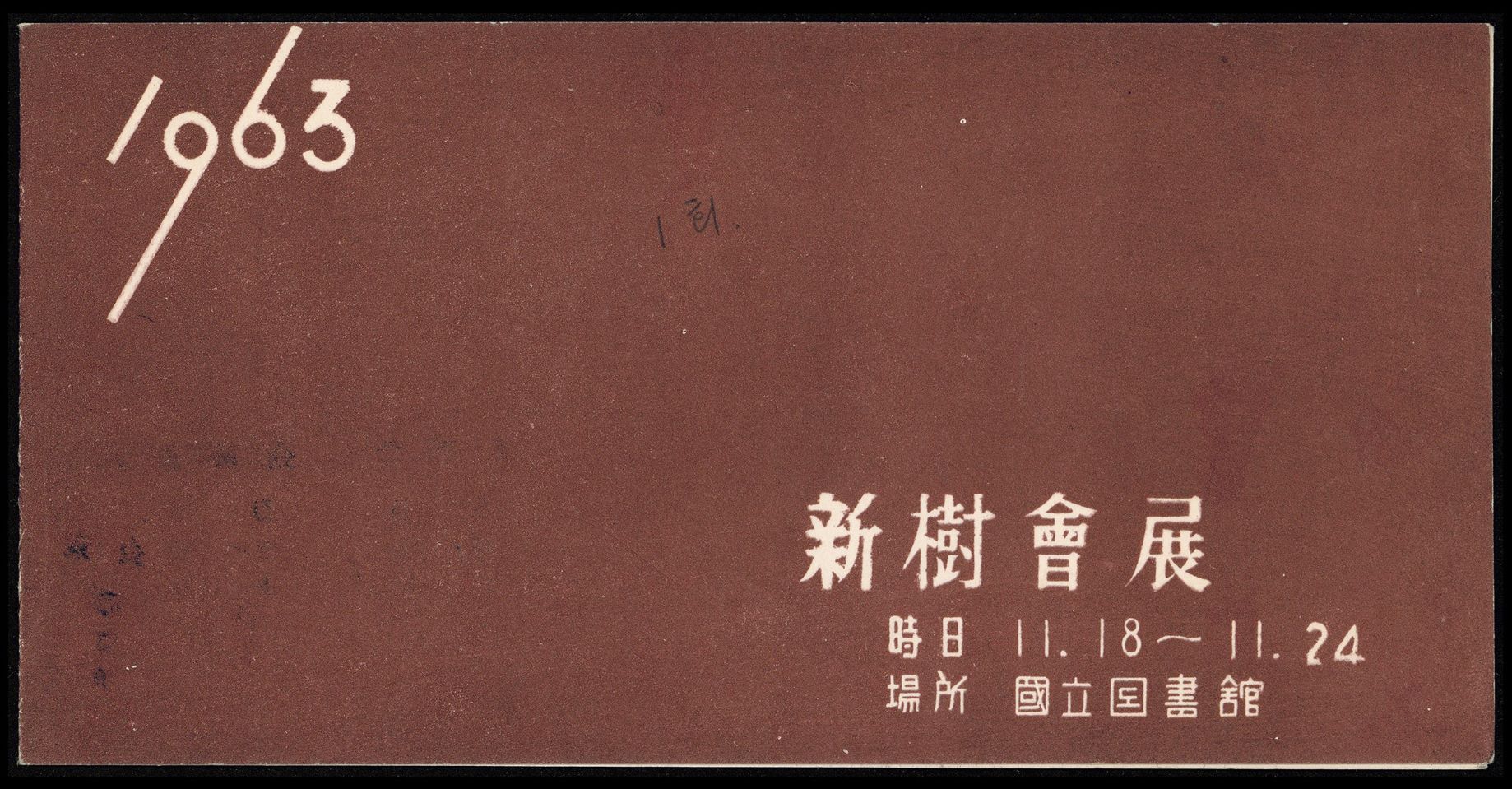
The Second Sinsuhoe Exhibition (Korean Information Center, Seoul, May 15-21) is held. A total of five artists including Cho Phyunghwi, Ha Taejin, Kim Dongsoo, Lee Yonghwi, and Oh Taehagk participate, presenting nineteen works.
-
June
The eye-opening ceremony for the Maitreya Buddha at Beopjusa Temple in Mt. Songnisan is held. Construction begins in 1939 but remains unfinished after Kim Bokjin’s death in 1940. It is eventually completed through the efforts of Yun Hyojoong, Kwon Jinkyu, Paik Moonki, and others. A groundbreaking ceremony is subsequently held in March 1963.
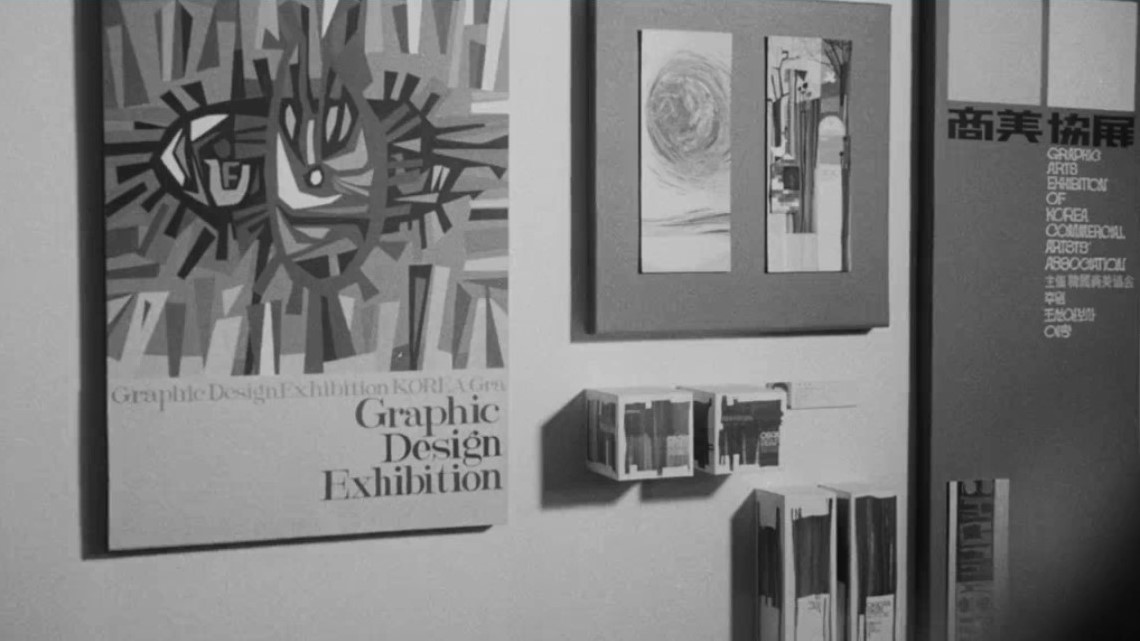
The Korea Commercial Artists Association [Hanguk sangeop misulga hyeophoe] holds The First Commercial Art Association Exhibition (Jungang Public Information Hall, Seoul, June 14–20). Forty artists in the design section participate, presenting approximately one hundred works. The Korea Commercial Artists Association is founded in April 1964 with the aim of advancing commercial art and promoting exchanges with international organizations. Its president is Yeom Intaek, and its vice presidents are Kim Hongryeon and Bong Sang-gyun.
-
July
-
August
-
September
-
October
The Thirteenth National Art Exhibition (Gukjeon) (Gyeongbokgung Palace Museum, Deoksugung Museum of Art, Seoul, October 16–November 15) is held. Kim Bongki receives the Presidential Award for Harvest, and Park Jongbae receives the Prime Minister’s Award for Work 77.
-
November
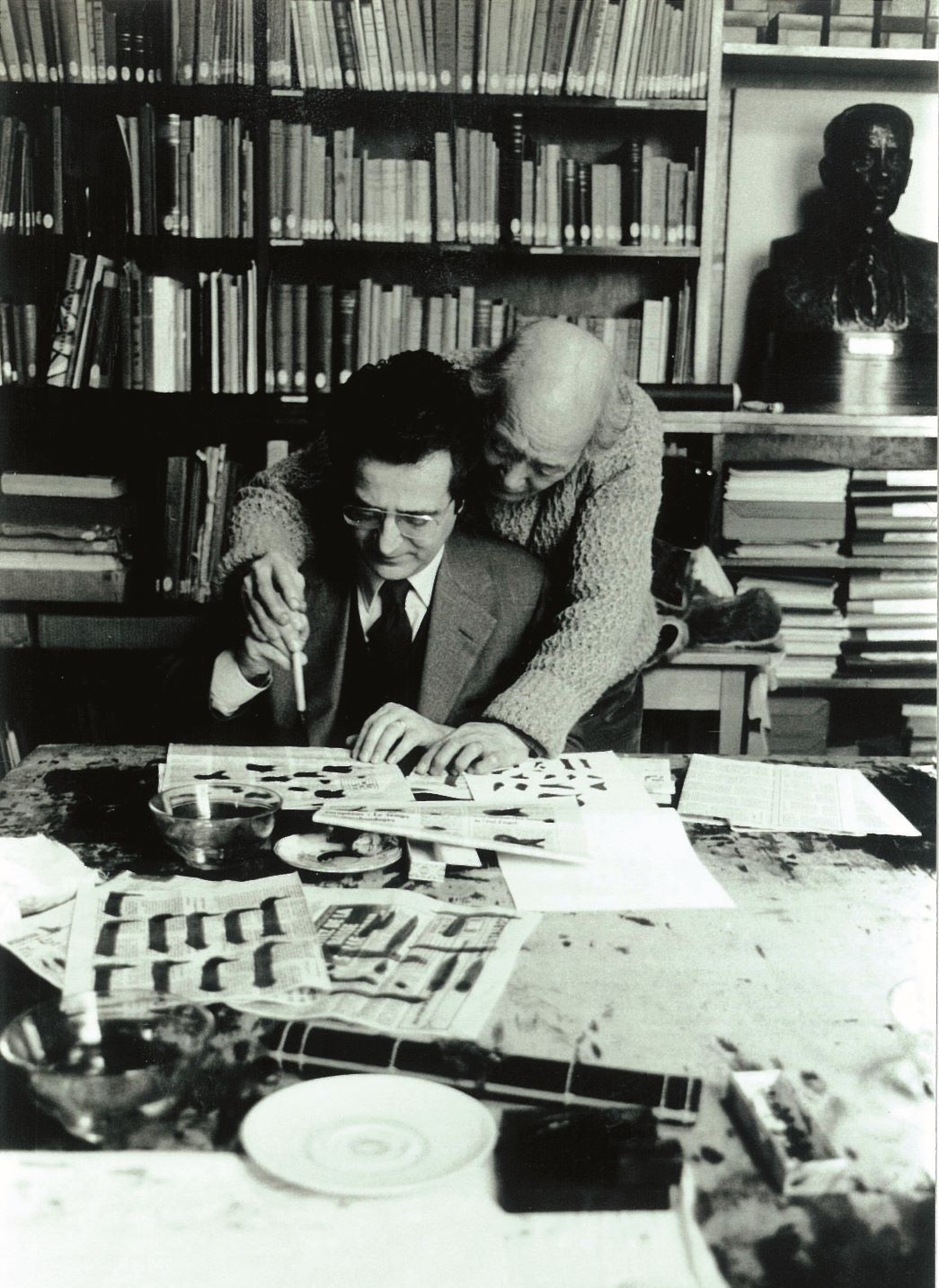
Lee Ungno establishes the Paris Oriental Painting Academy in collaboration with Vadim Elisseeff, director of the Cernuschi Museum, the City of Paris Museum of Asian Art, and teaches Eastern painting and calligraphy there.
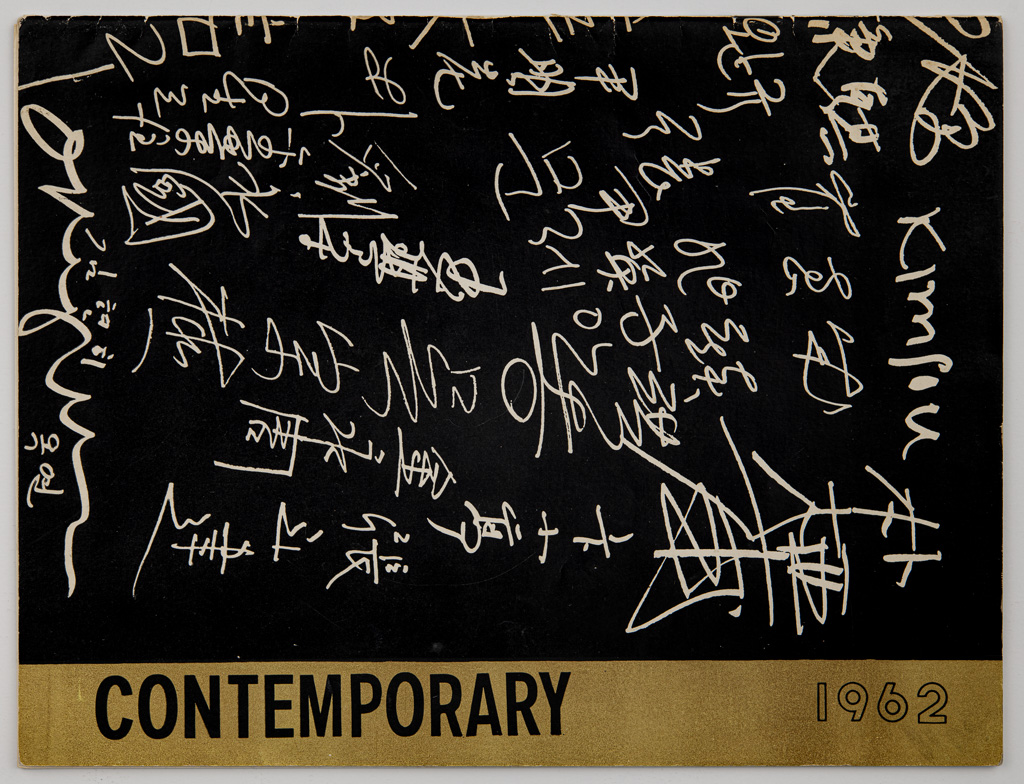
The Korea branch of the Congress for Cultural Freedom (Choon Choo Fine Arts Association) holds The Third Cultural Freedom Contemporary Art Exhibition (Seoul Press Center, November 2-10). A total of eleven artists participate, including Cho Yongik, Choi Kiwon, Han Yongjin, Jung Yungyul, Kim Chung-up, Kim Kichang, Kim Tschang-Yeul, Kim Youngjoo, Kwon Okyeon, Park Seo-Bo, and Yoo Youngkuk.
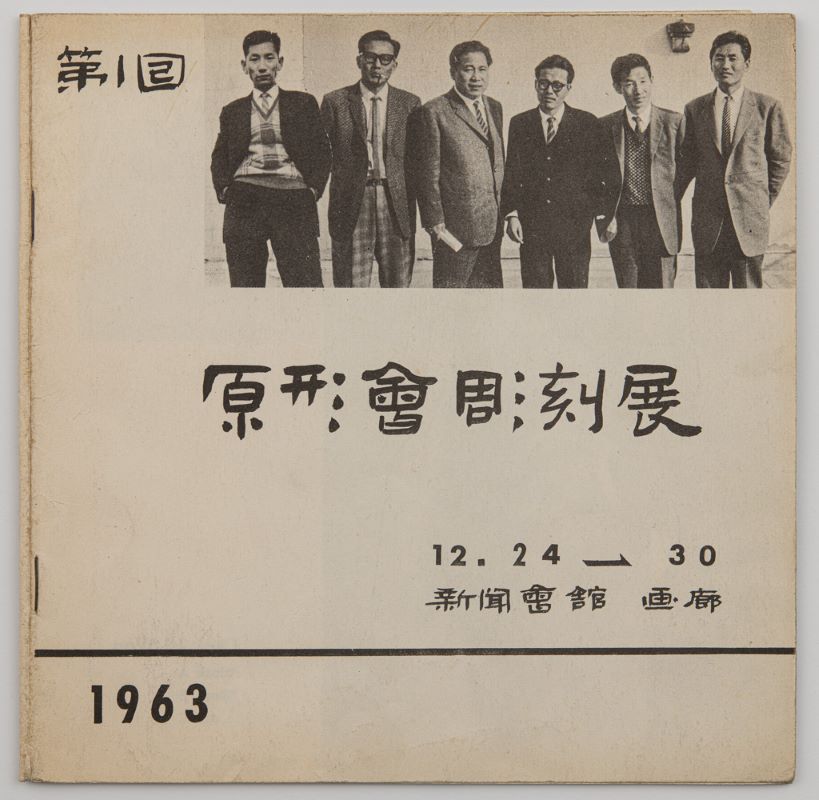
The Second Won-hyung Club Sculpture Exhibition (Korean Information Center, Seoul, November 22-27) is held. A total of thirteen artists participate, including Cho Sungmook, Choi Kiwon, Chun Sangbum, Kang Taisung, Kim Chanshik, Kim Younghak, Kim Youngjung, Lee Jong-gak, Lee Seungtaek, Lee Unsik, Oh Jong-uk, Park Cheoljun, and Park Chongbae.
In this exhibition, Lee Seungtaek presents a work in which he installs onggi (earthenware) objects on the wall. In the same year, he also produces a drawing for Untitled (Burning Canvases Floating on the River), which becomes a starting point for his notion of “non-sculpture.” -
December
The Eighth Mook Lim Art Exhibition (Korean Information Center, Seoul, December 21-25) is held. A total of thirty artists participate, including Ahn Dongsook, Cha Pyeongri, Choi Aekyung, Choi Jongin, Chung Takyoung, Han Insuk, Han Youngok, Hong Jeonghee, Jeong Jeongja, Jeong Taejin, Jung Chihwan, Kang Sincheol, Kang Whansup, Kim Choungza, Kim Sangik, Kim Sangsoon, Kim Younggil, Lee Deokin, Lee Jeongae, Lee Jongsang, Lee Taesik, Lee Yongja, Lim Songhee, Min Kyoungkap, Namgung Hoon, Shin Dongin, Shin Youngsang, Song Youngbang, Suh Seok, and Yu Namsick.
Related Essays
-
Cho Soojin
1960–1969: Avant-garde Activities and Development of the Art System
Following the periods of the Korean Empire (1897–1910) and Japanese occupation (1910–1945), the 1960s marked a period of renewed modernization in Korean art history, and much of what we see in Korean art today was shaped during this period. Having experienced the historical events of the April 19 Revolution and the May 16 Military Coup, which opened the door to the 1960s, many Koreans aspired to liberalism and democracy under the nationalistic economic system advocating anti-communist ideology, and even in their nationalism assumed a Western-oriented attitude. The sense of resistance to the establishment and the will to establish a new system by the youth, who were leading forces of the revolution, were manifested in art through avant-garde artists’ challenges to the National Art Exhibition (Daehanminguk misul jeollamhoe, also known as Gukjeon) and academicism and attempts to innovate traditional painting. Moreover, following from the desire for internationalization spreading throughout society, artists’ participation in overseas biennials became more frequent, and the number of people exploring art that modernizes tradition also increased. In addition, with the acceleration of industrialization and urbanization, consumption-oriented popular culture became reflected in art works, and art based on reproduction technologies such as prints and photography developed. The growth of the industrial design field was encouraged with the goal of “art exports,” and modern buildings transformed the environment of large cities, including the capital, Seoul. Furthermore, the activities of art critics in the art world became professionalized. The National Museum of Modern Art, Korea (now MMCA) opened its doors in Gyeongbokgung Palace in 1969, and art exchanges with Japan resumed in 1968 following the normalization of diplomatic relations between Korea and Japan in 1965. The 1960s in Korean art was a time when many historical moments that formed the origins of contemporary art were born through the fierce activities of the avant-garde. Art Informel Abstraction: Avant-garde Strategy for Reform The anti-National Art Exhibition movement began in 1957 with the simultaneous launch of oppositional, non-governmental groups such as the Creative Arts Association [Changjak misul hyeophoe], the Modern Art Association [Modeon ateu hyeophoe], the Neoplastics [Sinjohyeongpa], Hyundae Fine Artists Association [Hyeondae misulga hyeophoe], and the opening of the Contemporary Art Exhibit (1957), a public exhibition hosted by Chosun Ilbo newspaper. The movement started gaining momentum in 1960, when the April 19 Revolution broke out, artists belonging to these groups formed the Contemporary Fine Artists Alliance [Hyeondae misulga yeonhap] and demanded from the government the democratization of art and the reform of the National Art Exhibition. Their activities centered around the Contemporary Art Exhibit, which lasted until 1969, and took a confrontational stance against the forces that dominated the National Art Exhibition, while at the same time contributing to the rising influence of abstract art in the art world. By the 1960s, the Korean art world embodied multiple dichotomies of National Art Exhibitions vs. oppositional private exhibitions, and figuration vs. abstraction. Among abstract art, what was called Art Informel, an atypical abstract style based on the artist’s forceful bodily gestures, attained the status of the contemporary avant-garde. Young artists, mainly belonging to the Hyundae Fine Artists Association, used Art Informel abstract painting as a means to express the post-war human experience, and this also influenced sculpture. By the late 1950s, the metal sculptures at the National Art Exhibitions, the Contemporary Art Exhibit, and regular exhibitions by artist groups such as the Won-hyung Club or the Nakwoo Sculptors Society started to take on a tendency toward Art Informel abstraction. Meanwhile, some artists in Eastern painting circles also tried to use abstraction as the most globally contemporary art form to newly interpret traditional art. To this end, they established new organizations such as the Paek Yang Painting Association and Mook Lim-Hoe in the late 1950s and early 1960s, modernized Eastern painting through bold formal experiments, and actively participated in international exhibitions, demonstrating their will to join the global art world. The Search for an Art that is Korean yet Global As the Park Chung-hee administration’s ruling strategy emphasizing national culture penetrated the consciousness of many Koreans, such climate also affected the art scene, where works featuring traditional objects or architecture were often exhibited at the National Art Exhibitions, and there were increased attempts to shape traditions related to folklore and shamanism into modern forms. It became popular among artists to visit museums and temples or collect folk paintings, white porcelain, and antique furniture. At the same time, the overseas expansion of Korean artists also began in earnest, and artists’ studying abroad and short-term stays in France or the U.S., and participation in overseas biennales such as the Biennale de Paris, the São Paulo Art Biennial, and the International Festival of Painting Cagnes-sur-Mer became more frequent. Participation in international exhibitions was a rare opportunity to get in touch with the latest contemporary art trends and gauge the level of the internationalization of Korean art. However, these exhibitions also led to factionalism of the Korean art scene, as many competed to take advantage of such opportunities, the formation of forces and factions in the art world led to quite a few detrimental effects. Meanwhile, the Americanization of culture, a major phenomenon in Korean society in the 1950s, continued into the 1960s. In 1961, the Choon Choo Fine Arts Association, the Korean headquarters of the U.S. - supported Congress for Cultural Freedom, was launched; The institution hosted Invitation Exhibition of Congress for Cultural Freedom and related discussions in art until 1966. During this period, as the global Cold War system became solidified, centered on the U.S., and the division of North and South Korea had been completed, cooperation between South Korea, U.S., and Japan in the areas of defense and the economy became essential. And as an effect of this, diplomatic relations between South Korea and Japan were normalized in 1965, and even within the art world, exchanges with Japan officially resumed in 1968. From then on, the United States and Japan, along with France, became major countries with great influence on contemporary Korean artworks and the production of its discourse. Geometric Abstraction and Anti-Art: The Rise of Another Avant-Garde Since the mid-1960s, new avant-garde art trends appeared one after another in Korea to replace Art Informel abstraction, which had become established as the dominant trend in the Korean art world throughout the first half of the 1960s. First, in a situation where industrialization and urbanization caused by accelerated modernization were clearly transforming the surrounding environment, geometric abstraction, which was popular around the world throughout the late 20th century, also appeared in Korea under the name of Op Art, among others. The flat canvas, clear geometric forms, bright colors, and impersonal expression of geometric abstract painting had the characteristic of a cold abstraction that could compete with the hot abstraction of Art Informel, and became a very suitable means for new artists of the time to challenge the established abstract art. The geometric abstract style was embraced througth the Korean art world, including the applied arts, from the 1960s to the early 1970s, and members of the Korean Avant Garde Association (AG), an organization formed in 1969, stimulated the pursuit of avant-garde art that could actively participate in a reality dominated by mechanical civilization. Also, around the late 1960s, art that claimed to be the descendant of Western anti-art of the early twentieth century made its debut in Korea. These were works with a Neo-Dada tendency created by members of artists belonging to several new groups established since 1962, namely the Zero Group and the Sinjeon Group, which organized the Union Exhibition of Korean Young Artists (1967), and AG and The Fourth Group, which became active since 1969 and 1970, respectively. This art, referred to by various names, such as objet art, action painting, environmental art, and happening, was embraced by the art world as yet another avant-garde with innovation and contemporaneity comparable to geometric abstraction. It had the character of breaking down the concept of genres of established paintings and sculptures and became the forerunner of installation and performance art that would appear later. In addition, as artists actively introduced popular culture in their work, their works became key examples in art history where boundaries between art and daily life were blurred. At the same time, the participation of female artists in objet art and happenings became noticeable, showing the conditions of Korea at the time, in which the role of ordinary citizens and women was increasing even within the military-led, male-dominated social atmosphere. Photography, Printmaking, Design, and Architecture: The Expansion of the Domain of Fine Arts and the Advancement of the Applied Arts In 1960s Korea, art based on reproduction techniques, such as printmaking and photography, was quickly institutionalized as fine art. Korea Prints Association [Hanguk panhwa hyeophoe], formed in 1958, was active in holding individual and group exhibitions of its member artists, participating in international print biennials. Furthermore, printmaker Lee Hangsung organized an exhibition summarizing the history of printmaking, Contemporary Printing Arts Exhibition for Decade (1969). In the field of photography, Salon Ars was founded in 1960 with the late 1950s photography group Shinseonhoe as its predecessor and explored the issues of the formative nature of photography that is based on realism, which in turn led to the formation of Modern Photography Society [Hyeongdae sajin yeonguhoe] in 1961 and the launch of the photography research bulletin Sa-an (Alternative views) in 1964. Meanwhile, during this period, the rapid advance of the applied arts, which, like fine arts, aspired towards modernization and internationalization, was prominent. Among the applied arts, whereas tradition-oriented crafts were mainly presented at the National Art Exhibition, remaining in the domain of fine arts, the commercial art design during the Japanese occupation developed into industrial design in the 1960s, receiving the full support of the government with “art export” as its goal. At the same time, led by leading architects Kim Chung-up and Kim Swoogeun, modern buildings were built one after another, changing the urbanscapes of Korean cities including Seoul. However, the fact that Kim Chung-up, who criticized the urban planning policy of the Park Chung-hee regime at the time, was excluded from the state architecture construction project and even exiled abroad, was an incident that revealed the dark side of the political system of the developmental dictatorship. The Origins of Contemporary Korean Art in the 1960s In the history of Korean art, the 1960s was an era in which the various elements of society, involved in the formation of modernity, formed dynamic relationships with each other, and the activities of the avant-garde unfolded intensly within such contexts. The ten-year cry of the avant-gardists for the improvement of problems of the established art world had already seen some improvements, starting with the division of figurative and abstract sections at the National Art Exhibition in 1962, the addition of the photography section in 1964, and the opening of the National Museum of Modern Art, Korea (now MMCA) within Gyeongbokgung Palace in 1969. Furthermore, avant-garde art groups were established nationwide, including the founding of Art Group Hyuk in Busan and Epoch in Gwangju in 1963, contributing to the development of the local and regional art scenes. Also, members of the Korea Art Critics Association [Hanguk misul pyeongnonga hyeophoe], launched in 1956, contributed to the development of art criticism by way of extensively engaging in art criticism in the 1960s. As these historical moments constitute the genesis of contemporary art in many ways, the 1960s played a significant role in the history of Korean art.
-
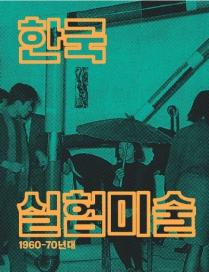
Kang Soojung
Korean Avant-Garde Art of the 1960s and 1970s: A Decade of Transition and Dynamics
Kang Soojung, "Korean Avant-Garde Art of the 1960s and 1970s: A Decade of Transition and Dynamics," Only the Young: Experimental Art in Korea, 1960s–1970s (Guggenheim Museum Publications. 2023), 64-83.
-
Jeon Yushin
Geometric Abstraction in Korean Art
Related Terms
-
Movement of constructing statues of patriotic ancestors
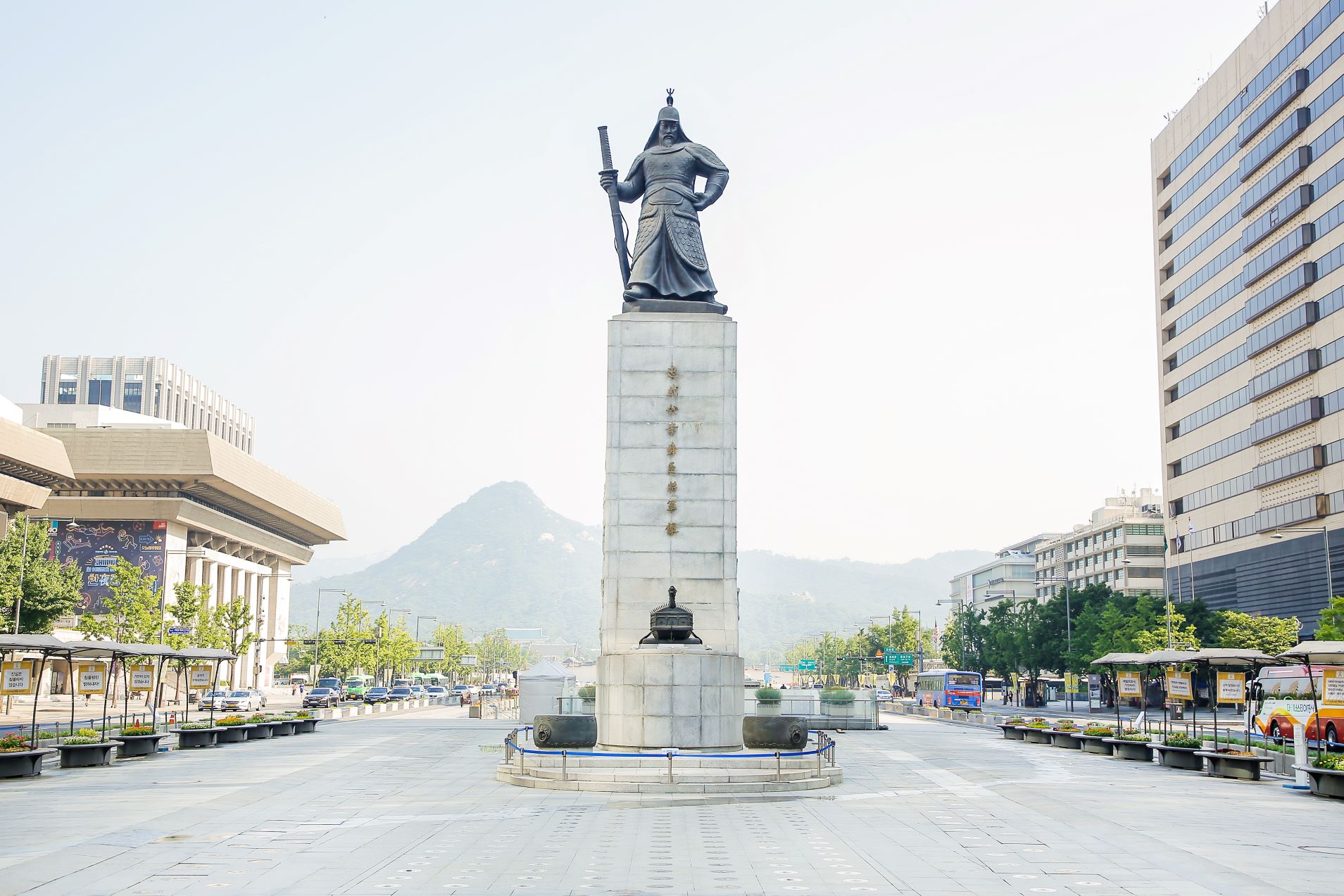
The Movement of Constructing Statues of Patriotic Ancestors was a national project to raise statues of patriots that took place from August 15, 1966 when the Committee for Constructing Statues of Patriotic Ancestors was officially launched through 1972. This state-led project of erecting statues of historical heroes was intended to honor their spirit and present them as role models for the nation. The formation of the committee was initiated to erect permanent statues of thirty-seven patriotic heroes whose plaster statues on Taepyeong-ro and Sejong-ro in Seoul were corroded in May 1964. Experts like museum directors, historians, art historians, artists, and professors as well as public officials and figures from the Seoul sinmun newspaper were appointed as members of the committee. The committee consisted of five sub-committees, including a financial sub-committee to raise financial resources and encourage businesspeople’s participation. The practical tasks of erecting statues were undertaken by Kim Kyungseung, the chairman of the expert committee, and professors of sculpture at art universities, including Kim Chongyung, Kim Sechoong, SongYoungsu, and Kim Chungsook. They also participated in constructing the statues. A total of fifteen statues were erected by the Committee for Constructing Statues of Patriotic Ancestors. They include the statue of Yi Sunsin on Sejong-ro dedicated by President Park Chung-hee and statues of the Great King Sejong and the Great Master Samyeong, all of which were erected in April 1968; statues of Yi Yi, the Great Master Wonhyo, Kim Yusin, and Ulji Mundeok erected in 1969; statues of Yu Gwansun, Shin Saimdang, Jeong Mongju, Jeong Yakyong, and Yi Hwang in 1970; and statues of Kang Gangchan, Kim Daegeon, and Yun Bonggil in 1972. Except for the statues of Kang Gamchan (in Suwon) and Yun Bonggil (in Daejeon), the others were erected in Seoul. All these statues still exist, although they have been moved from their original locations. After the Movement of Constructing Statues of Patriotic Ancestors was completed in 1972, statues of patriots continued to be erected throughout the country. Until the early 1980s, statues of Yi Sunsin and the Great King Sejong, mostly made of cement, were erected within the precincts of elementary schools across the nation to promote national unity and patriotism.
-

Department of Photography, Seorabeol University of Arts
The Department of Photography at the Seorabeol University of Arts was the first photography department in South Korea, established in 1964, and was the predecessor of the current Photography Department at Chung-Ang University. The Seorabeol University of Arts that opened in 1953 consisted of the departments of creative writing, theater and film, music, and fine arts. The Department of Photography was founded in 1964, following a recommendation by Kim Jong Yang, who was teaching cinematography at the Theatre and Film Department in the early 1960s and was also the head of the photography laboratory Saehan Color. The department's establishment was a result of his suggestion. The first dean of the Department of Photography was Kim Jongyang, the second was Lee Jaehwa, who was the head of the Saehan Color technology section, and the third was the photographer Park Pilho. The Department of Photography started as a department of the two-year junior college and then grew into the program of a four-year university. From its inception, the courses were taught be leading figures in the history of Korean photography, including Lee Gyeongmo, Yu Manyeong, Choe Ikchan, Limb Eungsik, Yook Myoungshim, and Jeong Huiseop. The curriculum was composed of photographic optics, photoengraving, reportage photography, and photographic chemistry, and the classes were based on techniques and practical skills rather than photography as an art form. While previous photography education had been conducted through apprenticeship or at private academies, the Department of Photography at the Seorabeol University of Arts was the first to incorporate photography into university education, marking a major turning point in Korean photography history as the origin of more systematic and professional photography education. Jeong Dongseon, an advertising photographer, belonged to the first graduating class, and another advertising photographer Yu Gyeongseon was a graduate from the fourth graduating class. Yu later served as a professor of photography at Chung-Ang University.
-

Actuel
A group of artists that formed when the Hyundae Fine Artists Association merged with the 1960 Fine Artists Association after a joint exhibition in 1961. The group comprised several young artists in their twenties and thirties who pursued avant-garde art, and adopted Informel as a common ideology for Korean contemporary art. Actuel was highly influential in the Daehan Art Association, and it received criticism for selecting three of its own members to participate in the Paris Biennale. The group disbanded after its second exhibition in April 1964.
-
Sinsuhoe
Sinsuhoe was founded in May 1963 by a group of colored ink painters that graduated from Hongik University, including Cho Phyunghwi, Kim Dongsoo, Choi Jaejong, Lee Yonghwi, Ha Taejin, and Oh Taehagk. They organized their first exhibition at an exhibition hall of the National Library of Korea in November 1963. The name Sinsuhoe means “a group looking for a new creation based on tradition, like a new tree [growing from old roots].” The group was formed in the late 1960s when large numbers of Korean artists began to work in collective association. Even though such groups did not represent specific ideologies, they instead often shared solidarity in terms of formal interest and expressive style. In 1972, many significant members of Sinsuhoe participated in their eleventh exhibition at the Shingegae Gallery. Members include Kim Dongsoo, Kim Seongchul, Kim Eunhee, Park Wonseo, Seo Hongwon, Oh Yangja, Oh Taehagk, Yoo Jiwon, Lee Seokgu, Lee Yonghwi, Lee Youngsu, Cho Pyunghwi, and Hong Byeonghak among others. Sinsuhoe also members focused on enhancing membership and hosted the Sinsuhoe Exhibition as a platform to include the work of other artists.
-
Korea Commercial Artists Association
The Korea Commercial Artists Association [Hanguk sangeop misulga hyeophoe; KCAA] is a private organization in the field of commercial art and graphic design founded on April 23, 1964 and remained active until 1966. It was established for the purpose of developing commercial art and improving its quality through exchange exhibitions with international organizations. Its members were young practitioners under the age of thirty who were working in the field of commercial art. The first president was Yeom Intaek, who served as the art director of the Korea Minting and Security Printing Corporation at the time, and the vice-presidents were Bong Sangkyun and Kim Hongryeon. At the general meeting in July 1965, Kim Gwanghyeon, who was working at Yuyu Corporation, was elected as the new president. The KCAA held its inaugural exhibition from June 8 to 14, 1964 at the Korean Information Service Gallery. Its forty members presented roughly 100 graphic design works closely related to modern life, including posters, pamphlets, wrapping designs, calendars, and medicine advertisements. At the time of the inaugural exhibition, the president Yeom Intaek declared that the KCAA was formed to launch a new movement in design, which had the power to directly influence national industry but had been treated poorly due to business owners’ lack of understanding. The association held the second member exhibition in March of the following year and the third edition in August at the same place. In the third edition, domestic and international calendar designs were gathered and compared. It was held as a response to the public’s demand for “different and unique calendars” as calendars “occupy a large portion in interior decoration.” The exhibition featured fifty-two items by the KCAA members as well as seven outstanding domestic calendars and nine outstanding international calendars of the year 1965. It also functioned as a competition. The outstanding domestic calendars were honored with the Association Award, Idea Award, and Lettering Award, among others. Among the twenty entries by non-members, those with remarkable designs were selected for the Print Art Award, Layout Award, Idea Award, Encouragement Award, and others. The KCAA held the fourth member exhibition in April 1966 at the National Public Information Center Gallery and the fifth edition in November of the same year at the Shinsegae Gallery.
-
Congress for Cultural Freedom Invitational Exhibition
The first exhibition held by the Korean branch of the Congress for Cultural Freedom. The congress held numerous classes on international issues, cultural seminars, and roundtable discussions to critically discuss the idea of an "American-dominated Free West." In the field of art, the congress held contemporary art seminars and discussions in addition to the Cultural Freedom Contemporary Art Exhibition, and in doing so greatly influenced the development of Korean post-war art. Five invitationals were held from 1962 to 1966, and artists such as Kim Youngjoo, Kwon Okyon, Park Seo-Bo, Kim Kichang, Park Rehyun, Chun Sungwoo, and Chung Sanghwa participated.
-
Won-hyung Club
A group formed in by 1963 by established sculptors who were all alumni of Seoul National University and Hongik University, and advocated a “sculptural philosophy of avant-garde action.” The membership consisted of artists such as Kang Taisung, Kim Youngjung, Kim Younghak, Kim Chanshik, Park Chongbae, Oh Jong-uk, Lee Seung-taek, Chun Sangbum, Cho Sungmook, and Choi Kiwon. The group held its inaugural exhibition in 1963 at the Sinmunhoegwan Gallery, and participated in the Joint Exhibition of Korean Contemporary Sculpture (held in 1970 at the National Museum of Modern and Contemporary Art) alongside the Nakwoo Sculptors Society, the 3rd Sculptors Society, and the Korean Modern Sculptors Society.
-
Paris Oriental Painting Academy
Académie de Peinture Orientale de Paris (The Paris Oriental Painting Academy) was an academy of Eastern painting run by Lee Ungno in Paris, France, from 1964 through 1989. Early on in his Parisian life around 1962, Lee began teaching East Asian calligraphy and painting to Europeans by offering an East Asian art course in his home. In 1964, he became friends with Vadime Elisseeff, the director of Musée Cernuschi (Cernuschi Museum), the municipal Asian art museum in Paris, and came to open an academy within the museum. At the time, the name of the academy was formalized as the Académie de Peinture Orientale de Paris. Its supporter’s association was composed of fourteen prominent figures, including Jacques Lassaigne, Chou Ling, Hans Hartung, Pierre Soulages, Fujita Tsuguharu, Zao Wou-Ki, Chang Da-Chien, and Lee Huiseung. The curriculum was divided into calligraphy and Eastern-style painting. Lee Ungno published his own Eastern painting instructional textbook L'Art de peindre à l’encre de Chine (The Art of Painting with Ink and Wash) in 1987 (an updated edition was published in 1988). In 1971, the Paris Oriental Painting Academy organized the exhibition Oeuvres et études de l'Académie de peinture orientale de Paris (Works and Studies of the Paris Oriental Painting Academy) that presented its students work at the Cernuschi Museum. Since 1977, it was held four times (1977, 1980, 1982, and 1988) at the Goryeo Gallery, which Lee opened in Paris in 1976. After Lee’s death, the Paris Oriental Painting Academy was continued as the Goam Academy run by his wife Park Ingyeong and his son Lee Yoongse. The Paris Oriental Painting Academy was the successor of the Goam Atelier, an Eastern-style painting school Lee Ungno founded in Seoul in 1945, indicating that Lee maintained his identity as an Eastern-style painter even after moving to Europe.

Sign Up for Email Updates