
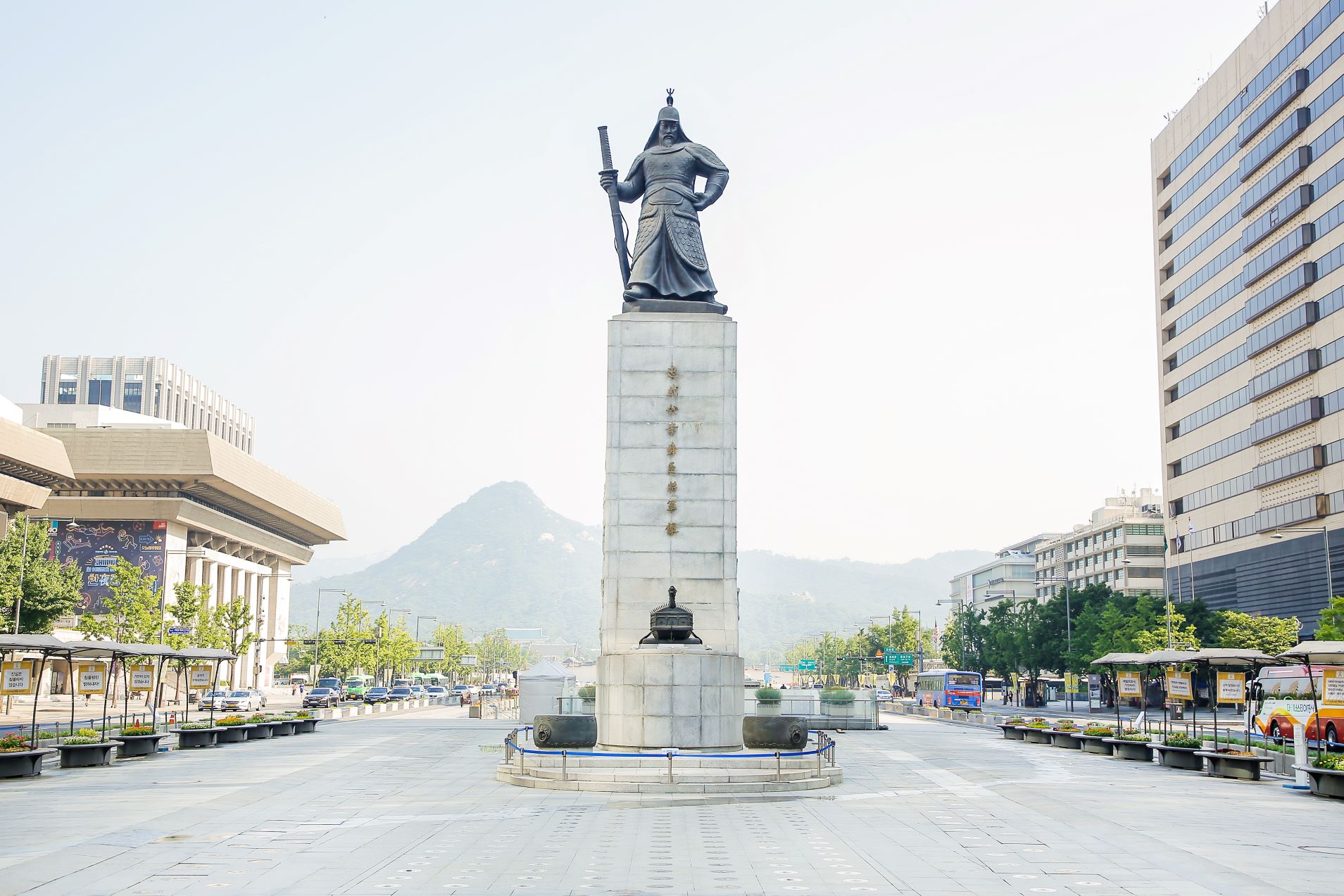
Kim Sechoong, Statue of Admiral Yi Sun-sin, 1968, bronze, granite, 1.700cm (Statue: 650cm), Sejongno, Gwanghwamun Plaza, Seoul, South Korea, ©Seoul Metropolitan City
Movement of constructing statues of patriotic ancestors


The Movement of Constructing Statues of Patriotic Ancestors was a national project to raise statues of patriots that took place from August 15, 1966 when the Committee for Constructing Statues of Patriotic Ancestors was officially launched through 1972. This state-led project of erecting statues of historical heroes was intended to honor their spirit and present them as role models for the nation. The formation of the committee was initiated to erect permanent statues of thirty-seven patriotic heroes whose plaster statues on Taepyeong-ro and Sejong-ro in Seoul were corroded in May 1964. Experts like museum directors, historians, art historians, artists, and professors as well as public officials and figures from the Seoul sinmun newspaper were appointed as members of the committee. The committee consisted of five sub-committees, including a financial sub-committee to raise financial resources and encourage businesspeople’s participation. The practical tasks of erecting statues were undertaken by Kim Kyungseung, the chairman of the expert committee, and professors of sculpture at art universities, including Kim Chongyung, Kim Sechoong, SongYoungsu, and Kim Chungsook. They also participated in constructing the statues. A total of fifteen statues were erected by the Committee for Constructing Statues of Patriotic Ancestors. They include the statue of Yi Sunsin on Sejong-ro dedicated by President Park Chung-hee and statues of the Great King Sejong and the Great Master Samyeong, all of which were erected in April 1968; statues of Yi Yi, the Great Master Wonhyo, Kim Yusin, and Ulji Mundeok erected in 1969; statues of Yu Gwansun, Shin Saimdang, Jeong Mongju, Jeong Yakyong, and Yi Hwang in 1970; and statues of Kang Gangchan, Kim Daegeon, and Yun Bonggil in 1972. Except for the statues of Kang Gamchan (in Suwon) and Yun Bonggil (in Daejeon), the others were erected in Seoul. All these statues still exist, although they have been moved from their original locations. After the Movement of Constructing Statues of Patriotic Ancestors was completed in 1972, statues of patriots continued to be erected throughout the country. Until the early 1980s, statues of Yi Sunsin and the Great King Sejong, mostly made of cement, were erected within the precincts of elementary schools across the nation to promote national unity and patriotism.
* Source: MMCA
Related
-
Kim Kyongseung
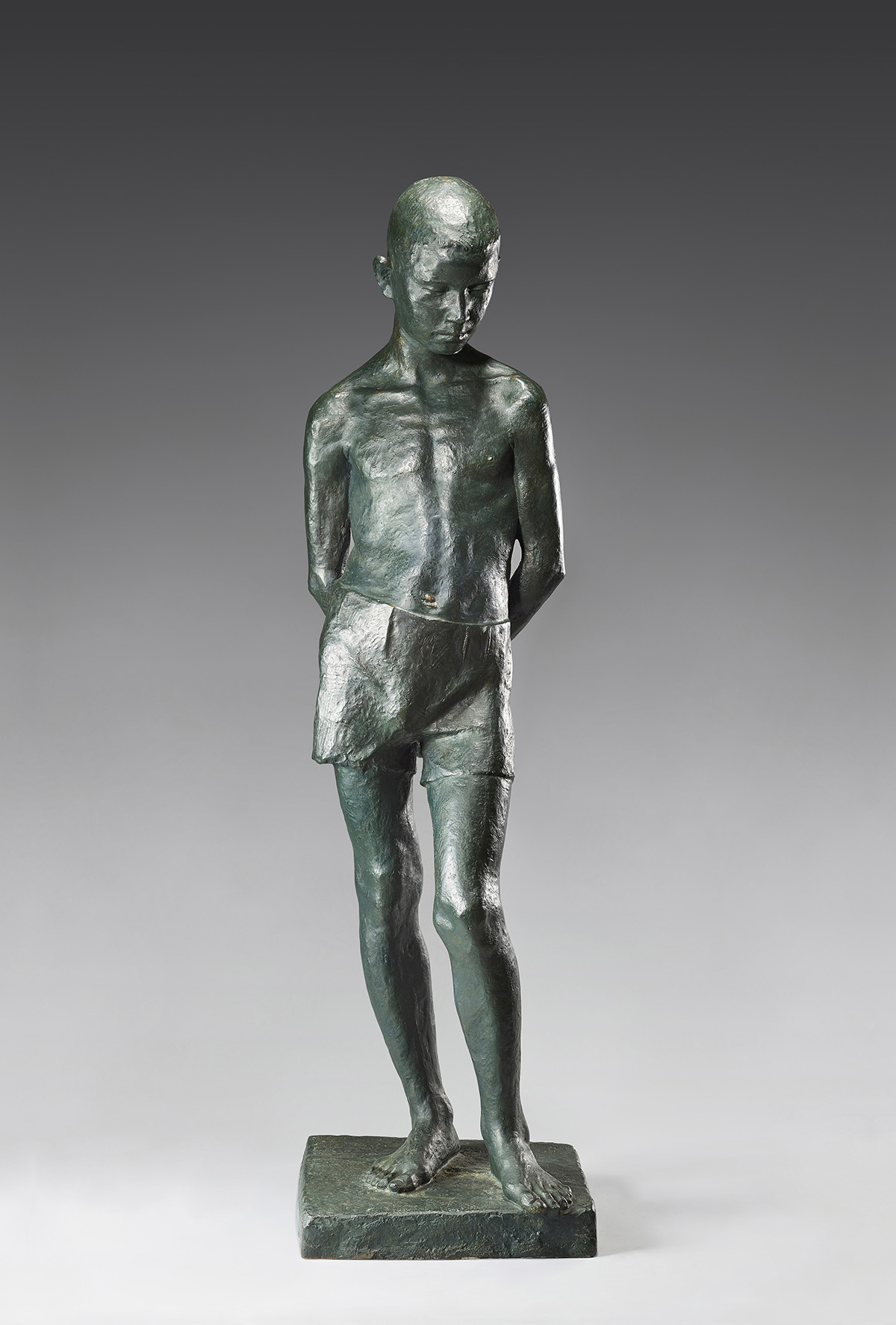
Kim Kyongseung (1915-1992, pen name Tanwol) was born in Kaesong, Gyeonggi-do in 1915. At Songdo High School, he learned drawing from Hwang Suljo, who had graduated from the Western painting department at Tokyo School of Fine Arts. Kim desired to become the Michelangelo of Korea. After graduating in 1933, he pursued his dream in Japan by attending Kawabata Art School, following in the footsteps of his older brother Kim Insoong. He studied drawing and entered the department of sculpture and casting at Tokyo School of Fine Arts in 1934. In 1939, he graduated from Tokyo School of Fine Arts and participated in the Joseon Art Exhibition. After independence, he contributed his work to the National Art Exhibitions (Gukjeon) and taught as a professor at Hongik University and Ewha Womans University. His work A Boy, which represents “the sophisticated mind of a boy” is considered as one of the most important works of modern Korean portraiture created during the 1940s. His works varied from figure paintings, such as A Pied Piper Boy and Spring Dream, to statues and sculptures created to support social and educational purposes; he created a variety of statues, including Sejong the Great (1968), April 19th Memorial Tower, General MacArthur, Baekbeom Kim Gu at Namsan Mountain, Dr. Kim Helen, and Monument for Korean War. His works used detailed, representative, and photo-realistic facial expressions and stereoscopic details of form to present heroic images of the subjects in question.
-
Committee for the Construction of Statues of Patriotic Ancestors
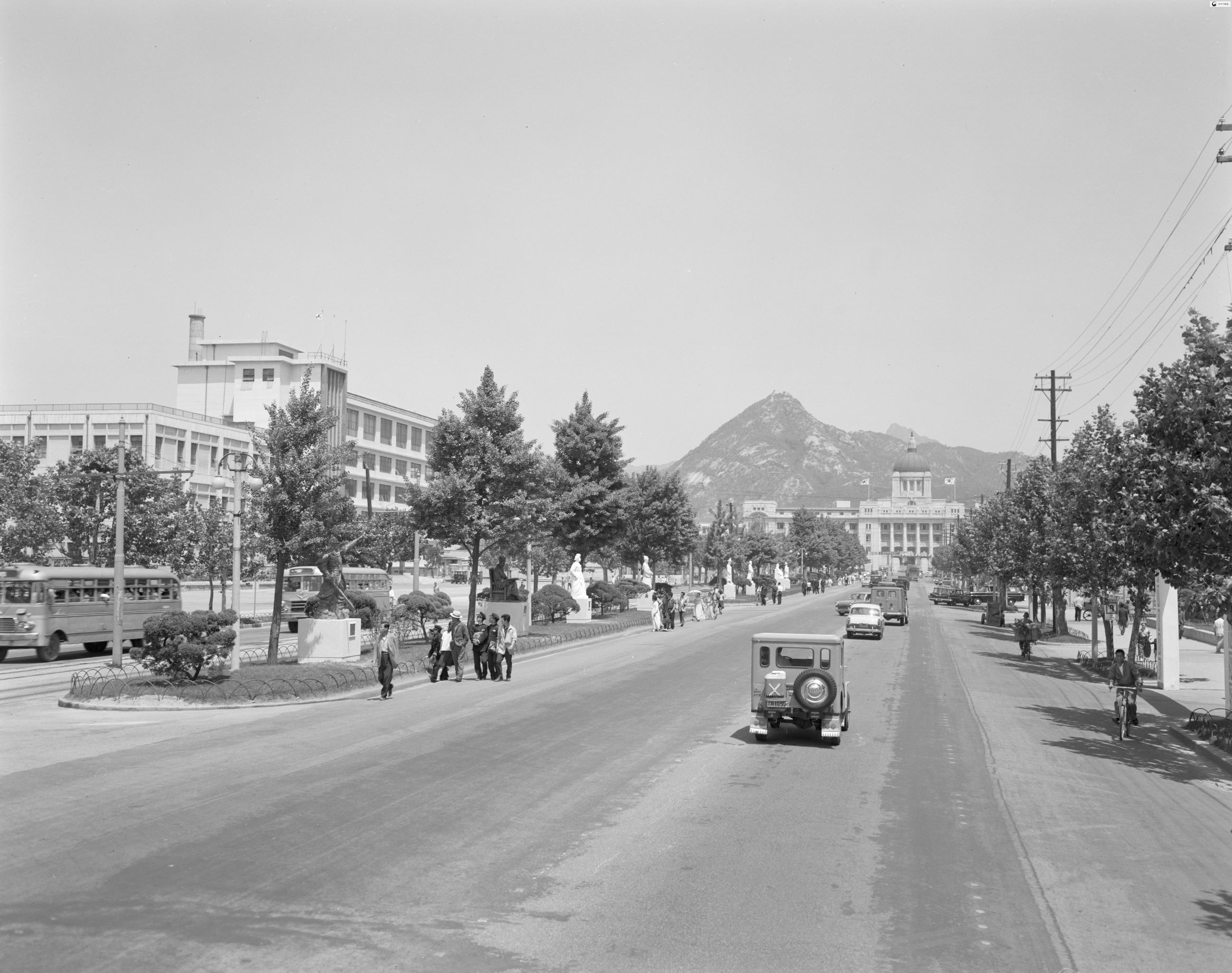
An organization that spearheaded the erection of 15 bronze statues in Seoul, Suwon, and Daejeon from 1968 to 1972. The statues of Yi Sun-sin (by Kim Se-choong), Sejong the Great (by Kim Kyongseung), and Samyeongdaesa (by Song Youngsu) created in 1968 and constitute their representative works. The organization was formed at a time when numerous memorials and statues were constructed to legitimize the May 16 Coup and inspire anti-communist sentiment. Lee Han-sang, the president of Pung Jeon Company and winner of the May 16 People’s Award in 1968, donated his prize money to the Seoul Sinmunsa Newspaper Press for the repair of 37 plaster statues that were erected between the Capitol building and Namdaemun. The demolition of the statues as result of urban renovation led to the creation of a committee to create new statues. The Committee for the Construction of Statues of Patriotic Ancestors became active on August 15, 1966 by installing an executive office at the Seoul Sinmunsa Newspaper Press. In the regulation, the goal of the project was “to celebrate exemplary and patriotic spirits by constructing statues of unforgettable national heroes and patriotic martyrs in our history.” The committee consisted of a commissioner, vice-commissioner, standing members, and assistant administrators. It consisted of five divisions with a chairperson and 25 members. The first commissioner was Kim Jong-Pil, the chair of the Republican party, followed by Jang Tae-hwa in 1969, and Shin Beom-sik in 1972.
Timelines

Sign Up for Email Updates