
Kim Yujin, Mok Soohyun, Shin Chunghoon
Study Group 2 │ Korean Art and Exhibition Histories: The Modern / Contemporary
“Study Group 2. Korean Art and Exhibition Histories” was held by the MMCA Research Lab at MMCA Seoul on December 13, 2024 with ten experts composed of art historians, curators and critics active in the Korean art, mainly touching base the relationship between Korean art and exhibitions.
Part 1, “The Modern / Contemporary”, featured Mok Soohyun (Art Historian), Shin Chunghoon (Seoul National University) and Kim Yujin (Curator, MMCA). Mok Soohyun went thru exhibitions that formed concepts of modern and contemporary arts. Shin Chunghoon presented analysis on the terminology of “contemporary art” and relevant exhibitions and theories. Kim Yujin examined first exhibitions held at the MMCA and the changes over time period.
*moderated by Shin Chunghoon(Seoul National University)
How Modern Art Exhibitions Shaped ‘Modern Art’
Mok Soohyun: I'm conducting research under the theme of "The Modern / Contemporary" focusing on How Modern Art Exhibition Shaped 'Modern Art'. There are still many debates about where modern art begins and what its characteristics are. My aim is to examine these issues from the perspective of how exhibitions have shaped them. This research involves looking into exhibitions related to modern art that were held after liberation, along with analyzing the associated discourses, and through this analysis, I hope to explore how ideas about modern art were formed or transformed, and what concept and category we have come to perceive modern art.
I will broadly address this across three periods and topics. First, I examined the memorial exhibitions of deceased artists in the 1950s and the Special Exhibition of Modern Korean Painting. During this period, the term or concept of modern art was not explicitly used. But I believe the notion of modern art began to take shape with the memorial exhibitions of deceased artists, which is why I focused on two such exhibitions.
The Posthumous Exhibition of Three Artists — Kim Junghyun, Gu Bonung and Lee Insung held in September 1954 at the Cheonil Gallery, and Special Exhibition of Modern Korean Painting held at the National Museum when it had relocated from its temporary refuge in Busan to its Namsan annex are the two exhibitions. This exhibition at the National Museum reviewed 50 years of Korean modern painting. Through this, we can observe the beginnings of efforts to organize exhibitions that occurred before 1950. This is the poster, for The Posthumous Exhibition of Three Artists — Kim Junghyun, Gu Bonung and Lee Insung and the leaflet published at the time. While no photographs of the artworks are here, the leaflet provides their titles, allowing us to infer which pieces were exhibited if they still remain today.
The second exhibition is Special Exhibition of Modern Korean Painting as mentioned. This exhibition featured over 20 artists, including senior masters and active mid-career artists. It was described as a "comprehensive summary of the 50 years of modern painting." As I will also mention at the end exhibitions that define contemporary frequently use the term "modern." We should pay attention to how people at that time perceived and distinguished between modern and contemporary art. Additionally, The Korean Posthumous Art Exhibition was held at the Korean Information Service Gallery in 1962. There are two notable essays in the discussions surrounding these exhibitions. In the April 1957 issue of Sintaeyang, Chung Kyu evaluated The Posthumous Exhibition of Three Artists — Kim Junghyun, Gu Bonung and Lee Insung as a turning point emphasizing that the question ultimately boils down to how these exhibitions should be understood in terms of their value from the perspective of Korea's modern art history. Lee Kyungsung wrote a book called The History of Korean Art in 1962 intended as a textbook. Interestingly, this book covers the entire history of Korean art, expanding "modern art" to include not only pre-modern but also early 20th-century art. Thus, by extending art history to include modern art, it deals with the first half of the 20th century. I believe this perspective reflects a distinct view of modern art.
The second topic is the 60 Years of Modern Korean Art exhibition that was held in the 1970s. After the National Museum of Modern and Contemporary Art (MMCA) was founded in 1969, this exhibition was held when the MMCA was located in Gyeongbokgung Palace Museum. This image is a press photograph that was in a newspaper at the time. The exhibition prominently featured representative works in full color, showcasing 381 pieces by 149 artists, illustrating the changes in art up until the 1960s. It categorized works into genres such as Western painting, Eastern painting, calligraphy, and sculpture. MMCA was launched without any holdings in 1969, so it began collecting Korean modern art to identify existing works and gradually build its collection and it also organizes the history of Korean modern art.
When reviewing the catalog and exhibited works, the lower chronological scope is set around the 1960s. But oil paintings and watercolors included semi-abstract and Art Informel pieces. Ink and color paintings ranged from portraits and landscapes from the 1900s to Suh Seok's abstract works. Sculptures were generally figurative, and calligraphy spanned styles from cursive script to Hangul calligraphy. So it seems the concept of modern art during this period was not fully defined, but instead, focused more on addressing a general lower boundary of the era.
The chronological scope of the exhibited works included Ko Huidong's Self-Portrait to Lee Cheul-yi's Work 60(A) for oil painting and watercolors, Kim Eungwon's Orchid and Rock to Pak Nosoo's Mountain Spirit for ink and color paintings, Yun Seung-uk's Girl Playing the Flute to Kim Chongyung's Work for sculpture, and Kwon Dongsoo's Tile Design to Yoo Chiwoong's Cursive Script for calligraphy. As mentioned earlier, there are a few pieces of abstract art from the period after the 1950s when abstraction had just begun to emerge.
The discourse on modern art during the time is reflected in Lee Kyungsung's A Brief History of 60 Years of Korean Modern Art. Modern art history was divided into formative, exploratory, dark, chaotic, transitional, and settlement periods. As Shin Chunghoon will later discuss, the year 1957 is still regarded as a pivotal moment in Korean modern and contemporary art history which is a trend that persists in contemporary discourse. Lee Kyungsung referred to this period after 1957 as the settlement period. However, given that this perspective regarding the periods and characteristics is from the 1970s, I believe it may not have organized the characteristics of modern art accurately when viewed from today's standpoint. In the 1980s, MMCA held the Exhibition of Korean Modern Art Materials which was a rare archival exhibition for its time. This exhibition included extensive documentation, demonstrating an effort to organize modern art not only through works but also through related materials.
Following these developments, MMCA expanded further in the late 1990s and early 2000s with the opening of the Gwacheon and later Deokgsugung branches. The Deoksugung branch hosted a series of exhibitions titled Glimpse into Korean Modern. The exhibition was divided into four genres, oil painting, ink and color painting, sculpture, and crafts. It took place over four years from December 1997 to February 2000, and can be seen as an exhibition embodying the determination to organize modern art at MMCA.
The exhibition's character was to showcase modern art by genre before the turn of the millennium. In the oil painting section, there was a corner dedicated to the transformation of the traditional art world which highlighted realistic works from the late Joseon Dynasty. Traditionally, modern art was understood to begin with the introduction of oil painting around 1900 or 1910. However, this exhibition examined how transitions from the Joseon Dynasty into the 20th century shaped modernity, offering a fresh perspective.
The ink and color painting exhibition categorized works not by era but by thematic subjects, following classifications of art of the Joseon Dynasty. It displayed works like Shin Myeong-Yeon's Lotus Flower and Jang Seungeop's Still-Life with Vessels and Plants. The exhibition's upper limit was works made after the opening of Joseon ports, but it's difficult to say that these works display modern characteristics. On the lower limit, if the 1970s exhibition included some abstract works, this period, moving through the 1970s and 1980s, shows how art history narratives increasingly associated contemporary art with the introduction of abstraction. So the abstract section is notably absent, and the character of modern art concluded with representational works. While the term "sculpture" was used in later periods, the earlier term "sculptural art" was used to describe the genre in which artists active in the 1920s and 1930s worked. Similarly, works such as the "Arhat Statue" created in 1905 and the "Civil and Miltary Statues" at King Gojong's tomb in Hongneung from 1919 were presented to explore the transition from traditional sculptural art to modern sculpture.
Modern sculpture extended to works like the figurative sculptures of Kwon Jinkyu, Kim Sechoong, and iron sculpture of Song Youngsu Crafts, which were excluded from the 60 Years of Modern Korean Art exhibition, were newly included, ranging from traditional items like 19th-century butterfly-shaped iron lamps and wooden lunch boxes to early 20th-century works from the Yi Royal Art Workshop, spanning into the 1960s.
Despite these, the nature and characteristics of modern crafts remain unresolved. Examining the discourses surrounding modern art exhibitions in the 1990s reveals an intention by MMCA to establish a framework for modern and contemporary art through categorized exhibitions. Calligraphy appeared in the 60 Years of Modern Korean Art exhibition, but was omitted in the 1990s exhibitions, while crafts were newly added. This shift likely reflects the influence of MMCA's efforts in the late 1970s to organize exhibitions of western painting, eastern painting, sculpture, and crafts, each accompanied by historical overviews. Therefore, I believe the modern genres were reorganized into modern genres under a contemporary concept. In terms of the era, there's a shift in perspective to explore how modern art evolved not from the 20th century but from the 19th. This change was discussed at a conference held in 1994 by the Association of Korean Modern Art History, co-hosted by MMCA. The conference focused critically on the debate regarding the starting point of modernity. There were various theories, including the theories of the 1890s, 1920s, and 1930s. I believe the shift in the exhibition occurred by accepting modernity should be viewed from the period of opening ports.
But the turning point of modernization was the discourse initiated by Lee Kyungsung and others in the late 1950s, which recognized the emergence of abstraction, like the 1957 Art Informel, as the beginning of contemporary. The theory accepted the idea of considering representational works prior to abstract art as the trait of modern art. Another somewhat unique point is that in 1987, restrictions on works by artists who defected to North Korea were lifted. There were attempts to reconsider the artists who defected to North Korea works as well.
I have summarized exhibitions related to modern art in three main points. In the 1970s, the temporal definition of modern art was not clearly established. Through memorial exhibitions of deceased artists and efforts to organize the history of Korean contemporary art, discussions emerged based on viewing 1957 as the turning point of contemporary art. From this foundation, the categories of modern art, including its nature and period, were organized and ultimately came together in the Glimpse into Korean Modern series.
Exhibitions that Rewrite ‘Contemporary Art’
Shin Chunghoon: What I want to emphasize is that the meaning of the term "contemporary art" has continuously changed. In other words, what we refer to as contemporary art now was never just one thing. The values and implications assigned to contemporary art have evolved over time, and that is part of the trajectory I am exploring in my project. In connection with this presentation, my attempt is to trace how the term "contemporary art" has been conceptualized in Korean art after the 1950s, through the exhibitions that became key milestones in its development. The premise here is that the meaning of "contemporary art" in Korean art has continuously shifted, and exhibitions have either embraced or led this shift.
In the mid-1950s, the term "contemporary art" was clearly defined in distinction from modern art. The repeated idea was that contemporary art was different from modern art. Contemporary art was loosely defined as something that did not replicate nature or tell a story, something we commonly call abstract art. Another definition was that it resonated with modern life. In terms of feeling, adjectives like fresh, novel, and sophisticated were often used. This move defining contemporary art in Korean art history as separate from modern art was not the first of its kind.
In the late 1930s, in an essay by Kim Whanki, abstraction was advocated and referred to as contemporary art, distinct from modern art. However, there were also strong counterarguments at the time. Some questioned whether it was correct for art to change just because the era was changing. One of the people who raised such doubts was Oh Chiho. He argued that art does not change simply because the era changes. Even if society becomes more scientific, rational, and intellectual, which leads to abstraction in art, he personally dismissed this as being closer to design. Thus, in the 1930s, "contemporary art" or "modernity" was still a contested term within the logic of art. However, by the 1950s, the term "modern" and "contemporary art" no longer became a subject of debate.
By the 1950s, the negation of modernity was no longer a subject of debate. The strong drive toward contemporary art was not about quickly moving to the next stage after modern art. It was more radical in nature, arguing that since modern art didn't exist, contemporary art had to be created. I believe this was the closer line of thinking.
Rather than moving from modern art to contemporary art as the next stage, the attitude was closer to the idea that without modern art, we must urgently begin contemporary art. In other words, modern art was considered absent or distorted. As Lee Kyungseong noted at the time, "We are in a barren wasteland with nothing to reference. Since we are in a barren wasteland with nothing to draw from, we are urged to boldly attempt contemporary art, even if it is a mere imitation." In the post-war atmosphere of new beginnings, novelty itself was perceived as inherently virtuous. For instance, a newly established art magazine was titled Sinmisul. The word "Sin(new)" was used frequently then, like in "Shinshin Department Store." This was a discussion pointed out by Kim Yisoon. Novelty became something inherently virtuous, while the past was devalued. Terms like abstractions, definition, and modernity became highly desirable, and these three terms were often interchangeable or used as substitutes for each other. On the other hand, words like "established," "tradition," and "modernity" lost their significance during this period.
By the mid-to-late 1950s, the term "contemporary art" had spread widely in Korean art, and the English term "contemporary art" replaced "modern art." Of course, this was not the case in all instances. If you look at the Contemporary Art Association Exhibition of the Contemporary Art Association founded in 1957 and the Contemporary Art Exhibit organized by the media, you can see the term "contemporary art" was firmly established. These were organizations and exhibitions aiming to embody the era's winds of change by adopting "contemporary art." For instance, the "Contemporary Art Association Exhibition" embraced the Art Informel style, from its third iteration, but not the first and second. Contemporary Art Exhibit featured a broader spectrum of works, but also served as a catalyst for the proliferation of so-called abstract art. However, amidst these aspirations for a fresh start, research into colonial-era art began in this period. As Mok Soohyun mentioned earlier, scholars such as Chung Kyu and Lee Kyungsung started investigating artists and art from the Japanese colonial period in the mid-1950s.
As this research accumulated, it became clear that what was lacking was not modern art itself, but rather discussions and narratives about modern art. In other words, it wasn't that modern art didn't exist. As more research was carried out, the discussion about whether there were things we could also call modern art started in this period. As a result, during this period, there was a theory of the absence of modernity. The absence of modernity evolved into rhetoric.
In the early and mid-1950s, the absence of modern art was seen as a reason to quickly advance to contemporary art. Over time, however, it became a rhetorical device to justify accelerating the drive toward contemporary art, while actual research on modern art was steadily progressing. By the 1960s, the term "contemporary art" was used less metaphorically and more directly. In the 1950s, "contemporary art" was metaphorical, encapsulating ideas of novelty, advancement, and innovation. "Modern" means the present time in immediate terms. So, the art of the present time was rhetorical, in the sense of being better, good, and moving forward.
In the 1950s, contemporary art became a term with value. By the 1960s, it became more neutral. In other words, it became closer to the immediate meaning. Works created by living artists were grouped as contemporary art, and such exhibitions began to take place frequently. So, by the 1960s, contemporary art was widely used as the art of the present time, here and now. During this period, the 1968 Contemporary Korean Painting exhibition was held at the National Museum of Modern Art in Tokyo, and exhibitions like the 10 Korean Contemporary Painters were held at the end of the 1960s.
In these exhibitions, not only the Informel artists but also artists from the 1910s appeared. Yoo Youngkuk and Lee Sedeuk were born in the 1910s. The person on the far left is Yoo Youngkuk. Also, Park Seo-Bo, and the person in the middle smoking a cigarette, architect Kim Swoogeun. The person on the far right is Youn Myeungro. This is the generation from the 1910s to the 1930s. Like this, the exhibitions encompassed various works. Thus, the term "contemporary" applied to their works was a kind of institutionalized contemporary art. Contemporary art was becoming an institution. If contemporary art in the past signified the voice of youth trying to make new things and overcome the older generation, by the 1960s, modern art began to give the impression of a solid system being established. Thus, if modern art in the 1950s was about challenging authority, contemporary art in the 1960s was about creating authority, which connects to the concept of institutionalization. This is closely tied to the history of Korean contemporary art in the 1960s.
As Mok Soohyun mentioned earlier, starting with the year 1957, the historical narration of Korean contemporary art began in the late 1960s. During this period, works such as "The New Culture of the 60s" or the December 1967 Space magazine feature "10 Years of Korean Abstract Painting" marked 1957 as the starting point and initiated the historicization of contemporary art.
In other words, while the 1950s were about contemporary art in practice, by the 1960s, contemporary art began to gain a history and depth of its own. Contemporary art was no longer just emerging or arriving, but built as something with its own historical narrative. And in 1969, the MMCA was established. As contemporary art got historicized and institutionalized, the values previously associated with contemporary art in the 1950s being advanced, new, and transcendent, began to shift. For example, the 1967 Union Exhibition of Korean Young Artists focused on youth, but the broader terms like avant-garde began to gain prominence. Among the key terms of the 1950s, contemporary, abstract, and avant-garde, "contemporary" transformed into a neutral term, and "abstract" no longer held its former glory. However, "avant-garde" survived through the 1960s and retained its place. By the early 1970s, under the Park Chung-hee regime with the implementation of Yushin reforms and emergency decrees, the term "avant-garde" was denigrated as decadent and reached the end of its trajectory.
In the 1970s, contemporary art became even more institutionalized and historicized. The establishment of MMCA in the 1970s and the publication of related magazines and books led to a series of retrospectives on contemporary art, gradually building its history. In this context, exhibitions like Korean Contemporary Art 1957-1972 at Myeong-dong Gallery or Korea: The Trend for the Past 20 Years of Contemporary Arts at the MMCA can be seen as a part of a historical project focused on Korean contemporary art, marking 1957 as a starting point. From this perspective, contemporary art appears as an institutional term, no longer tied to the administrative meanings of progressiveness or novelty. Yet, during this period, something different also unfolded. Contemporary art, imbued with values, meaning, and connotations pointing to specific ideas, began to take shape. For instance, the contemporary art exhibition at Myeong-dong Gallery. It may be summarized as follows.
Contemporary art is art that transcends the modern era. Importantly, this idea aligns with discussions by Lee Ufan. Contemporary art, in a way, builds a world from anthropocentric illusions, and as a result, modernity, which has become alienated from the living world, is left behind. In previous modern civilization where humans were at the center, the world was arranged according to their will. In the discussion where artists must break free from modernity and face the world itself, contemporary art as an art beyond modernity comes to a point where the meaning of contemporary art begins to fade away.
During this time, contemporary art seemed to have two main axes. One being its continuity as an institutionalized concept, and the other as something charged with specific meaning. The latter was what came to be called "modernism" at the time or referred to as the works of "1970s artists" by Lee Yil. These works faced criticism in the late 1970s through exhibitions like Korea: Five Artists, Five Hinsek—White or Korea: Facet of Contemporary Art at Tokyo Central Museum of Art. The criticism revolved around questions like, "Where is 'Korea' in Korean contemporary art? Where is 'modernity'?" "Can we truly call this 'art of the here and now'?" In this critical context, people's art emerged. In this context, the term "contemporary art" was not used in the discussions of people's art. Contemporary art was a highly problematic term from the perspective of Minjung art. While they didn't use the term "contemporary art," they did pursue their own version of Korean contemporary art in response to the demands of the time.
My current research focuses on exhibitions like the 1995 Rebellion of Space: Korean Avant-garde Art since 1967-1995 and the 1999 Global Conceptualism and the 2005 You Are My Sunshine: Korean Contemporary Art 1960-2004. The reason for this is that the 1990s are often referred to as the origin of what we call contemporary art, a time when exhibitions reimagined Korean contemporary art in diverse ways, and I'm reflecting on how the concept of contemporary art at the time may be connected to these discussions. The 1995 Rebellion of Space: Korean Avant-garde Art since 1967-1995 reflects the high popularity of installation and performance in the 1990s. Looking at the origins of installation and performance art of the time, this exhibition was linked to Korean experimental art. Furthermore, during the transition from the 1990s to the 2000s, conceptual art was a major topic of discussion, and one exhibition curated by Sung Wan-kyung under the title "Global Conceptualism" sought to trace the origins of conceptual art in Korea. In a way, I believe these exhibitions played a role in revisiting Korean contemporary art within the broader discourse on contemporary art.
The MMCA's Spaces and First Exhibitions
Kim Yujin: My research focuses on "The MMCA's Space and First Exhibitions" and today's presentation will serve as a progress report. I approached this topic somewhat sentimentally. I'd like you to imagine the first exhibition in this empty slide. There's a building, and inside, there's a space. A rectangular space with four white walls, like a blank canvas before its first brush strokes. In this space, the first exhibition will soon begin. Paintings will hang on the walls, sculptures and crafts will sit on pedestals. There will be wall texts introducing the exhibition, nameplates for the artworks, and visitors who will leave visible or invisible traces as they observe the completed space. The first exhibition leaves its initial marks within this white space and through its various records. Why is the first, the beginning, so important?
The beginning can be considered the start of history. When a new space is inaugurated, it signifies a meaningful start and suggests a direction it will take moving forward. When the opening of a space intersects with the opening of an exhibition, it is an inaugural commemorative exhibition. MMCA has undergone approximately six spatial changes to date, and with each new space, six inaugural exhibitions were held to mark the beginning of that space. First, let me briefly explain the changes in the exhibition spaces of MMCA.
Currently, MMCA operates four spaces, the Seoul branch, Gwacheon branch, Deoksugung branch, and Cheongju branch. It first opened its doors on October 20, 1969, at Gyeongbokgung Palace. To be exact, it was housed in the former building of the Government-General Art Museum of Joseon in the rear garden. The building constructed as the Government-General Art Museum of Joseon, was designed to focus on exhibition functions. Hence, MMCA also opened in a form that concentrated on exhibitions. Four years after its opening, in 1973, MMCA relocated to the Seokjojeon Hall at Deoksugung Palace as The National Museum of Korea relocated to a newly built facility at Gyeongbokgung, and Seokjojeon Hall was larger. After moving to Deoksugung, MMCA began collecting artworks, gradually building its organizational structure, and striving to enhance the professionalism of its museum operations.
The first time MMCA opened in a newly constructed building was in 1986 in Gwacheon. The Gwacheon branch was equipped with wide exhibition halls, modern storage facilities, and spaces dedicated to conservation and education, enabling it to fulfill the general functions of a museum. Until the opening of the Seoul branch in 2013, the Gwacheon branch served as the central space of MMCA, although its location outside the urban center often raised concerns about accessibility. In 1998, the western annex of the Seokjojeon Hall at Deoksugung was reopened as an MMCA space. This created a new space in central Seoul that could share the museum's functions. Initially named the Deoksugung Museum, this space was specialized as a venue for actively introducing modern art.
In 2009, MMCA officially decided to establish a branch on the site of the former Defense Security Command building. After years of construction, the Seoul branch opened on November 12, 2013. The Seoul branch is characterized by its incorporation of facilities such as multi-project hall, a MMCA film& video, and a digital library & archive, aimed at capturing the direction of contemporary art. In 2018, MMCA opened its first regional branch in Cheongju, primarily for the collection and preservation of artworks. The Cheongju branch is a unique museum where the ratio of storage and conservation exceeds that of exhibition. It is notable for its open storage concept, allowing visitors to access and share the collections.
Over the past 55 years, MMCA's spaces have evolved organically through relocations and expansions. From the beginning, MMCA's spaces have been closely tied to political and social issues. The spaces were created to host government-sponsored art exhibitions or to meet the demand for large-scale cultural and artistic institutions ahead of international events.
Thus, the museum's relocations and expansions have always sparked significant attention and discussion. These spaces not only fulfill the purposes assigned to the museum by the state but also foster communities that share the same objectives around them. Through the inaugural exhibitions held to commemorate the opening of these spaces, one can infer how the newly opened spaces intend to communicate with their audiences.
Next, let us look at the six inaugural exhibitions that were held to commemorate the opening of each new space. Exhibitions held for the first time in a new space carry significant meaning, as they reflect the direction of that space and, by extension, the direction of the museum itself. These first exhibitions are usually titled "inaugural commemorative exhibitions." Following the evolution of the spaces mentioned, what traces did MMCA leave in its first exhibitions held at each space, and what were these exhibitions held to commemorate? How did they convey the meaning of commemoration?
The first exhibition at MMCA in Gyeongbokgung was the 18th National Art Exhibition. The inaugural exhibition of MMCA was thus the 18th National Art Exhibition. As this exhibition demonstrates, the primary purpose of MMCA's opening was to ensure the systematic and stable operation of the National Art Exhibition of Korea. The museum's inaugural exhibition opening ceremony and the 18th National Art Exhibition were held concurrently, announcing that MMCA would henceforth oversee the National Art Exhibition. After its relocation to Deoksugung in 1973, the first exhibit was the Korean Contemporary Art 100 Active Korean Artists. This exhibition features 32 Eastern painters and 81 Western painters of the time, making it a meaningful showcase for assessing the state of contemporary Korean art.
The opening of the Gwacheon branch in 1986 positioned MMCA as a comprehensive museum with international capabilities. In line with global events such as the Seoul Olympics and the Asian Games, the inaugural commemorative exhibitions were held on a grand scale, including Korean Art Today, 20th Century French Art Exhibition, Contemporary Asian Art Show, Seoul, 1986 and Frederick R. Weisman Collection. These four exhibitions were the inaugural commemorative exhibitions. Documentation from that time indicates that the purpose of these exhibitions was to commemorate the completion and opening of the MMCA in Gwacheon, celebrate the 1986 Asian Games, renew the museum's status as a world-class art museum, and establish the museum as a leading international art institution.
In December 1998, the Deoksugung annex opened with the inaugural exhibition Korean Modern Art Revisited. This exhibition initiated a stronger focus on displaying, collecting, and documenting works from the modern period, establishing the Deoksugung branch as a space dedicated to modern art history. In 2009, the decision to open the Seoul branch on the site of the former Defense Security Command HQ was finalized, and the pre-renovation exhibition Beginning of New Era was held in the raw interior of the old building. The exhibition installed artworks while preserving the original building interior prior to remodeling. It broke away from the traditional white rectangular spaces that are often symbolic of conventional art galleries, showcasing an expanded vision of contemporary art that transcends the confines of the white cube. The exhibition's site-specific, transformative, and interdisciplinary nature was tied to the characteristics of the space. Subsequently, the inaugural commemorative exhibition at the Seoul branch, Zeitgeist Korea, and the Cheongju branch's A Day for Counting Stars: The Story of You and Me were held in 2013 and 2018, respectively. Among these six inaugural exhibitions, my research will focus specifically.
My research will focus specifically on the Gwacheon branch's 1986 inaugural exhibition and the Seoul branch's 2009 Beginning of New Era exhibition. The Gwacheon branch is significant as the starting point where MMCA could function as a comprehensive museum with various exhibition halls and storage facilities. The Seoul branch plays the role of a multifunctional cultural center with spaces for multi-project hall, film & video, and more. With the creation of these two spaces, I plan to explore in future studies how the inaugural exhibitions held in between reflect the purpose and function of the spaces. There's a time gap of 20 years between the two exhibitions, during which I aim to examine the changes in art media, the expansion of the concept of museum spaces, the evolution of curatorial planning, the shifting role of curators, and the transformations in exhibition catalog publishing. I believe specifically describing past exhibitions and reflecting on their significance will help in understanding how exhibitions evolved alongside the changes in space and contribute to the foundation for future studies in exhibition history.
Roundtable Question 1. Korean ‘Modern’ and ‘Contemporary’ art
Shin Chunghoon: As Mok Soohyun mentioned earlier, especially when looking at the 1970s, one notices how some works are labeled as Korean modern art, while others are classified as Korean contemporary art. It seems that, in certain contexts, these terms are applied somewhat arbitrarily. Such cases give the impression that there isn't a clear definition distinguishing modern from contemporary, leaving the division of eras ambiguous. But we entertained a thought. Rather than passively saying it's difficult to distinguish between the two, why not actively consider the possibility that distinguishing them might be unnecessary?
For instance, there was a time when these two periods were thought of as entirely separate. But can we still say the same today? Rather than viewing them as disconnected or discontinuous periods, what if we imagine them as continuous and interconnected? For example, works by Kim Whanki, Yoo Youngkuk, or Chang Ucchin. These works often appear classified sometimes as modern art and other times as contemporary art, fitting into both. If you were to ask me about what I think, there was a time when defining, categorizing, and delineating modern and contemporary art was an urgent task. But perhaps we are no longer in such an urgent time. If so, isn't it necessary to adopt an approach that imagines modern and contemporary art as continuous or conceptualizes them differently? With this thought in mind, I have a question for you, hoping you might share some insight.
Kim Yujin: Among the exhibitions Mok Soohyun presented, I would particularly like to ask about the 1973 60 Years of Modern Korean Art. Within our museum, this exhibition is considered significant because it not only introduced the concept of modern art for the first time but also served as a critical turning point for the collection of art. Some even view it as the actual inaugural exhibition of MMCA. Although the exhibition was titled "modern art," the artworks included spanned up to the 1960s. You mentioned that it did not clearly reflect the temporality or characteristics of modern art. Still, I believe this exhibition played a crucial role in establishing the criteria for modern art in the context of Korean art. I would like to ask you to elaborate further on your thoughts about this exhibition.
Mok Soohyun: As Kim Yujin just mentioned, 60 Years of Modern Korean Art was indeed a very important exhibition defining modern art. In the 1970s, as Shin Chunghoon explained earlier, it was a period of creating the contemporary. To establish the contemporary, there needed to be clear definitions and boundaries. The idea was that modernity needed to be defined in order to pave the way for contemporary. The establishment of MMCA naturally raised the question "How should the modern art that preceded the museum be organized?"
I believe 60 Years of Modern Korean Art emerged as an attempt to address the question. Efforts to systematize modern art, as referenced in Lee Kyungsung's preface, involved organizing how to segment time periods and understanding the activities of artists in those periods. This process became more systematic starting in the early 1970s. In this context, 60 Years of Modern Korean Art was indeed pivotal in organizing modern art. However, this was based on the perspective of the 1970s.
As Shin Chunghoon pointed out earlier, there was a moment when defining modern and contemporary was urgent. From the perspective of 2024, however, while the 1970s sought to define modern as a way of shaping the characteristics of contemporary, In the 21st century, we can view 20th-century art with a broader perspective. This distance makes us question whether rigidly dividing modern and contemporary art, drawing a line in 1957, holds meaningful value. When teaching classes, I no longer separate modern and contemporary art. Instead, I use the more inclusive term, "20th-century art". This allows us to discuss the characteristics of art from the 1950s and 1960s and concerns of artists during the time.
One of the biggest challenges we face when writing and translating into English is how to define the terms "modern" and "contemporary." Both are translated as "modern" in English, high difficult. The way we distinguish between "modern" and "contemporary" in Korean is often incomprehensible to those in English-speaking contexts. This difficulty suggests the need for a broader conceptual approach. Thinking of "modernity" not as a rigid division but within the larger framework of the 20th century. This is a perspective informed by our vantage point in the 21st century. Just as our understanding of contemporary has evolved, so too must our view of modern and its relationship to contemporary. However, it remains important to historically understand how people in the 1970s, while creating "the contemporary," conceptualized "the modern." With this, I hope I've addressed both questions together.
Roundtable Question 2. Absence of ‘Modern art’ and Approach to ‘Contemporary art’
Mok Soohyun: In my presentation, I approached exhibitions of modern art from the perspective of how researchers defined modern art. Meanwhile, you used the term "imagined" to describe contemporary art, Shin Chunghoon. There seems to be a difference in perspective between defining and imagining. While holding several meetings, I often felt like you and I were saying the same thing. But I learned that our ways of thinking were different. Contemporary art theorists often emphasized the absence of modern art. Why was there such a strong desire to stress the absence of modern art? As someone primarily focused on studying modern art, I've been curious about that. Was it truly possible to conceive of contemporary art while assuming the absence of modern art? I'd like to know your thoughts.
Kim Yujin: I'd like to add a question as well. In your presentation, you mentioned that the historicization of contemporary art began in the 1960s. At that time, contemporary art could be viewed as the art of its own time, from the contemporary perspective of that era. How was it possible to historicize contemporary art during that time, and in what ways was it done? I'd like to hear more details from you, someone studying the exhibitions of that period. Additionally, from the perspective of the fetishization of novelty and the conceptual approach to contemporary art, could you elaborate on how the term "contemporary" was understood in art from the 1950s to the 1970s? Regarding the theory of the absence of modern art, as I understand it, it seems to me less like an established theory and more like an attitude.
Shin Chunghoon: A kind of wish. Not necessarily a desire for modern art to be absent, but rather an attitude of using that narrative to achieve something else. This attitude seems to have been particularly prevalent in the 1950s. However, it wasn't limited to that time. Similar discussions arose in the 1970s and 1980s, when people argued, "modern art did not exist in Korea."
To begin with the latter, Korean modern art was neither thoroughly Korean art nor a direct absorption of the various movements in Western modernism. I believe it was closer to a critique of modern art that often appears from a critical perspective on the history of Korean art. This is commonly found within the discourse of Minjung art. Separately, this connects to the theory of the absence of modern art in the 1950s. While there aren't many detailed accounts from that time, I've thought about it through various writings. Two key issues seem to emerge. First, why was modern art considered absent? And second, if modern art was absent, how was contemporary art still possible?
The question of how contemporary art could emerge in the absence of modern art was a significant debate point. For example, when Kim Youngjoo and Lee Kyungseong discussed these matters, they often said that modern art was absent, leaving us with nothing to inherit. As a result, the emotions we currently feel and Western art have come to play an especially significant role. Because there was nothing to inherit, it led to the adoption and acceptance of Western practices that seemed fitting. I began to think about this after reading a 1961 dialogue between Kim Tschang-Yeul and Kim Byungki. Born in 1910 and 1929, respectively, they represented two generations with a degree of generational difference. During this dialogue, Kim Byungki challenged Kim Tschang-Yeul, asking whether Art Informel was simply a Western form. In response, Kim Tschang-Yeul didn't directly answer but instead shared an anecdote. He was reading Sartre at a cafe when an elder from the previous generation saw him, chuckled, and walked away. He then remarked that they used Western theories because they had nothing else to inherit.
They were in a situation where they had to discover and absorb foreign theories themselves. This reflects a slice of the societal attitude of the time to me, the notion that, while modern art might be absent, contemporary art could still emerge. And so, I think I can say it this way. In a sense, the dilemma of how contemporary began without modern might have been one of the choices available to the artists of that time.
Regarding Kim Yujin's earlier remarks, the historicization of contemporary art in the 1960s ties closely to the 1957 turning point theory. This theory, however, carries slightly different nuances. In 1957, young artists centered on Art Informel initiated the Contemporary Art Exhibit and founded the Modern Art Association. In a way, it's a gathering of people who practiced art that was not the mechanical reproduction they had criticized before, encompassing things like Fauvism, Cubism, and abstraction. In the case of Lee Kyungsung, he grouped the three together and said this marks the beginning of contemporary art. This is a relatively safe statement.
However, others have argued that Art Informel was more significant, asserting that it captured the essence of contemporary art. This makes the 1957 turning point theory inherently ambiguous and complex. The motivation for emphasizing turning points, as mentioned earlier, seems linked to a desire to solidify history quickly. In fact, it's a rather strange statement. Saying something has been 10 years or 13 years. What is the mindset behind accomplishing this little by little as time passes? When considering this, I feel we're at a point where there's no urgent need to sharply differentiate between modern and contemporary art. Perhaps now is the moment to unsettle these chronological boundaries and rethink them altogether.
As I mentioned, the issue of the absence of modern art wasn't due to its absence but to a lack of understanding. If history is a process of accumulation and discovery, then how could the history that connects us to the past not exist? Mok Soohyun and I had a discussion before and she mentioned how the art, cultural, and literary theories of the 1980s seemed strikingly similar to those of the 1930s. In truth, many of today's key debates were also central during the Japanese colonial period. By dividing history into discrete segments, we may have inadvertently narrowed our imaginative scope.
Roundtable Question 3. Changes in Spaces and Exhibitions of the MMCA
Mok Soohyun: During Kim Yujin’s presentation, you addressed the relocation of MMCA and its first exhibition in its new space. This presentation effectively showed the nature of the new space and the changes in the characteristics of exhibitions at MMCA. Toward the end of the presentation, you mentioned a closer examination of the 1986 inaugural exhibition at the Gwacheon branch and the 2009 Beginning of New Era at the Seoul branch. My interest lies in the 1970s, so I'd like to ask more about that today. The 1973 Korean Contemporary Art 100 Active Korean Artists and Korean Modern Art Revisited in 1998 when the Deoksugung branch opened. During the period when MMCA was moving between spaces, the 60 Years of Modern Korean Art was held in Gyeongbokgung. After the exhibition, MMCA relocated to Deoksugung in 1973. Regarding the title difference between 60 Years of Modern Korean Art and Korean Contemporary Art 100 Active Korean Artists, could this signify a direction or vision for MMCA's future? Can we interpret the exhibition 60 Years of Modern Korean Art as an effort to organize the art of the past, and the subsequent exhibition in the new space as a focus on contemporary artists?
Shin Chunghoon: When an art museum relocates or a new building is constructed, I think it is inevitably linked to considerations about how art will be exhibited in the present or future. In other words, the design is bound to reflect considerations about how contemporary art and its future development should be presented. Discussions regarding the kind of space needed, ceiling heights, and so on are held. In the design plans for both the Gwacheon and Seoul branches of MMCA, it seems likely that the differences between the spaces reflect the ways contemporary art was imagined at the time. My question is more of a request for clarification. Could you summarize your thoughts on how contemporary art in the 1980s might have differed from that of the 2000s? What striking differences might be revealed through these spaces?
Kim Yujin: Regarding Mok Soohyun's question first, the 60 Years of Modern Korean Art exhibition was held in 1972, followed immediately the next year by Korean Contemporary Art 100 Active Korean Artists, clearly differentiating modern and contemporary art in their titles. Referring to the catalogs published at the time might provide insights into their intentions and direction. The catalog for 60 Years of Modern Korean Art mentions that the exhibition was an opportunity to reassess our modern art history, to observe how Western influences were embraced and absorbed based on traditional art. The exhibition's concept focuses on reevaluating modern art history, harmonizing traditional art with new Western currents, and so on. In contrast, Korean Contemporary Art 100 Active Korean Artists aimed to evaluate the state of Korean art at the time, analyze its present status, and set the course for the future. The purpose of this exhibition was to clearly set the coordinates for the future, using works from contemporary artists who are active to analyze the present situation of Korean art and to show the direction in which it should move forward. As for Korean Contemporary Art 100 Active Korean Artists, much of the art was created in 1973, the year the exhibition was held. The oldest piece in the exhibition was Lee Chongwoo's Morning. With the Deoksugung Museum of Art opening as a new main branch after organizing the 60 Years of Modern Korean Art, it seems the intent was to find a connection with the future by expanding the museum's space. We can find the intentions of past exhibitions like these through publications left behind.
Similarly, as Shin Chunghoon asked, looking into past materials can often provide answers. As pointed out, the establishment of the Gwacheon branch in the 1980s and the Seoul branch in 2009 signifies a different purpose for each space, which I believe is reflected in the exhibitions. After the Gwacheon branch of MMCA was completed, records mention that its purpose was to create a comprehensive art center capable of accommodating and expressing Korean art culture, complete with an outdoor sculpture garden. What's interesting is the mention of the outdoor sculpture garden, which was a significant political issue at the time. This could have been one reason why the museum's site was chosen to be on the outskirts of the city. As I mentioned earlier, the museum had an international event ahead, so it was designed to prepare for international events, aiming to be Asia's largest museum internationally. As such, the Gwacheon branch incorporated many facilities required of a comprehensive art museum. In this sense, the building itself marked a step beyond the modern into a contemporary, comprehensive art museum. Similarly, the Seoul branch also functions as a comprehensive art museum. But, what I find noteworthy is how it reflects the diversification of art in its spaces.
For example, the room we're currently in, the "Multi-Project Hall," is used not only for lectures and seminars but also as a venue for experimental artworks by contemporary artists. The inclusion of spaces like a MMCA film & video, which presents media through the "Film and Video" program, indicates how the museum is revealing its future direction through its spatial design.
In fact, when the Gwacheon branch opened, it also included outdoor stage spaces for introducing theater, film, and dance performances. However, these programs were held outdoors and not integrated into the museum itself. As such, I think they operated more as independent programs rather than being directly connected to art exhibitions. On the other hand, the programs at the Seoul branch seem to indicate a new orientation where these diverse forms of art are integrated into the broader scope of art. The inaugural commemorative exhibitions at the Gwacheon branch emphasized its international scale, with three of the four exhibitions being international exhibitions. In the case of the Seoul branch, even before its completion, the space was left exposed and raw, unlike the sterile white cube style. Although the artworks were not specifically created for the space, contemporary art harmonized well with the architecture, which led to the focus on the Beginning of New Era exhibition.
Shin Chunghoon: In our part 1 "The Modern / Contemporary," we discussed how the concepts and notions of modern art have been shaped through modern art exhibitions, and how the imagination surrounding contemporary art has evolved through exhibitions bearing that title. Using MMCA as a case study, we explored these developments. As is the case with all presentations, this one may not provide exhaustive answers. However, we hope it offered thought-provoking perspectives and contribute to today's panel discussion. Thank you for listening to our Part 1 session. We'll conclude it here.

Part 1, “The Modern / Contemporary”, featured Mok Soohyun (Art Historian), Shin Chunghoon (Seoul National University) and Kim Yujin (Curator, MMCA). Mok Soohyun went thru exhibitions that formed concepts of modern and contemporary arts. Shin Chunghoon presented analysis on the terminology of “contemporary art” and relevant exhibitions and theories. Kim Yujin examined first exhibitions held at the MMCA and the changes over time period.
*moderated by Shin Chunghoon(Seoul National University)
* * *
How Modern Art Exhibitions Shaped ‘Modern Art’
Mok Soohyun: I'm conducting research under the theme of "The Modern / Contemporary" focusing on How Modern Art Exhibition Shaped 'Modern Art'. There are still many debates about where modern art begins and what its characteristics are. My aim is to examine these issues from the perspective of how exhibitions have shaped them. This research involves looking into exhibitions related to modern art that were held after liberation, along with analyzing the associated discourses, and through this analysis, I hope to explore how ideas about modern art were formed or transformed, and what concept and category we have come to perceive modern art.
I will broadly address this across three periods and topics. First, I examined the memorial exhibitions of deceased artists in the 1950s and the Special Exhibition of Modern Korean Painting. During this period, the term or concept of modern art was not explicitly used. But I believe the notion of modern art began to take shape with the memorial exhibitions of deceased artists, which is why I focused on two such exhibitions.
The Posthumous Exhibition of Three Artists — Kim Junghyun, Gu Bonung and Lee Insung held in September 1954 at the Cheonil Gallery, and Special Exhibition of Modern Korean Painting held at the National Museum when it had relocated from its temporary refuge in Busan to its Namsan annex are the two exhibitions. This exhibition at the National Museum reviewed 50 years of Korean modern painting. Through this, we can observe the beginnings of efforts to organize exhibitions that occurred before 1950. This is the poster, for The Posthumous Exhibition of Three Artists — Kim Junghyun, Gu Bonung and Lee Insung and the leaflet published at the time. While no photographs of the artworks are here, the leaflet provides their titles, allowing us to infer which pieces were exhibited if they still remain today.
The second exhibition is Special Exhibition of Modern Korean Painting as mentioned. This exhibition featured over 20 artists, including senior masters and active mid-career artists. It was described as a "comprehensive summary of the 50 years of modern painting." As I will also mention at the end exhibitions that define contemporary frequently use the term "modern." We should pay attention to how people at that time perceived and distinguished between modern and contemporary art. Additionally, The Korean Posthumous Art Exhibition was held at the Korean Information Service Gallery in 1962. There are two notable essays in the discussions surrounding these exhibitions. In the April 1957 issue of Sintaeyang, Chung Kyu evaluated The Posthumous Exhibition of Three Artists — Kim Junghyun, Gu Bonung and Lee Insung as a turning point emphasizing that the question ultimately boils down to how these exhibitions should be understood in terms of their value from the perspective of Korea's modern art history. Lee Kyungsung wrote a book called The History of Korean Art in 1962 intended as a textbook. Interestingly, this book covers the entire history of Korean art, expanding "modern art" to include not only pre-modern but also early 20th-century art. Thus, by extending art history to include modern art, it deals with the first half of the 20th century. I believe this perspective reflects a distinct view of modern art.
The second topic is the 60 Years of Modern Korean Art exhibition that was held in the 1970s. After the National Museum of Modern and Contemporary Art (MMCA) was founded in 1969, this exhibition was held when the MMCA was located in Gyeongbokgung Palace Museum. This image is a press photograph that was in a newspaper at the time. The exhibition prominently featured representative works in full color, showcasing 381 pieces by 149 artists, illustrating the changes in art up until the 1960s. It categorized works into genres such as Western painting, Eastern painting, calligraphy, and sculpture. MMCA was launched without any holdings in 1969, so it began collecting Korean modern art to identify existing works and gradually build its collection and it also organizes the history of Korean modern art.
When reviewing the catalog and exhibited works, the lower chronological scope is set around the 1960s. But oil paintings and watercolors included semi-abstract and Art Informel pieces. Ink and color paintings ranged from portraits and landscapes from the 1900s to Suh Seok's abstract works. Sculptures were generally figurative, and calligraphy spanned styles from cursive script to Hangul calligraphy. So it seems the concept of modern art during this period was not fully defined, but instead, focused more on addressing a general lower boundary of the era.
The chronological scope of the exhibited works included Ko Huidong's Self-Portrait to Lee Cheul-yi's Work 60(A) for oil painting and watercolors, Kim Eungwon's Orchid and Rock to Pak Nosoo's Mountain Spirit for ink and color paintings, Yun Seung-uk's Girl Playing the Flute to Kim Chongyung's Work for sculpture, and Kwon Dongsoo's Tile Design to Yoo Chiwoong's Cursive Script for calligraphy. As mentioned earlier, there are a few pieces of abstract art from the period after the 1950s when abstraction had just begun to emerge.
The discourse on modern art during the time is reflected in Lee Kyungsung's A Brief History of 60 Years of Korean Modern Art. Modern art history was divided into formative, exploratory, dark, chaotic, transitional, and settlement periods. As Shin Chunghoon will later discuss, the year 1957 is still regarded as a pivotal moment in Korean modern and contemporary art history which is a trend that persists in contemporary discourse. Lee Kyungsung referred to this period after 1957 as the settlement period. However, given that this perspective regarding the periods and characteristics is from the 1970s, I believe it may not have organized the characteristics of modern art accurately when viewed from today's standpoint. In the 1980s, MMCA held the Exhibition of Korean Modern Art Materials which was a rare archival exhibition for its time. This exhibition included extensive documentation, demonstrating an effort to organize modern art not only through works but also through related materials.
Following these developments, MMCA expanded further in the late 1990s and early 2000s with the opening of the Gwacheon and later Deokgsugung branches. The Deoksugung branch hosted a series of exhibitions titled Glimpse into Korean Modern. The exhibition was divided into four genres, oil painting, ink and color painting, sculpture, and crafts. It took place over four years from December 1997 to February 2000, and can be seen as an exhibition embodying the determination to organize modern art at MMCA.
The exhibition's character was to showcase modern art by genre before the turn of the millennium. In the oil painting section, there was a corner dedicated to the transformation of the traditional art world which highlighted realistic works from the late Joseon Dynasty. Traditionally, modern art was understood to begin with the introduction of oil painting around 1900 or 1910. However, this exhibition examined how transitions from the Joseon Dynasty into the 20th century shaped modernity, offering a fresh perspective.
The ink and color painting exhibition categorized works not by era but by thematic subjects, following classifications of art of the Joseon Dynasty. It displayed works like Shin Myeong-Yeon's Lotus Flower and Jang Seungeop's Still-Life with Vessels and Plants. The exhibition's upper limit was works made after the opening of Joseon ports, but it's difficult to say that these works display modern characteristics. On the lower limit, if the 1970s exhibition included some abstract works, this period, moving through the 1970s and 1980s, shows how art history narratives increasingly associated contemporary art with the introduction of abstraction. So the abstract section is notably absent, and the character of modern art concluded with representational works. While the term "sculpture" was used in later periods, the earlier term "sculptural art" was used to describe the genre in which artists active in the 1920s and 1930s worked. Similarly, works such as the "Arhat Statue" created in 1905 and the "Civil and Miltary Statues" at King Gojong's tomb in Hongneung from 1919 were presented to explore the transition from traditional sculptural art to modern sculpture.
Modern sculpture extended to works like the figurative sculptures of Kwon Jinkyu, Kim Sechoong, and iron sculpture of Song Youngsu Crafts, which were excluded from the 60 Years of Modern Korean Art exhibition, were newly included, ranging from traditional items like 19th-century butterfly-shaped iron lamps and wooden lunch boxes to early 20th-century works from the Yi Royal Art Workshop, spanning into the 1960s.
Despite these, the nature and characteristics of modern crafts remain unresolved. Examining the discourses surrounding modern art exhibitions in the 1990s reveals an intention by MMCA to establish a framework for modern and contemporary art through categorized exhibitions. Calligraphy appeared in the 60 Years of Modern Korean Art exhibition, but was omitted in the 1990s exhibitions, while crafts were newly added. This shift likely reflects the influence of MMCA's efforts in the late 1970s to organize exhibitions of western painting, eastern painting, sculpture, and crafts, each accompanied by historical overviews. Therefore, I believe the modern genres were reorganized into modern genres under a contemporary concept. In terms of the era, there's a shift in perspective to explore how modern art evolved not from the 20th century but from the 19th. This change was discussed at a conference held in 1994 by the Association of Korean Modern Art History, co-hosted by MMCA. The conference focused critically on the debate regarding the starting point of modernity. There were various theories, including the theories of the 1890s, 1920s, and 1930s. I believe the shift in the exhibition occurred by accepting modernity should be viewed from the period of opening ports.
But the turning point of modernization was the discourse initiated by Lee Kyungsung and others in the late 1950s, which recognized the emergence of abstraction, like the 1957 Art Informel, as the beginning of contemporary. The theory accepted the idea of considering representational works prior to abstract art as the trait of modern art. Another somewhat unique point is that in 1987, restrictions on works by artists who defected to North Korea were lifted. There were attempts to reconsider the artists who defected to North Korea works as well.
I have summarized exhibitions related to modern art in three main points. In the 1970s, the temporal definition of modern art was not clearly established. Through memorial exhibitions of deceased artists and efforts to organize the history of Korean contemporary art, discussions emerged based on viewing 1957 as the turning point of contemporary art. From this foundation, the categories of modern art, including its nature and period, were organized and ultimately came together in the Glimpse into Korean Modern series.
Exhibitions that Rewrite ‘Contemporary Art’
Shin Chunghoon: What I want to emphasize is that the meaning of the term "contemporary art" has continuously changed. In other words, what we refer to as contemporary art now was never just one thing. The values and implications assigned to contemporary art have evolved over time, and that is part of the trajectory I am exploring in my project. In connection with this presentation, my attempt is to trace how the term "contemporary art" has been conceptualized in Korean art after the 1950s, through the exhibitions that became key milestones in its development. The premise here is that the meaning of "contemporary art" in Korean art has continuously shifted, and exhibitions have either embraced or led this shift.
In the mid-1950s, the term "contemporary art" was clearly defined in distinction from modern art. The repeated idea was that contemporary art was different from modern art. Contemporary art was loosely defined as something that did not replicate nature or tell a story, something we commonly call abstract art. Another definition was that it resonated with modern life. In terms of feeling, adjectives like fresh, novel, and sophisticated were often used. This move defining contemporary art in Korean art history as separate from modern art was not the first of its kind.
In the late 1930s, in an essay by Kim Whanki, abstraction was advocated and referred to as contemporary art, distinct from modern art. However, there were also strong counterarguments at the time. Some questioned whether it was correct for art to change just because the era was changing. One of the people who raised such doubts was Oh Chiho. He argued that art does not change simply because the era changes. Even if society becomes more scientific, rational, and intellectual, which leads to abstraction in art, he personally dismissed this as being closer to design. Thus, in the 1930s, "contemporary art" or "modernity" was still a contested term within the logic of art. However, by the 1950s, the term "modern" and "contemporary art" no longer became a subject of debate.
By the 1950s, the negation of modernity was no longer a subject of debate. The strong drive toward contemporary art was not about quickly moving to the next stage after modern art. It was more radical in nature, arguing that since modern art didn't exist, contemporary art had to be created. I believe this was the closer line of thinking.
Rather than moving from modern art to contemporary art as the next stage, the attitude was closer to the idea that without modern art, we must urgently begin contemporary art. In other words, modern art was considered absent or distorted. As Lee Kyungseong noted at the time, "We are in a barren wasteland with nothing to reference. Since we are in a barren wasteland with nothing to draw from, we are urged to boldly attempt contemporary art, even if it is a mere imitation." In the post-war atmosphere of new beginnings, novelty itself was perceived as inherently virtuous. For instance, a newly established art magazine was titled Sinmisul. The word "Sin(new)" was used frequently then, like in "Shinshin Department Store." This was a discussion pointed out by Kim Yisoon. Novelty became something inherently virtuous, while the past was devalued. Terms like abstractions, definition, and modernity became highly desirable, and these three terms were often interchangeable or used as substitutes for each other. On the other hand, words like "established," "tradition," and "modernity" lost their significance during this period.
By the mid-to-late 1950s, the term "contemporary art" had spread widely in Korean art, and the English term "contemporary art" replaced "modern art." Of course, this was not the case in all instances. If you look at the Contemporary Art Association Exhibition of the Contemporary Art Association founded in 1957 and the Contemporary Art Exhibit organized by the media, you can see the term "contemporary art" was firmly established. These were organizations and exhibitions aiming to embody the era's winds of change by adopting "contemporary art." For instance, the "Contemporary Art Association Exhibition" embraced the Art Informel style, from its third iteration, but not the first and second. Contemporary Art Exhibit featured a broader spectrum of works, but also served as a catalyst for the proliferation of so-called abstract art. However, amidst these aspirations for a fresh start, research into colonial-era art began in this period. As Mok Soohyun mentioned earlier, scholars such as Chung Kyu and Lee Kyungsung started investigating artists and art from the Japanese colonial period in the mid-1950s.
As this research accumulated, it became clear that what was lacking was not modern art itself, but rather discussions and narratives about modern art. In other words, it wasn't that modern art didn't exist. As more research was carried out, the discussion about whether there were things we could also call modern art started in this period. As a result, during this period, there was a theory of the absence of modernity. The absence of modernity evolved into rhetoric.
In the early and mid-1950s, the absence of modern art was seen as a reason to quickly advance to contemporary art. Over time, however, it became a rhetorical device to justify accelerating the drive toward contemporary art, while actual research on modern art was steadily progressing. By the 1960s, the term "contemporary art" was used less metaphorically and more directly. In the 1950s, "contemporary art" was metaphorical, encapsulating ideas of novelty, advancement, and innovation. "Modern" means the present time in immediate terms. So, the art of the present time was rhetorical, in the sense of being better, good, and moving forward.
In the 1950s, contemporary art became a term with value. By the 1960s, it became more neutral. In other words, it became closer to the immediate meaning. Works created by living artists were grouped as contemporary art, and such exhibitions began to take place frequently. So, by the 1960s, contemporary art was widely used as the art of the present time, here and now. During this period, the 1968 Contemporary Korean Painting exhibition was held at the National Museum of Modern Art in Tokyo, and exhibitions like the 10 Korean Contemporary Painters were held at the end of the 1960s.
In these exhibitions, not only the Informel artists but also artists from the 1910s appeared. Yoo Youngkuk and Lee Sedeuk were born in the 1910s. The person on the far left is Yoo Youngkuk. Also, Park Seo-Bo, and the person in the middle smoking a cigarette, architect Kim Swoogeun. The person on the far right is Youn Myeungro. This is the generation from the 1910s to the 1930s. Like this, the exhibitions encompassed various works. Thus, the term "contemporary" applied to their works was a kind of institutionalized contemporary art. Contemporary art was becoming an institution. If contemporary art in the past signified the voice of youth trying to make new things and overcome the older generation, by the 1960s, modern art began to give the impression of a solid system being established. Thus, if modern art in the 1950s was about challenging authority, contemporary art in the 1960s was about creating authority, which connects to the concept of institutionalization. This is closely tied to the history of Korean contemporary art in the 1960s.
As Mok Soohyun mentioned earlier, starting with the year 1957, the historical narration of Korean contemporary art began in the late 1960s. During this period, works such as "The New Culture of the 60s" or the December 1967 Space magazine feature "10 Years of Korean Abstract Painting" marked 1957 as the starting point and initiated the historicization of contemporary art.
In other words, while the 1950s were about contemporary art in practice, by the 1960s, contemporary art began to gain a history and depth of its own. Contemporary art was no longer just emerging or arriving, but built as something with its own historical narrative. And in 1969, the MMCA was established. As contemporary art got historicized and institutionalized, the values previously associated with contemporary art in the 1950s being advanced, new, and transcendent, began to shift. For example, the 1967 Union Exhibition of Korean Young Artists focused on youth, but the broader terms like avant-garde began to gain prominence. Among the key terms of the 1950s, contemporary, abstract, and avant-garde, "contemporary" transformed into a neutral term, and "abstract" no longer held its former glory. However, "avant-garde" survived through the 1960s and retained its place. By the early 1970s, under the Park Chung-hee regime with the implementation of Yushin reforms and emergency decrees, the term "avant-garde" was denigrated as decadent and reached the end of its trajectory.
In the 1970s, contemporary art became even more institutionalized and historicized. The establishment of MMCA in the 1970s and the publication of related magazines and books led to a series of retrospectives on contemporary art, gradually building its history. In this context, exhibitions like Korean Contemporary Art 1957-1972 at Myeong-dong Gallery or Korea: The Trend for the Past 20 Years of Contemporary Arts at the MMCA can be seen as a part of a historical project focused on Korean contemporary art, marking 1957 as a starting point. From this perspective, contemporary art appears as an institutional term, no longer tied to the administrative meanings of progressiveness or novelty. Yet, during this period, something different also unfolded. Contemporary art, imbued with values, meaning, and connotations pointing to specific ideas, began to take shape. For instance, the contemporary art exhibition at Myeong-dong Gallery. It may be summarized as follows.
Contemporary art is art that transcends the modern era. Importantly, this idea aligns with discussions by Lee Ufan. Contemporary art, in a way, builds a world from anthropocentric illusions, and as a result, modernity, which has become alienated from the living world, is left behind. In previous modern civilization where humans were at the center, the world was arranged according to their will. In the discussion where artists must break free from modernity and face the world itself, contemporary art as an art beyond modernity comes to a point where the meaning of contemporary art begins to fade away.
During this time, contemporary art seemed to have two main axes. One being its continuity as an institutionalized concept, and the other as something charged with specific meaning. The latter was what came to be called "modernism" at the time or referred to as the works of "1970s artists" by Lee Yil. These works faced criticism in the late 1970s through exhibitions like Korea: Five Artists, Five Hinsek—White or Korea: Facet of Contemporary Art at Tokyo Central Museum of Art. The criticism revolved around questions like, "Where is 'Korea' in Korean contemporary art? Where is 'modernity'?" "Can we truly call this 'art of the here and now'?" In this critical context, people's art emerged. In this context, the term "contemporary art" was not used in the discussions of people's art. Contemporary art was a highly problematic term from the perspective of Minjung art. While they didn't use the term "contemporary art," they did pursue their own version of Korean contemporary art in response to the demands of the time.
My current research focuses on exhibitions like the 1995 Rebellion of Space: Korean Avant-garde Art since 1967-1995 and the 1999 Global Conceptualism and the 2005 You Are My Sunshine: Korean Contemporary Art 1960-2004. The reason for this is that the 1990s are often referred to as the origin of what we call contemporary art, a time when exhibitions reimagined Korean contemporary art in diverse ways, and I'm reflecting on how the concept of contemporary art at the time may be connected to these discussions. The 1995 Rebellion of Space: Korean Avant-garde Art since 1967-1995 reflects the high popularity of installation and performance in the 1990s. Looking at the origins of installation and performance art of the time, this exhibition was linked to Korean experimental art. Furthermore, during the transition from the 1990s to the 2000s, conceptual art was a major topic of discussion, and one exhibition curated by Sung Wan-kyung under the title "Global Conceptualism" sought to trace the origins of conceptual art in Korea. In a way, I believe these exhibitions played a role in revisiting Korean contemporary art within the broader discourse on contemporary art.
The MMCA's Spaces and First Exhibitions
Kim Yujin: My research focuses on "The MMCA's Space and First Exhibitions" and today's presentation will serve as a progress report. I approached this topic somewhat sentimentally. I'd like you to imagine the first exhibition in this empty slide. There's a building, and inside, there's a space. A rectangular space with four white walls, like a blank canvas before its first brush strokes. In this space, the first exhibition will soon begin. Paintings will hang on the walls, sculptures and crafts will sit on pedestals. There will be wall texts introducing the exhibition, nameplates for the artworks, and visitors who will leave visible or invisible traces as they observe the completed space. The first exhibition leaves its initial marks within this white space and through its various records. Why is the first, the beginning, so important?
The beginning can be considered the start of history. When a new space is inaugurated, it signifies a meaningful start and suggests a direction it will take moving forward. When the opening of a space intersects with the opening of an exhibition, it is an inaugural commemorative exhibition. MMCA has undergone approximately six spatial changes to date, and with each new space, six inaugural exhibitions were held to mark the beginning of that space. First, let me briefly explain the changes in the exhibition spaces of MMCA.
Currently, MMCA operates four spaces, the Seoul branch, Gwacheon branch, Deoksugung branch, and Cheongju branch. It first opened its doors on October 20, 1969, at Gyeongbokgung Palace. To be exact, it was housed in the former building of the Government-General Art Museum of Joseon in the rear garden. The building constructed as the Government-General Art Museum of Joseon, was designed to focus on exhibition functions. Hence, MMCA also opened in a form that concentrated on exhibitions. Four years after its opening, in 1973, MMCA relocated to the Seokjojeon Hall at Deoksugung Palace as The National Museum of Korea relocated to a newly built facility at Gyeongbokgung, and Seokjojeon Hall was larger. After moving to Deoksugung, MMCA began collecting artworks, gradually building its organizational structure, and striving to enhance the professionalism of its museum operations.
The first time MMCA opened in a newly constructed building was in 1986 in Gwacheon. The Gwacheon branch was equipped with wide exhibition halls, modern storage facilities, and spaces dedicated to conservation and education, enabling it to fulfill the general functions of a museum. Until the opening of the Seoul branch in 2013, the Gwacheon branch served as the central space of MMCA, although its location outside the urban center often raised concerns about accessibility. In 1998, the western annex of the Seokjojeon Hall at Deoksugung was reopened as an MMCA space. This created a new space in central Seoul that could share the museum's functions. Initially named the Deoksugung Museum, this space was specialized as a venue for actively introducing modern art.
In 2009, MMCA officially decided to establish a branch on the site of the former Defense Security Command building. After years of construction, the Seoul branch opened on November 12, 2013. The Seoul branch is characterized by its incorporation of facilities such as multi-project hall, a MMCA film& video, and a digital library & archive, aimed at capturing the direction of contemporary art. In 2018, MMCA opened its first regional branch in Cheongju, primarily for the collection and preservation of artworks. The Cheongju branch is a unique museum where the ratio of storage and conservation exceeds that of exhibition. It is notable for its open storage concept, allowing visitors to access and share the collections.
Over the past 55 years, MMCA's spaces have evolved organically through relocations and expansions. From the beginning, MMCA's spaces have been closely tied to political and social issues. The spaces were created to host government-sponsored art exhibitions or to meet the demand for large-scale cultural and artistic institutions ahead of international events.
Thus, the museum's relocations and expansions have always sparked significant attention and discussion. These spaces not only fulfill the purposes assigned to the museum by the state but also foster communities that share the same objectives around them. Through the inaugural exhibitions held to commemorate the opening of these spaces, one can infer how the newly opened spaces intend to communicate with their audiences.
Next, let us look at the six inaugural exhibitions that were held to commemorate the opening of each new space. Exhibitions held for the first time in a new space carry significant meaning, as they reflect the direction of that space and, by extension, the direction of the museum itself. These first exhibitions are usually titled "inaugural commemorative exhibitions." Following the evolution of the spaces mentioned, what traces did MMCA leave in its first exhibitions held at each space, and what were these exhibitions held to commemorate? How did they convey the meaning of commemoration?
The first exhibition at MMCA in Gyeongbokgung was the 18th National Art Exhibition. The inaugural exhibition of MMCA was thus the 18th National Art Exhibition. As this exhibition demonstrates, the primary purpose of MMCA's opening was to ensure the systematic and stable operation of the National Art Exhibition of Korea. The museum's inaugural exhibition opening ceremony and the 18th National Art Exhibition were held concurrently, announcing that MMCA would henceforth oversee the National Art Exhibition. After its relocation to Deoksugung in 1973, the first exhibit was the Korean Contemporary Art 100 Active Korean Artists. This exhibition features 32 Eastern painters and 81 Western painters of the time, making it a meaningful showcase for assessing the state of contemporary Korean art.
The opening of the Gwacheon branch in 1986 positioned MMCA as a comprehensive museum with international capabilities. In line with global events such as the Seoul Olympics and the Asian Games, the inaugural commemorative exhibitions were held on a grand scale, including Korean Art Today, 20th Century French Art Exhibition, Contemporary Asian Art Show, Seoul, 1986 and Frederick R. Weisman Collection. These four exhibitions were the inaugural commemorative exhibitions. Documentation from that time indicates that the purpose of these exhibitions was to commemorate the completion and opening of the MMCA in Gwacheon, celebrate the 1986 Asian Games, renew the museum's status as a world-class art museum, and establish the museum as a leading international art institution.
In December 1998, the Deoksugung annex opened with the inaugural exhibition Korean Modern Art Revisited. This exhibition initiated a stronger focus on displaying, collecting, and documenting works from the modern period, establishing the Deoksugung branch as a space dedicated to modern art history. In 2009, the decision to open the Seoul branch on the site of the former Defense Security Command HQ was finalized, and the pre-renovation exhibition Beginning of New Era was held in the raw interior of the old building. The exhibition installed artworks while preserving the original building interior prior to remodeling. It broke away from the traditional white rectangular spaces that are often symbolic of conventional art galleries, showcasing an expanded vision of contemporary art that transcends the confines of the white cube. The exhibition's site-specific, transformative, and interdisciplinary nature was tied to the characteristics of the space. Subsequently, the inaugural commemorative exhibition at the Seoul branch, Zeitgeist Korea, and the Cheongju branch's A Day for Counting Stars: The Story of You and Me were held in 2013 and 2018, respectively. Among these six inaugural exhibitions, my research will focus specifically.
My research will focus specifically on the Gwacheon branch's 1986 inaugural exhibition and the Seoul branch's 2009 Beginning of New Era exhibition. The Gwacheon branch is significant as the starting point where MMCA could function as a comprehensive museum with various exhibition halls and storage facilities. The Seoul branch plays the role of a multifunctional cultural center with spaces for multi-project hall, film & video, and more. With the creation of these two spaces, I plan to explore in future studies how the inaugural exhibitions held in between reflect the purpose and function of the spaces. There's a time gap of 20 years between the two exhibitions, during which I aim to examine the changes in art media, the expansion of the concept of museum spaces, the evolution of curatorial planning, the shifting role of curators, and the transformations in exhibition catalog publishing. I believe specifically describing past exhibitions and reflecting on their significance will help in understanding how exhibitions evolved alongside the changes in space and contribute to the foundation for future studies in exhibition history.
Roundtable Question 1. Korean ‘Modern’ and ‘Contemporary’ art
Shin Chunghoon: As Mok Soohyun mentioned earlier, especially when looking at the 1970s, one notices how some works are labeled as Korean modern art, while others are classified as Korean contemporary art. It seems that, in certain contexts, these terms are applied somewhat arbitrarily. Such cases give the impression that there isn't a clear definition distinguishing modern from contemporary, leaving the division of eras ambiguous. But we entertained a thought. Rather than passively saying it's difficult to distinguish between the two, why not actively consider the possibility that distinguishing them might be unnecessary?
For instance, there was a time when these two periods were thought of as entirely separate. But can we still say the same today? Rather than viewing them as disconnected or discontinuous periods, what if we imagine them as continuous and interconnected? For example, works by Kim Whanki, Yoo Youngkuk, or Chang Ucchin. These works often appear classified sometimes as modern art and other times as contemporary art, fitting into both. If you were to ask me about what I think, there was a time when defining, categorizing, and delineating modern and contemporary art was an urgent task. But perhaps we are no longer in such an urgent time. If so, isn't it necessary to adopt an approach that imagines modern and contemporary art as continuous or conceptualizes them differently? With this thought in mind, I have a question for you, hoping you might share some insight.
Kim Yujin: Among the exhibitions Mok Soohyun presented, I would particularly like to ask about the 1973 60 Years of Modern Korean Art. Within our museum, this exhibition is considered significant because it not only introduced the concept of modern art for the first time but also served as a critical turning point for the collection of art. Some even view it as the actual inaugural exhibition of MMCA. Although the exhibition was titled "modern art," the artworks included spanned up to the 1960s. You mentioned that it did not clearly reflect the temporality or characteristics of modern art. Still, I believe this exhibition played a crucial role in establishing the criteria for modern art in the context of Korean art. I would like to ask you to elaborate further on your thoughts about this exhibition.
Mok Soohyun: As Kim Yujin just mentioned, 60 Years of Modern Korean Art was indeed a very important exhibition defining modern art. In the 1970s, as Shin Chunghoon explained earlier, it was a period of creating the contemporary. To establish the contemporary, there needed to be clear definitions and boundaries. The idea was that modernity needed to be defined in order to pave the way for contemporary. The establishment of MMCA naturally raised the question "How should the modern art that preceded the museum be organized?"
I believe 60 Years of Modern Korean Art emerged as an attempt to address the question. Efforts to systematize modern art, as referenced in Lee Kyungsung's preface, involved organizing how to segment time periods and understanding the activities of artists in those periods. This process became more systematic starting in the early 1970s. In this context, 60 Years of Modern Korean Art was indeed pivotal in organizing modern art. However, this was based on the perspective of the 1970s.
As Shin Chunghoon pointed out earlier, there was a moment when defining modern and contemporary was urgent. From the perspective of 2024, however, while the 1970s sought to define modern as a way of shaping the characteristics of contemporary, In the 21st century, we can view 20th-century art with a broader perspective. This distance makes us question whether rigidly dividing modern and contemporary art, drawing a line in 1957, holds meaningful value. When teaching classes, I no longer separate modern and contemporary art. Instead, I use the more inclusive term, "20th-century art". This allows us to discuss the characteristics of art from the 1950s and 1960s and concerns of artists during the time.
One of the biggest challenges we face when writing and translating into English is how to define the terms "modern" and "contemporary." Both are translated as "modern" in English, high difficult. The way we distinguish between "modern" and "contemporary" in Korean is often incomprehensible to those in English-speaking contexts. This difficulty suggests the need for a broader conceptual approach. Thinking of "modernity" not as a rigid division but within the larger framework of the 20th century. This is a perspective informed by our vantage point in the 21st century. Just as our understanding of contemporary has evolved, so too must our view of modern and its relationship to contemporary. However, it remains important to historically understand how people in the 1970s, while creating "the contemporary," conceptualized "the modern." With this, I hope I've addressed both questions together.
Roundtable Question 2. Absence of ‘Modern art’ and Approach to ‘Contemporary art’
Mok Soohyun: In my presentation, I approached exhibitions of modern art from the perspective of how researchers defined modern art. Meanwhile, you used the term "imagined" to describe contemporary art, Shin Chunghoon. There seems to be a difference in perspective between defining and imagining. While holding several meetings, I often felt like you and I were saying the same thing. But I learned that our ways of thinking were different. Contemporary art theorists often emphasized the absence of modern art. Why was there such a strong desire to stress the absence of modern art? As someone primarily focused on studying modern art, I've been curious about that. Was it truly possible to conceive of contemporary art while assuming the absence of modern art? I'd like to know your thoughts.
Kim Yujin: I'd like to add a question as well. In your presentation, you mentioned that the historicization of contemporary art began in the 1960s. At that time, contemporary art could be viewed as the art of its own time, from the contemporary perspective of that era. How was it possible to historicize contemporary art during that time, and in what ways was it done? I'd like to hear more details from you, someone studying the exhibitions of that period. Additionally, from the perspective of the fetishization of novelty and the conceptual approach to contemporary art, could you elaborate on how the term "contemporary" was understood in art from the 1950s to the 1970s? Regarding the theory of the absence of modern art, as I understand it, it seems to me less like an established theory and more like an attitude.
Shin Chunghoon: A kind of wish. Not necessarily a desire for modern art to be absent, but rather an attitude of using that narrative to achieve something else. This attitude seems to have been particularly prevalent in the 1950s. However, it wasn't limited to that time. Similar discussions arose in the 1970s and 1980s, when people argued, "modern art did not exist in Korea."
To begin with the latter, Korean modern art was neither thoroughly Korean art nor a direct absorption of the various movements in Western modernism. I believe it was closer to a critique of modern art that often appears from a critical perspective on the history of Korean art. This is commonly found within the discourse of Minjung art. Separately, this connects to the theory of the absence of modern art in the 1950s. While there aren't many detailed accounts from that time, I've thought about it through various writings. Two key issues seem to emerge. First, why was modern art considered absent? And second, if modern art was absent, how was contemporary art still possible?
The question of how contemporary art could emerge in the absence of modern art was a significant debate point. For example, when Kim Youngjoo and Lee Kyungseong discussed these matters, they often said that modern art was absent, leaving us with nothing to inherit. As a result, the emotions we currently feel and Western art have come to play an especially significant role. Because there was nothing to inherit, it led to the adoption and acceptance of Western practices that seemed fitting. I began to think about this after reading a 1961 dialogue between Kim Tschang-Yeul and Kim Byungki. Born in 1910 and 1929, respectively, they represented two generations with a degree of generational difference. During this dialogue, Kim Byungki challenged Kim Tschang-Yeul, asking whether Art Informel was simply a Western form. In response, Kim Tschang-Yeul didn't directly answer but instead shared an anecdote. He was reading Sartre at a cafe when an elder from the previous generation saw him, chuckled, and walked away. He then remarked that they used Western theories because they had nothing else to inherit.
They were in a situation where they had to discover and absorb foreign theories themselves. This reflects a slice of the societal attitude of the time to me, the notion that, while modern art might be absent, contemporary art could still emerge. And so, I think I can say it this way. In a sense, the dilemma of how contemporary began without modern might have been one of the choices available to the artists of that time.
Regarding Kim Yujin's earlier remarks, the historicization of contemporary art in the 1960s ties closely to the 1957 turning point theory. This theory, however, carries slightly different nuances. In 1957, young artists centered on Art Informel initiated the Contemporary Art Exhibit and founded the Modern Art Association. In a way, it's a gathering of people who practiced art that was not the mechanical reproduction they had criticized before, encompassing things like Fauvism, Cubism, and abstraction. In the case of Lee Kyungsung, he grouped the three together and said this marks the beginning of contemporary art. This is a relatively safe statement.
However, others have argued that Art Informel was more significant, asserting that it captured the essence of contemporary art. This makes the 1957 turning point theory inherently ambiguous and complex. The motivation for emphasizing turning points, as mentioned earlier, seems linked to a desire to solidify history quickly. In fact, it's a rather strange statement. Saying something has been 10 years or 13 years. What is the mindset behind accomplishing this little by little as time passes? When considering this, I feel we're at a point where there's no urgent need to sharply differentiate between modern and contemporary art. Perhaps now is the moment to unsettle these chronological boundaries and rethink them altogether.
As I mentioned, the issue of the absence of modern art wasn't due to its absence but to a lack of understanding. If history is a process of accumulation and discovery, then how could the history that connects us to the past not exist? Mok Soohyun and I had a discussion before and she mentioned how the art, cultural, and literary theories of the 1980s seemed strikingly similar to those of the 1930s. In truth, many of today's key debates were also central during the Japanese colonial period. By dividing history into discrete segments, we may have inadvertently narrowed our imaginative scope.
Roundtable Question 3. Changes in Spaces and Exhibitions of the MMCA
Mok Soohyun: During Kim Yujin’s presentation, you addressed the relocation of MMCA and its first exhibition in its new space. This presentation effectively showed the nature of the new space and the changes in the characteristics of exhibitions at MMCA. Toward the end of the presentation, you mentioned a closer examination of the 1986 inaugural exhibition at the Gwacheon branch and the 2009 Beginning of New Era at the Seoul branch. My interest lies in the 1970s, so I'd like to ask more about that today. The 1973 Korean Contemporary Art 100 Active Korean Artists and Korean Modern Art Revisited in 1998 when the Deoksugung branch opened. During the period when MMCA was moving between spaces, the 60 Years of Modern Korean Art was held in Gyeongbokgung. After the exhibition, MMCA relocated to Deoksugung in 1973. Regarding the title difference between 60 Years of Modern Korean Art and Korean Contemporary Art 100 Active Korean Artists, could this signify a direction or vision for MMCA's future? Can we interpret the exhibition 60 Years of Modern Korean Art as an effort to organize the art of the past, and the subsequent exhibition in the new space as a focus on contemporary artists?
Shin Chunghoon: When an art museum relocates or a new building is constructed, I think it is inevitably linked to considerations about how art will be exhibited in the present or future. In other words, the design is bound to reflect considerations about how contemporary art and its future development should be presented. Discussions regarding the kind of space needed, ceiling heights, and so on are held. In the design plans for both the Gwacheon and Seoul branches of MMCA, it seems likely that the differences between the spaces reflect the ways contemporary art was imagined at the time. My question is more of a request for clarification. Could you summarize your thoughts on how contemporary art in the 1980s might have differed from that of the 2000s? What striking differences might be revealed through these spaces?
Kim Yujin: Regarding Mok Soohyun's question first, the 60 Years of Modern Korean Art exhibition was held in 1972, followed immediately the next year by Korean Contemporary Art 100 Active Korean Artists, clearly differentiating modern and contemporary art in their titles. Referring to the catalogs published at the time might provide insights into their intentions and direction. The catalog for 60 Years of Modern Korean Art mentions that the exhibition was an opportunity to reassess our modern art history, to observe how Western influences were embraced and absorbed based on traditional art. The exhibition's concept focuses on reevaluating modern art history, harmonizing traditional art with new Western currents, and so on. In contrast, Korean Contemporary Art 100 Active Korean Artists aimed to evaluate the state of Korean art at the time, analyze its present status, and set the course for the future. The purpose of this exhibition was to clearly set the coordinates for the future, using works from contemporary artists who are active to analyze the present situation of Korean art and to show the direction in which it should move forward. As for Korean Contemporary Art 100 Active Korean Artists, much of the art was created in 1973, the year the exhibition was held. The oldest piece in the exhibition was Lee Chongwoo's Morning. With the Deoksugung Museum of Art opening as a new main branch after organizing the 60 Years of Modern Korean Art, it seems the intent was to find a connection with the future by expanding the museum's space. We can find the intentions of past exhibitions like these through publications left behind.
Similarly, as Shin Chunghoon asked, looking into past materials can often provide answers. As pointed out, the establishment of the Gwacheon branch in the 1980s and the Seoul branch in 2009 signifies a different purpose for each space, which I believe is reflected in the exhibitions. After the Gwacheon branch of MMCA was completed, records mention that its purpose was to create a comprehensive art center capable of accommodating and expressing Korean art culture, complete with an outdoor sculpture garden. What's interesting is the mention of the outdoor sculpture garden, which was a significant political issue at the time. This could have been one reason why the museum's site was chosen to be on the outskirts of the city. As I mentioned earlier, the museum had an international event ahead, so it was designed to prepare for international events, aiming to be Asia's largest museum internationally. As such, the Gwacheon branch incorporated many facilities required of a comprehensive art museum. In this sense, the building itself marked a step beyond the modern into a contemporary, comprehensive art museum. Similarly, the Seoul branch also functions as a comprehensive art museum. But, what I find noteworthy is how it reflects the diversification of art in its spaces.
For example, the room we're currently in, the "Multi-Project Hall," is used not only for lectures and seminars but also as a venue for experimental artworks by contemporary artists. The inclusion of spaces like a MMCA film & video, which presents media through the "Film and Video" program, indicates how the museum is revealing its future direction through its spatial design.
In fact, when the Gwacheon branch opened, it also included outdoor stage spaces for introducing theater, film, and dance performances. However, these programs were held outdoors and not integrated into the museum itself. As such, I think they operated more as independent programs rather than being directly connected to art exhibitions. On the other hand, the programs at the Seoul branch seem to indicate a new orientation where these diverse forms of art are integrated into the broader scope of art. The inaugural commemorative exhibitions at the Gwacheon branch emphasized its international scale, with three of the four exhibitions being international exhibitions. In the case of the Seoul branch, even before its completion, the space was left exposed and raw, unlike the sterile white cube style. Although the artworks were not specifically created for the space, contemporary art harmonized well with the architecture, which led to the focus on the Beginning of New Era exhibition.
Shin Chunghoon: In our part 1 "The Modern / Contemporary," we discussed how the concepts and notions of modern art have been shaped through modern art exhibitions, and how the imagination surrounding contemporary art has evolved through exhibitions bearing that title. Using MMCA as a case study, we explored these developments. As is the case with all presentations, this one may not provide exhaustive answers. However, we hope it offered thought-provoking perspectives and contribute to today's panel discussion. Thank you for listening to our Part 1 session. We'll conclude it here.
- Share
 Copy URL
MMCA Research Lab Study Group 2. Korean Art and Exhibition Histories │ The Modern / Contemporary
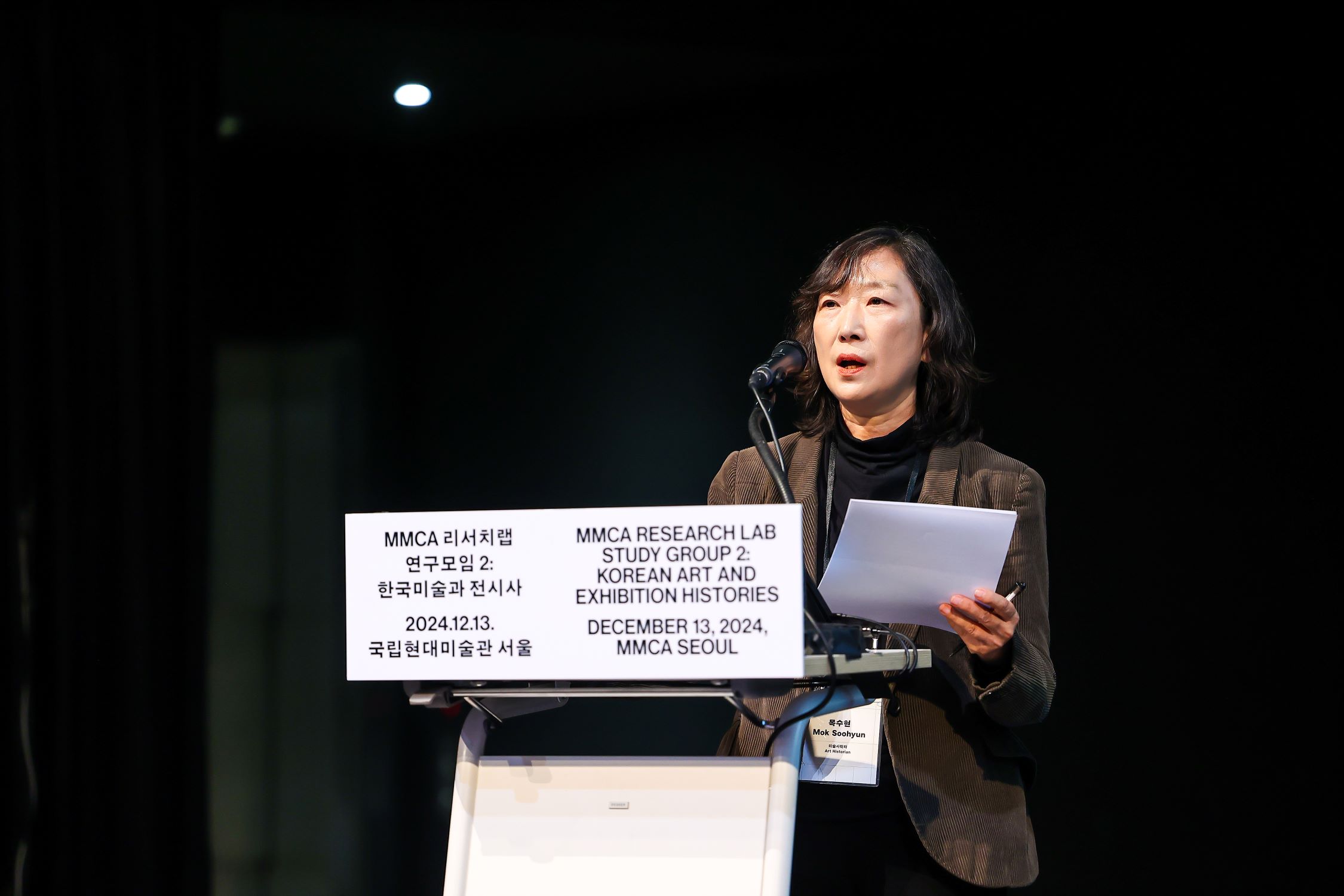
“Study Group 2: Korean Art and Exhibition Histories”, Mok Soohyun, MMCA Seoul, December 13, 2024 ⓒSon Hyeongju
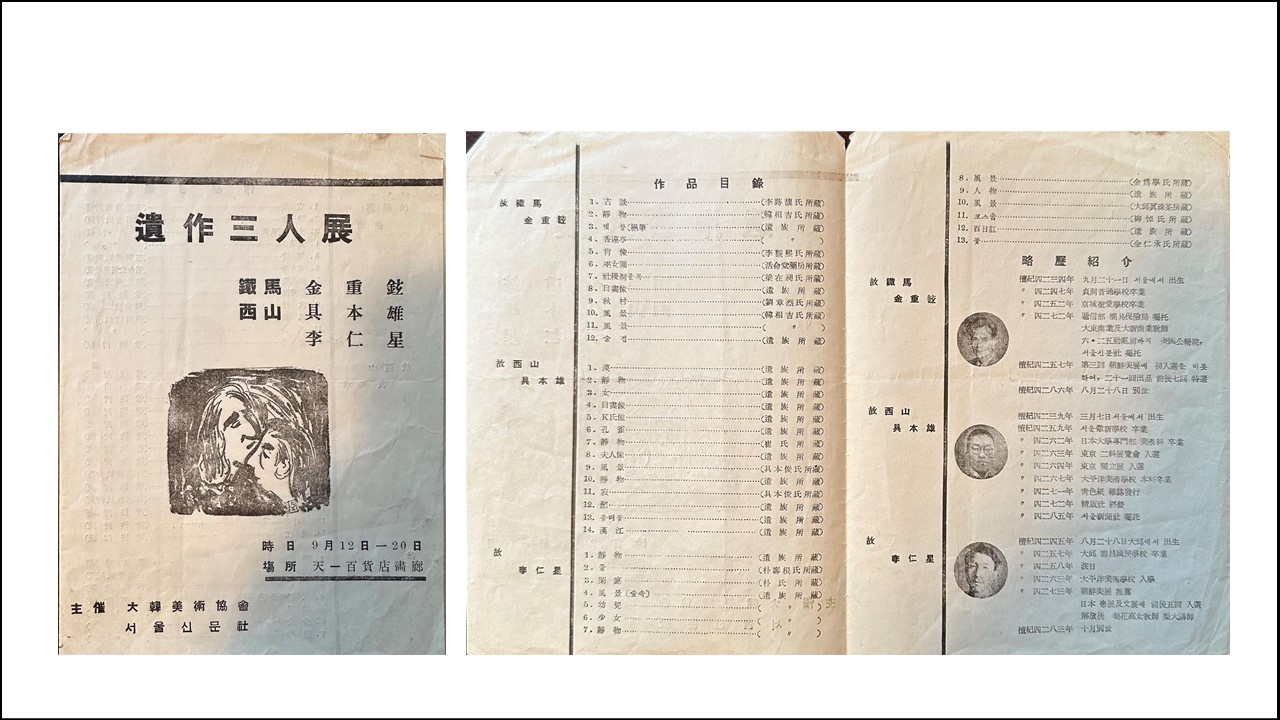
Posthumous Exhibition of Three Artists—Kim Junghyun, Gu Bonung and Lee Insung ⓒMok Soohyun
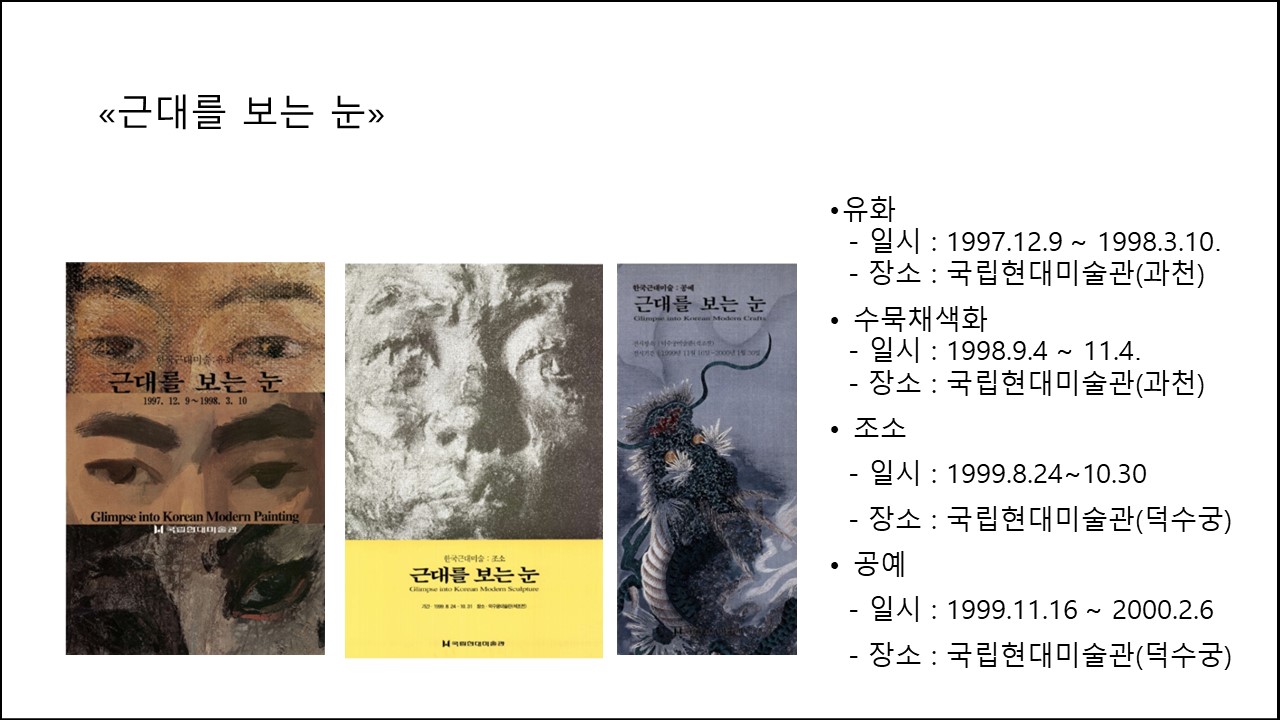
Glimpse into Korean Modern Painting ⓒMok Soohyun
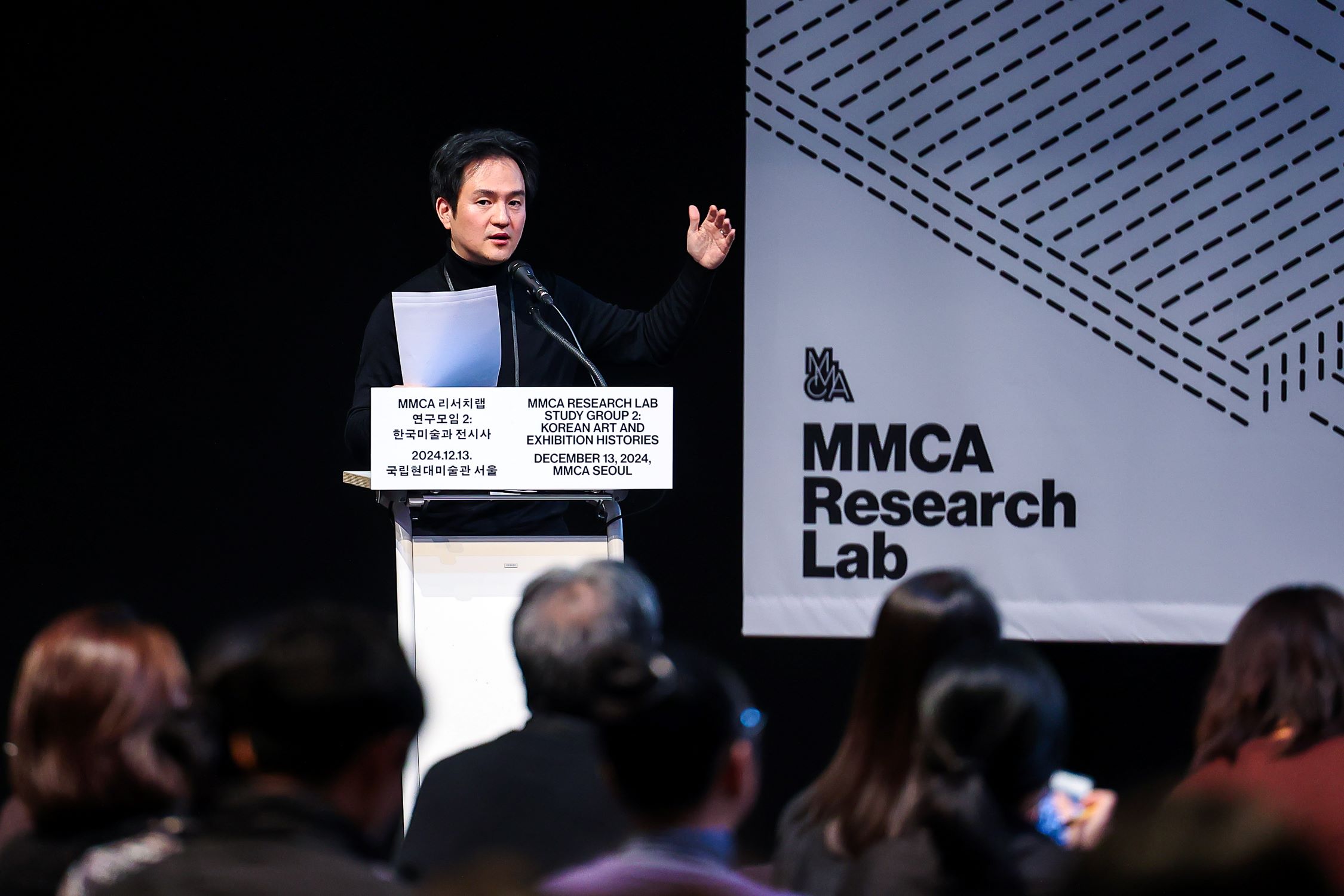
“Study Group 2: Korean Art and Exhibition Histories”, Shin Chunghoon, MMCA Seoul, December 13, 2024 ⓒSon Hyeongju
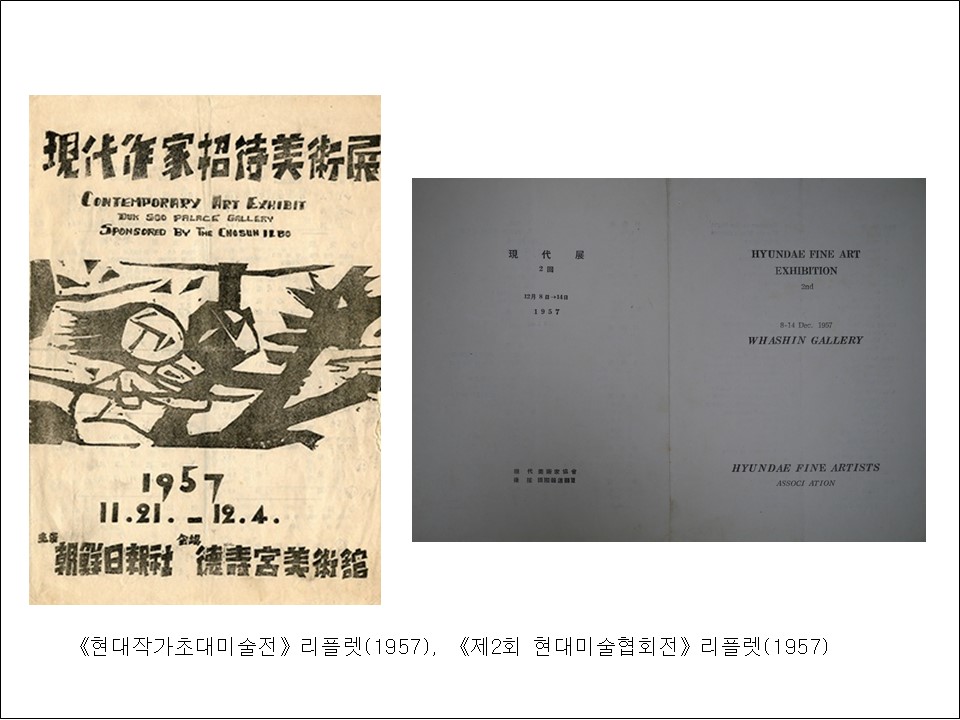
Contemporary Art Exhibit and The Second Contemporary Fine Art Exhibition ⓒShin Chunghoon
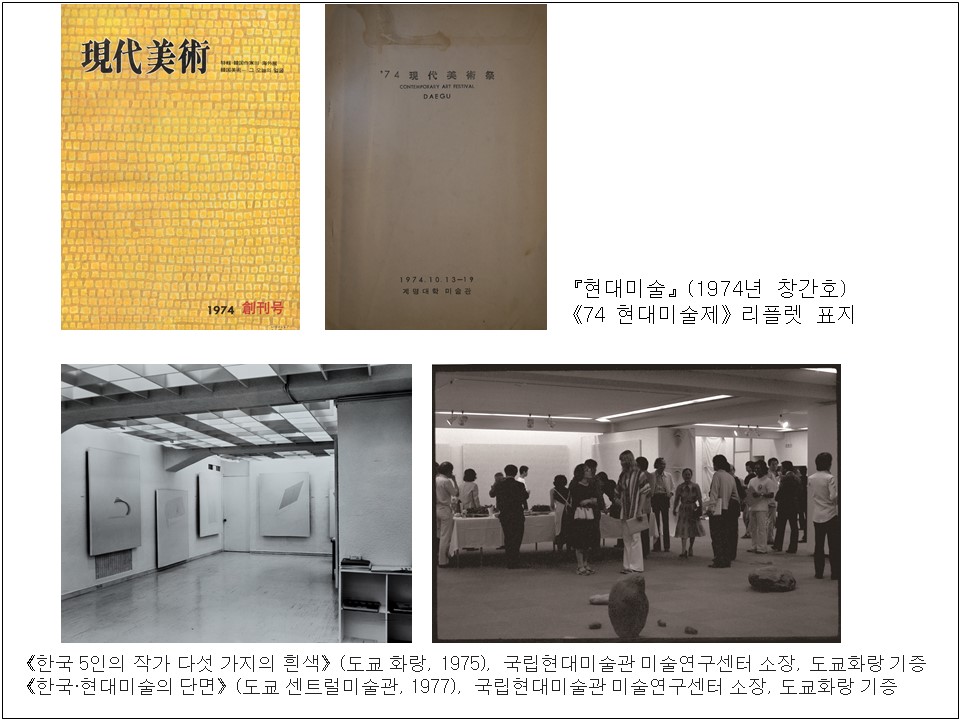
74 Contemporary Art Festival, Korea: Five Artists, Five Hinsek-White, Korea: Facet of Contemporary Art ⓒShin Chunghoon
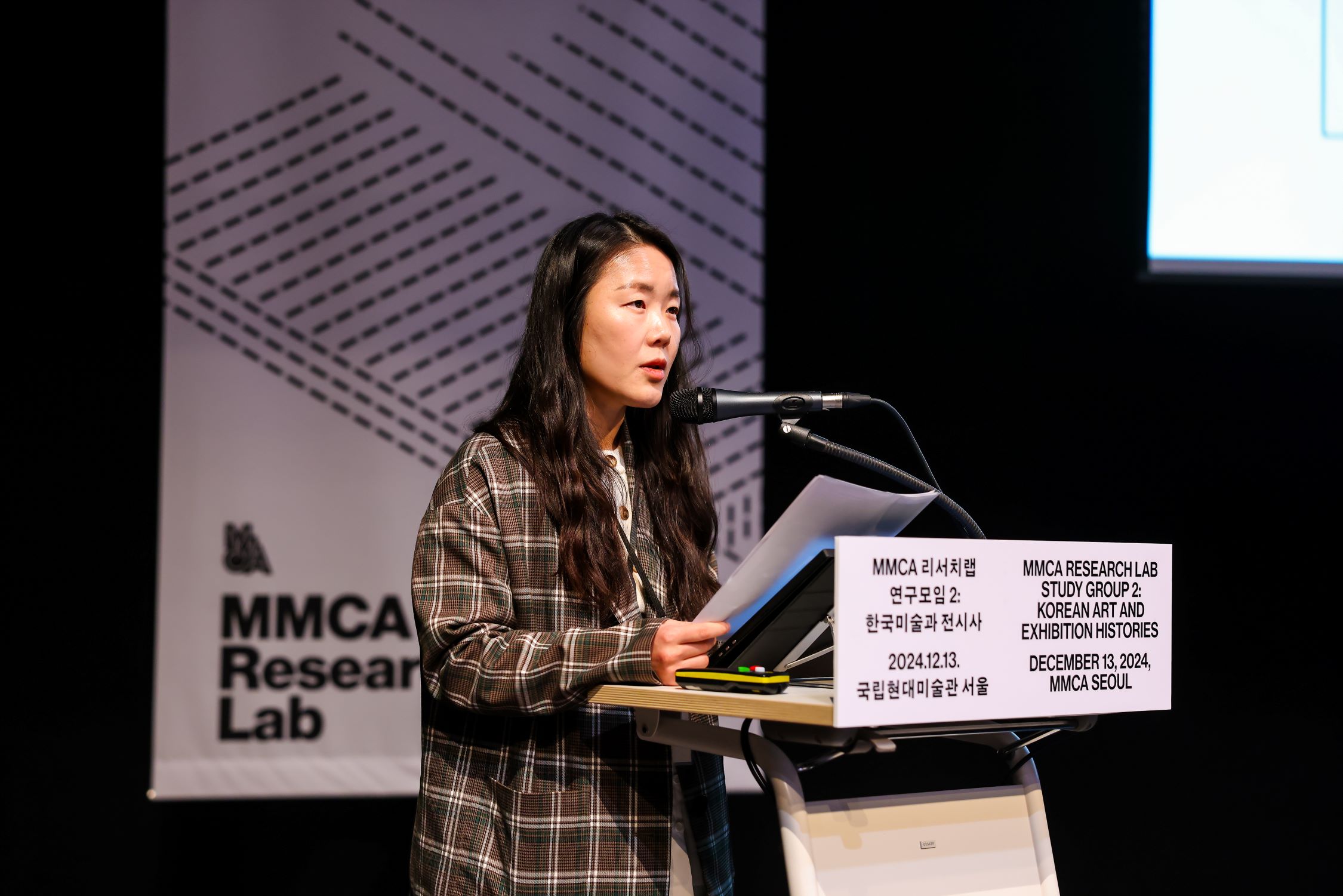
“Study Group 2: Korean Art and Exhibition Histories”, Kim Yujin, MMCA Seoul, December 13, 2024 ⓒSon Hyeongju
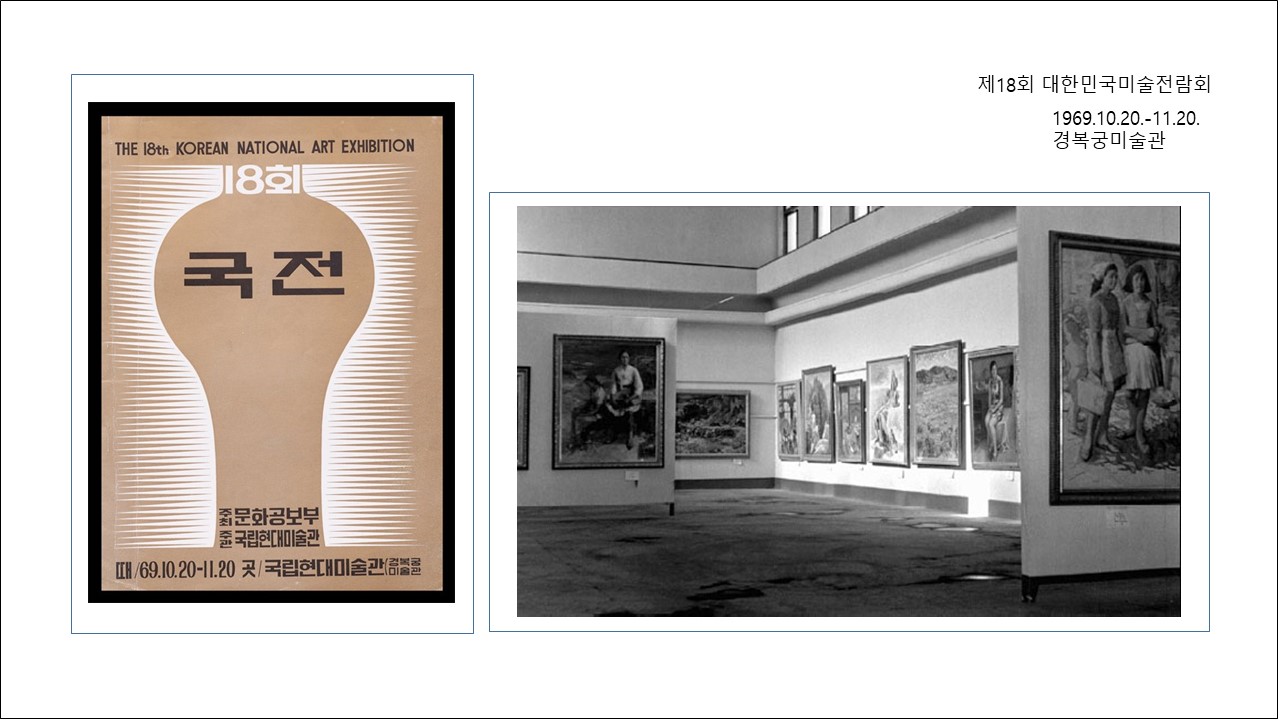
The Eighteenth National Art Exhibition ⓒKim Yujin
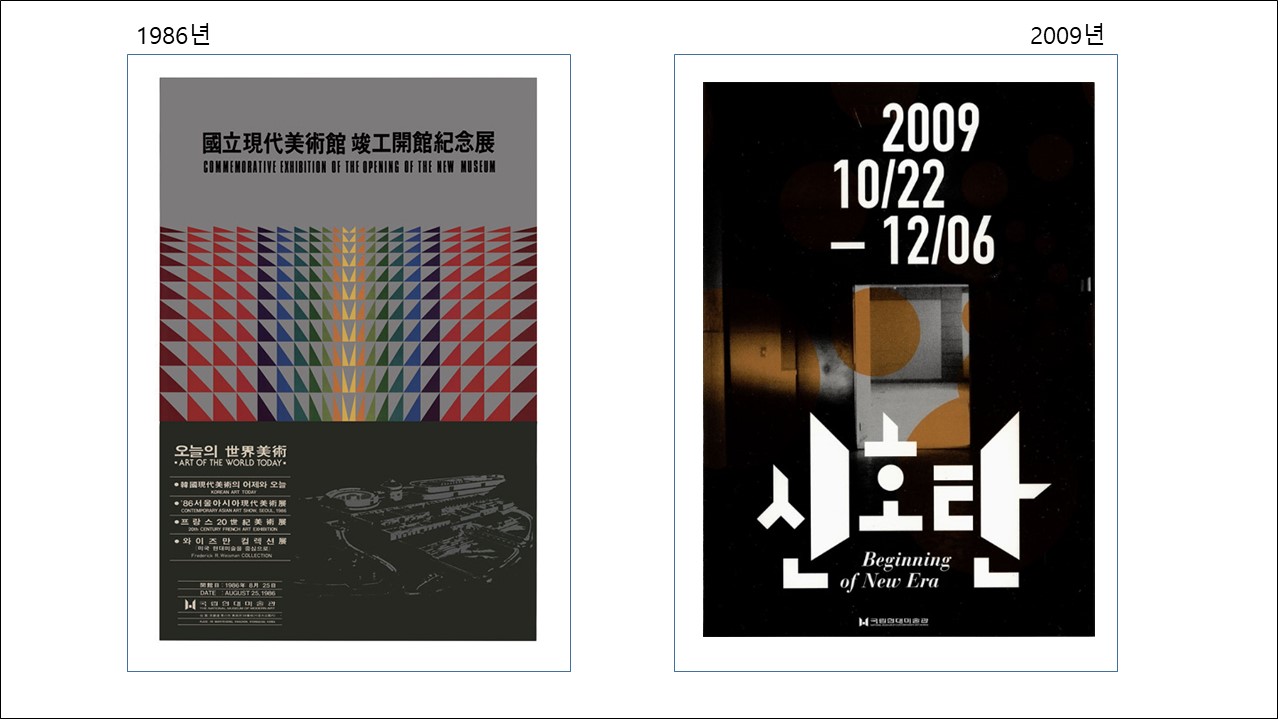
Commemorative Exhibition of the Opening of the New Museum, Beginning of New Era ⓒKim Yujin

“Study Group 2: Korean Art and Exhibition Histories”, The Roundtable for the Modern and Contemporary, from left to right: Shin Chunghoon (Seoul National University), Mok Soohyun (Art Historian), Kim Yujin (Curator, MMCA), MMCA Seoul, December 13, 2024 ⓒSon Hyeongju

“Study Group 2: Korean Art and Exhibition Histories”, The Roundtable for the Modern and Contemporary, from left to right: Shin Chunghoon (Seoul National University), Mok Soohyun (Art Historian), Kim Yujin (Curator, MMCA), MMCA Seoul, December 13, 2024 ⓒSon Hyeongju

Sign Up for Email Updates