Search Results
Timeline
-
1999
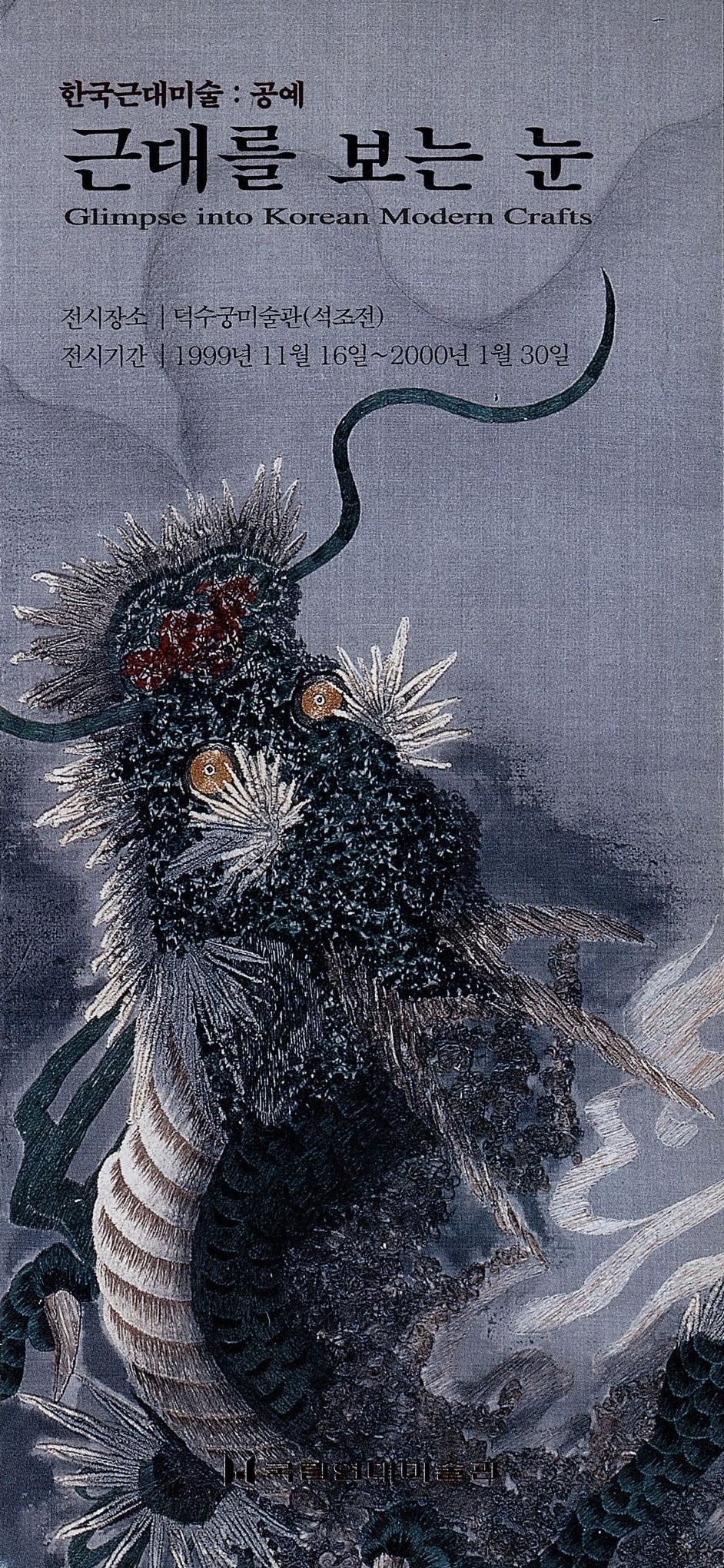
The fourth exhibition in the “Glimpse into Korean Modern” series, Glimpse into Korean Modern Crafts (National Museum of Contemporary Art, Deoksugung (now MMCA), November 16-February 6, 2000) is held. The exhibition surveys the origins and development of modern crafts as well as...
-
1999
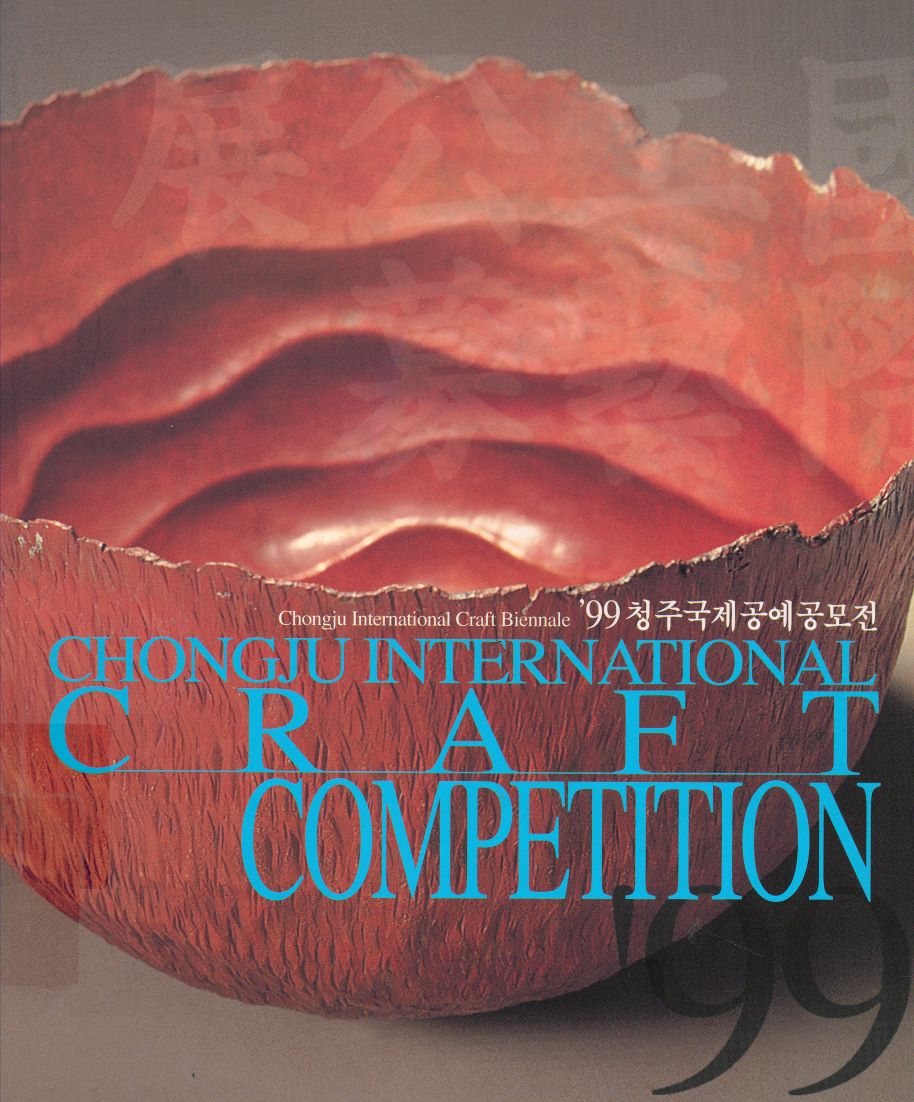
consists of Today’s World Contemporary Craft: International Invitational Exhibition, International Craft Competition, and an international academic symposium. The main exhibition, the International Invitational Exhibition, features forty-four international artists...
-
1999
/> Song Misook serves as commissioner of the Korean Pavilion and selects Noh Sangkyoon and Lee Bul. Lee presents Cyborg and Majestic Splendor in the international exhibition, and Gravity Greater than Velocity + Amateur in the Korean Pavilion, for which she receives a...

-
1999
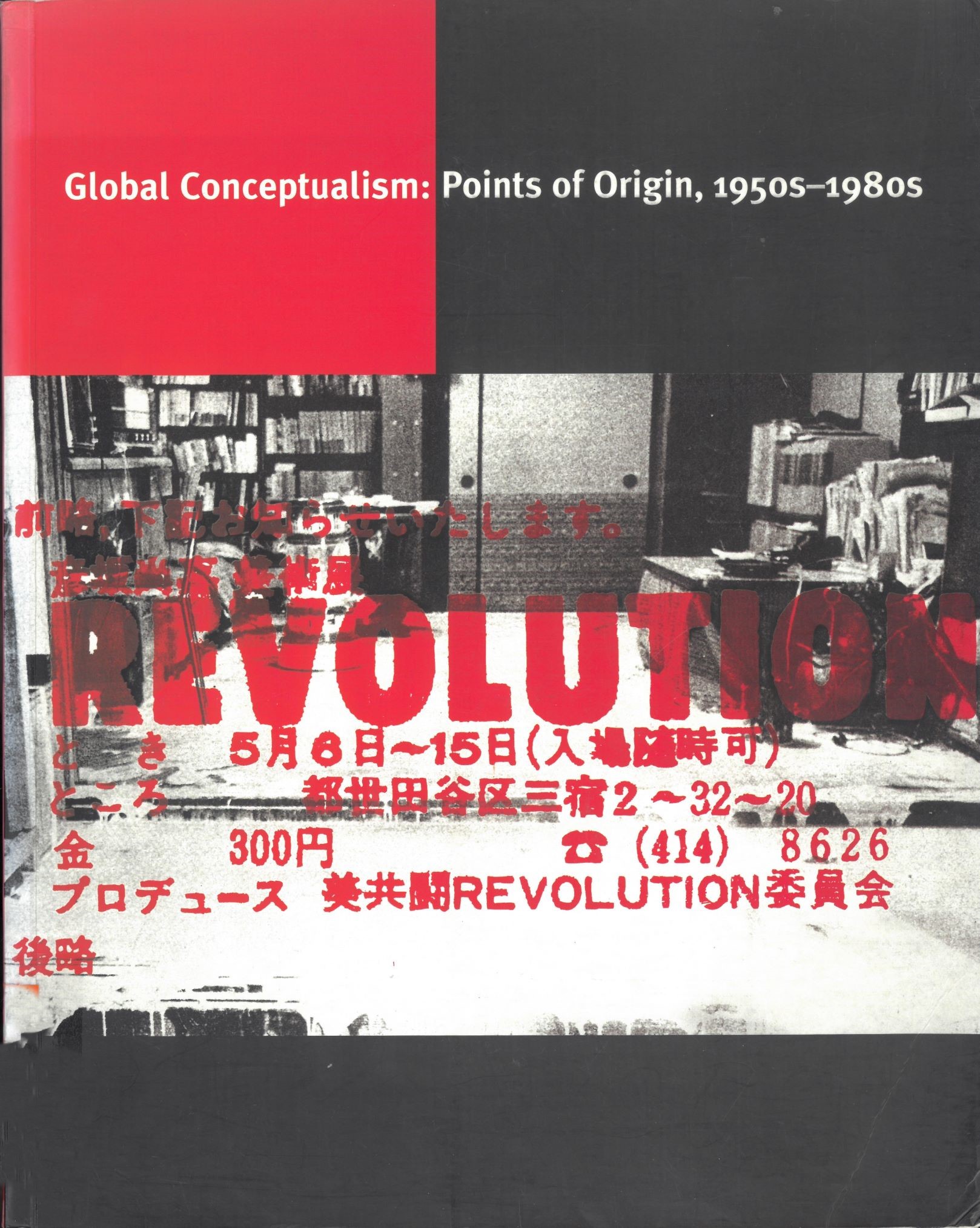
well as Kim Yongtae, Park Buldong, and Choi Byungsoo from the Minjung Art movement. Through these selections, the conceptual practices in Korean art that traversed both modernism and Minjung art are highlighted. The exhibition subsequently travels to the Walker Art Center, Minneapolis (December 19,...
-
1999
Younghae Chang Heavy Industries showcases Samsung, a flash animation consisting of texts and music, at the Ssamzie Space open studio in Jongno-gu, Seoul.
-
1998
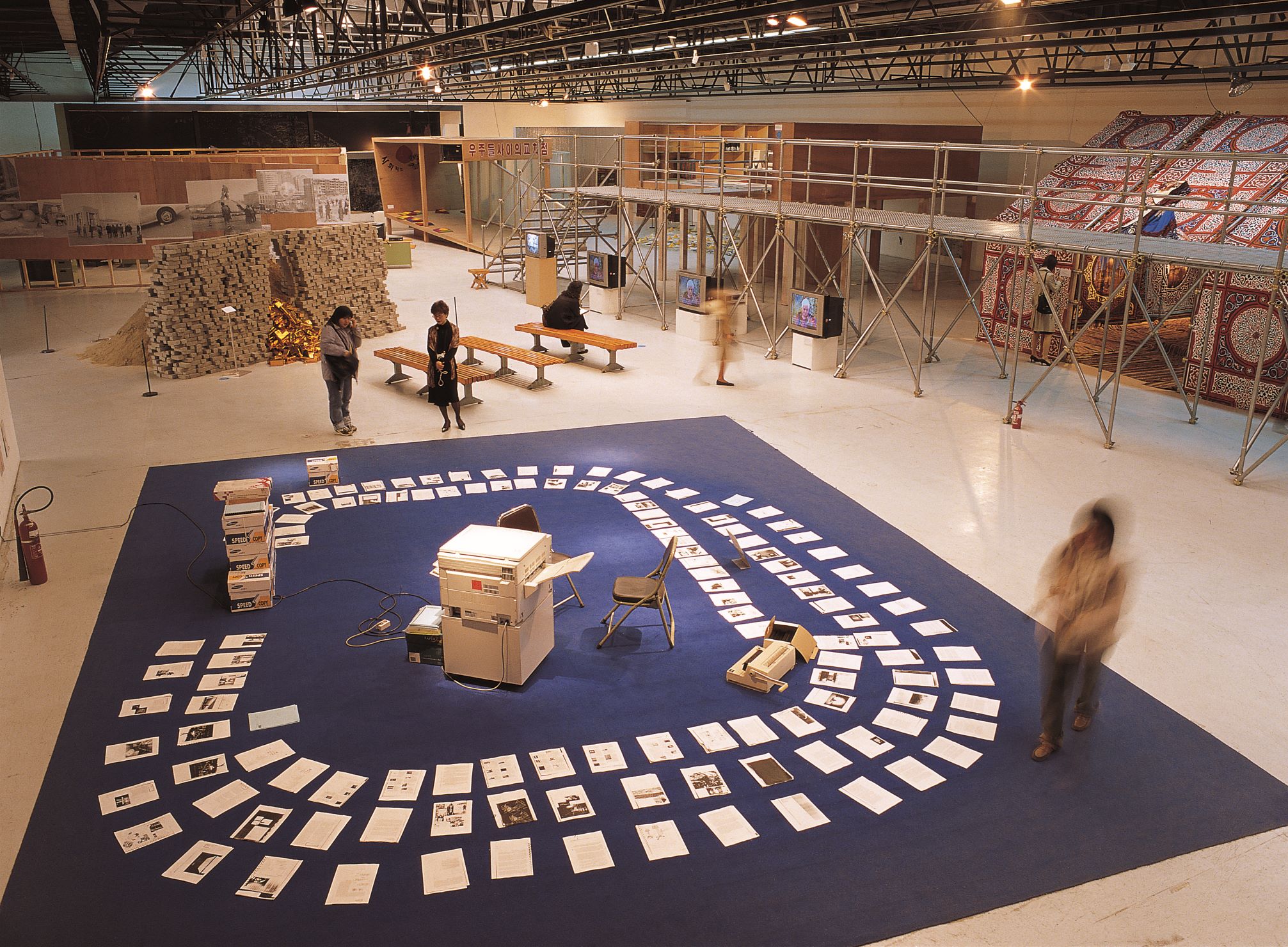
Seo Jungguk, Son Bongchae, Thomas Y. Han, Three-person collaboration (Park Hwalmin, Noh Kyunga, Kim Dongseop), Una Im & Fred Remy, Yang Haegue, Yeesookyung, Yoo Hyunjung, and Yu Jinsang. Curator Lee Youngchul pursues an exhibition that allows open interpretation through free spatial design.
-
1998
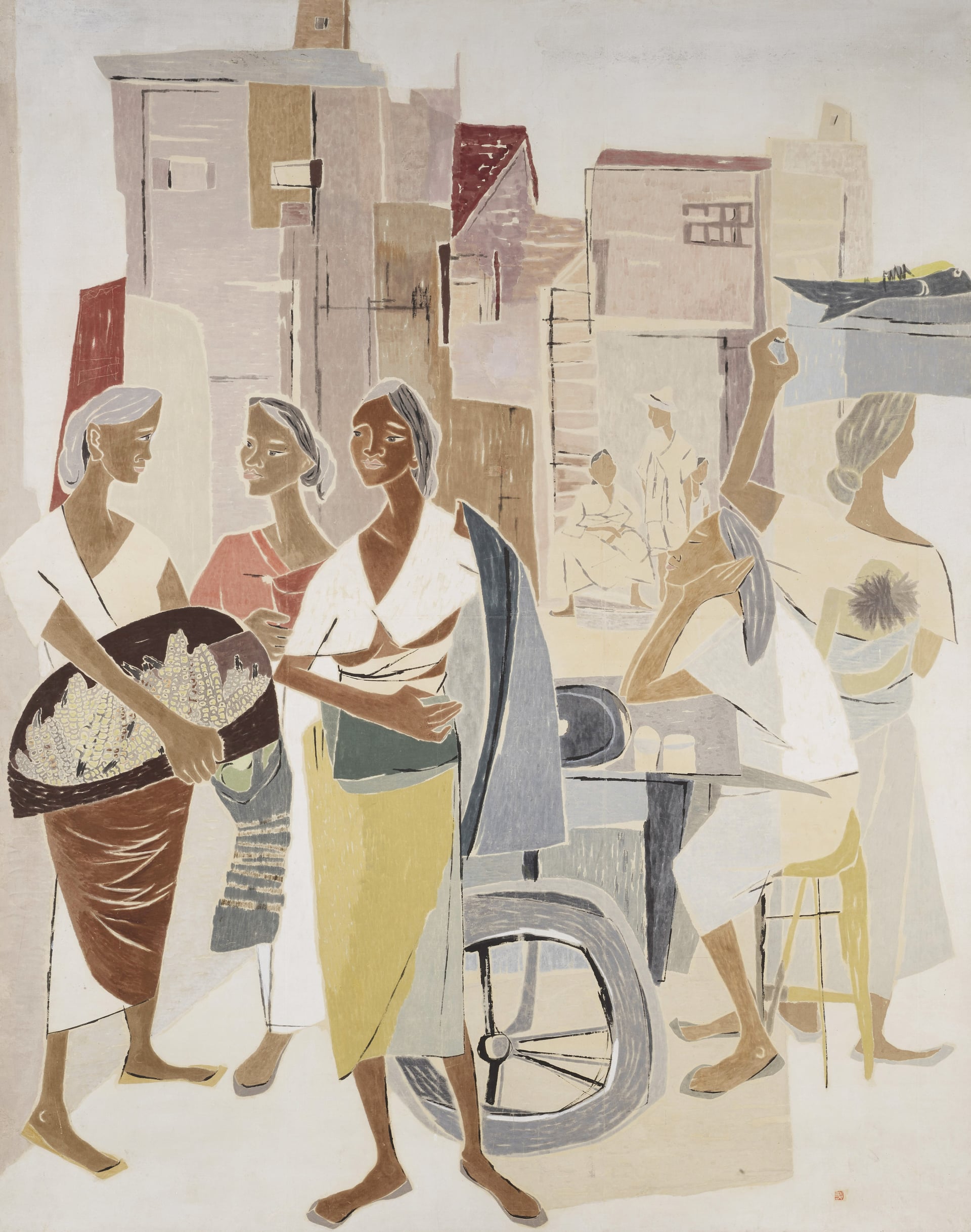
The second exhibition in the “Glimpse into Korean Modern” series, Glimpse into Korean Modern Ink Wash and Color Painting (National Museum of Contemporary Art, Gwacheon (now MMCA), September 4–November 4) is held. The exhibition surveys trends in ink and color painting from...
-
1997
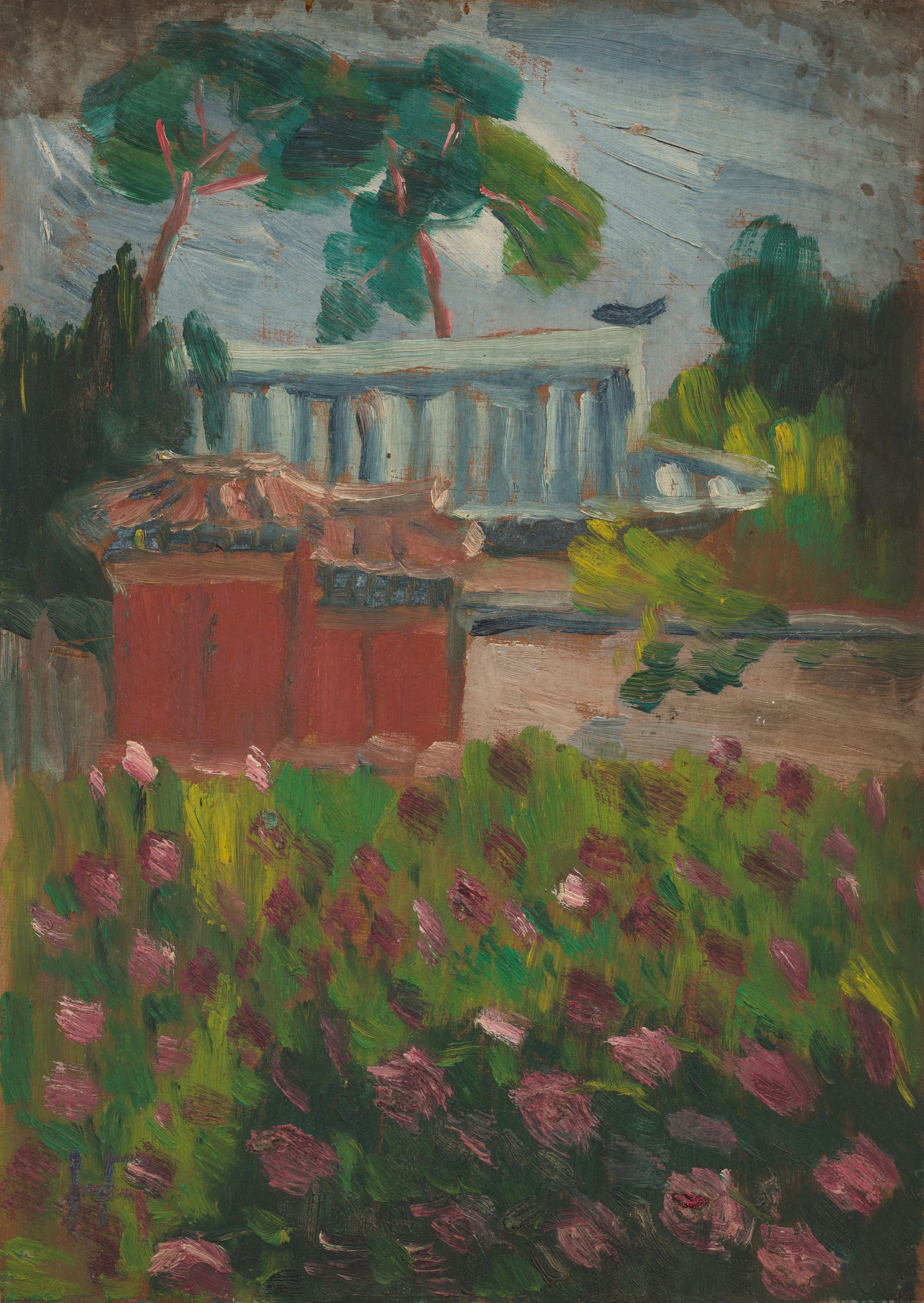
Glimpse into Korean Modern Oil Painting (National Museum of Contemporary Art, Gwacheon (now MMCA), December 9-March 10, 1998) is held. It is the first exhibition in the museum’s Glimpse into Korean Modern series, organized to establish a new understanding and...
-
1997
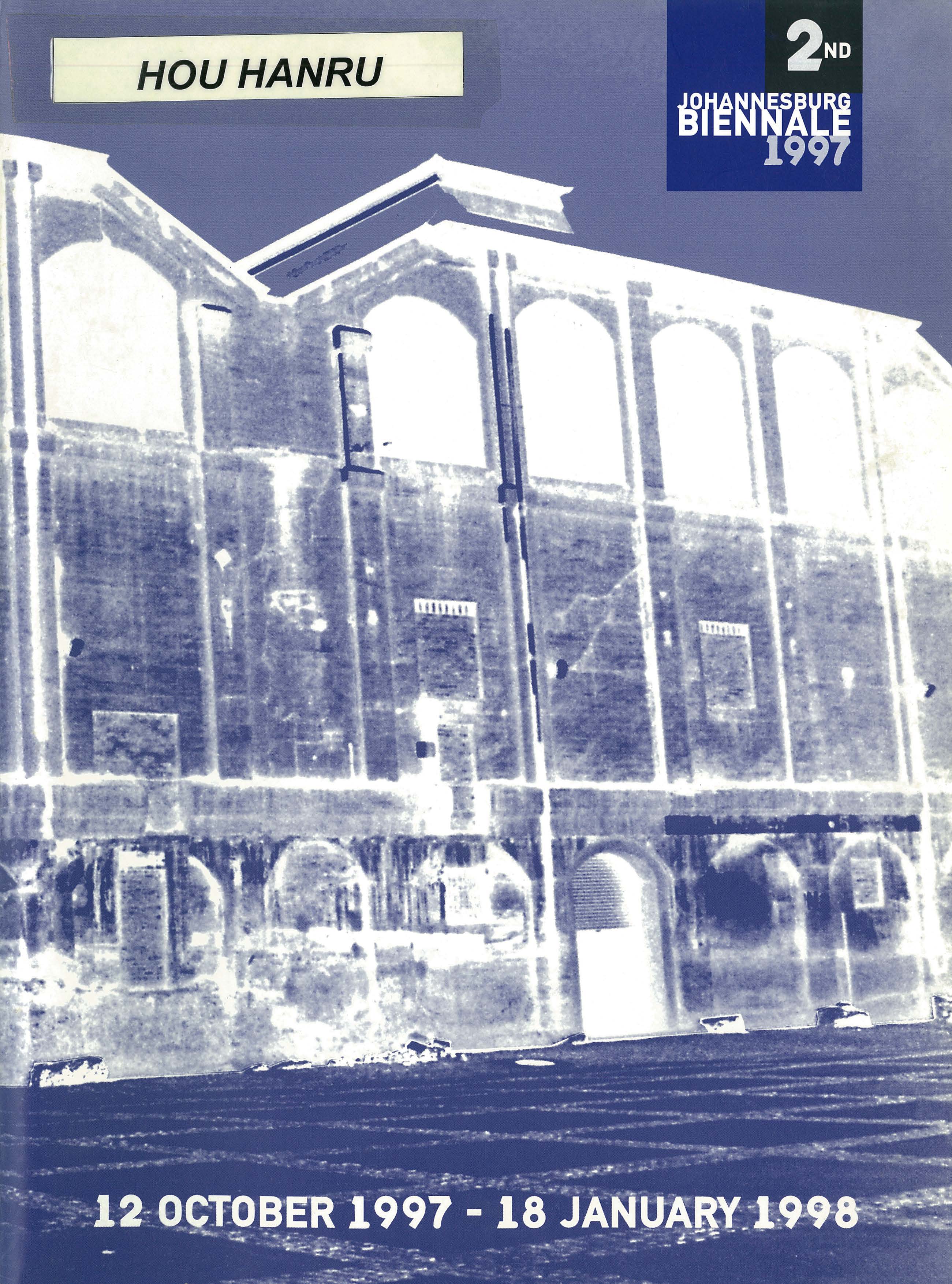
Kim Yu Yeon, Octavio Zaya, Gerardo Mosquera, Kellie Jones, Colin Richards, and Hou Hanru. A total of 160 artists from 63 countries participate, including Korean artists Kim Youngjin, Lim Choongsup, and Cho Duckhyun. The exhibition addresses multiculturalism, postcolonialism, and globalization as a...
-
1997
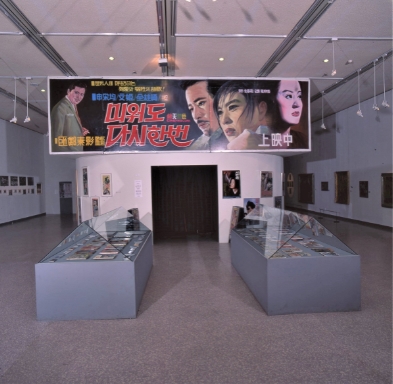
of the organizing committee, and Lee Youngchul is the exhibition director. A total of seventy-eight artists from thirty-five countries participate. Critically reflecting on multiculturalism in the era of globalization, the exhibition adopts the East Asian concept of the Five Elements (yin, yang, and...
-
1997
Cai Guoqiang, Zhou Tiehai, and Huang Yongping. Shiseido Gallery supports the publication of Kim Beom’s artist book The Art of Transformation, which presents, in the form of instructional texts, various methods for a human being to transform into a tree, a door, grass, a...
-
1995
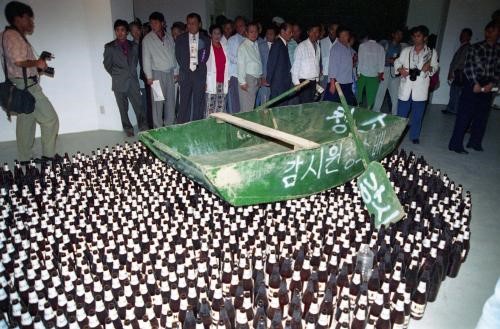
a community that transcends nations, ethnicity, ideology, and religion, and engages with the world. The organizing committee chair is Lim Young-Bang. The main exhibition appoints commissioners by continent: Oh Kwang-su (Asia), You Hongjune (Korea and Oceania), Sung Wan-kyung (South America),...
-
1995
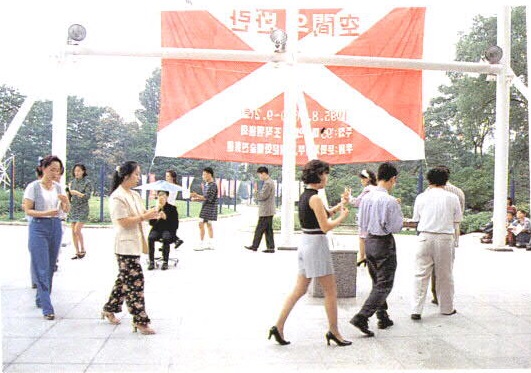
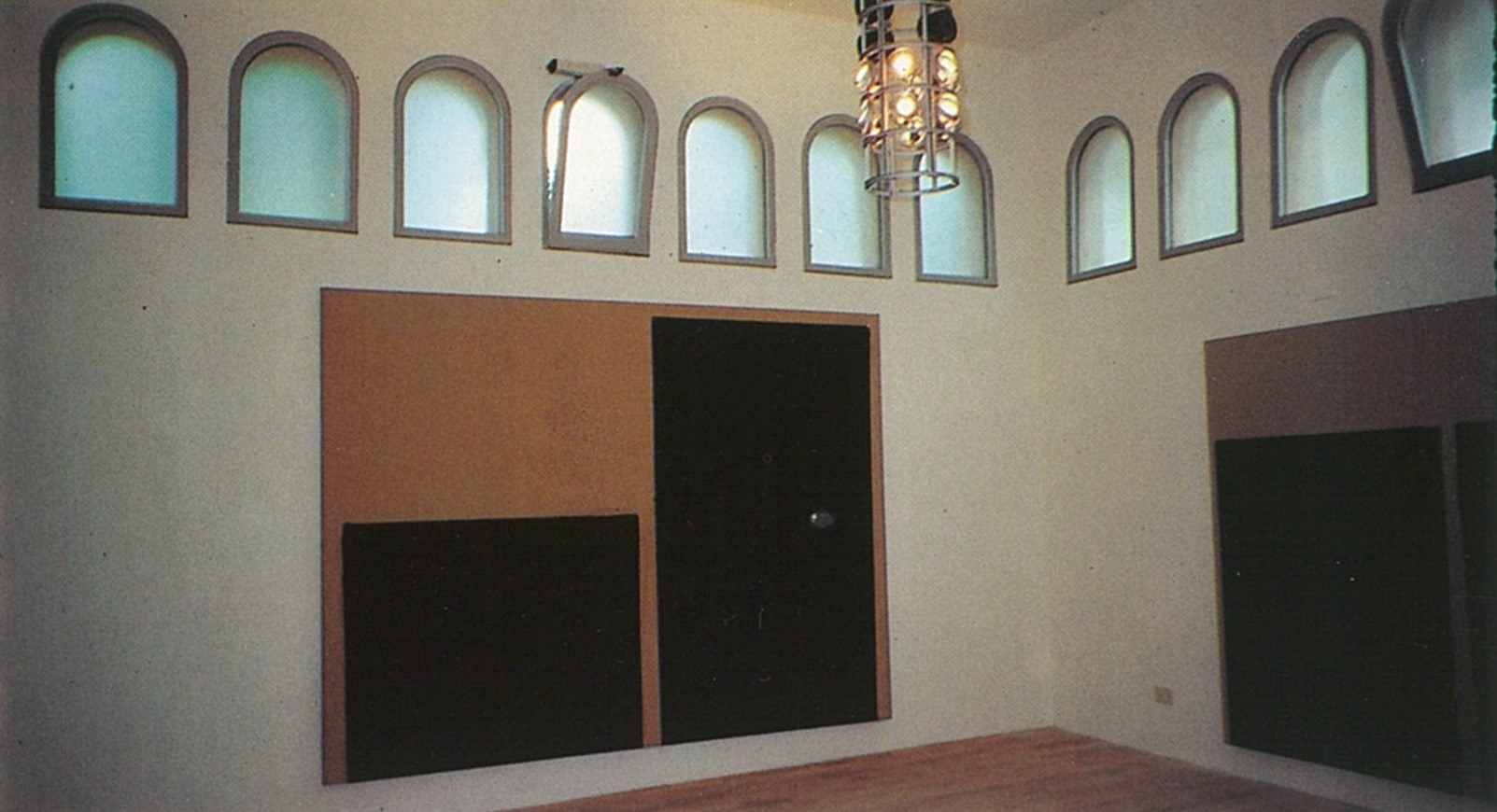
of Space: Korean Avant-garde Art since 1967-1995 (Seoul Museum of Art, formerly the Seoul 600th Anniversary Memorial Hall, August 26-September 2) is held. The exhibition provides an overview of three decades of sculpture and installation art since the 1960s. It is presented in two...
-
1995
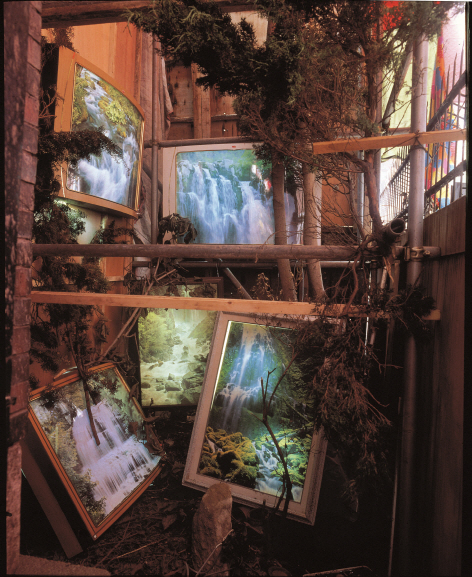
Christopher Novak, Hsian-fu Lu, Kang Kyunga, and Lee Namyong. A total of sixteen artists in their twenties and early thirties, active in Seoul and San Francisco, present works in diverse media, and the intermingled display creates the impression of experiencing both exhibitions simultaneously.
-
1995
Jean Clair under the theme Identity and Alterity. The exhibition presents around 600 works by more than 780 artists from 51 countries. The Korean Pavilion is established in the Giardini, co-designed by Kim Seokchul and Franco Mancuso. Lee Yil serves as commissioner...
-
1995
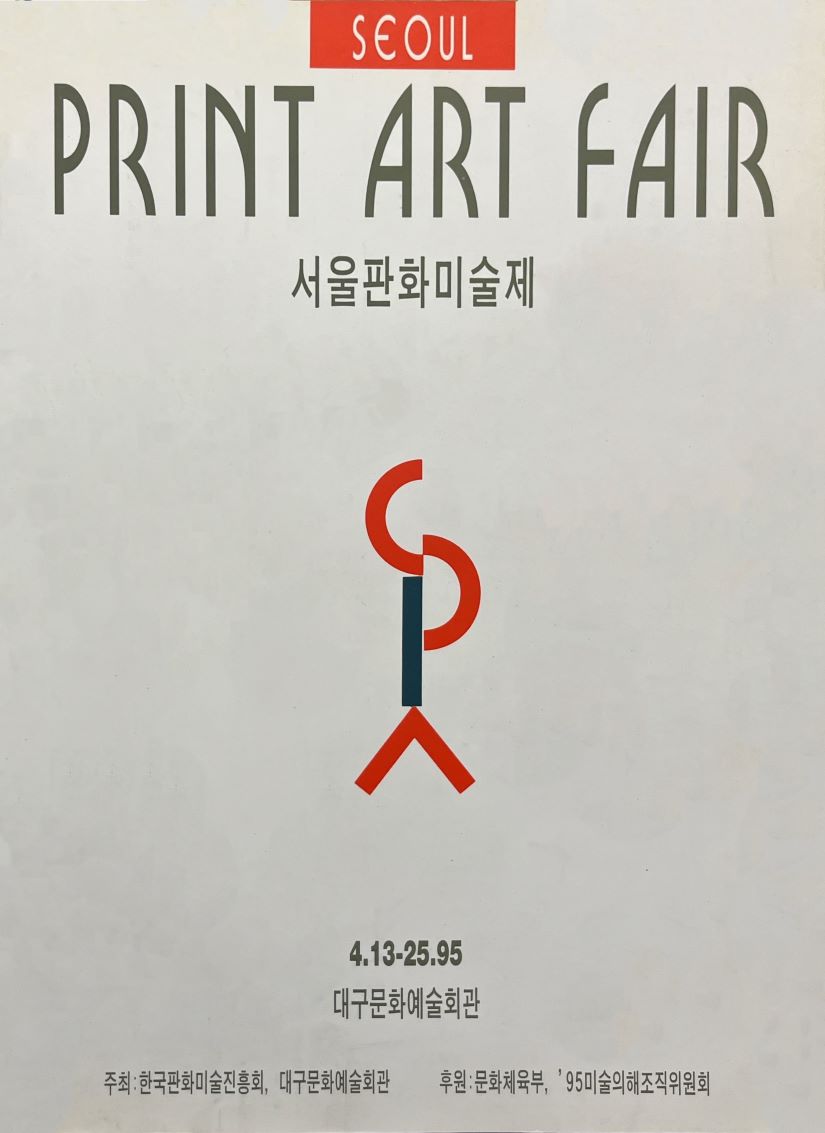
The First Seoul Print Art Fair (Hangaram Art Museum at the Seoul Arts Center, March 25-April 5) is held, organized by the Korean Print Art Promotion Association [Hanguk panhwa misul jinheunghoe] and the Seoul Arts Center. Among a total of 203 participants, 137 are Korean artists. The Gallery Special...
-
1994
Attitude (Fukuoka Art Museum, Japan, September 10–October 16) is held. A total of 123 works by 48 artists from 18 countries are presented. Korean artists Cho Duckhyun, Choi Jeonghwa, and Hong Sungmin participating. The Fukuoka Asian Art Show, an international exhibition introducing...
-
1993
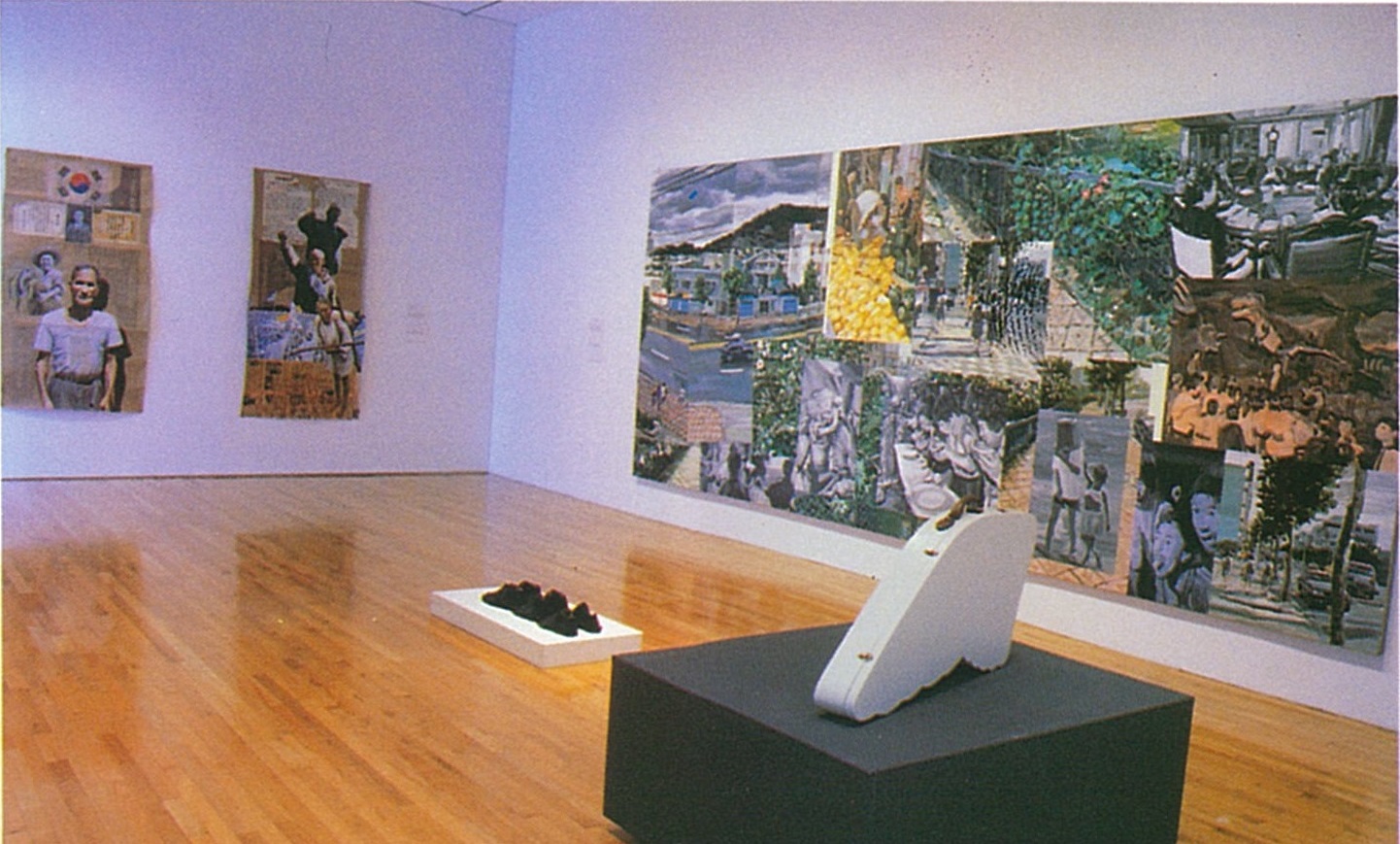
Park Hyejung, Lee Youngchul, and Jane Farver, and Christine Chang, Across the Pacific: Contemporary Korean and Korean-American Art (Queens Museum of Art, New York, October 15-January 9, 1994) is held. The exhibition is organized in three sections, presents forty-three works by...
-
1993
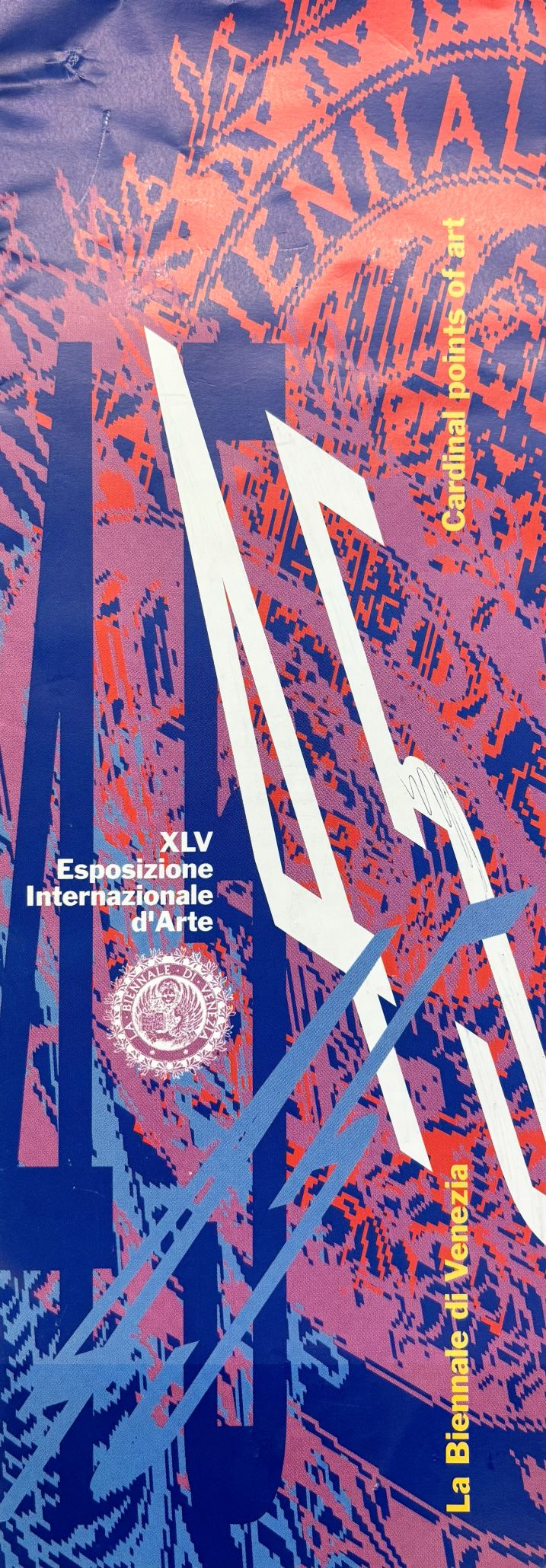
of Art', with more than 200 participants from 53 countries. Paik Nam June, participates as the artist for the German Pavilion and receives the Golden Lion Award. Suh Seungwon serves as commissioner for the Korean artist and selects Ha Chonghyun. The Korean Pavilion exhibition is held in an...
-
1993
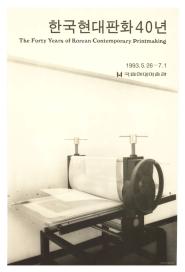
of Contemporary Art, Gwacheon, May 26-July 1) is held. The organizing committee consists of Kim Taeho, Kim Hyungdae, Oh Kwang-su, Youn Myeungro, Lee Gu-yeol, Suh Seungwon, Ha Dongchul, and the exhibition is planned to review the history and present state of Korean contemporary printmaking. The...
Essays
-
Choi Eun-ju
Organizing the Exhibition for Artist of the Year: Jheon Soocheon
* Source: Choi Eun-ju, “Organizing the Exhibition Artist of the Year 1995: Jheon Soocheon,” in Artist of the Year 1995: Jheon Soocheon, exhibition catalogue (Gwacheon: National Museum of Contemporary Art, 1995), 128–130. This text has been edited for minor typographical and...
-
Hong Jisuk
Newly Emergent Artist Groups of the Late 1950s and Their Significance: Focusing on the Modern Art As
Han Mook, Lee Kyusang, Yoo Youngkuk, Hwang Yeomsoo, and Park Kosuk. The group’s inaugural exhibition marked the first appearance of a group in the Korean art scene that could be described as “avant-garde” since the dissolution of the New Realism Group following its third exhibition...
-
Lee Hyojin
The Significance of Encountering the Era of the Modern Art Association
I. Introduction In the late 1950s, the Korean art world was in search of a new identity in the wake of liberation and the devastation of war. The government-sponsored exhibition system, inherited from the Joseon Art Exhibition under Japanese colonial rule, was reorganized a er independence as the...
-
Won Dong suk
New Currents in 1980s Art —Beyond the Art of the 1970s
of art continued to reveal the residual structures of colonial-era practice—carried over from the Joseon Art Exhibition into the National Art Exhibition—which further entrenched prevailing aesthetic ideologies. Even though many artists had lived through the Korean War and the April 19...
-
Lim Dae Geun
Traces of Being and Expanded Possibilities: The Last 20 Years of Contemporary Korean Printmaking
the works presented here were chosen through close consultation with the National Chalcography, The Royal Academy of Fine Arts, Madrid, in Spain and based on research materials accumulated over many years by the National Museum of Modern Art, Korea (now, MMCA) I believe that this selection offers a...
-
Lim Geun-jun
Contemporaneity and Generational Shifts in Korean Contemporary Art: 1987–2008
the New Art History, have attacked abstraction and modernism with unquestioning certainty?) In any case, I am convinced that the contemporaneity of Korean contemporary art emerged precisely at the point where the opposition between monochrome painting and Minjung art collapsed. When explaining how...
-
Lee Yil
Thinking White?
Lee Yil Thinking White? It has been not long since contemporary Korean art was introduced to Japan. The first exhibition of modern Korean art in Japan which reflected the general situation and broad aspects of recent trends was the one held in 1968 at the Kyoto National Museum of Modern Art under...
-
Lee Yil
Toward a New Perspective
be set aside. It is believed with confidence that such a task will be addressed more clearly in the Seoul Biennale to follow.” *Source: Lee Yil, “Toward a New Perspective,” The First Seoul Biennale (Seoul: National Museum of Contemporary Art, 1974), Exhibition catalogue.
-
Lee Yil
Change, Search, and Experiment: Ten Years of Korean Contemporary Painting
Korean contemporary art had already been sown, and by December of that year they would emerge in the form of Union Exhibition of Korean Young Artists. 2. Diffusion and Reduction (1968–70) The final two years of the 1960s may be regarded as marking another point of departure in the trajectory...
-
Lee Yil
A Report on Visiting the Forty-Second Venice Biennale
billion Korean won. In the final three months preceding the opening, thirty-five art specialists and nearly four hundred exhibition staff are mobilized. It should also be noted that all matters related to the installation and display of artworks are entirely entrusted to the commissioners appointed...
-
Kim Yujin
From Gwacheon to Seoul: Commemorative Exhibition of the Opening of the New Museum at MMCA Gwacheon (
Weisman Collection (August 26–October 10, 1986). Although each exhibition separately introduced the art of Korea and other countries in Asia, France, and the United States, together, as Commemorative Exhibition of the Opening of the New Museum, they embodied the intention to present Korean art...
-
Kim Yujin
From Gwacheon to Seoul: MMCA Seoul’s Beginning of New Era (2009)
had long been an off-limits space and transform it into one of communication with the public.”2 It is, in fact, highly unusual to stage an exhibition in a building that has not been repaired or refurbished after its previous use.3 Moreover, the DSC building had long been closed to th...
-
Shin Chunghoon
Toward Contemporary Art: Hyundae Fine Artists Association Exhibition (1957), Union Exhibition of Ko
practices including Pop, Op, environmental, kinetic, and performance art. It was consolidated in the inaugural AG (Korean Avant-Garde Association) exhibition, The First 1970 AG: Dynamics of Expansion and Reduction (Korean Information Service Gallery, 1970), following the group’s founding in...
-
Shin Chunghoon
Toward ‘Korean Contemporary Art’: Korea: The Trend for the Past 20 Years of Contemporary Arts (1978
In this sense, following the aborted Reality Group Exhibition (Hyeongsil dongin) in 1969 and anticipating the minjung art of the 1980s, these discursive practices rejected “contemporary art” as tainted and compromised, yet sought to rewrite Korean contemporary art in response to the...
-
Shin Chunghoon
Korean Art after the “Contemporary Art System”: Rebellion of Space (1995), Global Conceptualism (199
reconfiguring this genealogy as the point of origin for present practices, such efforts opened up the imagination of multiple temporalities within Korean art. Precedents thus revisited were recalled, reworked, and reinscribed into contemporary practice, acquiring new significance. This was not only...
-
Kim Yujin
The Expansion of the MMCA Venues: Inaugural Exhibition(s) Commemorating Each Opening
a space dedicated to actively presenting Korean modern art. Its inaugural exhibition was Korean Modern Art Revisited (December 1, 1998–March 31, 1999) marked the beginning of strengthened efforts to exhibit and collect works from the modern period, thereby establishing MMCA Deoksugung as a key...
-
Jeon Yushin
Reflection of Socio-Political Realities: Across the Pacific (1993), Facing Korea (200
The 1993 exhibition Across the Pacific: Contemporary Korean and Korean-American Art, held at the Queens Museum of Art (now Queens Museum) in New York, can be seen as a starting point for exhibitions of contemporary Korean art that reflected Korea’s political and social realities. The...
-
Tiffany Yeon Chae
From a Site of Memory to a Global Platform: The Founding of the Gwangju Biennale and Beyond the
Biennale, he co-curated the special exhibition InfoART with Cynthia Goodman and Kim Hong-hee. In the exhibition, he presented Dolmen, an experimental large-scale installation that combined television monitors, Korean jangdokdae—platforms for storing earthenware crocks of sauces and...
-
Tiffany Yeon Chae
Postcolonial Subjects in the Age of Globalisation: Unmapping the Earth (1997) and Annual
exhibition rooted in the curator’s lived experience and engagement with the local community of Gwangju. Equally important was that the emergence of voices in the public sphere was not external, but internal. In order to trace the trajectories of contemporary Korean art and criticism from the...
-
Tiffany Yeon Chae
What Can a Biennial Become Here and Now? Two Curatorial Experiments: MAN + SPACE (2000) and P_A_U_S_
of the exhibition, featuring two hundred and thirty three artists affiliated with twenty six alternative spaces and collectives across Asia and Europe.10 Project 2: Over There, the Land of Diaspora, curated by Young Soon Min, presented works by twenty four diasporic Korean artists based in Los...
Art Terms
-
Cultural Exhibition in Commemoration of Korean Lib
[Joseon munhwa danche chong yeonmaeng] in celebration of Korea’s independence on August 15, 1945. It was designed to showcase the competence of Korean culture by comprehensively staging the seven fields of art including literature, theater, films, Gugak, posters, comics, and art. This exhibiti...
-
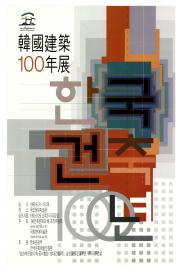
100 Years, Architecture of Korea
was a special exhibition on the theme of modern and contemporary Korean architecture held at the National Museum of Contemporary Art, Korea (now MMCA) from August 31 to October 28 in 1999 under the auspices of the '99 Year of Architecture Organizing Committee. A total of 189 architects and...
-
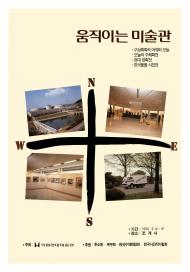
Traveling Art Museum
such as the Husohoe, Mokwoohoe, Korea Watercolor Association [Hanguk suchaehwa hyeophoe], and the Photo Artists Society of Korea [Hanguk sajin jakga hyeophoe]. Four exhibitions, The Past and Present of Figurative Painting, Watercolor Paintings of Today, Contemporary Prints...
-
War Documentation Art Exhibition
First Seoul Recapture Day." The War Painters Group is an organization of the Korean Armed Forces that took part in the commemoration of the day when the Incheon Landing Operation stopped North Korea's advance and restored Seoul. They played their part by holding an exhibition, and more than...

-
Zeitgeist Korea
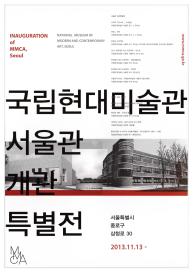
Korean contemporary art from the 1960s to the 1990s into three keywords: conceptual, virtual, and material. Regarding the intention of organizing the exhibition, Jung stated "Firstly, we chronologically identify the major currents of Korean contemporary art since the Korean War, but do not list...
-
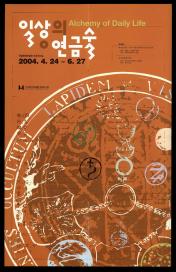
Alchemy of Daily Life
the Christchurch Art Gallery Te Puna o Waiwhetū, New Zealand, and supported by the Korea Foundation. It was held from November 18, 2005 to February 26, 2006 at the Christchurch Art Gallery Touring Exhibition Room and the Borg Henry Exhibition Room. It was the first exhibition of Korean contemporary...
-
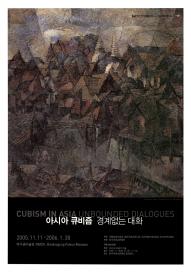
Cubism in Asia: Unbounded Dialogue
Western modernity and modern transformation in each country through the lens of Cubism. The exhibition was organized into four parts, identifying Cubism as the driving force behind each country's distinctive modern art, as it collided and fused with indigenous art forms, traditions, and customs....
-
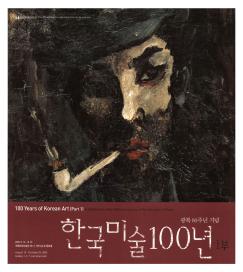
100 years of Korean art
the relocation of the National Museum of Contemporary Art, Korea from Deoksugung Palace to Gwacheon, the academic events that were part of the first and second exhibitions of 100 Years of Korean Art were posted online and named the "20th Anniversary of the Relocation to Gwacheon Online...
-
Gyeongbuk Art Exhibition
The Gyeongbuk Art Exhibition was a group exhibition organized by the Gyeongbuk Culture Construction Federation [Gyeongbuk munhwa geonseol yeonmaeng] and held from March 1 to 10, 1946 at the Daegu Public Hall. A Gyeongbuk regional branch of the Central Committee for the Construction of...
-
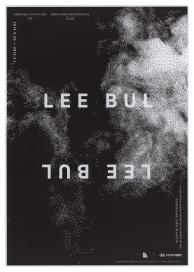
MMCA Hyundai Motor Series
MMCA Hyundai Motor Series is an annual exhibition event that has been organized by the MMCA and sponsored by Hyundai Motor Company for ten years since 2014, featuring large-scale solo exhibitions of mid-career Korean artists. It began in November 2013, when Hyundai Motor Company announced a ten-year...
-
Korean Photography Alliance
Korea Federation of Cultural Organizations and held an exhibition on the second floor of Busan Joseon Newspaper company. At the time, more than fifty photographs of leftist leaders and the U.S.-Soviet Joint Committee taken by the KPA members were displayed. However, when the division of Korea became...
-
Korean Applied Artists Association
1950s. Major members include Paik Taewon, Park Daisoon, Yim Hongsoon, Bong Sangkyun, Kang Huisu, Paik Taiho, Lee Dongchan, Lee Shinja, Min Chulhong, and Kwon Giljung. The first member exhibition of the KAAA was held in May 1961 at the Korean Information Service Gallery, and the second edition was h...
-
Hwang Jonggu
as a recommended artist and judge for the National Art Exhibition (Gukjeon) (1966–1983), an advisor to the Korean Contemporary Ceramic Artists Association (Hanguk hyeondae doyegahoe) (1984–2003), chairman of the jury panel for the Korean Crafts Competition (1990), and a member of the...

-
Lee Seokho
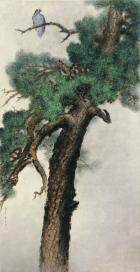
the sixth Joseon Art Exhibition [Joseon misul jeollamhoe] in 1927. He then made his presence known in Korean painting circles by submitting his works to the exhibition of the Calligraphy and Painting Association [Seohwa hyeophoe] and to the Eastern painting section of the Joseon Art Exhibition. He...
-
Nature Art
YATOO Outdoor Field Art Research Association [Yaoe hyeonjang misul yeonguhoe; YATOO] founded in 1981 refused to present (exhibit) their works indoors and instead presented them in nature, coining the term “nature art” amongst themselves. The origins of nature art can be traced back to th...

-
National Art Exhibition of Democratic People’s Rep
of the DPRK Arts Festival, the National Art Exhibition is a comprehensive exhibition showcasing selected outstanding works by professional artists and art studio members in various forms of art. It was launched to develop art by publicizing the achievements of rapidly evolving North Korean art and...
-
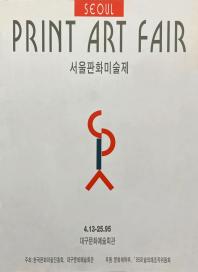
Seoul Print Art Fair
it was modeled after the French print fair SAGA. Fifty-seven domestic and overseas galleries, workshops, and related enterprises participated in the first Seoul Print Art Fair held in 1995. At the first edition held at Seoul Arts Center, many galleries exhibited high-quality works....
-
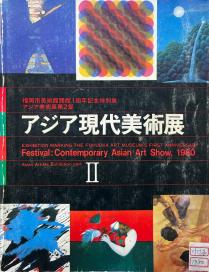
Asian Art Show
modern and contemporary art from Asia. The first edition of the exhibition presented 417 works by 417 artists and was divided into two sections with the first section introducing modern art from China, India, and Japan and the second section showcasing contemporary art from thirteen Asian countries....
-
The Forty Years of Korean Contemporary Printmaking
printmaking techniques and the enlargement of prints. In addition to the exhibition, the MMCA conducted research on the history of Korean printmaking and the reality of the print circles at the time in commemoration of the exhibition. The exhibition catalogue contains the essays “The History...
-
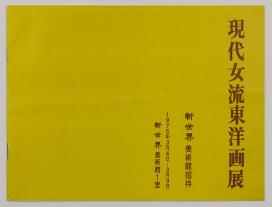
Modern Women’s Eastern Paintings Exhibition
Won Moonja, Mountain View from Suanbo, Rose, and Peacock by Hong Junghee. In the preface of the exhibition catalogue, Lee Kyungsung wrote that with the successive founding of women artists’ organizations, such as Woman Fine Arts Association [Yeoryu hwagahoe] in 1973...
Features
-
Korean Art and Exhibition Histories: The Modern / Contemporary
Kim Yujin, Mok Soohyun, Shin Chunghoon, Study Group 2 │ Korean Art and Exhibition Histories: The Modern / Contemporary
Mok Soohyun, Defining the Period and Scope of “Modern Art”: Glimpse Into Korean Modern Exhibition Series (1997–2000)
Mok Soohyun, 60 Years of Modern Korean Art (1972): Categorizing Modern Art in Korea
Mok Soohyun, “Modern Art” in the Context of Korean Art The Posthumous Exhibition of Three Artists — Kim Junghyun, Gu Bonung and Lee Insung (1954) and Special Exhibition of Modern Korean Painting (1954)
Shin Chunghoon, Korean Art after the “Contemporary Art System”: Rebellion of Space (1995), Global Conceptualism (1999), You Are My Sunshine (2004)
Shin Chunghoon, Toward ‘Korean Contemporary Art’: Korea: The Trend for the Past 20 Years of Contemporary Arts (1978), Korea: Five Artists, Five Hinsek—White (1975), Korea: Facet of Contemporary Art (1977)
Shin Chunghoon, Toward Contemporary Art: Hyundae Fine Artists Association Exhibition (1957), Union Exhibition of Korean Young Artists (1967)
Kim Yujin, From Gwacheon to Seoul: MMCA Seoul’s Beginning of New Era (2009)
Kim Yujin, From Gwacheon to Seoul: Commemorative Exhibition of the Opening of the New Museum at MMCA Gwacheon (1986)
Kim Yujin, The Expansion of the MMCA Venues: Inaugural Exhibition(s) Commemorating Each Opening
-
Korean Art and Exhibition Histories: Globalization
Bae Myungji, Jeon Yushin, Kim Hong-Ki, Tiffany Yeon Chae, Study Group 2 │ Korean Art and Exhibition Histories: Globalization
Kim Hong-Ki, The Korean Pavilion at the Venice Biennale (1995–1997): Globalizing the Aesthetic Traditions of Korea
Kim Hong-Ki, A Study of the Korean Pavilion at the Venice Biennale (1999–2001): Particularity and Universality in Contemporary Era
Kim Hong-Ki, A Study of Korean Pavilion at the Venice Biennale (2003–2005): ‘Site-Specificity’ and articulating the ‘Here and Now’
Jeon Yushin, Reflection of Socio-Political Realities: Across the Pacific (1993), Facing Korea (2003), The Battle of Visions (2005), Activating Korea (2007)
Jeon Yushin, Naturalism and Eastern Tradition: Working with Nature (1992), The Tiger’s Tail (1995), and Leaning Forward, Looking Back (2003)
Jeon Yushin, Korea’s First Generation of Curators and the Overseas Exhibitions of Contemporary Korean Art
Tiffany Yeon Chae, What Can a Biennial Become Here and Now? Two Curatorial Experiments: MAN + SPACE (2000) and P_A_U_S_E_止 (2002)
Tiffany Yeon Chae, Postcolonial Subjects in the Age of Globalisation: Unmapping the Earth (1997) and Annual Report (2008)
Tiffany Yeon Chae, From a Site of Memory to a Global Platform: The Founding of the Gwangju Biennale and Beyond the Borders (1995)
-
Korean Art and Exhibition Histories: Diversification of Media and Formats
Jang Seungyoun, Rethinking the Everyday Objects, Materials, and the Expansion of Media: This Kind of Art: Dishwashing (1994) and This Kind of Art: Nostalgia (1994)
Jang Seungyoun, The Emergence of “Image Producers” Who Perceive the Everyday and Interpret Reality: Apgujeong-dong: Utopia / Dystopia (1992) and Sub Document (1992)
Jang Seungyoun, The Sharp Emergence of Visual Culture — Memory, and History: Korean Art and Visual Culture After 1945 (1997)
Mun Hye Jin, From BlindSound to 404 Object not found: A Brief but Intense History of Korean Web Art
Mun Hye Jin, The Face of Hybridity: TEUM: Single Channel Video Show vs The Cross: Exhibition for Videography
Mun Hye Jin, Shifting from Technology Art to Video Art: The Early-to-Mid 1990s Video Landscape through the Work of Hong Sungmin
Jung Hyun, Daejeon as a Hub of Art and Science: The Daejeon Art and Science Biennale (2014)
Jung Hyun, Media and Technology in Korean Art of the 1990s
-
On Writing Timelines of Korean Art
Kang Min-gi, 1945–1953: Independence and “National Art” (Minjok Misul)
Kwon Heangga, 1953-1959: The Post-war Formation of Contemporary Art
Cho Soojin, 1960–1969: Avant-garde Activities and Development of the Art System
Kim Yisoon, 1970-1979: Transformation of the Art World and the Growth of “Korean” Art
Lim Shan, 1980–1989: Expanding Art Practices and the Narrative of the Times
Shin Chunghoon, 1990-1999: Korean Contemporary Art in Globalization
Cho Soojin, Kang Min-gi, Kim Yisoon, Kwon Heangga, Lim Shan, Shin Chunghoon, On Writing Timelines of Korean Art: The Roundtable
Cho Soojin, Kang Min-gi, Kim Yisoon, Kwon Heangga, Lim Shan, Shin Chunghoon, Study Group 1 │ On Writing Timelines of Korean Art: The Keyword

Sign Up for Email Updates