
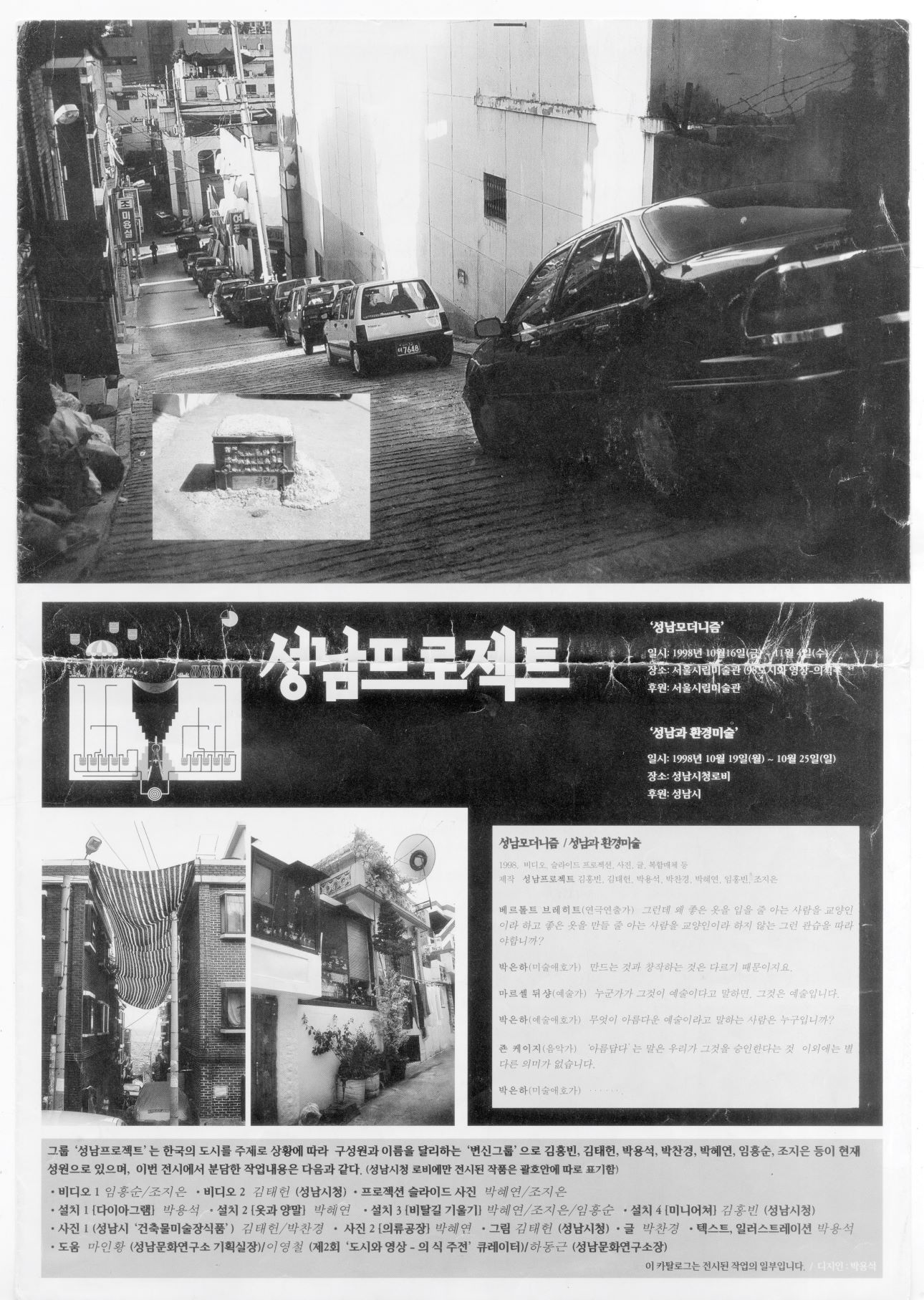
Seongnam Project, Seongnam Modernism leaflet, 1998, Image provided by Artist
Seongnam Project


* Source: Multilingual Glossary of Korean Art. Korea Arts Management Service
Related
-
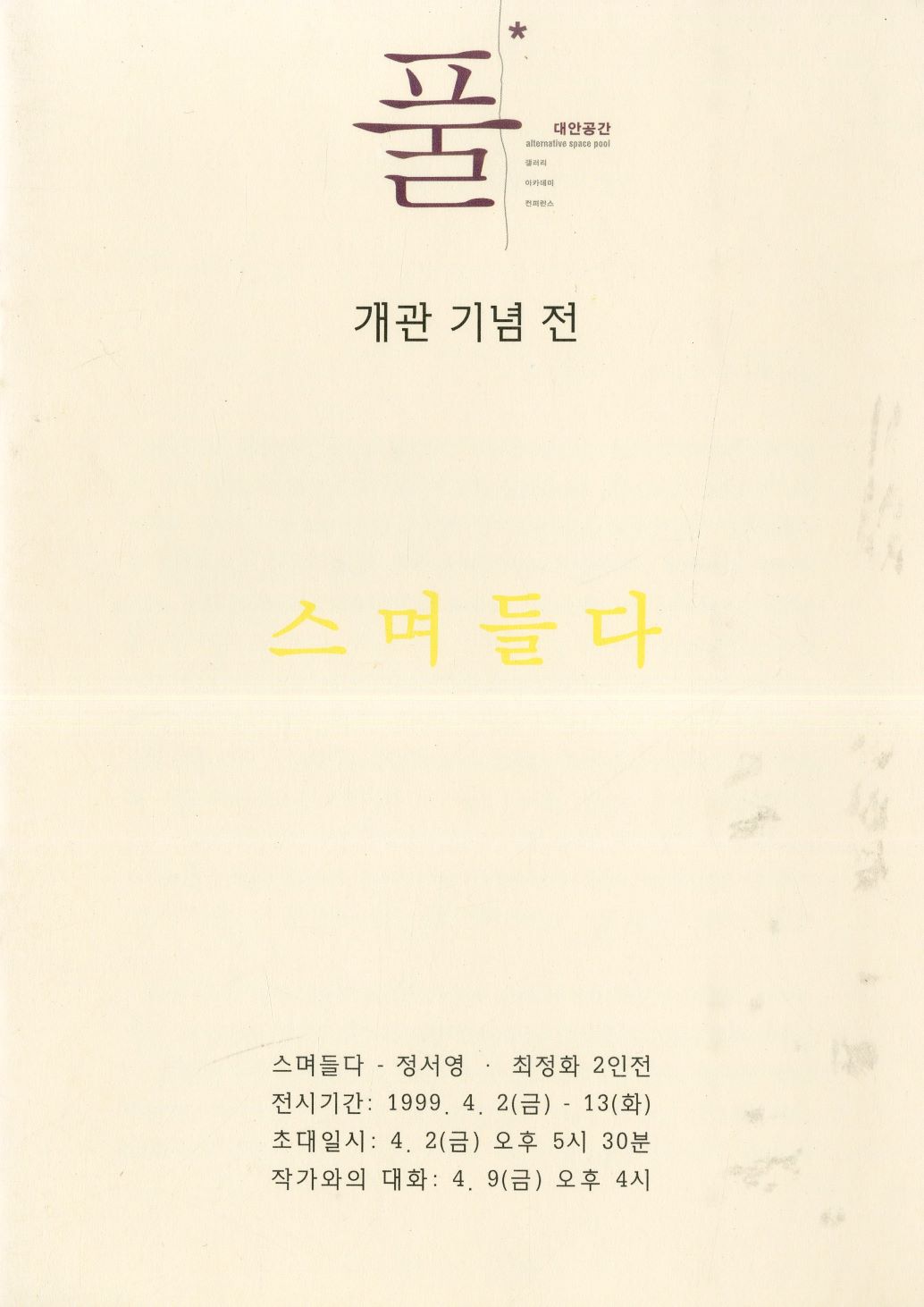
Art Space Pool
A non-profit exhibition space that opened in April 1999 in Gwanhun-dong, Jongno-gu, Seoul. The first director, Lee Youngwook, borrowed the name of the organization from the title of a poem written by Kim Su-young (1921–1968). The space was established to develop a democratic, alternative art culture, and it is seen as a major venue for the practice of, and discourse on, post-minjung art. The organization consisted of a director; a board of artists, curators, and critics; and a secretariat. Beginning with Seeping In-Chung Seoyoung and Choi Jeonghwa, the inaugural double exhibition which lasted from April 2 to 13, 1999, the exhibition space has held exhibitions for artists such as Koh Seungwook, Chang Younghae, Im Heung-soon, and Bahc Yiso. In addition to exhibitions, the space seeks to establish critical discourse on contemporary art trends through the operation of academies, symposiums, and workshops. In 2004, Art Space Pool became the first Korean non-profit exhibition space to become an art firm. It moved to Gugi-dong, Seoul in 2006.
-
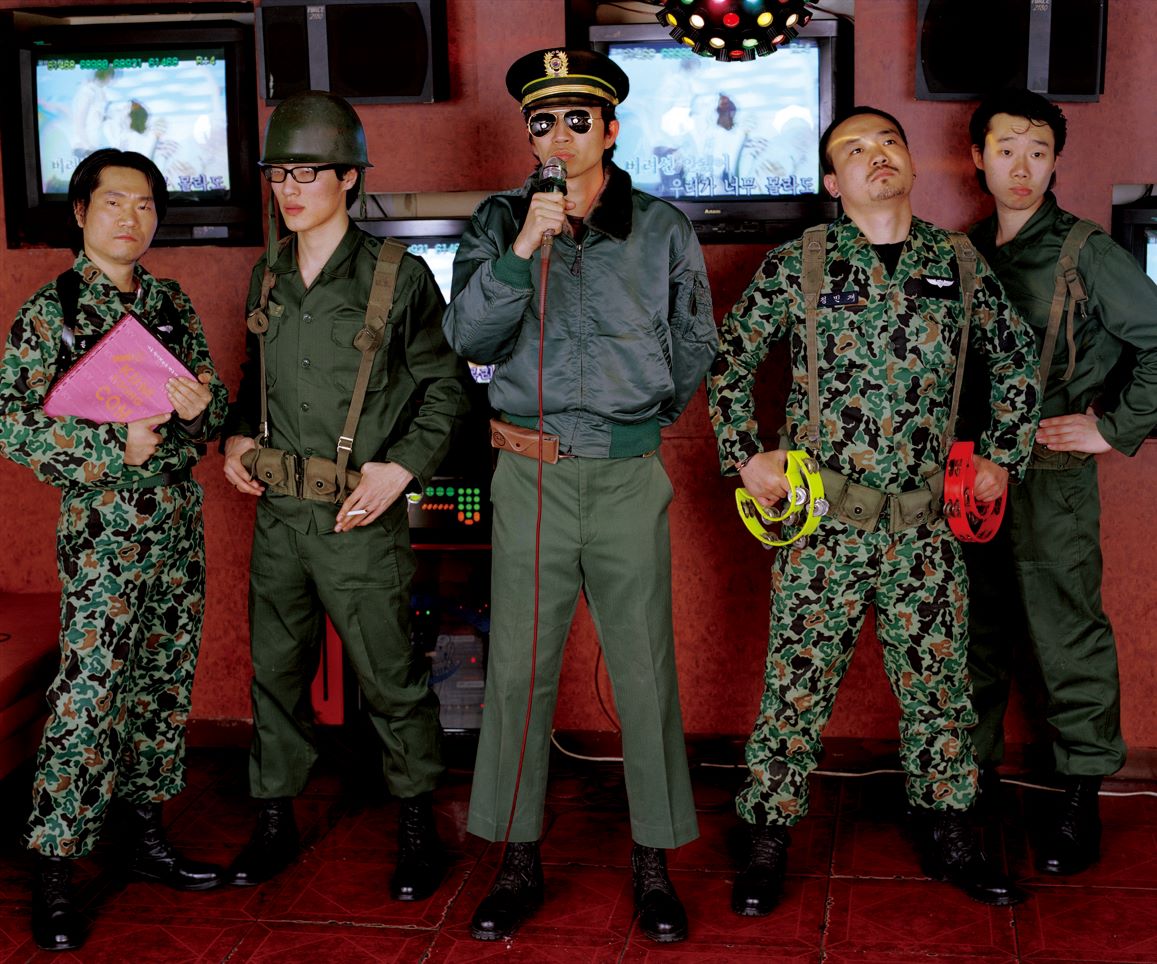
Post-Minjung art
A Korean artistic movement characterized by participation, which emerged following the decline of Minjung Art in the 1980s. The term and concept were particularly discussed in light of the attempts toward a critical restoration of Minjung Art during the late 1990s. Notable examples of the exponents of this concern include; Art groups such as the Seongnam Project, flyingCity, and Mixrice; and artists such as Park Chan-kyong, Cho Seub, Koh Seungwook, and Lim Minouk. These Post-Minjung artists criticized the theory-based reconstruction of political meaning within artistic production, use of class-based perspectives, and the Modernist anti-dialectic abandonment that characterized Minjung art. The movement adopted the pluralist rhetoric of the Western art community that was developed after the 1960s concerning conceptual art, site-specificity and institutional critique, identity politics, and installation practice. Post-Minjung artists also speculated on the use of new modes of realism that responded to the changed social, political, and economic conditions of Korea after the 1990s. Due to the influence of these artists, there has been substantial debate on whether all participatory art in 21st century Korea should be directly linked to the tradition of Minjung Art.
Timelines

Sign Up for Email Updates