
1. Lee Hyojae, The Social Consciousness of Women (Seoul: Pyeongminsa, 1978), Women's Society (Seoul: Jeongusa, 1979).
2. Kim Insoon, ed., Women, Humans, and Artistic Spirit [Yeoseong. Ingan. Yesuljeongsin] (Seoul: Gwahakgwa Sasang, 1995), 12.
3. The Women's Art Research Society Resource Book, Women, Art, Reality: 1987-1994 Women’s Art trough Women and Reality Exhibition, (publication year unknown), 43. In this resource book, “yeoseong misul” (art for women's liberation and social revolution) was distinguished from “yeoseongjuui misul” (feminist art) and “yeoryu misul” (women's art) that was used in the art world at the time. The book criticized “yeoryu misul” as a feminine production by women who tried to maintain their privileges by depending on the power of men who have succeeded in a patriarchal society and lacked self-consciousness and an awareness of women’s issues.
4. Kim, Women, Humans, and Artistic Spirit, 44.
5. Cho Hyeok, “A Strategy in-between Universality and Specificity: Speaking through Korean Woman Artist Lee Bul in the Globalized Art World,” Journal of History of Modern Art 48 (2020): 103-129.
2. Kim Insoon, ed., Women, Humans, and Artistic Spirit [Yeoseong. Ingan. Yesuljeongsin] (Seoul: Gwahakgwa Sasang, 1995), 12.
3. The Women's Art Research Society Resource Book, Women, Art, Reality: 1987-1994 Women’s Art trough Women and Reality Exhibition, (publication year unknown), 43. In this resource book, “yeoseong misul” (art for women's liberation and social revolution) was distinguished from “yeoseongjuui misul” (feminist art) and “yeoryu misul” (women's art) that was used in the art world at the time. The book criticized “yeoryu misul” as a feminine production by women who tried to maintain their privileges by depending on the power of men who have succeeded in a patriarchal society and lacked self-consciousness and an awareness of women’s issues.
4. Kim, Women, Humans, and Artistic Spirit, 44.
5. Cho Hyeok, “A Strategy in-between Universality and Specificity: Speaking through Korean Woman Artist Lee Bul in the Globalized Art World,” Journal of History of Modern Art 48 (2020): 103-129.
Kim Hyeonjoo
An Overview of South Korean Feminist Art

Feminist art in South Korea consists of 40 odd years of dynamic history. This history has been intertwined with South Korea’s unique political, social, and cultural changes and has gained momentum from domestic and international feminist theory and discourse. Feminist art, however, is still considered a very distinctive and independent field in the South Korean art world.
Under the influence of the second wave of the Western women’s movement and feminist theory, Koreans began to recognize the importance of women’s issues in the late 1970s, and women’s studies were established in the early 1980s within the institutional system. During this time, women’s organizations in the private sector were launched one after another and actively orchestrated social movements to solve women’s issues. These women’s organizations collaborated with the democracy and labor movements to form a united protest against Chun Doohwan’s military regime (1981-88). They also insisted that women’s liberation was tied to human liberation and thus claimed to establish an equal society by radically challenging tenets of the social structure suppressing women, such as capitalism and imperialism.
Amid such historical circumstances, the exhibition of From Half to Whole (October 24-30, 1986) by the October Gathering [Siwol Moim] heralded the launch of South Korean feminist art. The October Gathering was first to declare for women’s liberation in 1986. Feminist art was developed in earnest in late 1980s South Korea by a group of female artists who were agonizing over self-identity and the role of art relative to society and creativity. They included those who learned feminism from the literature on social participation, social structure theory, and women’s studies (Kim Insoon and Yun Suknam) or those who were active in anti-modernist social participatory art groups (Noh Wonhee, Jung Jungyeob, Lee Kiyeon, and Sung Hyosook).1
The October Gathering, the originators of South Korean feminist art, was formed by middle-aged female artists such as Kim Insoon, Kim Djin-suk, and Yun Suknam. They initiated feminist art in preparation for the exhibition From Half to Whole (1986). Following this exhibition, Kim Insoon and Yun Suknam played leading roles in feminist art in the 1980s and 1990s, although they had different styles. In the exhibition, Kim Insoon’s Good Wife and Wise Mother (1986) and Yun Suknam’s Mother were important works that gave a glimpse of their feminist consciousness at the time. Kim Insoon recalled painful memories of her parents by drawing scenes of humiliating and subordinate relationships between a wife and a husband who used to beat his wife. She described the work as a “challenge to gender inequality.”2 Kim, who used autobiographical experiences as the subject of her art, harshly criticized the patriarchal social convention that considers a wife obeying her husband as a natural principle and virtue, while also challenging the tradition of art which has portrayed homes and families as an ideal community based on love.
Yun Suknam’s Even I Had Ten Hands (1984) appropriated a Korean proverb “Even if I have ten hands, I am still short” to clearly depict Korean mothers’ hard lives. Yun’s mother suddenly had to earn the family’s livelihood due to the death of her husband shortly after the Korean War. This work pays tribute as a daughter, recalling the life of her mother who silently endured all kinds of unpleasant labor such as factory work, field work, and peddler, took good care of her six children, and never lost integrity during the modernization process. Even I Had Ten Hands is an early example of breaking the customary tradition of maternal reproduction, which had been framed as a representation of ideal motherhood or self-sacrifice in the grand discourse. Instead Yun proposes a specific and practical maternal concept based on her autobiographical experience.
In the late 1980s, feminist art activities were mainly pursued by the Women’s Art Research Society (Yeoseong misul yeonguhoe), which had been formerly known as the Women's Art Division prior to 1988. This was a women’s organization within the National Art Association (Minjok misul hyeopuihoe), a coalition of artists associated with Minjung art. Artists of the October Gathering and female artists interested in Minjung art were the main members. Some later formed a painting group, Dungji, to avoid government censorship and produce large scale banner paintings (geolgae geurim) in support of the women’s movement. The individual and collaborative works of female artists in the Women’s Art Research Association were exhibited through the annual exhibition Women and Reality over eight times from 1987 to 1994. The artists of the Women’s Art Research Association referred to their feminist art activities “yeoseong misul” instead of the English term “feminist art.” This demonstrates that they did not passively accept Western feminist theories or artistic precedents but tried to adhere to local women’s issues in South Korea. In this regard, yeoseong misul was a historical term for South Korean feminist art that reflected the local national context in the 1980s. It referred to art that raised women’s issues by embodying the contents of South Korean women’s lives and daily experiences.3 Yeoseong misul, under this circumstance, inevitably challenged the long tradition and norms of Korean art, which had regarded women as an aesthetic object, and paved the way for later feminist activist art to pursue artistic practice for social change.
Kim Insoon (b.1941), who served as a representative of Minjung art organizations including the Women's Art Research Association and Dungji, was an important figure in promoting yeoseong misul in the 1980s. Kim considered that women’s liberation could not be achieved without the liberation of the working class. Thus, she linked women’s issues to class issues and visited various labor sites of female workers who suffered from discrimination and realistically depicted their harsh reality.
Among Kim’s works depicting female labor sites, Twenty-two Daughters Died in the Green Hill Fire (1988) was based on a real incident in which 22 young female workers sleeping in their dormitories were burned to death due to a fire at a sewing factory in Anyang. Kim, heartbroken after hearing the news, tried to publicly accuse the faults within a society where the human rights of workers were violated and they lost their lives needlessly, while the majority of people at that time were simply excited that South Korea had entered the ranks of “advanced” countries by hosting the Seoul Olympics.4
Kim produced several large-size banner paintings with the Dungji painting group members for various women’s organizations events. Pico Series (or Mother Worker, 1989) is a one such painting composed of 10 pieces by Dungji. It is one of a few works that remains in relatively good condition. The painting depicts the 200-day struggle and settlement of married female workers who did not receive salaries from a disguised U.S. company. It began with Hong Seongae’s poem “Mother Laborer,” as she was also the financial secretary of the South Korean union of Pico Products Inc. These banner paintings were circulated nationwide at the request of women’s organizations, local universities, and farmers’ organizations for their events, but they were usually destroyed due to poor management during protests.
In South Korean feminist art in the 1980s, the main topics included women’s work, fixed gender roles, the oppressive reality of women, the discovery of self-consciousness, and sisterhood. Unlike the West, South Korean feminist art developed a realistic expressive method in paintings and discovered topics and materials highlighting strong local elements. However, it also commonly challenged existing art norms and opened a new possibility in activist art by questioning the process of art creation and the social role of art.
With the replacement of the government and the hosting of the Seoul Olympics in 1988, South Korean society began to globalize. Partial achievement of democratization, the influx of postmodern cultural theories, and the consumption culture that penetrated daily life, together resulted in multi-faceted changes in public consciousness and art creation in South Korea. As Minjung art was absorbed into the institutional system in 1994, its cohesion as a collective movement for social transformation collapsed. As a result, the Women’s Art Research Association also disbanded in response to the changing times.
Meanwhile, the women’s culture and arts movement had been actively developing since the early 1990s and the era of popular feminism opened for the first time in South Korea. The Alternative Culture, Feminist Artist Network, and the first South Korean feminist magazine If led feminist culture and art in the 1990s as alternatives to patriarchal culture. Yun Suknam, a member of the Women’s Art Research Association, served as a president of the Feminist Artist Network. In 1997, she was also appointed as a publisher and editor of If and maintained those roles for 10 years. By doing so, she was able to deepen her feminist consciousness through continuous communicating, learning, and building solidarity with feminist artists and intellectuals in various fields. Park Youngsook and Jung Jungyeob also actively participated in the feminist network and firmly established their identity as feminist artists.
Soon, under the influence of Postmodernism, a “new generation” of artists emerged. They had a new sensitivity familiar with popular culture and new media. In the 1990s, the shift from traditional media such as painting and sculpture to new media such as installation, performance, video, and photography was rapid. Lee Bul drew attention as an artist of the new generation and led South Korean feminist art in response to contemporary media. In the 1990s, South Korean feminist art focused on gender discrimination, discovery of women’s history, and gender identity in everyday lives along with individual narratives. Since then, women’s bodies and sexuality have become important issues in feminist art.
Yun Suknam (b.1939) had to give up her dream of being an artist because of poverty and lived as an ordinary homemaker for many years. She could finally become a full-time artist at the age of 39 in 1979. Today she is still rigorously working on her creations, hoping to be remembered as a feminist artist forever. Yun has been critically recognized for her practice since the early 1990s, initially through her wooden sculpture depicting female figures and installations collected from apartment dumps including chairs, sofas, and mother-of-pearl cabinets. She has created many representative works by expanding her themes from experiential motherhood (Mother series) to her later self-narrative as a middle-class housewife who lived a psychologically unstable life in material abundance (Pink Room series 1996-), and to the discovery of historic Korean women figures, such as Lee Maechang, Heo Nanseolheon, Rha Hyeseok, and Choi Seunghui (Bell Sound, 2002). In 2008, she surprised the public by holding a solo exhibition of a large-scale wooden installation featuring 1,025 abandoned dogs (1025: With or Without Person, 2003-2008). Through this series of abandoned dogs, Yun deplored the loss of humanity in capitalist society and urged an awakening of ecological life and ethical practices that coexist with other creatures. Since 2010, various Room series have been produced that visually embody the abstract concepts of the afterlife, nature, and the nation-state by introducing paper-cutting works inspired by the Korean shamanic ritual Gut.
Yun, who began employing traditional coloring method in her work in 2016, is currently pioneering a new genre of portrait paintings of historically marginalized Korean women. In such works she freely uses traditional materials such as Korean paper, ink, and colored paint, without being bound by the traditional concept or methodological framework of Eastern painting. The series Portraits of My Friends depicts her friends who had fostered Korea’s feminist culture. It shows that emotional and intellectual exchanges and friendships are not just exclusive to men, but also exist in women’s social networks. In her recent series A Portrait of a Woman Independence Activist, she rediscovers Korean female figures erased in the official history and sheds light on their achievements and challenges to show what the nation is to such women who have historically been considered as second-class citizens.
Since the 1990s, Park Youngsook (b.1941) and Jung Jungyeob (b.1962) have occupied important positions in the developmental process of South Korean feminist art. Park’s Mad Women Projects (1999-2005) is a series of photographs, consisting of 9 projects, that illustrated the reality of women who cannot survive without losing their identity in patriarchal society and going insane due to humiliation. It is a work in which each person among her feminist friends in South Korea and Japan acts her own image as a “crazy woman.” Jung Jungyeob believed that women’s housework is an ethical practice that saves ecosystems and lives. She found the subversive power to save lives in small legumes such as red beans and green beans. Small legumes, filled with vitality, expand into nature, the universe, and candlelight revolutions, evoking an affect as a driving force for social change.
Lee Bul (b.1964) pioneered a new genre called feminist performance through her unconventional performances from 1987 to 1996. In her early performances, a female body embedded with social and cultural meanings was subverted into a place of political speech, overturning the existing meaning. Her 1989 performance Abortion is a video that records the act of a suffering naked body hanging from the ceiling in front of the audience. At that time, an abortion issue based on the notion of women’s right to choose versus the notion of fetal life arose in the U.S. Lee Bul, in this context, shocked the public by demonstrating the fear of pregnancy and the pain of abortion as a subject of her art for the first time. In Sorry for Suffering: You Think I’m a Puppy on a Picnic? (1990), Lee walked from Gimpo Airport to Narita Airport and downtown Tokyo for 12 days in a grotesque costume. She problematized the social suffering of a woman who constantly receives gaze towards her incomplete and monstrous body located within ambiguous boundaries between humans and non-humans, nature and artificiality.
In her Cyborg and Monster Series (1997-2002), Lee Bul created a different idea of monstrous form, namely a mixture of human bodies, animals, plants, and machines, showing how technology has become more involved in notions of form in the post-human era. Hers was, and is, an artistic strategy of subverting the center from the margin, by leaving traces of the othered woman’s body, and based on the notion of the bizarre and abnormal body that deviates from the normative body.5 When she debuted in the international art scene in 1994, she noticed Orientalist views on Asian women and produced a monumental balloon work. Her 12-meter-high large balloon work Hydra (1998) featured a combination of images of mothers, shamans, monsters, and Asian women. It aimed to challenge the stereotypes of “passive” Asian women perpetuated by Orientalist perspectives.
South Korean feminist art in the 2000s was led by a number of younger female artists who grew up in a global art environment, such as the alternative spaces and residency programs first established in the late 1990s. They were also exposed to the women’s culture and arts movement in the 1990s. They were armed with feminist theory and a consciousness that intersected with multiculturalism, postcolonialism, and queer theory, in addition to digital technology skills. They were familiar with “nomad thought” (as put forward by Deleuze and Guattari) in their everyday lives where border-crossing became a norm. They are currently the most active generation in the global art scene. Their works involve various methods such as archiving and collaboration based on alternative artistic imagination. Negating existing power structures and gender norms, revealing differences between women in different conditions, and challenging the definition of “women,” constitute the main agendas of feminist art raised by this generation.
siren eun young jung (b.1974) is one of the foremost artists of this generation. In her decade-long work Yeoseong gukgeuk Project, she consistently asks “who is a woman” by implementing gender performativity through various visual devices. Yeoseong gukgeuk was a form of stage performance created in the Japanese colonial era and popularized in the 1950s and 1960s. In Yeoseong gukgeuk, female performers played male and female roles, but its history was erased within the political context of the Park Chung-hee regime. In her work, siren eun young jung has rediscovered the suppressed history of Yeoseong gukgeuk and finds the individuals who played the male roles and shows the process of the performer performing masculinity in various ways. Based on the concept of gender performativity, she adopts various archive materials, including video records of performers practicing Yeoseong gukgeuk, actual performance scenes, interviews with performers, and images showing their present life in order to revive the specific concerns relevant to women’s lives, while experimenting with an aesthetic form of her artworks. By so doing, she ultimately questions the definition of “women.”
Since 2015, South Korean feminist art has shared in the global fourth wave of feminism triggered by the #MeToo movement worldwide. The Netfemi (“net feminist”) generation has witnessed the spread of misogyny since 2015 in South Korea. For instance, in the 2016 misogynistic murder case at Gangnam Station, and in sexual harassment cases in the art world. Today, artists react quickly and sensitively to the current issues faced by young women such as sexual violence, dating violence, and abortion through social media. In this context, it is encouraging that many visual arts collectives advocating feminism are newly organized by South Korean women artists in their 20s and 30s. They are becoming a new driving force for the expansion of feminist art. However, as the stances of Generation MZ artists who advocate feminism are extremely diversified, and communication with fandom supporters is becoming common through social media, it is difficult to grasp the authenticity or direction of each activity, and the lack of communication between generations seems to be a serious problem. Above all, I hope that the many new women artists pay attention to concerns about the lack of awareness of previous South Korean feminism and feminist art, the excessive partiality, and a tendency to instrumentalize feminism within their careers. I truly hope this young generation will open up a new dimension of feminist art in South Korea and beyond.
In conclusion, from the 1980s to the 2000s, South Korean feminist art had been moving away from the homogeneous definition of “women” as a social category and rather taking the direction of revealing, investigating, and researching specific narratives of women’s lives under certain conditions. South Korean feminist art is still an on-going progress based on the diverse and complex utterances of the many female artists who have challenged the paradigms of existing art. They are opening a new horizon of consciousness by the excavating women’s narratives and realities that were once considered impossible as a subject for art.
Under the influence of the second wave of the Western women’s movement and feminist theory, Koreans began to recognize the importance of women’s issues in the late 1970s, and women’s studies were established in the early 1980s within the institutional system. During this time, women’s organizations in the private sector were launched one after another and actively orchestrated social movements to solve women’s issues. These women’s organizations collaborated with the democracy and labor movements to form a united protest against Chun Doohwan’s military regime (1981-88). They also insisted that women’s liberation was tied to human liberation and thus claimed to establish an equal society by radically challenging tenets of the social structure suppressing women, such as capitalism and imperialism.
Amid such historical circumstances, the exhibition of From Half to Whole (October 24-30, 1986) by the October Gathering [Siwol Moim] heralded the launch of South Korean feminist art. The October Gathering was first to declare for women’s liberation in 1986. Feminist art was developed in earnest in late 1980s South Korea by a group of female artists who were agonizing over self-identity and the role of art relative to society and creativity. They included those who learned feminism from the literature on social participation, social structure theory, and women’s studies (Kim Insoon and Yun Suknam) or those who were active in anti-modernist social participatory art groups (Noh Wonhee, Jung Jungyeob, Lee Kiyeon, and Sung Hyosook).1
The October Gathering, the originators of South Korean feminist art, was formed by middle-aged female artists such as Kim Insoon, Kim Djin-suk, and Yun Suknam. They initiated feminist art in preparation for the exhibition From Half to Whole (1986). Following this exhibition, Kim Insoon and Yun Suknam played leading roles in feminist art in the 1980s and 1990s, although they had different styles. In the exhibition, Kim Insoon’s Good Wife and Wise Mother (1986) and Yun Suknam’s Mother were important works that gave a glimpse of their feminist consciousness at the time. Kim Insoon recalled painful memories of her parents by drawing scenes of humiliating and subordinate relationships between a wife and a husband who used to beat his wife. She described the work as a “challenge to gender inequality.”2 Kim, who used autobiographical experiences as the subject of her art, harshly criticized the patriarchal social convention that considers a wife obeying her husband as a natural principle and virtue, while also challenging the tradition of art which has portrayed homes and families as an ideal community based on love.
Yun Suknam’s Even I Had Ten Hands (1984) appropriated a Korean proverb “Even if I have ten hands, I am still short” to clearly depict Korean mothers’ hard lives. Yun’s mother suddenly had to earn the family’s livelihood due to the death of her husband shortly after the Korean War. This work pays tribute as a daughter, recalling the life of her mother who silently endured all kinds of unpleasant labor such as factory work, field work, and peddler, took good care of her six children, and never lost integrity during the modernization process. Even I Had Ten Hands is an early example of breaking the customary tradition of maternal reproduction, which had been framed as a representation of ideal motherhood or self-sacrifice in the grand discourse. Instead Yun proposes a specific and practical maternal concept based on her autobiographical experience.
In the late 1980s, feminist art activities were mainly pursued by the Women’s Art Research Society (Yeoseong misul yeonguhoe), which had been formerly known as the Women's Art Division prior to 1988. This was a women’s organization within the National Art Association (Minjok misul hyeopuihoe), a coalition of artists associated with Minjung art. Artists of the October Gathering and female artists interested in Minjung art were the main members. Some later formed a painting group, Dungji, to avoid government censorship and produce large scale banner paintings (geolgae geurim) in support of the women’s movement. The individual and collaborative works of female artists in the Women’s Art Research Association were exhibited through the annual exhibition Women and Reality over eight times from 1987 to 1994. The artists of the Women’s Art Research Association referred to their feminist art activities “yeoseong misul” instead of the English term “feminist art.” This demonstrates that they did not passively accept Western feminist theories or artistic precedents but tried to adhere to local women’s issues in South Korea. In this regard, yeoseong misul was a historical term for South Korean feminist art that reflected the local national context in the 1980s. It referred to art that raised women’s issues by embodying the contents of South Korean women’s lives and daily experiences.3 Yeoseong misul, under this circumstance, inevitably challenged the long tradition and norms of Korean art, which had regarded women as an aesthetic object, and paved the way for later feminist activist art to pursue artistic practice for social change.
Kim Insoon (b.1941), who served as a representative of Minjung art organizations including the Women's Art Research Association and Dungji, was an important figure in promoting yeoseong misul in the 1980s. Kim considered that women’s liberation could not be achieved without the liberation of the working class. Thus, she linked women’s issues to class issues and visited various labor sites of female workers who suffered from discrimination and realistically depicted their harsh reality.
Among Kim’s works depicting female labor sites, Twenty-two Daughters Died in the Green Hill Fire (1988) was based on a real incident in which 22 young female workers sleeping in their dormitories were burned to death due to a fire at a sewing factory in Anyang. Kim, heartbroken after hearing the news, tried to publicly accuse the faults within a society where the human rights of workers were violated and they lost their lives needlessly, while the majority of people at that time were simply excited that South Korea had entered the ranks of “advanced” countries by hosting the Seoul Olympics.4
Kim produced several large-size banner paintings with the Dungji painting group members for various women’s organizations events. Pico Series (or Mother Worker, 1989) is a one such painting composed of 10 pieces by Dungji. It is one of a few works that remains in relatively good condition. The painting depicts the 200-day struggle and settlement of married female workers who did not receive salaries from a disguised U.S. company. It began with Hong Seongae’s poem “Mother Laborer,” as she was also the financial secretary of the South Korean union of Pico Products Inc. These banner paintings were circulated nationwide at the request of women’s organizations, local universities, and farmers’ organizations for their events, but they were usually destroyed due to poor management during protests.
In South Korean feminist art in the 1980s, the main topics included women’s work, fixed gender roles, the oppressive reality of women, the discovery of self-consciousness, and sisterhood. Unlike the West, South Korean feminist art developed a realistic expressive method in paintings and discovered topics and materials highlighting strong local elements. However, it also commonly challenged existing art norms and opened a new possibility in activist art by questioning the process of art creation and the social role of art.
With the replacement of the government and the hosting of the Seoul Olympics in 1988, South Korean society began to globalize. Partial achievement of democratization, the influx of postmodern cultural theories, and the consumption culture that penetrated daily life, together resulted in multi-faceted changes in public consciousness and art creation in South Korea. As Minjung art was absorbed into the institutional system in 1994, its cohesion as a collective movement for social transformation collapsed. As a result, the Women’s Art Research Association also disbanded in response to the changing times.
Meanwhile, the women’s culture and arts movement had been actively developing since the early 1990s and the era of popular feminism opened for the first time in South Korea. The Alternative Culture, Feminist Artist Network, and the first South Korean feminist magazine If led feminist culture and art in the 1990s as alternatives to patriarchal culture. Yun Suknam, a member of the Women’s Art Research Association, served as a president of the Feminist Artist Network. In 1997, she was also appointed as a publisher and editor of If and maintained those roles for 10 years. By doing so, she was able to deepen her feminist consciousness through continuous communicating, learning, and building solidarity with feminist artists and intellectuals in various fields. Park Youngsook and Jung Jungyeob also actively participated in the feminist network and firmly established their identity as feminist artists.
Soon, under the influence of Postmodernism, a “new generation” of artists emerged. They had a new sensitivity familiar with popular culture and new media. In the 1990s, the shift from traditional media such as painting and sculpture to new media such as installation, performance, video, and photography was rapid. Lee Bul drew attention as an artist of the new generation and led South Korean feminist art in response to contemporary media. In the 1990s, South Korean feminist art focused on gender discrimination, discovery of women’s history, and gender identity in everyday lives along with individual narratives. Since then, women’s bodies and sexuality have become important issues in feminist art.
Yun Suknam (b.1939) had to give up her dream of being an artist because of poverty and lived as an ordinary homemaker for many years. She could finally become a full-time artist at the age of 39 in 1979. Today she is still rigorously working on her creations, hoping to be remembered as a feminist artist forever. Yun has been critically recognized for her practice since the early 1990s, initially through her wooden sculpture depicting female figures and installations collected from apartment dumps including chairs, sofas, and mother-of-pearl cabinets. She has created many representative works by expanding her themes from experiential motherhood (Mother series) to her later self-narrative as a middle-class housewife who lived a psychologically unstable life in material abundance (Pink Room series 1996-), and to the discovery of historic Korean women figures, such as Lee Maechang, Heo Nanseolheon, Rha Hyeseok, and Choi Seunghui (Bell Sound, 2002). In 2008, she surprised the public by holding a solo exhibition of a large-scale wooden installation featuring 1,025 abandoned dogs (1025: With or Without Person, 2003-2008). Through this series of abandoned dogs, Yun deplored the loss of humanity in capitalist society and urged an awakening of ecological life and ethical practices that coexist with other creatures. Since 2010, various Room series have been produced that visually embody the abstract concepts of the afterlife, nature, and the nation-state by introducing paper-cutting works inspired by the Korean shamanic ritual Gut.
Yun, who began employing traditional coloring method in her work in 2016, is currently pioneering a new genre of portrait paintings of historically marginalized Korean women. In such works she freely uses traditional materials such as Korean paper, ink, and colored paint, without being bound by the traditional concept or methodological framework of Eastern painting. The series Portraits of My Friends depicts her friends who had fostered Korea’s feminist culture. It shows that emotional and intellectual exchanges and friendships are not just exclusive to men, but also exist in women’s social networks. In her recent series A Portrait of a Woman Independence Activist, she rediscovers Korean female figures erased in the official history and sheds light on their achievements and challenges to show what the nation is to such women who have historically been considered as second-class citizens.
Since the 1990s, Park Youngsook (b.1941) and Jung Jungyeob (b.1962) have occupied important positions in the developmental process of South Korean feminist art. Park’s Mad Women Projects (1999-2005) is a series of photographs, consisting of 9 projects, that illustrated the reality of women who cannot survive without losing their identity in patriarchal society and going insane due to humiliation. It is a work in which each person among her feminist friends in South Korea and Japan acts her own image as a “crazy woman.” Jung Jungyeob believed that women’s housework is an ethical practice that saves ecosystems and lives. She found the subversive power to save lives in small legumes such as red beans and green beans. Small legumes, filled with vitality, expand into nature, the universe, and candlelight revolutions, evoking an affect as a driving force for social change.
Lee Bul (b.1964) pioneered a new genre called feminist performance through her unconventional performances from 1987 to 1996. In her early performances, a female body embedded with social and cultural meanings was subverted into a place of political speech, overturning the existing meaning. Her 1989 performance Abortion is a video that records the act of a suffering naked body hanging from the ceiling in front of the audience. At that time, an abortion issue based on the notion of women’s right to choose versus the notion of fetal life arose in the U.S. Lee Bul, in this context, shocked the public by demonstrating the fear of pregnancy and the pain of abortion as a subject of her art for the first time. In Sorry for Suffering: You Think I’m a Puppy on a Picnic? (1990), Lee walked from Gimpo Airport to Narita Airport and downtown Tokyo for 12 days in a grotesque costume. She problematized the social suffering of a woman who constantly receives gaze towards her incomplete and monstrous body located within ambiguous boundaries between humans and non-humans, nature and artificiality.
In her Cyborg and Monster Series (1997-2002), Lee Bul created a different idea of monstrous form, namely a mixture of human bodies, animals, plants, and machines, showing how technology has become more involved in notions of form in the post-human era. Hers was, and is, an artistic strategy of subverting the center from the margin, by leaving traces of the othered woman’s body, and based on the notion of the bizarre and abnormal body that deviates from the normative body.5 When she debuted in the international art scene in 1994, she noticed Orientalist views on Asian women and produced a monumental balloon work. Her 12-meter-high large balloon work Hydra (1998) featured a combination of images of mothers, shamans, monsters, and Asian women. It aimed to challenge the stereotypes of “passive” Asian women perpetuated by Orientalist perspectives.
South Korean feminist art in the 2000s was led by a number of younger female artists who grew up in a global art environment, such as the alternative spaces and residency programs first established in the late 1990s. They were also exposed to the women’s culture and arts movement in the 1990s. They were armed with feminist theory and a consciousness that intersected with multiculturalism, postcolonialism, and queer theory, in addition to digital technology skills. They were familiar with “nomad thought” (as put forward by Deleuze and Guattari) in their everyday lives where border-crossing became a norm. They are currently the most active generation in the global art scene. Their works involve various methods such as archiving and collaboration based on alternative artistic imagination. Negating existing power structures and gender norms, revealing differences between women in different conditions, and challenging the definition of “women,” constitute the main agendas of feminist art raised by this generation.
siren eun young jung (b.1974) is one of the foremost artists of this generation. In her decade-long work Yeoseong gukgeuk Project, she consistently asks “who is a woman” by implementing gender performativity through various visual devices. Yeoseong gukgeuk was a form of stage performance created in the Japanese colonial era and popularized in the 1950s and 1960s. In Yeoseong gukgeuk, female performers played male and female roles, but its history was erased within the political context of the Park Chung-hee regime. In her work, siren eun young jung has rediscovered the suppressed history of Yeoseong gukgeuk and finds the individuals who played the male roles and shows the process of the performer performing masculinity in various ways. Based on the concept of gender performativity, she adopts various archive materials, including video records of performers practicing Yeoseong gukgeuk, actual performance scenes, interviews with performers, and images showing their present life in order to revive the specific concerns relevant to women’s lives, while experimenting with an aesthetic form of her artworks. By so doing, she ultimately questions the definition of “women.”
Since 2015, South Korean feminist art has shared in the global fourth wave of feminism triggered by the #MeToo movement worldwide. The Netfemi (“net feminist”) generation has witnessed the spread of misogyny since 2015 in South Korea. For instance, in the 2016 misogynistic murder case at Gangnam Station, and in sexual harassment cases in the art world. Today, artists react quickly and sensitively to the current issues faced by young women such as sexual violence, dating violence, and abortion through social media. In this context, it is encouraging that many visual arts collectives advocating feminism are newly organized by South Korean women artists in their 20s and 30s. They are becoming a new driving force for the expansion of feminist art. However, as the stances of Generation MZ artists who advocate feminism are extremely diversified, and communication with fandom supporters is becoming common through social media, it is difficult to grasp the authenticity or direction of each activity, and the lack of communication between generations seems to be a serious problem. Above all, I hope that the many new women artists pay attention to concerns about the lack of awareness of previous South Korean feminism and feminist art, the excessive partiality, and a tendency to instrumentalize feminism within their careers. I truly hope this young generation will open up a new dimension of feminist art in South Korea and beyond.
In conclusion, from the 1980s to the 2000s, South Korean feminist art had been moving away from the homogeneous definition of “women” as a social category and rather taking the direction of revealing, investigating, and researching specific narratives of women’s lives under certain conditions. South Korean feminist art is still an on-going progress based on the diverse and complex utterances of the many female artists who have challenged the paradigms of existing art. They are opening a new horizon of consciousness by the excavating women’s narratives and realities that were once considered impossible as a subject for art.
- Share
 Copy URL
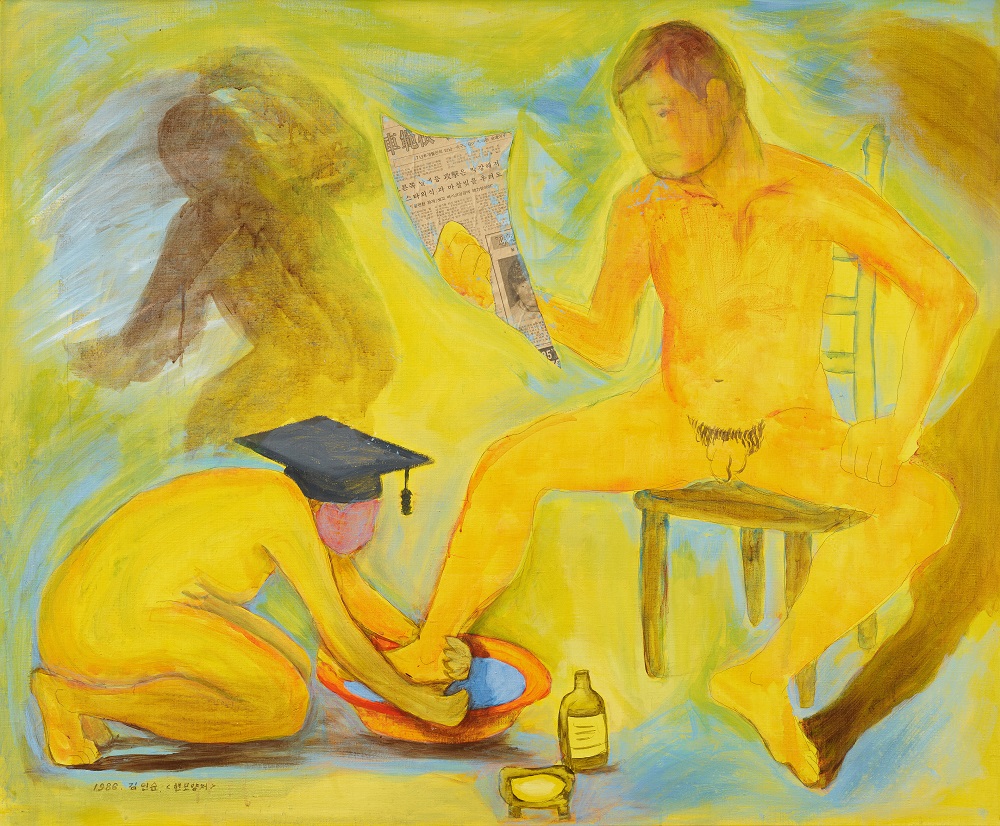
Kim Insoon, Good Wife and Wise Mother, 1986, Acrylic on canvas, 91×110cm. MMCA.
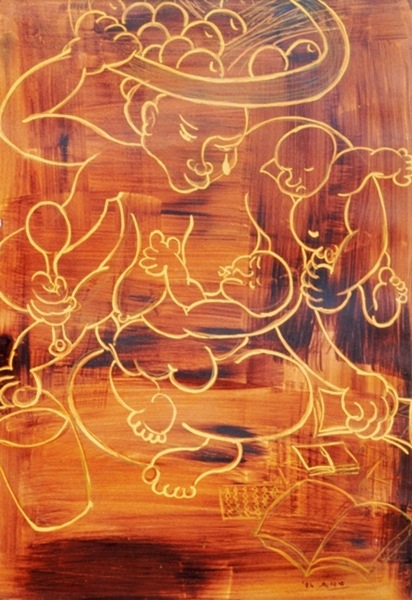
Yun Suknam, Even I Had Ten Hands, 1984, Acrylic on paper, 105×75cm. Seoul Museum of Art (SeMA) collection, Donated by Yun Suknam.
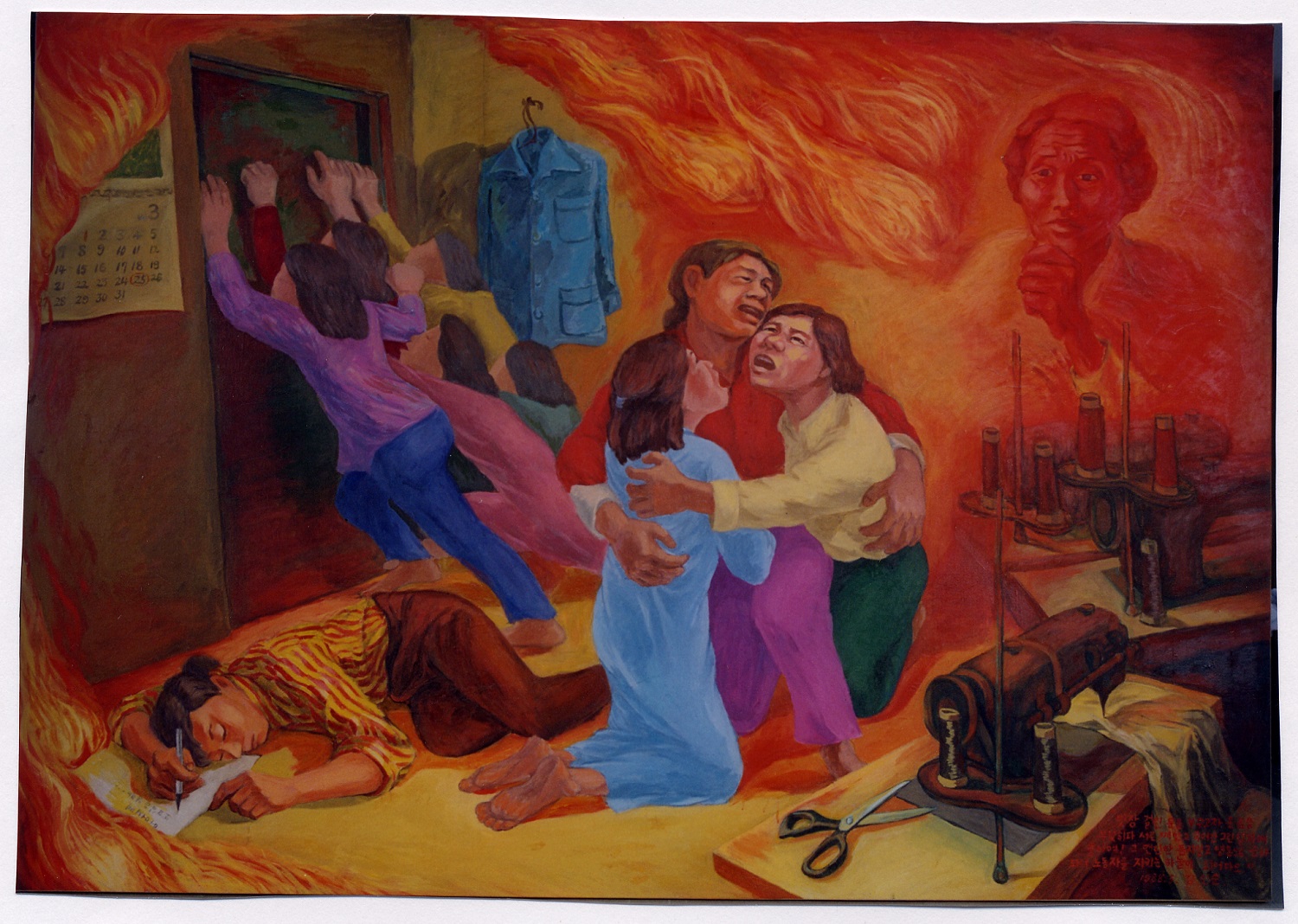
Kim Insoon, Twenty-Two Daughters Died in Green Hill Fire, 1988, Acrylic on canvas, 150×190cm. Seoul Museum of Art (SeMA) collection.
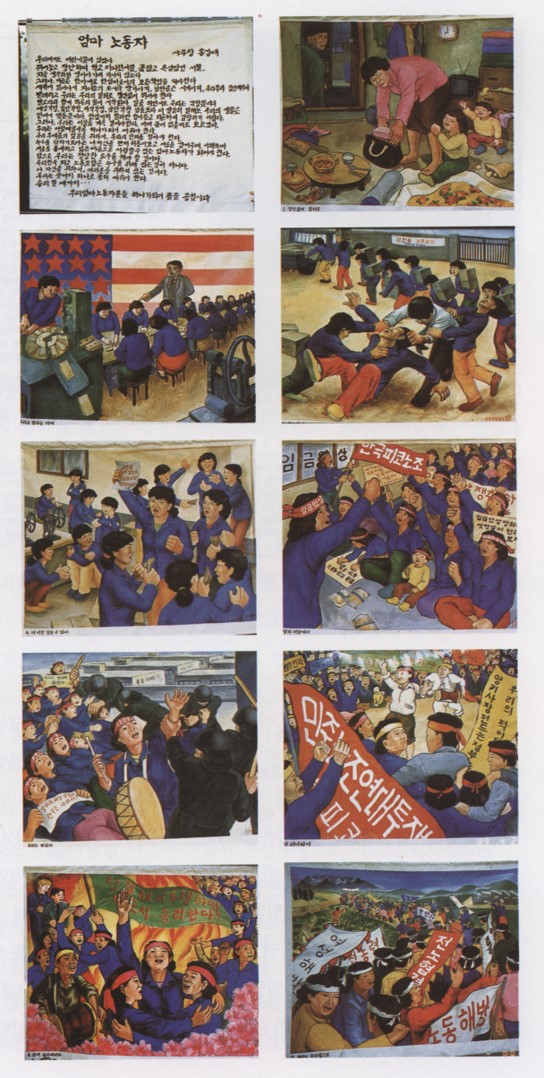
Dungji, Pico Series (or Mother Worker), 1989, Acrylic on cotton, 100×120cm (10).
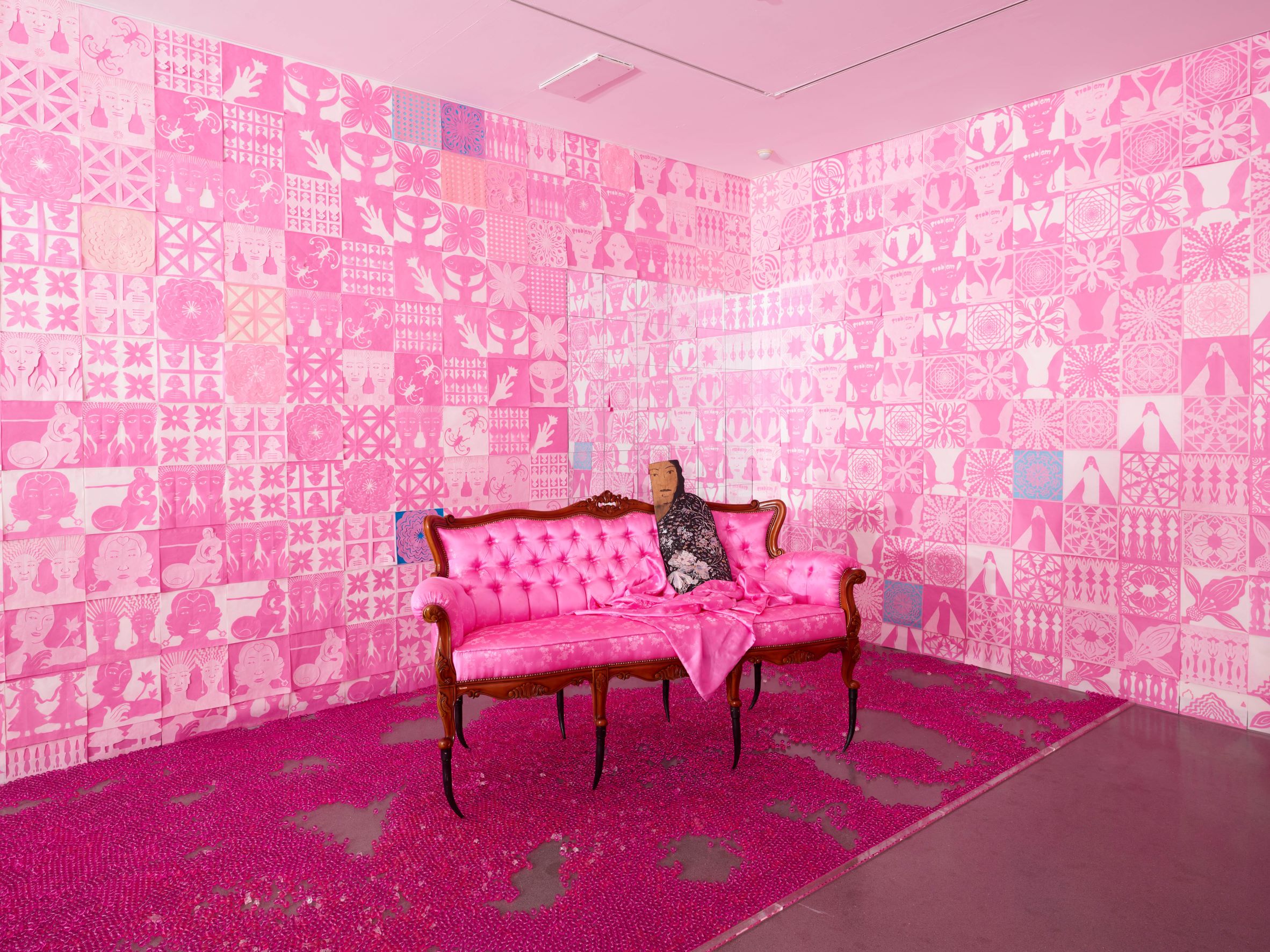
Yun Suknam, Pink Room V, 1996-2018, 3 Seater sofa, mirror, wooden figure decorated with mother-of-pearl, satin beads, origami paper, Dimensions variable. MMCA.
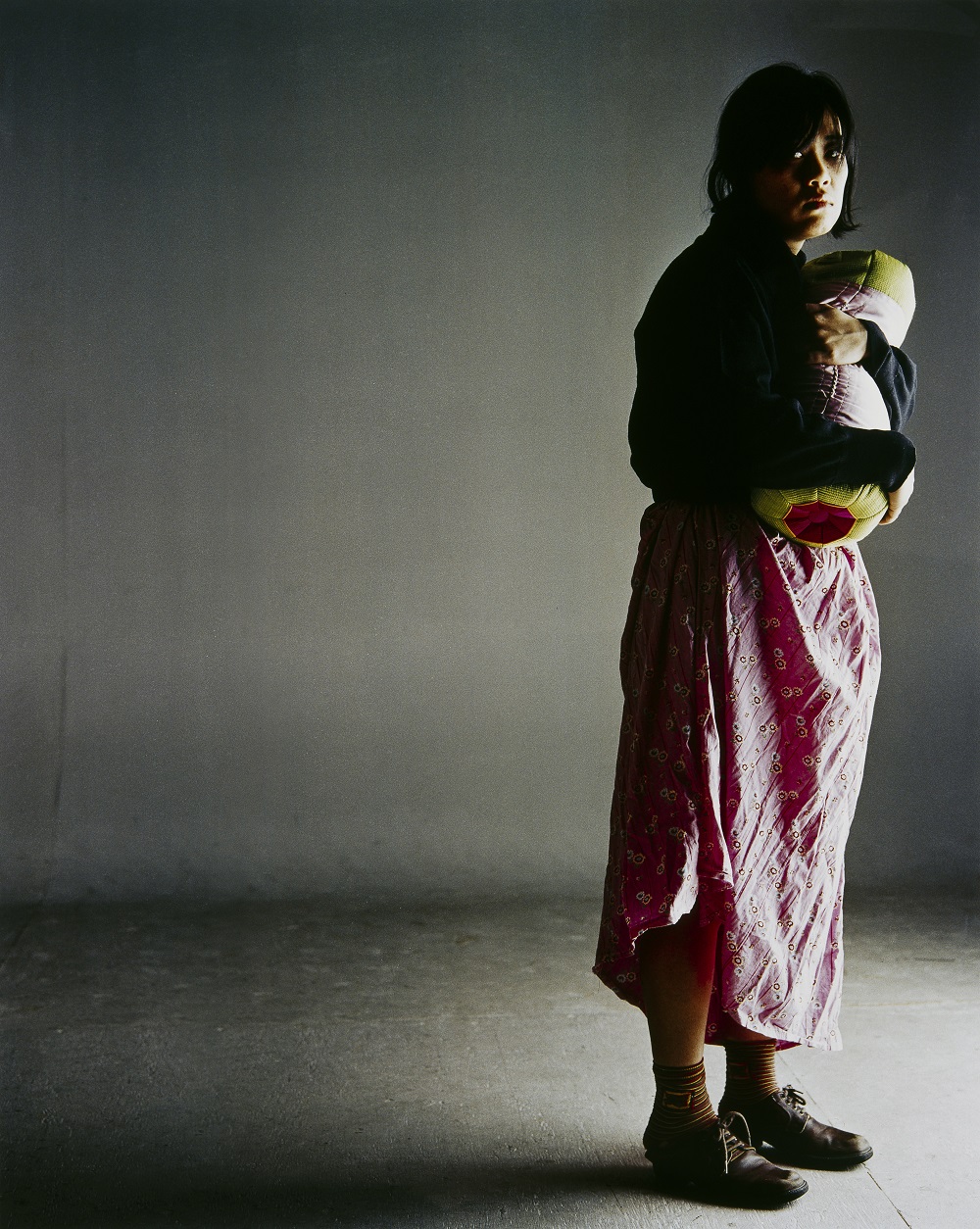
Park Youngsook, Mad Women Project-Mad Women #1, 1999, C-print, 150×150cm. MMCA.
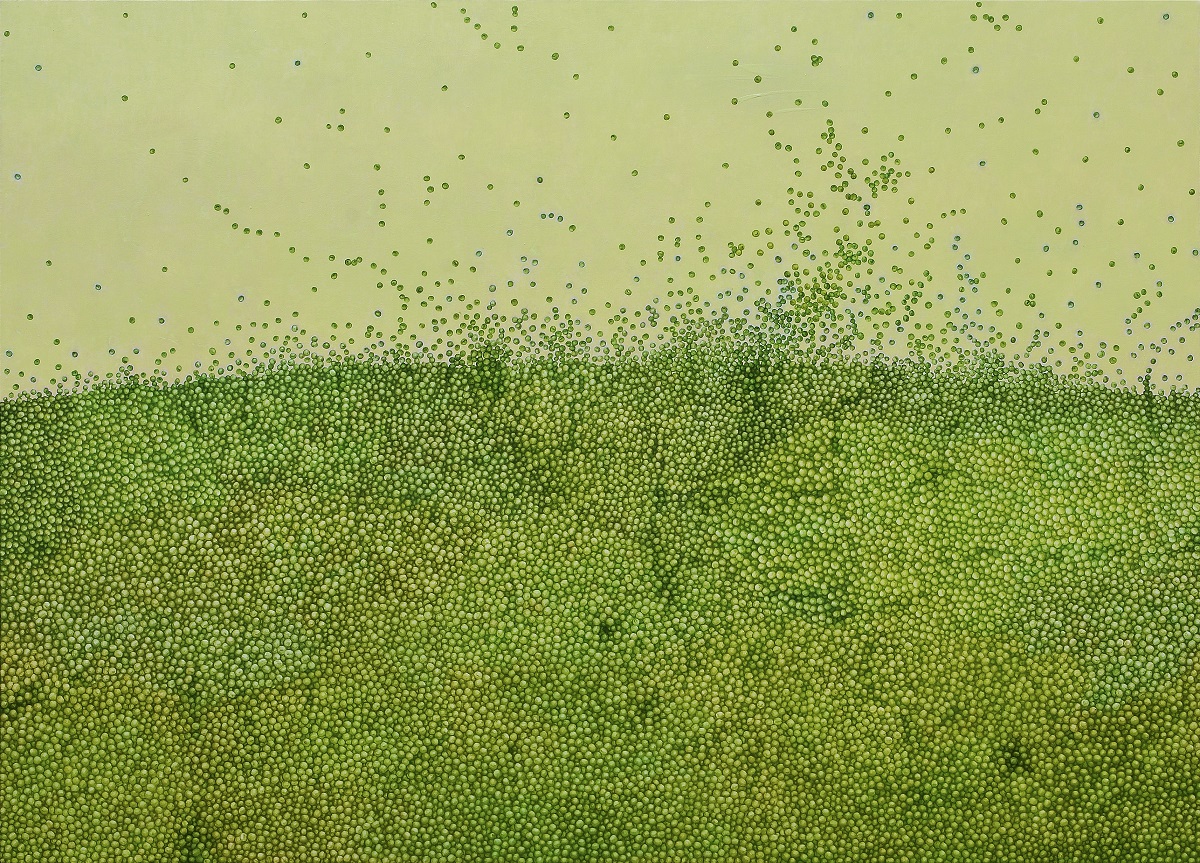
Jung Jungyeob, Field, Oil on canvas, 130×180cm. MMCA Art Bank.
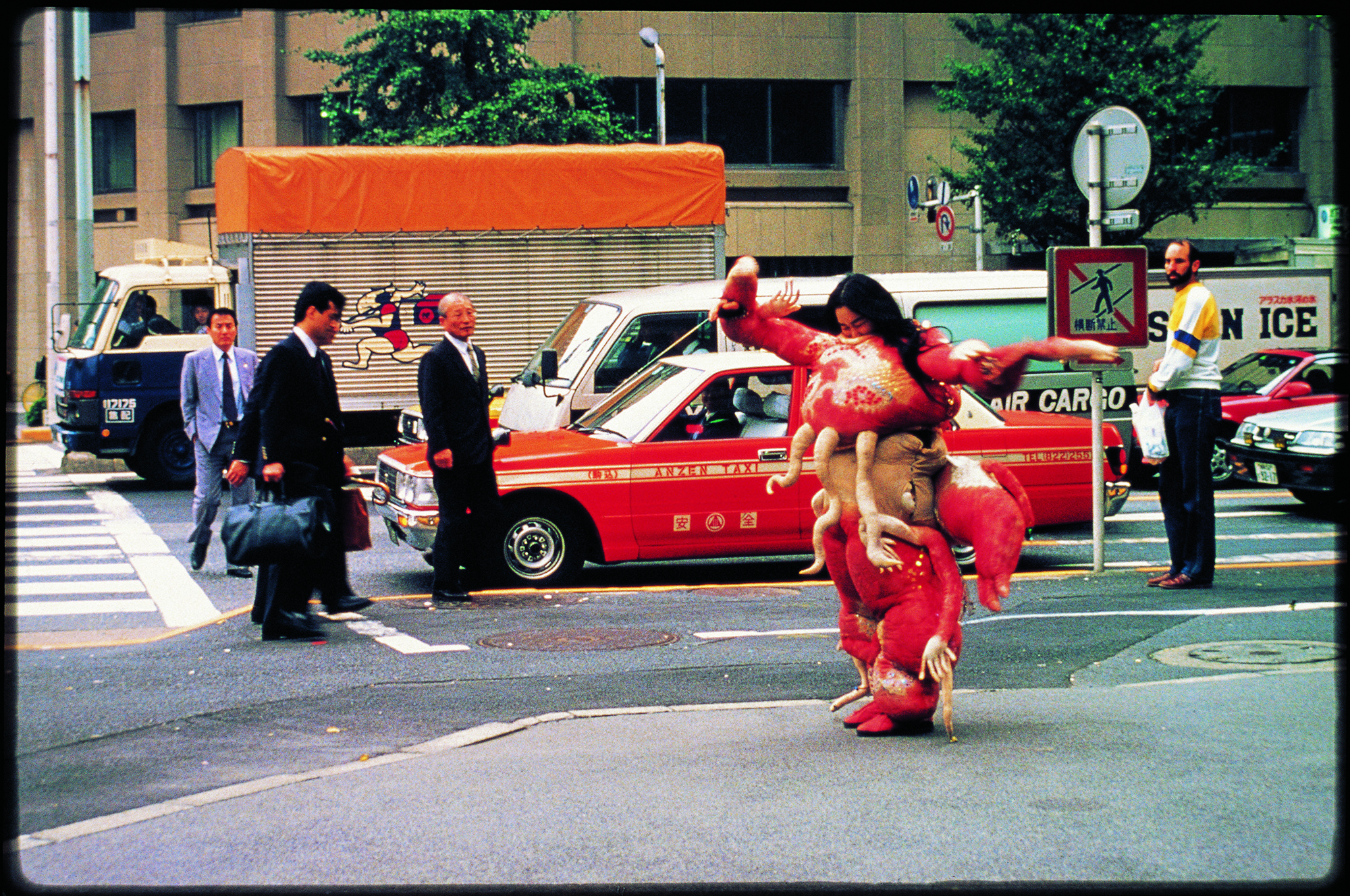
Lee Bul, Sorry for Suffering—You Think I’m a Puppy on a Picnic?, 1990, Performance, 12 days, The 2nd Japan and Korea Performance Festival, Gimpo Airport, Korea; Narita Airport, Meiji Shrine, Harajuku, Otemachi Station, Koganji Temple, Asakusa, Shibuya, University of Tokyo and Tokiwaza Theater, Tokyo, Japan. Courtesy of the artist.
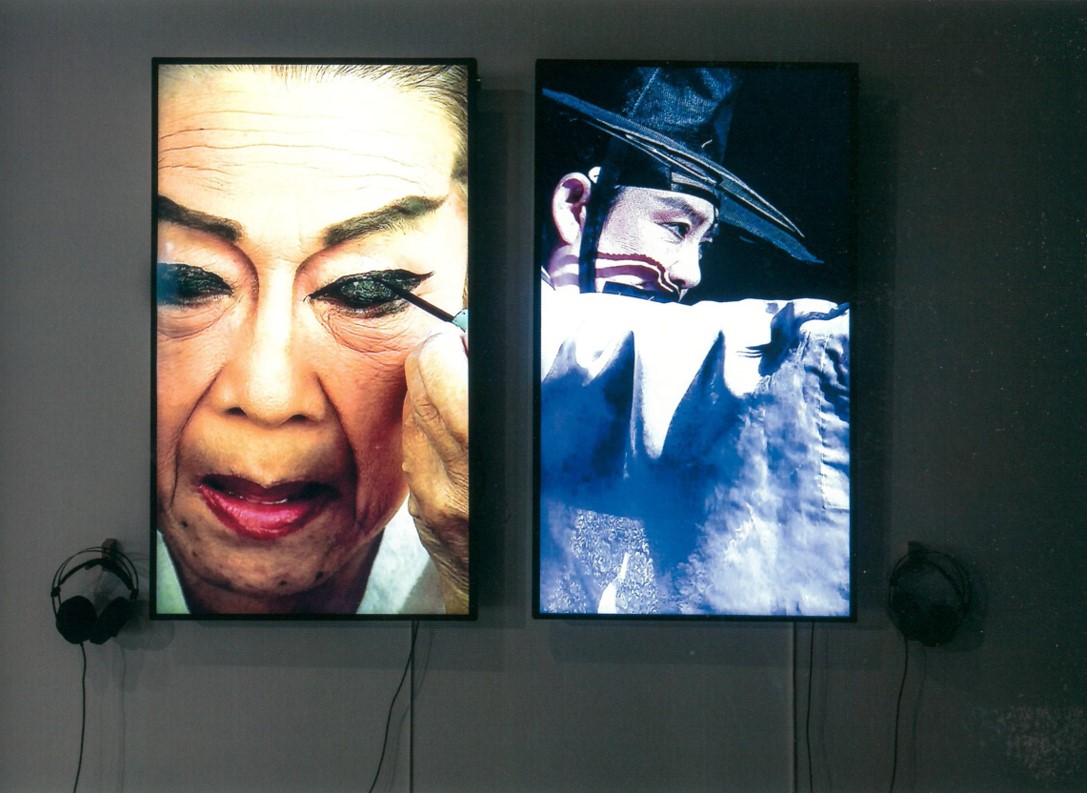
siren eun young jung, The Masquerading Moments, 2009, Single channel video, 8mins 16secs.
siren eun young jung, The Unexpected Response, 2009, Single channel video, 4mins 35secs.
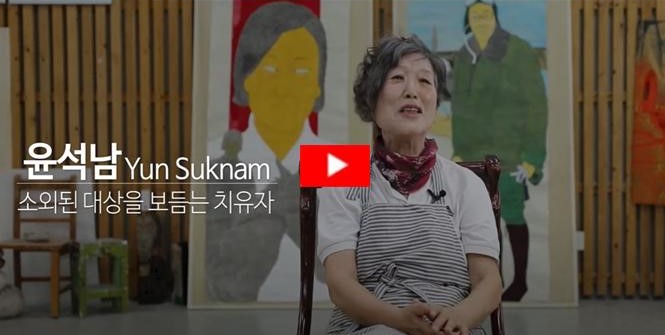
MMCA Artist Talk | Yun Suknam (Short Version) - YouTube
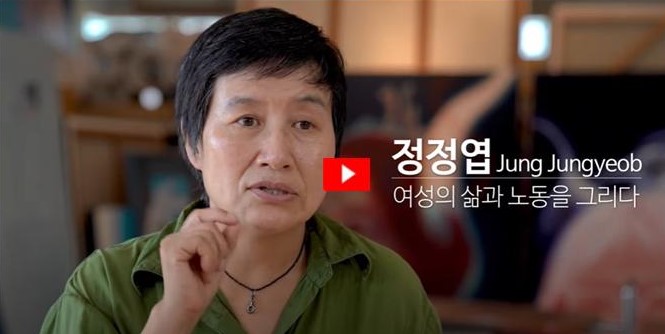
MMCA Artist Talk | Jung Jungyeob (Short Version) - YouTube

Sign Up for Email Updates