
-
January
-
February
Shinsegae Gallery Invitational Exhibition of Seven Modern Eastern Painters (Shinsegae Gallery, Seoul, February 4-10) is held. The exhibition features seven artists including Kim Dongsoo, Song Soonam, Oh Taehagk, Lee Jaeho, Cho Phyunghwi, Ha Taejin and Hong Sukchang.
The Third Triennale-India (Lalit Kala Akademi, New Delhi, February 8-March 21) is held. A total of ten korean artists participate, including Kim Tschang-yeul, Park Suk-won, Shim Moon-seop, Ahn Dong-sook, Lee Ufan, Jung Chang-sup, Cho Yong-ik, Choi Ki-won, Choi Myoung-young and Ha Jong-hyun, as part of a group of artists from 25 countries.
-
March
Modern Women’s Eastern Paintings Exhibition (Shinsegae Gallery, Seoul, March 4-9) is held. The exhibition features nine artists including Kang Jaesun, Kim Jeonghui, Moon Eunhee, Yang Jeongja, Oh Jeongja, Won Munja, Lee Sukja, Lee Insil and Hong Junghee.
-
April
Co-organized by the Korean Contemporary Printmakers Association [Hanguk hyeondae panhwaga hyeophoe] and the Los Angeles Printmaking Society, the Contemporary Prints Exchange Exhibition (Hyundai Gallery, Seoul, April 10-16) is held. It is held three times in collaboration with the Los Angeles Printmaking Society—in Pasadena, USA (1973), Korea (1975), and again in Pasadena (1976).
A total of 57 artists participate, including 15 from Korea—Kang Whansup, Kim Sangyu, Kim Choungza, Kim Chonghak, Kim Tchahsup, Kim Tschang-Yeul, Kim Hyungdae, Park Rehyun, Bae Yoong, Suh Seungwon, Yoo Kangyul, Youn Myeungro, Rhee Sangwooc, Lee Ufan, Cho Kookjeong—and 42 from the United States, including M. Agins and R. Brown.’75 Today’s Methods (Baekrok Gallery, Seoul, April 12-20) is held. A total of nine artists participate, including Kim Gyu-han, Kim Yongmin, Kim Taeho, Sung Neungkyung, Shin Hakchul, Ahn Byeongseok, Lee Kun-Yong, Lee Byoungyong, and Ham Yeon-sik. Lee Kun-Yong presents his first event works, Indoor Measurement and Equal Area, at 3 p.m. on April 19.
-
May
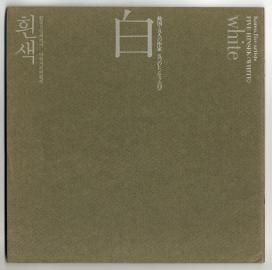
Tokyo Gallery organizes Korea: Five Artists, Five Hinsek—White (Tokyo Gallery, May 6-24), inviting Kwon Youngwoo, Park Seo-Bo, Suh Seungwon, Lee Dongyoub, and Hur Hwang. An essay by Lee Il titled "White Thinks" is included in the preface.
Hosted by Dong-a Ilbo newspaper, the Byeon Gwansik Retrospective (Seoul Press Center, May 28-June 7) is held.
-
June
-
July
The Seventh International Festival of Painting Cagnes-sur-Mer (Château-Musée Grimaldi, France, June 27-September 30) is held. The exhibition features five artists including Kim Dongkyu, Lee Seungjio, Lee Hyangmi, Chin Ohcsun and Choi Daesup. Jung Yungyul serves as commissioner for Korean artists.
National Museum of Modern Art, Deoksugung (now MMCA) holds the Crafts section of the Modern Korean Art Exhibition series. Modern Korean Crafts Grand Exhibition in Commemoration of the 30th Anniversary of Liberation (MMCA, July 9-27).
The exhibition features 100 artists including Kang Suhwa, Kang Changyun, Kang Changwon, Kwak Kaejung, Kwak Daeun, Kwak Wonmo, Kwon Sango, Kwon Soonhyung, Kim Kyoman, Kim Gunseon, Kim Gyoosik, Kim Geunbae, Kim Giryeon, Kim Tuk-kyum, Kim Mueon, Kim Bongyong, Kim Sukwhan, Kim Sujeong, Kim Seunghee, Kim Yeongtae, Kim Yunhwan, Kim Insook, Kim Jeasuk, Kim Chungsook, Kim Jihee, Kim Jinwoo, Kim Taisuk, Kim Taisun, Kim Taihee, Kim Heoneon, Kim Haekyung, Kim Huijin, Nam Sanggyo, Nam Cheolgyun, Noh Yongsuk, Park Daesun, Park Sungsam, Park Sookhee, Park Yeonggyu, Park Yongju, Park Eulbok, Park Insuk, Park Jungsuk, Park Jeongin, Park Hyangsuk, Park Hyungchul, Pai Mansil, Bae Myeonhui, Paik Taewon, Paik Taiho, Seo Gyeongun, Seo Donghui, Seo Jaehaeng, Sung Okhi, Son Jeongri, Song Jeongin, Shin Gwangseok, Shin Gwonhui, Shin Sangho, Shin Yangsuk, Eom Gwangseop, Um Jeongyoon, Won Daichung, Yoo Kangyul, Yoh Chulyun, Yu Yunjin, Yu Hyeonju, Yu Hyeja, Yoon Kwangcho, Yun Sukja, Yun Yeongsuk, Lee Kyonghee , Lee Deokhui, Lee Dongil, Rhee Boo-ung, Lee Soonsuk, Lee Shinja, Lee Yeongsuk, Lee Youngsun, Lee Jongsu, Lee Hyoseop, Lee Changho, Yim Hongsoon, Jang Gimyeong, Chang Yoonwoo, Jang Jean, Jeon Yeongsun, Chung Kyu, Chung Damsun, Jeong Daeyoo, Cho Chunghyun, Jo Jeongho, Choi Gwangja, Choi Daeseok, Choi Daesik, Choi Seungchun, Choi Chu Kyung, Choi Hyunchil, Hwang Jonggu and Hwang Chongnye.The First Ecole de Séoul (National Museum of Modern Art, Deoksugung (now MMCA), July 30 -August 5) is held. The exhibition features 25 artists including Kim Kulim, Kim Dongkyu, Kim Yong-Ik, Kim Jong-gun, Kim Chonghak, Kim Hongseuk, Park Seo-Bo, Park Suk-won, Suh Seungwon, Song Burnsoo, Song Jeonggi, Shim Moon-seup, Lee Kangso, Lee Dongyoub, Lee Bann, Lee Sangnam, Lee Seungjio, Lee Hyangmi, Im Tae-jeong, Jung Yungyul, Chung Chanseung, Choi Daesup, Choi Myoungyoung, Han Youngsup and Hur Hwang.
-
August
The First Korean Young Artists’ Association [Hanguk misul cheongnyeon jakgahoe] holds the First Camping with Outdoor Works (Kkotji Beach, Anmyeon-do, August 1-4).
Hosted by the Korean Fine Arts Association [Mihyeop], the Third Indépendants Exhibition (National Museum of Modern Art, Deoksugung (now MMCA), August 29-September 3) is held. A total of 152 artists participated. In the competition to select artists to exhibit at the eighth International Festival of Painting Cagnes-sur-Mer.
Kang Daechul, Kang Seonbo, Ko Younghoon, Kwak Namsin, Ku Deukhwan, Kim Kulim, Kim Gyuhan, Kim Dongkyu, Kim Dongjun, Kim Sun, Kim Sunwhoe, Kim Yong-ik, Kim Jangseop, Kim Jaegwan, Kim Jeongok, Kim Jong-gun, Kim Jongil, Kim Chonghak, Kim Juyoung, Kim Jinsuk, Kim Taeho, Kim Hagyeon, Kim Hyeonsu, Kim Hyeongho, Kim Hyesuk, Kim Hyejin, Gim Hongsok , Mun Changsik, Park Gyeongho, Park Byoungchoon, Park Bonghwa, Park Sangbeom, Park Seo-Bo, Park Seongnam, Park Jangyeon, Park Jaehui, Park Chul, Baek Jungi, Byeon Sangbong, Suh Seungwon, Seo Yeonghwan, Seo Eungwon, Seo Jaeman, Seon Hakgyun, Seong Yonghwan, Son Jangsup, Shin Sunghy, Shin Sukhui, Shin Ilgeun, Shin Jeongju, Shin Hocheol, Shim Sugu, Ahn Byeongseok, Ahn Sanggyu, Um Haisil, Yeon Yeongae, Oh Seayoung, Oh Jeongsuk, Woo Jaegil, Yu Geumhui, Yu Seongu, Yu Jimyeong, Yun Beom, Yun Hyongkeun, Lee Kunyong, Lee Dongseong, Lee Dongyoub, Lee Myungmi, Lee Myeongsu, Lee Bann, Lee Byeongseok, Lee Seduk, Lee Seungrae, Lee Seungjio, Lee Seungha, Lee Siung, Lee Yangu, Lee Yeongsang, Lee Ufan, Lee Ywanho, Lee Yunsim, Lee Inhwa, Lee Jeungsoo, Lee Jeungsoo b, Lee Jungja, Rhee Jongyoun, Lee Jongho, Lee Hyangmi, Jang Seogwon, Jang Chihwan , Jeon Yeonghwa, Jeong Minung, Jeong Sumo, Jeong Suna, Jeong Yunja, Jeong Wonil, Jeong Ingeon, Jeong Changseok, Jeong Huigeon, Jo Eunja, Jo Jongho, Jo Chungsik, Ju Gyeongok, Choi Gyeongsik, Choi Daesup, Choi Myoungyoung, Choi Byeongchan, Choi Jaechang, Choi Jongsup, Chae Taeshin, Ha Jeongae, Han Geumsu, Han Manyoung, Han Youngsup, Han Youngsoo, Ham Sup, Ham Yeonsik, Heo Ock, Hong Sukchang, Hong Suncheol, Hong Yongsun, Hwang Seongho and Hwang Yangja participate in the painting section;
Kim Hyera, Park Kiok, Park Suk-won, Park Changap, Um Taijung, Jo Yongja and Heo Ransuk in the sculpture section;
Kang Changyeol, Kim Youngjin, Kim Yongmin, Kim Jongho, Bae Namhan, Song Jeonggi, Shim Moonseup, An Seungyeong, Lee Myo-chun, Rhee Seundja, Jang Seong-jin, Chung Chanseung, Choi Byungso and Hong Soonmo in sections other than sculpture;
Kim Sun, Park Changap, Baik Kumnam, Lee Kangso, Jang Yeongseok and Han Unsung in the printmaking section.The First Space Art Grand Exhibition (National Museum of Modern Art, Deoksugung (now MMCA), August 25–30) is held. Among 32 artists recommended by the organizing committee, 22—including Kim Kulim, Kim Kwangwoo, Kim Dongsoo, Kim Mi Ryoung, Park Suk-won, Suh Seungwon, Suk Ranhi, Song Kyung, Ahn Byeongseok, Um Taijung, Oh Seyeol, Lee Seungjio, Lee Bann, Lee Cheoljoo, Lee Kun-Yong, Lee Dongyoub, Chon Joon, Chung Kwanmo, Chung Munkyu, Choi Myoungyoung, Ha Chonghyun, and Hwang Yongyop—participate. Ha Chonghyun receives the Grand Prize for Naissance and White Paper on Urban Planning 68.
-
September
The Women Ceramist Exhibition (Yangji Gallery, Seoul, September 3-9) is held. The exhibition features eight artists including Kim Su-seong, Kim Jin-u, Son Jeong-ri, You Heh-ja, Lee Kyunghee, Jang Jean, Cho Chunghyun and Hwang Chongnye.
The Ninth Paris Biennale (Musée d'art Moderne de Paris, Palais Galliera, September 19-November 2) is held. Shim Moon-seup and Lee Kangso participate. Lee Ufan serves as commissioner for korean artists.
-
October
The Fourth ST (National Museum of Modern Art, Deoksugung (now MMCA), October 6-14) is held. Lee Kun-Yong presents the event works Five Steps, Eating Hardtack, Ten Round Trips, Five Encounters, and Counting Age. A total of ten artists participate, including Kim Yongmin, Kim Hongjoo, Nam Sanggyun, Sung Neungkyung, So Jeonggi, Lee Kun-Yong, Yeo Un, Choi Wongeun, Choi Hyoju, and Hwang Hyunwook.
The Thirteenth Sao Paulo Art Biennial (Ciccillo Matarazzo Pavilion, Brazil, October 17-November 14) is held. The exhibition features 17 artists including Kim Yong-Ik, Kim Jong-gun, Kim Han, Kim Hongseuk, Park Seo-Bo, Yun Hyongkeun, Rhee Seundja, Lee Okryeon, Han Youngsup, Kim Kwangwoo, Park Chongbae, Shim Moon-seup, Um Taijung, Han Mook, Kim Chonghak, Song Jeonggi and Chung Chanseung. Kim Chungsook serves as commissioner for korean artists.
-
November
The Second Daegu Contemporary Art Festival (Keimyung University Art Museum, November 2-8) is held. The exhibition features 77 artists including Kang Kukjin, Kang Hajin, Ko Younghoon, Kwon Dalsul, Kim Kwangwoo, Kim Gyu-han, Kim Giho, Kim Dongkyu, Kim Myeong-su, Kim Sun, Kim Sunhoe, Kim Soungui, Kim Youngdae, Kim Youngjin, Kim Yongmin, Kim Yong-Ik, Kim Inhwan, Kim Jangsup, Kim Jaeman, Kim Jaeyun, Kim Jong-gun, Kim Jongil, Kim Chungjung, Kim Hae-Sook, Kim Hongseuk, Noh Jaeseung, Park Seo-Bo, Park Seungbeom, Park Jangnyun, Park Hangyul, Park Hyunki, Bae Namhan, Baek Mihae, Paik Soonam, Suh Seungwon, Sung Neungkyung, Song Gwangik, Shin Jeongju, Shim Moon-seup, Ahn Byeongseok, Yeo Un, Yeon Yeongae, Yu Byeongsu, Ryu Jongmin, Lee Kangso, Lee Kun-Yong, Lee Myo-chun, Lee Bann, Lee Byoungyong, Lee Sangnam, Lee Seungjio, Lee Ywanho, Rhee Jongyoun, Lee Jihwi, Lee Hyunjae, Lim Oksang, Jang Sik, Chung Kwanmo, Jeong Eungi, Chong Jaekyoo, Jeong Taejin, Jo Yonggak, Jo Hyeyeon, Choi Daesup, Choi Donjeong, Choi Byungso, Choi Byeongchan, Choi Boonghyun, Choi Sangcheol, Choi Changhyeok, Han Youngsup, Hur Hwang, Hwang Byeongho, Hwang Sungho, Hwang Hyunwook, Hwang hyochang and Hwang Tae-gap.
-
December
The First Seoul Contemporary Art Festival (National Museum of Modern Art, Deoksugung (now MMCA), December 16-22) is held. Kim Kulim, Park Seo-Bo, Shim Moon-seup, Yun Hyongkeun, Lee Kangso, Lee Seungjio, Jung Yungyul, Choi Daesup, Choi Kiwon, and Ha Indoo participate as members of the steering committee.
The exhibition features 106 artists including Kang Seonbo, Kwon Dalsul, Kim Gyeonghwa, Kim Kwangwoo, Kim Kulim, Kim Giho, Kim Dongkyu, Kim Myeong-su, Kim Sun, Kim Sunhoi, Kim Sooik, Kim Youngwook, Kim Youngjin, Kim Yong-Ik, Kim Yongchul, Kim Ungbae, Kim Jaegwan, Kim Jeongsu, Kim Jeonghui, Kim Jong-gun, Kim Jongil, Kim Juyoung, Kim Jinsuk, Kim Chungjung, Kim Hongseuk, Kim Hongjoo, Nam Sanggyun, Noh Jaeseung, Park Nam, Park Mansoo, Park Seo-Bo, Park Seungbeom, Park Jangnyun, Park Jaeho, Park Jongseon, Park Chul, Seo Yeonghwan, Seo Jaeman, Song Jeonggi, Shin Dongju, Shin Sunghy, Shim Myeongbo, Shim Moon-seup, Eom Gihong, Yeo Un, Yeon Yeongae, Oh Kyunghwan, Oh Seayoung, Woo Jaegil, Yoo Sanho, Yu Seongu, Ryu Hurial, Yun Hyongkeun, Lee Kangso, Lee Geun, Lee Namgyu, Lee Dooshik, Lee Myungmi, Lee Myo-chun, Lee Byeongseok, Lee Byoungyong, Lee Seungjio, Lee Seungtaek, Lee Siung, Lee Young-gil, Lee Ywanho, Lee Wonhwa, Lee Jeungsoo, Lee Taehyun, Lee Hyangmi, Lim Yeongtaek, Lim Yeonghui, Jang Sik, Chun Kook-kwang, Chung Keonmo, Chung Kwanmo, Jung Yungyul, Jeong Wonil, Chong Jaekyoo, Chung Chanseung, Jeong Haeil, Jo Yeongdong, Jo Oksun, Jo Cheolsu, Chin Ohcsun, Choi Gyeongsik, Choi Kiwon, Choi Daesup, Choi Byungso, Choi Byeongchan, Choi Wongeun, Choi Jaechang, Choi Jongsup, Choi Taeshin, Chu Gyeongok, Tak Yeonhwa, Pyo Seunghyun, Ha Indoo, Han Youngsup, Han Insung, Han Changjo, Ham Sup, Hong Minpyo, Hong Yongsun, Hwang Sungho and Hwang Tae-gap.The Fourth AG Exhibition (National Museum of Modern Art, Deoksugung (now MMCA), December 16-21) is held. The exhibition features four artists including Kim Han, Shin Hakchul, Lee Kun-Yong and Ha Chonghyun.
Kim Yongmin, Lee Kun-Yong, and Chang Sukwon hold the Three-Person Event Show (Growrich Gallery, Seoul, December 30). Kim Yongmin presents the event Drawing and Erasing, Lee Kun-Yong presents The Hand and the Strike and Chang Sukwon presents Turning and Walking.
Related Essays
-
Kim Yisoon
1970-1979: Transformation of the Art World and the Growth of “Korean” Art
A considerable number of changes occurred throughout the art world in the 1970s in Korea. Firstly, the Korea Culture and Arts Foundation was established and the National Museum of Modern Art, Korea (now MMCA) moved to Deoksugung Palace. Secondly, there was the expansion of exhibition spaces, the formation of the art market, and the diversification of international exchanges. The National Art Exhibition [Daehanminguk misul jeollamhoe, also known as Gukjeon] changed its operating procedure, and the non-governmental juried exhibition was born. With the launch of art magazines, the revitalization of art criticism, and the formation of female artists organizations, the quantitative expansion and diversification of the art world were visualized. Moreover, cracks appeared along the traditional genre concepts of painting and sculpture, with new terms and genres emerging, such as two-dimensional art, three-dimensional art, installation art, the event, and video. Most of all, printmaking made an exceptional development. There were also major changes made in the styles and trends of artworks. Artists in the 1970s systematically investigated the latest trends in the overseas art scene and produced a discourse that prioritized concepts and logic over formal experimentation. As “Korean democracy” was politically emphasized, artists were also interested in exploring “Koreanness,” resulting in the establishment of “Korean modernism.” Expansion of Exhibition Spaces and the Formation of the Art Market In the 1970s, the MMCA’s policy moved its focus from hiring out their galleries to organizing their own exhibitions. The MMCA, which opened in 1969, organized 60 Years of Modern Korean Art Exhibition (1972) featuring works from 1900 to 1960. MMCA began to lay the foundation for Korea’s modern art history by collecting important works from this occasion. In 1973, when the MMCA moved to Seokjojeon Pavilion in Deoksugung Palace, the project of contextualizing modern and contemporary art began in earnest. In 1973, in commemoration of its relocation to Deoksugung Palace, MMCA held One Hundred Active Korean Painters (1973) to highlight prominent artists at the time. From 1974 to 1978, the MMCA hosted an annual show under the title of the “Exhibition of Modern Korean Art,” which sought to establish modern and contemporary art history through special exhibitions that illuminated the historical trends in sculpture (1974), crafts (1975), Eastern painting (1976), Western painting (1977), and calligraphy, architecture, and photography (1978). At the same time, this period also witnessed the launching of many commercial art galleries. While the galleries of previous era were centered on hiring their space, the galleries of the 1970s focused on trading artworks and played a leading role in the formation of the art market. In the 1970s, commercial galleries, including Hyundai Hwarang, Myeong-dong Gallery, and Seoul Gallery, opened up in Insa-dong, Seoul, forming a gallery district. Private galleries also opened their doors in Daegu and Busan. In addition to buying and selling artworks, galleries published art magazines, such as Hwarang, Sun Misul, Hyeondae Misul, Misul Chunchu, providing an avenue for research on artists and art criticism. Emergence of Non-Governmental Juried Exhibitions and the Advancement of Regional Artists The status of the National Art Exhibition, founded in 1949, remained steadfast in the 1970s. However, as the National Art Exhibition continued for over twenty years, the limitations of the system came into view and the system was reformed accordingly. The National Art Exhibition was divided into spring and fall exhibitions, with the spring National Art Exhibition featuring non-figurative painting and sculpture, crafts, photography, and architecture, while the fall edition presenting figurative painting and sculpture, calligraphy, and Four Gentlemen (i.e. plum blossoms, orchids, chrysanthemums, and bamboo) paintings. Meanwhile, the so-called “era of non-governmental juried exhibitions” began with large-scale competitions hosted by newspaper companies. First, at the Korean Art Grand Award Exhibition hosted by Hankook Ilbo newspaper company in 1970, Kim Whanki, who was active in the U.S., won the grand prize with his Where, in What Form, Shall We Meet Again. Following from this, the non-governmental juried exhibitions began to attract attention, and in 1978, JoongAng Ilbo newspaper company held the JoongAng Fine Art Prize, and Dong-A Ilbo newspaper company held the Dong-A Art Festival. At the non-governmental juried exhibitions, hyper-realistic paintings received attention as a new art trend. JoongAng Ilbo newspaper company and the Samsung Foundation of Culture began publishing Gyegan Misul (Art quarterly), playing a leading role in the formation of critical discourse. Regional artists also joined forces to host contemporary art festivals. Starting with the Daegu Contemporary Art Festival in 1974, the Seoul Contemporary Art Festival (1975), the Gwangju Contemporary Art Festival (1976), and the Gangwon Provincial Contemporary Art Festival (1977) were held in various regions, and these came to serve as an opportunity to expand the base of contemporary art. Reinvigorating International Exchanges The most groundbreaking change in the international exchanges during the 1970s was the fact that South Korea hosted the Seoul International Print Biennale. Many professional printmakers, who studied printmaking in Japan, France, and the U.S, made their debut in the 1970s. Hosting international art shows in Korea demonstrated that its status in art world had risen to the international level. Until the 1960s, participation in biennials was important for Korean artists, as it allowed them to keep abreast of international art trends, but in the 1970s, they became more self-reliant, maintaining an equal relationship with the West. It is also noteworthy that exchanges with Japan were active among international exchanges in the 1970s. After the establishment of diplomatic relations between Korea and Japan in 1965, extensive exchanges were made in art scene around 1970. At the center of these exchanges was Lee Ufan, who went to Japan to study aesthetics. Debuting as an artist and art critic in Japan, he traveled back and forth between the two countries to present his works and writings, playing a substantial role in the exchange of artists between the two countries. Focusing on monochrome painters, solo and group exhibitions were held at the Tokyo Gallery and Muramatsu Gallery in Japan, and the exhibition Korea: Facet of Contemporary Art (1977) was held at the Tokyo Central Museum of Art. Diversifying Artist Groups and Production of Discourse Compared to previous eras, many art groups came and went during the 1970s. The activities of groups such as the Korean Avant Garde Association (AG) and the Space and Time Group (ST) were not limited to exhibitions, but also in the production of discourse. AG, which recruited critics as members, dedicated to the production of art theories by publishing an association journal prior to special exhibitions, while ST members organized study groups with critics to systematically research and disseminate art theories. In addition, the Korean Young Artists’ Association [Hanguk misul cheongnyeon jakgahoe] established an independent exhibition space and published the magazine Cheong-nyeon Misul. Artists’ interest in theory and discourse contributed to the formation of an artistic trend in the 1970s that held ideas and logic in high regard. Meanwhile, female artists formed art groups based on their specialties. Led by the Korea Woman Artists Association [Hanguk yeoryu hwagahoe], groups like the Korean Sculptress Association [Hanguk yeoryu jogakgahoe] and the Korean Women Handicraft Association [Hanguk yeoryu gongyegahoe] were formed, encouraging the activities of female artists by holding exhibitions on a regular basis. The Search for and Results of “Koreanness” While artists in the 1950s and 1960s showed a strong Western-oriented tendency, artists in the 1970s pursued art that reflected Korean tradition and reality. Thus, until the 1950s and 1960s, while the absolute standard for judging avant-garde art was modern art developing in the West together with a spirit of resistance, the 1970s, in contrast, demanded a great deal of creativity that reflected the reality of Korea. The plane monochrome paintings that appeared in this period displayed the flatness of painting that lay at the core of critic Clement Greenberg’s modernism but was also at the same time a new art form that reflected the Eastern spirit, including the thoughts of Lao-Tzu (老子) and Chan-Tzu (莊子). The tendency to value Eastern aesthetics, ideas, and logic also emerged in new genres such as events and installations. As this type of art came to be defined as an expression of “the East” and “Koreanness” that deviates from Western anthropocentrism, it received attention as an art form representative of Korean art at numerous international exhibitions and became established as typical Korean art in the 1970s.
-
Shin Chunghoon
Toward ‘Korean Contemporary Art’: Korea: The Trend for the Past 20 Years of Contemporary Arts (1978), Korea: Five Artists, Five Hinsek—White (1975), Korea: Facet of Contemporary Art (1977)
Fueled by the economic growth generated by industrialization and urbanization in the 1970s, Korea witnessed the full-scale consolidation of its art institutions. The establishment of the National Museum of Modern Art, Seoul (now MMCA) in 1969, the successive openings of private galleries beginning with Myeong-dong Gallery and Hyundai Hwarang (now Gallery Hyundai) in 1970, and the launch of art magazines such as Gyegan Misul (Quarterly Art) in 1976 all helped remedy the lack of systems for the reception, distribution, and consumption of artworks that, until then, had been produced without adequate institutional support. These developments expanded the art-going public and enlarged the art market, thereby accelerating both the institutionalization and the historicization of contemporary art. In the 1970s, “contemporary art” in Korea was broadly construed. It was often identified with post-1950s abstraction, as in exhibitions such as Korean Contemporary Art 1957–1972 (Myeong-dong Gallery, 1973) and Korea: The Trends for the past 20 Years of Contemporary Arts (National Museum of Modern Art, Seoul, 1978). At the same time, however, it was also understood as a more expansive category encompassing twentieth-century Korean art as a whole. This broadened framing was shaped by the National Museum of Modern Art’s Modern Korean Art Exhibition series, which began with Sculpture in 1974 and continued with Crafts (1975), Eastern painting (1976), Western painting (1977), and Calligraphy, Architecture, and Photography (1978). It was further reinforced by the publication of Hanguk hyeondae misulsa (The History of Korean Contemporary Art) and the multi-volume Complete Works of Contemporary Korean Art, planned during the same period by the Hankook Ilbo newspaper company. As the very name of Gukrip Hyeondae Misulgwan (now MMCA) suggested—at the time exhibiting Korean art from across the twentieth century—the category of the “contemporary” (hyeondae) was invoked repeatedly, even as its meaning as a period designation remained fundamentally ambiguous. In contrast to this neutralization—or nominalization—of the term, however, “contemporary art” in another register came to acquire renewed significance and expectation, gradually taking the place of the avant-garde as it fell into disrepute. Unlike its conventional and broadly inclusive usage, “contemporary art” was redefined as a project of intellectual and spiritual inquiry aimed at moving beyond the problematic legacy of modernity. More specifically, it was understood as an attempt to overcome the condition in which humanity—having assumed itself to be the measure of all things—constructed the world as an (illusory) image shaped by its own perspective, and in so doing became estranged from the living world itself. As part of this larger endeavor to transcend humanist modernity, the very idea of contemporary art drew heavily on Lee Ufan—introduced to Korean audiences the exhibition Contemporary Korean Painting at the National Museum of Modern Art, Tokyo, in 1968—whose theory of art, articulated the following year, significantly shaped Korean discourse, along with artistic discourses of anti-illusionism and literalism in the United States in the wake of Abstract Expressionism.1 In this context, Korean artists were urged to abandon manipulating materials in accordance with the artist’s intentions—imposing subjective expression or arbitrary meaning—as merely a perpetuation of modernity’s impasse. Instead, art was to become a means of structuring the encounter with a world that exists prior to humanist intervention. Critic Lee Yil, for his part, argued that Korean art was moving beyond “expression” and “representation”—the legacies of humanism—toward the “realization” of reality itself, a shift he described as marking the “transition from modern art to contemporary art.”2 Although the diverse artistic experiments that emerged in the Korean art field of the 1970s varied in form, they remained closely aligned with the renewed discursive field of anti-illusionist and anti-humanist “contemporary art”. Examples include the use of unprocessed natural objects or raw materials; the presentation of things stripped of contextual framing; paintings organized around repetitive brushstrokes, the intrinsic properties of canvas and pigment, or physical principles such as pressure and gravity; and performances structured through repetitive tasks, impassive gestures, or the body’s physical limits. Despite their apparent heterogeneity, these practices shared a common orientation: the displacement of the artist’s central role in favor of granting agency to materials, media, and environment. In this sense, they articulated newly charged modes of “contemporary art”. As a result, the discourse of Korean art was reorganized around concepts such as “materiality,” “matter,” “world,” “the actual,” and “the real.” This shift also energized the formation of groups and exhibitions including AG, ST, the Daegu Contemporary Art Festival, Indépendants, École de Séoul, and the Seoul Contemporary Art Festival. The significance of the 1970s lay not only in the renewal of the discourse on “contemporary art,” but more decisively in the explicit articulation of “Korean contemporary art” as a concrete objective. In other words, the project of contemporary art advanced beyond positioning itself as a latecomer to modernism and began to take shape as an effort to move beyond imported models by grounding itself in what was regarded as native to this land. While this may appear to be a self-evident goal, it had until then remained largely nominal—either pressed aside by the urgency of catching up or hampered by the absence of a viable methodology. By the 1970s, however, the overcoming of “Western,”, anthropocentric modernity (and modern art) had become the very aim of contemporary art, and practice was redefined not as imitation but as the manifestation of what was already present: “whiteness,” “monochrome,” “non-action,” “the primal,” and “nature.” In this way, discussions of the achievements of Korean contemporary art—in both quantitative and qualitative terms—took shape. Lee Yil’s responses to overseas exhibitions such as Korea: Five Artists, Five Hinsek—White (Tokyo Gallery, Tokyo, 1975) and Korea: Facet of Contemporary Art (Central Museum of Art, Tokyo, 1977) exemplify this tendency. Encouraged by observations that these works resonated with Minimalism and Supports/Surfaces yet remained distinct from them, and that they appeared more overtly “Eastern” than Japanese art, Lee ultimately proclaimed that through these “artists of the 1970s,” contemporary art had become naturalized in Korea.3 Yet this heightened conviction that “contemporary Korean art” had at last been firmly established appeared to some as a misguided perception. Critics posed pointed questions: Could contemporary art, defined as the overcoming of humanist modernity, truly represent the art of a society that had scarcely undergone the formative experience of modernity itself? Were the Western and Japanese references not reduced to narrow formalist models? Were the “Korean” elements believed to be latent in contemporary art of the 1970s in fact overlooking the realities of Korean society, appealing instead merely to exoticism? Voices such as Kim Yoon-soo, Won Dongseok, and Park Yongsuk argued that the 1970s still witnessed mere imitation of powerful foreign models—imitations that lacked any historical necessity—and that Korean art remained confined to the realm of formal concerns.4 Indeed, the situation was increasingly perceived as more severe. With the growing emphasis on “logic” and “method” in the production and reception of art, Korean art had achieved an unprecedented theoretical clarity—an accomplishment that deserves recognition. At the same time, however, intuitive appreciation through ordinary vision became ever more difficult; art appeared overly erudite, even hermetic. Moreover, as such inaccessible forms of art came to monopolize institutional support, the alienation of the public from contemporary art emerged as an acute problem. From this perspective, the contemporary art of the 1970s captured neither the “Korean” nor the “contemporary.” Awareness of this contradiction converged with the rise of minjung (people’s) discourse, fueling a conviction that art should engage the sensibilities and lives of ordinary audiences. In this sense, following the aborted Reality Group Exhibition (Hyeongsil dongin) in 1969 and anticipating the minjung art of the 1980s, these discursive practices rejected “contemporary art” as tainted and compromised, yet sought to rewrite Korean contemporary art in response to the demands of the here and now.
-
Kim Bokyoung
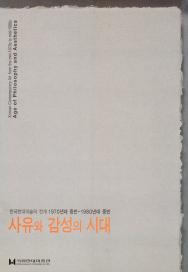
Korean Monochrome Painting in the 1970s-80s-Object and the Other, a Social History of Non-Representation
-
Kim Mi-kyung
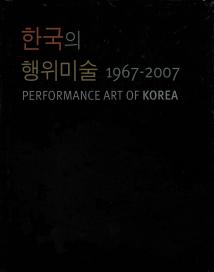
Performance Art of Korea 1960-70
-
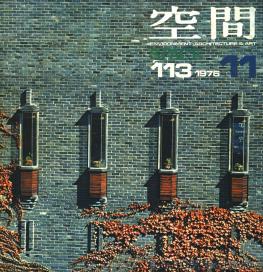
Lee Yil
Change, Search, and Experiment: Ten Years of Korean Contemporary Painting
Change, Search, and Experiment: Ten Years of Korean Contemporary Painting Lee Yil Preface To trace the footprints of Korean art over the past decade may at first appear a relatively easy task, since the period still resonates vividly in our memory as a ‘lived past’. Yet when we attempt to apprehend and evaluate these years as a self-contained historical unit, and further to define their place in history, the task proves far more elusive – not least because the temporal distance required for historical assessment remains insufficient. What we call historical evaluation demands a certain degree of detachment in time; but the past decade remains firmly embedded in present realities, making it ‘a past in progress’ in which present and past coexist. What further obscures our historical vision is that the very age in which we live is one of accelerated movement. Contemporary art is no exception to this convulsive rhythm. At times, abrupt discontinuities resurface like an atavistic inheritance; at others, sudden shifts emerge as if by mutation. What may outwardly appear as rupture—an absence of historical perspective—may, in fact, conceal beneath the surface a deeper continuity of underlying currents that cannot be readily dismissed. In Korean art, even if transformations have not been as radically complex as elsewhere, the uneasy entanglement between the established and younger generations remains vividly present. Though often thinly layered and limited in scope, artistic expression encompasses diverse and sometimes contradictory tendencies, each asserting its claim to contemporaneity. Within such a tangled context, can one meaningfully articulate a dominant trajectory from the past decade of Korean contemporary painting? Perhaps, but if only the account were confined to a straightforward chronological narrative exclusively grounded in the available evidence. However, even the task of gathering and organizing the vast and still unprocessed body of material is itself daunting, and the subjective judgments inherent in selecting and excluding sources are unavoidable. With these conditions in mind, this overview of trends in Korean painting (Western-style) over the past decade will proceed according to the following method. First, the discussion will proceed chronologically, while also concentrating on those ‘movements’ that played a leading role in the development of contemporary Korean painting between 1966 and 1976. The concrete activities of these collective movements, along with the ideas and ideals they embodied, will be examined in relation to Korea’s historical and generational context and situated within the broader framework of international contemporary art. As a consequence, with only a few exceptional cases, individual artistic activities will be considered only in a limited way. It should be emphasized, however, that the term ‘collective movement’ refers not only to formally organized ‘groups’, but also to ideological and spiritual ‘kinships’ formed through individual practices that resonated with one another. 1. The Afterimage of Abstract Expressionism (1966–67) If 1957 is regarded as the year that Art Informel was introduced into Korea, then by 1966–67, a decade later, the prevailing tendencies of the art world were marked by the decline of Abstract Expressionism and by the inability, or relative absence, of a younger generation capable of moving beyond it. In effect, the Informel generation and the established artists associated with it, who had until then played a central role in shaping modern painting in Korea, had largely relinquished their earlier leadership, limiting their activities to the maintenance of the status quo. Meanwhile, the younger generation had yet to acquire the resources or confidence necessary to break through this inertia. This condition was clearly reflected in the Contemporary Art Exhibit organized by the Chosun Ilbo, which in 1966 reached its tenth iteration, despite not being held in the preceding or following year, and in the Congress for Cultural Freedom Invitational Exhibition (established in 1962). Both of these exhibitions, which had previously played leading roles in advancing modern Korean painting, at this point revealed symptoms of decline and stagnation. The generation of Abstract Expressionist painters who had once proclaimed a genuine avant-garde, even at an international level, together with the earlier generation of Abstraction Lyrique, could no longer maintain their position at the forefront. The global currents of contemporary art no longer allowed them to persist indefinitely in claiming an avant-garde stance. Yet, instead of responding to these shifts, they appeared largely indifferent, choosing instead to remain within, and even cling to, the stylistic frameworks they had previously established. If the emergence of Art Informel and action-painting in Korea can be understood as a response to the nation’s concrete historical circumstances, more specifically, as a manifestation of a pervasive existential crisis, then the movement must be recognized as a decisive turning point in the trajectory of modern Korean painting. The difficulty, however, was that the sharper and more urgent such expressions became, the more rigorously artists were compelled to cultivate an acute awareness of their contemporary reality. At the same time, they were challenged to articulate more autonomous visions and methodologies in response to that reality. In comparison with international developments, Abstract Expressionism had by this time already become an outdated idiom. Here, it would not be necessary to rehearse the problem of international simultaneity, nor are we unaware that Korea’s circumstances were inevitably subject to limitations in this regard. It must be stressed, however, that in every place and period the development of art unfolds according to its own intrinsic and dynamic ‘laws.’ To embody the dynamism of these laws is what generates the collective movement of an era or sustains the consistent pursuit of an individual painter. In Korea, however, the vigorous energy of Abstract Expressionism and of its leading figures around the early 1960s had, by the latter part of the decade, reached a state of stagnation, while revolving in place without any visible signs of transition or struggle for renewal. Two painters seeking a new transition Yet painting in 1966, at the threshold of the latter half of the 1960s, cannot be regarded as entirely stagnant. Importantly, in the tenth edition of the Contemporary Art Exhibit (1966), two painters—Ha Chonghyun and Chun Sungwoo—emerged as pivotal figures in the search for new directions. Their approaches stood in sharp contrast, both in formal composition and painterly style. To borrow terminology then unfamiliar within Korean abstraction but current in American discourse, Ha gravitated toward the so-called ‘hard-edge’ style, aiming for sharp geometric compositions of color planes. By contrast, Chun’s works revealed affinities with ‘color-field’ painting, as broad fields of interpenetrating hues spread across the canvas. Despite these contrasting approaches, what the two artists shared was a determination to reposition painting not as an arena for existential crisis or as a situational expression of the zeitgeist, but as an autonomous and bounded order—an objective world of its own. However, these attempts at new directions were not yet sufficient to form a collective trend. The legacy of Abstract Expressionism, already deprived of its initial vitality and any forward-looking tension, persisted largely by sheer inertia. The emerging experiments in painting had not yet created the conditions for new approaches to take root. Even in 1967, when both the Contemporary Art Exhibit organized by the Chosun Ilbo and the Congress for Cultural Freedom Invitational Exhibition were suspended, the second edition of 10 Korean Contemporary Painters revealed little more than a state of stagnation. Among the artists selected to represent Korea at the São Paulo Biennale, it was only Ha Chonghyun’s rigorous color-plane compositions and Youn Myeungro’s pop art–inspired concepts and techniques that offered even a faint sense of freshness. Meanwhile, among artists in around their thirties—the generation that succeeded the Informel painters—there began to emerge tentative signs of a post-Expressionist orientation. Notably, Choi Myoungyoung and Kim Tchahsup, both of whom were selected to represent Korea at the Paris Biennale, presented works that, though still confined to the stage of exploration, nevertheless signaled an interest in cultivating new formal languages of their own. Choi sought to sublate conventional Expressionist styles into more intellectual and geometric compositions, while Kim, at the same moment, introduced bright, unmodulated colors and evocative imagery into his compositions. Yet neither had attained a fully coherent visual language. Nonetheless, as 1967 drew to a close, the seeds of a decisive turning point in Korean contemporary art had already been sown, and by December of that year they would emerge in the form of Union Exhibition of Korean Young Artists. 2. Diffusion and Reduction (1968–70) The final two years of the 1960s may be regarded as marking another point of departure in the trajectory of contemporary Korean art. Previously, the general tendencies of this period have been characterized as the dynamic interplay between ‘diffusion and reduction’. This dynamic, however, should not be viewed solely within the context of Korean art; rather, it may represent a distinctive Korean response to broader global phenomena. This period may be understood as a second phase of engagement with global perspectives, succeeding the late 1950s, when younger artists first demonstrated a bold awareness of confronting global artistic trends. During this time, diverse modes of expression—at times seemingly contradictory—coexisted, as artists explored the rationale for their existence and sought to uncover fundamental meanings. Despite its temporal lag, this phenomenon appears to have corresponded with broader international trends. In the West, for instance, the waning fervor of Abstract Expressionism was followed almost simultaneously by the rise of Pop Art and the so-called Nouveau Réalisme. Concurrently, experiments were unfolding in Op Art and ‘hard-edge’ abstraction, as well as in Assemblage works known as ‘Junk Art’, and in attempts to transform everyday objects into conceptual or environmental forms. Art thus came to dismantle the boundaries that had traditionally separated genres, expanding into a state of ‘unregulated openness.’ At the same time, it moved toward a ‘reduction’ that sought to restore painting to its fundamental, inherent systems of form. The proposal of the designation ‘diffusion and reduction’ arose precisely from this line of thought. In Korea, the catalyst for this new phase was the earlier Union Exhibition of Korean Young Artists, organized by three groups that, while heterogeneous in character, joined together for a collective exhibition. The groups were Origin Fine Arts Association (Orijin), Zero Group (Mudongin), and Sinjeon Group (Sinjeon dongin). The Origin Fine Arts Association, which included Choi Myoungyoung, Suh Seungwon, Lee Seungjio, Kim Sooik, Shin Kiock, Choi Changhong, Lee Sangrak, and Ham Sup, consisted of painters belonging to the so-called “Generation of April 19 Revolution” and represented the cohort that directly succeeded the Informel generation. These artists shared, first and foremost, a common trait of anti–Abstract Expressionism, and secondly, they sought to consolidate this position in the direction of a planar, geometry-oriented aesthetic. It may be said that this orientation was first expressed in a collective form through Origin Fine Arts Association. In the Korean context, this form of ‘cool’ abstraction—at once constructive and planar-marked by fields of color that retained emotional resonance yet combined with simplified, lucid primary tones and what Clement Greenberg described as the ‘material openness of design’ and ‘linear clarity’ -did not appear to follow a distinctly consistent logic in its conception. Rather, it appears that these painters, without fully grasping the historical contexts or the conceptual particularities of the successive strands of geometric abstraction as they had developed in Europe and the United States, absorbed those diverse tendencies almost simultaneously and in largely sensorial terms. The Collective Emergence of Geometric Abstraction by Necessity In fact, there is no indigenous tradition of geometric abstraction in Korea. There was neither Piter Mondrian nor Kazimir Malevich, nor any direct encounter with Constructivist formal principles as mediated through the Bauhaus. Instead, what emerged—largely in reaction against geometric abstraction as it had developed elsewhere—was Art Informel, which forcefully asserted itself in the postwar years. "As a counter-reaction, the postwar ‘second generation’ moved toward a new pictorial order, once again seeking a unitary, homogeneous space. Yet recent abstraction in Korea goes further, rejecting even the constructive and painterly elements that had defined earlier forms of geometric abstraction. It also renounces the purely formal world to which Mondrian aspired, regarding his pictorial space as still constrained by the traditional dualism of ‘form and ground.’ When set against these Western contexts, one may question whether the Origin Fine Arts Association’s pursuit of a new formal order could genuinely overcome, or fully assimilate, the issues at stake. At the same time, these painters were shaped by the particular conditions of Korea’s own art-historical context, circumstances which inevitably imposed such limitations. Yet from this highly ambiguous position, and through equally ambiguous conceptions, the emergence of geometric abstraction in Korea as a collective movement was nonetheless the outcome of an undeniable necessity specific to our context. That necessity lay in establishing a formative order grounded in fundamental forms and a demand for visual clarity. On the other hand, the two other groups that participated in the Union Exhibition, namely Zero Group (Choi Boonghyun, Kim Youngja, Lim Dan, Lee Taehyun, Moon Bokcheol, Jin Iksang) and Sinjeon Group (Kang Kukjin, Yang Deoksu, Jung Kangja, Shim Seonhee, Kim Inhwan, Chung Chanseung), stood in sharp contrast to Origin Group. Grounded in the Dadaist spirit that underpinned Art Informel—namely, its ‘anti-art’ tendency—they openly declared a rupture with the realm of abstraction. Already in the early 1960s, Zero Group had staged a solo exhibition of object-based works with strong Dadaist inclinations, marking one of Korea’s earliest ventures into the new avant-garde. In the Union Exhibition, they continued to present everyday objects, rejecting the established boundaries of ‘art as art’ and dismantling the framework of conventional form. At the same time, they pursued new approaches to the objet, while making explicit their intention to return artistic practice to a point of origin. This position became both a challenge to art and an ethical provocation, calling for greater awareness of contemporary reality. Toward the Everyday and Environmental Integration of Art Finally, Sinjeon Group, the youngest generation among those in the Union Exhibition, appeared—unlike the rather negative orientation of Zero Group to accept urban realities and the environments they provided in a positive light. This group pursued more actively the integration of art into everyday life and into the environment. In doing so, they avoided both the lofty, rarefied stance of Origin Fine Arts Association and the cynicism of Zero Group, instead displaying a constructive disposition toward engaging with urban and everyday spaces. These tendencies defined the distinctive character of this younger generation of artists. Moreover, as 1968 unfolded, responding to the signal for change heralded by the Union Exhibition, the artistic scene began to display an unprecedented vitality from the very outset of the year. The start of the 1968 art season was marked by the Comprehensive Art Exhibition, a group invitational organized by the Korean Information Service Gallery, which had newly relocated to a site beside Deoksugung Palace that year. Both established groups and emerging collectives were invited to share this platform, yet the generational gap between them, at once ideological and sensorial, was evident. Representing the younger generation were the very three groups that had participated in the Union Exhibition of Young Korean Artists at the end of the previous year. Their presence in this exhibition affirmed their determination to pursue, with even greater vigor, the directions they had already set forth. Separate from the Comprehensive Art Exhibition, another strikingly fresh group emerged in the opening season of 1968, reaffirming that the Korean art scene was entering a new phase. This was the First Painting ’68 Exhibition, held in March. Its founding members were Kwak Hoon, Kim Kulim, Kim Tchahsup, Park Heeja, Yu Bukang, Li Jagyong, Cha Myeonghui, Ha Dongchul, and Han Gisu. Rather than presenting stylistic or ideological homogeneity as a group, the participating artists pursued the development of their individual idioms and aesthetic positions with greater breadth. Although the exhibition therefore lacked collective consistency, the fact that all its members as representatives of a new generation demonstrated fresh sensibilities and strong ambitions made it a particularly stimulating and inspiring debut. Although it is admittedly problematic to reduce the tendencies of these artists to a few categories, their principal orientations may be identified, in rough terms, as follows: an Op-art tendency (Kim Kulim); a color-field or imagistic tendency (Kim Tchahsup); a Pop-oriented tendency (Ha Dongchul); and lyrical abstraction, pursued by several of the women members. Among these, the works of Kim Kulim and Kim Tchahsup attracted particular attention. Kim Kulim may have been the first in Korea to assimilate the visual language of Op Art into his pictorial practice, employing meticulous calculation, method, and materials to produce works of considerable refinement. His plastic reliefs generated strong visual impact through the disciplined rhythms of patterned surface repetition. It may be argued that the addition of color contrast to the repetitive relief forms would have further amplified their intensity. By contrast, Kim Tchahsup pursued what may be characterized as a form of ‘New Imagism,’ developing a distinct pictorial mode. In his works, geometric lines alternated with rhythmic ones, across which vivid color fields extended. As these lines and fields dissolved into one another, they generated fluid silhouettes and highly suggestive images. Meanwhile, the Contemporary Art Exhibit —after skipping 1967 and returning in 1968 for its twelfth iteration—appeared to have undergone a significant renewal. Most notably, it featured an unprecedented number of younger-generation artists, a scale of inclusion never before seen in the history of the exhibition. At the same time, this very fact testified to a marked transformation in the landscape of the Korean art world. The clearest manifestation of this shift was the emergence of Op Art and geometric modes of expression, revealing the changing direction of the period. The Pitfalls of Homogeneity However, phenomena of this nature are not without their inherent pitfalls and such pitfalls are not confined to the younger generation alone. Instead, they have always existed as latent conditions within the very climate of Korean art. A salient example can be found in the Informel generation, where the danger lay precisely in the pitfalls of homogeneity. As noted earlier, geometric abstraction in Korea constituted a mode of expression lacking any deep-rooted logical necessity. Although engagement with this form of abstraction may be seen as justified within the developmental trajectory of modern Korean painting, what was lacking was the firm establishment of a systematic conception and methodology. In reality, however, there was no assurance that the younger generation would not simply repeat the very missteps of the Art Informel generation. At this point, it may be useful to turn outward to Sam Hunter’s classifications in Modern American Painting and Sculpture. In defining the anti-expressionist, or so-called “post-painterly” abstraction of the 1960s, Hunter identified several principal categories: Color-Field Painting: Represented by painters such as Kenneth Noland and Jules Olitski. Hard-Edge Painting: A term first introduced by critic Jules Langsner in the late 1950s, applied in particular to artists including Ellsworth Kelly, Al Held, and Frank Stella. Shaped Canvas: Works in which the canvas is treated not merely as an abstract plane but as an object in itself, often extending to the edges, whereby the painted surface acquires a relief-like, objecthood quality. Monochrome Painting: A tendency that assumed a decisive form in the work of artists ranging from Ad Reinhardt to younger figures such as Robert Mangold. Op Art: Brought to prominence in 1965 through The Responsive Eye, the exhibition organized by William Seitz at the Museum of Modern Art in New York. Serial Art: A more recent development within abstraction, characterized by the systematic repetition of identical images or abstract forms in serial arrangements, resulting in works where variation across the surface is minimized or eliminated. Hard-edge abstraction’s inroads into the established generation For reference, one might also add the so-called school of ‘non-relational’ abstraction. Yet even without being explicitly identified as such, it may reasonably be subsumed within the six categories noted above. Sam Hunter’s classification can hardly be regarded as definitive; nevertheless, it illustrates the extraordinary diversity of new forms of abstraction that emerged in reaction against Abstract Expressionism from the 1960s onward. This is not to suggest that such classifications can be applied without modification to Korean abstraction, for it must be acknowledged that our own cultural and historical circumstances differ fundamentally from that context. Still, even allowing for these differences, it must be noted that constructive or schematic hard-edge styles of abstraction nonetheless emerged as a dominant current in painting. This occurred despite their lack of an independent pictorial vision at the level of conception, the absence of a corresponding methodology, and, above all, a striking poverty of individuality. And importantly, this was not a movement confined to the younger generation alone. In other words, this wave had spread even to the established generation. For example, in the Contemporary Korean Painting Exhibition, held for the first time at the National Museum of Modern Art, Tokyo (July–September 1968), the following artists participated: Byun Chongha, Choi Youngrim, Chung Changsup, Chun Sungwoo, Ha Chonghyun, Kim Foon, Kim Youngjoo, Kwon Okyon, Lee Seduk, Lee Soojai, Nam Kwan, Park Seo-Bo, Quak Insik, Lee Ufan, Yoo Youngkuk, Kim Chonghak, Kim Sangyu, Rhee Seundja, Yoo Kangyul, and Youn Myeungro (as listed in the exhibition catalogue). In this exhibition, Yoo Youngkuk’s expressionist abstractions, once dominated by the intensity of color, shifted toward compositions structured around geometric patterns and color fields. Kim Youngjoo’s canvases, previously characterized by impassioned brushwork, abruptly turned to schematic repetitions of triangular color bands. Chun Sungwoo’s formerly hazy, all-over surfaces, meanwhile, were redefined by straight lines that divided the canvas into large zones beneath layered fields of color. Even Park Seo-Bo, one of the strongest advocates and most representative figures of the Art Informel movement, presented works marked by lucid geometric compositions, in which verticals, horizontals, and diagonals intersected sharply, while color fields of strong contrast were set against one another. What distinguished his canvases, moreover, was a resolute, systematic spirit, lacking in the works of Ha Chonghyun, that endowed them with a uniquely balanced solidity. Park Seo-Bo’s shift in artistic direction is particularly noteworthy, not only because he had been one of the leading painters of the Informel generation, but also because his influence on his contemporaries was considerable. His exceptionally strong artistic personality, which had already distinguished him during the Informel period, can be assumed to have exerted a significant impact during the subsequent phase of geometric abstraction as well. Indeed, his transition affected many younger artists—whether consciously or not—and ultimately led to the formation of what might be described as a distinctively Korean “school,” that is, a stylistic group centered around a particular artist or manner of painting. Affirmation of Solidarity and Resistance to Homogenization However, to return once more to the case of Park Seo-Bo: as his transition from constructive abstraction around 1968 to the Illusion series presented in his solo exhibition Heredity (遺傳質) in the 1970s demonstrates, the overall current of the art world was by no means confined to a single trajectory of geometric abstraction. The Contemporary Art Exhibit of 1969, held the following year, proved instead to be a regressive and heterogeneous group exhibition lacking clear character, and the year as a whole saw no individual activity of significant influence. Yet if any collective movement emerged that outwardly expressed a sense of shared solidarity and a search for new possibilities, it was the founding of the AG Group (Korean Avant-Garde Association). (Founding members: artists— Kwak Hoon, Kim Kulim, Kim Tchahsup, Park Suk-won, Park Chongbae, Suh Seungwon, Lee Seungjio, Choi Myoungyoung, Ha Chonghyun; critics and theorists—Kim Inhwan, Oh Kwang-su, Lee Yil; listed in alphabetical order.) The original purpose of founding this association, which included art critics among its members, was to serve as the nucleus for a genuine avant-garde art movement within the contemporary art scene of the time and to become its ideological center. Accordingly, “AG” set as its primary task the establishment of a theoretical framework to define the coordinates of contemporary art, publishing a specialized art journal for this purpose (the first issue appeared in the same year, and the series ended with the fourth issue). Along with this, the group’s practical propositions took concrete form with the opening of the AG exhibition in 1970. This event marked another turning point in the Korean art scene. Around the same time, the Sincheje group held its inaugural exhibition in May, followed by a second in December, further reflecting the fervent enthusiasm and creative drive that characterized this period. (Members: Kim Soo-Pyung, Yun Geocheol, Kim Changjin, Lee Kangso, and Lee Jooyeong) In short, the founding of AG, the AG 1970 Exhibition, and the various group shows associated with its members—each in its own form—responded sensitively to the spirit of the times and, through the articulation of their independent artistic ideals, seem to have affirmed a sense of historical solidarity. These experimental propositions served to restrain the younger generation’s movements from lapsing into uniformity, while fostering new experiences of artistic creation and perception, thereby expanding the expressive range of Korean painting to an unprecedented degree. 3. The Current Situations and Prospects (1971–76) It was Michel Tapié, it is said, who once remarked that the era of collective artistic activity had already lost its validity. Yet such a claim can hardly be applied directly to the Korean context. On the contrary, collective activity, whether on a large or small scale, and the ‘shared ground’ underpinning it continue to be regarded as indispensable. Indeed, as if to confirm this, the early 1970s witnessed the emergence of numerous groups, many of which, as previously noted, were bound together by a sense of historical solidarity or by ideological commitments, each leaving its own distinct trajectory. Although it may not be especially necessary to enumerate in detail the rise and decline of all such groups, two in particular may be cited as representative examples in which the voices of the younger generation were articulated in a concentrated and relatively consistent manner: the ST (Space and Time) Group (founded in 1971 by Lee Kun-Yong, Park Wonjun, Kim Munja, Han Jeongmoon, and Yeo Un) and the Esprit Group (founded in 1972 by Kim Gwangjin, Kim Myeong-su, Kim Taeho, Noh Jaeseung, Yang Seung-ock, Lee Byungyong, Lee Ilho, Chun Kook-hwang, and Hwang Hyochang). The Esprit Group, moreover, created a broader forum for younger artists, staging the ambitious Exhibition of Contemporary Artists in Their Twenties (1973), which featured Kim Youngsu, Kim Juyeong, Kim Jinseok, Nam Sanggyun, Kim Taeho, Baik Kunnam, Eom Gihong, Yeo Myeonggu, Lee Dooshik, Lee Byoungyong, Lee Jongnam, Lee Ywanho, Lee Wonhwa, Lee Hyangmi, Hur Hwang, and Hong Minpyo. Alongside these, groups such as ‘Plane’, ‘Structure,’ and ‘Crosswise’ also engaged in notable activities in parallel. Taken together, the early 1970s constituted a period in which the Korean art scene, viewed from a broader perspective, was steadily working toward the genuine consolidation of contemporary art in Korea. The Groundbreaking “Independent Exhibition of New Faces” Coinciding with this period, the inauguration of Korea’s first Indépendants in 1972 carries epochal significance in the development of contemporary Korean art. Not in the sense of an official Indépendants modeled on the French precedent, but rather as a ‘truly independent exhibition for new faces,’ it marked a dramatic turning point in the landscape of Korean contemporary art. Admittedly, the exhibition inevitably entailed considerable trial and error and various constraints inherent in any initial attempt. Nevertheless, by the time it reached its second iteration in the following year, the exhibition had already evolved into a genuine forum for ‘young art’. Yet I would argue that there was an important stepping stone in this process of growth. This was the First Seoul Biennale, organized by the AG Association, which was held prior to the Second Indépendants in 1974. Although the two exhibitions differed in both title and organizational structure, they shared a common objective: to provide the younger generation with a platform through which freer, more creative, and more individual expressions could be articulated within a collective context. Building on these two group exhibitions in 1974, the following year witnessed the opening of both the École de Seoul exhibition and the Seoul Contemporary Art Festival. In the present year, these two exhibitions, along with the Indépendants, now in its fourth iteration, have continued to be held. To this, one may add the establishment in 1974 of the Korean Young Artists' Association, founded primarily by younger sculptors and continuing to pursue sustained collective activity. Taken together, these developments amount to the advent of a veritable ‘spring and autumn period’ of group exhibitions in Korea. At the same time, however, it should not be overlooked that such phenomena inevitably entail a number of complex issues. In other words, these successive group exhibitions, regardless of their form, must not assume a ‘power-oriented’ bias. Fortunately, such partiality, at times bordering on the very homogeneity that should have been resisted, appears to be gradually diminishing. This is an encouraging development, whether considered from the perspective of collective tendencies or from that of individual artistic practices. Moreover, it is particularly noteworthy that, in both the reception of contemporary art and the interpretation of our own indigenous traditions, these works strongly convey a consciousness of active engagement. This, I believe, makes the prospects for the future all the more promising. It is widely recognised that we must be especially careful today about attempting to interpret the diverse tendencies of Korean art through frameworks shaped by Western concepts. Moreover, the very term ‘conceptual art’, or what it ideologically signifies, in fact implies a fundamental re-examination of established artistic notions. This is all the more relevant given that, in Korea, we have yet to reach a clear definition of ‘contemporary art’ itself. As a result, the expression ‘conceptual art’ may still sound somewhat misplaced or unfamiliar. Yet from our present perspective, it would seem that the time has come to articulate our own definition of the concept of art. In this regard, the impact of Lee Ufan through both through his works and his theoretical writings on the Korean art world since the 1970s must be regarded as highly significant. The decade of the 1970s has now entered its latter half. Looking back once more on the art world of the past ten years, it is evident that substantial transformations have taken place. Beyond the limitations of the ‘movements’ discussed in this essay, several painters now approaching their late forties are revealing new pictorial worlds. At the same time, in contrast to these developments, a number of younger artists who are indifferent to the ‘eye’ of the general public are engaging in experimental practices. Ideologically and methodologically, their orientations span from Lao-Tzu (老子) and Chan-Tzu (莊子) to structuralism, each asserting its own foundations. To schematically unify the present situation of Korean art, shaped by such divergent tendencies, would seem an impossible undertaking. Today, however, it can be asserted with confidence that Korea now possesses artists who are even capable of manifesting genuine individuality on the international stage, while the younger generation likewise exhibits comparable artistic potential. Collectively, these developments suggest that the prospects for contemporary Korean art are becoming increasingly broad and promising. *Source: Lee Yil, “Change, Search, and Experiment: Ten Years of Korean Contemporary Painting,” Space (November 1976): 42–48.
Related Terms
-
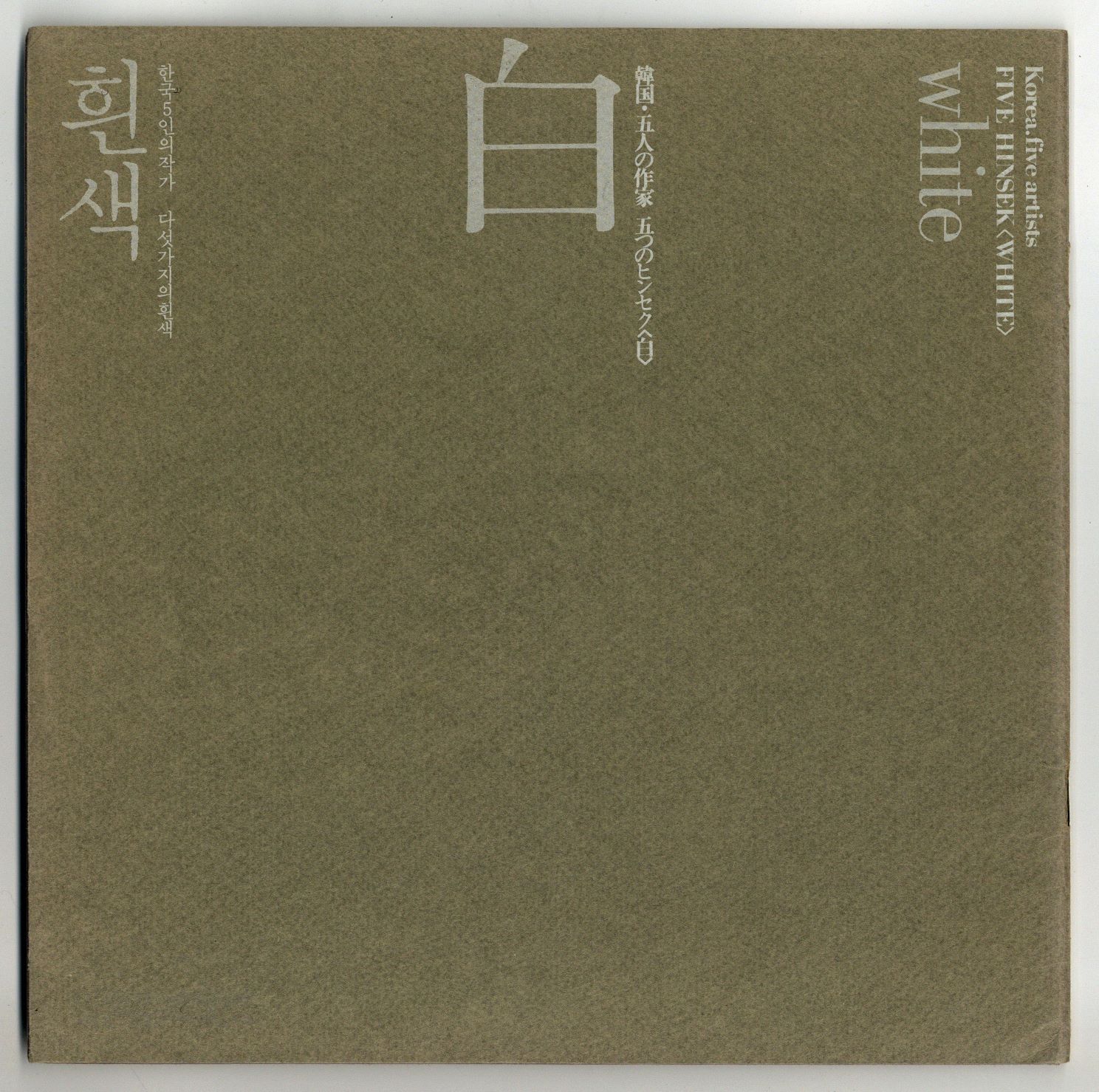
Korea: Five Artists, Five Hinsek—White
An exhibition held from May 6 to 24, 1975 at the Tokyo Gallery. Kwon Youngwoo, Park Seo-Bo, Suh Seungwon, Lee Dongyoub, and Hur Hwang participated in the exhibition. Yamamoto Takashi, the president of Tokyo Gallery, and Nakahara Yusuke, an art critic, planned the exhibition under the premise that the color white was a shared characteristic within the paintings of several young Korean artists. In the preface to the exhibition, Nakahara stated that the color white reflected a sensibility that surpassed any personal perspective. Lee Yil, an art critic, co-wrote the preface. He was of the opinion that the use of white in Korean painting symbolized a unique aesthetic sensibility, and that it was also significant as a psychological symbol. He stated the characteristic of the work of the five painters as “white monochrome”—a “single psychological vision that embraces the world”, distinct from European monochrome. The exhibition is seen as the beginning of the mainstream interest in monochromatic painting within Korea.
-

Three-Person Event Show
The Three-Person Event Show was a performance art exhibition held on December 30, 1975 at the Growrich Gallery in Seoul by Kim Yongmin, Lee Kunyong, and Jang Seokwon, who were members of the avant-garde art collective Space and Time Group (ST) from the 1970s. Under the leadership of Lee Kunyong, ST held its first exhibition attended by the theorist Kim Bokyoung and artists Kim Munja, Park Wonjun, Yeo Un, Han Jeongmun, and Shin Sunghy in 1971. Later, ST organized a total of seven group exhibitions until 1980, which were joined by other artists including Sung Neungkyung, Kim Yongmin, Nam Sanggyun, Song Jeonggi, Jang Seokwon, and Yun Jinseop. Throughout the 1970s, members of ST held several seminars and discussions, published a series of research bulletins, and produced a steady stream of over 100 performance art works. Lee Kunyong, who led the activities of ST, named his and his colleagues’ performance art an “event” to differentiate it from happenings from the late 1960s. He first presented the events Indoor Measurement and Equal Area at the ’75 Today’s Method Exhibition held at Baekrok Gallery in Seoul on April 19, 1975. In the Three-Person Event Show held in the same year, Kim Yongmin presented the events Marking off and Painting, Lee Kunyong, Walking and Eating Snacks, and Jang Seokwon, Laughter and Clock. Their events had characteristics of conceptual art that explored the concept of the everyday through the simple performance of everyday acts. The following year, on April 4, 1976, Sung Neungkyung joined these three artists to hold the Three-Person Event Show at Seoul Gallery in Seoul. In this event exhibition, Lee Kunyong presented Rubber Band and String and Logic of Place, Kim Yongmin, Mop and Footprints, Sung Neungkyung, Reading Newspaper and Counting Money, and Jang Seokwon, Matches.
-
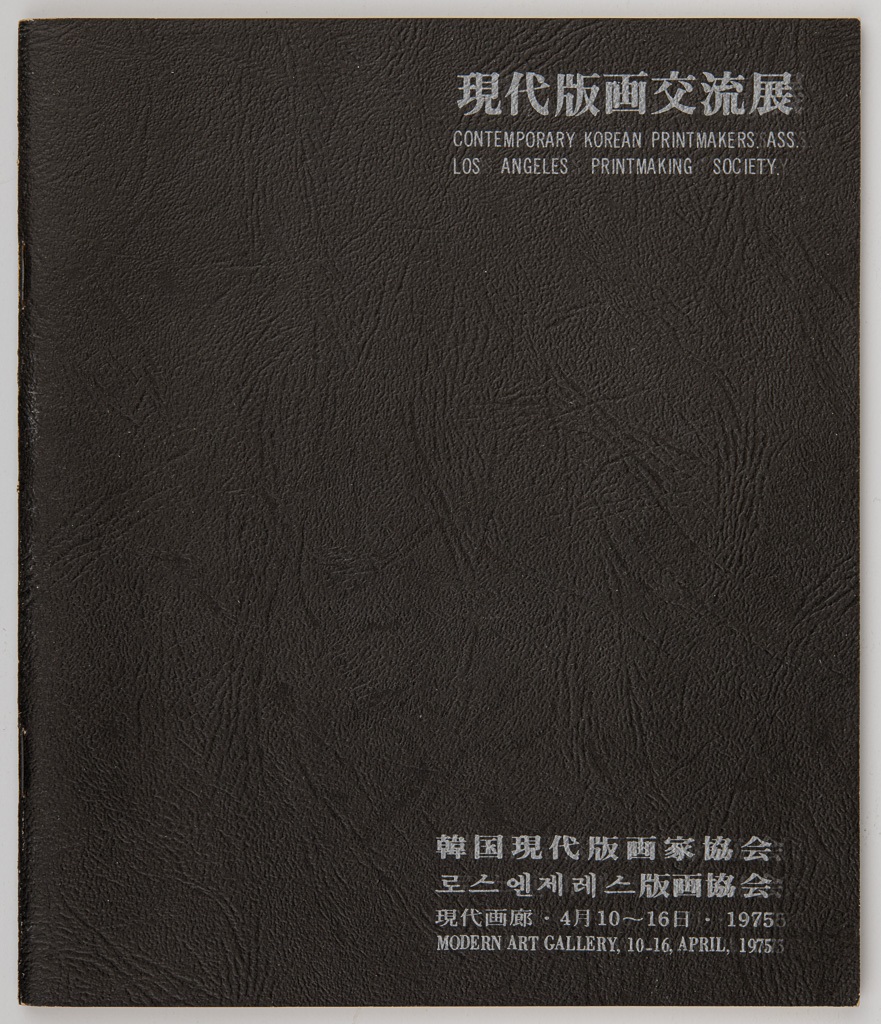
Contemporary Print Exchange Exhibition
The Contemporary Print Exchange Exhibition was an exhibition organized by the Korean Contemporary Printmakers Association (Hanguk hyeondae panhwaga hyeophoe) and the Los Angeles Printmaking Society (Losenjeles panhwaga hyeophoe) and held at Hyundai Hwarang from April 10 to 16 in 1975. The Korean Contemporary Printmakers Association hosted a number of international exchange exhibitions in the 1970s, including three with the Los Angeles Printmaking Society in 1973, 1975, and 1976. The 1975 exchange exhibition was held at Hyundai Hwarang in South Korea, and the other two were held at the USC Pacific Art Museum in Pasadena in the U.S. The Korean Contemporary Printmakers Association was able to establish direct contact with the Los Angeles Printmaking Society largely owing to Kim Bongtae, an artist active in the U.S. at the time. The International Contemporary Print Exchange Exhibition in 1975 featured Kang Whansup, Kim Minja, Kim Sangyu, Kim Choungza, Kim Chonghak, Kim Tchahsup, Kim Tschang-yeul, Kim Hyungdae, Ro Jaewhoang, Park Rehyun, Bae Yoong, Suh Seungwon, Yoo Kangyul, Youn Myeungro, Rhee Sangwooc, Lee Ufan, Cho Kookjeong, and Hwang Kyubaik. They showed diverse trends in contemporary Korean printmaking in the 1970s. This exhibition proved that international exchange through art was active and direct even when printmaking was only recently recognized as a medium of artistic expression in South Korea. The fact that the association organized the exhibition on an equal footing with the U.S. indicates the expansion of communication channels through art and the active transformation of international exchange.
-
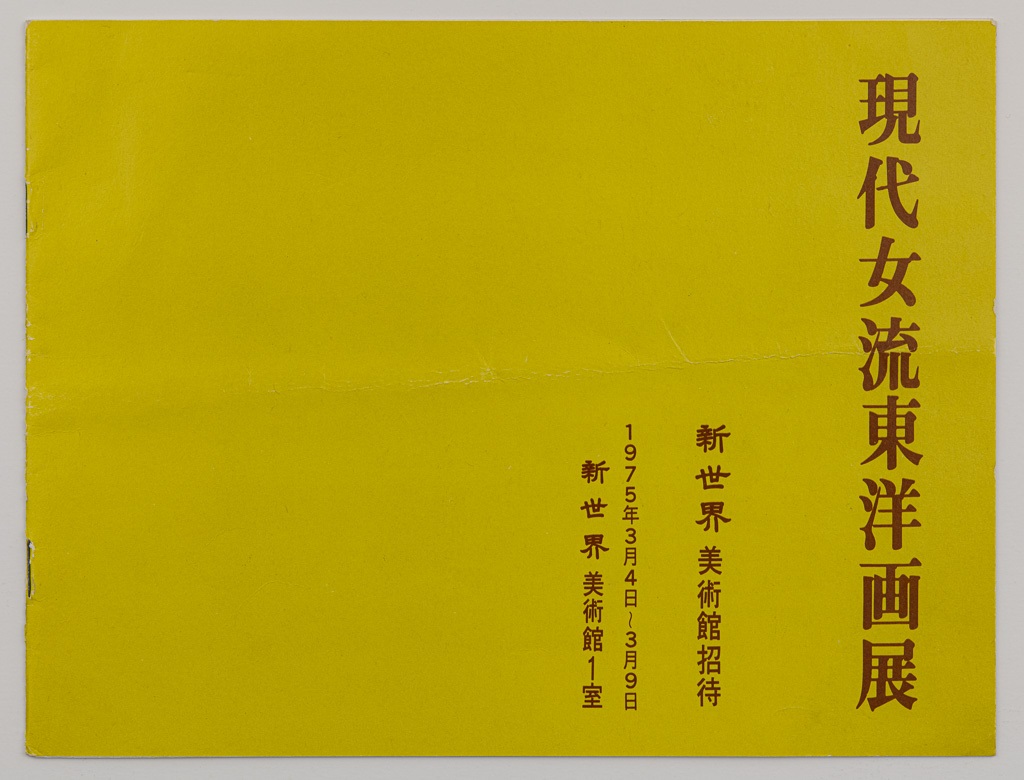
Modern Women’s Eastern Paintings Exhibition
The Modern Women’s Eastern Paintings Exhibition was an invitational exhibition held from March 4 through 9, 1975 at Shinsegae Gallery. The Shinsagae Gallery stated that this exhibition was not just an exhibition simply intended to promote friendship among women artists, but an exhibition of selected female artists in their thirties who were active at the time, including three artists from each of the three art universities, namely, Seoul National University, Ewha Womans University, and Hongik University. The nine selected artists were Lee Insil, Hong Junghee, and Yang Jeongja from Seoul National University; Won Moonja, Oh Jungja, and Kim Jeonghui from Ewha Womans University; and Moon Eunhee, Kang Jaesun, and Lee Sookja from Hongik University. Except Kim Jeonghui, all the other artists had won multiple awards at the National Art Exhibition (Gukjeon). The displayed works were dominated by landscape paintings and bird-and-flower paintings, including Bird, A Cluster of Flowers, and Purple Flower by Kang Jaesun, Persimmon by Moon Eunhee, Sylvia and Riverside by Kim Jeonghui, Sunny Day and Lotus by Oh Jeongja, Afternoon and Monkey by Won Moonja, Mountain View from Suanbo, Rose, and Peacock by Hong Junghee. In the preface of the exhibition catalogue, Lee Kyungsung wrote that with the successive founding of women artists’ organizations, such as Woman Fine Arts Association [Yeoryu hwagahoe] in 1973 and Korean Sculptress Association in 1974, and the holding of a series of related exhibitions, “female artists, whose existence is faded or disconnected from dialogue by being sandwiched between male artists, have gathered and made their distinctive visual statements known to the world” and that the Modern Women’s Eastern Paintings Exhibition was designed in such an atmosphere. This exhibition is an example of how the art world still referred to women [yeoseong] artists as “yeoryu artists” in the 1970s.
-
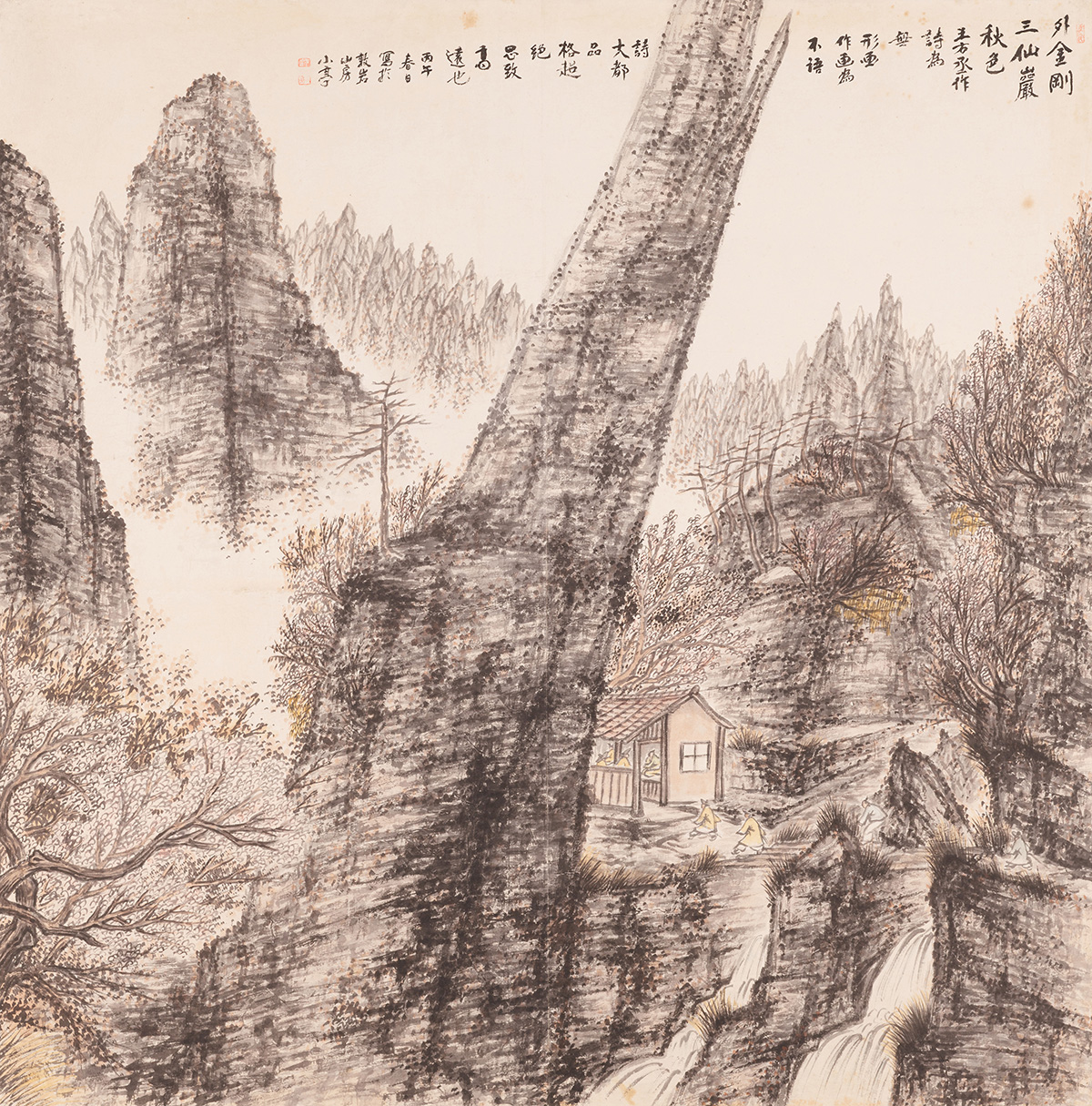
Byeon Gwansik
Byeon Gwansik (1899-1976, pen name Sojeong) was born in Ongjin, Hwanghae-do. He was a grandson of the last painter of the Joseon royal family, Sorim Cho Seokjin. He attended the Calligraphy and Painting Society [Seohwa Misulhoe] in 1917 when he turned 18. In 1923, he tried to organize Dongyeonsa with Lee Yongwoo, No Soohyeon, and Lee Yongwoo to look for harmony between old and new styles, but Dongyeonsa was disbanded the following year due to financial difficulties. In 1925, he moved to Japan with Kim Eunho and sat in on classes at the Tokyo School of Fine Arts. There, he developed a new style called Shinnamhwa that incorporated Nambukjong style with western painting techniques. After his return to Korea in 1929, his last official activity was to submit his work to the Joseon Art Exhibition [Joseon misul jeollamhoe]. He left Seoul in 1937 to focus on his art exploring diverse landscapes in Korea. He uniquely depicted Korea landscapes in his painting by using multiple ink-application painting method, broken line method, and unconventional compositions. His representative works include Farm Village (1957), Muchangchunsaegdo, and Oegeumgangsamseonamdo (1970).
-
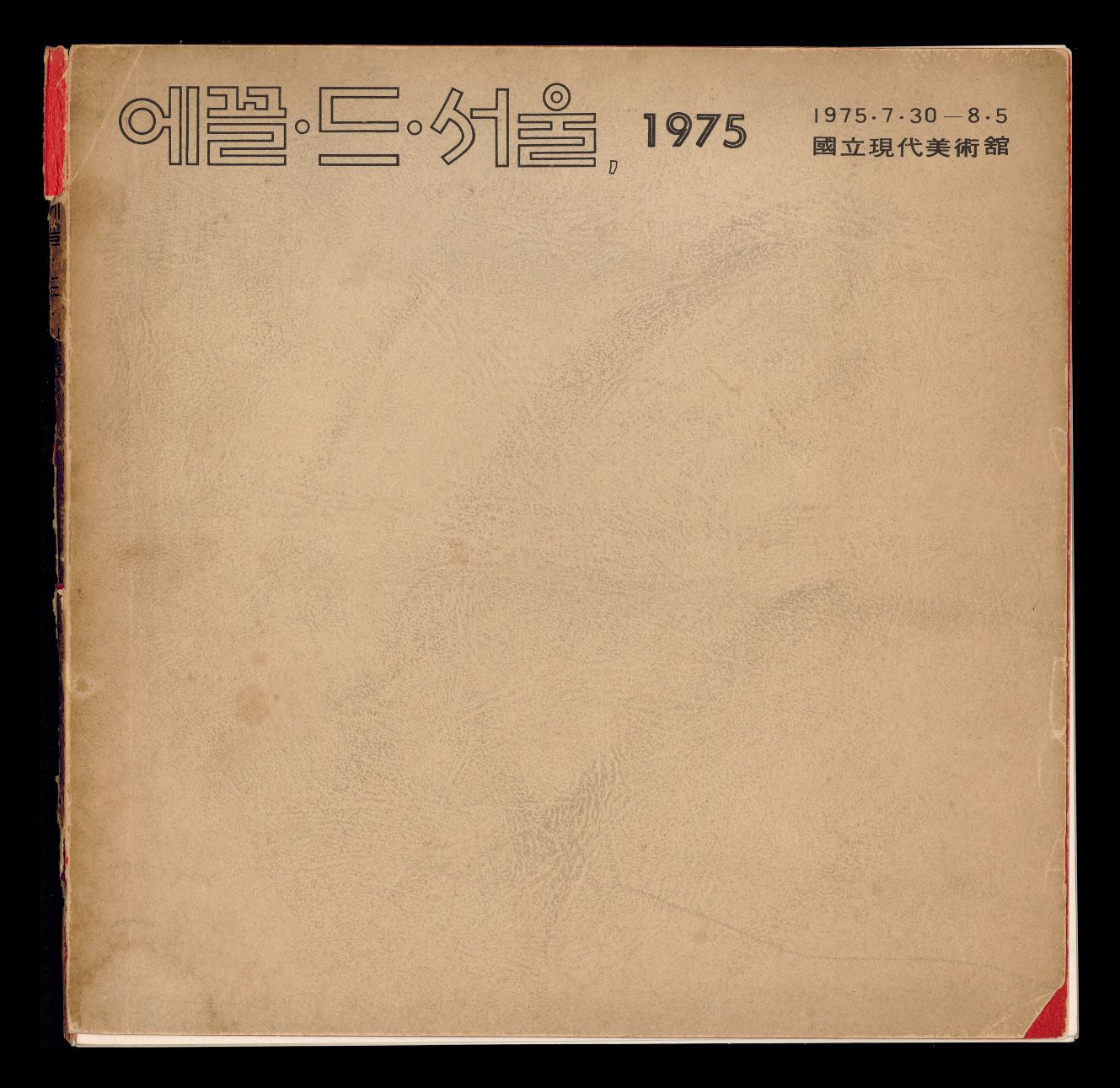
Ecole de Séoul
The Ecole de Seoul is an art group founded by Park Seo-Bo and others in 1975. Their first exhibition was held at the National Museum of Modern and Contemporary Art of Korea from July 30 to August 5, 1975. For the second exhibition in 1976, they adopted a new system, used for the first time in Korea, where an independent commissioner selected artists. Founding member Park Seo-Bo said, “While the Indépendants Exhibition and the Seoul Contemporary Art Festival aim to find new artists and expand the territory of contemporary art, the Ecole de Séoul is a miniature reflection of our contemporary art community.”
-
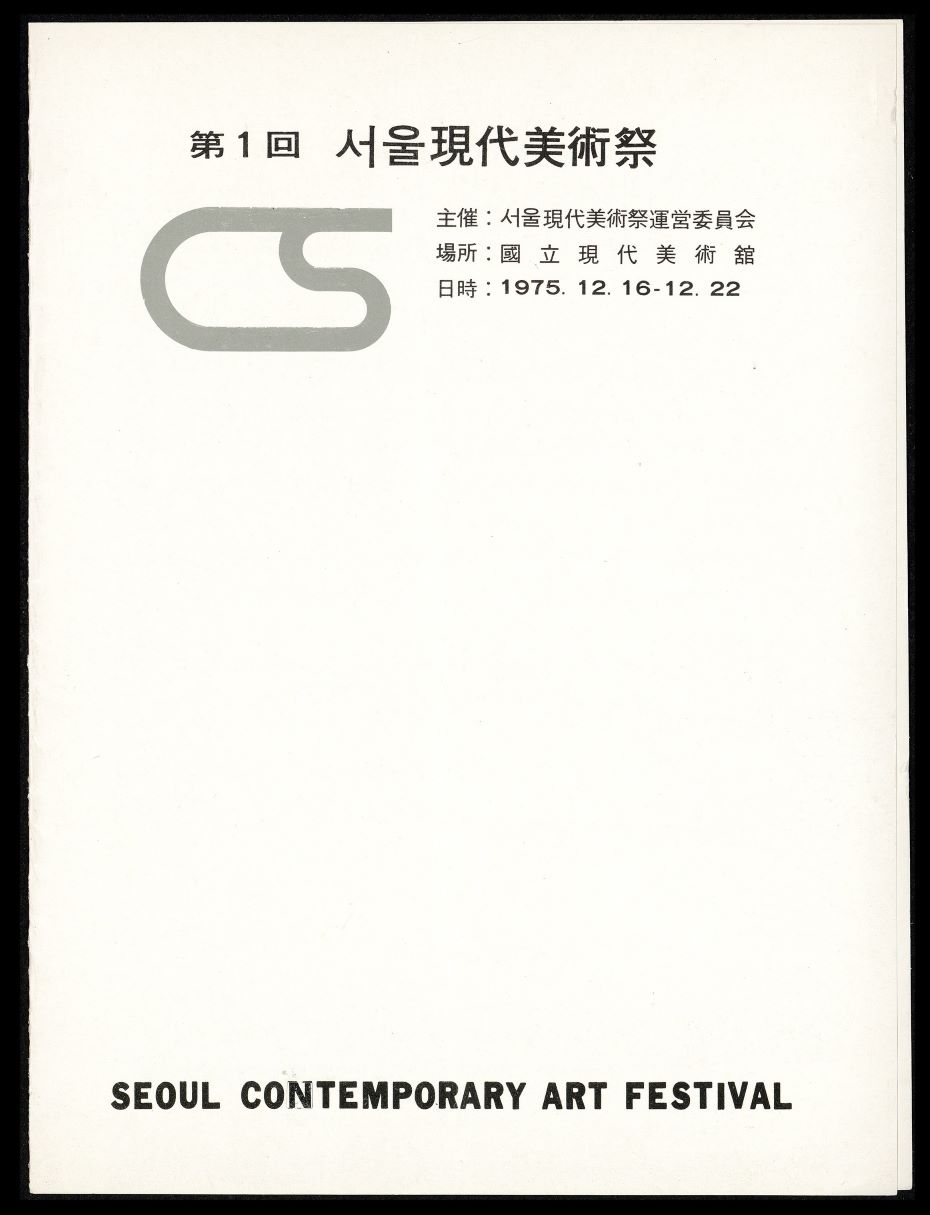
Seoul Contemporary Art Festival
The Seoul Contemporary Art Festival was a large-scale art festival held since 1975 by avant-garde artists of the time to counter the academism of the National Art Exhibition (Gukjeon). The first festival was held from December 16 through 22, 1975 at the National Museum of Modern Art, Korea (now MMCA). Ninety-six artists were invited with the operating committee consisting of Kim Kulim, Park Seo-Bo, Shim Moonseup, Yun Hyongkeun, Lee Kangso, Lee Seungjio, Jung Yungyul, Choi Daesup, Choi Kiwon, and Ha Indoo. According to the exhibition mission statement included in the catalogue of the first Seoul Contemporary Art Festival, the festival was originally established in December 1972 with the goal of providing a common platform for the participation of all creative contemporary artists, but due to various reasons, the holding of the festival was postponed until 1975. The number of the operating committee members for the second edition in August 1976 doubled from the ten people in the first edition. They were Kim Kulim, Kim Chonghak, Kim Chanshik, Park Seo-Bo, Park Suk-won, Suh Seungwon, Shim Moonseup, Youn Myeungro, Yun Hyongkeun, Lee Kangso, Lee Seungjio, Jung Yungyul, Chung Changsup, Cho Yongik, Choi Kiwon, Choi Daesup, Choi Manlin, Choi Myoungyoung, Ha Indoo, and Ha Chonghyun. At the meeting of the operating committee, the overall exhibition plan was discussed and invited artists were selected. In the process, the festival strove to discover new talents on a national scale who were in tune with both Korean and international art trends.

Sign Up for Email Updates