
-
January
The Korean Information Center is established as an exhibition hall under the Office of Public Information, with its main venue in Jeong-dong and an annex opened on July 15 in Sogong-dong, Jung-gu, Seoul. In January 1968, the gallery is relocated to the former Economic Development Exhibition Hall within Deoksugung Palace.
The sister-school exchange exhibition between Seoul National University and the University of Minnesota, Korean Art (University Gallery, University of Minnesota, January 8–February 4), is held. The exhibition is part of an artwork exchange program involving faculty and students at the University of Minnesota. In May 1958, the University of Minnesota Art Exchange Exhibition (Main Auditorium, Seoul National University, Seoul, May 23–31, 1958) is held.
-
February
Lee Bongsang opens the Lee Bongsang Painting Research Institute in Seoul. Kim Seobong, Park Seo-Bo, Park Seokho, and Lee Bongsang serve as members of the advisory committee. In December 1959, the institute is renamed the Seoul Art Research Institute (Seoul Misul Yeonguso).
-
March
The National Museum of Korea and the Korean Plastic Arts and Culture Research Institute (Hanguk Johyeong Munhwa Yeonguso) jointly organize the Exhibition of International Graphic Art (National Museum, Deoksugung Palace, Seoul, March 1–10). Works from Germany, Romania, the United States, Italy, and other countries are presented, totaling seventeen pieces.
The First Korean Photographers Group Founding Exhibition (Dong Hwa Gallery, Seoul, March 10-16) is held. Seven photographers participate, including Sung Dukyung, Lee Geon jung, Lee Hyeongmo, Jeong Doseon, Jeong Huiseop, Jo Myeongwon, and Choi Kyebok, presenting a total of forty-five works. The Korean Photographers Group [Hanguk sajin jakgadan] is formed in February 1957 by Choi Kyebok as the group leader, Lee Geon-jung as the secretary general, and Sung Dukyung, Lee Hyeongmo, Jo Myeongwon, Jeong Doseon, and Jeong Huiseop as organizing members.
-
April
The First Sinseonhoe Photography Exhibition (Dong Hwa Gallery, Seoul, April 2-8) is held. Seventeen photographers participate, including Kang Gyeonghwan, Kang Seyoung, Kim Gimyeong, Kim Beomsam, Kim Seonghwan, Park Yongnak, Son Gyumun, An Jongchil, Lee Ansun, Lee Haemun, Lee Hyungrok, Chung Bumtai, Jo Gyu, Jo Yonghun, Choi Taejun, Han Youngsoo, and Hwang Baengnyeon, presenting a total of thirty-eight works. Sinseonhoe is founded in April 1956 by young photographers who sought to pursue realist photographic art, and the group remains active until the early 1960s.
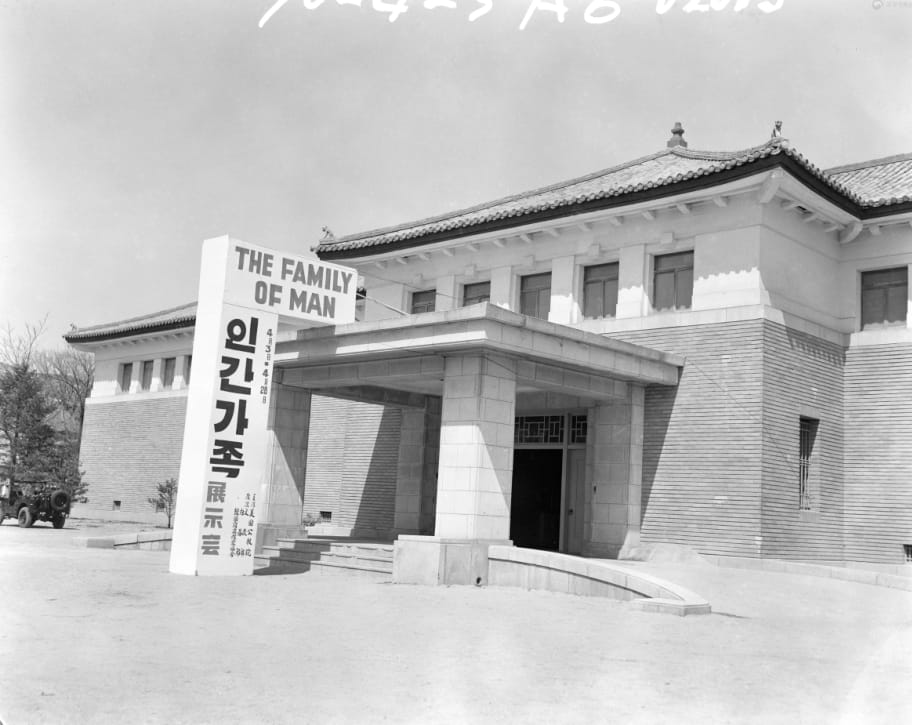
The Family of Man, curated by Edward Steichen, head of the Department of Photography at the Museum of Modern Art in New York, is held (Gyeongbokgung Palace Museum, Seoul, April 3–May 5). Under the theme “Humanity,” the exhibition features 503 works contributed by 273 participants from sixty-eight countries. Having toured more than one hundred cities since 1955, the exhibition played a significant role in the spread of realist photography amid the Cold War. The exhibition was brought to Korea through the efforts of Limb Eungsik and attracted approximately 300,000 visitors.
The First Modern Art Association Exhibition (Dong Hwa Gallery, Seoul, April 9–15) is held. Five artists participate, including Park Kosuk, Yoo Youngkuk, Lee Kyusang, Han Mook, and Hwang Yeomsoo, and they present a total of thirty-four works. The Modern Art Association [Modeon ateu hyeophoe], founded in January 1957 with the aim of pursuing a new form of modern art beyond the mannerism prevailing in the art world, held a total of six exhibitions before disbanding in 1960.
Organized by the United States Information Service (USIS) in Korea, Eight American Artists (National Museum of Korea, Deoksugung, Seoul, April 9-21) is held. Participants include David Hare, Ezio Martinelli, Guy Anderson, Kenneth Callahan, Mark Tobey, Morris Graves, Rhys Caparn, and Seymour Lipton.
It is recognized as the first exhibition of Abstract Expressionism presented in Korea and contributes to the spread of Abstract Expressionist art in the country.From April through December, Chung Kyu contributes to the magazine Sintaeyang on the history of Western painting circles in Korea in the first half of the twentieth century, under the title “Pioneers of Western painting in Korea.”
-
May
The First Hyundae Fine Artists Association Exhibition (USIS Center, Seoul, May 1-9) is held. Nine artists participate, including Kim Younghwan, Kim Jonghwi, Kim Tschang-Yeul, Kim Cheonggwan, Moon Woosik, Lee Cheol, Chang Seongsoun, Jo Yongmin, and Ha Indoo. The Hyundae Fine Artists Association [Hyeondae misulga hyeophoe], founded in November 1956, championed the anti-National Art Exhibition stance and promoted the modernism of emerging young artists.
The First Creative Arts Association Exhibition (Dong Hwa Gallery, Seoul, May 28-June 4) is held. Participating artists include Ko Whahum, Ryu Kyungchai, Park Changdorn, Park Hangsup, Lee Bongsang, Lee Joon, Chang Reesuok, Choi Youngrim, and Hwang Yooyup.
The Creative Arts Association [Changjak misul hyeophoe], formed in January 1957 by mid-career artists advocating reform of the Great Korean Art Association [Daehan misul hyeophoe], pursued a new sensibility of constructivist realism.The Korea Handicraft Demonstration Center [Hanguk gongye sibeomso] opens on Taepyeong-ro in Seoul. Operating for three years in cooperation with the Ministry of Commerce, it closes in January 1960 and is transferred to the College of Fine Arts at Seoul National University. The center played a foundational role in the introduction of modern design systems in Korea.
-
June
The First Sinjohyeongpa Exhibition (Dong Hwa Gallery, Seoul, June 27-July 4) is held. Seven artists participate, including Kim Kwanhyun, Byon Yeongwon, Byeon Huicheon, Son Gyepung, Lee Sangsoon, Cho Byunghyun, and Hwang Kyubaik, presenting thirty-eight works.
Sinjohyeongpa, a multidisciplinary art group formed by painters, designers, and architects pursuing the formative philosophy of the Bauhaus, held its third and final exhibition in 1959 and disbanded in 1961. -
July
-
August
-
September
-
October
Choi Kyungja presents fifty pieces of clothing at the first Clothing Exhibition (Bando Hotel, Seoul, October 12).
The Sixth National Art Exhibition (Gukjeon) (Gyeongbokgung Palace Museum, October 15-November 13) is held.
Yim Jiksoon wins the Presidential Award for A Sitting Figure, and Son Myeongye receives the Vice Presidential Award for Love.Organized by the U.S. National Commission for UNESCO, Art in Asia and the West (San Francisco Museum of Modern Art, October 28-December 1) is held. Works by Kim Youngki, Park Sookeun, and Sung Jaehyu are featured along with Korean antiques.
-
November
The Paik Taewon Crafts Exhibition (Dong Hwa Gallery, Seoul, November 2-8), is held. As the artist’s first solo craft exhibition, it features more than thirty new lacquer-inlay works, including screens and folding dividers. In May 1958, Paik Taewon receives the Seoul City Culture Award in recognition of his efforts to modernize lacquerware.
The Second Modern Art Association Exhibition (Hwashin Gallery, Seoul, November 16–22) is held. Seven artists participate, including Park Kosuk, Moon Shin, Yoo Youngkuk, Lee Kyusang, Chung Jeumsik, Han Mook, and Hwang Yeomsoo, presenting a total of thirty-three works.
Hosted by Chosun Ilbo newspaper company, The First Contemporary Art Exhibit (Deoksugung Museum of Art, November 23-December 8) is held. A total of thirty-six artists participate, including Kwon Youngman, Park Saengkwang, Suh Seok, and Lee Ungno (Eastern-style painting), Kim Gyeong, Kim Byungki, Kim Youngjoo, Kim Younghwan, Kim Tschang-Yeul, Kim Cheonghwan, Kim Choongsun, Kim Foon, Kim Sou, Ra Byeongzae, Moon Woosik, Moon Hakjin, Park Seo-Bo, Byon Yeongwon, Byeon Huicheon, Shim Chookcha, An Youngmok, Lee Seduk, Lee Cheol, Chang Seongsoun, Chun Hyucklim, Chung Kyu, Chung Jeumsik, Jeong Junyong, Chung Changsup, Jo Donghun, Cho Byunghyun, Cheon Pyongkun, Choi Youngrim, Ham Daejeong, Han Bongduk, and Hwang Kyubaik (Western-style painting). The exhibition sought to unite independent artists who challenged established authorities and to pursue anti-academicism. It continued to be held through its thirteenth edition in 1969.
-
December
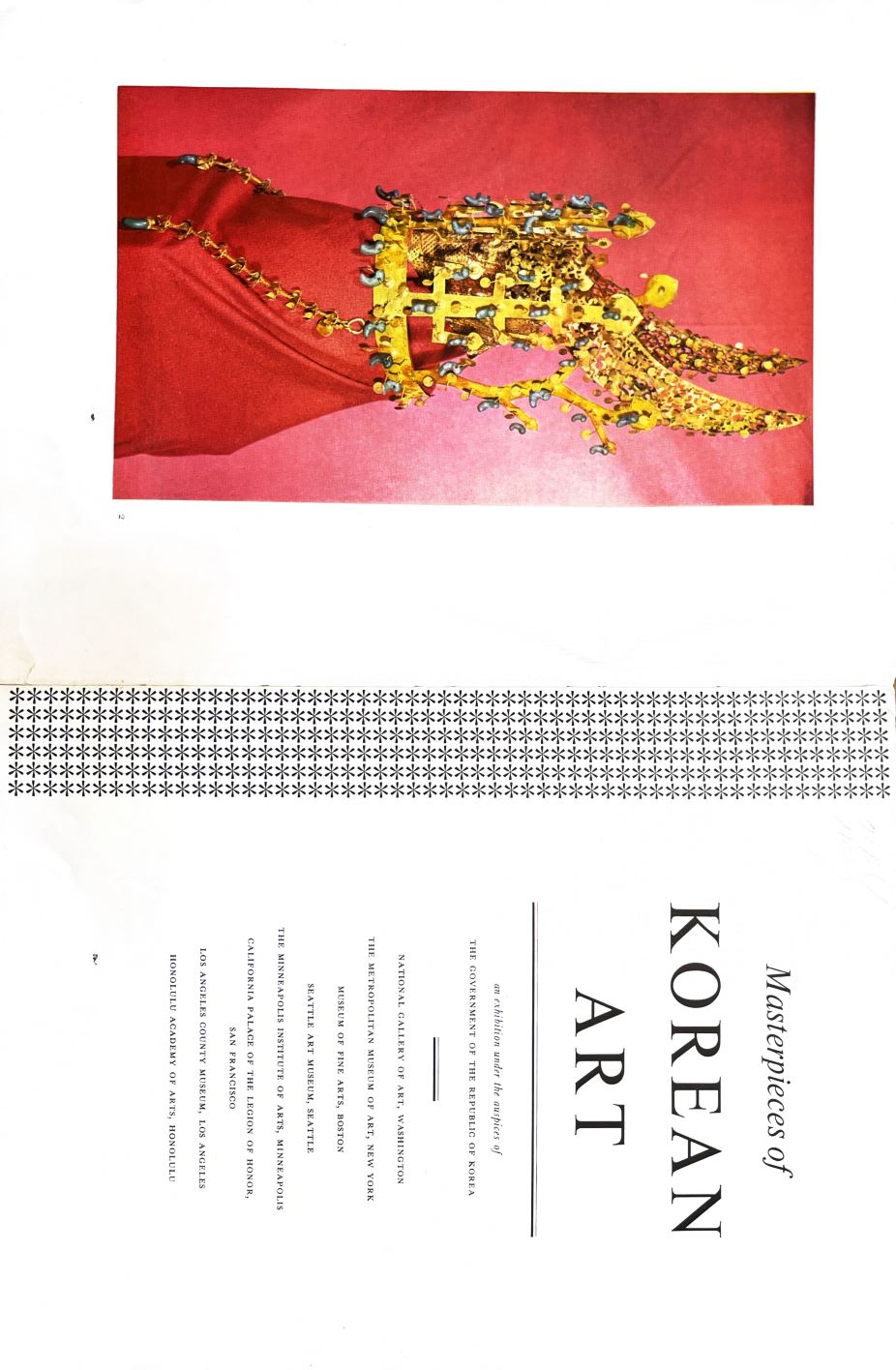
Masterpieces of Korean Art (National Gallery, Washington D.C., December 5, 1957-January 12, 1958) is held as the first overseas exhibition of Korean antiquities after Korea’s liberation in 1945. The exhibition tours eight cities including New York, Boston, Seattle, Minneapolis, San Francisco, Los Angeles, and Honolulu until 1959.
The Second Hyundae Fine Artists Association Exhibition (Hwashin Gallery, Seoul, December 8–14) is held. A total of thirteen artists including Kim Suhbohng, Kim Younghwan, Kim Tschang-Yeul, Kim Cheonggwan, Kim Choongsun, Park Seo-Bo, Jo Donghun, Chun Sangsoo, Chung Keonmo, Chang Seongsoun, Lee Suheun, Lee Yangno, and Lee Cheol participate and present fifty-three works.
The First Paek Yang Fine Art Exhibition (Hwashin Gallery, Seoul, December 15-21) is held. A total of nine artists including Kim Kichang, Kim Youngki, Kim Junghyun, Park Rehyun, Lee Geumchu, Lee Yootae, Jang Deok, Cho Joonghyun, and Chun Kyungja participate and present twenty seven works.
Paek Yang Painting Association [Baegyanghoe] is an art association established in 1957 by Eastern-style painting to explore new directions in Korean painting and to foster younger generations of artists.Hosted by the United States Information Service (USIS) in Korea, the Contemporary American Painters Exhibition (USIS Center, Seoul, December 24–January 8, 1958) is held, introducing more than twenty works of contemporary American painting to the Korean public.
Related Essays
-
Kwon Heangga
1953-1959: The Post-war Formation of Contemporary Art
After ceasefire of the Korean War in July 1953, Korean art history was reorganized into art centered on South Korea rather than art of the Korean peninsula. In the midst of the Cold War, the South Korean art world began to lay the foundation for post-war contemporary art within the framework of a state-led art and culture policy centered on anti-communism. The older generation, who benefitted from the national art and culture policy, established the academism of the National Art Exhibitions [Daehanminguk misul jeollamhoe, also known as Gukjeon], while new generations, who rebelled against it, designated the art of older generations as “modern” [geundae], and to define contemporary art, began to advocate “abstraction,” the “avant-garde,” and “internationalization.” The art world of the 1950s was a “period of transition to contemporary art,” filled with the desire to move beyond modernity. Dispute over the State-led Art System and the National Art Exhibition After the armistice of the Korea War, Korean society entered a period of post-war recovery. The Korean art world began to be reorganized, with artists, who fled to Busan, Daegu, and other places during the Koran War, returning to Seoul, alongside artists defecting to South Korea from North Korea, who filled the void left by artists who defected to North Korea. The Great Korean Art Association [Daehan misul hyeophoe], led by right-wing artists under the leadership of Ko Huidong, took on the character of a cultural organization that disseminated the ideology of liberal democracy and anti-communism. The National Academy of Arts, Republic of Korea, launched in accordance with the presidential decree announced at the beginning of the New Year in 1954, and the National Art Exhibition (Gukjeon), which resumed after the war, became established as key institutions dominating the art world since the 1950s. Just as the Joseon Art Exhibition [Joseon misul jeollamhoe] during the Japanese colonial period was the only gateway for artists, the National Art Exhibition was still the only portal for artists and a means of guaranteeing social reputation and status. However, because the right to select judges for the National Art Exhibition rested with the National Academy of Arts, Republic of Korea, the National Art Exhibition became the epicenter of artists’ struggle for hegemony. Disputes surrounding the judging of the National Art Exhibition, including the division between the Great Korean Art Association and the Korean Fine Arts Association [Hanguk misul hyeophoe], the boycott of the National Art Exhibition, and the exhibition of rejected works from the National Art Exhibition, reached their peak in the late 1950s. Opposition Between Figuration and Abstraction Until the early to mid-1950s, the dominant style of the National Art Exhibitions was figurative art. As the anti-National Art Exhibition tendency began to form in the late 1950s, artists critical of this pursued abstraction or non-figurative art as the new avant-garde, in opposition to realism and figurative art. The Neoplastics [Sinjohyeongpa] formed in 1956, the Four Artists Exhibition (1956) organized by artists graduated from Hongik University who declared their oppositional stance against the National Art Exhibition, the Creative Arts Association [Changjak misul hyeophoe] and the Modern Art Association [Modeon ateu hyeophoe], and the Contemporary Art Exhibit (1957) hosted by the Chosun Ilbo newspaper company, among others, led this trend. It reached a peak during the third and fourth exhibitions of the Hyundae Fine Artists Association in 1958. The younger generation, fresh out of university, filled the exhibition with enormous screens of rough brushstrokes, matières, and intensely colored abstracts. Labeled as “the aesthetic vanguard,” they referenced Abstract Expressionism and Art Informel, introduced through Japan and the U.S. On account of this, there was criticism from art critics that it was nothing more than an imitation of the West. Nevertheless, their unrestrained experimentation with technique and expressionistic abstractions secured legitimacy as an expression of the existential anxiety of the Korean War generation, and as the shared global language of form in line with the subjective traditions of the East, to become established as the representative trend in the art world of the late 1950s. The opposition between figurative vs. abstract or non-figurative art, which began in the 1950s, took on the form of modern vs. contemporary, and conservative vs. progressive oppositions. However, in the 1960s, abstraction was incorporated into the National Art Exhibition, and in 1962, as separate figurative and non-figurative sections became established within the National Art Exhibition, abstraction also became part of the academicism of the National Art Exhibitions. International Exchanges and Korean Artists Studying Abroad The 1950s was also the first time Korean art expanded overseas and international exchanges became active. In the Cold War system after WWII, international cultural exchanges were used as one kind of diplomatic tool. Sponsorship by the United States International Cooperation Agency (ICA), which was an American aid agency for developing countries, the American-Korean Foundation (A.K.F.), and the Rockefeller Foundation played important roles in the overseas expansion of Korean art and international exchanges. The Korean Plastic Arts and Culture Research Institute (Hanguk johyeong munhwa yeonguso) that was operated by the National Museum of Korea with a three-year grant from the Rockefeller Foundation, ICA support for the Korean Handicraft Demonstration Center, and the exchange exhibition between the University of the Minnesota and Seoul National University, the National Museum of Korea’s touring exhibition of Korean art in the U.S., and exhibitions such as Contemporary Korean Paintings (1958) held at World House Galleries in New York, and support for Korean artists to study abroad in the United States—such activities were all carried out as part of the U.S. aid or exchange policy during the cultural Cold War. Yoo Kangyul and Chung Kyu, who worked at the Korean Plastic Arts and Culture Research Institute, learned graphics, ceramics, and printmaking in the U.S., and sculptor Kim Chungsook also learned silkscreen printmaking techniques along with sculpture and introduced them to Korean university education for the first time. The reason why exchanges in the fields of printmaking and crafts were particularly prominent was because U.S. aid to developing countries was tied to the practical aim of industrial development. Eight American Contemporary Artists (1957) and The Family of Man (1957), which were held in direct or indirect connection with the United States Information Agency (USIA) and the United States Information Service-Korea (USIS), not only served as an opportunity to spark interest in American contemporary art and photography among the Korean masses, but also influenced the domestic spread of Art Informel and the rise in realist photography. However, the overseas expansion of Korean artists in the 1950s was not only led by the state or limited to the U.S. For example, studying abroad in France was an object of envy for many artists. During this period, many artists began to leave to study in Paris despite difficult circumstances, either with the help of religious organizations or through personal connections. After the Korean Community in Paris (La Communauté coréenne de Paris) was launched with the approval of the diocese in 1954, Kim Yeong-seon, Kim Sou, Na Hikyune, Kim Whanki, Kwon Okyun, Moon Shin, and Lee Ungno left for Paris, led by Nam Kwan. The dobuljeon (translated as the exhibition held right before departing for France) became a synonym for studying abroad, and their return exhibitions, along with contributions in newspapers about the Parisian art scene, became primary channels for introducing contemporary Western art to Korea. The fact that most of these artists were of the generation that had already experienced studying abroad in Japan can be said to be a characteristic of the 1950s that was different from the 1960s and later. Just as Kim Whanki went to Paris and came to reconsider the tradition of Korean art, the problem of overcoming the time gap between Korean art and global art through comparisons with global art, and within that, the question of how to secure the unique identity of Korean art beyond imitation became two major challenges that artists were faced with for the future development of Korean art.
-
Kim Yisoon
The Development of Korean Sculpture from the 1950s to the 1970s
Related Terms
-
The Family of Man
The Family of Man was a photography exhibition which celebrated the 25th anniversary of the Museum of Modern Art, New York from January to May 1955. Edward Steichen, a director of the museum’s photography department since 1947, organized the exhibition. It was composed of 503 items by 273 artists from 68 countries. After its initial showing, the exhibition toured the world. In Korea, the exhibition was held at the Gyeongbokgung Palace Museum from April 3 to 28, 1957. The exhibition portrayed the diverse lives of people around the world attempting to portray mankind as a single family, and promote greater humanist faith in mankind. The press and art critics, however, criticized the exhibition for its overemphasis on sentimentalism and popular taste, and its exclusion of the harshness of reality.
-

Eight American Artists
A travelling exhibition organized by the Seattle Art Museum that was held in Asia and Europe. In Korea, the exhibition was held from April 9 to 21, 1957 at the National Museum at Seokjojeon in Deoksugung, the present location of the Deoksugung Museum. The United States Information Service in Korea supported the exhibition. The exhibition featured 30 paintings by four abstract artists: Mark Tobey, Morris Graves, Kenneth Callahan, and Guy Anderson, and 10 metalwork sculptures by four sculptors: Rhys Caparn, David Hare, Seymour Lipton, and Ezio Martinelli. The exhibition introduced contemporary American art to the Korean art community, and it influenced the development of Korean abstract art.
-
Masterpieces of Korean Art
Masterpieces of Korean Art was the first overseas exhibition of Korean art organized by the National Museum in eight U.S. cities from December 15, 1957 through June 7, 1959 in an effort to rebuild the reputation of the country ruined after the Korean War and promote its cultural heritage abroad. Curated by Kim Chaewon, then director of the National Museum of Korea, preparations for the exhibition began to be made in 1956. The large-scale exhibition traveled to Washington, D.C., New York, Boston, Seattle, Minneapolis, San Francisco, Los Angeles, and Honolulu. For the exhibition, Alan Priest, the head of the East Asian Department of The Metropolitan Museum of Art, and Robert Paine, the curator of the Museum of Fine Arts, Boston, visited South Korea. On the Korean side, Ko Huidong, Bae Ryeom, Son Jaehyeong, Lee Byeongdo, Jeon Hyeongpil, Choi Sunu, Hong Jongin, and others were commissioned to select items to be displayed. However, it was regrettable that the opinions of Priest and Paine were unilaterally carried out in the process. Some 198 items, including sculptures, paintings, ceramics, and metalwork objects were selected at this first large-scale overseas exhibition of national cultural treasures. The exhibition was held in consecutive order through 1959 at the National Gallery of Art in Washington, D.C., The Metropolitan Museum of Art in New York, Museum of Fine Arts, Boston, Seattle Art Museum, Minneapolis Institute of Art, California Palace of the Legion of Honor in San Francisco, Los Angeles County Museum of Art, and Honolulu Museum of Art. Pertinent exhibition catalogues were published as well. Masterpieces of Korean Art sparked great interest in another overseas exhibition The National Art Treasure of Korea held in March 1961 at the Victoria and Albert Museum in London, England. It traveled across European countries, including the Hague in Netherlands, France, Germany, and Austria until the end of June 1962.
-
Korean Photographers Group
The Korean Photographers Group [Hanguk sajin jakgadan] is a Korean photography agency founded in January 1957 with the international photo news agency Magnum Photos as its model. It was established by seven photographers: Choi Kyebok as the leading member alongside Seong Dugyeong, Lee Geon-jung, Lee Gyeongmo, Jeong Doseon, Jeong Huiseop, and Cho Myeongwon. All of them created photos both to sell and as artistic creations, and they specialized in promotional photos for promoting the Syngman Rhee government’s tourism and cultural heritage policies in the 1950s. In particular, Korea Old and New and Pictorial Korea, which were published for international publicity through the commission by the Office of Public Information, contained photographs of temples, historic ruins, tourist destinations, and rapidly transforming cities after the Korean War, all of which were provided by the Korean Photographers Group. The Korean Photographers Group pursued creative activities together by holding four members’ exhibitions, and each member built his or her oeuvre as an individual photographer. The second members exhibition held in 1957 at the Korean Information Service was themed around photographs of historic sites and scenic spots. The third one held in the same year at Donghwa Gallery was themed around tourism photos.
-

Modern Art Association
The Modern Art Association was an art association established on January 5th, 1957 by several veteran artists. They aimed to establish a wholesome art culture in Korea after a dispute over the 1956 National Art Exhibition (Gukjeon). The five founding members were Lee Kyusang, Park Kosuk, Yoo Youngkuk, Han Mook, and Hwang Yeomsoo. Other artists, including Chung Jeumsik, Lim Wangyu, Chung Kyu, Moon Shin, Kim Gyeong, and Chun Kyungja, joined after the third exhibition. In Sinmisul magazine, they explained that the group “aims to solve the problems of contemporary painting and to maintain independence as the avant-garde of the movement.” They hosted their first exhibition in April 1957, followed by exhibitions in November 1957, June 1958, November 1958, December 1959, and their final exhibition in July 1960. There was a dispute among members regarding participation in the Invitational Exhibition of Contemporary Artists sponsored by Chosun Ilbo in 1959, and the group was disbanded after Han Mook and Moon Shin left for France. The group played a pivotal role in the 1950s Korean art community by advocating for an avant-garde spirit to drive the modern art community.
-

Hyundae Fine Artists Association
An art organization formed in 1957 under the leadership of Moon Woosik, Kim Younghwan, Kim Tschang-Yeul, Jang Seong-soon, Lee Cheol, Ha Indoo, Kim Jonghwi, and Kim Cheonggwan. The association held its inaugural exhibition at the United States Information Service gallery from May 1 to 9 in 1957. As part of a new generation of artists who received university education after independence, the members chose the pursuit of the “antithesis of feudal elements that hinder the development of culture” as the task of the association, and they stated the founding purpose of the association as being to achieve “communion with the highbrow universal consciousness that is oriented toward contemporary art.” In the third exhibition, which was in 1958, the association featured Informel art, which heralded the beginning of an era of Informel in Korean art. In 1961, the association held a joint exhibition with the 1960s Artists Association, and in 1962, the two organizations merged to form Actuel.
-
National Art Exhibition
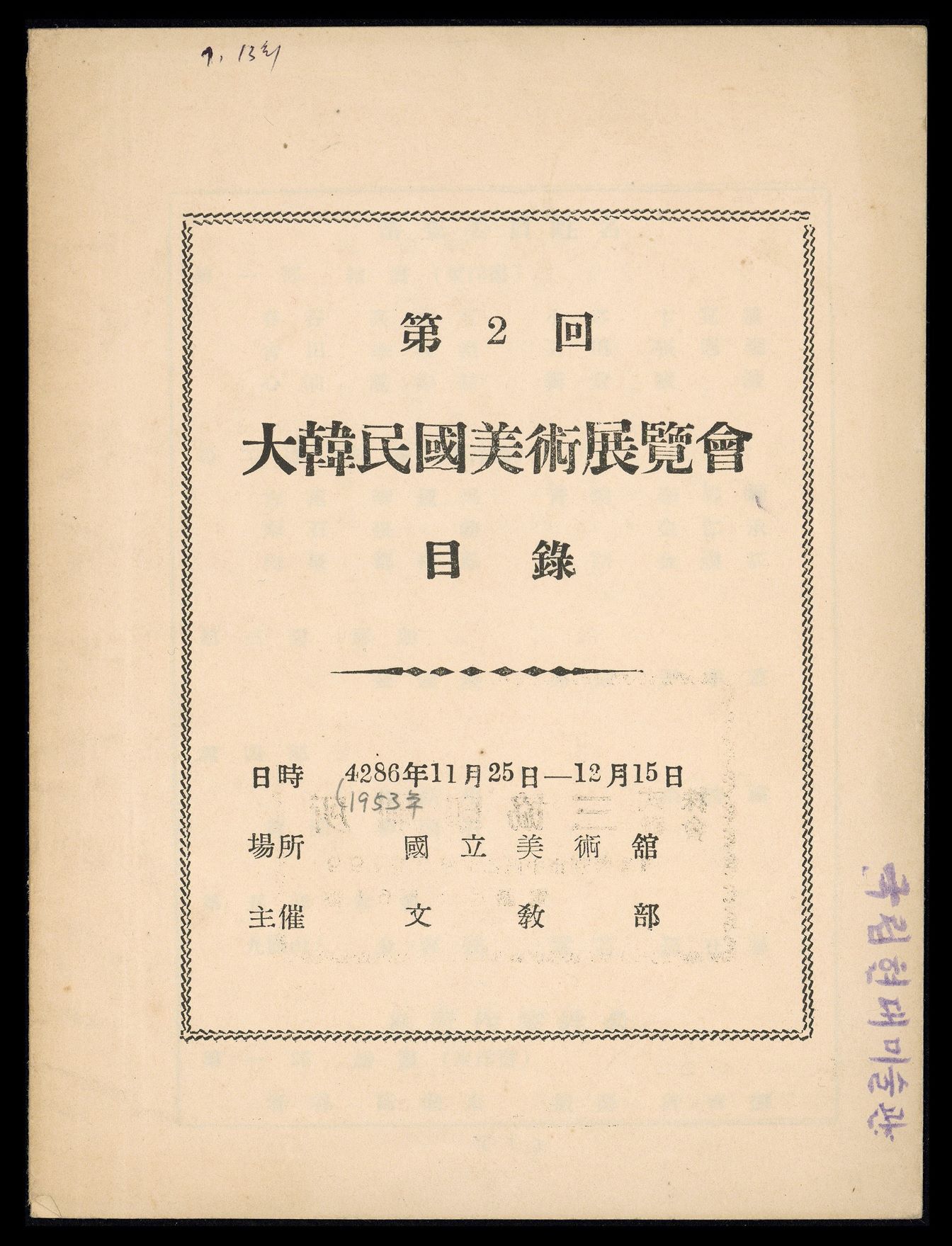
A government-hosted exhibition held 30 times from 1949 to 1981, also known by the shorter name Gukjeon. Following national independence, the exhibition was the primary means for young and emergent Korean artists to achieve recognition. The influence of the exhibition declined as a result of the emergence of non-figurative art during the 1970s, the increased opportunities for artists to participate in overseas exhibitions, and the rise of private exhibitions and galleries.

Sign Up for Email Updates