
-
January
-
February
-
March
-
April
-
May
-
June
-
July
-
August
On August 18, immediately following the Liberation, the Central Committee for the Construction of Korean Culture [Joseon munhwa geonseol jungang hyeobuihoe] is founded. Participating committee members, categorized by sector, include: Kim Namcheon, Park Taewon, Lee Kiyoung, Lee Wonjo, Lee Taejun, and Im Hwa (Literature); Ko Huidong, Gil Jinseop, Kim Jukyung, and No Soohyeon (Art); Kim Sunnam, Kim Jaehun, Park Gyeongho, and Ahn Byeongso (Music); Kim Seung-gu, Seo Hangseok, Song Young, Ahn Youngil, and Lim Seongyu (Theater); and Kim Jeonghyeok, Park Kichae, Yun Sangryeol, Lee Byeongil, and Lee Jaemyeong (Film).
On August 18, the Korean Art Construction Headquarters [Joseon misul geonseol bonbu] is organized under the Central Committee for the Construction of Korean Culture [Joseon munhwa geonseol jungang hyeobuihoe]. With a total of 187 participating artists, Ko Huidong serves as the Central Committee Chairman, and Jeong Hyeonung as the Secretary General.
The organization is composed of the following departments: the Eastern Painting Section (Chairman No Soohyeon; members Kim Yongjun, Bae Ryeom, Byeon Gwansik, Shim Euntaek, Lee Yootae, Chang Woosoung, Huh Baeklyun); the Western Painting Section (Chairman Kim Jukyung; members Gil Jinseop, Oh Chiho, Lee Byeonggyu, Lee Insung, Lee Chongwoo, Gilbert Pha Yim, Chang Louis Pal); the Sculpture Section (Chairman Kim Du-il; members Mun Seok-o, Yun Seung-uk, Lee Gukjeon, Lee Juhaeng); the Children's Art Section (Chairman Lee Byeonggyu; members Kim Gyutaek, Park Seungkyu, Jeong Hyeonung); and the Crafts and Design Section (Chairman Lee Soonsuk; members Kim Bongryong, Kim Jaeseok). Additionally, within the Propaganda Art Corps, Gil Jinseop serves as Captain, Kim Man-hyeong as Production Director, and Lee Soonsuk as a member. Subsequently, amidst a period of political turmoil, the formation and dissolution of artist groups based on left-wing and right-wing ideologies occur repeatedly. -
September
Radical artists dissatisfied with the activities of the Korean Art Construction Headquarters [Joseon misul geonseol bonbu] inherit the legacy of the colonial-era Joseon Proletarian Art Movement and found the Korean Proletarian Fine Art Federation [Joseon peurolletaria misul dongmaeng]. This takes place on September 15 at a temporary office in Jongno-gu, Seoul.
Led by Chairman Lee Juhong and Secretary General Park Jinmyeong, the participants include committee members Kang Ho, Kim Ilyoung, Park Jinmyeong, Lee Juhong, Lee Chun-nam, Chae Nam-in, and Chu Min. The Central Councilors include Kang Ho, Kim Ilyoung, Park Munwon, Park Jinmyeong, Lee Juhong, and Lee Chun-nam.
They announce a platform calling for the construction of proletarian art; the rejection of all reactionary art; and the promotion of the international proletarian art movement.
Subsequently, the organization is renamed the Korean Art Alliance [Joseon misul dongmaeng].On September 30, the Korean Proletarian Arts Federation [Joseon peurolletaria yesul dongmaeng], the parent organization of the Korean Proletarian Fine Art Federation, is formed at the Christian Literature Society (Yasogyo Seohoe, a Christian publishing institution) building in Jongno, Seoul. Han Seol-a serves as the Central Committee Chairman, and Yun Gijeong as the Secretary General.
The council members are organized by sector: the Literature Alliance (Kwon Hwan, Kim Duyong, Park Seokjeong, Park Seyoung, Park Wonji, Eom Heungseop, Yun Gijeong, Lee Kiyoung, Han Seol-a, Han Hyo, and Hong Gu); the Theater Alliance (Kang Ho, Kim Seung-gu, Kim Uk, Na Ung, Park Yeongho, Park Changhwan, Park Chunmyeong, Park Hak, Song Young, Sin Go-song, and Yun Sejung); the Art Alliance (Kim Ilyoung, Park Jinmyeong, Lee Juhong, Lee Chun-nam, and Chae Nam-in); and the Music Alliance (Kang Jang-i, Kim Sun-nam, Sin Mak, Lee Beomjun, and Jeong Jong-gil).
By uniting these literature, theater, art, and music organizations, they aim to counter the Central Committee for the Construction of Korean Culture [Joseon munhwa geonseol jungang hyeobuihoe].Choi Kyebok, together with Kye Cheol-sun, forms the Gyeongbuk Federation of Photography Culture [Gyeongbuk sajin munhwa yeonmaeng] in Daegu. In April 1946, Limb Eungsik establishes the Busan Photographic Society [Busan Gwanghwahoe] in Busan, serving as its president; it is renamed the Busan Art Photography Research Society [Busan yesulsajin yeonguhoe] in 1947.
In 1949, the Silver Shadow Society [Eunyeonghoe] is established in Incheon, with Lee Kyungsung serving as president. -
October
Ewha Womans University established Hanlimwon, Yelimwon, and Haenglimwon, and founded the Departments of Music and Fine Arts within Yelimwon. Subsequently, in September 1947, Yelimwon’s Fine Arts Division adds departments of Oriental Painting, Western Painting, Embroidery, and Design.
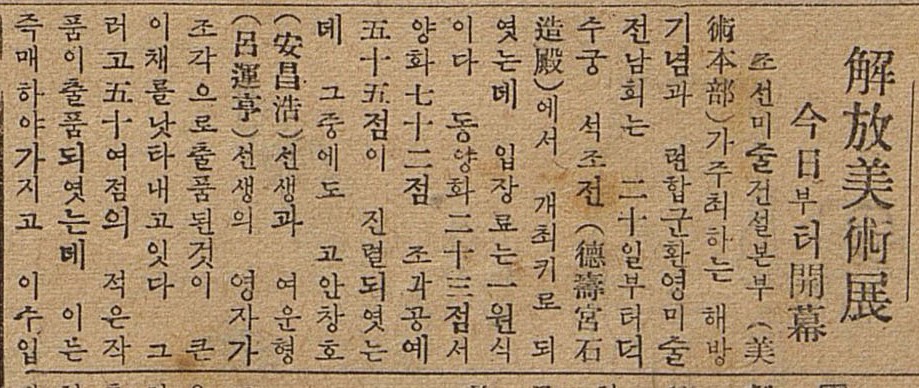
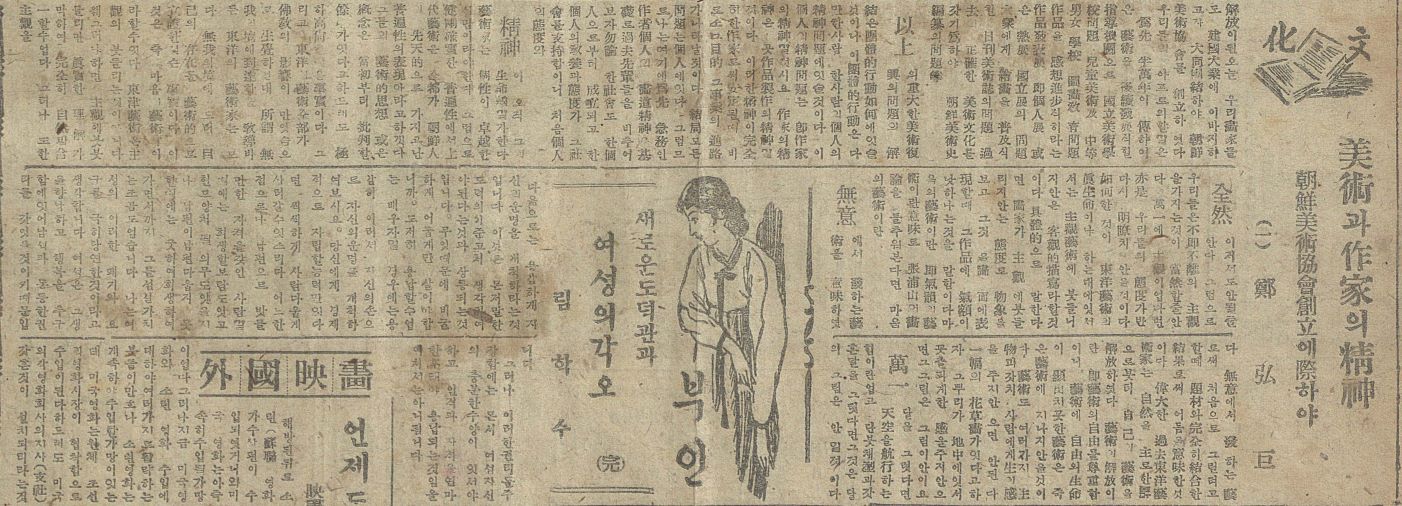
The Korean Art Construction Headquarters [Joseon misul geonseol bonbu] and the Central Committee for the Construction of Korean Culture [Joseon munhwa geonseol jungang hyeobuihoe] host the Art Exhibition in Celebration of National Independence (Deoksugung Museum of Art, October 19–29).
As the first large-scale exhibition organized by Korean artists since liberation, it features ninety-seven members displaying 132 works. Participating artists include Ko Huidong, Gil Jinseop, Kim Jukyung, No Soohyeon, To Sangbong, Byeon Gwansik, Yun Seung-uk, Lee Madong, Lee Sangbeom, Lee Ungno, Lee Insung, Lee Chongwoo and Huh Baeklyun."Art Exhibition in Celebration of National Independence", Sin Joseon, October 8, 1945.
-
November
Ko Huidong withdraws from the Korean Art Construction Headquarters [Joseon misul geonseol bonbu], criticizing its political activities. He subsequently organizes the Korean Art Association [Joseon misul hyeophoe], aiming for neutrality and unity within the art community.
Ko Huidong is elected as the first President, with Lee Chongwoo as Vice President.
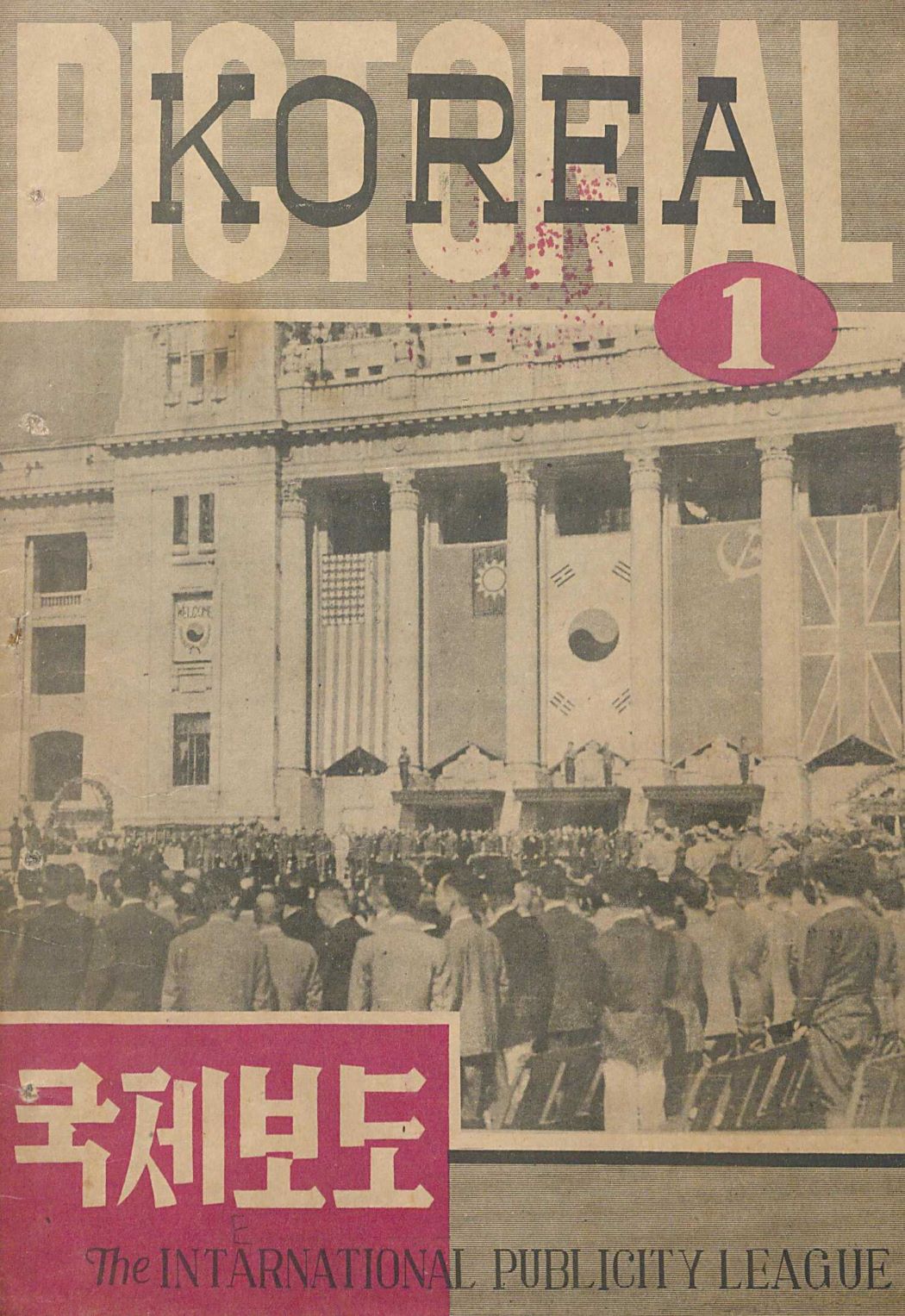
Its officers include Gil Jinseop, Kim Man-hyeong, Kim Yongjun, Kim Jaesuk, Kim Jukyung, No Soohyeon, Lee Byeonggyu, Lee Seokho, Lee Wansuk, Lee Qoede, Chang Louis Pal, Chang Woosoung, Jeong Hyeonung, Jo Gyu-bong, and Huh Baeklyun (as Council Members); and Kim Man-hyeong, Kim Jaesuk, Bae Ryeom, Yun Ja-seon, Yoon Hee-soon, Lee Gukjeon, Lee Yootae, Lee Qoede, Jeong Hong-geo, and Choi Jaiduck (as Executive Committee Members).Song Jeong-hun establishes the International Publicity League [Gukje bodo yeonmaeng] and publishes Pictorial Korea [Gukje bodo]. As the first comprehensive pictorial monthly since the liberation, a total of forty-five volumes is published. Artists Song Jeong-hun, Pai Unsoung, Han Hongtaik, and Hong Sunmun, among others, participate in designing and editing the magazine. Kim Hanyong serves as a photojournalist for the International Publicity League, and Lee Gyeongmo as a board member.
-
December
The Anti-War Anti-Fascist Struggle Committee—advocating opposition to war and fascism—holds the Anti-war, Anti-fascist Peace Advocacy Street Exhibition [Banjeon banpasyo pyeonghwa ong-ho gadujeon] in the plaza in front of the Hwasin Department Store in Seoul (December 8–10) to advocate for peace.
Members of the Korean Proletarian Fine Art Federation [Joseon peurolletaria misul dongmaeng] take a leading role in the event. With support from the Music Alliance, they produce anti-war songs and stage street performances while touring downtown areas on trucks.
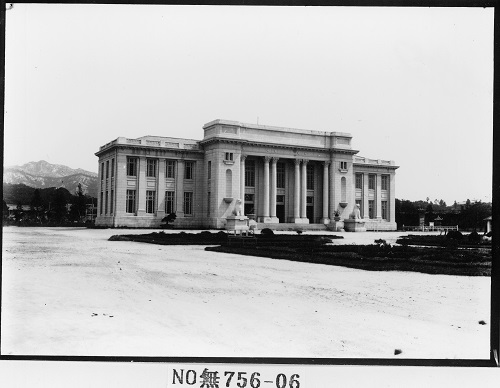
Prior to this, a joint lecture on 'Anti-War, Anti-Fascism, and Defense of Peace' is held at the Joseon Central YMCA in Seoul on December 7. Thirteen organizations participate, including the National Council of Labor Unions, the Communist Party of Korea, the Women's Alliance, the Scientists' Alliance, and the People's Party.The United States Army Military Government in Korea (USAMGIK) opens the National Museum of Korea (formerly the Government-General Museum of Joseon) inside Gyeongbokgung Palace. Kim Chewon serves as its first director.
"National Museum Opens to the Public Starting Today," Dong-A Ilbo, December 4, 1945.
Related Terms
-

Central Committee for the Construction of Korean Culture
A progressive cultural activist organization established on 18 August 1945, under the leadership of Yim Hwa, Lee Taejun, Kim Namchun, and Lee Wonjo. The concern of the Central Committee for the Construction of Korean Culture (Joseon munhwa geonseol jungang hyeopuihoe) was cultural liberation, cultural development, and national reunification after the divisive period of colonialism. The purpose of this association was to build an independent national culture. On 17 September 1945, dissatisfaction with the ambiguous class-based tendencies of the Central Committee for the Construction of Korean Culture (Joseon munhwa geonseol jungang hyeopuihoe) led Han Seol-a, Lee Giyeong, and Yun Gijeong to leave the group and organize the Korean Artist Proletarian Federation. On the 13th of December that same year, the Communist Party of Korea demanded that both the Central Committee for the Construction of Korean Culture (Joseon munhwa geonseol jungang hyeopuihoe) and the Korean Artist Proletarian Federation (Joseon peurolletaria yesul dongmaeng) merge, and the two organizations merged into the Federation of Korean Writers (Joseon munhakga dongmaeng) on 8 February 1946.
-
Korean Art Construction Headquarters
An artist organization established in August 18, 1945 and dissolved November 20, 1945. The founding of the organization was led by Kim Jukyung, Jeong Hyeonung, Gil Jinseop, and Yoon Hee-soon. The organization was one of the five divisions of the Central Committee for the Construction of Korean Culture [Joseon munhwa geonseol jungang hyeobuihoe] which included literature, art, music, film, and theater. The goal of the headquarters was the “new and unified building of Korean art,” and Ko Huidong was designated as the head commissioner. The Headquarters was the largest art organization after independence, comprising a total of 186 artists in six different divisions; Eastern Art, Western Art, Sculpture, Crafts, Children’s Art, and advertisement art. The first activities of the Korean Art Construction Headquarters [Joseon misul geonseol bonbu] after its establishment included the creation of banners, portraits, and national flags for the welcoming parade to celebrate the arrival of Allied Forces. From October 20th to 29th, 1945, the headquarters held the first Art Exhibition for the Celebration of Independence and the Welcoming of the Allied Forces. The exhibition featured 23 works of Eastern-style art, 72 works of Western-style art, and 55 works of sculpture and crafts produced by about 90 artists. After the dissolution of the Headquarters, right-wing members including Ko Huidong established the Korean Art Association [Joseon misul hyeophoe] in 1945.
-
Art Exhibition in Celebration of National Independence
An exhibition held in 1945 at the Seokjojeon in Deoksu Palace. It was held to celebrate Korea’s independence and welcome the advancing Allied forces. The event was organized by the Korean Art Construction Headquarters [Joseon misul geonseol bonbu], and the exhibition lasted from October 20 to 30. The official title of the exhibition was the Art Exhibition in Celebration of National Independence. 132 works of 97 artists were featured in the exhibition, and 20,000 visitors came to see the exhibition in ten days. Kim Eunho, Lee Sangbeom, and Kim Kichang were not allowed to take part in the exhibition due to their willing collaboration with Japanese authorities during the colonial period. Lee Insung was also criticized by right-wing artists for the design of his posters for the exhibition, which read, “all rights to the people.” Another point of controversy was the fact that most artists featured works that they produced during the Japanese colonial era instead of new works. The exhibition served as an example of the state of the national art community at the time of the liberation, which was in disarray due to the process of attempting to exorcise the influential ideological and structural remnants of Japanese colonialism.
-
Liberation period
A time of socio-political upheaval that lasted from independence in 1945 to the inauguration of the Republic of Korea government in August 1948. Numerous art groups formed during this period. The art community was united in its support for the creation of a new modern national art and to escape from the feudal and imperialist hegemony of the Japanese colonial era. Left-wing organizations argued for an ethnically specific art accompanied by a focus on the class struggle following the precedent of socialist realism. In contrast, right-wing organizations had no clearly defined political inclinations, and instead focused on inheriting and modernizing historical art traditions. The two sides were therefore in opposition. Furthermore, even the left-wing organizations failed to achieve any consensus on the establishment of an ethnic art due to various differences in political perspective. The Committee for the Preparation of Korean Independence was the first organization to be nationally active following independence, but internal disputes resulted in the dissolution of the committee after about 20 days. Organizations that were active afterwards included the Korean Art Construction Headquarters (Joseon misul geonseol bonbu), Korean Proletarian Art Federation (Joseon peurolletaria misul dongmaeng), Korean Plastic Arts Federation (Joseon johyeong yesul dongmaeng), Korean Artist Federation (Joseon misulga dongmaeng), and Korean Art Alliance (Joseon misul dongmaeng).
-
Pictorial Korea
Pictorial Korea is a photographic publication that the International Publicity League of Korea had issued to publicize a positive image of Korea to foreign countries from 1950 through 1970. The titles of each volume are not listed, but it has been said that about twelve volumes were published. Pictorial Korea contained photographs showing the then-current status of the Republic of Korea, its rural and urban landscapes, historical traditions and customs, modern factories and industries, arts and culture, and exhibitions, accompanied by their descriptions in English. The first volume of Pictorial Korea published in January 1950 was about 250 pages long and included more than 100 photographs, indicating that great emphasis was placed on international publicity via visual images. In Pictorial Korea published from 1953 through 1954, the photographers Lee Gyeongmo and Kim Hanyong were in charge of photographs and editing. In some cases, photos by domestic photographers were selected for inclusion through internal photography contests. The works by prominent Korean photographers, such as Limb Eungsik, Han Youngsoo, Lee Hyungrok, and Choi Minshik, were featured in Pictorial Korea.
-
Korean Art Association
An organization established in 1945 under the leadership of Ko Huidong after the Headquarters for the Korean Art Construction Headquarters (Joseon misul geonseol bonbu), the largest art organization of the time, disbanded. Criticizing the political activism of the Korean Art Construction Headquarters, the Korean Artists Association avowed political neutrality Ko Huidong was the president of the association, and famous artists of the time such as Lee Chongwoo, Kim Yongjun, Kim Jukyung, No Soohyeon, and Gilbert Pha Yim all participated in the association. The association claimed to be the successor of the Society of Painters and Calligraphers, which was active from the late 1910s to the 1930s. The association planned the establishment of art schools, the publication of books on art history, the holding of exhibitions, and the publication of art magazines. Contrary to its avowed political neutrality, however, Ko Huidong, who held right-wing beliefs, continued with his pro-government activism, and numerous members who opposed this left the association to form the Korean Art Alliance (Joseon misul dongmaeng) in 1946.
-
Korean Proletarian Fine Art Federation
An organization established in 1945 that was aligned with socialist ideology. The name of the federation was changed to Puromimaeng shortly after its establishment, before being again changed to the Korean Art Alliance (Joseon misul dongmaeng). The alliance promoted proletarian art and advertised its work on the streets and at factories, and it also criticized the beliefs and lack of principles of the Korean Art Construction Headquarters (Joseon misul geonseol bonbu), the largest art organization at the time. The alliance followed a clear political ideology and aesthetic, and following the dissolution of the Korean Art Construction Headquarters (Joseon misul geonseol bonbu), it absorbed many of the formers’ artists into its ranks. Its membership, however, lacked influence in the art community, and as a result the alliance was ineffectual and disbanded in 1948.
-
National Museum
The National Museum was established by the Korean government in 1945 after Independence. It consists of a general museum and a special museum. The National Museum of Korea as a general museum took over the Museum of the Japanese Government-General of Korea and opened at Gyeongbokgung Palace in 1945. It annexed the Gyeongju, Buyeo, Gongju, and Kaesong museums. It also annexed Song Seokha’s National Museum of Anthropology and accepted the collection of Deoksugung Museum of Art (former Yi Royal Family Museum) in 1969. The museum was called “National Museum” from 1945 to 1972, and the “National Museum, of Korea” after the reorganization in 1972. Meanwhile, local annex museums were upgraded to local national museums, such as Gyeongju National Museum and Buyeo National Museum. Since Independence, national museums have been constructed in many local cities, including Gyeongju, Buyeo, Gongju, Gwangju, Jinju, Cheongju, Jeonju, Daegu, Gimhae, Jeju, Chuncheon, Naju, and Iksan. These museums play pivotal roles in maintaining local histories and cultures. Special museums within the National Museum of Korea include the National Palace Museum (the history and culture of the Joseon Dynasty), the Maritime Museum (maritime culture), the Forest Museum, the Diplomatic Museum, the Police Museum, the Custom Museum, the Lighthouse Museum, the Postal Museum, and the Museum of Korean Traditional Music.

Sign Up for Email Updates