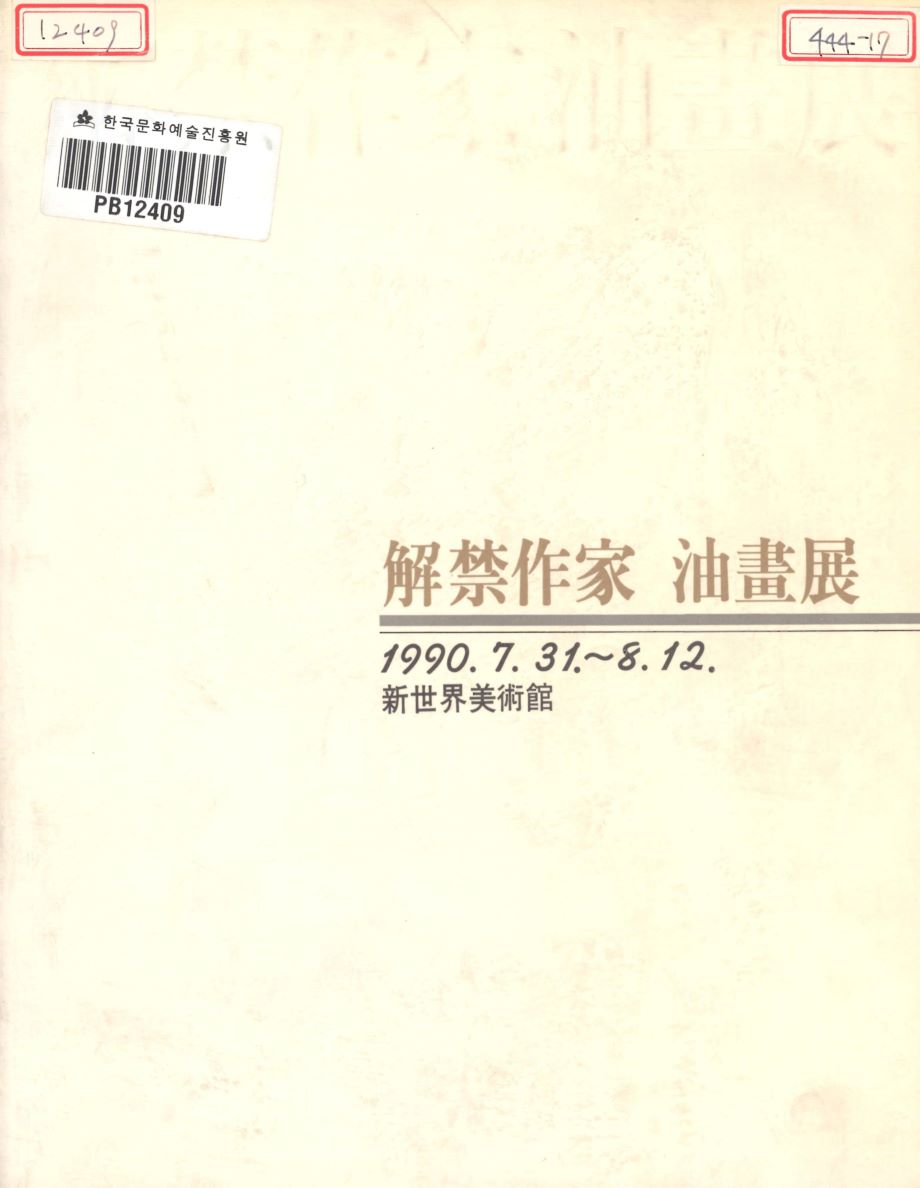
Oil Paintings of Unbanned Artists Catalog, 1990, Image provided by ARKO Arts Archive
Artists who defected to North Korea


* Source: Multilingual Glossary of Korean Art. Korea Arts Management Service
Related
-
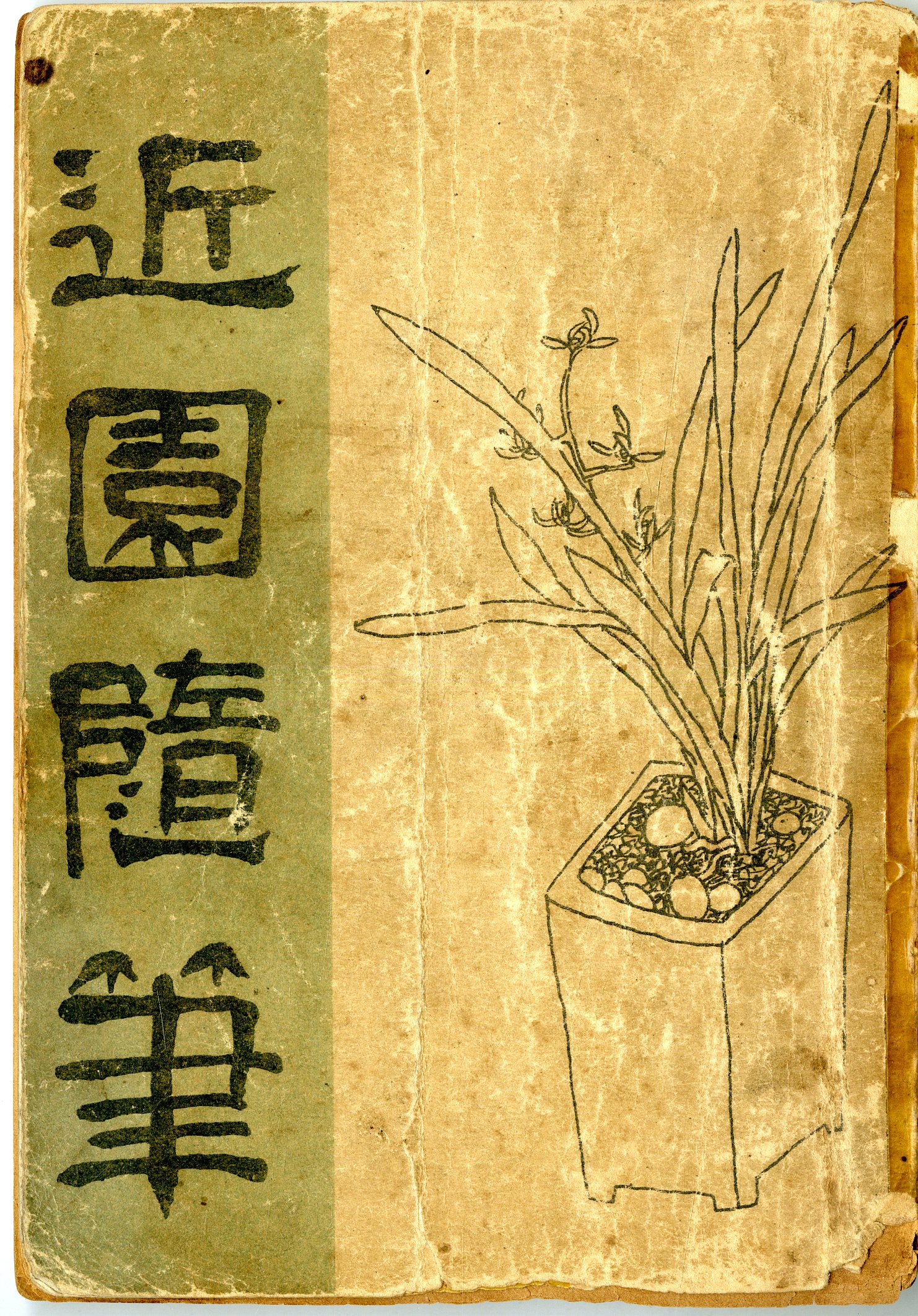
Kim Yongjun
Kim Yongjun (1904-1967, pen name Geunwon) was born in Daegu and first showed his promise as an artist when he was selected for the Joseon Art Exhibition [Joseon misul jeollamhoe] as a high school student. He published art criticism, such as On Reconstruction of Art Circle in Korea and Criticism on Proletarian Art, which demonstrated his potential as an art theorist. He also organized diverse art events, such as Dongmihoe and Baekjman Western Painting Association [Baekmanyanghwahoe] in the 1930s. During his later years, he was more active as an art critic and contributed essays to many newspapers and magazines rather than focusing on creating his own artwork. He participated in creating a magazine, Munjang, in 1939 and published a variety of essays on Eastern painting. After Independence, he contributed to the foundation of the fine arts division at Seoul National University and served as a professor at the Oriental painting department teaching Art History and Theory. He resigned his appointment and moved to Dongkook University because of his involvement in protesting the nationalization of Gyeongseong Imperial University (later Seoul National University). He worked as a dean of the Fine Arts College of Seoul National University for a few months after the outbreak of the Korean War in 1950 but moved to North Korea with his family during the 1950 September 28th restoration of Seoul by US and South Korean forces. He produced several Eastern paintings and published a wide range of art history essays in North Korea. Prior to his migration to North Korea, he wrote a few books such as Geunwonsupil (Essays of Kim Yongjun) (1948) and Joseon misul daeyo (A compendium of Korean art) (1949).
-
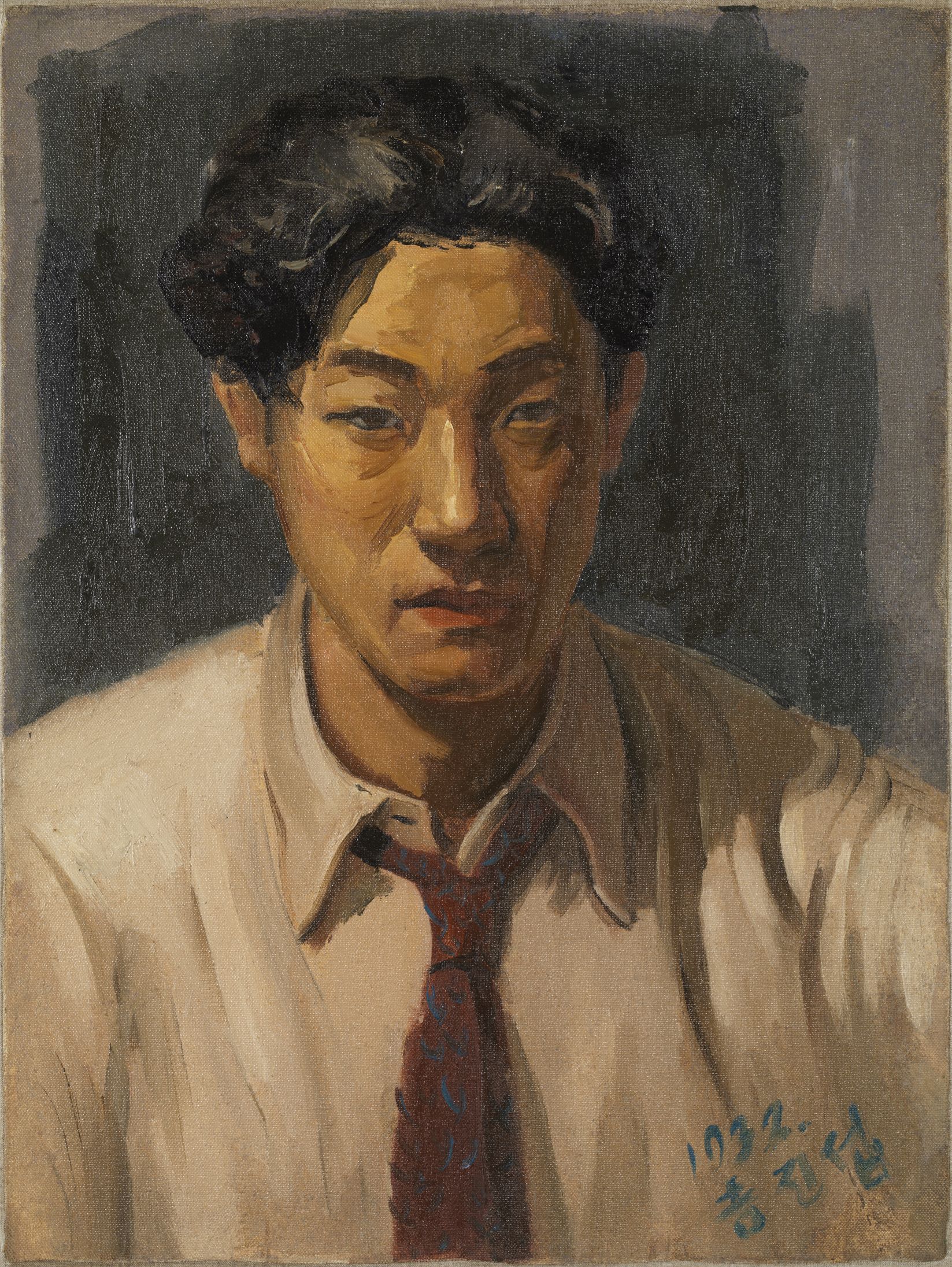
Gil Jinseop
Gil Jinseop (1907-1975) was born in Pyongyang, the son of pastor Gil Seonju of Pyongyang's Jangdaehyeon Church. His father was one of the 33 national delegates of the Mach First Independence Movement. In South Korea, it is considered that he died in 1975, but the North Korean Human geography indicates that he died in 1974. While at Soongsil High school, his painting Landscape was selected for the 1925 Joseon Art Exhibition [Joseon misul jeollamhoe]. Another work of his was selected for the Joseon Art Exhibition while he studied at the department of Western Painting in Tokyo School of Fine Arts. Later, he held a solo exhibition at the Pyongyang Commercial Art Gallery. After graduating from Tokyo School of Fine Arts in 1932, he started to actively participate in Mogilhoe Association, the White Savages Group, and the Yanghwa Art Coterie Exhibition. His style emphasized speedy and light lines, bright and vivid color sense, and margin and matiere. After Independence, he taught as a professor at the Fine Arts College, Seoul National University until April 1947. He was appointed as a leader of the Korean Art Construction Headquarters [Joseon misul geonseol bonbu], a vice-president of the Korean Plastic Arts Federation [Joseon johyeong yesul dongmaeng], and a head of Seoul branch of the Korean Artist Federation [Joseon misulga dongmaeng]. He moved back to North Korea after being appointed as a first representative of the Supreme People’s Assembly in August 1947. In later life he served as a faculty member at the Pyongyang Art School and a vice president of the Korean Artist Federation [Joseon misulga dongmaeng].
-
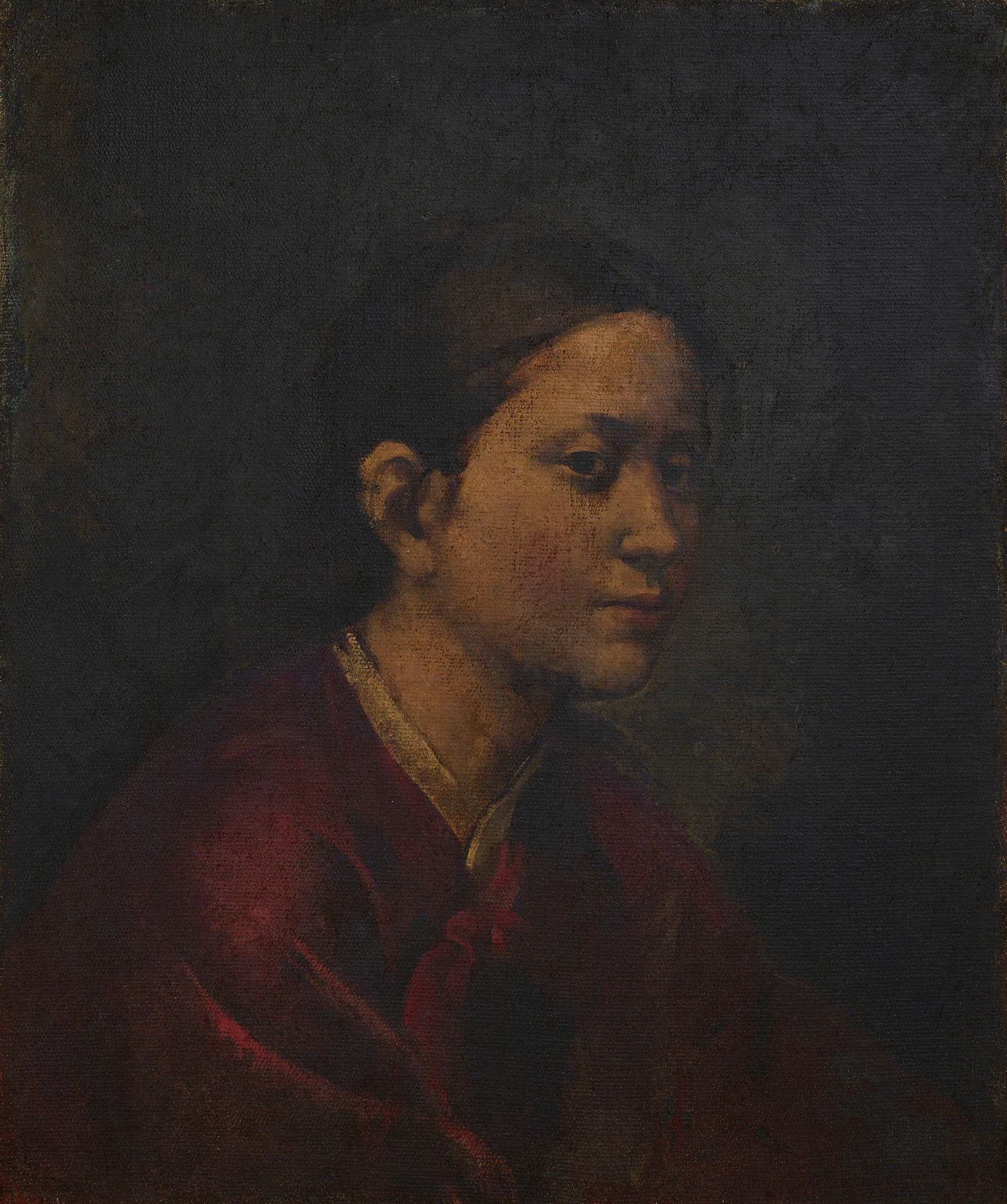
Lee Qoede
Lee Qoede (1913-1965) was born in Chilgok, Gyeongsangnam-do as the second son of a wealthy landowner family. He was strongly influenced and supported by his brother, leftist intellectual Lee Yeoseong and specialized in the history of art, clothing, and folklore. He graduated from Soochang Elementary School in Daegu in 1928, Whimoon High School in 1933, and the Department of Western Painting at the Teikoku Art School in Japan. His works, such as Fate (1938), Night Picnic (1939), and Swing (1940), were selected for the Nikakai Exhibition. After his return to Korea, he founded and led the New Artists Association and its exhibitions from 1941 to 1944. After independence, he was appointed as a committee member of the painting division at the Korean Plastic Arts Federation [Joseon johyeong yesul dongmaeng] and a chairman of the Western Painting division at the Korean Art Alliance [Joseon misul dongmaeng]. After visiting North Korea, he became a centrist and founded the Korean Art and Culture Association [Joseon misul munhwa hyeophoe]. where he was appointed as a chair. In 1948, he joined the National Guidance League. While working as a lecturer at Hongik University, the Korean war broke out, after then and he contributed to the Korean Art Alliance. He escaped Seoul just prior to the 1950 September operation to retake the city but was arrested by the South Korean army and held in prison camps in Busan and Geoje. In an exchange of prisoners, he opted to go to North Korea. In 1988, when the ban on artists who defected to North Korea was lifted, his family revealed his works, such as the People series, A Beggar, and Fate, to the public. He then was re-evaluated as one of the most significant artists in Korean modern art history.
Timelines

Sign Up for Email Updates