
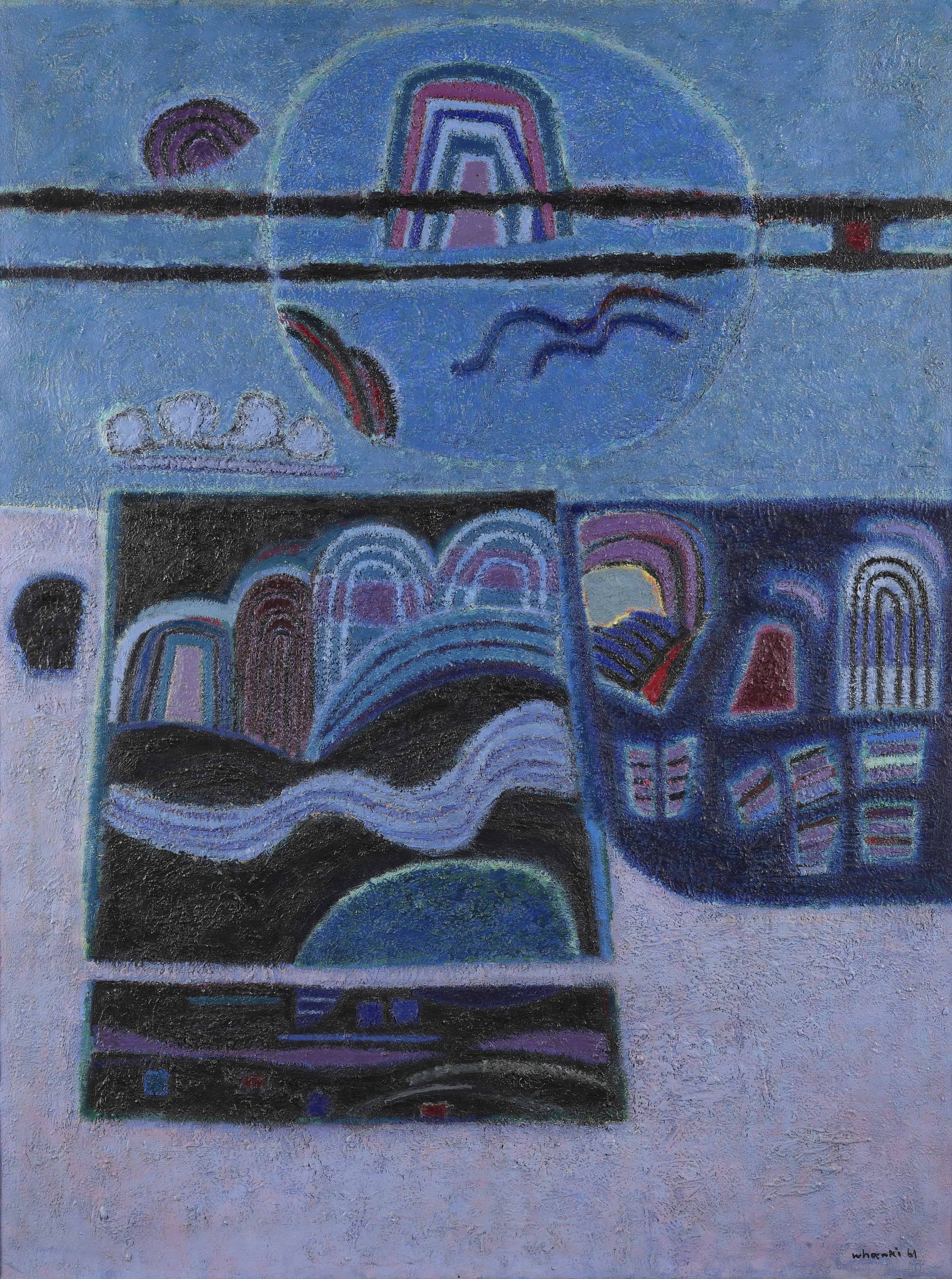
Kim Whanki, Moonlight in Summer, 1961, Oil on canvas, 194×145.5cm. MMCA collection
Kim Whanki


* Source: Multilingual Glossary of Korean Art. Korea Arts Management Service
Related
-

Semi-abstract
The term semi-abstraction refers to a painting that combines abstract and figurative painting styles together. Lee Ungno used the term in a different local context in relation to his work. In his book Appreciation and Technique of Eastern-style Painting (1956), Lee argues that semi-abstraction describes an artistic technique based on sketching from nature, which also further attempts to express an abstract atmosphere to better emphasize the author’s conceptual intentions. The concept was officially used in Korea at the 1961 Grand Art Exhibition of Korea to distinguish three divisions: western painting, semi-abstract work, and abstract work.
-
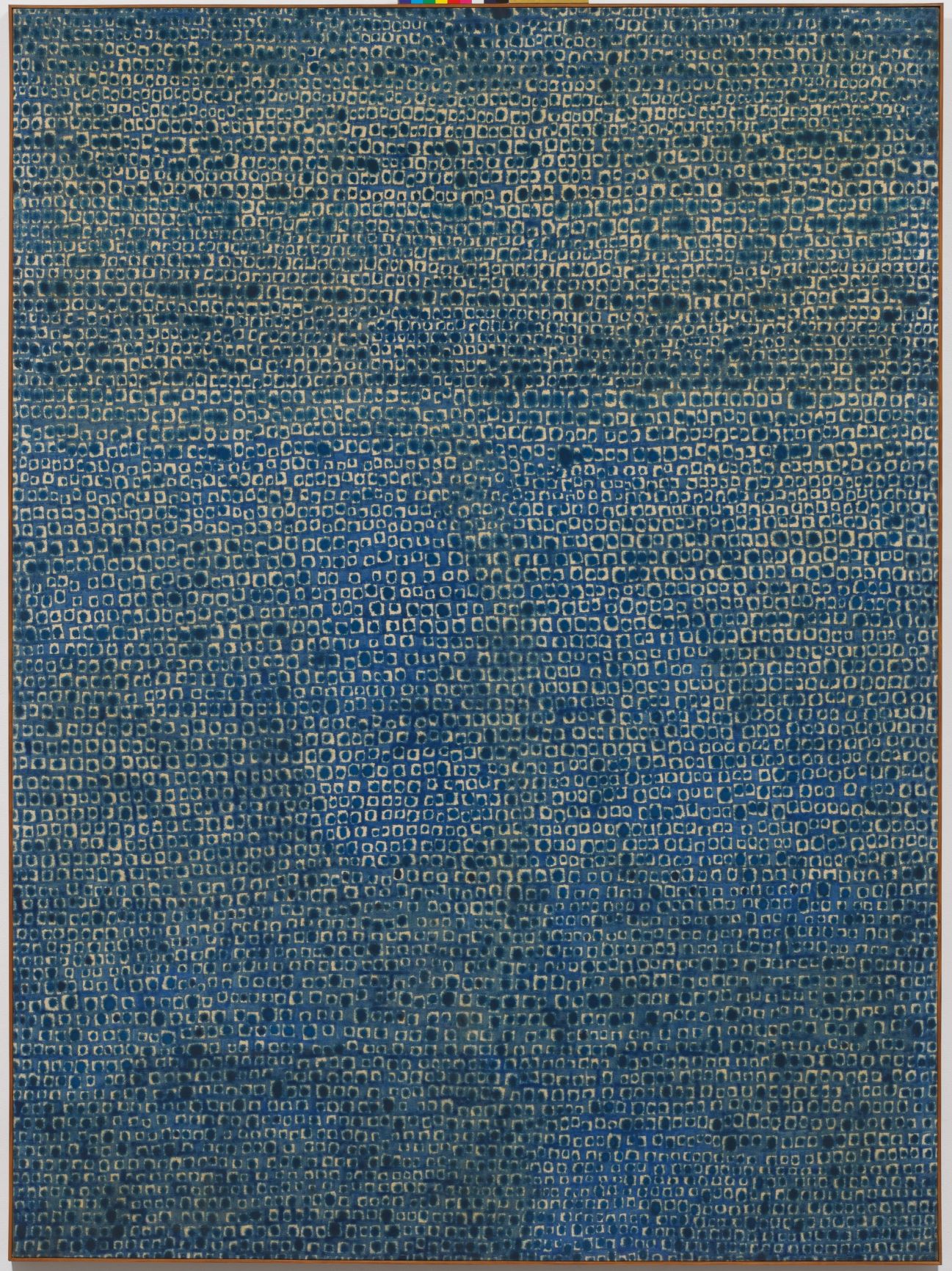
Abstract art
A term which can be used to describe any non-figurative painting or sculpture. Abstract art is also called non-representational art or non-objective art, and throughout the 20th century has constituted an important current in the development of Modernist art. In Korea, Abstract art was first introduced by Kim Whanki and Yoo Youngkuk, students in Japan who had participated in the Free Artists Association and the Avant-Garde Group Exhibition during the late 1930s. These artists, however, had little influence in Korea, and abstract art flourished only after the Korean War. In the 1950s so called “Cubist images,” which separated the object into numerous overlapping shapes, were often described as Abstractionist, but only with the emergence of Informel painting in the late 1950s could the term “abstract” be strictly used to describe the creation of works that did not reference any exterior subject matter. The abstract movements of geometric abstractionism and dansaekhwa dominated the art establishment in Korea in the late-1970s. By the 1980s, however, with the rising interest in the politically focused figurative art of Minjung, abstraction was often criticized as aestheticist, elitist, and Western-centric.
-

Modern Art Association
The Modern Art Association was an art association established on January 5th, 1957 by several veteran artists. They aimed to establish a wholesome art culture in Korea after a dispute over the 1956 National Art Exhibition (Gukjeon). The five founding members were Lee Kyusang, Park Kosuk, Yoo Youngkuk, Han Mook, and Hwang Yeomsoo. Other artists, including Chung Jeumsik, Lim Wangyu, Chung Kyu, Moon Shin, Kim Gyeong, and Chun Kyungja, joined after the third exhibition. In Sinmisul magazine, they explained that the group “aims to solve the problems of contemporary painting and to maintain independence as the avant-garde of the movement.” They hosted their first exhibition in April 1957, followed by exhibitions in November 1957, June 1958, November 1958, December 1959, and their final exhibition in July 1960. There was a dispute among members regarding participation in the Invitational Exhibition of Contemporary Artists sponsored by Chosun Ilbo in 1959, and the group was disbanded after Han Mook and Moon Shin left for France. The group played a pivotal role in the 1950s Korean art community by advocating for an avant-garde spirit to drive the modern art community.
Timelines

Sign Up for Email Updates