
1. National Institute of Korean Language, Standard Korean Language Dictionary [in Korean], https://stdict.korean.go.kr/.
2. Kim Dongil, “Exhibition as a Ceremonial Ritual,” in All about Exhibition, Exhibition catalogue (Seoul: National Museum of Modern and Contemporary Art, 2022), 94.
3. Lim Daegeun, “Art Museum Exhibition—Revealed Evaluation,” in All about Exhibition, Exhibition catalogue (Seoul: National Museum of Modern and Contemporary Art, 2022), 45.
2. Kim Dongil, “Exhibition as a Ceremonial Ritual,” in All about Exhibition, Exhibition catalogue (Seoul: National Museum of Modern and Contemporary Art, 2022), 94.
3. Lim Daegeun, “Art Museum Exhibition—Revealed Evaluation,” in All about Exhibition, Exhibition catalogue (Seoul: National Museum of Modern and Contemporary Art, 2022), 45.
Kim Yujin
The Expansion of the MMCA Venues: Inaugural Exhibition(s) Commemorating Each Opening
The term “commemoration” is defined as “the act of remembering and cherishing in one’s heart for a long time a meaningful event or an admirable figure it.”1 Various events intended to recall the significance of the figure or occasion may be held on an annual basis, while the meaning of commemoration may also be expressed in physical forms such as commemorative monuments or memorial halls. Although the forms may differ, the purpose of commemoration remains the same. Commemoration is an act of sharing common experiences and memories of a particular event or figure and serves as a means of strengthening a community’s sense of belonging and solidarity.
Museums have long engaged in acts of commemoration through the form of exhibitions. A survey of museum exhibitions reveals that many have been organized for commemorative purposes. Such exhibitions may directly highlight the subject of commemoration, or they may unfold in ways entirely unrelated to it. In fact, regardless of the theme, the very act of commemoration constitutes what is commonly referred to as a ritual act. An exhibition is a commemorative act through which the individual joins and bonds with the community, and the museum serves as the ideal venue for conducting this commemorative ritual.2
The National Museum of Modern and Contemporary Art (MMCA), Korea, has held commemorative exhibitions in various forms, marking occasions such as liberation, the establishment of diplomatic ties, births, deaths, and museum openings. Among these, the significance of the “inaugural exhibition” is particularly noteworthy, as it pertains directly to the museum itself, unlike national commemorations such as liberation or diplomatic relations. An inaugural exhibition is closely tied to the museum’s physical space, with the inauguration of that space coinciding with the launch of its exhibition program to mark the opening. Whenever a new exhibition space is created, the first show held there carries special significance, as it indicates the orientation of that space—that is, the orientation of the museum itself. While exhibitions commemorating the opening at ten-year intervals are also subsequently held, the primary focus of this essay is on the significance of the inaugural exhibition as the museum’s first exhibition.
Why does the first—the inaugural—hold such significance? An initial beginning marks the start of history itself and is, in and of itself, worthy of commemoration. In the case of a museum opening, it signals the meaningful inauguration of a given space and serves as an important indicator of its future direction. The MMCA has undergone approximately six major spatial transformations to date, and with each, an inaugural exhibition has marked the beginning of that space. This essay will first briefly examine the museum’s spatial openings and the inaugural exhibitions that accompanied them.
The MMCA first opened its doors on October 20, 1969, in the former building of the Museum of Japanese Government–General of Korea located in the rear garden of Gyeongbokgung Palace. It was founded with a primary focus on exhibitions. The first exhibition held to mark the opening of the museum at Gyeongbokgung was the eighteenth National Art Exhibition (Gukjeon, October 20–November 20, 1969). The museum’s inaugural ceremony was held concurrently with the opening of the eighteenth Gukjeon, thereby announcing that the MMCA would henceforth serve as the exhibition’s organizing body. This made it clear that one of the principal aims of the museum’s establishment was the systematic and stable administration of the Gukjeon.
In 1973, four years after its opening, the MMCA relocated to the Seokjojeon Hall within the Deoksugung Palace complex, a venue that offered a larger exhibition space. Following the move, the museum began building its collections, formalizing its organizational structure, and ensuring the professionalism of its operations. The first exhibition held after the relocation was 100 Active Korean Artists (July 5–August 4, 1973). As its title indicates, the exhibition brought together contemporary artists working in both Korean ink painting and Western oil painting, offering a snapshot of the state of the art in Korea at the time.
The first time the MMCA opened in a newly constructed building, rather than occupying an existing one, was in 1986 in Gwacheon, Gyeonggi-do Province. This opening marked a turning point in establishing the MMCA as a comprehensive art museum with international capabilities. Equipped with spacious galleries as well as up to date facilities for storage, conservation, and education, the MMCA Gwacheon was designed to fulfill the full range of functions expected of a comprehensive art museum. In line with major international events such as the Asian Games 1986 in Seoul and the Seoul Olympics 1988, the inaugural exhibitions were also staged on a large scale. Four exhibitions were presented together under the title “Commemorative Exhibition of the Opening of the New Museum,” including Korean Art Today (August 26–October 3, 1986), 20th Century French Art (August 26–October 31, 1986), Contemporary Asian Art Show, Seoul 1986(August 26–December 25, 1986), and Frederick R. Weisman Collection (August 26–October 10, 1986).
In December 1998, the West Wing of Seokjojeon Hall at Deoksugung Palace was reopened as a branch of the MMCA, providing the museum with a venue in central Seoul to extend its functions. Initially referred to as the Deoksugung Museum, this site was a space dedicated to actively presenting Korean modern art. Its inaugural exhibition was Korean Modern Art Revisited (December 1, 1998–March 31, 1999) marked the beginning of strengthened efforts to exhibit and collect works from the modern period, thereby establishing MMCA Deoksugung as a key venue for consolidating the history of Korean modern art.
In 2009, the establishment of the MMCA Seoul on the former site of the Defense Security Command (DSC) was officially approved, and to commemorate this decision the exhibition Beginning of New Era (October 22–December 6, 2009) was held. Staged in the DSC buildings prior to their remodeling, with its bare interior walls deliberately left exposed, the exhibition primarily featured works that actively engaged with the spatial environment. Breaking away from the white cube that has long served as the symbolic image of the conventional art gallery, the exhibition presented an expanded vision of contemporary art. Introducing art works characterized by transformation and variation, site-specificity, and a post-genre orientation was likewise inseparable from the spatial context.
In November 2013, MMCA Seoul officially opened with special inaugural exhibitions that encompassed multiple displays and programs. The special exhibitions integrated exhibitions drawn from the museum’s collection, experimental art projects across diverse genres, and site-specific works that engaged the architectural and spatial characteristics of MMCA Seoul. What distinguished these large-scale inaugural exhibitions was its active exploration of the museum’s own space and site.
In 2018, MMCA Cheongju was established as the museum’s first regional branch, built as an art storage center dedicated to the collection and conservation of artworks. Designed as a specialized type of museum, it allocated a far greater proportion of space to storage and conservation science facilities than to exhibition halls and is distinguished by its operation of “open storage,” which makes the stored collections accessible to the public. Conceived as a repository of collections, MMCA Cheongju inaugurated its program with the special exhibition A Day for Counting Stars: The Story of You and Me (December 27, 2018–August 25, 2019), which presented works from the collection in ways that reflected the character of the Cheongju branch.
Over the course of more than fifty-five years, the MMCA’s venues have shifted, expanded, and organically evolved. From its inception, the museum has fulfilled the purposes assigned to it by the state, and each relocation or expansion has therefore generated considerable debate and drawn wide attention. Yet an exhibition, as an object of aesthetic experience in itself, inevitably undergoes substantial transformation when its spatial context changes—affecting the selection of artworks, the organization of the exhibition, and the perception of the audience.3 Accordingly, by examining the inaugural exhibitions that marked the opening of each new site, one can gain insight into both the institutional objectives underlying the museum’s venues and the broader significance of its exhibitions

Museums have long engaged in acts of commemoration through the form of exhibitions. A survey of museum exhibitions reveals that many have been organized for commemorative purposes. Such exhibitions may directly highlight the subject of commemoration, or they may unfold in ways entirely unrelated to it. In fact, regardless of the theme, the very act of commemoration constitutes what is commonly referred to as a ritual act. An exhibition is a commemorative act through which the individual joins and bonds with the community, and the museum serves as the ideal venue for conducting this commemorative ritual.2
The National Museum of Modern and Contemporary Art (MMCA), Korea, has held commemorative exhibitions in various forms, marking occasions such as liberation, the establishment of diplomatic ties, births, deaths, and museum openings. Among these, the significance of the “inaugural exhibition” is particularly noteworthy, as it pertains directly to the museum itself, unlike national commemorations such as liberation or diplomatic relations. An inaugural exhibition is closely tied to the museum’s physical space, with the inauguration of that space coinciding with the launch of its exhibition program to mark the opening. Whenever a new exhibition space is created, the first show held there carries special significance, as it indicates the orientation of that space—that is, the orientation of the museum itself. While exhibitions commemorating the opening at ten-year intervals are also subsequently held, the primary focus of this essay is on the significance of the inaugural exhibition as the museum’s first exhibition.
Why does the first—the inaugural—hold such significance? An initial beginning marks the start of history itself and is, in and of itself, worthy of commemoration. In the case of a museum opening, it signals the meaningful inauguration of a given space and serves as an important indicator of its future direction. The MMCA has undergone approximately six major spatial transformations to date, and with each, an inaugural exhibition has marked the beginning of that space. This essay will first briefly examine the museum’s spatial openings and the inaugural exhibitions that accompanied them.
The MMCA first opened its doors on October 20, 1969, in the former building of the Museum of Japanese Government–General of Korea located in the rear garden of Gyeongbokgung Palace. It was founded with a primary focus on exhibitions. The first exhibition held to mark the opening of the museum at Gyeongbokgung was the eighteenth National Art Exhibition (Gukjeon, October 20–November 20, 1969). The museum’s inaugural ceremony was held concurrently with the opening of the eighteenth Gukjeon, thereby announcing that the MMCA would henceforth serve as the exhibition’s organizing body. This made it clear that one of the principal aims of the museum’s establishment was the systematic and stable administration of the Gukjeon.
In 1973, four years after its opening, the MMCA relocated to the Seokjojeon Hall within the Deoksugung Palace complex, a venue that offered a larger exhibition space. Following the move, the museum began building its collections, formalizing its organizational structure, and ensuring the professionalism of its operations. The first exhibition held after the relocation was 100 Active Korean Artists (July 5–August 4, 1973). As its title indicates, the exhibition brought together contemporary artists working in both Korean ink painting and Western oil painting, offering a snapshot of the state of the art in Korea at the time.
The first time the MMCA opened in a newly constructed building, rather than occupying an existing one, was in 1986 in Gwacheon, Gyeonggi-do Province. This opening marked a turning point in establishing the MMCA as a comprehensive art museum with international capabilities. Equipped with spacious galleries as well as up to date facilities for storage, conservation, and education, the MMCA Gwacheon was designed to fulfill the full range of functions expected of a comprehensive art museum. In line with major international events such as the Asian Games 1986 in Seoul and the Seoul Olympics 1988, the inaugural exhibitions were also staged on a large scale. Four exhibitions were presented together under the title “Commemorative Exhibition of the Opening of the New Museum,” including Korean Art Today (August 26–October 3, 1986), 20th Century French Art (August 26–October 31, 1986), Contemporary Asian Art Show, Seoul 1986(August 26–December 25, 1986), and Frederick R. Weisman Collection (August 26–October 10, 1986).
In December 1998, the West Wing of Seokjojeon Hall at Deoksugung Palace was reopened as a branch of the MMCA, providing the museum with a venue in central Seoul to extend its functions. Initially referred to as the Deoksugung Museum, this site was a space dedicated to actively presenting Korean modern art. Its inaugural exhibition was Korean Modern Art Revisited (December 1, 1998–March 31, 1999) marked the beginning of strengthened efforts to exhibit and collect works from the modern period, thereby establishing MMCA Deoksugung as a key venue for consolidating the history of Korean modern art.
In 2009, the establishment of the MMCA Seoul on the former site of the Defense Security Command (DSC) was officially approved, and to commemorate this decision the exhibition Beginning of New Era (October 22–December 6, 2009) was held. Staged in the DSC buildings prior to their remodeling, with its bare interior walls deliberately left exposed, the exhibition primarily featured works that actively engaged with the spatial environment. Breaking away from the white cube that has long served as the symbolic image of the conventional art gallery, the exhibition presented an expanded vision of contemporary art. Introducing art works characterized by transformation and variation, site-specificity, and a post-genre orientation was likewise inseparable from the spatial context.
In November 2013, MMCA Seoul officially opened with special inaugural exhibitions that encompassed multiple displays and programs. The special exhibitions integrated exhibitions drawn from the museum’s collection, experimental art projects across diverse genres, and site-specific works that engaged the architectural and spatial characteristics of MMCA Seoul. What distinguished these large-scale inaugural exhibitions was its active exploration of the museum’s own space and site.
In 2018, MMCA Cheongju was established as the museum’s first regional branch, built as an art storage center dedicated to the collection and conservation of artworks. Designed as a specialized type of museum, it allocated a far greater proportion of space to storage and conservation science facilities than to exhibition halls and is distinguished by its operation of “open storage,” which makes the stored collections accessible to the public. Conceived as a repository of collections, MMCA Cheongju inaugurated its program with the special exhibition A Day for Counting Stars: The Story of You and Me (December 27, 2018–August 25, 2019), which presented works from the collection in ways that reflected the character of the Cheongju branch.
Over the course of more than fifty-five years, the MMCA’s venues have shifted, expanded, and organically evolved. From its inception, the museum has fulfilled the purposes assigned to it by the state, and each relocation or expansion has therefore generated considerable debate and drawn wide attention. Yet an exhibition, as an object of aesthetic experience in itself, inevitably undergoes substantial transformation when its spatial context changes—affecting the selection of artworks, the organization of the exhibition, and the perception of the audience.3 Accordingly, by examining the inaugural exhibitions that marked the opening of each new site, one can gain insight into both the institutional objectives underlying the museum’s venues and the broader significance of its exhibitions
- Share
 Copy URL
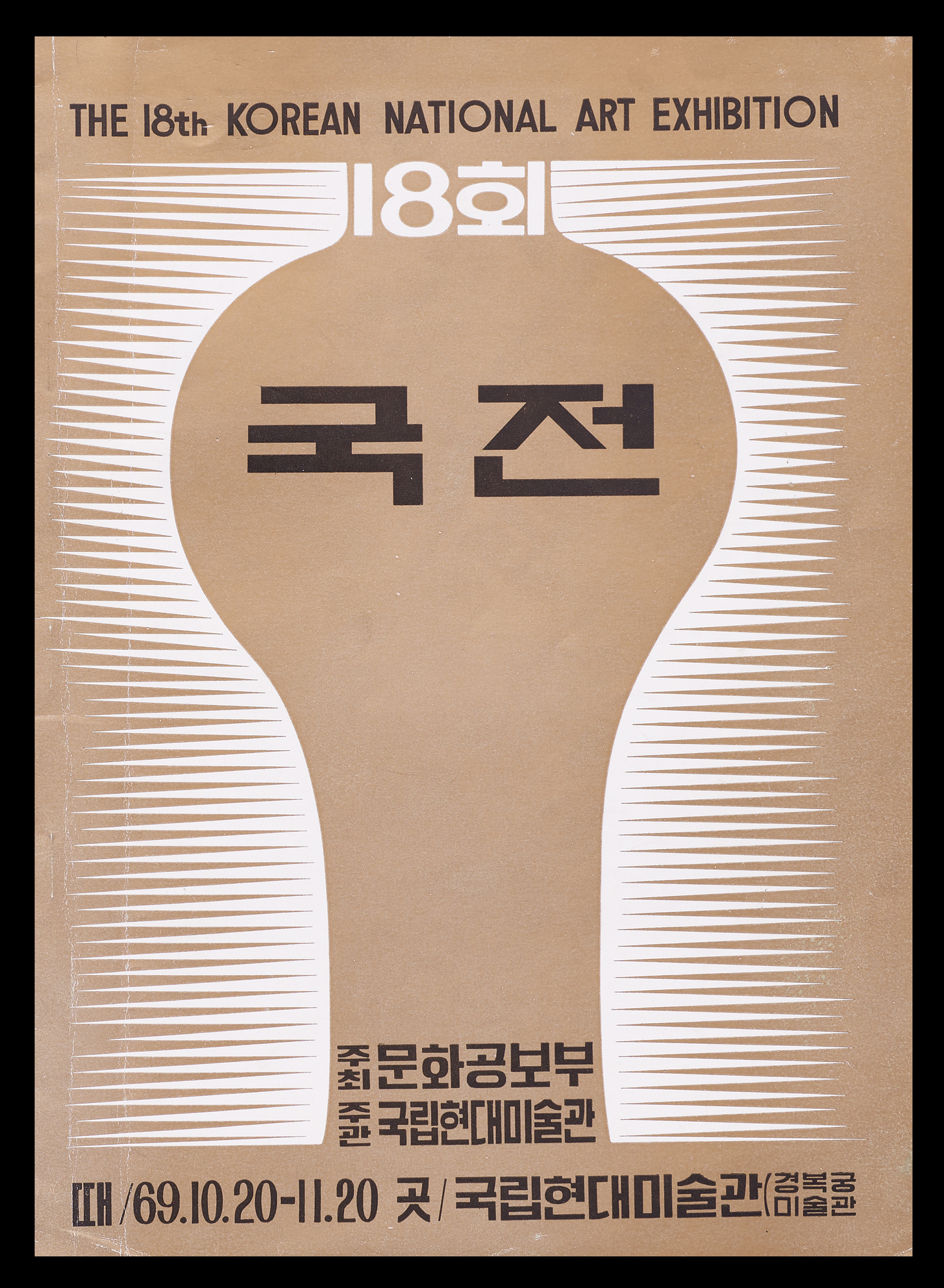
The Eighteenth National Art Exhibition, brochure, 1969. MMCA Art Research Center Collection.

Exhibition view of the Eighteenth National Art Exhibition, 1969. National Archives of Korea Collection.
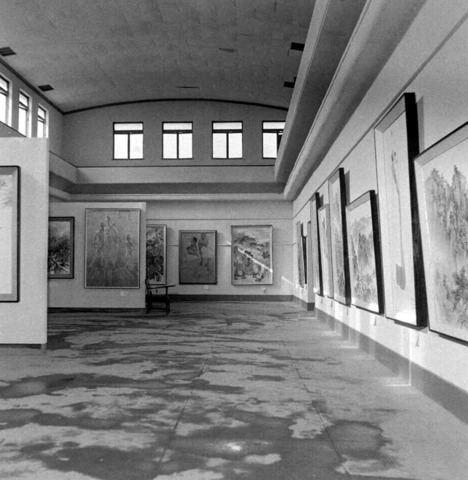
Installation view of the Eighteenth National Art Exhibition, 1969. National Archives of Korea Collection.

Relocation and opening of the National Museum of Modern Art, 1973. Courtesy of National Archives of Korea.
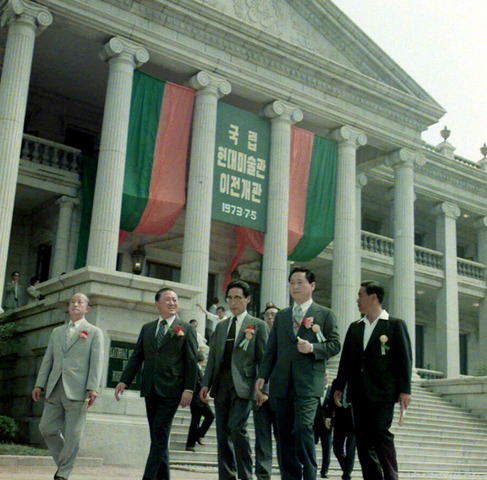
Relocation and opening of the National Museum of Modern Art in Deoksugung, 1973. National Archives of Korea Collection.
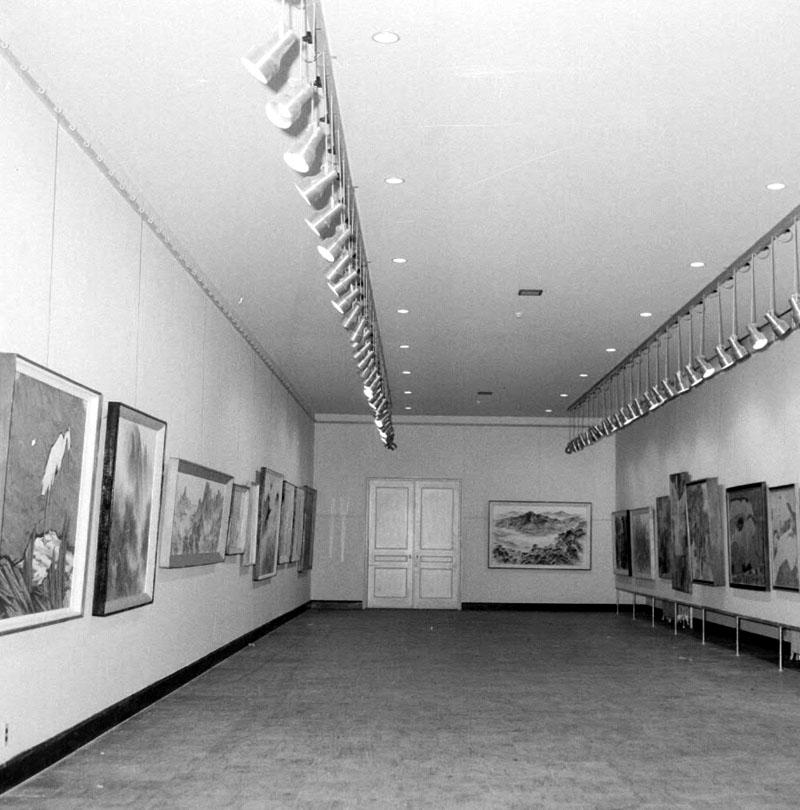
Installation view of the relocation and opening exhibition of the National Museum of Modern Art, 1973. National Archives of Korea Collection.

100 Active Korean Artists, exhibition catalogue, 1973. MMCA Art Library Collection.

Opening view of the 100 Active Korean Artists exhibition, 1973. National Archives of Korea Collection.
path=ck_image/2025/10&physical=OxkbMjsy254xdF8Iv4xB.jpg&contentType=image/jpeg" style="height:502px; width:500px" />
Relocation and Opening of the National Museum of Modern Art, 1973. Courtesy of National Archives of Korea.
Relocation and Opening of the National Museum of Modern Art in Deoksugung, 1973. National Archives of Korea Collection.
Installation view of the Relocation and Opening of the National Museum of Modern Art, 1973. National Archives of Korea Collection.
100 Active Korean Artists, Exhibition catalogue, 1973. MMCA Art Library Collection.
Opening view of the 100 Active Korean Artists, 1973. National Archives of Korea Collection.
Relocation and Opening of the National Museum of Modern Art, 1973. Courtesy of National Archives of Korea.
Relocation and Opening of the National Museum of Modern Art in Deoksugung, 1973. National Archives of Korea Collection.
Installation view of the Relocation and Opening of the National Museum of Modern Art, 1973. National Archives of Korea Collection.
100 Active Korean Artists, Exhibition catalogue, 1973. MMCA Art Library Collection.
Opening view of the 100 Active Korean Artists, 1973. National Archives of Korea Collection.

Sign Up for Email Updates