• January
  • February
  • March
  • April
  • May
  • June
  • July
  • August
  • September
  • October
  • November
  • December
  • 1945
  • January, 1945

    January

  • February, 1945

    February

  • March, 1945

    March

  • April, 1945

    April

  • May, 1945

    May

  • June, 1945

    June

  • July, 1945

    July

  • August, 1945

    August

  • September, 1945

    September

  • October, 1945

    October

  • November, 1945

    November

  • December, 1945

    December

  • 1946
  • January, 1946

    January

  • February, 1946

    February

  • March, 1946

    March

  • April, 1946

    April

  • May, 1946

    May

  • June, 1946

    June

  • July, 1946

    July

  • August, 1946

    August

  • September, 1946

    September

  • October, 1946

    October

  • November, 1946

    November

  • December, 1946

    December

  • 1947
  • January, 1947

    January

  • February, 1947

    February

  • March, 1947

    March

  • April, 1947

    April

  • May, 1947

    May

  • June, 1947

    June

  • July, 1947

    July

  • August, 1947

    August

  • September, 1947

    September

  • October, 1947

    October

  • November, 1947

    November

  • December, 1947

    December

  • 1948
  • January, 1948

    January

  • February, 1948

    February

  • March, 1948

    March

  • April, 1948

    April

  • May, 1948

    May

  • June, 1948

    June

  • July, 1948

    July

  • August, 1948

    August

  • September, 1948

    September

  • October, 1948

    October

  • November, 1948

    November

  • December, 1948

    December

  • 1949
  • January, 1949

    January

  • February, 1949

    February

  • March, 1949

    March

  • April, 1949

    April

  • May, 1949

    May

  • June, 1949

    June

  • July, 1949

    July

  • August, 1949

    August

  • September, 1949

    September

  • October, 1949

    October

  • November, 1949

    November

  • December, 1949

    December

  • 1950
  • January, 1950

    January

  • February, 1950

    February

  • March, 1950

    March

  • April, 1950

    April

  • May, 1950

    May

  • June, 1950

    June

  • July, 1950

    July

  • August, 1950

    August

  • September, 1950

    September

  • October, 1950

    October

  • November, 1950

    November

  • December, 1950

    December

  • 1951
  • January, 1951

    January

  • February, 1951

    February

  • March, 1951

    March

  • April, 1951

    April

  • May, 1951

    May

  • June, 1951

    June

  • July, 1951

    July

  • August, 1951

    August

  • September, 1951

    September

  • October, 1951

    October

  • November, 1951

    November

  • December, 1951

    December

  • 1952
  • January, 1952

    January

  • February, 1952

    February

  • March, 1952

    March

  • April, 1952

    April

  • May, 1952

    May

  • June, 1952

    June

  • July, 1952

    July

  • August, 1952

    August

  • September, 1952

    September

  • October, 1952

    October

  • November, 1952

    November

  • December, 1952

    December

  • 1953
  • January, 1953

    January

  • February, 1953

    February

  • March, 1953

    March

  • April, 1953

    April

  • May, 1953

    May

  • June, 1953

    June

  • July, 1953

    July

  • August, 1953

    August

  • September, 1953

    September

  • October, 1953

    October

  • November, 1953

    November

  • December, 1953

    December

  • 1954
  • January, 1954

    January

  • February, 1954

    February

  • March, 1954

    March

  • April, 1954

    April

  • May, 1954

    May

  • June, 1954

    June

  • July, 1954

    July

  • August, 1954

    August

  • September, 1954

    September

  • October, 1954

    October

  • November, 1954

    November

  • December, 1954

    December

  • 1955
  • January, 1955

    January

  • February, 1955

    February

  • March, 1955

    March

  • April, 1955

    April

  • May, 1955

    May

  • June, 1955

    June

  • July, 1955

    July

  • August, 1955

    August

  • September, 1955

    September

  • October, 1955

    October

  • November, 1955

    November

  • December, 1955

    December

  • 1956
  • January, 1956

    January

  • February, 1956

    February

  • March, 1956

    March

  • April, 1956

    April

  • May, 1956

    May

  • June, 1956

    June

  • July, 1956

    July

  • August, 1956

    August

  • September, 1956

    September

  • October, 1956

    October

  • November, 1956

    November

  • December, 1956

    December

  • 1957
  • January, 1957

    January

  • February, 1957

    February

  • March, 1957

    March

  • April, 1957

    April

  • May, 1957

    May

  • June, 1957

    June

  • July, 1957

    July

  • August, 1957

    August

  • September, 1957

    September

  • October, 1957

    October

  • November, 1957

    November

  • December, 1957

    December

  • 1958
  • January, 1958

    January

  • February, 1958

    February

  • March, 1958

    March

  • April, 1958

    April

  • May, 1958

    May

  • June, 1958

    June

  • July, 1958

    July

  • August, 1958

    August

  • September, 1958

    September

  • October, 1958

    October

  • November, 1958

    November

  • December, 1958

    December

  • 1959
  • January, 1959

    January

  • February, 1959

    February

  • March, 1959

    March

  • April, 1959

    April

  • May, 1959

    May

  • June, 1959

    June

  • July, 1959

    July

  • August, 1959

    August

  • September, 1959

    September

  • October, 1959

    October

  • November, 1959

    November

  • December, 1959

    December

  • 1960
  • January, 1960

    January

  • February, 1960

    February

  • March, 1960

    March

  • April, 1960

    April

  • May, 1960

    May

  • June, 1960

    June

  • July, 1960

    July

  • August, 1960

    August

  • September, 1960

    September

  • October, 1960

    October

  • November, 1960

    November

  • December, 1960

    December

  • 1961
  • January, 1961

    January

  • February, 1961

    February

  • March, 1961

    March

  • April, 1961

    April

  • May, 1961

    May

  • June, 1961

    June

  • July, 1961

    July

  • August, 1961

    August

  • September, 1961

    September

  • October, 1961

    October

  • November, 1961

    November

  • December, 1961

    December

  • 1962
  • January, 1962

    January

  • February, 1962

    February

  • March, 1962

    March

  • April, 1962

    April

  • May, 1962

    May

  • June, 1962

    June

  • July, 1962

    July

  • August, 1962

    August

  • September, 1962

    September

  • October, 1962

    October

  • November, 1962

    November

  • December, 1962

    December

  • 1963
  • January, 1963

    January

  • February, 1963

    February

  • March, 1963

    March

  • April, 1963

    April

  • May, 1963

    May

  • June, 1963

    June

  • July, 1963

    July

  • August, 1963

    August

  • September, 1963

    September

  • October, 1963

    October

  • November, 1963

    November

  • December, 1963

    December

  • 1964
  • January, 1964

    January

  • February, 1964

    February

  • March, 1964

    March

  • April, 1964

    April

  • May, 1964

    May

  • June, 1964

    June

  • July, 1964

    July

  • August, 1964

    August

  • September, 1964

    September

  • October, 1964

    October

  • November, 1964

    November

  • December, 1964

    December

  • 1965
  • January, 1965

    January

  • February, 1965

    February

  • March, 1965

    March

  • April, 1965

    April

  • May, 1965

    May

  • June, 1965

    June

  • July, 1965

    July

  • August, 1965

    August

  • September, 1965

    September

  • October, 1965

    October

  • November, 1965

    November

  • December, 1965

    December

  • 1966
  • January, 1966

    January

  • February, 1966

    February

  • March, 1966

    March

  • April, 1966

    April

  • May, 1966

    May

  • June, 1966

    June

  • July, 1966

    July

  • August, 1966

    August

  • September, 1966

    September

  • October, 1966

    October

  • November, 1966

    November

  • December, 1966

    December

  • 1967
  • January, 1967

    January

  • February, 1967

    February

  • March, 1967

    March

  • April, 1967

    April

  • May, 1967

    May

  • June, 1967

    June

  • July, 1967

    July

  • August, 1967

    August

  • September, 1967

    September

  • October, 1967

    October

  • November, 1967

    November

  • December, 1967

    December

  • 1968
  • January, 1968

    January

  • February, 1968

    February

  • March, 1968

    March

  • April, 1968

    April

  • May, 1968

    May

  • June, 1968

    June

  • July, 1968

    July

  • August, 1968

    August

  • September, 1968

    September

  • October, 1968

    October

  • November, 1968

    November

  • December, 1968

    December

  • 1969
  • January, 1969

    January

  • February, 1969

    February

  • March, 1969

    March

  • April, 1969

    April

  • May, 1969

    May

  • June, 1969

    June

  • July, 1969

    July

  • August, 1969

    August

  • September, 1969

    September

  • October, 1969

    October

  • November, 1969

    November

  • December, 1969

    December

  • 1970
  • January, 1970

    January

  • February, 1970

    February

  • March, 1970

    March

  • April, 1970

    April

  • May, 1970

    May

  • June, 1970

    June

  • July, 1970

    July

  • August, 1970

    August

  • September, 1970

    September

  • October, 1970

    October

  • November, 1970

    November

  • December, 1970

    December

  • 1971
  • January, 1971

    January

  • February, 1971

    February

  • March, 1971

    March

  • April, 1971

    April

  • May, 1971

    May

  • June, 1971

    June

  • July, 1971

    July

  • August, 1971

    August

  • September, 1971

    September

  • October, 1971

    October

  • November, 1971

    November

  • December, 1971

    December

  • 1972
  • January, 1972

    January

  • February, 1972

    February

  • March, 1972

    March

  • April, 1972

    April

  • May, 1972

    May

  • June, 1972

    June

  • July, 1972

    July

  • August, 1972

    August

  • September, 1972

    September

  • October, 1972

    October

  • November, 1972

    November

  • December, 1972

    December

  • 1973
  • January, 1973

    January

  • February, 1973

    February

  • March, 1973

    March

  • April, 1973

    April

  • May, 1973

    May

  • June, 1973

    June

  • July, 1973

    July

  • August, 1973

    August

  • September, 1973

    September

  • October, 1973

    October

  • November, 1973

    November

  • December, 1973

    December

  • 1974
  • January, 1974

    January

  • February, 1974

    February

  • March, 1974

    March

  • April, 1974

    April

  • May, 1974

    May

  • June, 1974

    June

  • July, 1974

    July

  • August, 1974

    August

  • September, 1974

    September

  • October, 1974

    October

  • November, 1974

    November

  • December, 1974

    December

  • 1975
  • January, 1975

    January

  • February, 1975

    February

  • March, 1975

    March

  • April, 1975

    April

  • May, 1975

    May

  • June, 1975

    June

  • July, 1975

    July

  • August, 1975

    August

  • September, 1975

    September

  • October, 1975

    October

  • November, 1975

    November

  • December, 1975

    December

  • 1976
  • January, 1976

    January

  • February, 1976

    February

  • March, 1976

    March

  • April, 1976

    April

  • May, 1976

    May

  • June, 1976

    June

  • July, 1976

    July

  • August, 1976

    August

  • September, 1976

    September

  • October, 1976

    October

  • November, 1976

    November

  • December, 1976

    December

  • 1977
  • January, 1977

    January

  • February, 1977

    February

  • March, 1977

    March

  • April, 1977

    April

  • May, 1977

    May

  • June, 1977

    June

  • July, 1977

    July

  • August, 1977

    August

  • September, 1977

    September

  • October, 1977

    October

  • November, 1977

    November

  • December, 1977

    December

  • 1978
  • January, 1978

    January

  • February, 1978

    February

  • March, 1978

    March

  • April, 1978

    April

  • May, 1978

    May

  • June, 1978

    June

  • July, 1978

    July

  • August, 1978

    August

  • September, 1978

    September

  • October, 1978

    October

  • November, 1978

    November

  • December, 1978

    December

  • 1979
  • January, 1979

    January

  • February, 1979

    February

  • March, 1979

    March

  • April, 1979

    April

  • May, 1979

    May

  • June, 1979

    June

  • July, 1979

    July

  • August, 1979

    August

  • September, 1979

    September

  • October, 1979

    October

  • November, 1979

    November

  • December, 1979

    December

  • 1980
  • January, 1980

    January

  • February, 1980

    February

  • March, 1980

    March

  • April, 1980

    April

  • May, 1980

    May

  • June, 1980

    June

  • July, 1980

    July

  • August, 1980

    August

  • September, 1980

    September

  • October, 1980

    October

  • November, 1980

    November

  • December, 1980

    December

  • 1981
  • January, 1981

    January

  • February, 1981

    February

  • March, 1981

    March

  • April, 1981

    April

  • May, 1981

    May

  • June, 1981

    June

  • July, 1981

    July

  • August, 1981

    August

  • September, 1981

    September

  • October, 1981

    October

  • November, 1981

    November

  • December, 1981

    December

  • 1982
  • January, 1982

    January

  • February, 1982

    February

  • March, 1982

    March

  • April, 1982

    April

  • May, 1982

    May

  • June, 1982

    June

  • July, 1982

    July

  • August, 1982

    August

  • September, 1982

    September

  • October, 1982

    October

  • November, 1982

    November

  • December, 1982

    December

  • 1983
  • January, 1983

    January

  • February, 1983

    February

  • March, 1983

    March

  • April, 1983

    April

  • May, 1983

    May

  • June, 1983

    June

  • July, 1983

    July

  • August, 1983

    August

  • September, 1983

    September

  • October, 1983

    October

  • November, 1983

    November

  • December, 1983

    December

  • 1984
  • January, 1984

    January

  • February, 1984

    February

  • March, 1984

    March

  • April, 1984

    April

  • May, 1984

    May

  • June, 1984

    June

  • July, 1984

    July

  • August, 1984

    August

  • September, 1984

    September

  • October, 1984

    October

  • November, 1984

    November

  • December, 1984

    December

  • 1985
  • January, 1985

    January

  • February, 1985

    February

  • March, 1985

    March

  • April, 1985

    April

  • May, 1985

    May

  • June, 1985

    June

  • July, 1985

    July

  • August, 1985

    August

  • September, 1985

    September

  • October, 1985

    October

  • November, 1985

    November

  • December, 1985

    December

  • 1986
  • January, 1986

    January

  • February, 1986

    February

  • March, 1986

    March

  • April, 1986

    April

  • May, 1986

    May

  • June, 1986

    June

  • July, 1986

    July

  • August, 1986

    August

  • September, 1986

    September

  • October, 1986

    October

  • November, 1986

    November

  • December, 1986

    December

  • 1987
  • January, 1987

    January

  • February, 1987

    February

  • March, 1987

    March

  • April, 1987

    April

  • May, 1987

    May

  • June, 1987

    June

  • July, 1987

    July

  • August, 1987

    August

  • September, 1987

    September

  • October, 1987

    October

  • November, 1987

    November

  • December, 1987

    December

  • 1988
  • January, 1988

    January

  • February, 1988

    February

  • March, 1988

    March

  • April, 1988

    April

  • May, 1988

    May

  • June, 1988

    June

  • July, 1988

    July

  • August, 1988

    August

  • September, 1988

    September

  • October, 1988

    October

  • November, 1988

    November

  • December, 1988

    December

  • 1989
  • January, 1989

    January

  • February, 1989

    February

  • March, 1989

    March

  • April, 1989

    April

  • May, 1989

    May

  • June, 1989

    June

  • July, 1989

    July

  • August, 1989

    August

  • September, 1989

    September

  • October, 1989

    October

  • November, 1989

    November

  • December, 1989

    December

  • 1990
  • January, 1990

    January

  • February, 1990

    February

  • March, 1990

    March

  • April, 1990

    April

  • May, 1990

    May

  • June, 1990

    June

  • July, 1990

    July

  • August, 1990

    August

  • September, 1990

    September

  • October, 1990

    October

  • November, 1990

    November

  • December, 1990

    December

  • 1991
  • January, 1991

    January

  • February, 1991

    February

  • March, 1991

    March

  • April, 1991

    April

  • May, 1991

    May

  • June, 1991

    June

  • July, 1991

    July

  • August, 1991

    August

  • September, 1991

    September

  • October, 1991

    October

  • November, 1991

    November

  • December, 1991

    December

  • 1992
  • January, 1992

    January

  • February, 1992

    February

  • March, 1992

    March

  • April, 1992

    April

  • May, 1992

    May

  • June, 1992

    June

  • July, 1992

    July

  • August, 1992

    August

  • September, 1992

    September

  • October, 1992

    October

  • November, 1992

    November

  • December, 1992

    December

  • 1993
  • January, 1993

    January

  • February, 1993

    February

  • March, 1993

    March

  • April, 1993

    April

  • May, 1993

    May

  • June, 1993

    June

  • July, 1993

    July

  • August, 1993

    August

  • September, 1993

    September

  • October, 1993

    October

  • November, 1993

    November

  • December, 1993

    December

  • 1994
  • January, 1994

    January

  • February, 1994

    February

  • March, 1994

    March

  • April, 1994

    April

  • May, 1994

    May

  • June, 1994

    June

  • July, 1994

    July

  • August, 1994

    August

  • September, 1994

    September

  • October, 1994

    October

  • November, 1994

    November

  • December, 1994

    December

  • 1995
  • January, 1995

    January

  • February, 1995

    February

  • March, 1995

    March

  • April, 1995

    April

  • May, 1995

    May

  • June, 1995

    June

  • July, 1995

    July

  • August, 1995

    August

  • September, 1995

    September

  • October, 1995

    October

  • November, 1995

    November

  • December, 1995

    December

  • 1996
  • January, 1996

    January

  • February, 1996

    February

  • March, 1996

    March

  • April, 1996

    April

  • May, 1996

    May

  • June, 1996

    June

  • July, 1996

    July

  • August, 1996

    August

  • September, 1996

    September

  • October, 1996

    October

  • November, 1996

    November

  • December, 1996

    December

  • 1997
  • January, 1997

    January

  • February, 1997

    February

  • March, 1997

    March

  • April, 1997

    April

  • May, 1997

    May

  • June, 1997

    June

  • July, 1997

    July

  • August, 1997

    August

  • September, 1997

    September

  • October, 1997

    October

  • November, 1997

    November

  • December, 1997

    December

  • 1998
  • January, 1998

    January

  • February, 1998

    February

  • March, 1998

    March

  • April, 1998

    April

  • May, 1998

    May

  • June, 1998

    June

  • July, 1998

    July

  • August, 1998

    August

  • September, 1998

    September

  • October, 1998

    October

  • November, 1998

    November

  • December, 1998

    December

  • 1999
  • January, 1999

    January

  • February, 1999

    February

  • March, 1999

    March

  • April, 1999

    April

  • May, 1999

    May

  • June, 1999

    June

  • July, 1999

    July

  • August, 1999

    August

  • September, 1999

    September

  • October, 1999

    October

  • November, 1999

    November

  • December, 1999

    December

UPDATES UPDATES

Timelines

Essays

Essays

New Currents in 1980s Art —Beyond the Art of the 1970s

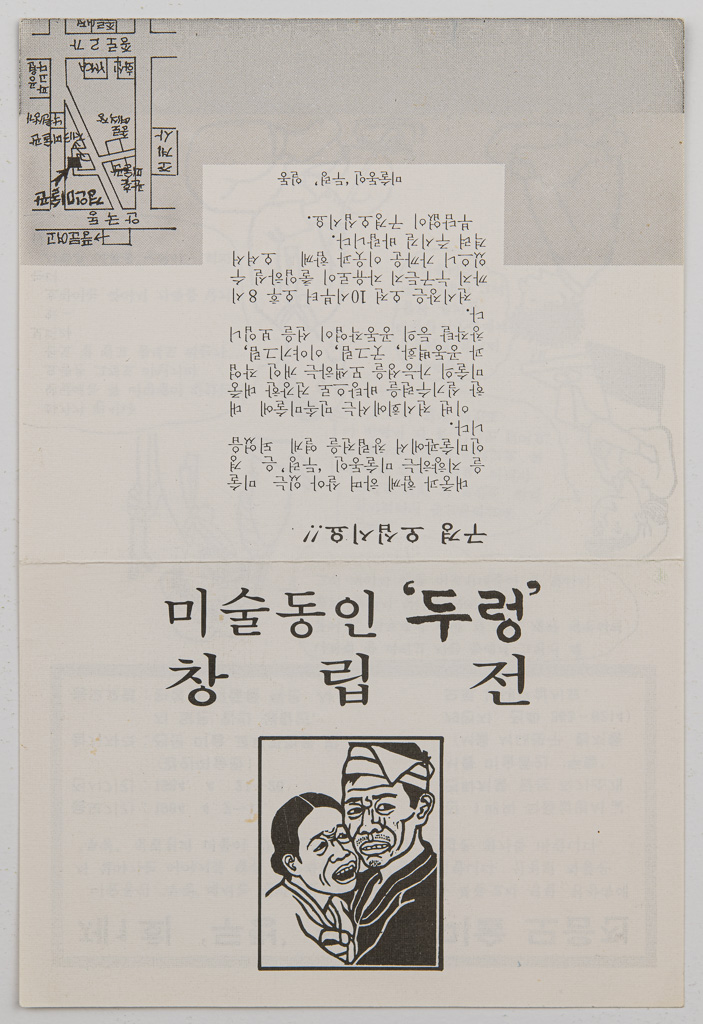
Won Dong suk Professor, Mokpo National University New Currents in 1980s Art —Beyond the Art of the 1970s 1 The currents of Korean art in the 1980s emerged from a movement that sought to understand life in its totality, and from this foundation they generated a powerful and far-reaching impact. Although the leaders of this artistic movement are primarily drawn from the younger generation and still consist largely of Western-style painters, it is anticipated that their influence will gradually extend across multiple genres. This shift is expected to open new perspectives on artistic appreciation, broaden the base of audiences, and ultimately bring transformative changes to the sphere of art education as well. The reason for this lies in the fact that if all artistic and cultural practices are, fundamentally, unfolding processes of a zeitgeist, then art, too, is inevitably joining the current of national consciousness shaped through the collective efforts of the people, who have sought to understand and act upon the realities of their time. That the integration of art occurred later—chronologically speaking—than in other fields, particularly literature, can be attributed to a number of internal factors within the artistic sphere. One might be tempted to attribute this delay to a kind of spiritual impoverishment among artists—a lack of historical consciousness or sensitivity to contemporary realities. Yet this would be an oversimplification, for the intellectual and emotional capacities of artists are in no way fundamentally deficient. Their everyday awareness is as finely attuned to reality as that of the broader public. Rather, it was the long-held assumption that an artist’s daily consciousness and the function of art were distinct that produced various forms of artistic practice separated from lived experience. Although such practices may have yielded aesthetic achievements, they simultaneously contributed to a weakening of the zeitgeist. Moreover, when examined sociologically, the tendencies within the art world to assert one’s existence through art detached from life—whether consciously or unconsciously—fostered a climate that ultimately served the class interests embedded in institutional culture. This preconceived separation between artistic function and everyday awareness, in fact, reveals itself to be a historical construct—one that has distorted the essential role of art. Another contributing factor lies in the difference between artistic modes of expression and everyday language. Because the mediating forms of art diverge from common linguistic communication, there emerged a fixed value paradigm that mistook the development of these mediating forms for the entirety of art’s function. This misconception ultimately shaped cultural patterns of transmission, taste, and reception. As a mode of artistic existence, the visual form of art—and its means of transmission—differs fundamentally from the linguistic tools through which literature can readily articulate everyday consciousness. Because language itself possesses a universality in communicating life and culture, literary practice has long benefited from an advantageous position in conveying the zeitgeist. By contrast, even art criticism must rely on language in order to interpret and diagnose artistic phenomena. For this reason, the expression of everyday consciousness through visual means has never been as simple as it is through language. Moreover, because visual artistic language relies on sensory codes that are already established, altering the habitual structures of visual perception entails a profound shift in consciousness—one that is not easily achieved. If traditional Korean painting reflects a relatively conservative artistic mindset due to the slow pace of change inherent in its long-standing visual system, the visual language of modernism, by contrast, prides itself on the avant-gardism and experimental spirit produced by rapid formal transformation. Yet despite these differences, neither has succeeded in developing or generating a new visual language capable of communicating effectively with contemporary consciousness. Instead, the problem has remained confined to an internal struggle over the functions of artistic media within the art world itself. 2 The shifts in the 1980s entailed a fundamental critique and reassessment of all these issues within the field of art, seeking not only to recover and reestablish its original functions but also to transform modes of living themselves—thus taking on the characteristics of a broader cultural movement. Consequently, these internal changes in art directed their force toward altering patterns of consciousness and behavior, aspiring to, and at times realizing, a powerful capacity for social reinvestment. By contrast, the trajectory of earlier modern Korean art had remained detached from the consciousness and ideology of the nation’s historical experience, functioning instead as an ornamental aspect of elite or colonial culture. To briefly outline the context: the period in which a modern national consciousness emerged—grounded in the subjectivity of the people (minjung) and the ideals of democracy—may be traced, setting aside debates over precise starting points, to the Silhak (Practical Learning) movement of the late Joseon dynasty. The internal reform principles of gyeongse chiyong (經世致用, statecraft for practical governance) and iyong husaeng (利用厚生, enhancing the welfare of the people), together with the economic rise of the jungin (middle-class people) and commoner classes, led to the flourishing of popular arts such as pansori (musical storytelling), talchum (mask dance), and folk painting. Alongside true-view landscape painting (jingyeong sansu) and genre painting, these developments established and advanced a realist orientation within Korean national art. However, as the contradictions within the socio-economic structure of the Joseon dynasty remained unresolved, peasant rebellions erupted, and the imperialist drive for colonial expansion accelerated the collapse of the feudal ruling class. With Japan’s annexation of Korea, the minjung were subjected to an even more severe period of repression and suffering. In this context, the realism of minjung arts—which lacked institutional protection—could offer only sporadic acts of resistance. As these forms failed to revive or reflect the lived realities of the people, they gradually declined. What followed was a distorted cultural phenomenon: the uneven and coercive “colonial modernity” imposed under Japanese rule. In essence, this system functioned by fundamentally suppressing the colonized population’s political consciousness and their capacity for economic and social recovery, while simultaneously constructing a cultural mechanism that encouraged accommodation to the colonial order. In other words, by compelling the acceptance of a modern culture stripped of its political core, the colonial regime cultivated an administrative culture designed to regulate and sustain its rule. As a result, the colonial subject was transformed into a cultural technician—a functional worker shaped through ideological indoctrination to become suitable for the management of colonial governance. It is well known that the institutional mechanism for controlling the arts during the colonial period was the Joseon Art Exhibition (Joseon misul jeollamhoe) system. The regulation specifying that participating artists were prohibited from submitting works that might “threaten public order or morality” makes this abundantly clear. In an era when the colonial authorities’ notions of “order” and “morality” scarcely required explanation, artists working within the Joseon Art Exhibition framework inevitably came to assume that aesthetic function—severed from everyday consciousness—constituted the essence of modern art. It is hardly surprising, then, that such habits of thought solidified into fixed assumptions. European modern art—whether in naturalism, realism, or impressionism—arose from artists’ assertion of independence as they challenged academism and official salons, which had served as instruments of monarchical control. Their consciousness of reality—whether grounded in bourgeois ideology or positioned against it—and their belief in artistic freedom as an inviolable right emerged from the broader intellectual history of modernity. Even the art-for-art’s-sake attitude, often criticized today, was a historical product of that context: it presupposed a social foundation in which political liberty was possible and expressed a desire to deepen the autonomous aesthetic sphere that developed alongside the differentiation of bourgeois civic culture. However, when these European artistic modes were transplanted into the cultural apparatus of Japanese colonial rule, the freedom that had grounded their original formal languages was stripped away. What was modernized instead was a detached aesthetic formalism—a contemplative mode severed from its ideological foundations—which helped disseminate distortions and prejudices shaped by Japan’s outward-looking imperial gaze. This transformed, contemplative formalism, operating under the guise of establishing an eternal and universal aesthetic realm, was mobilized within the Joseon Art Exhibition system to regulate and mediate between two stylistic poles according to purely formal criteria. In adopting a traditional and conservative mode of mediation, Eastern painting turned toward a one-point linear-perspective system as a means of incorporating a “modern” visual outlook. This shift relied upon the purportedly rational and scientific visuality developed in European Renaissance art. Modernized Eastern painting produced through this one-point perspective was promoted as an advancement, yet it did so by eliminating the multi-perspectival spatial development characteristic of the traditional “Three Distances” (三遠法, the high, deep, and level distances) and the use of reverse perspective. In doing so, it dispensed with the fluid sense of natural generation, relative ways of seeing, and the symbolic potential of imaginative space and empty margins. In other words, it represented a transformation of aesthetic stasis, narrowing imagination under a single, unified optical regime. In this context, the repetition of conservative motifs lacked persuasive power, as it amounted merely to a retrograde taste. Thus, only those who selected local (hyangto) subjects could be regarded as belonging to the ranks of modern artists. Meanwhile, within the camp that regarded the mere adoption of Western artistic modes as synonymous with modernity, artists easily aligned themselves with styles fashionable in Japan and thereby secured a position of advantage within colonial art. Whether situated within derivative strands of naturalist impressionism or aligned with Japan’s liberal avant-garde groups, these artists adopted a static aesthetic that maintained a deliberate distance from lived reality—an approach grounded in a shared East Asian ecological sensibility. This perspective found expression in the art of the Joseon Art Exhibition as a world aestheticized through “local lyricism.” Although some today interpret the use of local subject matter during this period as an early indication of national aesthetic consciousness, such readings overlook the fact that these choices were deeply inflected by the tastes of the colonial administration. Regional motifs—whether antiquities and architectural remnants, depictions of rustic farmhouses, or scenes of traditional customs—may indeed have served as objects of affectionate attention for artists. Yet these subjects were ultimately maintained within a gaze of deliberate distance, treated as ecologically immutable objects and contemplated as aesthetic forms in which any sense of contemporary reality was effectively excluded. Thus, while these motifs remained as residual, retrogressive markers of Korean history—seemingly fixed in place for eternity—they also functioned as evidence disconnected from actual social change, thereby allowing the purported achievements of Japan’s modernization to stand out in relative contrast. To put it kindly, for Korean artists such subjects signaled a form of diminished self-consciousness; yet the fact that Japanese artists in the Joseon Art Exhibition likewise favored Korean scenery from this vantage point reveals its affinity with the exotic tastes of the ruling class, to which both groups ultimately belonged. Korean artists, too, sometimes earned distinction in government-organized exhibitions by depicting Japanese scenery and customs; yet the difference lay in the lively manifestations of modernized daily life that these subjects conveyed. Their genre images of contemporary life amounted to little more than reflections of a self-satisfied realism—one that celebrated the purported accomplishments of Japan’s colonial “modernization.” Accordingly, it is unsurprising that pro-Japanese painting styles—captivated by Japanese forms and chromatic sensibilities—became the dominant tendency within the art world of the time. Nor is it surprising that the artists who rose to prominence under this influence voluntarily participated in war-support art (銃後美術) during the Pacific War, thereby assuming roles that directly served the coercive political functions of the colonial state. In other words, the contemplative aesthetic loudly proclaimed as the “pure function” of art was itself part of the structural apparatus of colonial domination—a political subtext embedded within its very form. 3 It is widely understood that the National Art Exhibition (Gukjeon), established after Liberation without a clear recognition of these historical conditions, simply inherited the structure of the Joseon Art Exhibition, altering only the administrative title. This continuity owed much to the dominance exerted by artists who had risen through the Joseon Art Exhibition system. More fundamentally, however, the post-Liberation government, confronted with national division, the devastation of fratricidal war, and ideological fragmentation, politically incorporated remnants of pro-Japanese forces, thereby obstructing the development of democratic capacity. The institutional authoritarianism and bureaucratic residues of the colonial system suppressed the full range of expressive freedoms essential to a democratic social culture—freedoms that would otherwise have emerged from the people’s own spontaneous creativity. Although the post-Liberation era underwent enormous material transformations—driven by political contradictions and factionalism, rapid economic expansion, persistent income inequality, conflicts and alienation among social classes, the rise of a commercialized mass culture, and the proliferation of foreign influences—the structure of cultural consciousness experienced little corresponding renewal. In pursuing material modernization without achieving its spiritual or intellectual counterpart, the period gave rise to a sense that, rather than breaking from the colonial past, aspects of colonial cultural patterns were being reproduced in new forms. Amid these broader social transformations, the function of art continued to reveal the residual structures of colonial-era practice—carried over from the Joseon Art Exhibition into the National Art Exhibition—which further entrenched prevailing aesthetic ideologies. Even though many artists had lived through the Korean War and the April 19 Revolution, their historical consciousness remained atrophied or numb. At the same time, a bureaucratic sense of authority came to shape the distribution of power within the art world and exerted a profound influence on art education. The movement that challenged this situation emerged with the postwar generation of artists who pursued abstract art, particularly Informel, from the late 1950s into the 1960s. Responding sensitively to developments in post-war contemporary Western art, they introduced an international perspective that confronted the sensibilities of the older generation and the outdated frameworks of art. Through participation in international exhibitions and active exchange, they helped transplant modernism into Korea and gradually set in motion a reorganization of the artistic field. By the 1970s, these pioneers of modernism had come to occupy leading positions, cultivating successors who followed their direction and thereby establishing themselves as dominant figures in shaping contemporary artistic currents. However, these modernists, too, failed to respond to the vigorous movement of the 1970s, in which writers criticized the Western-oriented tendencies of literary modernism and sought to establish a distinctly national literature. As a result, they came to be seen as socially disengaged practitioners of aesthetic play, their historical consciousness dulled and unresponsive. Critic Kim Yoon-Soo points out this issue as follows. “Although they lived through the period spanning the Liberal Party dictatorship, the April 19 Revolution, the May 16 coup, and the ensuing Republican government, they made no effort to embody these historical realities, their suffering, or their ideals within their art. In choosing the latter—the modernist position of abstract art—over the spirit of April 19, they effectively betrayed the former. From this contradiction, Korean modern art proceeded through the 1960s and 1970s by turning away from the political and social realities of the time and distancing itself from the democratization movement.” — “A New Stage of Korean Art,” in The Present Stage of Korean Literature II [in Korean] (1983), 370. Thus, the modernist evasion of reality and the absence of historical consciousness were, in fact, intrinsic to the very logic of its aesthetic structure. Although I will refrain from repeating these points in detail, as numerous critics besides myself have already articulated them with great precision, it is worth remembering that the form of modernism known through their analyses represents only a small fraction of the broader currents within contemporary international art. Within the broader field of international artistic diversity, the strand of modernism they practiced reflected a bourgeois worldview that affirmed an “absolute self” within art. The array of terms mobilized to explain their pursuit of experimentation—objectification, neutralization, de-imaging, flatness, displacement, continuity and fragmentation, magnification and minimization (minimalism), among others—constituted a formal vocabulary deployed to articulate and legitimize an elaborate system of aesthetic play. Although it is often claimed that such practices yield a logic of thought or conceptual depth, they amount, in the end, to a closed circuit of proliferating notions—expressions of a self-sufficient satisfaction grounded in rules and systems of play. From the outset, their artistic world erected barriers of difficulty that shut out the broader public, resulting in a self-enclosed mode of practice in which mutual reinforcement among like-minded adherents served only to deepen a kind of self-referential gratification. Furthermore, the critical discourse that offers auxiliary support to this practice amounts largely to an exercise in ornate rhetoric. Because the everyday language of criticism cannot genuinely communicate with the formal vocabulary employed by these artists, critics may cloak their writing in convoluted modifiers in an attempt to appear aligned, yet no real communication takes place. In a domain premised on the exclusion of everyday consciousness and imagery—one that ostensibly requires no linguistic elucidation—the very act of criticism borrowing ordinary language is itself contradictory. Forced explanations inevitably result in a proliferation of tautological statements, resembling esoteric incantations that not even the artists themselves can fully comprehend. It is therefore unsurprising that such criticism finds little genuine audience. In the end, it remains unclear what these modernists ultimately aim to pursue or achieve. Even if they claim that their work is anchored in a point of departure and in the continual examination of that very starting point, their destination proves elusive—resembling, in effect, the peeling of an onion. This is because their artistic world neither speaks of life nor seeks to draw it in. As long as they continue to proclaim the existence of an art departed from lived experience, their false consciousness becomes a logical confirmation of their own predicament: an anxiety rooted in the absence of the human, a symptom of crisis that exposes the self-contradiction of their position. For this reason, the later phases of European modernism, beginning in the 1970s, recognized that the closed logic of internal experimentation amounted only to a demonstration of art’s own existential emptiness and bore no relation to the transformations taking place in the world outside. This is why these movements shifted toward Neo-figuration, Neo-realism, and Neo-expressionism. In fact, the narrowness of the information we possessed about international art is clearly revealed by the tendencies displayed in exhibitions such as Nouvelles Figurations en France (1982) at the Musée de Seoul in the early 1980s and Contemporary Art of Germany, held at the National Museum of Modern Art (now MMCA) in November 1983. What these examples demonstrate is that domestic modernism had ceased to function as an avant-garde or cutting edge; it had already become an outdated fashion. 4 Of course, the artists of the 1980s did not begin from a heightened sensitivity to international trends; nevertheless, their underlying consciousness differed markedly from that of the generation that emerged in the 1960s. Their work developed from an awareness shaped by accumulated experiences of political upheaval, structural contradictions within industrial capitalism, intensifying social conflict, and the mass manipulation inherent in consumer culture. Grounded in this consciousness—and in a collective sense of solidarity formed through the people’s determination to confront historical realities and overcome the alienation of everyday life—these artists forged an autonomous point of departure. Accordingly, the function of their art lies in its capacity to communicate with life and to work toward its recovery: it embodies an ethical sensibility that calls forth the practice of social reinvestment and manifests concrete expressions of truth. Because this movement arose from shared experiences of life itself, the question of who initiated it, which group played a leading role, or where its point of origin lay holds little meaning—and indeed cannot be determined. Such inquiries stem from a dominant mode of thinking that privileges elite agency within historical development, a fundamentally anti-minjung perspective. In this regard, the art of the 1980s marks yet another break from the colonial mindset imposed by foreign powers. In short, it emerged autonomously from the soil of the people. If there is a common thread in the emergence of these autonomous artistic movements, it is that they arose from voluntary initiatives—whether by individuals or collectives—that challenged the illusory system of artist production sustained by the National Art Exhibition and other juried exhibitions, both large and small. Since juried systems operate on the authority of established tastes, filtering art through the dominant logic of those already in power, the growing tendency toward independent exhibitions and group exhibitions represents a declaration of artistic independence and a refusal of such frameworks. Although these initiatives may still be small in number, the assertion of a confident, self-determined artistic stance will undoubtedly surpass and outpace the careerist pursuit of recognition through juried competitions. Of course, artist collectives had existed prior to this period. Yet whereas earlier groups were often gatherings shaped by academic ties, factional alliances, or alumni networks—circles that largely showcased the prestige associated with success in juried exhibitions—the new collectives of the 1980s were ideologically distinct. Their cohesion stemmed from a theoretical as well as practical rejection of the very premise of the juried system and of the illusions it sustained. Examples of such collective exhibitions, recalled here from memory, include Reality and Utterance, Imsulnyeon (The Year Imsul), The Third Group Exhibition, December Exhibit, Young Minds, Hoengdan, ’83 Humanity, Fact and Reality, The Silcheon Group, Dureong, and, in Gwangju, The Year 2000 Exhibition. Notable solo exhibitions of the period include Lee Manik (1977), Oh Kyunghwan (1978), Lee Sang-guk (1979), Noh Wonhee (1980), Kwun Suncheol (1980), Hong Sungdam (1980, Gwangju), Shim Jungsoo (1981), Lim Oksang (1981), Kim Kyoungin (1981), Park Hanjin (1981), Son Jangsup (1981), Lee Chulsoo (1981), Lee Chungwoon (1981), Oh Hae Chang (1982), Shin Hakchul (1982), Park Bouchan (1982), Min Joungki (1983), and Son Sangki (1983). Some of these artists were also affiliated with the collectives mentioned above, and in several cases the names of their groups overlapped. Altogether, however, more than one hundred artists were actively engaged during this period. What is most distinctive about Reality and Utterance is that, from its inception, young critics participated as members of the collective. Traditionally, critics occupied positions either preceding or following the work of artists, offering judgments before or after artistic production. Breaking with this convention, these critics sought to establish a new mode of criticism—one characterized by a collaborative or companionate relationship with artists, through which all artistic questions could be explored jointly. Their stance is not one of advocating for any particular group of artists; rather, it reflects a commitment to cultivating a shared ground of experience encompassing art and reality as a whole. From this foundation, they aim to achieve productive commonality through reciprocal critique and mutual supplementation. For this reason, the collective continually seeks to refine its methods through sustained discussion and reflection, creating open channels of dialogue with newly emerging groups as well as individual artists. Beyond their published statements, they have broadened their theoretical scope by compiling writings by members and editing the anthology Art and Industrial Society (published by Yeolhwadang), which has come to serve as an important precedent for collective activities in the 1980s. Over the course of four exhibitions, artists such as Son Jangsup, Shim Jungsoo, and Lee Chungwoon departed, while new younger members joined, allowing the group to maintain a steady sense of vitality. The artistic practices within these collectives vary widely, each shaped by the strong and distinctive voices of individual artists, making it difficult to characterize them in uniform terms. The ways in which these artists articulate their thematic concerns range widely—at times rough, at times measured, humorous, satirical, somber, or even sly—creating, in their tumultuous diversity, an atmosphere reminiscent of a bustling night market. Their modes of mediation are equally varied: they paste, cut, peel away, and reveal layers of comics, photographs, advertisements, posters, newspapers, printed text, hanji, and toys, while also employing oil, acrylic, industrial paint, and ink, producing a vivid sense of material immediacy akin to that of Pop Art. Among them, artists who have held solo exhibitions—such as Lim Oksang, Noh Wonhee, Min Joungki, Son Jangsup, Lee Chungwoon, and Shim Jungsoo (sculpture)—have tended to forgo extensive material experimentation, instead cultivating highly individualized worlds of their own. Even outside the collective context, they established themselves as notable figures of the 1980s art scene. Meanwhile, although they have not yet held solo exhibitions, the distinctive satire of Oh Yoon and Kim Jungheun, the inventive originality of Kang Yobae and Ahn Changhong, the humor of Joo Jaehwan, and the unabashed candor of Kim Yongtae will, without doubt, lead each of them to demonstrate their full artistic force in time. Meanwhile, the collective Imsulnyeon, From 98,992, founded in 1982 and responsible for two exhibitions, adopted the symbolic name “From Here and Now” and consisted of artists of roughly the same generation. Their work is characterized by an almost hyperrealist technique through which they dramatize either the cold, objective aspects of reality or its allegorical and symbolic dimensions. With their own emotions held in reserve, the images they render reveal a world permeated by anxiety, crisis, and fear of global despair. In this regard, a certain conceptual tendency can be discerned, insofar as the realities depicted are not fully embodied on an individual level; nevertheless, the compressed intensity of their expression is striking, and their working attitude is earnest. Grounding their practice in hyperrealism while reflecting aspects of contemporary urban-industrial society, these artists are likely to continue drawing attention within the art world. (A more detailed discussion appears in the December 1983 issue of Madang.) In contrast, the collectives Young Minds, Hoengdan, and The Silcheon Group exhibit markedly different dispositions. Although some members overlap with one another and with the earlier collectives—and with a few exceptions in individual artistic approaches—the prevailing tendency among these groups is characterized by an intense, distinctly anti-artistic fervor. Rather than articulating their concerns through conventional forms or established compositional systems, these artists release an outpouring of consciousness saturated with mockery, derision, satire, contempt, humor, and playful irreverence—an impulse directed toward the wholesale dismantling of such systems altogether. In their work, the artist’s own actions and gestural interventions take precedence over the artwork. This anarchic attitude gives the impression of a Korean variant of European Dadaism. For them, no sacred realm of art exists, nor do they recognize any rituals of officiation within the artistic “sanctuary.” Even their catalogues ignore customary practices, such as including photographic reproductions of works or providing biographical notes. Instead, they openly flaunt an unruly denunciation of established art, and, as if retaliating against the habits instilled through academic training, they lay bare—and even celebrate—their own vulnerabilities. By casting off the divisions that separate art from life and pulling “high art” down to the level of an impromptu scrawl on a tavern wall or the illicit erotic drawings found in public restrooms, these artists seek not a crude, recreational vulgarity but rather a rediscovery of genuine selfhood within the muddy turbulence of lived experience. For this reason, although individual works may at times appear impulsive or unruly, one senses the vivid heat of creative birth—the raw trace of life itself—felt outside the conventional frameworks of art, in the sense that the creation starts from destruction. To attain an understanding of life itself, the fixed consciousness of art must first be shattered. In this respect, their stance is fundamentally different from the Informel movement of the 1960s, which expressed itself through debates over stylistic form. However, it must also be recognized that this anti-artistic fervor, when presented within the conventional format of the gallery exhibition, risks failing to communicate with life outside the art world and instead remaining an insular, self-referential exchange among its participants. If the task of life is to discover the struggles with reality, then failing to challenge the conventions of exhibition practice risks remaining within a fragile state of consciousness—one that shirks the hazards of genuine experimentation and circles instead around the complaints of a discontented reveler behind closed doors. Small-scale vendors who lack the means to maintain a proper storefront set up makeshift stalls in busy markets or on crowded street corners, fleeing and hiding when enforcement officers approach, only to resume their business again. Their persistence illustrates a tenacious capacity for renewal. Likewise, spaces for exhibition can be found anywhere, at any time. If the aim is to expand conditions in which new artistic cultures can truly communicate with life, then it is only fitting that such practices emerge in sites outside commercial galleries—within the spaces of lived reality itself. To remain confined within the art world while raising a banner of resistance is fundamentally at odds with the character of their work. The Third Group Exhibition had long attracted attention as a collective committed to exploring a vein of Korean sensibility in which non-figurative and figurative modes coexisted. However, due to external pressures and internal aesthetic divergences, the group has since ceased its activities. Among the artists who passed through this collective, Lee Manik made significant contributions in the 1970s with his discovery of a figurative sensibility grounded in literary narratives, yet his work of the 1980s shows little sign of transformation, leaving a sense of disappointment. Kim Kyungin, who began his artistic career relatively late, in his forties, rose to prominence with themes that depicted the situational terror of human existence. Kwun Suncheol achieved notable success with his expressionist treatment of ordinary faces, revealing glimpses of everyday life and earning him considerable popularity within the gallery scene. Lee Sang-guk, whose vigorous brushwork once brought vitality to socially conscious themes—and who, together with Oh Kyunghwan, generated significant discussion early on—has not sustained this momentum. Oh Kyunghwan, after studying in France, has not held exhibitions in Korea, and Lee’s second solo exhibition in 1983 revealed the weakness of an insufficiently developed thematic inquiry, suggesting that his work has not yet moved beyond a state of stagnation. Founded in 1978, Fact and Reality focused primarily on the aesthetics of figuration, raising questions about the apprehension of neutral objects within the lineage of photorealism. Yet it remains uncertain whether this approach will generate developments that connect meaningfully with the artistic consciousness of the 1980s, for their notion of “neutral reality” is stripped of any historical perspective. The ’83 Humanity Exhibition, now in its second iteration, possesses a notably distinctive character. Centered around two artists—Chung Munkyu and Hwang Yooyup—whose work offers striking perspectives on the human figure, the exhibition identifies significant emerging artists, presents their work collectively, dissolves afterward, and then reconstitutes itself with a new group the following year. The intention is to avoid the factionalism often associated with artist collectives and to preserve the individual independence of each participating artist. Nevertheless, although some artists affiliated with other collectives are included, the sensibilities expressed here are more supple, and the perspectives more varied, reflecting an awareness attuned to the realities of the 1980s. Particularly noteworthy in sculpture are the works of Park Bouchan, Hong Soonmo, and Kim Youngwon, whose forms demonstrate significant depth of transformation, while the electrifying world presented by emerging artist Park Jeongae constitutes a bold and provocative intervention. Just as Shim Jungsoo’s 1981 solo exhibition in sculpture struck a decisive blow against the prevailing falsehoods of abstraction—by presenting forceful thematic intensity and a recovered imagery grounded in the concrete realities of human experience—so too is it likely that, in the 1980s, the perspectives of the new generation of sculptors will inevitably bring about a transformation in the field. If the collective activities discussed above arose primarily in Seoul and thus reflected the continuing centralization of the Korean art world, the Year 2000 Exhibition—a collective movement that emerged in Gwangju—once drew extraordinary attention from the capital. Although it has since ceased operations for a variety of reasons, its cultural significance remains considerable: it represented an autonomous, regionally grounded initiative shaped by the artists’ shared experience of the May 1980 Gwangju Democratization Movement and their search for an artistic mode of sublimation. The art of southern provinces (namdo) possesses a distinct local character and requires closer scrutiny. Compared with other regions, the peculiar tendencies of the southern provinces art scene stem largely from the distribution of artists aligned with the National Art Exhibition system, whose influence reinforced entrenched conservative styles in Gwangju and elsewhere. This conservatism had become chronic and resistant to change. Moreover, Gwangju’s Provincial Art Exhibition (Domijeon), effectively a miniature version of the National Art Exhibition, stifled the creative freedom of younger artists. Even modest collective initiatives were forced to navigate the authority and preferences of established local figures who functioned as de facto arbiters of the regional art world. Within this climate, the Year 2000 Exhibition, which began in 1980, was a whirlwind arising from the difficult conditions of a provincial environment—far more challenging than those in Seoul—yet it eventually lost momentum under pressures external to art itself. As a result, young artists in Gwangju have often endured misunderstandings and a persistent sense of unjust scrutiny from outside the region. Even so, through this collective exhibition, Lim Oksang and Shin Kyoungho—though also members of Reality and Utterance—found renewed vitality while living and working in the provinces. The emergence of Lee Geunpyo, Hong Sungdam, and Choi Youl further opened a door to new formal possibilities. In particular, Hong Sungdam, whose 1980 solo exhibition foregrounded experiential testimony to the emotions of the minjung, drew significant attention from the Seoul art world. Choi Youl, for his part, played an equally vital role—not through painting alone, but through his incisive criticism, which positioned him as an intellectual companion within the movement. Other artists who, though not affiliated with the aforementioned collectives, have risen through individual activity include Shin Hakchul and Son Sangki. In his 1982 solo exhibition, Shin appropriated contemporary techniques such as photomontage and collage to depict fragments of modern history and industrial reality through a demonic imagination marked by the grotesque, fear, and brutality—sending shockwaves through the art world. That same year, he was selected as Artist of the Year by art journalists. Although his incorporation of consumer products from industrial society as direct objects can at times feel unfamiliar or diffuse, his experimental pursuit of an urban sensibility points toward the expanding scope of his practice. Son Sangki, who first distinguished himself in the figurative division of juried exhibitions, presented his Artificial City series in his 1983 solo exhibition. In these works, he overcame the pain and haunting memories associated with his own physical disability, shifting his gaze toward the realities of marginalized neighbors and rendering the harsh spaces of urban life with expressionistic intensity. His ability to transform personal misfortune into compelling visual language suggests that his work will continue to resonate ever more deeply. With a few exceptions in their forties, the artists discussed above are largely in their thirties and belong to the petit bourgeois class—individuals who, whether salaried workers, small studio owners, or unemployed, cannot make a living solely from the sale of their work. Among them is Hwang Jaihyoung, who closed his studio and, supporting a family, moved to a mining town. There, living and working as a miner, he has translated the immediacy of lived realities into his art, embodying a rare and genuine integrity of life and practice. In this way, the artists’ effort to narrow the distance between life and art constitutes one of the defining characteristics of the 1980s. Even beyond their artistic practice, they share a common ethical integrity that informs their approach to life itself. 5 If the function of art has begun to find its path as a means of restoring the totality of life, this cannot be confined to an awareness limited to the artist’s own existence. Once the gaze shifts from the self toward one’s neighbors, and further toward the conditions of life as a whole, it becomes inevitable that the lives of marginalized regions and marginalized classes—the minjung—must be addressed. At this stage, extended cultural debates over the concept of the minjung—what it signifies and what its concrete substance might be—are an unnecessary distraction. The minjung is neither an abstract construct nor a mythic invention; rather, it may be understood simply as the people themselves, seeking to reclaim their human rights from the lived experience of marginalization. Accordingly, it can no longer be overlooked that today’s minjung remains alienated from established art and deceived by the mechanisms of consumerism and mass culture. Moreover, the professionalized division of labor in industrial society has institutionally severed the minjung from their own creative cultural roles—from autonomous development, reception, and ownership. For this reason, the movement for Minjung art, as an integral component of national culture, constitutes a natural and necessary manifestation of historical consciousness. However, up to this point, Minjung art had largely been a top-down movement advanced from the standpoint of intellectuals and artists—an effort “for the people” rather than one emerging organically from within. This framework revealed a limitation in which enlightened cultural elites continued to regard the minjung as objects rather than as agents. In other words, it had not yet reached the stage of a “movement of the minjung by the minjung,” wherein the minjung themselves rise from below and become autonomous subjects seeking a unity of subject and object. In this context, professional artists faced a dual task: restoring the function of art while also determining how to achieve a sense of reconciliation and unity with self-sustaining forms of Minjung art. Such an effort first emerged not in Seoul but in the regional cultural sphere of Gwangju, where, in 1983, Hong Sungdam, Choi Youl, and other members of the local Minjung art team initiated what they called the “Citizens’ Art School.” Although the program began as a commission from the Gwangju Catholic Church, it was fundamentally different from conventional “art practice courses”; rather than offering technical training, it sought to awaken citizens’ own desire for creative expression—an opening toward Minjung art grounded in voluntary, collective participation. The significance of the Citizens’ Art School is as follows: “We no longer live in an era where only poets may write poetry and only painters may make pictures. The art that is needed today must arise from an attitude of humility toward the lived experiences of others—a willingness to receive and share them together… From now on, the question is not one of skill or professional specialization. Art must become a site in which the total life of an era is expressed.” Thus, participants in the Citizens’ Art School consisted not of art majors but of ordinary citizens—students, repeat exam-takers, office workers, and homemakers. Divided into several teams, they engaged in collective discussions and expressed the thematic concerns of their lives through printmaking techniques. The initial choice of printmaking was explained as follows: “Anyone can draw, carve, cut, and print, and in doing so communicate their joys and sorrows to others and receive theirs in return. The very act of printing and sharing impressions signifies that the public can acquire its own messages independently.” In other words, by overcoming their sense of alienation from art through their own non-professional interests—and by realizing an active desire to express their own lives—the people can form a genuine sense of solidarity grounded in the creation and shared enjoyment of culture. This, in turn, becomes a pathway toward securing a more active mode of life and toward freedom itself. Through such processes, the minjung can transform from passive consumers into productive agents. In fact, minjung art movements across the Third World exhibit notable similarities in their overall character. From the perspective of the major powers or centers of “high culture,” such practices may be dismissed as crude or naïvely impulsive. Yet externally, they constitute foundational efforts to free national culture from the sphere of imperial cultural influence, and internally, they express a legitimate desire to break free from hierarchical structures of domination and to create a communal culture. Accordingly, the advancement of national culture lies in the enhancement of life grounded in Minjung art. Yet Minjung art remains in its early stages and continues to face various forms of misunderstanding and external pressure. These difficulties stem both from the lingering remnants of colonial rule—which long sought to erase national culture under Japanese occupation—and from ongoing political prejudices. At the same time, those who lack even the leisure afforded by labor often regard their own potential for artistic creation with skepticism or even ridicule. Although the erosion of rural culture and the absence of labor culture today have been shaped in large part by external forces, they also persist to the extent that people are unable to overcome the conditions of their own lives—signs of an internal vitality left unrealized. Culture is the force that reveals the value of survival itself, rather than the abandonment of it. Through the force that awakens, recovers, and reveals the value of our collective survival, both artists and the minjung come to recognize the meaning of their own existence and to sustain an unwavering commitment to creative work. It is this fervor—this continual drive to contribute to creation—that will ultimately shape the direction of art in the 1980s.

Art Terms