
-
January
-
February
Younghae Chang Heavy Industries showcases Samsung, a flash animation consisting of texts and music, at the Ssamzie Space open studio in Jongno-gu, Seoul.
Alternative Space In The Loop opens in Mapo-gu, Seoul, with Suh Jinsuk as director. Its inaugural exhibition, Kim Eunyoung’s Fake Flower (February 6–20), is presented. The space is later renamed Alternative Space LOOP and establishes itself as a non-profit alternative venue supporting the experimental practices of emerging artists. In 2005, LOOP relocates to a newly constructed building.
Cholesterol Night (Ssamzie Art Studio, Seoul, February 26) is organized under the direction of Gimhongsok. The event takes the form of a food performance, temporarily transforming the space into "Samji Banjeom (Samji Chinese Restaurant)" and inviting first- and second-term resident artists as well as external guests to participate.
-
March
As the seventh exhibition in the Sungkok Art Museum’s "Artist of Tomorrow" program, Lee Yong-baek: Tactile Documentary (March 5–30) is held. The exhibition explores the boundaries of perception based on a critical perspective on material civilization, and presents video and installation works such as Black Forest, Tactile Documentary, Unfinished Monument, and Baby of Narcissus.
-
April
Alternative Space Pool opens in Baegak Building, Jongno-gu, Seoul (formerly Twenty First Century Gallery). Triggered by the dismissal of the Gwangju Biennale Foundation’s artistic director, the need for an artist-centered space emerged, leading to the launch of the venue through the takeover of Twenty First Century Gallery. Its steering committee consists of Kwon Hyuksoo, Kim Yong-Ik, Kim Yongchul, Suh Yongsun, Ahn Kyuchul, Lee Youngwook, Jung Heon-i, Choi Gene-uk, and Hong Myung-seop. The inaugural exhibition, Seeping In—Chung Seoyoung and Choi Jeonghwa (April 2–13), is held. In 2006, Pool relocates to Gugi-dong, Jongno-gu, Seoul.
Global Conceptualism: Points of Origin, 1950s–1980s (Queens Museum of Art, New York, April 28–August 29) is held. The exhibition is directed by Luis Camnitzer, Jane Farver, and Rachel Weiss, with co-curators László Beke (Eastern Europe), Chiba shigeo and Reiko Tomii (Japan), Okwui Enwezor (Africa), Gao Minglu (China, Taiwan, Hong Kong), Claude Gintz (Western Europe), Mari Carmen Ramírez (Latin America), Margarita Tupitsyn (Former Soviet Union), Terry Smith (Australia and New Zealand), Sung Wan-kyung (South Korea), and Peter Wollen (North America). The exhibition presents approximately 240 works by about 135 artists from 30 countries.
Sung Wan-kyung introduces Korean artists Kim Yongmin and Sung Neungkyung of the Space and Time (ST), as well as Kim Yongtae, Park Buldong, and Choi Byungsoo from the Minjung Art movement. Through these selections, the conceptual practices in Korean art that traversed both modernism and Minjung art are highlighted. The exhibition subsequently travels to the Walker Art Center, Minneapolis (December 19, 1999–March 5, 2000), and the Miami Art Museum (September 15–November 26, 2000). -
May
Open Space-Multimedia (Samae Corporation Factory, Icheon, Gyeonggi-do, May 10–June 10) is held. A total of eighteen artists participate, including Choi Sunyoung, Hwang Jisun, Hwang Sejin, Jung Inyup, Jung Minyoung, Kim Kyujung, Kim Simu, Kim Youngheon, Lee Hojung, Lee Jinwon, Lee Woohyun, Lee Yongbaek, Oliver Grimm, Ryu Biho, Ryu Hoon, Suh Jungguk, Yoo Inho, and Yoon Sungchin.
The Samsung Foundation of Culture opens the Rodin Gallery in Jung-gu, Seoul, on May 12. Its inaugural exhibition, An Epic of Love and Passion—Rodin and The Gates of Hell (May 14–September 12), is co-organized with the Musée Rodin in Paris. The exhibition features forty-six works in plaster, bronze, and ceramic, along with twenty-five drawings, including The Gates of Hell and The Burghers of Calais.
During the 2000s, the Rodin Gallery introduced major exhibitions of Korean contemporary art, presenting works by Kimsooja, Bahc Yiso, Ahn Kyuchul, and Lee Bul. In 2011, it reopened under the new name PLATEAU, beginning with the exhibition Space Study, before permanently closing in 2016.Curated by Andreas Schlaegel, Elvis Koonjoongpanjom (Sungkok Art Museum, Seoul, May 14–June 30) is held. The Gracelands Place Project Team—composed of artists from Korea, Germany, Canada, the Netherlands, and Israel (Andreas Schlaegel, Guy Bar-Amotz, Michael Raedecker, Lisa Cheung, and Jung Yeondoo)—participates. Inspired by the operating style of a Chinese restaurant in London, the exhibition adopts hybrid contemporary culture as its central concept. For the first three days (May 14–16), performances under the title Elvis Koonjoongpanjom, combining food, impersonations, and DJ sets, are presented.
-
June
The Forty-eighth Venice Biennale (June 12–November 7) is directed by Harald Szeemann and held under the theme dAPERTutto (“Everywhere”), with sixty countries participating.
Song Misook serves as commissioner of the Korean Pavilion and selects Noh Sangkyoon and Lee Bul. Lee presents Cyborg and Majestic Splendor in the international exhibition, and Gravity Greater than Velocity + Amateur in the Korean Pavilion, for which she receives a Special Award. Kimsooja also participates in the international exhibition."Venice, the Festivities Have Begun," Chosun Illbo, June 3, 1999
Artist of the Year 1999: Kim Hosuk (National Museum of Contemporary Art, Gwacheon (now MMCA), June 15–August 15) is held. The exhibition reinterprets traditional ink painting in a contemporary manner, featuring urban landscapes and ink drawings from the 1980s, a history painting series from the 1990s, as well as portraits of ordinary people and Buddhist paintings.
-
July
Ssamzie Art Studio 1: 1998–1999 (Ssamzie Art Studio, Gangdong-gu, Seoul, July 3–9) is held, showcasing the achievements of the first-term resident artists. A total of nine artists participate: Chang Younghae, Chung Seoyoung, Gimhongsok, Hong Sounmyoung, Kho Nakbeom, Park Chan-kyong, Park Hyesung, Rhii Jewyo, and Son Bongchae. In the second half of 1999, nine artists are selected as second-term residents: Ahn Sunghi, Ham Kyungah, Jeong Hyeseung, Kang Un, Kim Changkyum, Kim Yousun, Lee Mikyeong, Park Yongseok, and Yoo Hyunmi.
Ssamzie Art Studio later changes its name to “Ssamzie Studio” and relocates near Hongik University in Mapo-gu, Seoul, in June 2000, operating until 2008. -
August
The Korea Culture and Arts Foundation organizes The Eighth New Generational Tendency in Korean Contemporary Art: Mixer and Juicer (Misulhoegwan (now ARKO Art Center), Seoul, August 13-24) is held. Unlike previous editions, the exhibition is organized independently rather than through the selection of artists by external commissioners. “Mixer & Juicer” features sixteen artists in their twenties and thirties, including Bae Youngwhan, Ham Jin, Ham Kyungah, Ham Yangah, Jung Sujin, Jung Yeondoo, Kim Hyunsoo, Kim Sujin, Lee Jinkyung, Lee Wonhee, Lim Jungkyu, Lim Minouk and Frederic Michon, MAFI, Nayoungim, and Park Sunghwan.
An accompanying seminar, Trends and Prospects of Twenty-First Century Art, is held on August 18 at the Korea Culture and Arts Foundation.The third exhibition in the “Glimpse into Korean Modern” series, Glimpse into Korean Modern Sculpture (National Museum of Contemporary Art, Deoksugung (now MMCA), August 24-October 31) is held. It presents figurative works by artists born before the 1930s.
’99 Seoul Photography Exhibition: The Photograph Looks at Us (Seoul Museum of Art, August 27–September 15) is held. The chair of the steering committee is Lee Youngjune, with committee members Park Youngsook, Shin Hyekyung, Lee Ju-yong, and Hwang Gyutae. The exhibition presents a wide spectrum of photography—from photojournalism to satellite imagery—expanding the discourse of photography beyond the dichotomy of documentation and artistic expression.
Participants include Admap Korea, Inc., Bae Joonsung, CheongO G&G Co., Ltd., Choi Jeonghwa, Choi Keumhwa, Hong Miseon, Hwang Gyutae, Hyunjudong Project, Jeon Misook, Kim Dohyun, Kim Jungsun, Kim Oksun, Kim Sanggil, Kim Sumi, Kim Wooil, Kim Yeong-gill, Kong Sunghun, Koo Bohnchang, Lee Changjoon, Lee Jooyong, Lim Minouk and Frederic Michon, Meta4, Mok Najung, Noh Jungha, Park Heejin, Park Jongsung, Park Kyungil, Park Youngsook, Shin Hyekyung, Shin Kyungchul, Son Seunghyun, Song Kyungseok, Um Sangbin, Yeom Eunkyung, Yeom Jongsook, Yoon Jungmi, Yum Joongho.As the Ministry of Culture, Sports and Tourism designates 1999 as the "Year of Architectural Culture", the National Museum of Contemporary Art, Korea (now MMCA) and the Organizing Committee for the Year of Architectural Culture jointly organize The 100 Years, Architecture of Korea (MMCA Gwacheon, Aug 31-October 28). Occupying Exhibition Halls 1 and 2 as well as the Central Hall, this large-scale exhibition presents architecture as an art form that reflects both the history of life and the conditions of living.
The exhibition is divided into three sections: Part I, The Forced Introduction of Western Culture and the Transformation of Korean Architecture; Part II, The Pursuit of the Fundamental Values of Architecture; and Part III, New Perspectives on the Future. -
September
The First Women’s Art Festival: Patjis on Parade (Hangaram Art Museum at the Seoul Arts Center, September 4-27) is held. The exhibition chair is Kim Hong-hee, and the curatorial team of five—Kim Sunhee, Kim Hong-hee, Beck Jee-sook, Oh Hyejoo, and Lim Junghui—jointly organize the exhibition.
The exhibition is structured in two parts: Part I, Patjwi in History, explores women’s art from the Joseon Dynasty to the 1980s, while Part II, Patjwi in the 21st Century, presents works by 1990s artists through five sub-themes. Part I consists of “Joseon Dynasty 1392–1910” (Kim Sunhee), “Modernity 1920–1950” (Kim Hong-hee), Women’s Art and Modernism” (Lim Junghui), and “Women’s Art and Reality” (Oh Hyejoo and Beck Jee-sook). Part II consists of “Women’s Sensibility” (Kim Sunhee), “Women and Ecology” (Lim Junghui), “Sex and Gender” (Kim Hong-hee), “Ritual and Play” (Oh Hyejoo), and “Media in the Home” (Beck Jee-sook). A total of seventy-three artists participate.Ahn Graphics launches a irregular publication Journal of Design Culture and Criticism [Dijain munhwa bipyong]. The editor is Kim Minsu. It is published until Issue No. 6 in 2002.
The First Cheongju International Craft Biennale (Cheongju Arts Center and Sports Complex, Chungcheongbuk-do, September 30–October 31) is held. The organizing committee chair is Na Gijeong, and the curator is Jang Dong-gwang. Under the theme "Hands of Harmony", the Biennale consists of Today’s World Contemporary Craft: International Invitational Exhibition, International Craft Competition, and an international academic symposium. The main exhibition, the International Invitational Exhibition, features forty-four international artists and one hundred ninety-nine Korean artists. An associated international academic conference, The Intersection of Art and Industrial Design—Restoration of Craftsmanship (Cheongju University College of Arts, Music Hall, October 15), is also held.
-
October
Seoul in Media-Lumia of Century (Seoul Museum of Art, formerly the Seoul 600th Anniversary Memorial Hall, Jongno-gu, Seoul, October 15–November 3) is held. The chair of the steering committee is Kang Taehee, with committee members Kwon Soonhwan, Kim Wonbang, Kim Haemin, Shin Hyunjung, Yeom Eunkyung, and Oh Byungkwon.
A total of thirty-three artists participate, including Chae Mihyun, Cho Duckhyun, Cho Taibyung, Choe U-ram, Han Kyeryun, Heo Kuyoung, Hur Unkyung, Hwang Gyutae, Kim Daesoo, Kim Haemin, Kim Heesun, Kim Hyunhee, Kim Jaegwon, Kim Jinsoo, Kim Seungyoung, Kim Youngjin, Kwon Soonhwan, Lee Ju-yong, Lee Junmok, Lee Kiil, Lee Yongbaek, Lim Choongsup, Lim Youngsun, Moon Joo, Oh Sang-Ghil, Oliver Griem, Suh Yangbyum (Video performance), Shin Hyunjung, U Sunok, Yeom Eunkyung, Yim Heejoong, Yook Taejin, Yoon Youngseok.
The exhibition presents diverse media works, including video art, computer-based art, photography, laser, and holograms.The art magazine Art is first published under the slogan “The Eyes of a New Era, a Living Art Journal.” The publisher is Lee Kyuil and the editor is Kim Boggii. In November 2000, the magazine is renamed Art in Culture.
The non-profit exhibition Project Space SARUBIA (Jongno-gu, Seoul) opens. Kim Sunghee, Seol Wonki, Yun Dongkoo, and Yu Myungboon acquire the former Sarubia Café in Insa-dong and establish it as an exhibition venue. Operated on the principle of “artist-oriented” practice, SARUBIA selects emerging artists through an open review process. For its inaugural exhibition, Ham Jin: Fantasy Diary (October 20–November 19) is held, presenting thousands of small figurines made of paper clay, paper, plastic, and toys. In January 2011, the space relocates to Changseong-dong, Jongno-gu, Seoul.
Curated by Lee Youngchul, The First Art Factory 2000: Artists’ House—Unsettled Zone (Icheon Art Center, formerly Samae Corporation Sock Factory, Gyeonggi-do, October 23–November 23) is held. Participants include university students, graduate students, and recent graduates in their twenties from eight universities in the Seoul metropolitan area.
The online website Neolook is launched. Operated by the Imageology Institute and directed by Choi Keumsoo, it is an art-specialized online medium that provides exhibition information.
-
November
The fourth exhibition in the “Glimpse into Korean Modern” series, Glimpse into Korean Modern Crafts (National Museum of Contemporary Art, Deoksugung (now MMCA), November 16-February 6, 2000) is held. The exhibition surveys the origins and development of modern crafts as well as the transition toward contemporary practices. It presents more than one hundred works by thirty-four artists born before 1933, focusing on works produced up to 1965, when craft and design became separated, and ranging from naturalistic realism to the figurative tendencies of the 1960s.
The Ministry of Culture and Tourism opens the Design Museum (Arts Center, Seocho-gu, Seoul, now the Hangaram Design Museum). The steering committee members are Kang Woohyun, Kim Yeongsun, Kim Jungheun, Min Chulhong, Bae Jinhan, Ahn Sang-Soo, An Jeongeon, and Jung Gukhyeon.
For the inaugural exhibition, Disvovering Design—Design Culture in Everyday Life (November 11–January 20, 2000), curated by Kim Suki, Eom Hyeok, and Choe Beom, the exhibition is organized into five sections: Urban Signs, Domestic Landscape, Language of Body, The Order of Objects, and Encounter with Cyberspace. Participants include Kim Dojun, Kim Sanggyu, Kim Hyungsoo, Nam Kiil, Design Center in Daewoo Electronics , Global Marketing Operation in Samsung Electronics, Seo Gyesook, Ahn Yongchan, Lee Sungchul, Lee Sunghui, Lee Yongjae, Lee Yunju, Yeo Insu, Cho Taebyeong, Jang Minseo, Jung Jaeun, and the Corporate Design Center in LG Electronics/Design Strategy Group. -
December
Curated by Kim Sejin, The Cross: Exhibition for Videography (Dongsoong Cinematheque, Jongno-gu, Seoul, December 18–23) is held. A total of ten artists participate, including Hong Sungmin, Kang Hong-goo, Kang Young Mean, Kim Hyunsoo, Kim Sejin, Lee Dongi, Lee Jungjae, Park Eun-young, Park Hwayoung, and Park Il-hyun. The exhibition catalogue is produced in videotape format, highlighting the shifts in Korean video culture around the emergence of cable television in 1995.
Related Essays
-
Shin Chunghoon
1990-1999: Korean Contemporary Art in Globalization
Entering the 1990s, Korean society was marked by a palpable sense of anticipation. With the restoration of procedural democracy, including direct presidential elections, and an economic boom, Korea seemed on the verge of achieving developed country status. The momentum toward openness and global integration had already gained traction following the 1988 Seoul Olympics. Against the backdrop of overlapping expectations for democratization, development, and globalization, Korean art underwent significant transformations. The “Cold War” tension between Modernism and Minjung art began to ease, giving way to a more sensuous artistic expression that embraced "new generation" and "technology" as its guiding principles. The dissolution of boundaries and hierarchies across genres and media paved the way for the emergence of video, performance, and installation art. Simultaneously, Korean contemporary art gained international recognition as it entered the global circuit of biennials. While these changes led many to perceive the Korean art scene of the 1990s as a radical departure from the past or an achievement of "contemporaneity," the decade also laid bare the inadequacies of Korean modernization, evidenced by events such as the collapse of the Seongsudaegyo Bridge and the Sampoong Department Store, as well as the IMF-led neoliberal restructuring following the financial crisis of 1997. Amidst the disillusionment stemming from initial expectations, "postmodern" Korean art sought to reclaim the reflexivity of modernism through a renewed interest in "conceptual art." Additionally, there was an effort to restore the critical nature of Minjung art through considerations about the public role of art. Furthermore, the art world grappled with weighing the risks and seeking responses to the increased international visibility of Korean art. Easing the “Cold War” divide in Korean art Against the backdrop of a swiftly transforming political landscape, the 1990s witnessed a notable departure from the Cold War structure that had long defined Korean art through the dichotomy of Modernism and Minjung art. The emergence of Minjung art in the 1980s had been a response to the escalating aspirations for democratization, challenging the dominance of Korean modernist art perceived as overly reliant on foreign influences and seemingly disconnected from societal realities. However, as formal democratization took root and income levels rose in the 1990s, the urgency of the Minjung movement waned. Previously accepted representations and reductive approaches to reality, once tolerated, became less viable, making the continuation of Minjung art increasingly challenging. The exhibition of “15 Years of Korean Minjoong Arts: 1980-1994" (1994) symbolized both institutional approval and the historical conclusion of Minjung art. In a way, Korean art had oscillated between the axes of modernism and realism, navigating the possibilities and limitations of each. The new generation of artists found themselves in a different landscape. They were not constrained to choose between delving into the aesthetic depth of their medium and aligning with revolutionary ideals. Instead, in contrast to the prior structure, they either resisted both, sought a middle ground, or ventured to create an entirely new sphere external to it. Popular Culture and Technology In the early 1990s, the art world shifted its primary focus to popular culture and technology. While interest in these domains had already surfaced in the late 1960s with the incorporation of Pop art, Op art, Kinetic art, Happenings, and Environmental art into Korean art, the reception was tempered by suspicions of mere imitation of international trends, given the nascent stages of urbanization and industrialization at the time. However, in the 1990s, with the onset of a new societal era marked by terms such as "mass consumer society," "post-Fordism," and "information society," the interest became more compelling as it was perceived as self-generated. For subsequent generations of artists and critics, popular culture and technology ceased to be viewed merely as tools of deception and exploitation. Even within the Minjung art circle, they were seen as avenues for the rejuvenation of Minjung art, which was experiencing a crisis. By embracing the visual and technological elements of mass media, artists aimed to renew "communication" and "criticism" surrounding the new reality, employing mediums such as video, animation, film, and publishing. However, the enthusiasm for popular culture and technology found a more vibrant expression beyond the realm of Minjung art. Various endeavors, labeled as "new generation," "mixed media," and "postmodern," transcended the confines of genre and media. They seamlessly navigated between photography, video, installation, and performance, seemingly liberated from historical obligations. Instead of shouldering the weight of both modernism and Minjung art, these initiatives, almost in a mocking tone, encouraged a sensory indulgence, an embrace of the everyday, artistic professionalism, and a relaxed attitude toward art. Some artists opted for unconventional exhibition venues like downtown clubs or rock cafes, diverging from the traditional museum or gallery settings. They even ventured into the realms of film art or the design industry. For those who came of age during the industrialization period of the 1960s and 1970s, internalizing the impact of popular and material culture, the new cultural and technological landscape resulting from the acceleration of capitalism became a playground of sorts. The buoyant atmosphere of the early to mid-1990s further bolstered the legitimacy of their spirited and carefree approach to art. Globalization of Korean Art—Challenges and Prospects The decline of Modernism and Minjung art in the 1990s was closely linked to an expanding openness and integration with the global artistic landscape. Notably, internal critique of Minjung art surfaced with overseas exhibitions like "Minjung Art: A New Cultural Movement from Korea" (1988) and "Across the Pacific: Contemporary Korean and Korean-American Art" (1993), and the significance of a "new generation" of artists gained early affirmation from foreign curators. Thus, globalization profoundly influenced the unfolding terrain of domestic "post" art. The emergence of “conceptual” artworks by artists returning to Korea in the 1990s after international experiences showcased an "austere" visual approach, intellectual depth, reflexive attitudes toward art, and subtle rhetoric. These “conceptual” works constituted another axis of the art of the 1990s, serving as a counterbalance to the distinctive artistic atmosphere often termed “sensualism.” Foremost among the events solidifying globalization's impact was the inclusion of Korean art in the global biennial circuit. In 1995, the establishment of the Gwangju Biennale and the installation of the Korean Pavilion at the Venice Biennale marked significant milestones. Subsequent overseas exhibitions and awards for Korean artists further heightened international visibility, sparking celebratory discussions on contemporaneity and the surpassing of long-standing developmental expectations. However, the escalating global attention came with a caveat: the demand for exoticism tended to confine Korean art within the categories of "tradition" or the "periphery," potentially alienating local audiences. The debate on how to navigate these dynamics took precedence over discussions between modernism and Minjung art, taking center stage in critical discourse within art magazines. The negotiation of the rules of this international art world’s "game" became a central concern, shaping the trajectory of Korean art at the turns of the new millennium. The Restructuring of the Art World: Alternative Spaces and Public Art The Korean financial crisis of 1997 marked a turning point, abruptly halting the promising beginning of the 1990s. The crisis reverberated through the Korean art world, resulting in the closure of many institutions and a reduction in funding. Nevertheless, the late 1990s witnessed the emergence of alternative venues such as Project Space SARUBIA, Alternative Space LOOP, Art Space Pool, and Ssamzie Space, which played a crucial role in reshaping the Korean art landscape. Furthermore, the return of artists who had studied and lived abroad injected a fresh vitality to Korean art, bringing diverse interests and novel approaches to the forefront. Meanwhile, amidst challenges like unemployment, evictions, homelessness, and community collapse, there arose a compelling need for a more direct intervention of art in Korean society. The stringent neoliberal restructuring underscored the imperative for heightened public critical awareness, bringing renewed attention to the public role of art. This prompted a shift in public art practice away from market-driven logic, signaling a transformative trajectory in the art scene as the new millennium approached.
-
Jung Hyun
Media and Technology in Korean Art of the 1990s
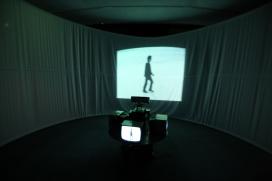
Media and Technology This study begins by examining exhibitions related to media art—an area that has long been marginalized in research on Korean art of the 1990s. The exhibition histories has only recently begun to garner scholarly attention. Importantly, the aim of this study is not to propose specific frameworks or methodologies for writing exhibition history. Rather, it seeks to trace archival materials related to (media art) exhibitions in order to explore how we might revisit the irretrievable times and spaces of the past. Throughout this process, the study seeks to reflect on the historical conditions of that period. It should be noted that examining the history of media art exhibitions remains an uncharted domain that cannot be fully addressed through the mere collection of data or theoretical analysis alone. This raises the question of whether the term exhibition histories can, in fact, serve as a viable conceptual framework. How might a “history of exhibitions” be meaningfully constructed? Korean modernism, so to speak, has arrived at the present by piecing together a disjointed spine. Before attempting to write a history of exhibitions, we must first ask: what constitutes an exhibition, and how was it practiced? Only by recovering the records of these processes and the memories of those involved in the field at the time can we begin to develop a concrete and coherent narrative and direction. For this reason, this study should not be understood as an attempt to write a definitive history of exhibitions, but rather as a preliminary investigation that lays the necessary groundwork for constructing such a history. The study focuses on media art–centered exhibitions held from the 1990s to the early 2000s. The scope of research is limited to art institutions capable of sustaining ongoing exhibitions of media art—those in which the key characteristics of media art including exhibition planning, collection, and conservation can be examined. Given these criteria, only a limited number of institutions were qualified as eligible case studies. Priority was given to the long-term research viability of the selected institutions, leading to a focus on media art exhibitions organized by major public art museums. This decision was not intended to exclude exhibitions held in galleries or alternative spaces but rather reflects the perspective that museum exhibitions are more appropriate to constructing “history of media art exhibitions.” Technology as a Social Imagination Before proceeding with the main discussion, it is necessary to clarify certain terminological distinctions. In the Korean context, the terms media art and video art are often used interchangeable—a conflation largely grounded in the fact that video has long served as a dominant medium within the broader category of media art. The prevalence of single-channel video works in exhibitions around the early 2000s further contributed to reinforcing the general familiarity with the term video art. Yet this terminological ambiguity extends beyond the realm of semantics; it provides meaningful insight into the anthropological dimensions of Korea’s technological landscape and media ecology. Beginning in the 1980s, the Korean art scene began to witness the emergence of creative experiments grounded in media-based practices. A pivotal moment came in 1984 when Paik Nam June’s Good Morning, Mr. Orwell was broadcast domestically, which sparked heightened interest in artworks engaging with technological media as distinct from traditional artistic forms. This growing attention persisted into the 1990s, reflecting broader transformations in technology, society, and culture, and ultimately informing new directions in art historical discourse. Concurrently, a series of state-led international events, including the Asian Games Seoul 1986, the Olympic Games Seoul 1988, and the Daejeon international Exposition in 1993, served as catalysts for grand-scale cultural celebrations aimed at integrating advanced science with the arts. From this period onward, artistic practices expanded rapidly to incorporate not only video, but also light, sound, and internet networks in diverse and multidimensional ways.1 During this time, the concept of technology was understood and interpreted in a quite broad sense. Notably, many of these early experiments in technology-based art took place within the context of festivals—an aspect that deserves particular attention. The connection between media art and festivals is most clearly manifested in public art practices that incorporate media technologies. This aspect will be examined in Chapters 2 and 3, which focus on SEOUL in MEDIA and the Seoul Media Biennale, two major initiatives launched in the mid-1990s. While attempts to integrate science and art began as early as the mid to late 1980s, it was not until the 1990s that exhibitions explicitly adopted the term technology art (tech-art). Even a brief glance at Western modernist art reveals that artistic engagement with science and technology resonates with the developmental history of media, beginning with the advent of photography. Marcel Duchamp, for example, employed non-art materials, such as dust, wire, varnish, foil, and glue, in his work The Bride Stripped Bare by her Bachelors, Even (The Large Glass). He also produced explanatory pamphlets containing metaphorical and scientific reflections on technology, encouraging viewers to consult them during the exhibition. In the 1960s, kinetic artist Jean Tinguely staged Study for an End of the World (1962) in the Nevada desert, a performance that involved the detonation of old defunct computers and machine parts. At the time, kinetic art was less concerned with the act of recycling discarded materials than issuing a critical warning about the potential crises that machine civilization could bring to the planet. While technology can serve as a beneficial tool for human advancement, it also holds the potential for destruction—and for that reason, it cannot be uncritically embraced. Art historian Yang Eunhee notes that “the antiwar movement that grew out of student activism in the 1960s also expressed resistance to violence by asserting the incompatibility of technology and war.”2 Decades later, the technology boom that swept through Korea in the 1990s was shaped by a socio-technical imaginary—a vision of a progressive future made possible through the convergence of technology and art. Philosopher of science Kim Sang-Hyun defines the socio-technical imaginaries as a form of co-production,3 whereby “a collectively imagined social order is projected onto the meanings, roles, and objectives of science and technology, while at the same time that social order is shaped by those very technologies.” He further highlights that Korea’s socio-technical imaginary also took on the form of nationalist developmentalism.4 Meanwhile, art historian Lee Eunjoo interprets the concept of technology art in the Korean art scene of the time as encompassing not only the fusion of science, art, and technology, and the notion of open-ended works for audiences, but also the possibility of the artworks themselves becoming subjects of aesthetic interpretation.5 Artist Sim Cheowoong, who explored the relationship between media technologies and art in the 1990s, draws attention to the rapid transitional period during which the computer marked a critical shift from analog to digital systems. He notes that “computer graphics were not simply tools for representing technology, but rather engaged with analog concepts, and amid the sweeping tide of the so-called digital revolution, came to be replaced by the term ‘digital,’ which restructured the patterns of visual culture. As a result, technology art began to give way to the term ‘media art.’”6 In 1996, Sim conducted a notable experiment that staged the collision between digital and analog, as well as between technology and media, by combining 3D animation with video. Post-Media Discourse As the world evolves on a digital foundation, older technologies and objects are rendered obsolete almost instantaneously. As previously discussed, technology and art anticipated the transformation of the sociocultural landscape in the West, following industrialization in the 1960s. In the Korean art scene, a similar shift became more pronounced around 2010, when growing attention began to be paid to the various cultural and social mutations generated by scientific and technological developments. Boris Groys identifies one of the defining conditions of contemporary art as the production and circulation of images within today’s digital networks, which have undergone unprecedented transformation.7 These images became heterogeneous in ways that transcend the physical and technical distinctions of specific media. “In the framework of contemporary culture an image is permanently circulating from one medium to another medium, and from one closed context to another closed context.”8 In this way, images are continuously propagated and extended, ultimately stripped of any specificity tied to time, space, place, or medium—a condition that gives rise to what is now referred as post-cinema discourse. The death of cinema will inevitably be followed by the death of television and eventually, the death of the internet. The term ‘post-media’ denotes the dissolution of the relationship between the image (or event) and any specific site. The evolution of media—from screen to video, to computer monitor, to projector—unfolds in the overlap between emergence and extinction. As a result, consumers, viewers, and users inevitably find themselves caught between obsolete devices and emerging technologies, oscillating between a sense of nostalgia for old machines and the desire for the latest innovations. Today, media can no longer be understood merely as a product; rather, its materiality can be defined in terms of a form of materialism that exists not only within the realm of art, but also through continuous interaction with the surrounding environment. Siegfried Zielinski interprets the materiality of media, and the epistemological structures centered on human and cultural inquiry, as part of media archaeology—a theoretical and practical approach that aligns, at least partially, with the trajectories of philosophy of technology and the humanities.9 Lev Manovich, a leading figure in post-media discourse, has argued that the transition to digital representation, along with the rise of common modification/editing tools—such as copying, pasting, morphing, inserting, filtering, and compositing—has effectively dissolved the traditional boundaries between artistic tools and materials. These tools have blurred the distinctions between photography and painting, and between film and animation. In other words, the relationship between analog and digital is not one of binary opposition, but rather a continuity that spans past and future—a concept that can be understood as extending a posthumanist thought in the age of climate crisis to even include the material remnants of technological civilization. The intersection of these ideas with contemporary art resonates with the practices of the 1960s, such as Fluxus, Happenings, and Conceptual art.
-
Mun Hye Jin
Shifting from Technology Art to Video Art: The Early-to-Mid 1990s Video Landscape through the Work of Hong Sungmin
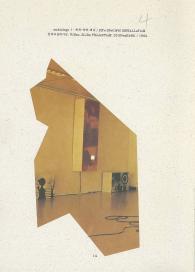
In March 1990, a Korean magazine published a special feature article on video art. The article introduced fifteen major video artists from both Korea and abroad and provided an overview of the current state and future prospects of video art.1 It presented early pioneers such as Paik Nam June, Richard Serra, and Ant Farm, positioning the emergence of video art as a critical response to the conservative aesthetics of commercial television. Based on the article’s emphasis on the aesthetic and formal classifications of video art, it may be inferred that the Korean art world at the time had a certain level of awareness of the Western discourse surrounding video art. However, the article served primarily as an introductory overview of Western video art.2 Given that Korean video art can be traced back at least to the 1970s, with artists such as Kim Kulim and Park Hyunki, and that the genre began to gain real momentum in the 1980s following the broadcast of Paik Nam June’s Good Morning, Mr. Orwell (1984), this lack of earlier engagement may come as a surprise. While traditional video art in the West began to decline in its narrower sense, specifically as a medium based on magnetic tape was gradually replaced by new digital technologies, in Korea, video art only began to flourish during this period. This contrast reflects both the temporal gap between Korea and the West and the contextual particularities of the Korean art scene. However, it was not until the late 1990s that works grounded in temporality—the most distinctive characteristic of video art as noted in the article—began to fully take shape in Korean contexts. In this context, Hong Sungmin, who studied Time Arts at the School of the Art Institute of Chicago and returned to Korea in 1992, serves as a representative figure of the early Korean video art scene. As one of the first artists to formally study video in the United States—the center of video art—Hong represented a rare case of direct engagement with the discourse of Western video art. Until the late 1990s, when a new generation of artists, including Park Hwayoung, Seo Hyunsuk, and Ham Yangah, who also studied video and film in the U.S., began their careers, he remained virtually alone in this regard. Following his homecoming exhibition of Mass Media & Multi Medium (Dongbang Plaza Gallery, 1992), he actively participated not only in solo exhibitions such as Sauna/Sound (Midopa Gallery, Midopa Department Store, Sanggye Branch, 1994), as well as major domestic and international media art shows and young artists exhibitions. These included Front DMZ (Seoul Museum of Art, 1993), Young Korean Artists '94 (MMCA, 1994), Fukuoka Asian Art Triennale (1995), Ssack (Art Sonje Center, 1995), Rebellion of Space: Korean Avant-Garde Art since 1967-1995 (Seoul Museum of Art, 1995), The New Generational Tendency in Korean Contemporary Art: Body and Recognition (ARKO Art Center, 1995), InfoART (Gwangju Biennale, 1995), and the first edition of SEOUL in MEDIA 1988–2002 (Seoul 600 Year Memorial Hall, 1996). Hong Sungmin’s early works employed a variety of time-based media beyond video, including sound installations and slide projections. Notable examples include Appropriation of Appropriation (1992), a sound installation that replaced Roy Lichtenstein’s Ben-Day dots with 800 speakers, and Audiology I: Physical Education–The Body–Physical Education (1992), a complex installation incorporating computer-printed photographs, video, slide projections, and speakers. From 1994 onward, Hong Sungmin focused primarily on video works. Emblematic works from the mid-1990s include Man and Queen (1994) (presented in Young Korean Artists ’94), which juxtaposes the male-centered power structure—appropriating the images of the Seongsu Bridge’s collapse, the television drama The Third Republic, and the film The Bridge on the River Kwai—with commercial imagery that objectifies women; By King Bye! King (1995) (featured in the exhibition Ssack), which likens the vanity of power and the cyclical nature of history to the back-and-forth motion of a Viking pirate ship ride; and Windows’ 95 (1995) (shown in InfoART), which critiques the unilateral imposition of corporate systems that compel global users to conform, framing such systems as a form of violence. Hong Sungmin’s early works were largely understood through their message-oriented approaches, such as critiques of sociopolitical realities and the disclosure of ideologies in mass media. Because his early pieces were often mixed-media installations rather than long-length single-channel videos, the temporal and conceptual dimensions inherent in his work received less critical emphasis. As a result, his practice was classified within installation art or technological art movements, which were gaining prominence in Korea at the time. Hong Sungmin’s work, which engages with appropriation, mass media, synesthetic corporeality, and the relationship between high art and consumer culture, markedly differs in tone and approach from that of his domestically trained contemporaries, whose practices tended to be more existential and metaphysical. Despite Hong’s intentions for his work to be recognized as time-based art, it was often interpreted within the prevailing frameworks of the Korean art scene of the time. First and foremost, in the early to mid-1990s, the concept of single-channel video art emphasizing content had not yet taken firm root in Korea. In his essay titled “Seven Reasons Why TV Is Better than Video Art,” written for the exhibition T-V (Gongpyeong Art Center, 1996), Hong remarked that this show was the first exhibition in Korea dedicated to tape-based (single-channel) video. With the participation of Korea’s first generation of single-channel artists as well as commercial and animation directors—including Kim Sejin, ium, Kang Young Mean, Lee Jungjae, Cha Eun-taek, and Lee Sung-gang—this exhibition marked a pivotal moment in the emergence of a media culture that prioritized genuine engagement with video imagery itself.3 With the launch of cable television and M.net in 1995 in Korea, followed by the start of 24-hour broadcasting in 1996, an unprecedented proliferation of visual imagery saturated everyday life. This ushered in a full-fledged video generation, and it was during this period- mid-to-late 1990s when artists began producing single-channel video and content-driven video art began to establish as a unique practice in Korea. Another reason is that the early 1990s, when Hong Sungmin returned to Korea and began his practice, was a period when installation art and technology art were at the forefront of critical discourse in the Korean art scene. Art magazines at that time frequently featured special issues dedicated to installation art. One such issue, for example, introduced a range of new generation art groups like Museum and Sub Club; technology art figures, such as Kim Jaegwon and Kim Yoon; and more classical installation artists including Kimsooja and Lee Sanghyun, introducing them collectively as 1990s installation art in Korea.4 In the exhibition Rebellion of Space: Korean Avant-Garde Art since 1967–1995 (Seoul Museum of Art, 1995), curated by Yoon Jinsup as a comprehensive survey of Korean three-dimensional and installation art, both technology art and new generation art were designated as distinct sections alongside experimental art and postmodern small-group movements. As a result, Hong Sungmin’s video works were often classified narrowly as technology art and, more broadly, as installation art. Examples of the latter include the aforementioned Rebellion of Space exhibition and Instal-Scape (Daegu Arts Center, 1996), a curated installation exhibition by Hong Myung-seop. At the time, video art was often regarded as a subset of installation art. This perspective was largely shaped by first-generation Korean video artists like Yook Keunbyung and Oh Sang-Ghil, whose work rooted in installation practices emerged from the small-group movements of the 1980s. Moreover, leading mid-1990s video artists based in Korea, including Kim Youngjin, Yook Taejin, and Kim Haemin produced works in which video was deeply integrated as installation formats. (Many of these artists were trained in sculpture and primarily engaged in video installation.) Meanwhile, technology art flourished in the early 1990s, developing either as a subset of installation art or as a distinct practice, unified by shared concerns with postmodernism, globalization, and the prevailing zeitgeist. Although it was more closely aligned with Hong Sungmin’s work in terms of media, technology art differed significantly in both sensibility and contextual orientation. It began to take shape in the late 1980s under the influence of Paik Nam June and the return of artists who had studied media in Japan and Europe. Its momentum continued into the early 1990s, further facilitated by digital transition and government policies promoting the video industry (1993). Representative exhibitions include High-Voltage Line (Total Museum of Contemporary Art, 1988), 220V (Noksaek Gallery, 1989), Electronic Café (Ahn Graphics, 1990), Art and Technology (Seoul Arts Center, 1991), Science + Art Show (KOEX, 1992), and Technology Art Exhibition: Nature and Technology (Expo Culture and Arts Exhibition Center, Daejeon, 1993). What stood out across these exhibitions was a fascination with new media itself and a utopian optimism regarding the capacities and potentials of technology.5 In contrast, Hong Sungmin’s emphasis did not lie in a fascination with cutting-edge technology, but rather in a homeopathic strategy that employed media aligned with mass consumer society to critique mass media itself. This orientation was already evident in the exhibition Mass Media & Multi Medium (1992). In an interview with Lee Jun, Hong clearly stated that the media used in the exhibition served solely as a means of facilitating communication with the audience; using media for its own sake held no intrinsic meaning for him. Unlike conventional mass media, which disseminates content unilaterally, Hong aimed to create multi-mediated platforms that, through the artist’s intervention, fostered interactive communication with viewers and this, he emphasized, was the main purpose behind his use of media.6 A common theme through all of Hong Sungmin’s works is his critical engagement with mass media imagery and the mechanisms and structures through which such images operate. His playful sensibility marked by a mixture of seriousness and humor, cynicism and fascination resonates more closely with the ethos of new generation art than with that of technology art. In this sense, Hong Sungmin’s early works were, to some extent, misunderstood, partly because there were no contemporaries at the time whose practices meaningfully intersected with his own. For example, many of his works deal with themes of voyeurism. Sauna/Sound (1994) stages a scene of naked men in a sauna, seemingly being secretly observed through a glass door; Rear Windows, “ I said I’m not gonna hurt you” (1997) invites viewers to peep at selected scenes from films in which men commit acts of violence against women; and Peeping/People (1997) which displays imagery of cheerleaders whose figures are revealed only by the presence of the viewer’s shadow. In these works, voyeurism is employed as a strategy to appropriate the representational methods of television and film—much like Cindy Sherman’s Untitled Film Stills (1977–80)—in order to make viewers reflect on the underlying structures of these media. By projecting images from the rear of the screen to simulate act of peering into someone else’s apartment window (a reference to the film Rear Window), by casting light from the opposite side of a video projector to use shadows as a screen, or by separating sound and image,7 Hong Sungmin’s work at times echoes the influence of artists like Peter Campus, who similarly intervened in the physical structure of video presentation. However, at the time of production, there was a lack of theoretical and practical frameworks within which such formal strategies could only be understood. As a result, his works were largely interpreted in terms of their messages—whether as critiques of pervasive gender-based violence or reflections on Korean social mores—while their formal and conceptual qualities were largely overlooked. It was only in the late 1990s and early 2000s, with an emergence of a new generation of artists and a deeper understanding of video art, that concepts inherent in video art such as temporality, narrative, and apparatus began to be shared and widely discussed. Yet by the mid-2000s, Hong had shifted his focus from video work to performance, and his early practice remained largely neglected in critical discussions. In this sense, Hong Sungmin’s work—arguably ahead of its time—not only reveals the transitional phase in which video art began to diverge its entanglement from technology art but also exemplifies the contextual particularities of Korean video art history, where artistic practice often developed in isolation from established critical contexts.
-
Mok Soohyun
Defining the Period and Scope of “Modern Art”: Glimpse Into Korean Modern Exhibition Series (1997–2000)
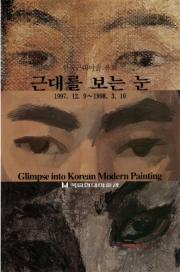
In anticipation of the new millennium, the National Museum of Contemporary Art (now MMCA) organized the exhibition series Glimpse into Korean Modern, held between 1997 and 2000. This series was structured around specific genres: oil painting (Dec. 9, 1997 – Mar. 10, 1998, Galleries 1 and 7, MMCA Gwacheon), ink wash and color painting (Sep. 4 – Nov. 4, 1998, Galleries 1 and 7, MMCA Gwacheon), sculpture (Aug. 24 – Oct. 31, 1999, Galleries 1 and 2, MMCA Deoksugung), and crafts (Nov. 16, 1999 – Jan. 30, 2000, Galleries 1 and 2, MMCA Deoksugung). These exhibitions marked the first systematic review of modern art undertaken by the MMCA since the 60 Years of Korean Modern Art series in the 1970s and may be regarded as the culmination of the museum’s institutional efforts to historicize Korean modern art. In comparison to the modern art exhibitions of the 1970s, Glimpse into Korean Modern series demonstrates a significant shift in the classification of genres. Whereas the 1972 exhibition 60 Years of Modern Korean Art featured categories of Western painting, Eastern painting, sculpture, and calligraphy, this later exhibition replaced the “Western” and “Eastern” designations with medium-based classifications—namely oil painting and ink wash and color painting. While calligraphy was excluded, crafts were newly introduced as a category. Notably, the term jogak (彫刻, sculpture) was replaced by the broader term joso (彫塑), which encompasses both carving and modeling practices. The first in the exhibition series, Glimpse into Korean Modern Oil Painting, was curated by Kim Heedae, who explained that the exhibition was conceived around the following questions: “How did Korea’s pioneering artists confront and internalize the new form and aesthetics of oil painting? How do we today engage with this legacy?”1 The exhibition featured 280 works by 128 artists and was presented in Galleries 1 and 7 of the MMCA Gwacheon. It was structured around five thematic sections: the reception of Western-style painting and foreign artists (late eighteenth century-1900s); the emergence of oil painters and the formation of the art circle (1910s–1920s); group movements and ideological plurality (1930s–1945); art during the Liberation period and the Korean War (1945–1953); and transformations of modern art in postwar (post-1950s). The first section focused on the reception of Western-style painting beginning in the late eighteenth century, exploring how artists such as Kim Du-ryang and Chae Yong-sin adopted and realized visual realism. By including a section featuring oil paintings of Korean landscapes and figures by foreign artists from the late nineteenth century, the exhibition examined the cultural shifts within which oil painting was received and began to take root—offering a broadened perspective that distinguishes it from previous exhibitions on modern art. While earlier exhibitions up to the 1970s tended to regard oil painting primarily as a transplanted Western medium, this exhibition broadened the perspective by examining how visual realism disrupted traditional artistic practices, thereby facilitating the voluntary assimilation of the medium and the formation of a distinct Korean art world. Special sections were dedicated to key figures such as Oh Chiho, Gu Bonung, Lee Insung, Lee Jungseop, Park Sookeun, and Kim Whanki, as well as to artists who defected to the North, art produced during the Korean War, and overlooked and forgotten artists—reflecting an effort to expand and deepen the narrative of Korean modern art history. This shift was made possible by the lifting of restrictions on artists who had defected to North Korea (wolbuk artists), alongside a growing body of academic research that preceded the exhibition. Following democratization in 1987, previously suppressed discussions about wolbuk artists were made possible, prompting a wave of exhibitions in the private sector. These included Lim Gunhong: The Forgotten Painter (Lotte Museum of Art, Feb. 8–20, 1984), Cheonggye Chung Chong-yuo Exhibition (Shinsegae Gallery, July 20–Aug. 6, 1989), Oil Paintings of Unbanned Artists (Shinsegae Gallery, July 31–Aug. 12, 1990), and An Artist Who Defected to North Korea, Lee Qoede (Shinsegae Gallery, Oct. 8–27, 1991). These exhibitions contributed to the reintegration of artists who had played pivotal roles in the Korean art scene prior to the Korean War into the broader narrative of modern Korean art, thereby expanding the historiographical framework of Korean art history. Meanwhile, in 1990, Kumsung Publishing released art books titled The Collection of Modern Korean Paintings, a comprehensive twenty-seven-volume series. It consisted of thirteen volumes on oil painting (or Western-style painting), featuring artists such as Rha Hyeseok and Lee Chongwoo; thirteen volumes on ink wash and color painting (or Korean painting), including figures like Cho Seokjin and An Jungsik; and a supplementary volume titled Artists Who Went North. This publication undertook the rediscovery and re-evaluation of works of artists from the modern period. In 1994, the MMCA and the Association of Korean Modern and Contemporary Art History jointly held an academic symposium on the origins of modern art. Significantly, a new perspective emerged—one that departed from the transplantational framework, conceiving modern art as a historical continuum that rearticulated traditional aesthetics through innovative perspectives and methodologies. Further reinforcing this shift, Choi Yeol published his seminal work, History of Korean Modern Art: 1800-1945, in 1998. This comprehensive study provides a meticulous account of the evolution of modern art in Korea. This shift in perspective is further exemplified by the exhibition Glimpse into Korean Modern Ink Wash and Color Painting, particularly in its decision to define the category as “ink wash and color painting.” This category was originally named “calligraphy and painting,’” which, in the premodern era, were considered as a unified practice grounded in shared principles and ideals. In the early twentieth century, however, this classification was redefined as “Eastern painting” by Japan to encompass China, Japan, and Korea. Eventually, the category shifted toward medium-based criteria. The genre terms “Western painting” and “Eastern painting” were established during the colonial period in the early twentieth century. Since the 1950s, there have been calls for revising these labels, as they reflect an othering of Western art and encompass a vague and ambiguous notion of “the East.” The exhibition appears to reflect this ongoing critique. Instead of framing the evolution of modern ink wash and color painting within a broad art-historical narrative, the exhibition presented 135 works by sixty-seven artists according to traditional subject categories, such as flower-and-bird painting, landscape, the Four Gentlemen (plum, orchid, chrysanthemum, and bamboo), still life, animal paintings, and figure painting. For example, the flower-and-bird section spans from Shin Myeong-Yeon’s Flower and Bird (nineteenth century) to Park Saengkwang’s Peony (1969); the landscape section from Heo Ryeon’s Landscape (1877) to Kim Haksoo’s Snowy Day (1993); the Four Gentlemen and stilllife section from Jo Hui-ryong’s Plum Blossoms (late nineteenth century) to Choi Wooseok’s Vegetables and Fruits (1959); the animal section from Kang Pilju’s Deer (late nineteenth century) to Sung Jaehyu’s Group of Tigers (1970); and the figure section from Kang Jin-hui’s Farewell at a Plank Bridge (1888) to Chun Kyungja’s Gate of the Youth (1968). While this categorization facilitates the tracing of subject-specific developments, it also raises critical questions: Does the modernity of ink wash and color painting lie solely in shifts in subject matter or expression? The exhibition’s subject-centered approach excludes post-1950s developments in ink abstraction, thereby effectively limiting modern art to its ‘traditional’ aspects. Consequently, it calls for a reconsideration not only of the lower threshold of modernity in ink painting, but also of its upper limit. A notable terminological shift was evident in the exhibition Glimpse into Korean Modern Sculpture, where the genre label in Korean was changed from jogak (彫刻) to joso (彫塑). This new term, joso, encompasses both jogak (sculpture) carving from the outside and joso, which involves building up from within. The exhibition demonstrated a conscious effort to trace the transformation of traditional sculptural practices into modern forms. Part I, titled “The Modern Development of Traditional Korean Sculpture” examined this shift by presenting works such as the clay Arhats (1905) and the stone Civil and Military Officials (1919) at King Gojong’s tomb Hongneung, all of which are by unknown artists. This section explores how these traditional sculptural forms evolved toward modernity. Part II, “The Dawn of Modern Sculpture Art,” featured artists who studied Western sculpture, including Kim Bokjin, Gu Bonung, and Kim Chongyung. Part III, “The Transition of Modern Korean Sculpture,” focused on figurative sculpture from the 1950s onward, showcasing artists such as Kwon Jinkyu, Kim Sechoong, Kim Chungsook, and Song Youngsu. It was noted that works engaging with abstract sculpture and the wider trajectory of modernity in joso were deliberately reserved for a subsequent exhibition, An Aspect of Korean Contemporary Art in the 1950s to the 1960s.2 The final exhibition in the series, Glimpse into Korean Modern Crafts, aimed to examine the origins and development of modern craft and its transition into contemporary practice. The exhibition was structured into four sections: Changes in the Perspective of Traditional Craft (late nineteenth century–1900s), The Dawn of Modern Craft (1910s–1920s), The Emergence of Modern Artisans and the Restructuring of the Craft Circle (1930s–1945) and Searching for New Directions (1945–mid-1960s). Showcasing over 200 works by thirty artists, including those by anonymous makers, the exhibition traced the evolution of Korean craft across a range of mediums. In Part I, anonymous late nineteenth-century household objects were exhibited such as the Butterfly-shaped Iron Oil Lamp, White Porcelain Jar, and Stacked Food Boxes among other metal, ceramic, and wooden items. Part II explored transformations in production systems under the impact of modernity, featuring objects such as the Silver Plum Blossom Wine Cup produced by the Yi Royal Household Art Manufactory (Yiwangjik Craftwork Manufactory), the Imperial Edict Box of Emperor Gojong, and embroidered Landscape. Beginning with Part III, the exhibition presented designs by Lim Suk Jae and Lee Soonsuk as well as lacquerware inlaid with mother-of-pearl, embroidery, and ceramics attributed to specific artists. Part IV covered the period up to 1965, which marked the institutional separation between craft and design.3 The selection and categorization of works were informed by the distinct nature of the craft genre, which, unlike other artistic practices, has historically lacked attributed authorship due to its artisanal modes of production, and which necessarily balances functionality with aesthetic considerations. Therefore, the exhibition series Glimpse into Korean Modern, structured across multiple genres, marked a shift in how modernity is approached in Korean art history. Unlike previous exhibitions, in which mixed genres and uniform temporal boundaries for artists and works often hindered the articulation of modernity, this series differentiated each genre by its specific characteristics, thereby aiming to trace the transformations of traditional painting, sculpture, and craft into modern forms. In doing so, it reflected a shift in the historiographical approach to modern art. However, the demarcation of the lower chronological boundary for modern works remained largely anchored in figurative or naturalistic realism. In other words, the exhibition reflected the continued influence of a 1970s framework that defined the contemporary primarily through the emergence of abstraction. What was the underlying foundation of these exhibitions on modern art and the discourses surrounding them? It appears that they were largely driven by a post-Korean War effort to define contemporary art as distinct from what came before, thereby designating earlier works as modern art. Central to this framing was the concerted effort to mark the Contemporary Art Exhibit in 1957 as the starting point of contemporary Korean art. But was this division between the modern and the contemporary truly valid? If Korean contemporary art is to be defined by the influence of Abstract Expressionism and Art Informel after the World War II era—particularly represented by the United States and France—then Korean art history is inevitably positioned as a narrative shaped by external stimuli and stylistic imitation. Yet even by the late 1930s and early 1940s, artists such as Kim Whanki and Yoo Youngkuk were already articulating a sensibility attuned to their time. Through the 1950s and 1960s, they continued to develop highly individual styles, largely independent of the dominant aesthetics associated with Art Informel. Throughout the latter half of the twentieth century, exhibitions on 'modern art' redefined the term: in the 1950s and 1960s, by contrasting it with traditional art, and later, in the 1970s, by distinguishing it from emerging contemporary art. By the late 1990s, exhibitions of modern art sought to address both continuity and change in relation to tradition; nonetheless, they continued to position modern art as categorically distinct from contemporary art. From today’s vantage point, nearly a quarter into the twenty-first century, we might ask: which continuity has proven stronger—tradition to modernity, or modernity to contemporaneity? And which transition entailed more profound transformation? Was the introduction of abstract art truly the decisive rupture in the modes of perception and representation, as it was understood during the 1950s–1970s? Could these exhibitions perhaps have constructed a framework through which modern art came to be perceived as such? However, now may be the moment to take a broader view—one that acknowledges continuity between modern and contemporary, and recognizes the distinctiveness of the present as having emerged from that very continuum.
-
Shin Chunghoon
Korean Art after the “Contemporary Art System”: Rebellion of Space (1995), Global Conceptualism (1999), You Are My Sunshine (2004)
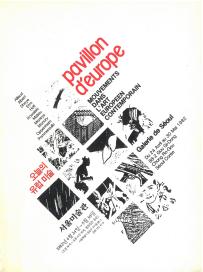
In the 1980s, ‘contemporary art’ became routinized, circulating as an everyday term stripped of its earlier charge. Yet beyond the boundaries of official institutions, the term came under unprecedented critique. It came to designate the dominant tendencies of 1970s Korean art, which were regarded as overly erudite and hermetic, alienating the general public, and was often used interchangeably with “modernism,” now recast as a problem.1 During this transitional decade, artist groups such as the Gwangju Freedom Artists Association [Gwangju Jayu Misulin Hyeobuihoe] , Reality and Utterance, Dureong, and Imsulnyeon, along with individual artists who shared their causes, argued that art should cease to function as a code decipherable only to experts. Instead, it should become part of the ordinary conversations of the marketplace and serve the pursuit of a better life, rather than dwelling solely on self-reflection within its own essence. In this process, the key categories that had defined Korean contemporary art—“the contemporary,” “abstraction,” “avant-garde”—lost their force, giving way to “nation,” “people,” “figuration,” “reality,” and “communication.” By the mid-1980s, amid the intensifying confrontation between the authoritarian military regime and the democratic movement, this orientation moved beyond the exhibition hall and into the streets, becoming coalesced into what was officially named (National) Minjung Art, a banner under which artists and critics alike waged their struggles. Whether through neutralization within officialdom or denigration from outside, “contemporary art” no longer functioned as a term capable of carrying expectations of the advanced, the progressive, or the experimental. In this context, the 1980s brought about a transformation in what might be called the “regime of contemporary art”—the order of production and reception in Korean art that had taken shape as a self-proclaimed latecomer to modernism. This transformation, however, did not occur abruptly. Already in the 1970s, concepts such as “Korea” and “the East,” “nation” and “reality,” or “minjung” had entered public discourse on art, assuming a central role in artistic production and reception. And further back, the very process of referencing Western art movements had always been accompanied by questions of “necessity,” with each instance of “imitation” scrutinized for its legitimacy. These developments may be seen as foreshadowing the shifts of the 1980s. At the same time, this transformation did not amount to the immediate collapse of the long-standing “regime of contemporary art”. That order was not simply a matter of borrowing Western styles; rather it was grounded in a deeper subordination to a linear temporality oriented toward the West as its destination—an order with deep roots and long duration. Thus, even after the 1980s, the influence of major artistic tendencies such as Neo-Expressionism, Postmodernism, commodity sculpture, and later site-specific art continued to shape the Korean art scene. Nevertheless, what the 1980s impressed upon Korean art was the realization that attending to the “here and now” could be more significant—and fruitful—than the appropriation of foreign movements that were regarded as contemporary—and therefore advanced. During this period, foreign artistic movements came to be explored as not out of convention, but out of necessity. Dada and Surrealism were newly revisited, while Constructivism and photomontage were introduced. Pop art, which had briefly appeared in the Korean art world in the 1960s before fading away, was once again taken up—this time for its readability and accessibility. In this renewed engagement with Euro-American movements under the conjunctural demands of the 1980s, the role of the Musée de Seoul deserves particular attention. Upon its opening, the museum staged exhibitions such as Pavillion d’europe (1982) and Nouvelles Figurations en France (1982), which made clear that the problems with Korean art stemmed not simply from imitation but from the narrowness of its points of reference. French Figuration Narrative and Nouvelle Figuration paintings demonstrated that contemporary art in the West could not be reduced to modernist formalism—and, further, that even abstract techniques themselves could function as vehicles of political rhetoric. By confirming that realist approaches could hold legitimate citizenship within the field of contemporary art, these exhibitions offered historical and institutional validation for the emergence of Minjung Art. The fissures in the “regime of contemporary art” deepened in the 1990s. A key factor in this shift was the widespread turn toward locality and specificity as central values of Korean art, particularly in the wake of Minjung Art. Yet an unpromising pattern was repeated: the imagined “Korean”—mobilized in opposition to what was deemed foreign, or reconstructed in such a way as to claim that the desired qualities of the latter had “always already” existed here—was repeatedly invoked. At times, this pursuit of a reified Koreanness through traditional motifs was even overused, functioning within the reconfigured global art landscape as a strategy for visibility and, in some cases, a prerequisite for entry into biennials.2 More fruitful, however, were approaches that addressed the “here and now” as hybrid rather than essential. In a sense, Korean art, long self-proclaimed as a belated follower of contemporary art, had failed to inhabit the present. It rushed toward the “future,” deploying what had not yet been fully experienced—often criticized as a premature rehearsal—and its critical reflections often summoned a distant “past,” thereby alienating local audiences. By situating itself within a linear historical narrative that posited Western modernity as universal and projected it teleologically as the destination, Korean art rendered its own “present” as perpetually incomplete or lacking. By contrast, in the 1990s the “now” was forcefully asserted as the distinctive reality of this place. Installations by Choi Jeonghwa and Bahc Yiso, using plastic baskets, yellow linoleum flooring, plywood, lumber, and cement, stand as key examples. The kitsch or vernacular aesthetics at work here should be understood less as irony or critique than as an acknowledgment of discrepant modernities and heterogeneous temporalities. As is often noted, if the 1990s mark the origins of dongsidae musul in Korea—as distinct from hyeonday misul, both conventionally translated as “contemporary art”—it is because contemporaneity came to be conceived not as the aspiration to be synchronous with the West, but as the recognition that multiple temporalities coexist within the present. The critique of the single, linear temporality of contemporary art also unfolded through exhibitions that sought to rewrite art history. Rebellion of Space: Korean Avant-garde Art since 1967–1995 (Seoul Museum of Art, 1995); the Korean section of Global Conceptualism: Points of Origin, 1950s–1980s (Queens Museum of Art, New York, 1999); and You Are My Sunshine: Korean Contemporary Art 1960-2004 (Total Museum of Contemporary Art, 2004), among others, traced the Korean origins of the contemporary practices—conceptual art, installation, and performance—that came to define the 1990s and the new millennium.3 These exhibitions complicated the prevailing narrative of “contemporary Korean art,” which had often located its beginnings in the abstraction of the 1950s. By renewing and reconfiguring this genealogy as the point of origin for present practices, such efforts opened up the imagination of multiple temporalities within Korean art. Precedents thus revisited were recalled, reworked, and reinscribed into contemporary practice, acquiring new significance. This was not only a critical reflection on linear time but also an anticipation of twenty-first-century practices in which multiple histories and plural temporalities coexist.
-
Kim Hong-Ki
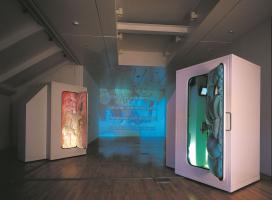
A Study of the Korean Pavilion at the Venice Biennale (1999–2001): Particularity and Universality in Contemporary Era
Within the context of Korean art's globalization, the Korean Pavilion at the Venice Biennale began to signal a pivotal shift with the 1999 exhibition, marking a departure from the approaches taken in its first two exhibitions. In the earlier exhibitions, globalization was understood as a process of clearly distinguishing Korean art from international art, thereby combining the specificity of Korean art with the universality of international art. The specificity of Korean art at the time was understood to reside in its distinct traditional aesthetics. For example, Jheon Soocheon’s clay figurines fired in Gyeongju, Kang Ik-Joong’s images reminiscent of talismans and Minhwa (folk paintings), and Lee Hyungwoo’s objects that evoked wooden utensils from old farmhouses, were all considered evidence of a traditional aesthetic that embodied the particularity of Korean art. From a temporal standpoint, this perspective framed the globalization of Korean art as a link between the traditional past, where Korean aesthetics resided, and the immediate and universal present of international art. This internalized Orientalist perspective, which defines itself as a traditional, pre-modern temporality, highlights globalization as an effort to preserve Korean identity while bridging the temporal gap with Western art. However, a shift emerged from the 1999 exhibition of the Korean Pavilion: there was a growing tendency to locate the distinctiveness of Korean art in its contemporary particularity, rather than in traditional aesthetics. Consequently, “globalization” came to be reimagined not as a diachronic intersection between Korea’s past and the West’s present, but as a synchronic convergence of multiple, coexisting contemporaneities. The commissioner for the Korean Pavilion’s 1999 exhibition was art historian Song Misook, who selected two artists: Lee Bul and Noh Sangkyoon. With this, Song became the first female commissioner since the establishment of the Korean Pavilion, and Lee Bul the first female artist to participate. As was the case in the previous exhibition, the participating artists were relatively young: Lee Bul (b. 1964) was in her mid-thirties, and Noh Sangkyoon (b. 1958) was in his early forties at the time. Explaining her selection, Song stated that the aim was to “introduce young artists who, rather than established artists, have creatively merged avant-garde cultural discourse that recently rose to prominence in the international art scene into contemporary Korean popular culture with distinctive talent and originality.”1 While Song, like previous commissioners, maintained a distinction between international and Korean art, she did not frame the relationship as a temporal displacement. Rather than positioning Korea’s enduring traditional aesthetics as an antithesis to the contemporaneity of avant-garde discourse in international art, she identified the specificity of Korean art within the realm of “contemporary Korean popular culture.” According to Song Misook, the popular culture referenced by both Noh Sangkyoon and Lee Bul manifests through their use of mass-produced industrial readymades. Noh adorned the gallery walls with sequins, typically used to embellish clothing, and decorated ready-made Buddha statues made of polyester resin. Lee showcased an installation featuring karaoke and video footage, drawing on one of Korea’s most prominent forms of popular culture(In the same year, Lee also participated in the main exhibition of the Biennale, curated by Harald Szeemann, with Cyborg and Majestic Splendor). With Lee receiving a special prize at this Biennale, the Korean Pavilion became one of the few national pavilions to earn this distinction for three consecutive years since its inauguration. While Noh Sangkyoon’s polyester resin Buddha statues adorned with sequins may still appeal to traditional aesthetics that can evoke an Orientalist gaze, his non-representational, sequin-covered flat works resonated more closely with the distinctive visual perceptual experience of modernist painting. Moreover, Lee Bul’s karaoke installation significantly departed from established conceptions of traditional aesthetics. Rather than drawing on Korean traditional specificity, Lee emphasized a distinctly contemporary specificity through the karaoke setting. Her projection of adolescent schoolgirls onto karaoke monitors and gallery walls asserted a feminist position that subverted the male-dominated narratives of modernism. Song Misook asserted that these works exhibited a universal sensibility, engaging both modernism (through Noh’s self-reflexivity) and postmodernism (through Lee’s feminism), while also revealing “the truth of polarity and contradictions embedded in value systems that pervade through contemporary Korean life and art, by extension, through the global condition.”2 In this regard, Korea’s local specificity was redefined through the lens of contemporary lives, rather than through its traditions. The commissioner of the Korean Pavilion at the 2001 Venice Biennale was Park Kyungmi. Having worked as a curator at Kukje Gallery for over a decade and in the process of launching her own PKM Gallery, Park was the first professional curator, rather than an art critic or art historian, to serve in this role. This appointment reflected the rising prominence of curators, whose influence in exhibitions had begun to match or exceed that of the artists. The exhibition featured two artists: Michael Joo and Suh Doho. Joo, a Korean American, was the first foreign artist to participate in the Korean Pavilion, while Suh had studied at Seoul National University before pursuing further education and a career in the United States. Both were in their late thirties and represented a younger generation attuned to the current and universal sensibilities of international contemporary art. This exhibition sought to position contemporary Korean identity in dynamic dialogue with global artistic trends, rather than anchoring Korean local specificity in unique traditions.3 Suh Doho presented a series of installation works in the Korean Pavilion, including Some/One, Who Am We?, and Public Figures that explored the relationship between anonymous individuals and structures of social power. He also exhibited Floor, which shared similar thematic concerns in the main exhibition of the Biennale, curated once again by Harald Szeemann, as in 1999. For example, Some/One is a large-scale armor-like sculpture constructed from approximately 100,000 military dog tags, each engraved with identifying details such as national ID numbers and blood types. This work presents a striking visualization of interplay between countless anonymous individual soldiers reduced to numbers and codes and the powerful collective systems they uphold. In her curatorial essay, Park Kyungmi described Suh’s identity as “dialectical”, not fixed but constantly shaped and transformed through relationships. She wrote: “For artists who continuously traverse different temporal and spatial contexts, encountering diverse cultures, the experience of identity as something unfixed and constantly in flux becomes more real.”4 The conception of Korean culture and tradition in the work of artists like Suh is thus not static, but nomadic and inherently multicultural. The locality of Korean culture expressed in Some/One does not stem from past traditions, but from contemporary lived experiences such as military culture. Moreover, this culture is not uniquely Korean. It embodies a universal condition inherent in the dynamics between individuals and collective power structures. On the other hand, Michael Joo created works that engaged with the architectural characteristics of the Korean Pavilion, particularly its numerous windows, which enabled a fluid connection between interior and exterior spaces. For example, Tree was an installation composed of a large oak tree, approximately 1.4 meters in diameter, sourced locally in Italy. The tree was cut into right-angled segments and reassembled using metal rods. The resulting structure extended from the interior exhibition space to the exterior terrace, creating a visual and spatial transgression of boundaries. At first glance, this work might appear to symbolize the separation and reconnection between traditional Eastern thought, embodied by wood, and Western scientific rationality, represented by metal. Park Kyungmi herself remarked that Joo's work engaged with "themes that combine Western scientific thinking and Eastern idealism."5 However, such an interpretation should not be conflated with an expression of internalized Orientalism, which assumes a temporal lag between East and West. Rather, the work is fundamentally grounded in the site-specific conditions of the Korean Pavilion located in the Giardini. As Yoo Jaekil notes, the installation “utilizes the site-specific space to raise questions about the dichotomy between inside (institution/civilization/history) and outside (nature/generation).”6 The binary between civilization and nature embedded in the work does not stem from an assumed temporal discrepancy between Western modernity and Korean tradition, but from the exhibition’s unique spatial setting where the architectural structure (civilization) meets the surrounding park (nature). In this context, globalization moves beyond reconciling one's own tradition with the modernity of the other; Instead, it explores a “dialectical identity” shaped by multiple, simultaneous contemporaneities.
-
Cho Seon-ryeong
The Topography of Korean Video Art in the '90s
-
Kim Hong-hee
Postmodernist Feminist Art in the 1990s
1. Korean Feminist Art as a Form of Non/Anti/Post-Modernism Feminist art fundamentally arises from criticism of gender-discriminatory culture and male-centric art circles, in which women and women’s art is perceived as the other. This perspective, therefore, results in criticism and rejection of modernism, which is predominantly a male-driven movement. Modernist art first emerged from French avant-garde art in the late 19th century, ultimately maturing in the post-WW2 United States. Modernism’s purist attitudes toward media and formalist absolutism threatened the existence of women’s art. Given these circumstances, American feminist critic Lucy Lippard asserted, “The greatest contribution of feminist art movements is that it has contributed nothing to modernism.”1 British art historian Griselda Pollock also stated, “Feminism must comprise a complete criticism of the practice, system, and critiquing structure of modernism. Of course, pro-modernist feminists such as Pauline Johnson argued that modernism is compatible with feminism, but the modernism that they spoke of is Habermasian enlightenment modernism, which is distinct from the type of formalist modernism that has been established as an art style. Korean feminist art emerged comparatively later than in the United States or Europe and with lukewarm support, but it too derives from criticism of modernism. Ever since it was introduced to the Korean art community by artists who had studied in France or the United States, modernist art developed through the 60s and 70s and led to the popularity of abstract styles such Art Informel, monochrome painting, and geometric abstraction. As exemplified by the figurative art of Pyohyun Group in the 70s, the neo-expressionist women’s figurative art of the 80s, and the realist figurative art of Minjung feminists, the critique of modernism by women artists emerges, whether consciously or not, as a rejection of abstraction and support for figurative representation. Where for men, the anti-modernist figurative movement emerged with Fact and Reality (Sasilgwa hyeonsil), a hyperrealist group established in 1978, for women it began in 1971, with the Pyohyun Group. That women were first to pursue a figurative style partly reflects the gender characteristics of women, who prefer the figurative over the abstract, but it is more an urgent recognition of the reality of a male-driven modernist movement. The figurative work of the Pyohyun Group is distinct from that of hyperrealist groups. Where the latter thematizes the peripheries of contemporary life and the banality of everyday life and utilizes hyperrealistic trompe l’oeil to create an objective, formalized, and abstract representation of the subject matter, Yoo Yeunhee, Kim Myong Hi, and Lee Eun-san of the Pyohyun Group depict women’s psychological and social experiences in a manner that is both subjective and emotive. In so much as it is expressive, autobiographical, and empathetic, the figurative art of neo-expressionists such as Kim Wonsook is no different. Where the Pyohyun Group and neo-expressionists are non-modernists, the realist figurative art of Minjung feminists, as an official style of Minjung art, is clearly anti-modernist. In short, the non-modernist figurative art of the 70s to the 80s and the anti-modernist figurative art of Minjung feminists represent feminist influence as a feminine response to modernist abstraction. Even so, the figurative art of women artists was not interpreted as an anti-modernist resistance but rather a non-modern, primordial, or narrative, female style. In contrast, male-driven hyperrealism, Minjung art, and neo-expressionism were recognized as a newly emerging anti-modernist force, shifting the flow of art history under the umbrella term “postmodern painting.” Where feminist figurative artists in the 70s and 80s worked with a will toward non/anti-modernism, the postmodernist feminists of the 90s experimented with deconstruction of genre and medium specificity under de-modernist sentiments. Rather than criticizing men themselves, they criticized patriarchy at the level of society, which had produced patriarchal discourses. From a de-modernist perspective, they focused on issues of gender, representation, and body as they made a statement on post-modernist feminism. In short, Korean women’s art has undergone phases of non-modernism, anti-modernism, and de-modernism to reach the present situation. 2. Pluralization of Feminist Art in the 1990s While the members of the Pyohyun Group pursued non-modernist styles, their work was a feminine style within the framework of modernism. As such, it is inevitable that what they pursue differs from anti-modernist Minjung art. In an art community divided into modernism and Minjung art in the 80s, the two branches of feminism cut off communication with each other and therefore were unable to manifest feminism as a single, unified force. But towards the 90s, the emergence of postmodernism resulted in the two factions of feminism engaging in exchange or even partial cooperation, which led to the formation of a pluralist current. As if answering the call of pluralism and decentralism, postmodernist feminism in the 90s transcended the ideological, stylistic, and genre limitations to incorporate a diverse range of works from modernism, Minjung art, and postmodernism. This led to an era of prosperity for not only women artists but the wider Korean art community as a whole. As a result of sociopolitical shifts, Minjung feminism, therefore, turned its eyes from matters of class and labor to women’s issues. This required a new style to fit their new area of interest. In the 90s, Yun Suknam, an early member of the Women's Art Research Society (Yeoseong misul yeonguhoe), developed a unique style that overcame the limitations of the pre-existing socialist realist style. This new style served as a new visual language for feminism. She developed a style of painting that resembles reliefs, depicting women, in particular mother figures, on wooden planks and scrapwood. She collaborated with photographer Park Youngsook in expanding the themes of her work. From the mid-to-late 90s and onward, Yun began to make installation works that allude to the inner world of contemporary women, shifting her focus from motherhood and mother figures to daughter and herself, in an attempt to once again transform her themes and style. Park, who had worked on the theme of the oppression of women’s bodies, depicts sadomasochistic female imagery through her Mad Women Project in the late 90s. Through an approach to feminist issues at a psychoanalytic, semiotic level, she presents the aesthetic, political potential of feminist photography. At the same time, the second-generation Minjung artists who apply deconstructionist styles to socialist themes, such as Jo Kyoungsook, Seo Sookjin, and Ryu Junhwa, all raise the issue of gender identity, the reality of women’s lives, and multiple selves. They make tangible the issue of power in the context of gender, and thus they emerge as critical postmodernists. They borrow popular images such as advertisements and comic strips as a form of attack on high-brow art and modernism. In methodology as well, they use printers and copy machines to highlight the issue of communication. The oppression of women in contemporary systems of meaning is exposed by Seo Sookjin’s descriptive yet critical texts and images, Jo Kyoungsook’s autobiographical metaphors of women’s images as visualized through mass media, and Ryu Junhwa’s representation of objectified and commodified female bodies and the idea of femininity as established by society. In 1997, a feminist artist project group named Ipgim was formed by second-generation Minjung artists. It spurred the popularization of feminist art with their alternative programs focusing on life, recreation, practice, and communication. The project group was comprised of eight members in various fields, including painting (Jung Jungyeob, Ryu Junhwa, Ha Insun, and Woo Shinhee), design (Yoon Heesu), animation (Kwak Eunsook), multimedia (Kim Myungjin), and art direction (Je Miran). The members chose the name of the group with the intent of “thawing and giving life to frigid earth, hands, hearts, and a world with the warmth that emanates from a woman’s mouth.” Their primary goal would be the study and critique of women’s art and artists and the organization of women’s art as an alternative art group. One of the results of their research and organization was the A-Bang-Gung: Jongmyo Seized Project in 2000, which led to a lawsuit that as of 2003 is still ongoing. What was originally organized as an alternative art event challenging patriarchal authority and oppressive traditions was disrupted by the Jeonju Yi clan and other Confucian groups. The project was later revived in the form of a street performance held along with various women’s organizations, and it became an event that confirmed the necessity of creating a discourse on women’s art and solidarity between women’s organizations. Ipgim emphasizes femininity and the female mythos, and at the same time, it strategizes and politicizes them. As such, it represents a practical application of essentialist feminism. In that they subscribed to “real femininity” and promoted gynocentrism, separatism, and activism, they portray a pan-generational sensibility as opposed to a 90s feminist sensibility. Through on-site group works, they attempted to overcome contemporary elitist feminism by communicating with public. This means that they are therefore given legitimacy as a popular feminist group. Where second-generation Minjung feminism strengthened and expanded feminist aestheticism and politics, the Pyohyun group disbanded after the 21st members’ exhibition in 1992. Former members including Kim Myonghi, Yoon Hyojoon, and Noh Jungran now continue a 20-year legacy through solo work. Of these, Kim is known as an important figure among the 90s feminist figurative artists as a result of her neo-expressionistic oil stick paintings. Neo-expressionism emerged in the 80s and through the 90s became popularized as a mainstream genre of postmodernist figurative art. Associating more with content than form and autobiographical narratives than objective reality, it was preferred as a style by female artists in that it could express social, psychological, and physical experiences of women in such contexts. The correlation between neo-expressionism and feminine/feminist art can be found in the work of Cha Ouhi and Yeom Seongsoon, who anthropomorphize elements of the universe including wind and water and thus reveal a neo-expressionistic sensibility; Eom Jungsoon, who metaphorically depicts an organic botanical world through delicate fibrous drawings; Younhee Chung Paik, who visualizes dreams and fantasy worlds through a surrealistic imagination; and Yang Kwang-ja, who crafts her own unique images through a combination of abstract expressionism, the Minjung style, and neo-expressionism. The work of Kim Wonsook, who crafts allegories of basic emotions from her personal stories, and Kim Myonghi’s oil stick paintings represent prototypical styles of postmodernist figurative paintings. Kim Myonghi creates unique realist works as an “on-site observer and experiencer” who focuses on insignificant things and unnamed people. Simultaneously based on reality while also portraying a trans-factual, surrealistic, and poetic sensibility, her brand of realism can be defined as an “imaginative realism” that overlaps objective fact, personal experience of social truths, internal inspiration, and potential imagination. Based on a total of 15 years living abroad and educational experience traveling within non-Western countries, she has produced recent works that thematize “dislocation” as a result of diaspora, migration, and exile. These works convey a powerful message of feminism from a postcolonial perspective. Other feminist groups such as 30 Carat and Hyeongsang Misul of Busan also emerged, spurring the multifaceted multilateralization of women’s art in the 90s. Busan’s Hyeongsang Misul group, for instance, combines feminism with figurative art to explore possibilities for women’s styles. Representations of feminine eroticism are presented through humorous images by Kim Nanyoung in a way that demystifies sex, and plant-like and organic styles containing sexual subtext in Kim Chunja’s painting. In 1993, 30 Carat was formed by a group of women artists in their 30s, including Ha Minsu, Yum Jukyung, Ahn Mi-young, Park Jisook, Ha Sangrim, Kim Mikyoung, Choi Eunkyung, and Lim Mi Ryoung. Through joint exploration and continuous group exhibitions, the group sought to overcome the limitations of conventional women’s art, particularly as married women artists. Comparing themselves to expensive diamonds, they emphasized their role and significance as women artists in their 30s. Through their diverse styles and media experiments, ranging from abstract paintings to videos, they visualize femininity and women’s issues. Like the Pyohyun group, rather than thematizing and strategizing women and femininity, they harnessed these as subject matters, beginning from a narrow female perspective arising from their experiences as married women, therefore bearing the limitations of familial feminism. But they also sought to overcome the visual and conscious limitations of the previous generation by analyzing Minjung feminism and the activities of the Pyohyun group. The second member’s exhibition, Existence of Men: Wavering Classicism, reflects these efforts. Rather than representing the oppression of women as victims, here they turned the tables, objectifying men and raising the issue of masculinity, therefore exposing male chauvinism and gender biases. In feminist art, traditional crafts such as textiles, clothing, embroidery, sewing, and dyeing cannot simply be regarded in terms of media and subject matter. Rather, they embody a powerful political significance as visual metaphors of female lives that transcend time and space. Following the textile needlework of Pyohyun group’s Yoon Hyojoon, which incorporates the motif of pillow maguri, 30 Carat’s Yum Jukyoung depicted the sensibilities of traditional Korean women through textiles and dyeing. Ha Minsu replaces drawing by sewing on fabric. Since her time in Meta-Vox in the late 80s, Ha used fabric as a medium, but upon joining 30 Carat, she turned her interest from textiles as a simple media and came to regard textiles as a form of feminist art, working on feminist art that criticizes husbands, fathers, and patriarchal society. Beginning in the 90s, Kimsooja began creating visual works that comprised collages of textiles, transforming into the “Bottari (cloth bundle)” artist, harnessing Korean motifs as represented by bottari. She portrays the bottari as a symbol of nomadism, of travel and wandering, and thus brings light to the issue of identity. Hong Hyunsook harnesses worn clothes and textiles in the context of ecofeminism, and Kim Yousun employs mother-of-pearl inlay, often considered a ‘men’s craft’ that is used primarily by women, as a medium, creating minimalist objects that are gender-ambiguous in form and context. 3. A New Generation of Post-Modernist Feminists Feminist art in the 90s was above all driven by postmodernist artists with new sensibilities, who were the product of their time. In addition to feminists, a number of women artists who took an interest in the issues of otherness and gender from a postmodernist perspective were converted to feminism, which has led to a robust development and diversification of not only Korean feminist art but postmodernist art. Although these artists are apolitical and post-ideological in their concerns, they are producers and observers of contemporary postmodernist culture, responding keenly to contemporary reality and thus promoting a new form of feminist art. Whether they are feminist or not, the new generation of women artists have moved away from formalist interest, displaying a great questioning awareness and working from a socially critical perspective. They question the premises of Korean patriarchy, which has established an almost ubiquitous patriarchal discourse historically, and they bear in mind the cultural meanings of “gender” rather than “sex,” taking issue with the representation of women. Through a psychological and material approach to the body, they confront the politics of sex with the politics of the body and in so doing resume the feminist task that the previous generation of women’s art had set out to accomplish. As an effective means to deliver this critical message, they choose object, installation, and performance over traditional painting and sculpture, and they make use of mass media and moving images such as photographs, film, video, and computer graphic. As a result, they emerge as the de facto pillars of postmodernist art. This new generation of postmodernist women artists can be largely divided into three categories. The first group comprises established artists in their mid-to-late 30s, who continuously worked as part of small underground groups or as independent figures. As seen in the work of Lee Bul and Lee Hyeong Joo, who were members of the Museum group, and Park Hye Seong, who was a member of Off and On, the underground movement presented a pioneering example of postmodernist artists, who depicted the latest themes of gender, sexuality, body, grotesque, and homosexuality through new media such as performance, installation, and digital technology featuring a post-genre sensibility. Among these, Lee Bul was invited alongside Kimsooja to major international exhibitions, achieving recognition abroad. This caused a feedback effect on Korea, and they have become self-made success stories in that they have also achieved fame in Korea as well. Early in her career, Lee displayed potential and talent as a body artist and performance artist through her nude performance. Although performance as a genre is perhaps the most suited to accomplishing the aims of feminism, women artists in Korea have largely neglected the genre, and there has been a gap in this space ever since the mythic performance of Jung Kangja in the late 60s. Lee’s Abortion (1989), wherein she substituted the pain of abortion by suspending herself upside down in the nude, was a revival of the short tradition of Korean female performance art, and it provided a new genesis for feminist performance that embodied a powerful progressive message. Following her celebrated rotting fish installations that combined the concept of decay with a majestic aesthetic vision, she continues to expand the horizons of postmodernist feminist art through her recent series of ‘grotesque’ works depicting cyborgs and monsters. The second group comprises artists who returned to Korea in the mid-to-late 90s after studying abroad as well as progressive women artists who were quickly absorbing new information through direct and indirect overseas contacts. It is through this context that present-day women artists are expanding in quality and quantity. Through provocative installations and videos, Chang Younghae thematizes suppressed sexuality. Yoo Hyunmi and Yeesookyung approach gender issues at a conceptual level, practicing feminism through a nondeclarative appeal. Chung Seoyoung, Chung Zuyoung, Lee Mi Kyung, Kim Joo Hyun, Lee Somi, Kim Sora, Hong Su-ja, and Nayoungim aestheticize the issue of communication with a novel post-genre sensibility on a foundation of purity and intellect. A uniquely feminine sensibility and intellect is being expressed by artists such as Ham Kyungah, Kim Jihyun, Shin Hyekyung, Park Hwayoung, and Jo Gyehyeong, who work with photography and video, as well as Hwang Hae Sun, Kim Yousun, and Ahn Sung Hee, who explore new subject matter and media such as textile, mother-of-pearl inlay, and sticker. Oh Kyung-hwa, a video artist, focuses on filmic narrative, creating works that incorporate the reality of the social and psychological experiences of women. Yu Hyeonjeong uses interactive technology to bring women of the past face to face with the oppressive reality that defined their existence. The third group is comprised of the so-called “emerging artists,” individuals in their late 20s to early-to-mid 30s. They possess a different sensibility when compared to the previous generation, commercializing and branding not only their work but also themselves. Drawing upon their prominent organizational skills and initiative, they look towards establishment and stardom. IUM approaches recreational and fashion joie de vivre through performances and object installations, and she narcissistically, conventionally approaches feminism through video work. Cho Helen uses artificial leather and photograph to express the sadomasochistic sexual psyche of a pubescent girl. Kim Heekyung, Kim Sejin, Ham Yang Ah, Rhii Jewyo, Jung Yun-Mi, Choi So-yeon, Jang Min-Jung, and Mira Park visualize issues of the new generation through various media and their own unique ideas. Furthermore, at the start of the 21st century, overseas-based or diaspora artists such as Nikki S. Lee and Sowon Kwon have been introduced to the domestic art scene, and imbued a new energy to the Korean art community. Beginning her career as a fashion photographer, Lee debuted as an artist by choosing to photograph herself rather than models. For her photo projects, she inserts herself into and identifies with marginalized groups such as Latinos, punks, yuppies, and lesbians. She also poses in front of the camera, at times as a lonely traveler, an obese elderly woman, an office worker, and a stripper. Through her documentary snapshots of her journey of transformation and wandering, she tracks a multifaceted identity or a third self that transcends the barriers of race and culture. Kwon analyzes the living spaces of women and their relation to furniture from a gender structural perspective using diverse media that includes blueprint drawings and computer animation. Like clothing, furniture represents the preferences, lifestyles, and social status of its user, the choice of which carries a cultural meaning beyond use value. The interior is not only a physical space but also a cultural space. On top of that, it is a psychological space for women who dream of “a room of one’s[their] own.” From this perspective, Kwon examines the ideology of a patriarchal family structure that separates spheres of private and public, or inside and outside; the gender meanings of the interior, which constructs and reflects feminine fantasies; femininity and decorativeness, and their relation to modernism.
Related Terms
-
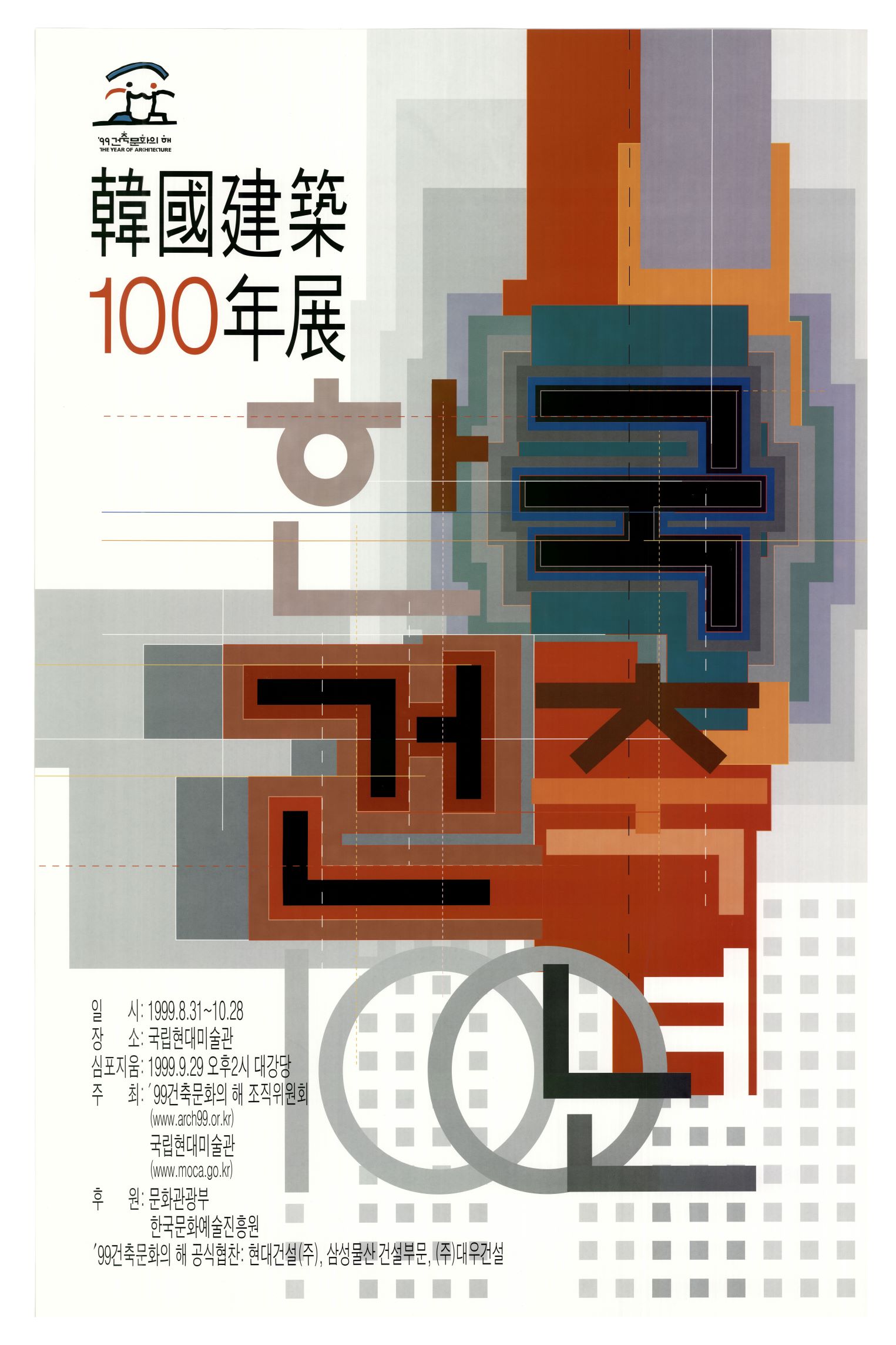
100 Years, Architecture of Korea
100 Years, Architecture of Korea was a special exhibition on the theme of modern and contemporary Korean architecture held at the National Museum of Contemporary Art, Korea (now MMCA) from August 31 to October 28 in 1999 under the auspices of the '99 Year of Architecture Organizing Committee. A total of 189 architects and architectural scholars participated in the exhibition, and over 350 works including blueprints, maps, architectural books, and archival photographs were exhibited, organized into three parts and twelve themes. Part 1, “The Involuntary Introduction of Western Culture and the Transformation of Korean Architecture,” consisted of five subtopics and the archival collection of architectural firms. The five topics included (1) The Impact of Modernization, (2) Heteronomous Modernization, (3) Autonomous Modernization, (4) Modernization of the Architectural World and Architectural Education, (5) Liberation and Architecture. With the opening of ports, efforts to actively adopt and establish Western architectural styles and systems, as well as efforts to receive modern architecture while rooted in traditional culture, were demonstrated in Part 1 through 35 works and models such as Chungdong Church, the rotary in front of the Bank of Korea, Hwashin Department Store, and the Gyeongseong Industrial Promotion Hall. Part 2 was composed under the theme of “The Pursuit of Fundamental Values of Architecture,” and had subtopics such as the Pursuit of Modernity, Exploration of Identity and Regionalism, Transformation of Housing Due to Urbanization, Pursuit of Rationality (Architecture as Making), Expression of Architectural Aesthetics, Exploration of Technological Aesthetics, Architectural Urban Context, Exploration of Architectural Space, and Internalization and Architecture. Covering the achievements of Korean architecture from the mid-1950s to the present, Part 2 examined the application of Western concepts of modernity and the movement of research on traditional Korean forms as modernization progressed after the Korean War. Furthermore, it presented the flow of Korean architectural history, focusing on the exploration of Korean traditional identity, urbanization and housing changes, and the diversification and internationalization of architecture, centered around the era of urbanization coinciding with the Seoul Olympics in 1988. Part 3 was titled “A New Way of Thinking for the Future" structured around the subthemes “Phenomena and Perception: Perception and Exploration of the New Era I” and “Reflection and Alternatives: Perception and Exploration of the New Era II.” The aim of Part 3 was to envision the future of Korean architecture by presenting models from emerging architects, who explore current and future issues through architectural knowledge and imagination, while inviting viewers to contemplate the future of Korean architecture. The exhibition utilized visual materials such as panels, models, slides, and videos to make architecture, which may be difficult for the public to understand, more accessible. In addition, time was set aside for conversations between the artists (architects) and visitors on weekend. Furthermore, a large-scale timeline measuring 22 meters was also on display, analyzing global architectural history, the current situation of Korean architecture, and contemporary Korean architectural structures. This attempt aimed to provide a comprehensive overview of modern Korean architectural history.
-
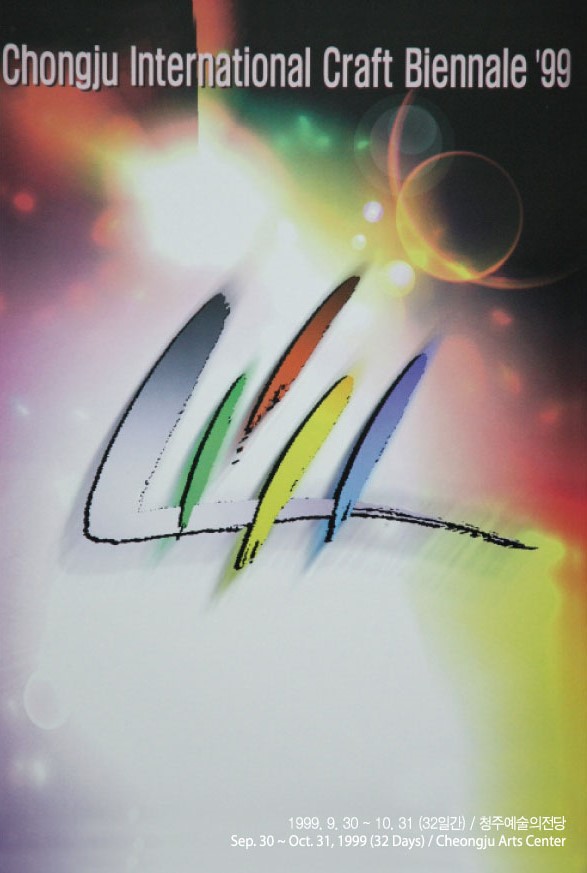
Cheongju Craft Biennale
The Cheongju Craft Biennale is an international multidisciplinary art event that encompasses all areas of crafts, including ceramics, wood lacquerware, textile, and metalwork, and is held every two years in the fall. The first Cheongju International Craft Biennale was held from September 30 through October 31, 1999 at the Cheongju Arts Center under the theme of “Hands of Harmony” (Director Jang Dong-gwang). Since 2011, a cultural space converted from a former tobacco manufacturing warehouse began to be used as the venue for the biennale. Since the tenth edition in 2017, the biennale was remade the Cheongju Craft Biennale. The biennale consists of the main exhibition, special exhibition, exhibition at an invited country’s pavilion, and the Cheongju International Craft Competition as well as various academic workshops and educational and hands-on activity events. The Cheongju city has been organizing the Cheongju Craft Biennale since 1997, recognizing that craft is a significant field encompassing both art and industry. The Cheongju Craft Biennale Organizing Committee is chaired by the mayor of Cheongju and vice-chaired by the vice mayor. In 2015, Alain de Botton was invited as the artistic director of a special exhibition, which attracted much attention from the public and was a huge success. At the closing ceremony of the twelfth edition in 2021, Cheongju was declared as the “craft city.” Cheonju is seeking to join the Crafts and Folk Art field of the UNESCO Creative Cities Network. As of the thirteenth edition in 2023, the Cheongju Craft Biennale has grown to become one of the largest and most prestigious craft biennales in the world with more than 3,000 artists participating from over sixty countries and 300,000 visitors.
-
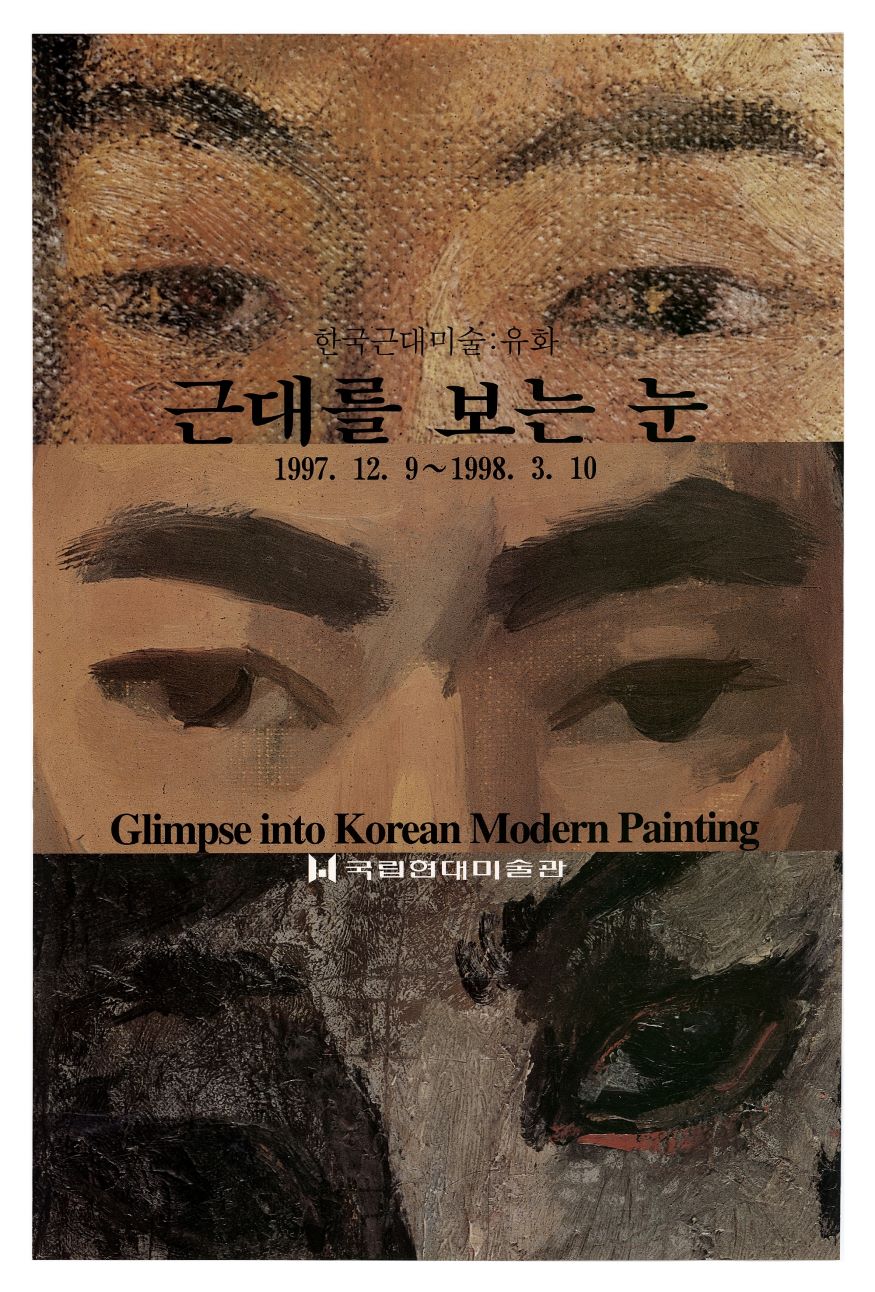
Glimpse into Korean Modern
Glimpse into Korean Modern was an influential exhibition series on Korean modern art. It began with an oil painting exhibition at the National Museum of Contemporary Art, Korea (now MMCA) in December 1997 and sequentially proceeded to various fields such as ink wash painting, sculpture, architecture, and crafts. An oil painting exhibition was held from December 9, 1997 to March 10, 1998, a sculpture exhibition was held from August 24, 1999 to October 31, 1998, and a craft exhibition was held from November 16, 1999 to January 30, 2000. The exhibition was designed to establish an national art history by re-evaluating and understanding Korean modern art. Reflecting the research achievements of Korean modern art, the exhibition attempted to excavate and organize artwork and materials that were lost amid a rapidly changing society and played a role in suggesting various in-depth research directions. The exhibition, organized field by field, focused on newly discovered works beyond one common perspective.
-
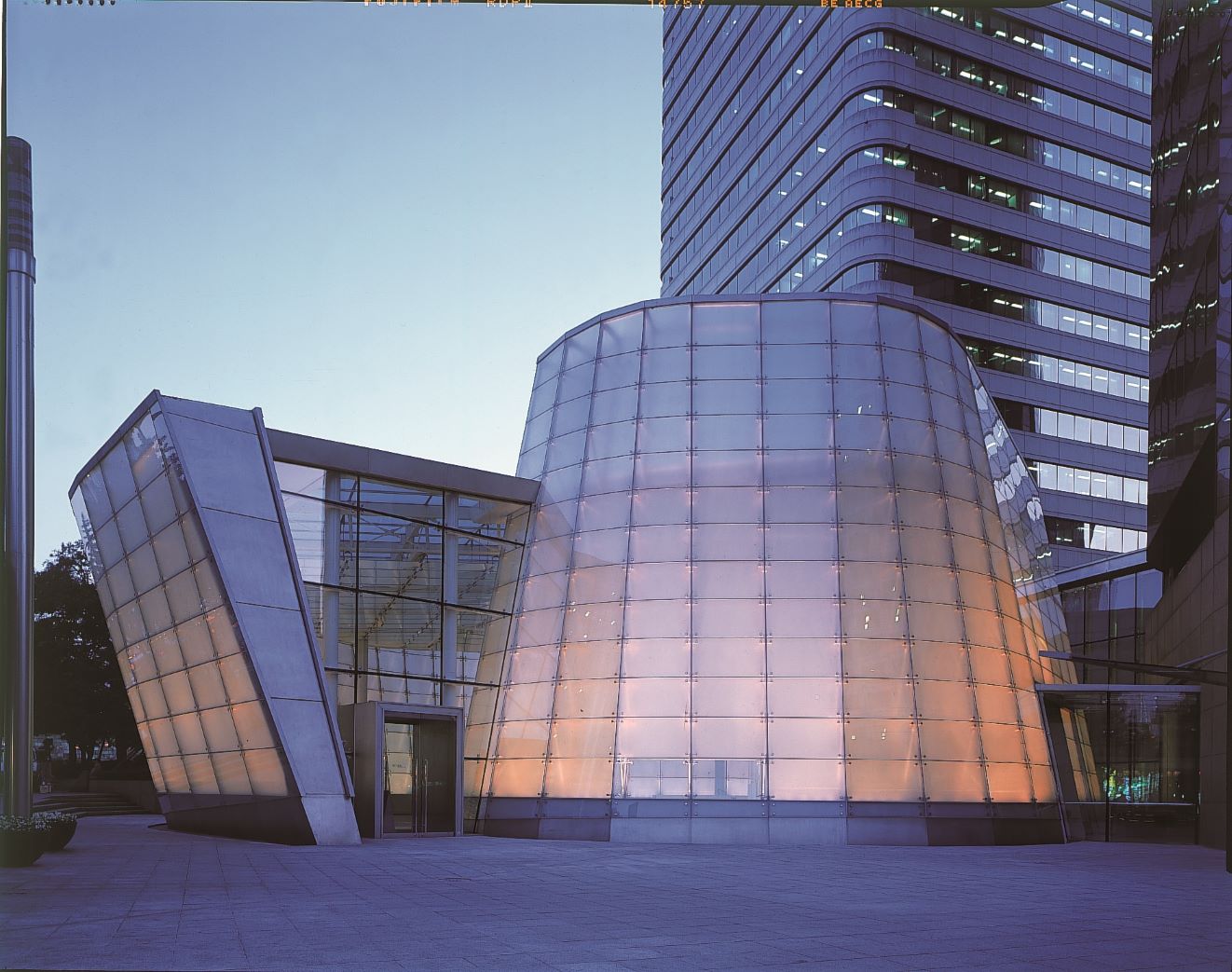
PLATEAU
An exhibition space established by the Samsung Foundation of Culture in 1999, PLATEAU is located on the first floor of the Samsung Life Insurance building in Sejongdae-ro, Jung-gu, Seoul. The predecessor of PLATEAU, Rodin Gallery, comprised a glass pavilion and contemporary art exhibition space in which Rodin’s The Gates of Hell and The Burghers of Calais are on display. The shift in focus to contemporary art in 2011 led Rodin Gallery to be renamed PLATEAU. PLATEAU, as per its name, is a space in which the artistic output of past masters as well as that of the future will be reinterpreted and subjected to experimental reinterpretation. The name also signifies the idea of the critical and intellectual heights that artists might seek to reach, and a place where all who love art can experience an uplifting artistic experience. PLATEAU has held solo and event exhibitions of Korean and overseas contemporary artists, and served an important role in contemporary Korean art. The exhibition space closed in 2016, when the Samsung Life Insurance building was sold.
-
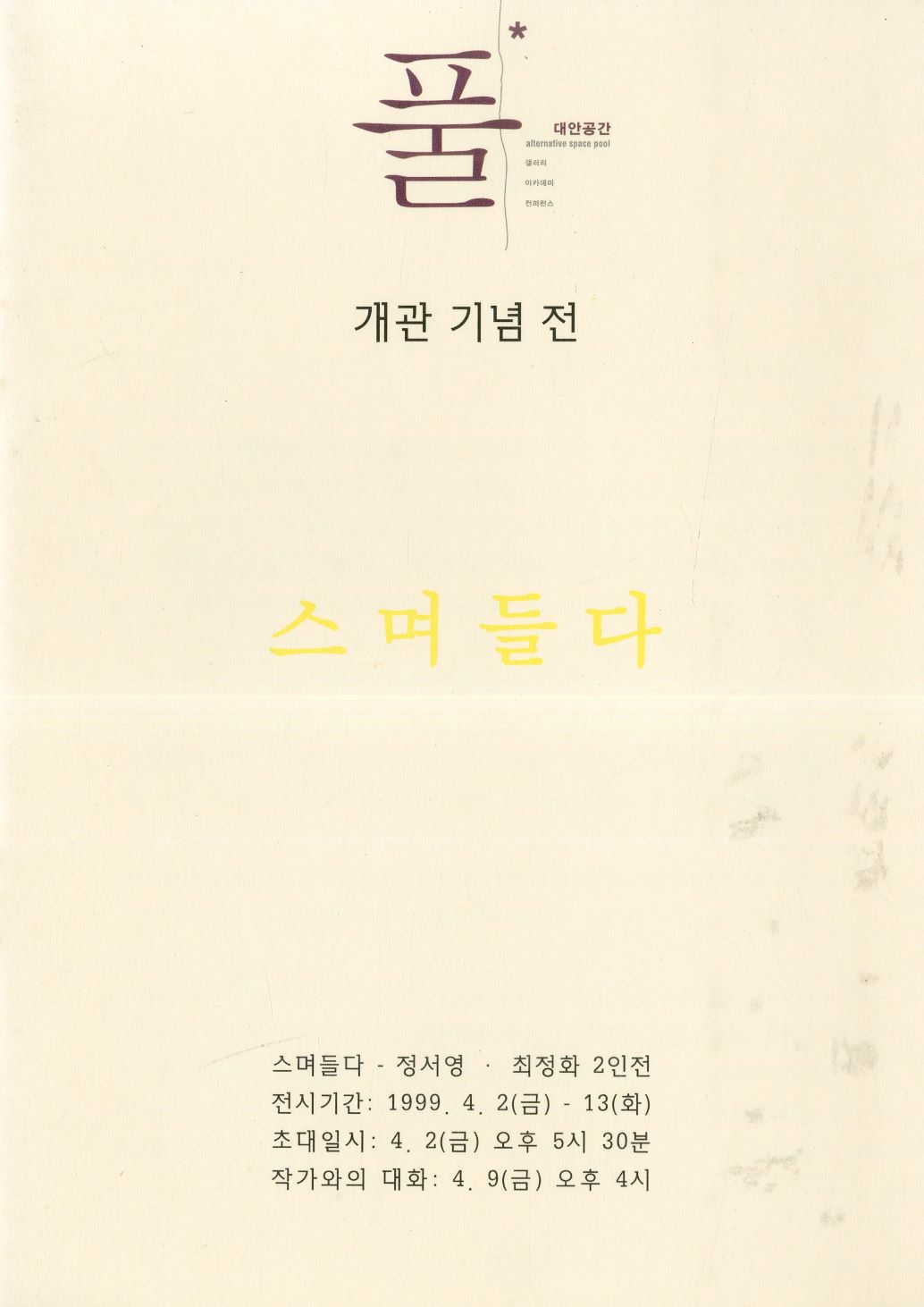
Art Space Pool
A non-profit exhibition space that opened in April 1999 in Gwanhun-dong, Jongno-gu, Seoul. The first director, Lee Youngwook, borrowed the name of the organization from the title of a poem written by Kim Su-young (1921–1968). The space was established to develop a democratic, alternative art culture, and it is seen as a major venue for the practice of, and discourse on, post-minjung art. The organization consisted of a director; a board of artists, curators, and critics; and a secretariat. Beginning with Seeping In-Chung Seoyoung and Choi Jeonghwa, the inaugural double exhibition which lasted from April 2 to 13, 1999, the exhibition space has held exhibitions for artists such as Koh Seungwook, Chang Younghae, Im Heung-soon, and Bahc Yiso. In addition to exhibitions, the space seeks to establish critical discourse on contemporary art trends through the operation of academies, symposiums, and workshops. In 2004, Art Space Pool became the first Korean non-profit exhibition space to become an art firm. It moved to Gugi-dong, Seoul in 2006.
-
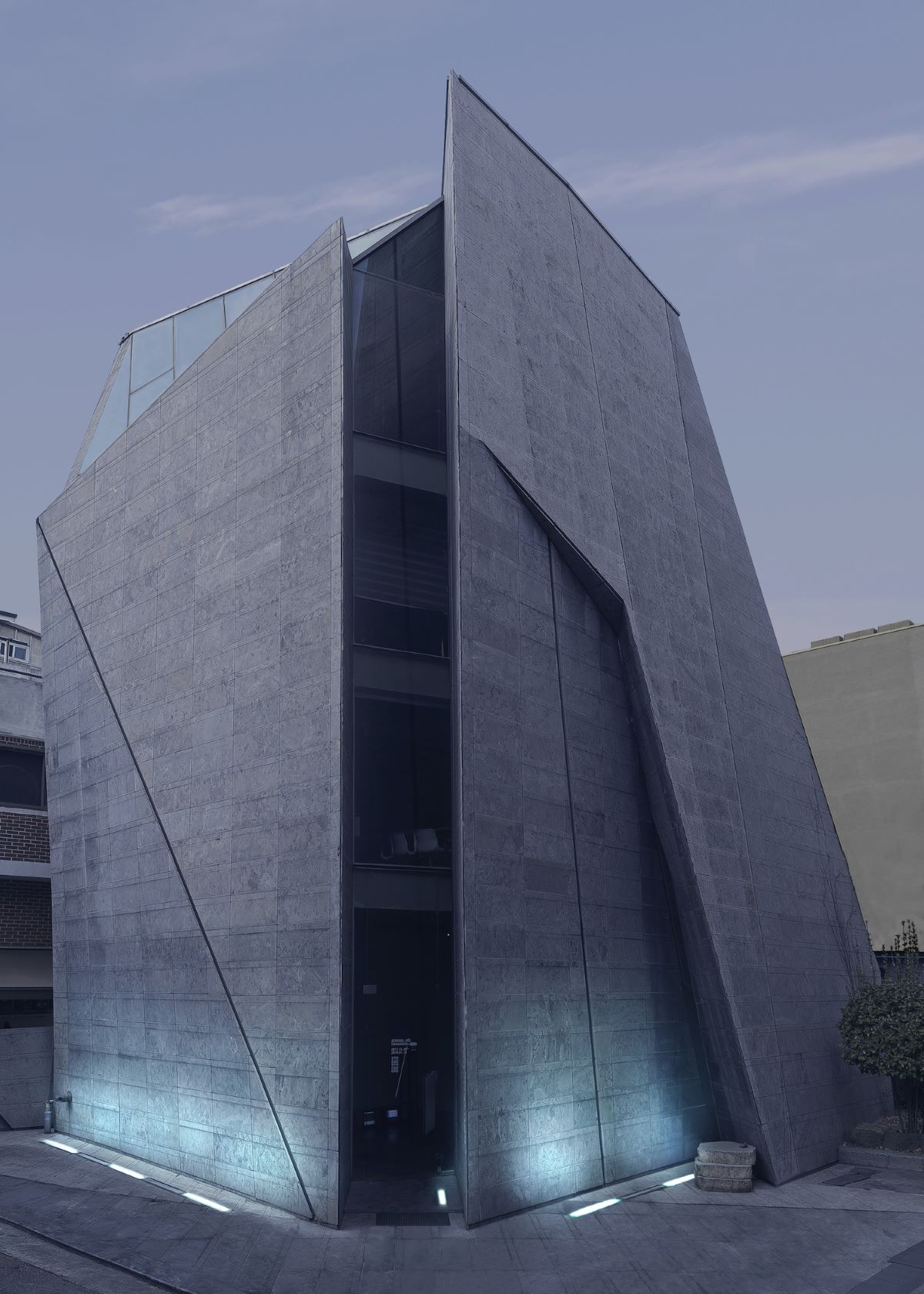
Alternative Space LOOP
An exhibition space established in February 6, 1999 by Suh Jinsuk. A non-profit exhibition space located near Hongik University in Seoul, LOOP was the first alternative space in Korea. It was established to support and publicize experimental artists and art work as well as to engage in mutual exchange with overseas artists and other alternative spaces. The inaugural exhibition was Fake Flower Kim Eunyoung Guest Exhibition. LOOP moved to a larger building in November 2005, and it held Since 1999, a showcase of the diverse currents of Korean contemporary art from the late 1990s to the present day. Since 2004, curators active in Asia have organized Move on Asia, where they select individual themes and showcase fitting moving images accordingly. In 2019, it became a non-profit culture and arts organization.

Sign Up for Email Updates