
-
January
The Lee Jungseop Art Exhibition (Midopa Gallery, January 18-27) is held. A total of forty-five works—including oil paintings such as White Bull, Bull, and Family Leaving the Road, as well as paintings on foil wrappers and drawings—are featured. In April of the same year, the Lee Jungseop Art Exhibition (USIS Center, Daegu, April 11–16) is held in Daegu, organized by the Yeongnam Ilbo newspaper company. In July, Lee Jungseop is admitted to Daegu Holy Family Hospital with symptoms of schizophrenia.
-
February
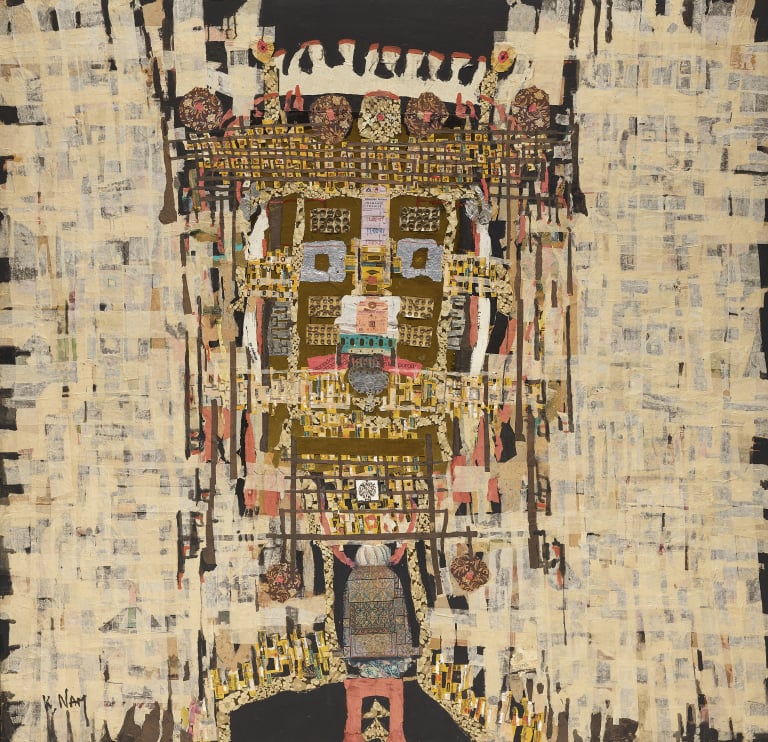
Nam Kwan goes to France via Japan and studies at the Académie de la Grande Chaumière. In the same year, Kim Sou’s Landscape and Nam Kwan’s Old Man are featured in the exhibition Artistes étrangers en France (Foreign Artists in France) (Petit Palais, Paris, June 10–September 26), organized by the City of Paris.
In May, Park Youngseun holds the Park Youngseun dobuljeon (exhibition before departing for France) (Midopa Gallery, Seoul, May 18–28) and leaves for Paris to study. -
March
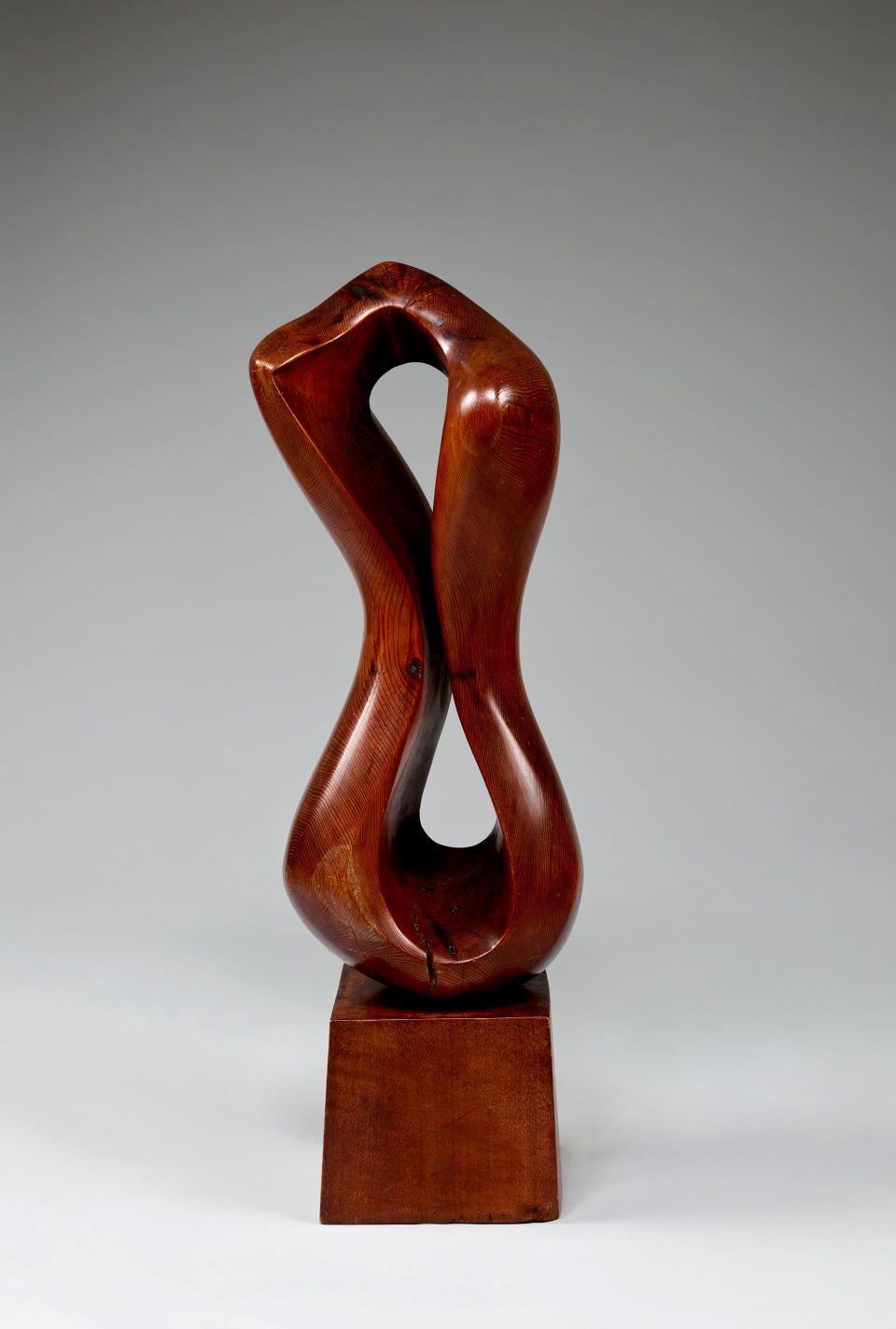
Kim Chungsook, Korea’s first female sculptor, studies in the graduate program at Mississippi State University in the U.S. with support from the American-Korean Foundation. Subsequently, she spends a year at the Cranbrook Academy of Art in Bloomfield Hills, Michigan, where she studies welding art and metal craft. After returning to Korea in 1956, she serves as a professor at Hongik University, training future sculptors and pioneering the field of welded sculpture along with Song Youngsu.
“Sculpture and Kim Chungsook,” Pyeonghwa Sinmun, October 10, 1955.
-
April
-
May
The General Meeting of the Great Korean Art Association [Daehan misul hyeophoe] (Sukmyung Girls’ Middle School, Seoul, May 8) is held. Ko Huidong and Chang Louis Pal run for the position of chairman. Various controversies arise during the voting and ballot-counting process. Ko Huidong is appointed honorary chairman and To Sangbong is appointed chairman; subsequently, Chang Louis Pal and his supporters leave the Great Korean Art Association.
Chang Louis Pal and his supporters, who protested the election process of the chairman of the Great Korean Art Association [Daehan misul hyeophoe], hold the inaugural general meeting of the Korean Artists Association [Hanguk misulga hyeophoe] (Auditorium of the College of Liberal Arts and Sciences, Seoul National University, Seoul, May 21).
Participants include: No Soohyeon, Bae Ryeom, Suh Seok, Chang Woosoung, and Chang Unsang (Eastern Painting); Kim Byungki, Moon Hakjin, Park Deuksoon, Lee Kyusang, Lee Seduk, Chang Louis Pal, and Chang Ucchin (Western Painting); Kim Sechoong, Kim Jonggi, and Chang Gieun (Sculpture); Kim Choonghyun, Bae Gilgi, and Son Jaehyeong (Calligraphy); Limb Eungsik, Ji Buwon, and Choi Changhui (Photography); and Kim Jeongsu, Kim Taesik, and Lee Huitae (Architecture). -
June
The Great Korean Art Association [Daehan misul hyeophoe], celebrating its tenth anniversary, holds The Seventh Great Korean Art Association Exhibition (Gyeongbokgung Palace Museum, Seoul, June 10–30). A total of thirty-two artworks and commemorative objects presented from Korea and abroad in commemoration of the eightieth birthday of President Syngman Rhee, together with 219 works by members, are exhibited. Chun Kyungja’s Stillness receives the Presidential Award, and Yim Jiksoon’s Buddhist Image receives the Minister of Education Award.
“President Syngman Rhee Visits the Exhibition," Chosun Ilbo, June 11, 1955.
Limb Eungsik contributes an article titled “The present and future of the photographic world: Towards the production of the photography of everyday life” (June 9–10) to the Kyunghyang Shinmun, strengthening the movement of realist photography.
“Present and Prospects of Photo Groups-1,” Kyunghyang Shinmun, June 09, 1955.
“Present and Prospects of Photo Groups-2,” Kyunghyang Shinmun, June 10, 1955.
The United States Information Service (USIS) in Daegu, celebrating its seventh anniversary, holds the exhibition Highlights of American Painting (USIS, Daegu, June 13–25). A total of forty-one representative works by artists including Gilbert Stuart, Grant Wood, and Edward Hopper are featured as photoprints.
The Goam Lee Ungno Eastern Painting Art Exhibition (Donghwa Gallery, Seoul, June 27–July 10) is held, featuring a total of fifty-two works. In 1956, Lee Ungno writes the art textbook for middle and high school students, Appreciation and Techniques of Eastern Painting [Dongyanghwaui gamsanggwa gibeop], in which he summarizes materials, techniques, and an overview of art history, and proposes “semi-abstraction” as a method for modernizing Eastern painting.
-
July
The Craft Artists Group Exhibition (Donghwa Gallery, Seoul, July 12–22) is held, featuring twenty-four works by seven participating artists: Kim Jaesuk, Park Kumju, Park Ryeook, Park Sungsam, Paik Taewon, Yoo Kangyul, and Cho Jungho.
The Craft Artists Group is an organization founded in 1955, primarily led by Kim Jaesuk, Park Sungsam, Paik Taewon, and Yoo Kangyul. The group aims for contemporary and everyday crafts grounded in tradition. -
August
-
September
-
October
-
November
The Fourth National Art Exhibition (Gukjeon) (Gyeongbokgung Palace Museum, Seoul, November 1–30) is held. The Architecture Section is newly established, and the Applied Arts Section is renamed the Crafts Section again. Pak Nosoo’s Woman, Mystic Sound of Tungso receives the Presidential Award—the first for the Eastern Painting Section—and Byeon Jongha’s Poplar receives the Vice Presidential Award. for the first time in the Eastern Painting Section of the National Art Exhibition. Afterwards, ink and color painting becomes the main trend in the Eastern Painting Section of the National Art Exhibition.
“Opening of the National Art Exhibition," Kyunghyang Sinmun, November 2, 1955.
The First Baeku Association Exhibition (Deoksugung Museum of Art, Seoul, November 20–30) is held, featuring sixty works by eighteen participating artists: Kim Won, Kim Chongha, Kim Changaek, Kim Hyanggu, Kim Hwakyung, Kim Duwhan, Kwon Okyon, Byeon Huicheon, Song Hyaesoo, Lee Seduk, Lee Yootae, Lee Soo-auck, Lee Chung Keun, Chang Ucchin, Chung Kyu, Jo Changhwan, Chu Kyung, and Choi Dukhyu. Choi Dukhyu’s Landscape receives the Baeku Association Award, and Chang Ucchin’s Under the Tree and Lee Soo-auck’s Late Autumn receive Encouragement Awards.
The Baeku Association is an organization founded in July 1955 by artists who graduated from the Imperial Academy of Fine Arts in Japan, succeeding the tradition of the Imperial Academy of Fine Arts Alumni Exhibition from 1942. The group was established to promote friendship among alumni and present their works. At the time of its founding, the representative committee members are Kim Won, Byeon Huicheon, Chang Ucchin, and Chu Kyung, with thirty-two members including Kim Hwakyung and Lee Yootae. The association is discontinued in 1965 after its eighth exhibition. -
December
Related Essays
-
Kwon Heangga
1953-1959: The Post-war Formation of Contemporary Art
After ceasefire of the Korean War in July 1953, Korean art history was reorganized into art centered on South Korea rather than art of the Korean peninsula. In the midst of the Cold War, the South Korean art world began to lay the foundation for post-war contemporary art within the framework of a state-led art and culture policy centered on anti-communism. The older generation, who benefitted from the national art and culture policy, established the academism of the National Art Exhibitions [Daehanminguk misul jeollamhoe, also known as Gukjeon], while new generations, who rebelled against it, designated the art of older generations as “modern” [geundae], and to define contemporary art, began to advocate “abstraction,” the “avant-garde,” and “internationalization.” The art world of the 1950s was a “period of transition to contemporary art,” filled with the desire to move beyond modernity. Dispute over the State-led Art System and the National Art Exhibition After the armistice of the Korea War, Korean society entered a period of post-war recovery. The Korean art world began to be reorganized, with artists, who fled to Busan, Daegu, and other places during the Koran War, returning to Seoul, alongside artists defecting to South Korea from North Korea, who filled the void left by artists who defected to North Korea. The Great Korean Art Association [Daehan misul hyeophoe], led by right-wing artists under the leadership of Ko Huidong, took on the character of a cultural organization that disseminated the ideology of liberal democracy and anti-communism. The National Academy of Arts, Republic of Korea, launched in accordance with the presidential decree announced at the beginning of the New Year in 1954, and the National Art Exhibition (Gukjeon), which resumed after the war, became established as key institutions dominating the art world since the 1950s. Just as the Joseon Art Exhibition [Joseon misul jeollamhoe] during the Japanese colonial period was the only gateway for artists, the National Art Exhibition was still the only portal for artists and a means of guaranteeing social reputation and status. However, because the right to select judges for the National Art Exhibition rested with the National Academy of Arts, Republic of Korea, the National Art Exhibition became the epicenter of artists’ struggle for hegemony. Disputes surrounding the judging of the National Art Exhibition, including the division between the Great Korean Art Association and the Korean Fine Arts Association [Hanguk misul hyeophoe], the boycott of the National Art Exhibition, and the exhibition of rejected works from the National Art Exhibition, reached their peak in the late 1950s. Opposition Between Figuration and Abstraction Until the early to mid-1950s, the dominant style of the National Art Exhibitions was figurative art. As the anti-National Art Exhibition tendency began to form in the late 1950s, artists critical of this pursued abstraction or non-figurative art as the new avant-garde, in opposition to realism and figurative art. The Neoplastics [Sinjohyeongpa] formed in 1956, the Four Artists Exhibition (1956) organized by artists graduated from Hongik University who declared their oppositional stance against the National Art Exhibition, the Creative Arts Association [Changjak misul hyeophoe] and the Modern Art Association [Modeon ateu hyeophoe], and the Contemporary Art Exhibit (1957) hosted by the Chosun Ilbo newspaper company, among others, led this trend. It reached a peak during the third and fourth exhibitions of the Hyundae Fine Artists Association in 1958. The younger generation, fresh out of university, filled the exhibition with enormous screens of rough brushstrokes, matières, and intensely colored abstracts. Labeled as “the aesthetic vanguard,” they referenced Abstract Expressionism and Art Informel, introduced through Japan and the U.S. On account of this, there was criticism from art critics that it was nothing more than an imitation of the West. Nevertheless, their unrestrained experimentation with technique and expressionistic abstractions secured legitimacy as an expression of the existential anxiety of the Korean War generation, and as the shared global language of form in line with the subjective traditions of the East, to become established as the representative trend in the art world of the late 1950s. The opposition between figurative vs. abstract or non-figurative art, which began in the 1950s, took on the form of modern vs. contemporary, and conservative vs. progressive oppositions. However, in the 1960s, abstraction was incorporated into the National Art Exhibition, and in 1962, as separate figurative and non-figurative sections became established within the National Art Exhibition, abstraction also became part of the academicism of the National Art Exhibitions. International Exchanges and Korean Artists Studying Abroad The 1950s was also the first time Korean art expanded overseas and international exchanges became active. In the Cold War system after WWII, international cultural exchanges were used as one kind of diplomatic tool. Sponsorship by the United States International Cooperation Agency (ICA), which was an American aid agency for developing countries, the American-Korean Foundation (A.K.F.), and the Rockefeller Foundation played important roles in the overseas expansion of Korean art and international exchanges. The Korean Plastic Arts and Culture Research Institute (Hanguk johyeong munhwa yeonguso) that was operated by the National Museum of Korea with a three-year grant from the Rockefeller Foundation, ICA support for the Korean Handicraft Demonstration Center, and the exchange exhibition between the University of the Minnesota and Seoul National University, the National Museum of Korea’s touring exhibition of Korean art in the U.S., and exhibitions such as Contemporary Korean Paintings (1958) held at World House Galleries in New York, and support for Korean artists to study abroad in the United States—such activities were all carried out as part of the U.S. aid or exchange policy during the cultural Cold War. Yoo Kangyul and Chung Kyu, who worked at the Korean Plastic Arts and Culture Research Institute, learned graphics, ceramics, and printmaking in the U.S., and sculptor Kim Chungsook also learned silkscreen printmaking techniques along with sculpture and introduced them to Korean university education for the first time. The reason why exchanges in the fields of printmaking and crafts were particularly prominent was because U.S. aid to developing countries was tied to the practical aim of industrial development. Eight American Contemporary Artists (1957) and The Family of Man (1957), which were held in direct or indirect connection with the United States Information Agency (USIA) and the United States Information Service-Korea (USIS), not only served as an opportunity to spark interest in American contemporary art and photography among the Korean masses, but also influenced the domestic spread of Art Informel and the rise in realist photography. However, the overseas expansion of Korean artists in the 1950s was not only led by the state or limited to the U.S. For example, studying abroad in France was an object of envy for many artists. During this period, many artists began to leave to study in Paris despite difficult circumstances, either with the help of religious organizations or through personal connections. After the Korean Community in Paris (La Communauté coréenne de Paris) was launched with the approval of the diocese in 1954, Kim Yeong-seon, Kim Sou, Na Hikyune, Kim Whanki, Kwon Okyun, Moon Shin, and Lee Ungno left for Paris, led by Nam Kwan. The dobuljeon (translated as the exhibition held right before departing for France) became a synonym for studying abroad, and their return exhibitions, along with contributions in newspapers about the Parisian art scene, became primary channels for introducing contemporary Western art to Korea. The fact that most of these artists were of the generation that had already experienced studying abroad in Japan can be said to be a characteristic of the 1950s that was different from the 1960s and later. Just as Kim Whanki went to Paris and came to reconsider the tradition of Korean art, the problem of overcoming the time gap between Korean art and global art through comparisons with global art, and within that, the question of how to secure the unique identity of Korean art beyond imitation became two major challenges that artists were faced with for the future development of Korean art.
-
Kim Yisoon
The Development of Korean Sculpture from the 1950s to the 1970s
Related Terms
-

Lee Jungseop
Lee Jungseop (1916-1956, pen name Daehyang) was born in Pyongyang. He learned oil painting from Yim, Gilbert Pha at Osan School, Jeongju. He attended the Teikoku Art School in Japan in 1936 and moved to the Bunka Gakuen to learn oil painting in 1937. During his school years, he submitted his work to Japan Free Artists Association [Jiyū bijutsuka kyōkai] in 1938 and to the New Artists’ Association [Sin misulga hyeophoe] Exhibition. After his return to Korea in 1943, he was active in Wonsan and moved to South Korea with his family after the outbreak of the Korean War. He sought shelter in Busan and Seogwipo but had to send his Japanese wife and two sons back to Japan in June 1952 due to financial difficulties. He submitted work as a war correspondent painter. He orchestrated solo exhibitions in Tongyeong in 1953 and Midopa art gallery in Seoul and for the United States Information Service Center at Daegu in 1955. He died at a Red Cross hospital in 1956 after suffering from malnutrition and liver cirrhosis. His works, such as White Ox, illustrated local subject matter and family life with a simple touch, and one of his drawings on silver foil was purchased by the Museum of Modern Art in New York. A high-profile posthumous exhibition in 1972 at Hyundai Hwarang greatly increased the popularity of his work among the general public.
-
Nam Kwan
Nam Kwan (1911-1990) graduated from the Taiheiyo Art School in 1935 and performed research for two further years. He submitted his work to the Ministry of Education Fine Arts Exhibition (Munbuseong misul jeollamhoe), Donggwang Group Exhibition, and the Gukhwa Group Exhibition in Tokyo. In 1954, he attended the Académie de la Grande Chaumièrec in Paris and was invited to submit his work to the Avant-Garde Art Exhibition Salon de Mai and Fleuve Art Gallery. After returning to Korea in 1968, he became a professor at Hongik University. Before he went to Paris, he created portrait and landscape paintings, emphasizing lyrical colors and free expression. While Nam Kwan’s early works tended to focus on figuration, he switched to Oriental style of abstraction, influenced by Parisian Art Informel. In 1962, he experimented with abstract works symbolizing ancient letter inscriptions and after his return to Korea in 1968 he developed a style based on mask abstraction. He liked to utilize abstract letters, lines, and figures using blue as an organising palette. Nam Kwan became a leading figure in the abstract art movement in Korea after independence, and he is particularly well-known for reconfiguring ancient inscriptions as abstract idioms within his work.
-
Kim Chungsook
Kim Chungsook (1917-1991) was taught by Yun Hyojoong and Yoo Jinmyeong at Hongik University until graduating in 1953. She moved to the U.S. and studied painting from professor Leo Spot at Mississippi State University and attended the graduate program of the Cranbrook Academy of Art, Michigan. After her return to Korea in 1957 she worked as a professor at Hongik University. She introduced welded sculpture to Korean students and artists and expanded the scope of sculptural metal work in Korea. She went back to the U.S. to study industrial design and metal craft at the Cleveland Institute of Art in Ohio from 1958 to 1959. She served as the Dean of sculpture in the Fine Art department of Hongik University and the director of the Plastic Arts Research Institute. Kim Chungsook’s style has been described as one of love and affection, as her work reflected both her strong Christian beliefs and her feminine sensibility. Her series Wings is considered as representational of her interests in diverse techniques and materials. In the context of modernist sculpture in Korea she is considered a pioneer who worked in the tradition of Plasticism to introduce a new lyrical approach.
-
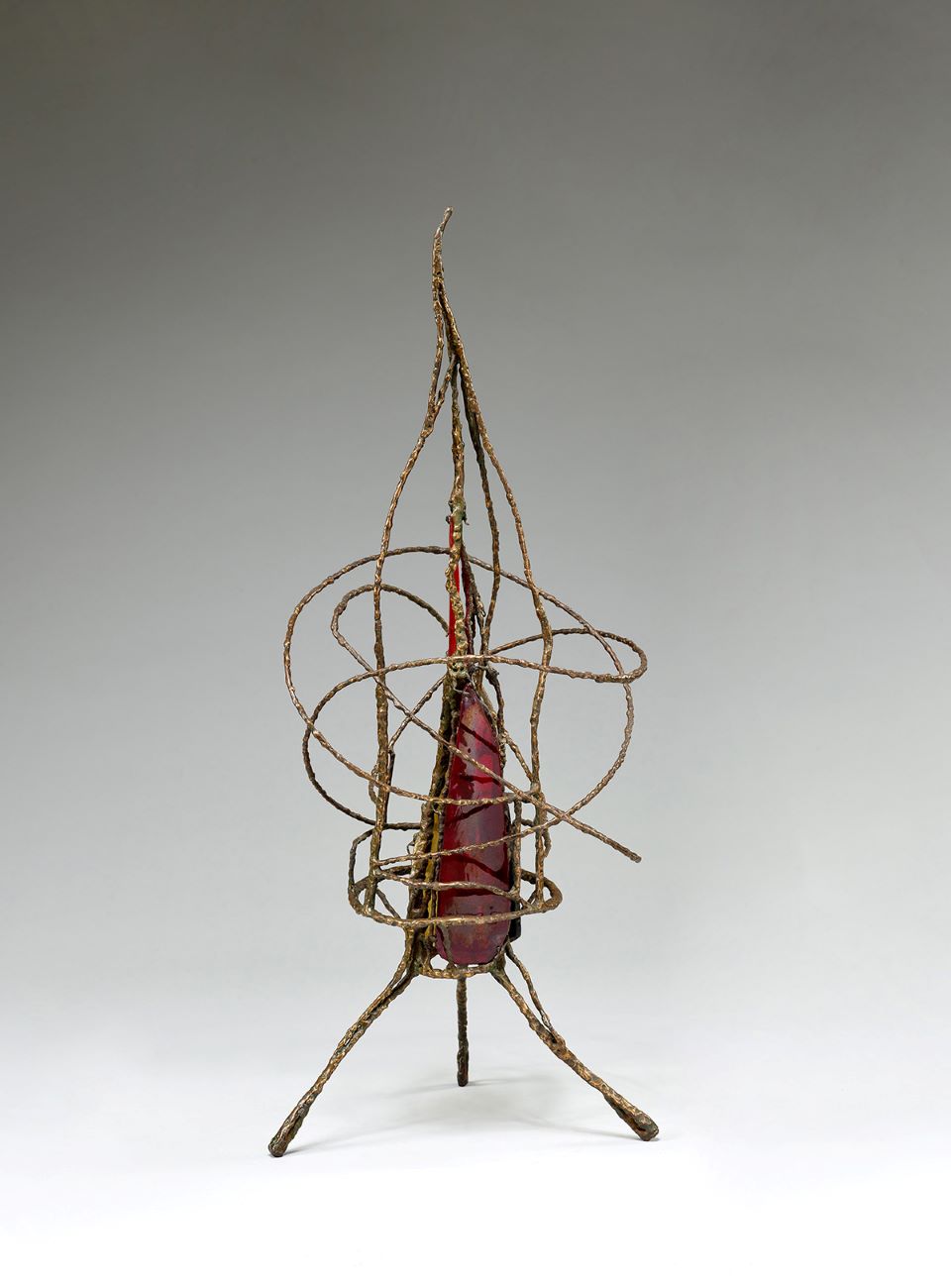
Welded sculpture
A welded sculpture is an art work created through the welding of different structural and material metal elements. Within Western art welded sculptures rose to fashion during World War II and the immediate post-war period, and this style of work was introduced to Korea in the 1950s, with many influential pieces debuting at the National Art Exhibition (Gukjeon) in 1957. These Korean welded sculptures often expressively attempted to highlight the materiality of metal, and dealt with the painful recent history of war and anxiety over contemporary Korean society, expressing political and social rage. The emergence of the experimental art and escape from Art Informel in the late 1960s encouraged artists to search for new and different styles, and welded sculpture as an art genre gradually disappeared. Song Youngsu, Oh Jong-uk, Park Chongbae, and Park Suk-won are representative artists in this welded sculpture genre.
-

Great Korean Art Association
An art association that formed in 1948, when the Korean Art Association [Joseon misul hyeophoe], which was established in 1945, reformed in parallel with the establishment of the new Korean government. Following independence, the organization reformed and expanded primarily to foster solidarity and anti-communist sentiment in artists, and held the inaugural Great Korean Art Association Exhibition. In June 1961, the association closed officially with the government's comprehensive art institute reformation policy, and in December that year, the association merged into the Korean Fine Arts Association [Hanguk misul hyeopoe].
-
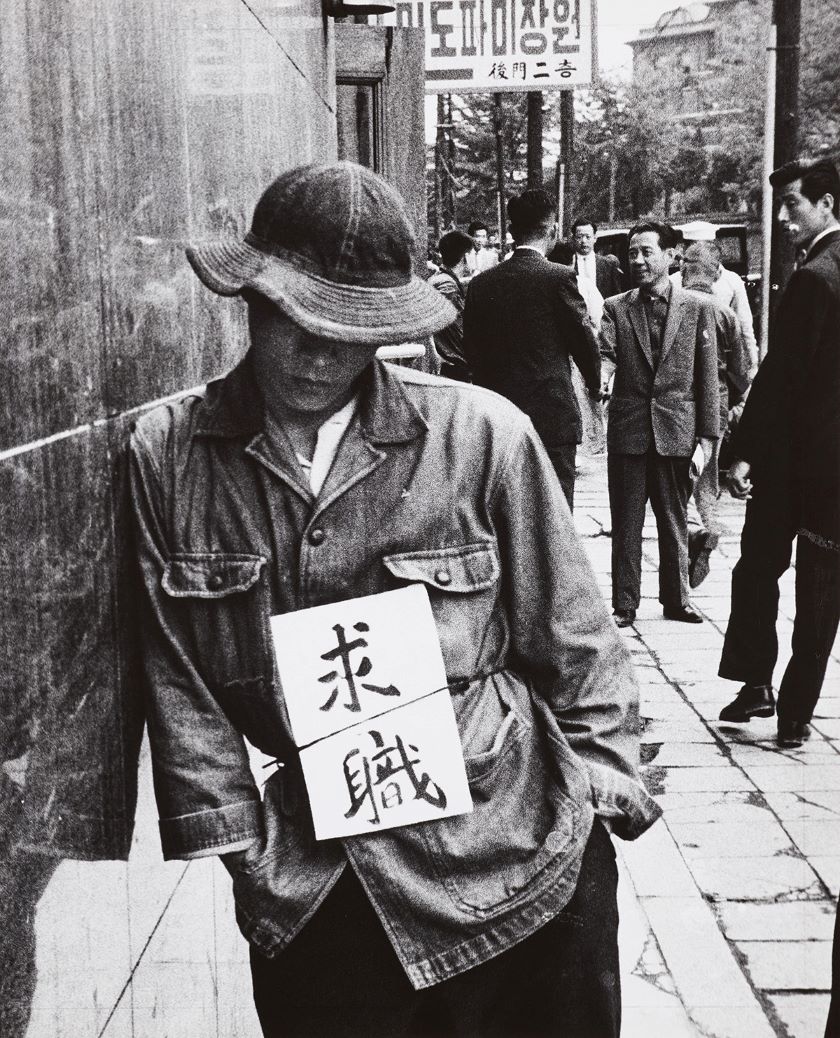
Limb Eungsik
Limb Eungsik (1912∼2001, courtesy name Gujeong) was a native of Busan. He studied at the Busan Chesinriwonyangseongso (academy for communications officers) in 1931, and in 1934, he graduated from the Toshima Communications School in Japan. In 1935, he began working at the Gangreung Post Office, where he established the Gangreung Sauhoe, a photographers club. From 1946, he managed a photograph processing lab called ARS, which was located in Busan. There he established the Busan Gwanghwahoe, another photography group. During the Battle of Incheon in 1950, he served as a wartime photographer, and in June 1952, he held a joint exhibition with the Korea Fine Art Photography Institute in Busan, after which he established the Korea Photographers Association in December. In 1954, he taught the first photography class the College of Fine Arts at the Seoul National University and he continued to teach at Ewha Womans University and Hongik University, before spending four years, from 1974 to 1978, as a professor at the Chung-Ang University photography department. During the Japanese colonial era, Im primarily produced pictorialism photographs, but from the 1950s and onward, he rejected artistic salon photography and engaged in "Everydaylife realism [Saengwhaljuui]," which depicted reality in close up. His photography albums include Hanguk Gogeonchuk (Korean Heritage Architenture) (1977), and Pungmo (1982), which was an album of portraits of people in the field of culture and arts.
-

Lee Ungno
Lee Ungno (1905-1989, pen name Goam) was born in Yesan, Chungcheongnam-do where he studied classic Chinese. He moved to Seoul in 1922 to study bamboo ink-painting from Kim Kyujin and was selected for the Joseon Art Exhibition [Joseon misul jeollamhoe]. In 1935, he attended Kawabatawa Art School and the Hongo Western Painting Center to study oil painting and learned Japanese realism from Matsbayasi Keiketsu. He returned to Korea in 1945 and produced realistic colored ink-wash paintings, such as the March 1st Independent Movement and Yungchayungcha. He pursued a style of semi-abstract art that attempted to express the inner spirituality. In the 1950s, he taught at Hongik University and Sorabol Art College. He moved to Europe after his exhibition in 1957 and created the letter-abstract genre that combines Western abstract art and East-Asian ink-wash painting. Diverse art critics, such as Jacques Lassaigne and Michel Tapie, praised his work, which led to several exhibitions in Europe, the U.S., and Japan. He opened the Oriental Painting Academy in Paris to teach ink-wash painting and received an honorary grand prize at the San Paulo biennale in 1965. Upon return to Korea he was imprisoned for two years because of the 1968 East-Berlin Affair and later moved to Paris to exhibit his works in Europe, the U.S., and Japan. In the 1980s, he created an ink-wash painting work depicting the people of the Gwangju Uprising. He passed away two days before a retrospective exhibition was held in 1989 in Seoul.
-
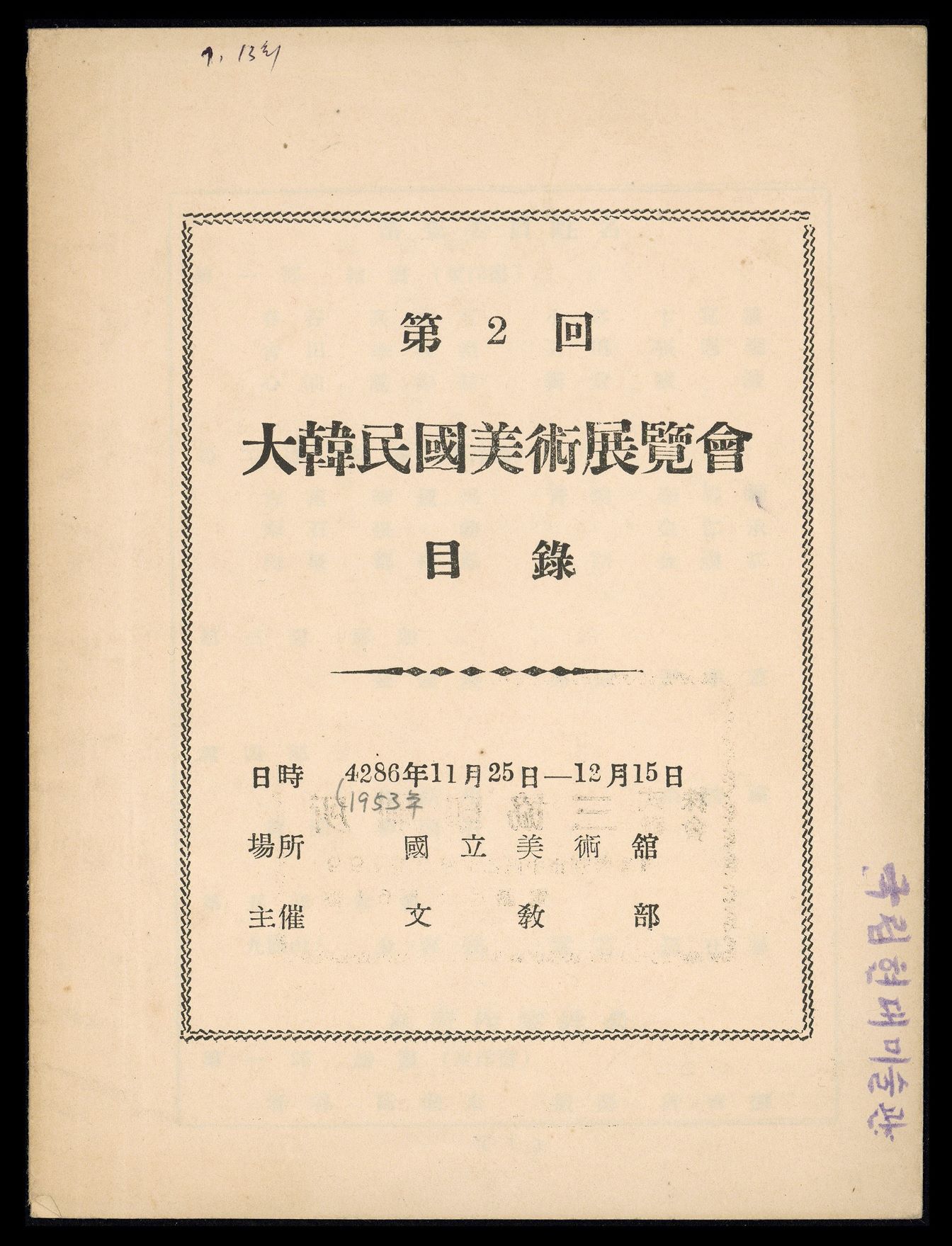
National Art Exhibition
A government-hosted exhibition held 30 times from 1949 to 1981, also known by the shorter name Gukjeon. Following national independence, the exhibition was the primary means for young and emergent Korean artists to achieve recognition. The influence of the exhibition declined as a result of the emergence of non-figurative art during the 1970s, the increased opportunities for artists to participate in overseas exhibitions, and the rise of private exhibitions and galleries.

Sign Up for Email Updates