Eastern Painting Research Institute


* Source: MMCA
Related
-
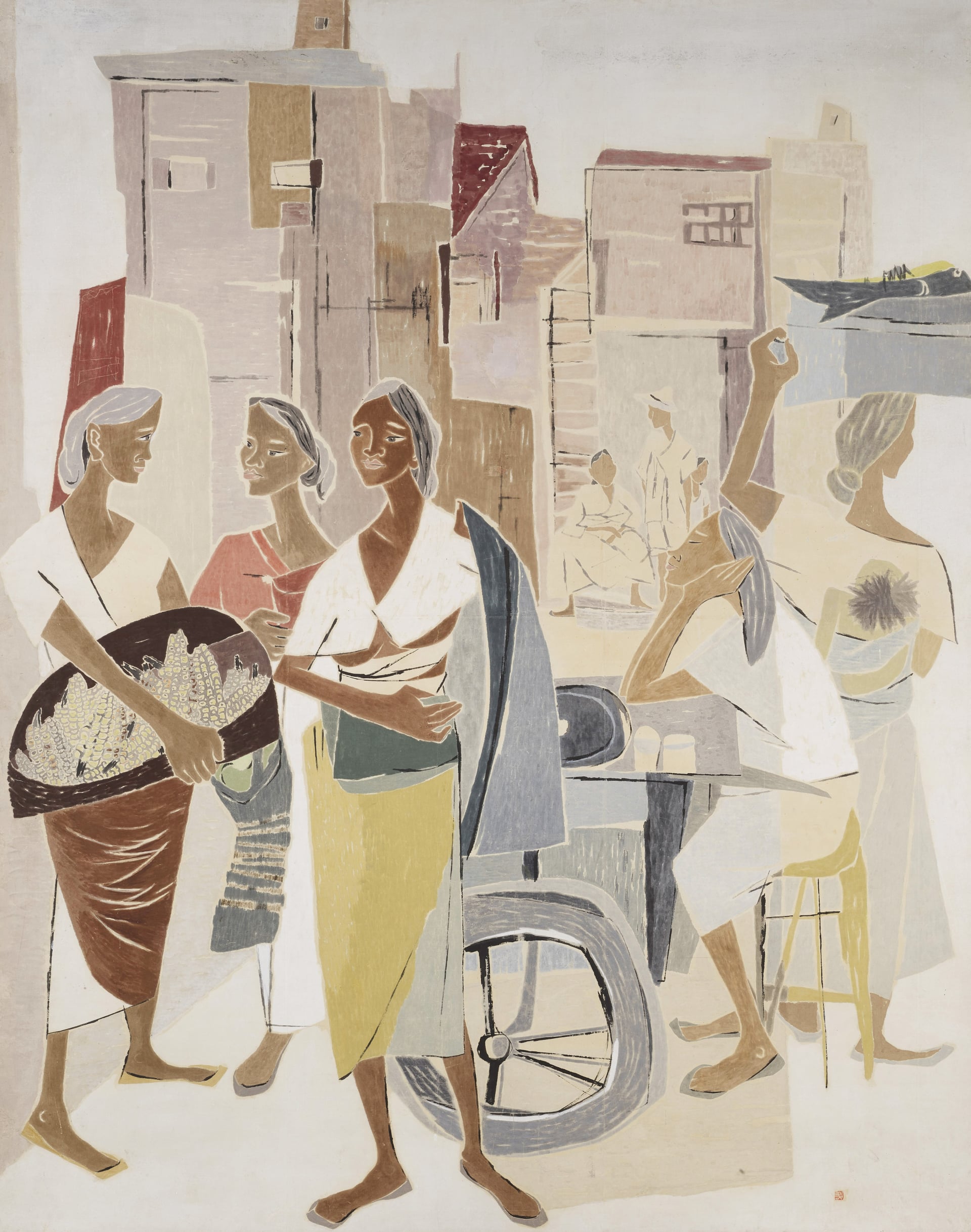
Park Rehyun
Park Rehyun (1920-1976, pen name Woohyang) studied at Gyeongseong girls Normal School and graduated from the Department of Japanese Painting at Tokyo Women’s Art School in 1944. She studied at the Pratt Institute in New York and Bob Blackburn’s Print Studio from 1969 to 1973. After she married Kim Kichang, she held several solo and collaborative exhibitions with her husband and contributed her works to Paek Yang Fine Art Exhibition. She won a Changdeokgung Palace Award at the Joseon Art Exhibition [Joseon misul jeollamhoe] in 1943, a President Award at the fifth National Art Exhibition (Gukjeon) in 1956, a President Award at the eighth Great Korean Art Association Exhibition in 1956, and a Shin Saimdang Award in 1974. During the colonial period, Park Rehyun produced Japanese style color portraits, then, after independence she moved toward a semi-abstract technique, often featuring the three-dimensional formal interpretation of objects and a division of planes and using traditional Oriental painting materials. In the 1960s, she gradually replaced this approach with a splashed ink and pre-dyeing effect. Then, after moving to the U.S., she expanded her oeuvre to include print and tapestry.
-
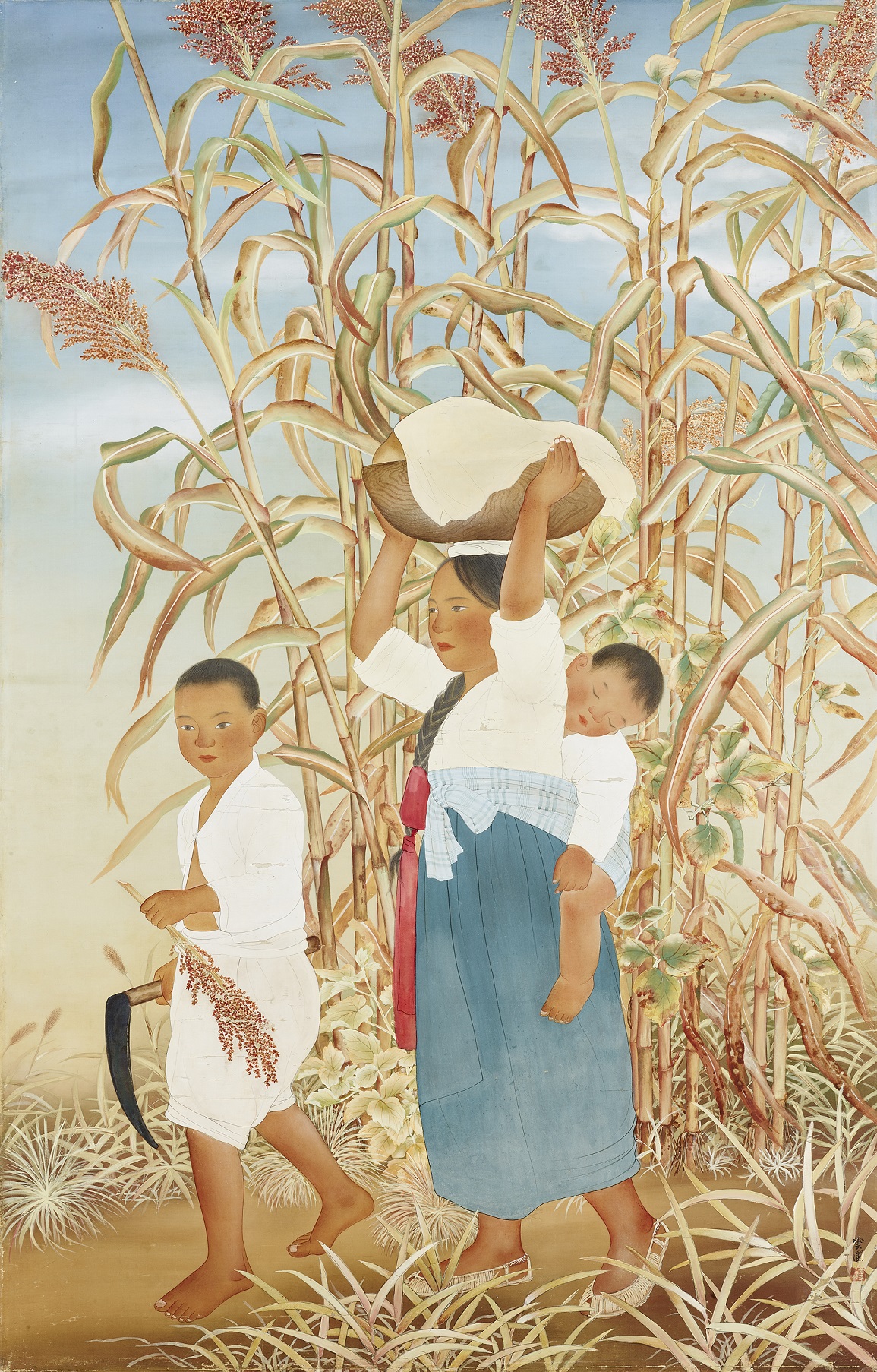
Kim Kichang
Kim Kichang (1913-2001, pen name Unpo or Unbo) studied Eastern painting at Kim Eunho’s art studio Nakcheongheon. After his debut in the tenth Joseon Art Exhibition [Joseon misul jeollamhoe] in 1931, he won special selections from 1937 to 1940, and became a renowned painter. He was appointed as the first president of Paek Yang Painting Association and became a professor at Hongik University and Soodo Women's Teachers College. He was awarded the Order of Civil Merit, Peony Medal in 1981 and the Korean Art Academy Award in 1983. After he passed away in 2001, he was awarded a posthumous Geumgwan Order of Culture Merit award. Although Kim initially focused on colorful figure paintings, following in the legacy of his mentor Kim Eunho, in his later career he collaborated with his wife Park Rehyun to modernize Korean painting by adopting cubism and abstraction. He reinterpreted traditional folk paintings in his representative works, such as Blue-green Landscape Painting series started in the 1970s and his Fool’s Landscape Painting in the 1980s and was inspired by portraits of historical figures. He contributed to the development of Korean modern art by working in an expanded formal territory from figuration to abstraction and addressing subject matter from folk painting, to figure and landscape painting.
-
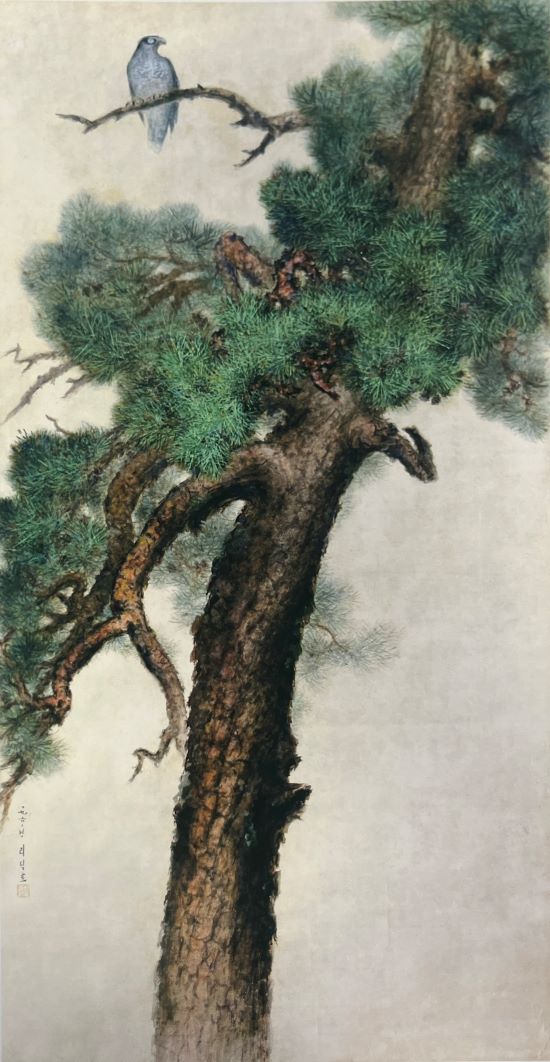
Lee Seokho
Lee Seokho (1904-1971, pen name Ilgwan) learned Chinese classics and calligraphy at a young age and then studied painting under Kim Eunho. He received an honorable mention for his calligraphy at the sixth Joseon Art Exhibition [Joseon misul jeollamhoe] in 1927. He then made his presence known in Korean painting circles by submitting his works to the exhibition of the Calligraphy and Painting Association [Seohwa hyeophoe] and to the Eastern painting section of the Joseon Art Exhibition. He enjoyed creating detailed polychrome bird-and-flower paintings under the influence of Kim Eunho. He was active in the artist group Husohoe together with Kim Eunho’s other disciples, including Chang Woosoung, Kim Kichang, and Lee Yootae. Upon Lee’s participation in the foundation of the Dangu Art Academy [Dangu misulwon] that aimed to establish national art in 1945, his painting style departed from polychrome painting and changed to “new literati painting” that reinterpreted traditional literati painting. Lee Seokho was exposed to Socialist ideas while working in the Anseong branch of Joseon Jungang Ilbo newspaper in the 1930s. While working in the painting division of the Korean Plastic Arts Federation [Joseon johyeong yesul dongmaeng] in 1946, he visited North Korea with Lee Qoede at the invitation of the Preparatory Committee for the Construction of the Liberation Tower in Gangwon-do Province. After the establishment of the government of the Republic of Korea in 1948, he immersed himself in artistic creations and holding exhibitions, such as Seven Eastern Painters (1948) and Two Eastern Painters: Goam and Ilgwan (1949). However, when the Korean War broke out, Lee came to belong to the Joseon Material Culture and Relics Conservation Committee [Muljil munhwa yumul bojon wiwonhoe] affiliated with the North Korean People’s Army and was assigned the task of transporting South Korean cultural heritage items to North Korea. As Seoul was recaptured by the South Korean army, he defected to North Korea along with the North Korean People’s army. In North Korea, he was an active member artist of the Korean Artist Federation [Joseon misulga dongmaeng] and taught Joseon (Korean) painting at the Pyongyang Art University. Beginning in the late 1950s, he traveled to several overseas countries including Vietnam and Moscow, which raised his status as an artist. In 1959, he was elected a chairman of the Joseon painting division of the Korean Artist Federation. In the 1960s when discourse on polychrome painting occurred in North Korea, he sought a painting style integrating polychrome painting. After his death, as the boneless brush technique used in Joseon painting was reevaluated by Kim Il-sung, his A Pine Tree (1966) was designated as a national treasure. A two-person exhibition was held for Lee Seokho and U Chiseon in 1988 followed by his solo exhibition in 1989. In 1992, Painting Album of the Joseon Painter Rhee Seokho was published.
Timelines

Sign Up for Email Updates