5000 Years of Korean Art in Smithsonian National Museum of Natural History, Washington D.C, USA, September 30, 1981, Korea TV Collection
5000 Years of Korean Art


* Source: MMCA
Related
-
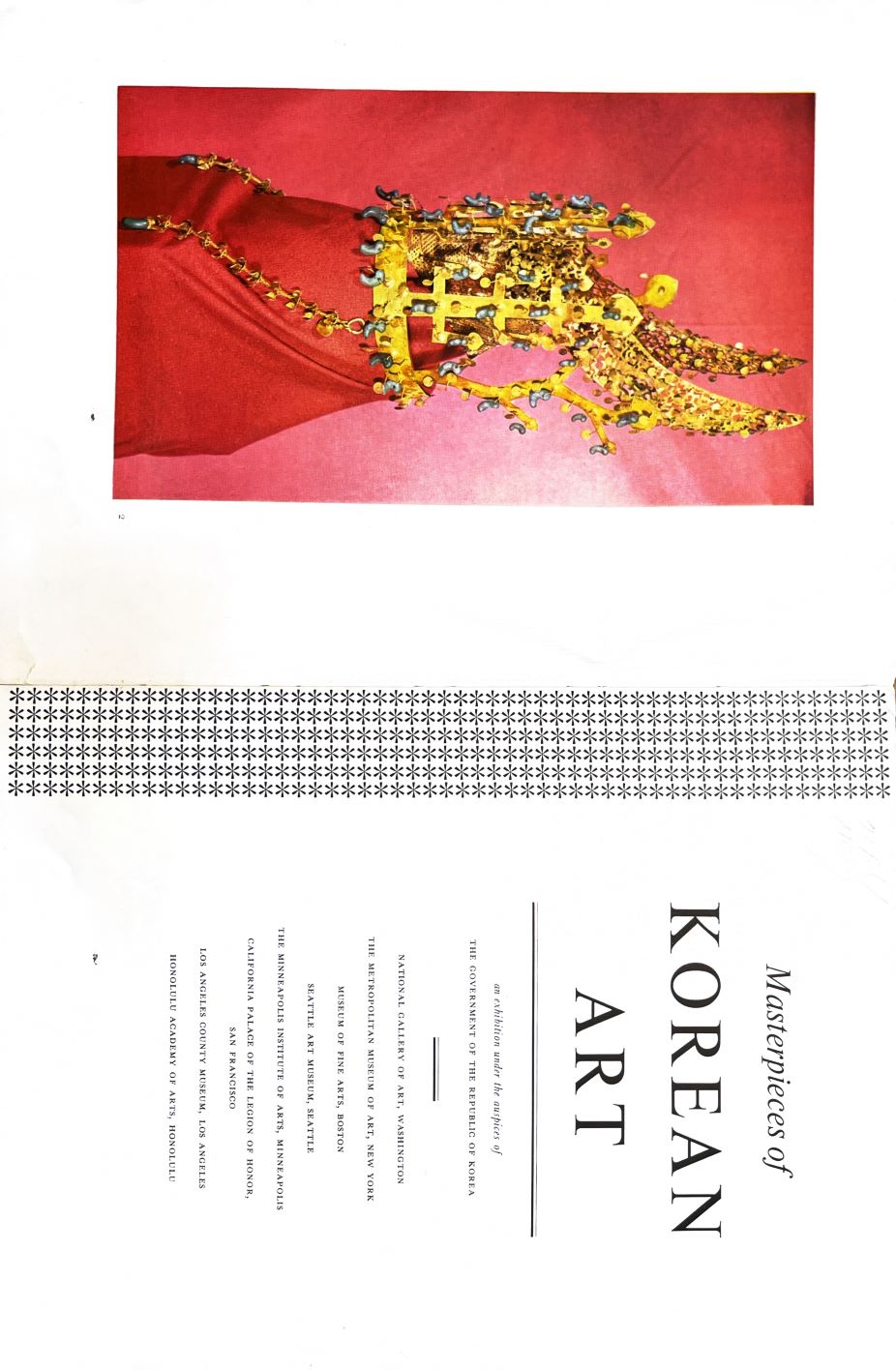
Masterpieces of Korean Art
Masterpieces of Korean Art was the first overseas exhibition of Korean art organized by the National Museum in eight U.S. cities from December 15, 1957 through June 7, 1959 in an effort to rebuild the reputation of the country ruined after the Korean War and promote its cultural heritage abroad. Curated by Kim Chaewon, then director of the National Museum of Korea, preparations for the exhibition began to be made in 1956. The large-scale exhibition traveled to Washington, D.C., New York, Boston, Seattle, Minneapolis, San Francisco, Los Angeles, and Honolulu. For the exhibition, Alan Priest, the head of the East Asian Department of The Metropolitan Museum of Art, and Robert Paine, the curator of the Museum of Fine Arts, Boston, visited South Korea. On the Korean side, Ko Huidong, Bae Ryeom, Son Jaehyeong, Lee Byeongdo, Jeon Hyeongpil, Choi Sunu, Hong Jongin, and others were commissioned to select items to be displayed. However, it was regrettable that the opinions of Priest and Paine were unilaterally carried out in the process. Some 198 items, including sculptures, paintings, ceramics, and metalwork objects were selected at this first large-scale overseas exhibition of national cultural treasures. The exhibition was held in consecutive order through 1959 at the National Gallery of Art in Washington, D.C., The Metropolitan Museum of Art in New York, Museum of Fine Arts, Boston, Seattle Art Museum, Minneapolis Institute of Art, California Palace of the Legion of Honor in San Francisco, Los Angeles County Museum of Art, and Honolulu Museum of Art. Pertinent exhibition catalogues were published as well. Masterpieces of Korean Art sparked great interest in another overseas exhibition The National Art Treasure of Korea held in March 1961 at the Victoria and Albert Museum in London, England. It traveled across European countries, including the Hague in Netherlands, France, Germany, and Austria until the end of June 1962.
-
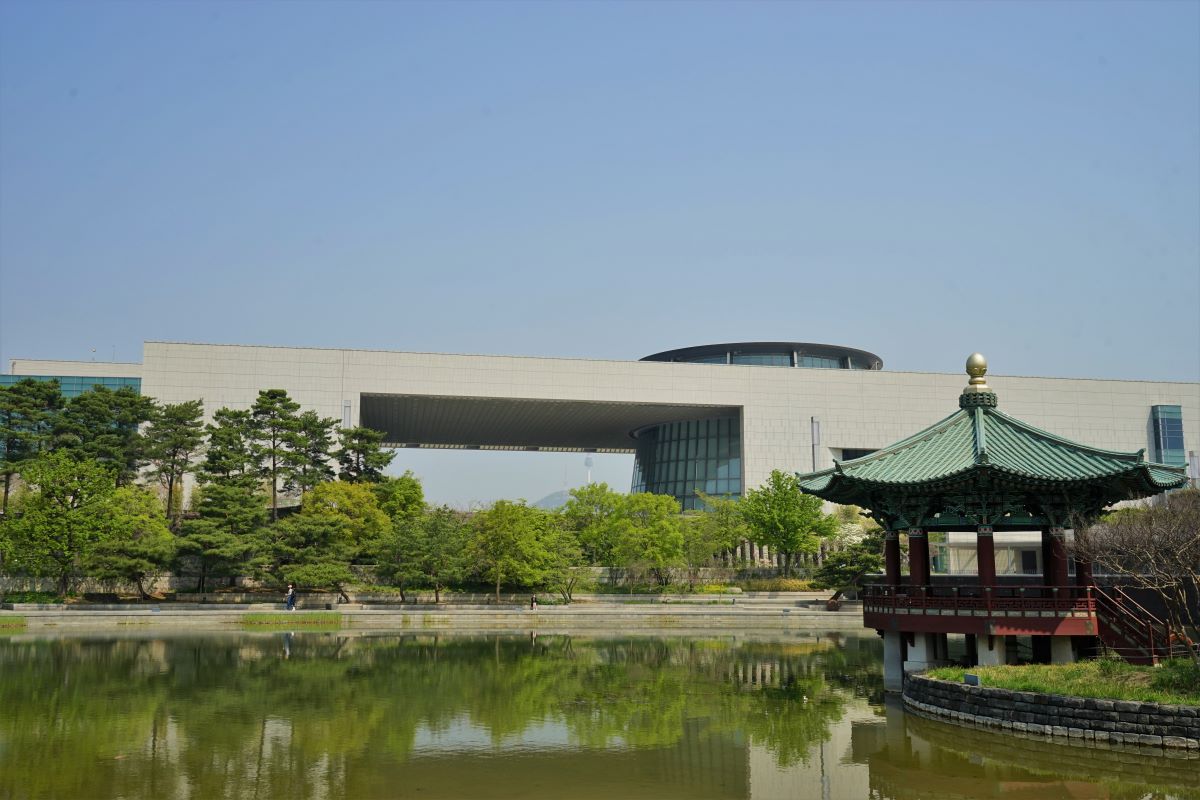
National Museum of Korea
The National Museum of Korea is located at 137 Seobinggo-ro, Yongsan-gu, Seoul. The predecessor to the National Museum is the Yi Royal Family Museum founded in September 1908. The Yi Royal Family Museum showcased artwork owned by the royal family of Korea and was opened to the public in November 1909. The museum was relocated from its original home in the Japanese Government-General of Korea building to Gyeongbokgung Palace in 1910 and renamed the Japanese Government-General of Korea Museum in December 1915. The Japanese Government-General of Korea Museum collected and exhibited excavated artefacts and donated items from temples while conducting historical and archaeological research and archiving. The National Museum of Korea was established following the acquisition of the Japanese General-Government Museum in December 1945. In 1969, the National Museum of Korea merged with the Deoksugung Museum, the successor of the Yi Royal Family Museum. In October 2005, the National Museum of Korea moved to a newly constructed building at its current location in Seoul. As of December 31st, 2018, the museum holds a collection of approximately 410,000 pieces that span from the prehistoric to the modern era, and includes works from China, Japan, and Central Asia.
Timelines

Sign Up for Email Updates