Korean Handicraft Demonstration Center Exhibition View, c.1959, Image provided by Kim Jongkyun
Korean Project


* Source: MMCA
Related
-
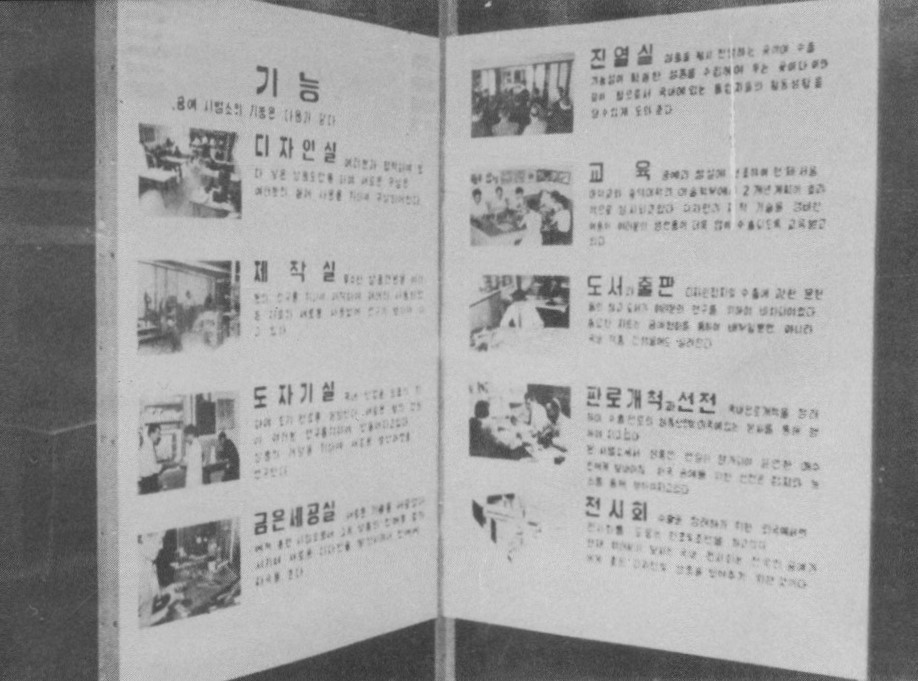
Korean Handicraft Demonstration Center
An organization for the development of the craft industry that formed in 1956, with the support of the International Co-operation Administration (ICA) of the United States. The ICA was one of the programs launched in 1955 to support developing countries, and it aimed to improve and foster the craft industry of Korea. Smith, Scherr & McDermott Industrial Design, an American firm in Akron, Ohio, led the establishment of the center on the fourth floor of the Central Industry building in Taepyeong-ro. The primary activities of the center included the survey of handicrafts and light industry in Gyeongnam, Jeonbuk, and Jeonnam; the improvement of design in crafts such as woodworking, ceramics, and metalworking; the establishment of crafts departments in universities and industrial design courses; and on-site training. The center was transferred to the Seoul National University College of Fine Arts in 1960, and it closed in May 31, 1960, when the contract with the Korean government expired. The center was instrumental in implementing American design education and the concepts of industrial design in Korea.
-
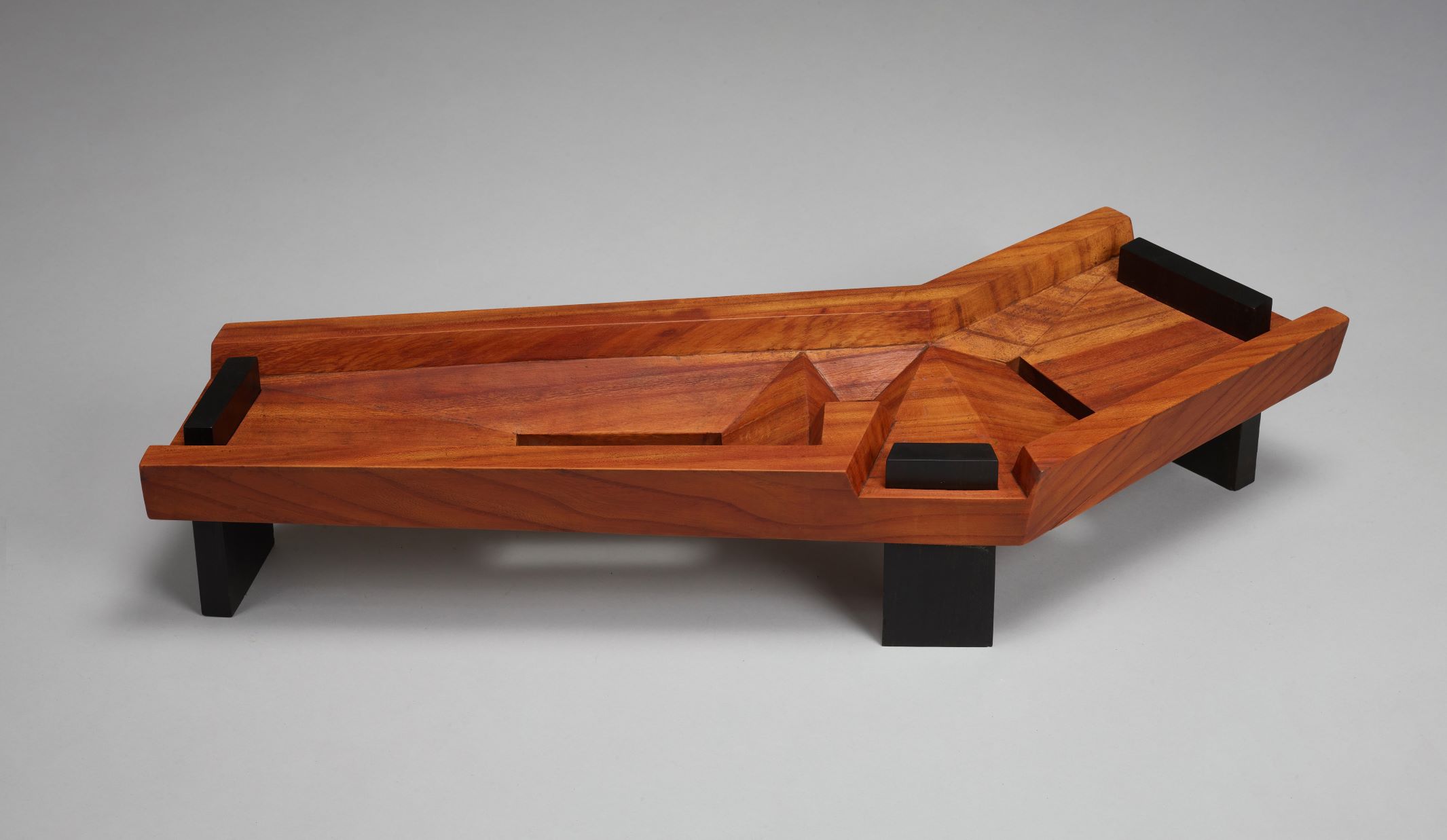
Min Chulhong
Min Chulhong(1933-2020) is a pioneering industrial designer and educator who has engaged in both education and artistic practice based on contemporary design concepts. Soon after graduating from the Applied Arts Department at the College of Fine Arts of Seoul National University in 1958, Min was selected for the Design Faculty Overseas Study Program organized by the Korea Handcraft Demonstration Center (KHDC) and studied for a year at the Illinois Institute of Technology in the U.S. as a special student. After his return to Korea in 1959, he served as head designer at the KHDC and taught in the Applied Arts Department at the College of Fine Arts of Seoul National University. In 1963, he was appointed as a full-time lecturer at the same university, and there he worked as a professor until his retirement in 1998. In June 1972, he founded the Korea Society of Industrial Designers (KSID, later absorbed and integrated into the Korea Association of Industrial Designers (KAID)) together with eight other designers. They are Lee Sunhyeok, Bu Su-eon, Kim Gilhong, An Jong-mun, Bae Cheon-beom, Choi Daeseok, Kim Cheol-su, and Min Gyeong-u. The oldest of the nine founding members, Min Chulhong led the establishment of the KSID and served as its first and second president. In 1983, he founded Min Industrial Design Associates, which provided design services for government agencies and business entities. The institute undertook a wide range of service projects, including industrial machines and robots, transportation devices, environmental sculptures, and corporate identity programs (CIP). Occasionally, Kim Jinpyeong, Kwon Yeonggeol, Kim Gyeongbae, Kim Hyeonjung, Mun Gijong, Jang Hoik, Jeong Gyeongwon, Ko Ildu, Hong Seokgi, and others participated in these projects as part-time designers. In the same year, Min became a design advisor to Daewoo Electronics. In 1986, he was appointed as a design committee member for the Seoul Olympic Games and designed a sculpture engraved with the names of Olympic winners and a documentary monument Wall of Glory (1989). In 1994, the Min Chol Hong Retrospective exhibition was held at the MMCA. It was the first solo exhibition of an industrial designer since the museum opened. Min received the Silver Tower Order at the Korea Design Award in 2005, and in 2013 he was inducted into the Designer Hall of Fame by the Korea Institute of Design Promotion.
-
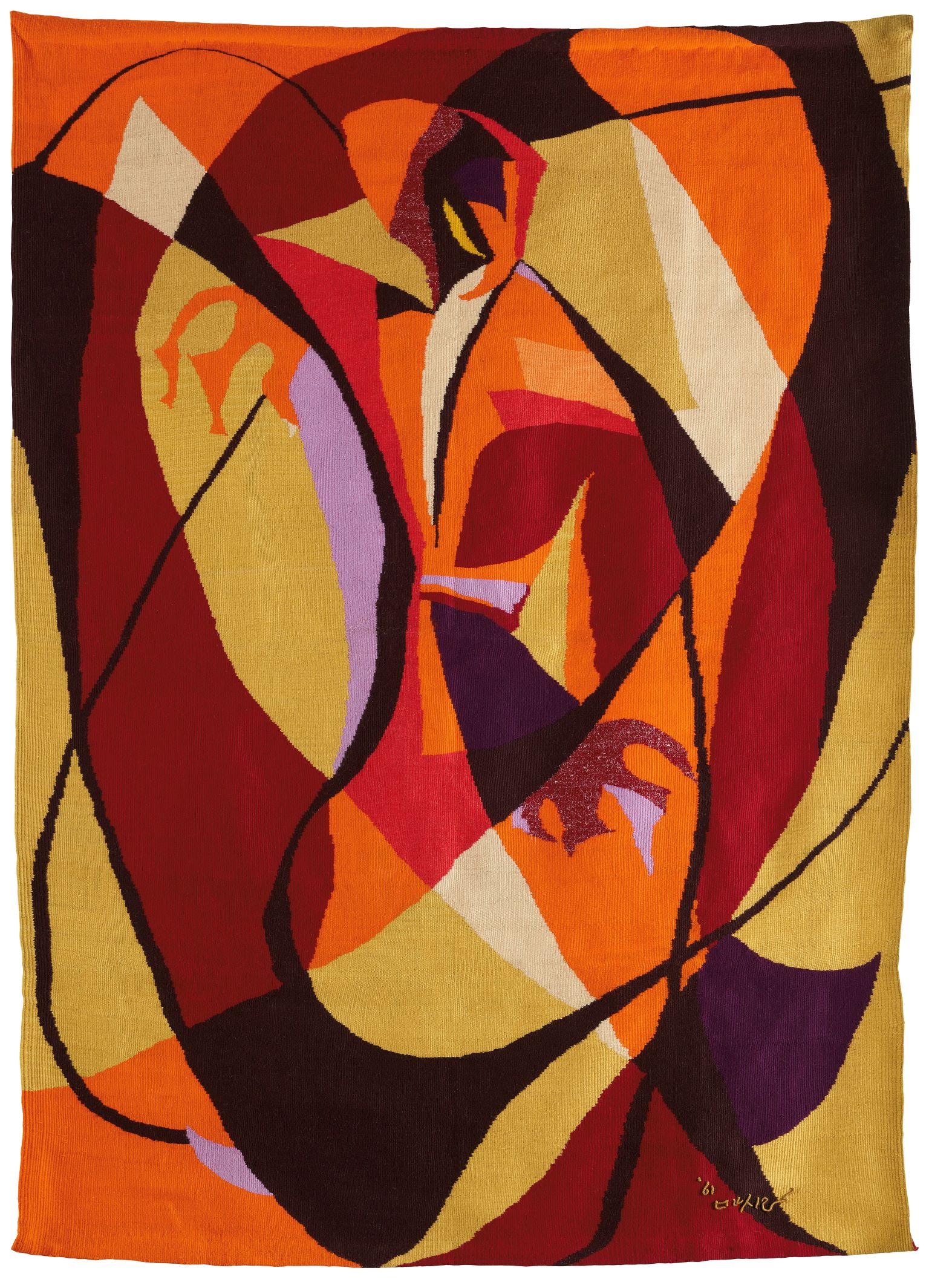
Pai Mansil
Pai Mansil (1923-2018, pen name Chunbin) was a Korean textile artist. She graduated from the English Department at Ewha College (present-day Ewha Womans University) in 1943. After Korea’s liberation from Japan, she majored in textile design at The University of the Arts in Philadelphia, U.S., and completed the master’s course in industrial art at Columbia University. In 1974, she received a doctorate in literature from Ewha Womans University. After returning from studying abroad in the U.S., Pai served as a professor in the Living Art and Decorative Art Departments at Ewha Womans University for nearly thirty years. After retirement, she ran Chunbin Total Design Academy from 1991 through 1997. Pai believed that art enriches and beautifies life and that design, in particular, is central to art since it is devised through creativity and imagination, along with skills in applying all materials. Accordingly, she engaged in all fields of applied art, decorative art, living art, and industrial art, and her activity spanned from interior decoration to interior architecture. She submitted her work to the Modern Korean Crafts Grand Exhibition in Commemoration of the 30th Anniversary of Liberation (1975), the Korean Fiber Art Biennale (1984), Art to Wear (1987), the Textile Art Festival (1990), and the Seoul Craft Exhibition (1991). Her notable work as an interior designer includes the Walkerhill Hotel (1962) and the YMCA Center (1968). She won the Seoul City Culture Award and was awarded the Pomegranate Medal of the Order of Civil Merit. In 2010, she was bestowed the title of Master Designer from the Korean Society for Interior Architects and Designers. Among her publications and related catalogues are Design and Color (1965), History of Decorative Art (1975), The Art of Korean Furniture: Late Yi Dynasty (1975), The Beauty of Wooden Furniture from the Yi Dynasty (1978), Traditional Style of Korean Wooden Furniture (1988), Dining Tables Korean Traditional Handicrafts (2006), Mal Sill Pai’s Art and Design Works (2012). The archives of Pai Mansil were donated to the MMCA in October 2020.
Timelines

Sign Up for Email Updates