Limb Eungsik, Portrait of Kim, Bong-Ryong, 1971, Gelatin silver print on paper, 33x26cm. MMCA collection
Kim Bongryong


* Source: MMCA
Related
-
Korean Craftspersons Association
The Korean Craftspeople Association (Joseon gongyega hyeophoe, KCA) is an organization of craftspeople founded shortly after Korea’s liberation from Japan with the goal of purifying the crafts community and producing outstanding craftworks. It was established on March 10, 1946 by the chairman Kim Jeasuk, the vice chairman Kang Changwon, and fourteen other craftspeople and designers, such as Kim Bong-ryong, Park Cheolju, Paik Taewon, and Lee Wanseok. Later, as its membership grew to more than fifty, the KCA came to be equipped with various divisions, including design, lacquering, goldsmithing, ceramics, embroidery, dyeing, woodworking, and ox-horn inlaying. It was formed as a unified organization that encompassed craftspeople and designers from all across the country. It aimed to cooperate with the government for the establishment of craft policies, to preserve, foster, and enhance traditional crafts, and to promote the cultural development of people’s lives by winning recognition for Korean culture through overseas exports. The KCA advertised a call for entries for the National Art and Craft Exhibition (Jeonguk misul gongye jeollamhoe) held at the Gyeongbokgung Palace Museum from May 20 to 30, 1946 through the sponsorship of the U.S. military government. From June 21 to 30, 1946, it held the first Art and Craft Exhibition (Misul gongye jeollamhoe) at the Deoksugung Museum of Art. The KCA joined the National Federation of Cultural Organizations, which was formed in February 1947 when thirty cultural organizations came together. It also took part in the Korean Comprehensive Arts Exhibition in 1947 in Geunjeongjeon Hall at Gyeongbokgung Palace organized by the Ministry of Education. Nothing is known about its subsequent activities. -
Lacquerware Inlaid with Mother-of-Pearl Training Center
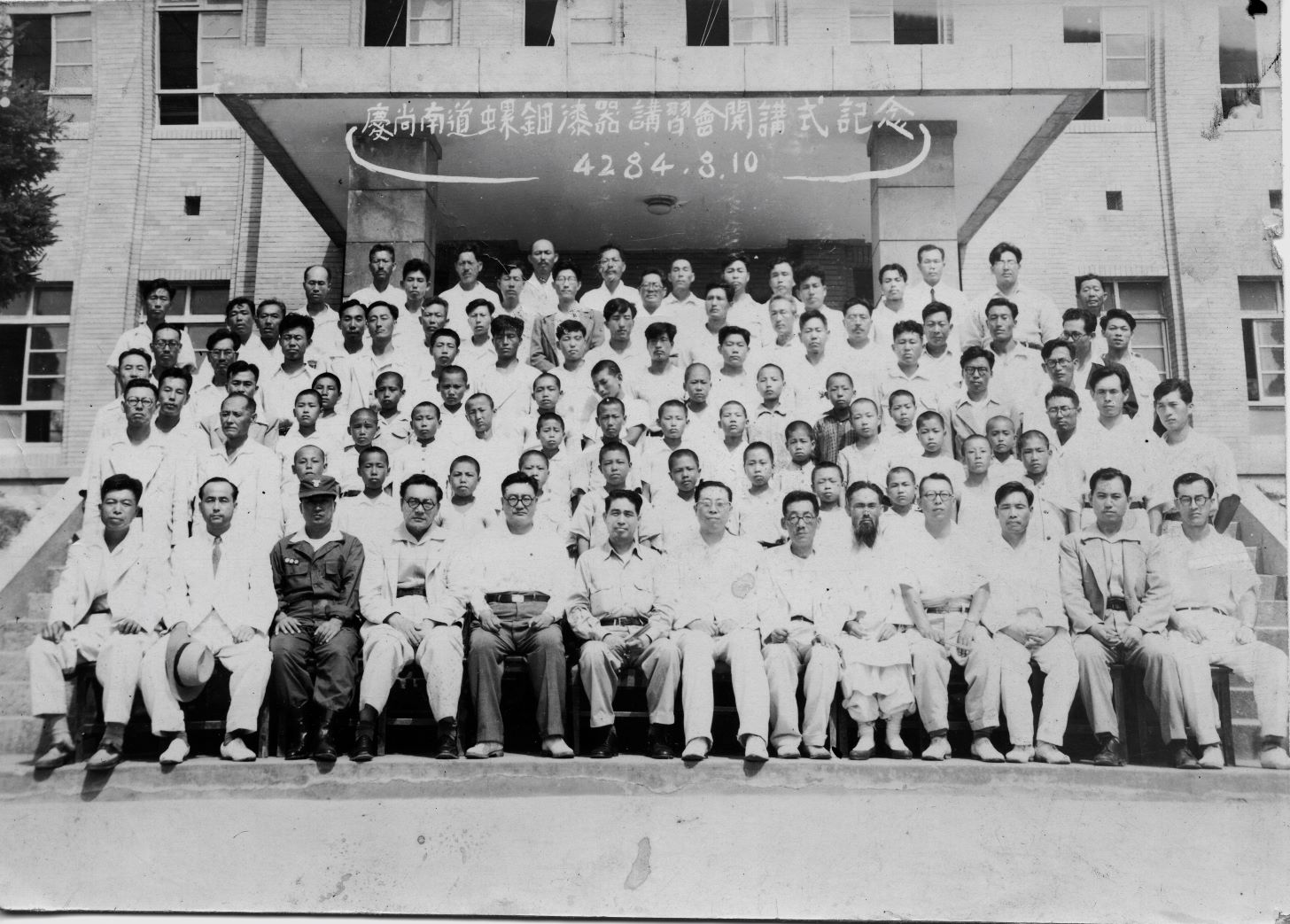
The Lacquerware Inlaid with Mother-of-pearl Training Center [Najeon chilgi gisulwon yangseongso] was established in August 1951 in Tongyeong city (then Tongyeong-eup), Gyeongsangnam-do Province under the name of Mother-of-Pearl Lacquerware Training School, a two-year provincial technical education institution with a capacity of forty students. In 1952, the following year, it was renamed under the current name to focus on fostering professional masters in mother-of-pearl inlaying and lacquering. There were 429 incoming students, and the institute graduated 82 students. Among the graduates from the center are Kim Seongsu, the director of the Ottchil Art Museum; Lee Hyungman, the holder of the National Important Intangible Cultural Heritage No. 10 (Mother-of-pearl inlaying); and Lee Munchan. In the early years of its establishment, the faculty consisted of Kim Bongryong (jureumjil technique of cutting mother-of-pearl pieces according to patterns and pasting them on the surface), Shim Bugil (kkeuneumjil technique of pasting mother-of-pearl pieces in thin and short strings), Yoo Kangyul (design), Ahn Yongho (lacquering), Jang Yunseong (drawing), and Kang Changwon (dry-lacquering). The painter Lee Jungseop, who stayed in Tongyeong to escape the Korean War, is said to have taught drawing to students at the center. In 1955, an advanced program, the Research Department, was established with the lacquering and mother-of-pearl inlaying divisions. In 1960, the basic curriculum was prolonged from two years to three years. As its jurisdiction institution was transferred from Gyeongsangnam-do Province to Chungmu-si (present-day Tongyeong-si) in August 1962, the training center was relocated to Jungang-dong (where Tongyeong Culture Center is currently located) and renamed the Chungmu Municipal Crafts Academy [Chungmu sirip gongye hagwon]. Since then, the training center had attempted various changes, such as the construction of a building with up-to-date facilities within the precinct of Nammangsan Park, with the aim of earning foreign currency through overseas exports. However, it was closed in 1971 when it stopped recruiting students due to financial difficulties and a shift in the direction of the export industry. The Lacquerware Inlaid with Mother-of-pearl Training Center, where professional education on mother-of-pearl inlaying and lacquering was conducted from early on after Korea’s independence, is considered as the birthplace of modern and contemporary craft education. Tongyeong is a hub of practicing mother-of-pearl inlaying and lacquering that carried on the legacy of the twelve workshops of the Regional Naval Headquarters during the Joseon dynasty. During the time when the training center existed, about half of the country’s craftspeople working in mother-of-pearl inlaying and lacquering lived in Tongyeong. The initial training center building in present-day Hangnam-dong, Tongyeong-si was designated as National Registered Cultural Heritage in December 2020.
Timelines

Sign Up for Email Updates