Modern Watercolor Association Inaugural Exhibition, Leaflet, 1956, Image provided by Kimdaljin Art Archives and Museum
Modern Watercolor Association


The Modern Watercolor Association (Hyeondae suchaehwa hyeophoe) is an art organization founded in November 1956 by nine artists specialized in watercolor painting. Its inaugural exhibition was held at Dong Hwa Gallery in Seoul from November 17 to 27 in the same year. The founding members were Ko Whahum, Ryu Kyungchai, Lee Kyonghee, Lee Kyuho, Lee Chongmoo, Lee Joon, Yim Jiksoon, Chang Reesuok, and Choi Dukhyu. The association was established by mid-career painters in their thirties and forties with the aim of expanding the popularity of watercolor painting to make it more accessible to the general public, but it did not last long. It was criticized for the strong tendency toward fraternization among its members. It was also pointed out that only two founding members, Ko Whahum and Lee Kyonghee, who won a special prize for her watercolor Pohang Pier at the first National Art Exhibition (Gukjeon) in 1949, had an identity as a watercolorist. Nonetheless, their activities led to the Korean Society of Watercolor Artists, which sought to develop the distinctiveness and diversity of watercolor. The Korean Society of Watercolor Artists was formed in 1984 under the leadership of Lee Chongmoo, Yim Jiksoon, and Choi Dukhyu. Other established painters joined the society, including Kim Tai, Park Kitae, Park Soukho, Bae Dongshin, Shim Chookcha, An Jaehu, Yun Geoncheol, Lee Dooshik, Lee Suchang, Chun Sangsoo, Choo Yenkeun, and Choe Gyeonghan.
* Source: MMCA
Related
-
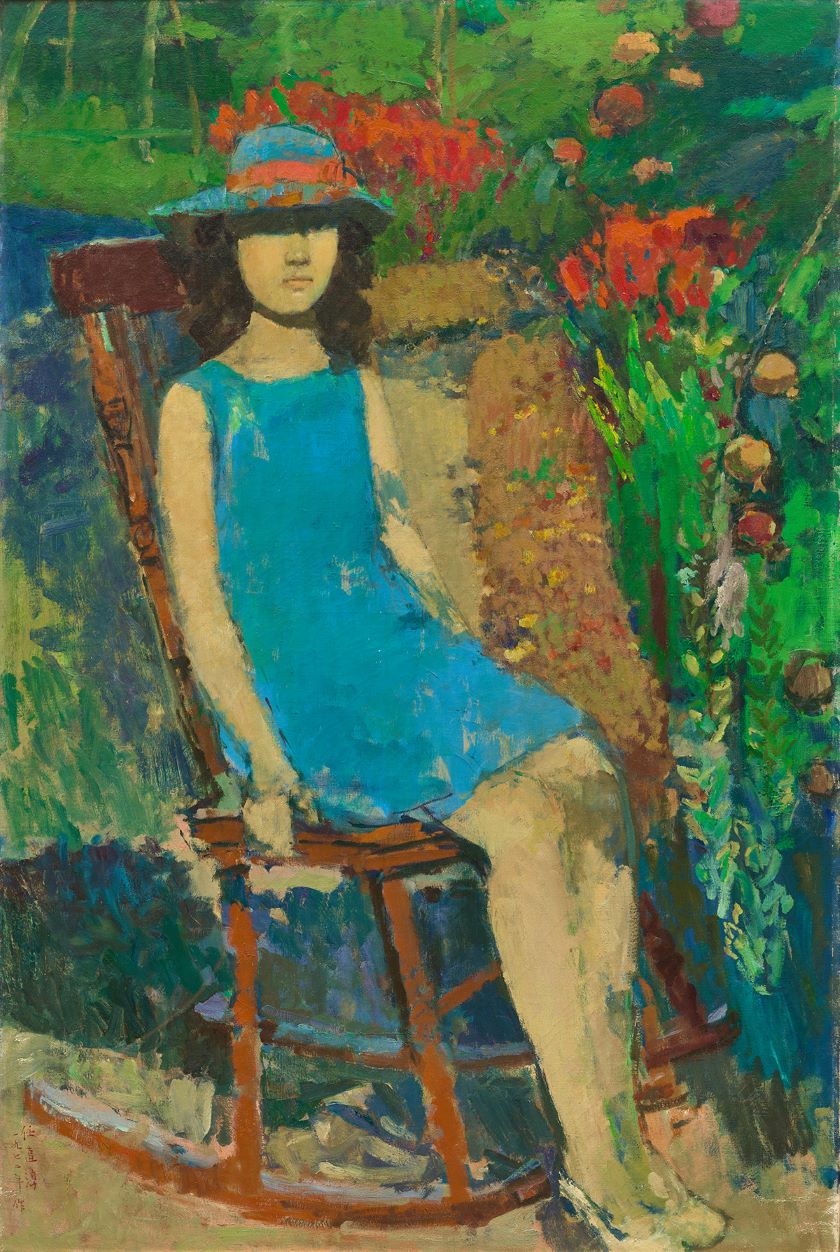
Yim Jiksoon
Yim Jiksoon (1921-1996, pen name Unchang) moved to Japan in 1936. He graduated from the Japan Art School in 1942 and returned to Korea in 1943. He was selected for the 1940 and 1941 Joseon Art Exhibitions (Joseon misul jeollamhoe). After independence, his Art Studio won the Minister of Education award at the National Art Exhibition (Gukjeon) in 1956 and his work, A Seated Statue, won the President award in 1957. He became a Noteworthy Artist and Invited Artist at the National Art Exhibition. Yim Jiksoon taught at Chosun University as a professor from 1961 to 1985. He was recognised as a painter and teacher with an immense passion for art and education and became a leading figure during the heyday of the Honam local regionLwestern painting community. His works were based on familiar, everyday objects. He has also been particularly celebrated for his female figures. From the late 1980s until his death, he primarily focused on painting natural scenes. Yim Jiksoon's painting was driven by his interest in light and color, and his reflections on the essential themes of nature and humanity, concerns which he rendered in bright and warm compositions.
-
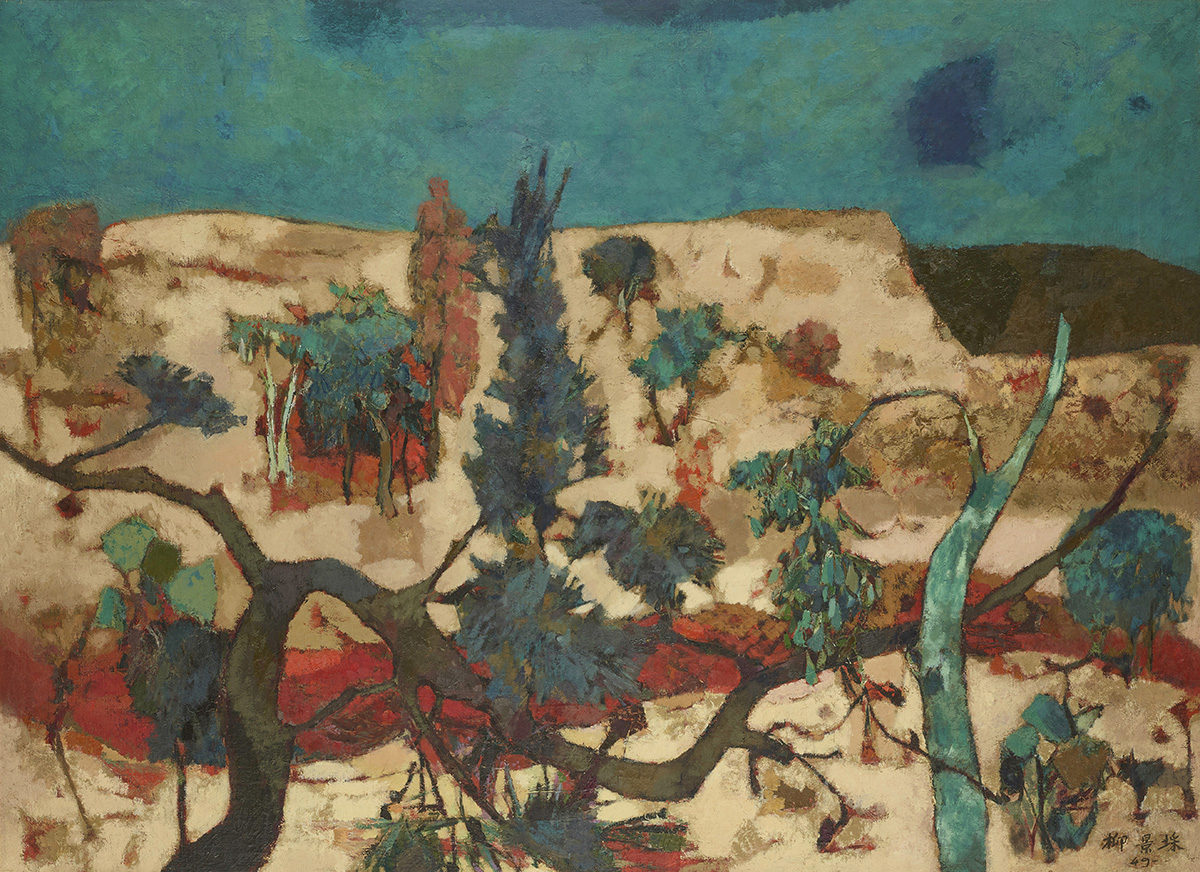
Ryu Kyungchai
Ryu Kyungchai (1920-1995, pen name Pyunjeong) graduated from the Ryokuinsha Painting School in Tokyo in 1941. In 1949, he was awarded a presidential prize at the 1st National Art Exhibitions (Gukjeon), a Noteworthy Artist award in 1956, an Invited Artist award in 1959, before being selected as a judge for the 9th National Art Exhibition in 1960. He taught at Ewha Womans University from 1955 to 1961 and at Seoul National University from 1961 to 1986. He was appointed as a member of the Republic of Korea's National Academy of Arts in 1979 and was selected as president in 1987. Ryu Kyungchai’s works from the 1940s to 1950s, take nature as the main subject, and portray a pastoral style to describe the encounter between man and the environment. However, since Downtown Area in 1960, figuration gradually disappeared in his works as he moved toward abstraction. In the 1970s, he integrated the warmth and sentiment of nature into his abstract manner, and by the mid-1970s, figurative reference was increasingly replaced with colors in his works. By the late 1970s, he concentrated on pure abstraction on a flat monochrome plane. From the 1980s, he created geometric simplified forms of abstract art. Ryu Kyungchai is recognised as one of the first Korean artists to work in abstraction, and a pioneer within several national abstract art movements since the 1960s.
Timelines

Sign Up for Email Updates