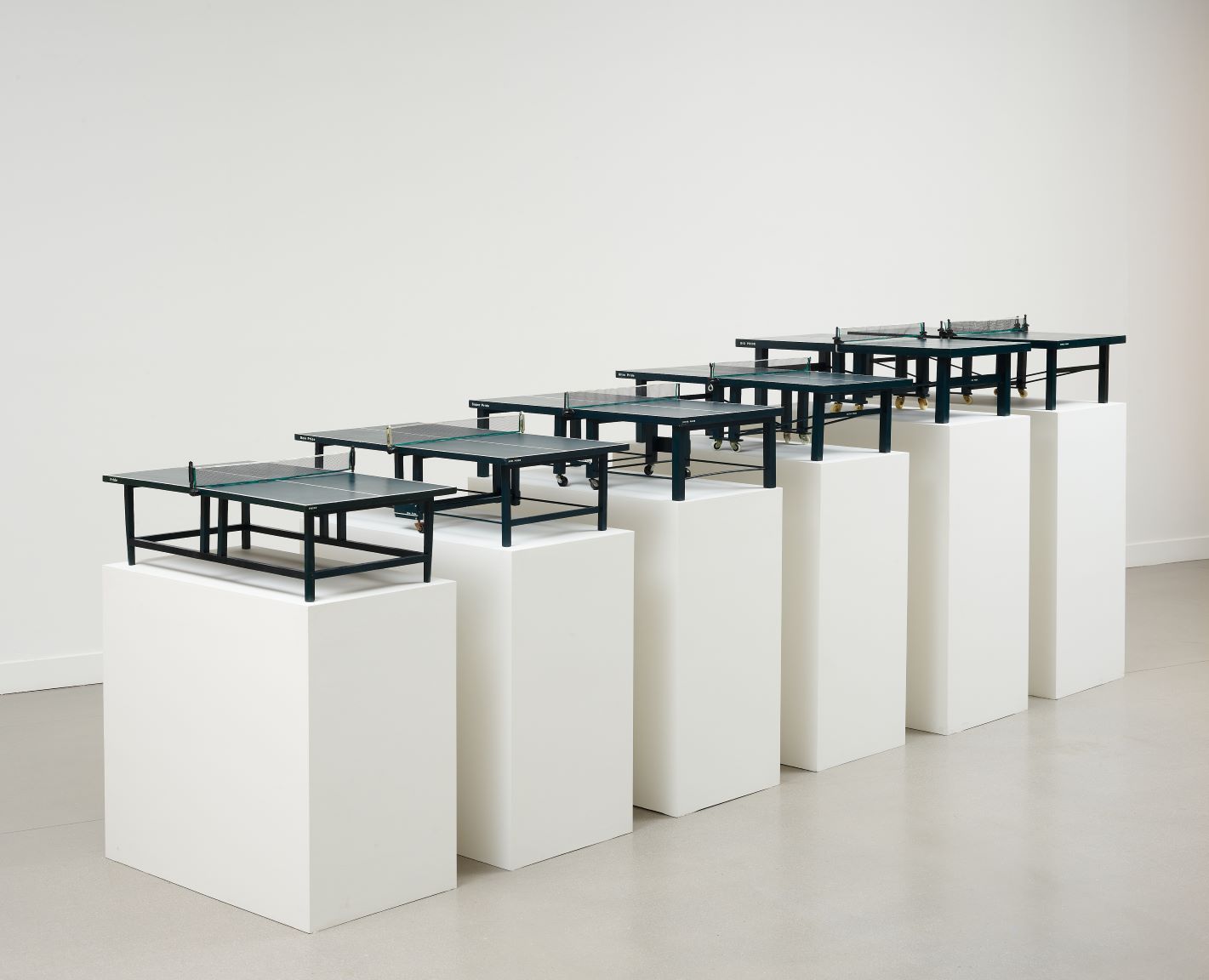
Bahc Yiso, Your Bright Future, 2002, Electric lamps, woods and wires, MMCA collection
Bahc Yiso


* Source: MMCA
Related
-
Postmodernism
Postmodernism emerged to prominence in the 1980s as a broad intellectual critique of modernism in its role as the dominant philosophical zeitgeist of the 20th century. Postmodernist critique has a general tendency to challenge the separation between high and low culture, strict distinctions between artistic genres, as well as notions of originality, newness, and authorship. The term postmodernist art can be used to cover a wide range of creative approaches, none of which are limited to medium-specificity, however, appropriation and citation are often considered as important characteristics. In art history, the label can be applied to many artworks created after the 1960s; however, it is not used for one specific genre of art. The term can be applied to not only pop art in its resisting of cultural hierarchies and conceptual art deviating from medium-specificity, but also land art, body art, video art, and installation art in terms of their critically expanding of artistic genre and form in challenge to established convention. In the context of the 1980s, Neo-expressionist paintings, returning back to figuration and historical eclecticism (such as Julian Schnabel’s works), and the ironically “staged” self-portrait photographs of Cindy Sherman question the originality and provide evidence of the variety of artistic practices that could be termed as postmodernist art. As such, the term postmodernism, can perhaps most usefully be considered in application to the diverse types of artistic practices that challenge the conventional notions of modernism. In Korea, postmodernist works offer an equally diverse field of practice depending on the definition of “postmodernism” in question. Historically, the term was used to describe the work of the small art groups called “New generation” that emerged between the end of the 1980s and early 1990s. These groups often focused their work on de-centered topics, usage of multi-media, an affinity with popular culture, and a casual attitude towards fine art. Some people also regard the Minjung Art movement as representative of postmodernism in Korea. This is because it emerged as a direct criticism against national modernist art including Dansaekhwa of the 1970s.
-

Hyunsil Publishing
Hyunsil Publishing was a publishing company founded in 1992 by an art community group interested in art and social movements. When the progressive art movement group, the Research Society for Art Criticism (Misul bipyung yeonguhoe) (1989-1993), became inactive in 1992, Kim Suki, Kim Jinsong, and Um Hyuk, who led the art movement together, created Hyeonsil Munhwa Yeongu. Instead of discussing abstract discourse or high culture, they focused on various phenomena in popular culture and daily life. A series of books published by Hyunsil contained the major discourses and issues of the cultural community in 1990s South Korea. Representative books include Apgujeong-dong Utopia Dystopia (1992) written by Yun Suknam, Kim Jinsong, Kim Suki, Eom Hyeok, Park Youngsook, and Cho Bongjin, Watching TV Close, Reading TV from Distance, The Myth, Desire, Image of Advertisement, Do as You Please, and New Generation Theory: Order and Chaos in 1993. In the 2000s, Hyeonsil Munhwa Yeongu has essentially become more of a publishing company specializing in culture than an art collective.
-
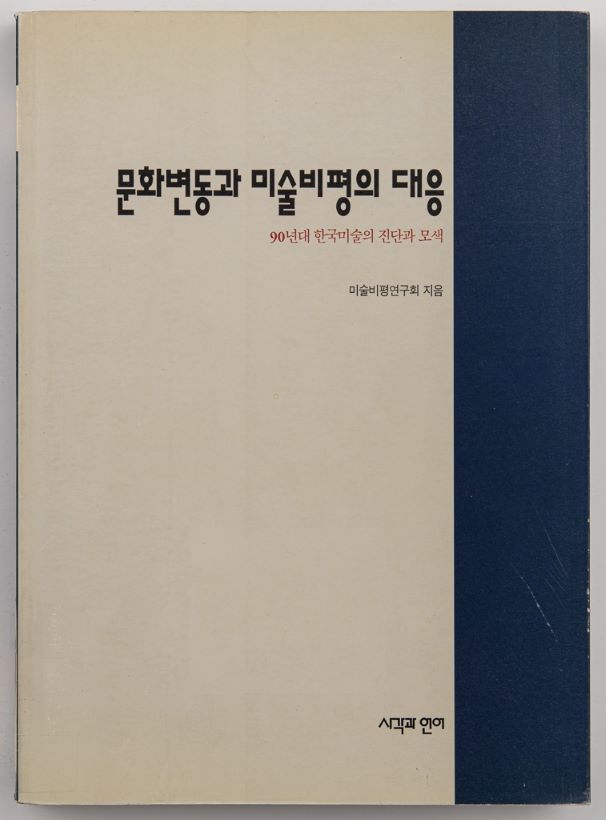
Research Society for Art Criticism
The Research Society for Art Criticism (Misul bipyung yeonguhoe) was founded by several critics interested in the field of progressive realism, such as Lee Youngwook, Shim Kwanghyun, and Lee Youngchul in 1989. The group aimed to develop the theoretical grounding for a new Korean nationalist art movement and methodology applicable to the rapidly changing social and cultural environment in Korea. They focused on Korean modern art, critical theory, cultural theory, and mass media theory. By providing theoretical support for Minjung art, the group played a significant role in the mainstream emergence of socially critical art in Korea. Major members of the society included Sung Wan-kyung, Lee Youngwook, Shim Kwanghyun, Lee Youngchul, Park Sinui, Eom Hyeok, Park Chan-kyong, Beck Jee-sook, Lee Youngjun, Kim Suki, Kim Jinsong, Kang Sungwon, Paik Han-ul, Oh Museok, Lee Yunam, Cho Bongjin, Choi Bum, Cho In-su, Gal Hong, Yang Hyunmi, Kim Yongcheol, and Lee Juyeong. The group was disbanded in July 1993.
Timelines

Sign Up for Email Updates