Bahc Yiso, Pride Series, 1993, Wood, steel, net, Pride:33.5×91.5×55, Big Pride:33×97×58, Super Pride:30.7×91.8×55.5, Ultra Pride:31×92×57.2, New Pride:31.5×91.5×55, Double Pride: 34×96.7×53.6cm. MMCA collection
Postmodernism


* Source: Multilingual Glossary of Korean Art. Korea Arts Management Service
Related
-
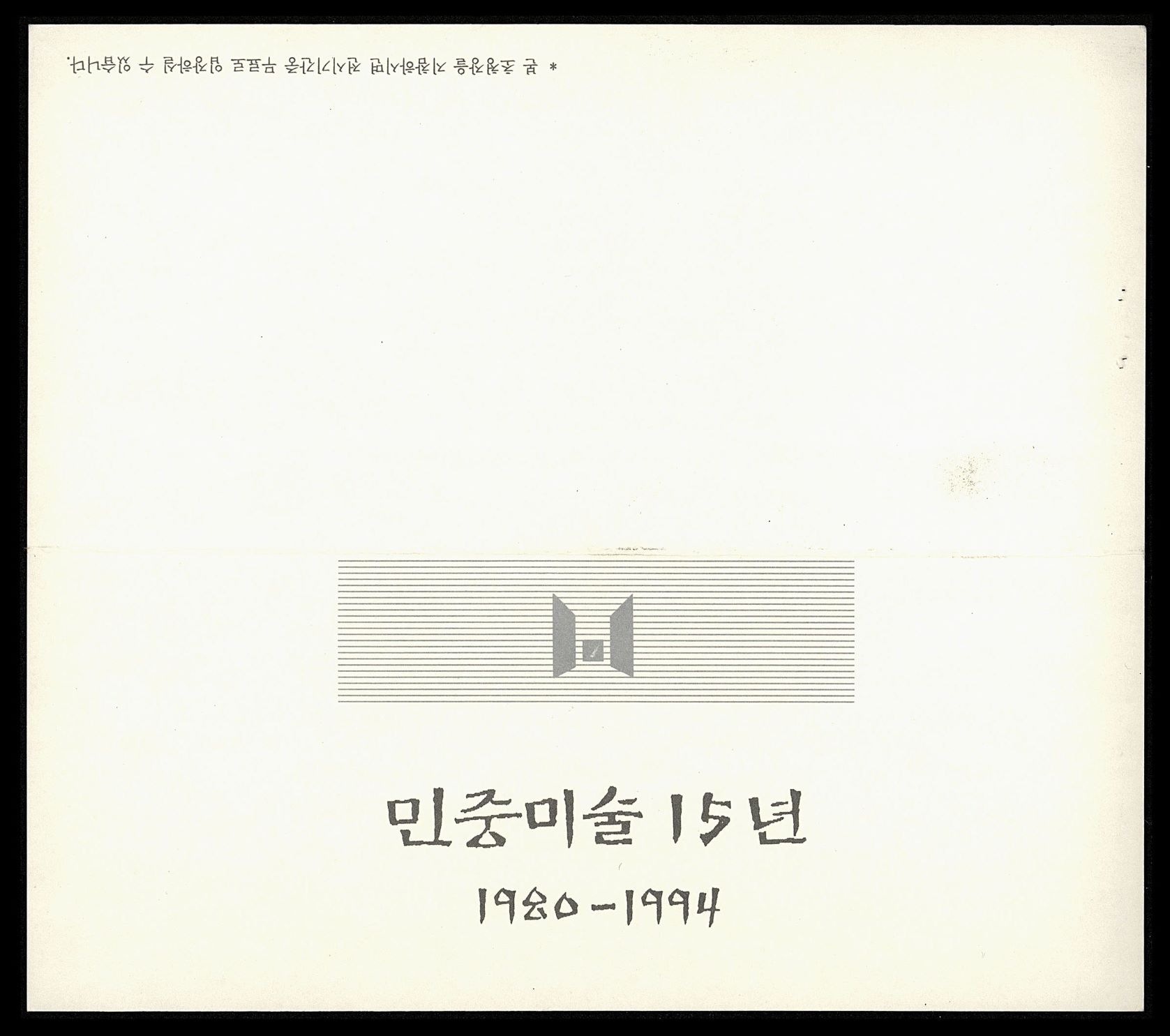
Minjung Art
An artistic movement that came to prominence alongside Korea’s democratization movement in the 1980s. Minjung artists often sought to critically portray the violent repression and corruption of the military dictatorship, to represent the experiences of laborers and farmers, and to achieve social change through art. In contrast to abstraction, which constituted the mainstream of 1970s art in Korea, Minjung Art is notable for the use of representational and figurative forms. One possible point of origin for Minjung Art is Oh Yoon’s work in the Reality Group (Hyeonsil dongin). The group was formed in 1969 by Kim Ji-ha, Oh Yoon, and Lim Se-taek. A variety of Minjung art groups were established, including the Reality and Utterance (Hyunsilgwa bareon) in 1979 by Kim Jungheun, Oh Yoon, Joo Jae-hwan, art critic Sung Wan-kyung, and Choi Min, the Gwangju Freedom Artist Association (Gwangju jayu misulin hyeopuihoe) in 1979 by Hong Sungdam and Choi Youl, the Imsulnyeon (The Year Imsul) in 1982, and the Dureong in 1983. These groups all commonly critiqued Western capitalism. In terms of form, Minjung artists adopted traditional and ethnic folk modes of expression using diverse media such as collage, printmaking, oil painting, and photography. Following the 15 Years of Korean Minjoong Arts: 1980-1994 Exhibition at the National Museum of Modern and Contemporary Art, Minjung Art became an accepted part of Korean art history. Overseas, Minjung Art has also become a recognized term that describes this genre and its unique focus on the political and social history of Korea.
-

New Generation Art
In the Korean context, “new generation art” refers to a series of artworks created between the late 1980s and the early 1990s. The use of this term relates to what was called the “new generation discourse,” a discussion about the young generation of artists emergent in the 1990s who had internalized individualism and a consumption-centered value system based on material abundance. In the Korean art community, this idea of New Generation Art referred to art projects displaying individual, unregulated, and disposable characteristics, concerns which separated them from the precedents set within the local traditions of Minimalist Modernism and Minjung Art. Museum, Golden Apple, and Sub Club are some of the most representative groups of New Generation Art, and numerous project exhibitions used the group’s name as their exhibition title. New generation artists organized experimental and crossover style performances, events, and exhibitions at new cultural venues such as the Space Ozone, Café Ollo Ollo, the Power Plant, Fungus, and the Plastic Surgery in Seoul.
-
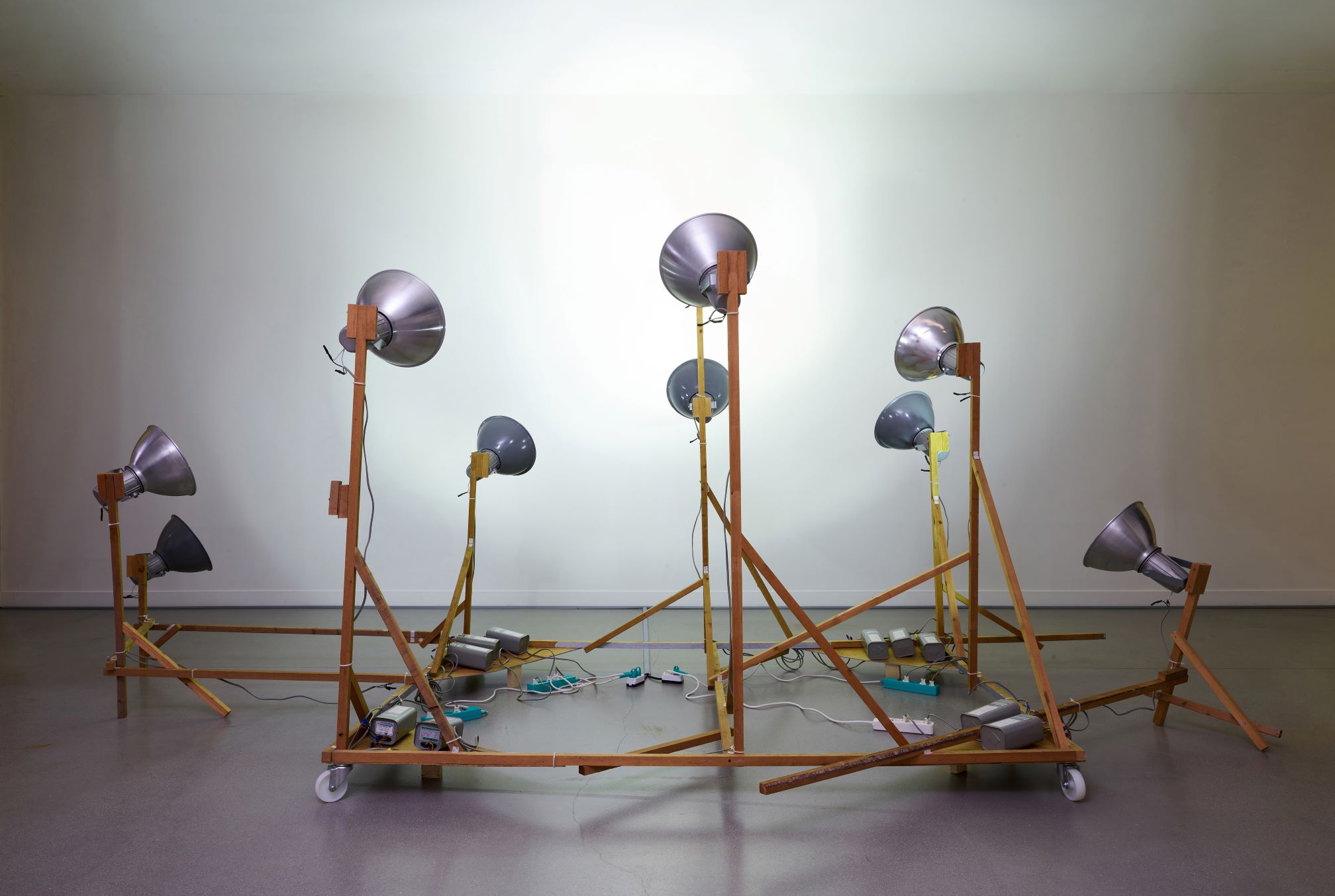
Bahc Yiso
Bahc Yiso (Bahc Mo, 1957-2004) was a conceptual artist who played a crucial role in leading postmodernist discourse in Korean art in the 1990s. After studying Western painting in the College of Fine arts at Hongik University, Bahc enrolled in the Painting Department of the Pratt Institute Graduate School in the U.S. in 1982 and graduated from there in 1985. He used the name “Bahc Mo” in the U.S., and as a theorist, critic, and translator, he introduced contemporaneous art theories to the Korean art community. From 1985 through 1989, he ran Minor Injury, an alternative space in Brooklyn defying the mainstream art world and organized group exhibitions to promote Korean art abroad, including Minjung Art: New Cultural Movement of Korea (1988) and Across the Pacific: Contemporary Korean and Korean American Art (1993–1994). He returned to South Korea in 1995 and began using the name “Bahc Yiso” since 1998. He also strove to introduce alternative models of art education as an educator. In 2002, he became the winner of the third Hermés Foundation Missulsang, and in 2003 he participated in the 50th Venice Biennale as the representative artist of the Korean Pavilion. In 2004, he died suddenly of a heart attack. His major works include Exotic, Minority, Oriental (1990), UN Tower (1997), and We Are Happy (2004). Bahc received the Arts Council Korea’s Art of the Year Award in 2006. In the same year, an exhibition entitled Divine Comedy: A Retrospective of Bahc Yiso was held. Another exhibition Bahc Yiso: Lines of Flight was held in 2011. Bahc Yiso: Memos and Memories, a large-scale retrospective exhibition held in 2018 at the MMCA brought him to public attention.
Timelines

Sign Up for Email Updates