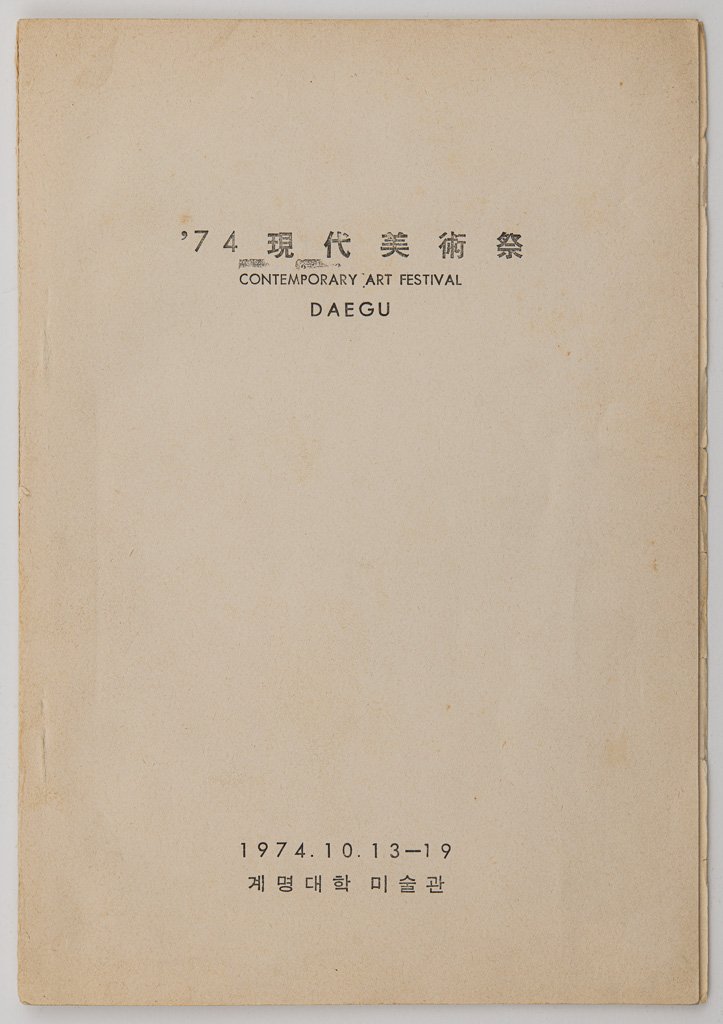
'74 Contemporary Art Festival, Brochure, 1974, MMCA Art Research Center Collection, Gift of Lee Kunyong
Daegu Contemporary Art Festival


* Source: Multilingual Glossary of Korean Art. Korea Arts Management Service
Related
-
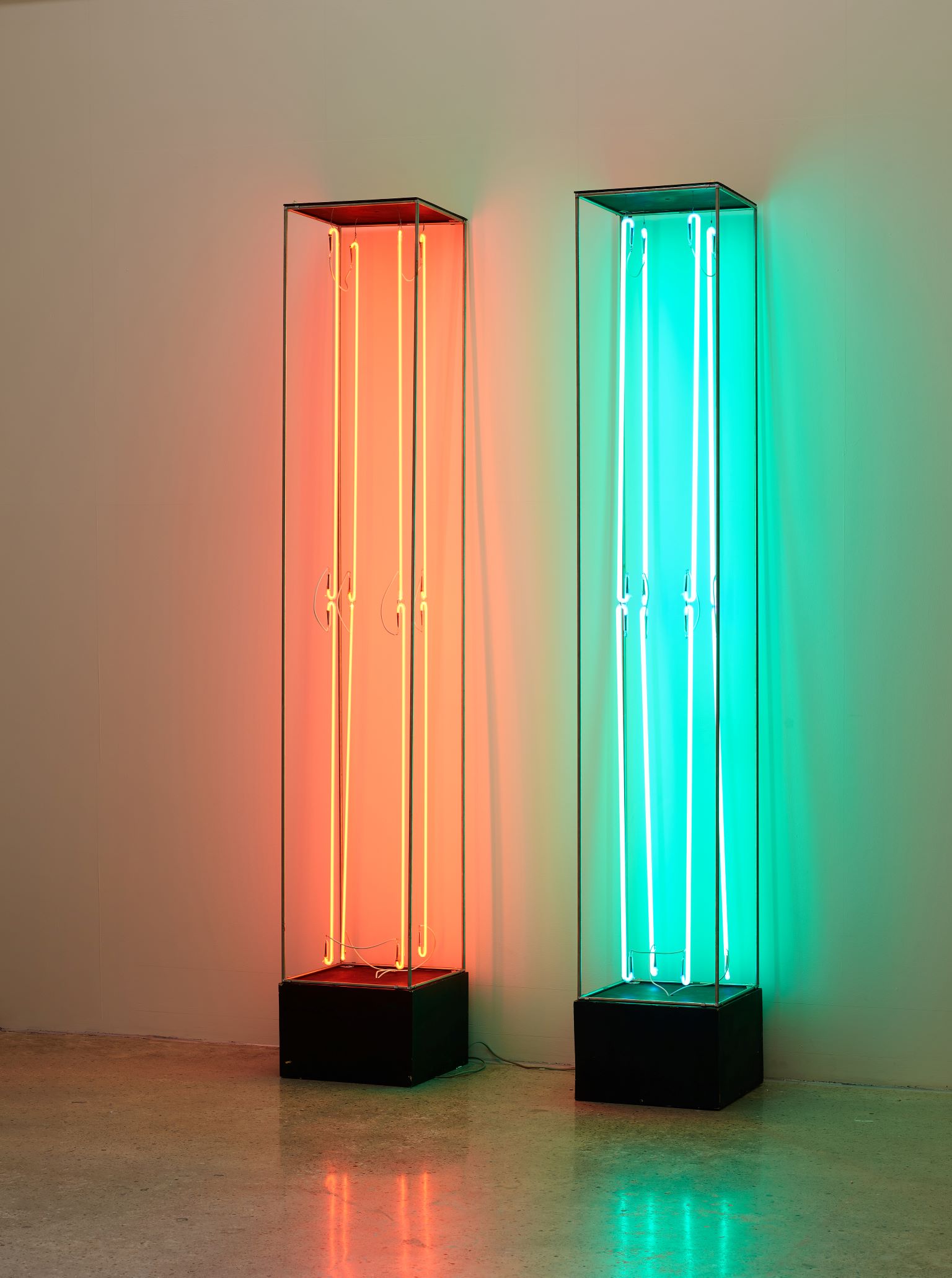
Experimental art
A genre of Korean art characterized by non-two-dimensional work such as sculpture, environmental installation and performance that emerged in the late 1960s and continued over the course of the 1970s. Art historian Kim Mikyung has analyzed the movement in the context of the political and social phenomena of the time and first coined the term experimental art to describe such work.
-
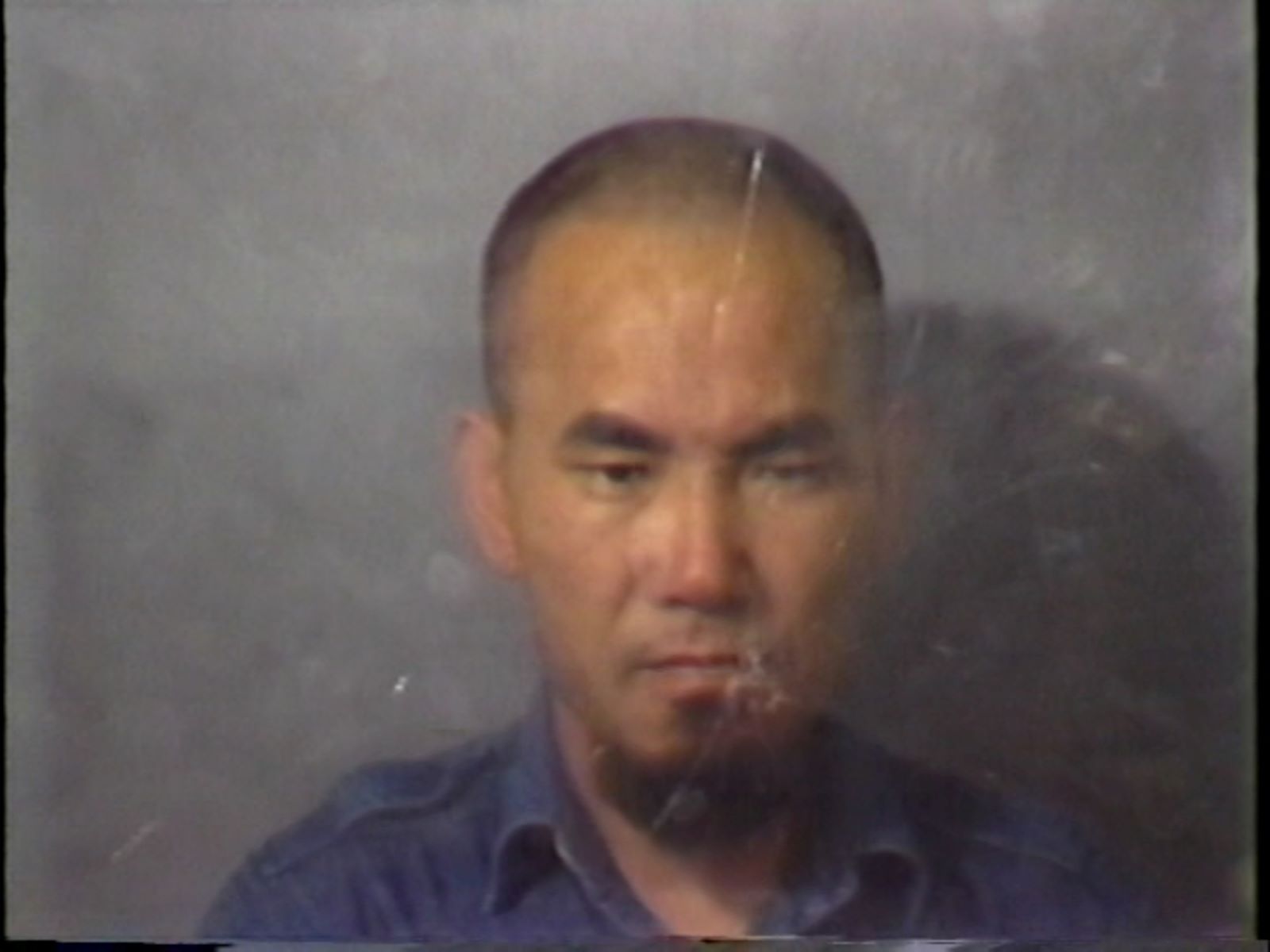
Video art
A genre of modern art that uses video as a medium. After Paik Nam June created the first works of video art in 1963, the genre spread internationally. Video art explored new artistic possibilities using advanced technology and embodied a rejection of conventional art media. Video art was quick to drawn critical attention because of the relative immediacy that underlies the creation and display of such works, and the efficiency of the medium as means to portray and interlink a large number of images. Following Paik Nam June ’s early experiments with TV monitor installations in the 1960s, in the 1970s new forms of work emerged that combined video and performance art.
-
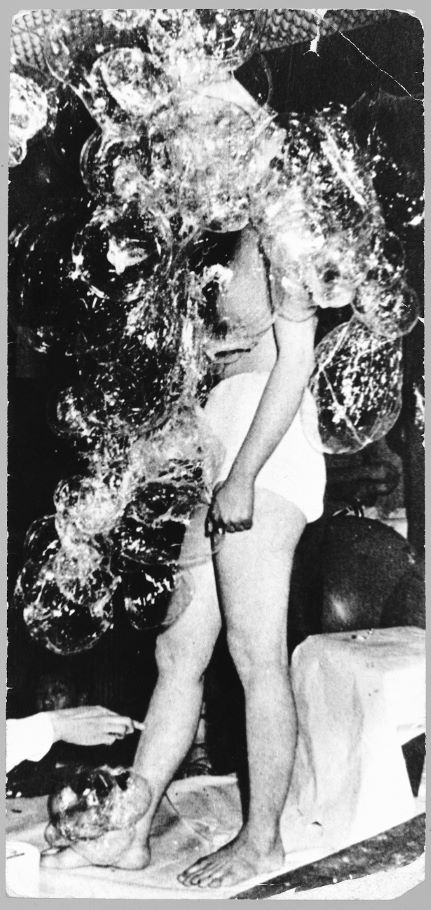
Performance
Performance is a genre within which artists use their voice, body, and objects to express their artistic vision through live action. It became popularized after World War II as an experimental genre through the work of John Cage and Merce Cunningham. Performance can be related to other movements of the period such as action painting, body art, happening, process art, Fluxus, and conceptual art. It is characterized by audience participation, improvisation, spontaneity, and provocativeness. The first work of performance in Korea is widely considered to be The Happening with Plastic Umbrellas and Candle Lights performed by Kang Kukjin, Chung Chanseung, Kim Youngja, Jung Kangja, Shim Sunhee, and Kim Inwhan during the Union Exhibition of Korean Young Artists held at the Korean Information Service Gallery in December 1967.
Timelines

Sign Up for Email Updates