The First Golden Apple, Brochure, 1990. MMCA Art Research Center Collection
Golden Apple


* Source: Multilingual Glossary of Korean Art. Korea Arts Management Service
Related
-
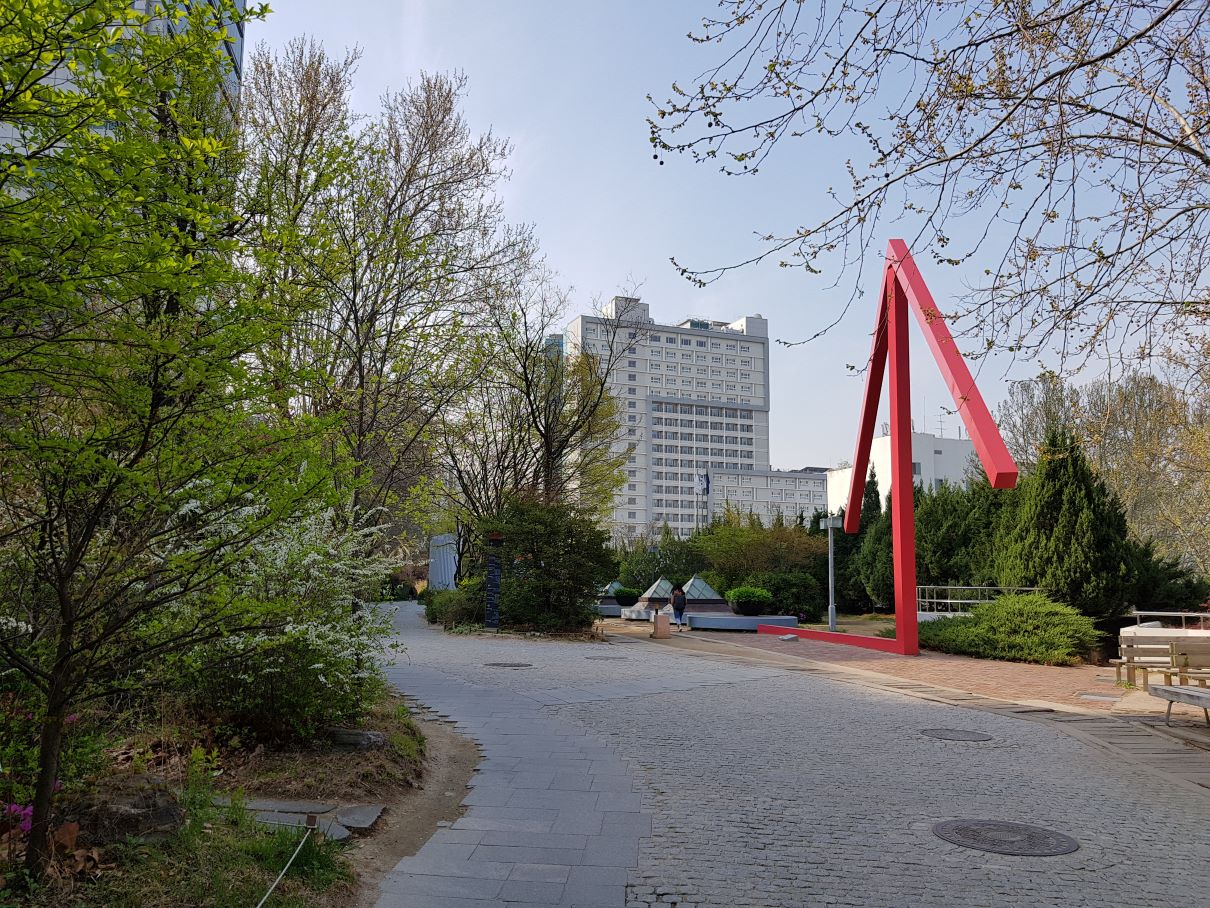
Department of Art at Hongik University
Established in 1949, the Department of Art at Hongik University consists of one art theory department and eleven practice-based departments, including painting, Oriental painting, printmaking, sculpture, woodworking and furniture design, metal art and design, ceramics and glass, textile art and fashion design, visual communication design, and industrial design. In 1955, it moved from Jongro-gu, Seoul to the current location in Sangsu-dong, Mapo-gu, Seoul. The history of the College of Fine Arts can be largely divided into the period of the Department of Fine Arts from 1949 through 1953, the period of the School of Fine Arts from 1954 through 1971, and the period of the College of Fine Arts from 1972 until now. In March 1953, the Department of Fine Arts produced the first six graduates, and in the following year the School of Fine Arts with three departments was established. In December 1971, it was upgraded to a college, which exists up to the present. Several exhibitions organized by its graduates are notable, including the Four Artists Exhibition held in 1956 as the first anti-National Art Exhibition (Daehanminguk misul jeollamhoe or Gukjeon) by the third and fourth classes of graduates and the Union Exhibition of Korean Young Artists held in 1967 by graduates from the 1960s as an effort to realize experimental art.
-

New Generation Art
In the Korean context, “new generation art” refers to a series of artworks created between the late 1980s and the early 1990s. The use of this term relates to what was called the “new generation discourse,” a discussion about the young generation of artists emergent in the 1990s who had internalized individualism and a consumption-centered value system based on material abundance. In the Korean art community, this idea of New Generation Art referred to art projects displaying individual, unregulated, and disposable characteristics, concerns which separated them from the precedents set within the local traditions of Minimalist Modernism and Minjung Art. Museum, Golden Apple, and Sub Club are some of the most representative groups of New Generation Art, and numerous project exhibitions used the group’s name as their exhibition title. New generation artists organized experimental and crossover style performances, events, and exhibitions at new cultural venues such as the Space Ozone, Café Ollo Ollo, the Power Plant, Fungus, and the Plastic Surgery in Seoul.
-
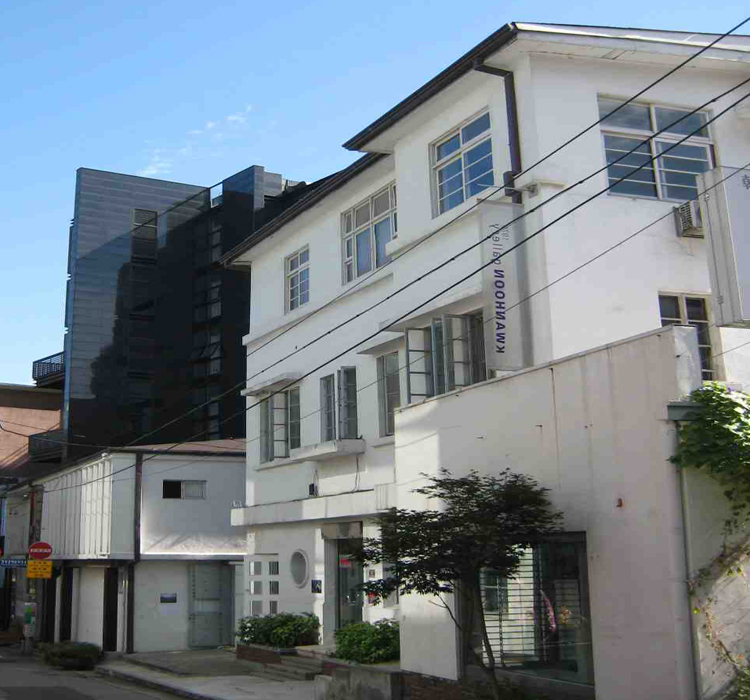
Kwanhoon Gallery
A gallery which opened in 1979 in Insa-dong. Its name was originally the Kwanhoon Art Museum, but this was changed to Kwanhoon Gallery in the early 1990s following the Museum and Art Gallery Support Act. In the 1980s, the gallery held exhibitions featuring prominent art organizations such as Ecole de Séoul, Logos & Pathos, and Meta-Vox, as well as the Museum exhibition. The gallery became a foundational platform for experimental and avant-garde contemporary art in Korea.
Timelines

Sign Up for Email Updates