Han Hongtaik, Design of an Umbrella Handle, 1962, Color on paper, 75×52cm. MMCA collection
Han Hongtaik


* Source: Multilingual Glossary of Korean Art. Korea Arts Management Service
Related
-
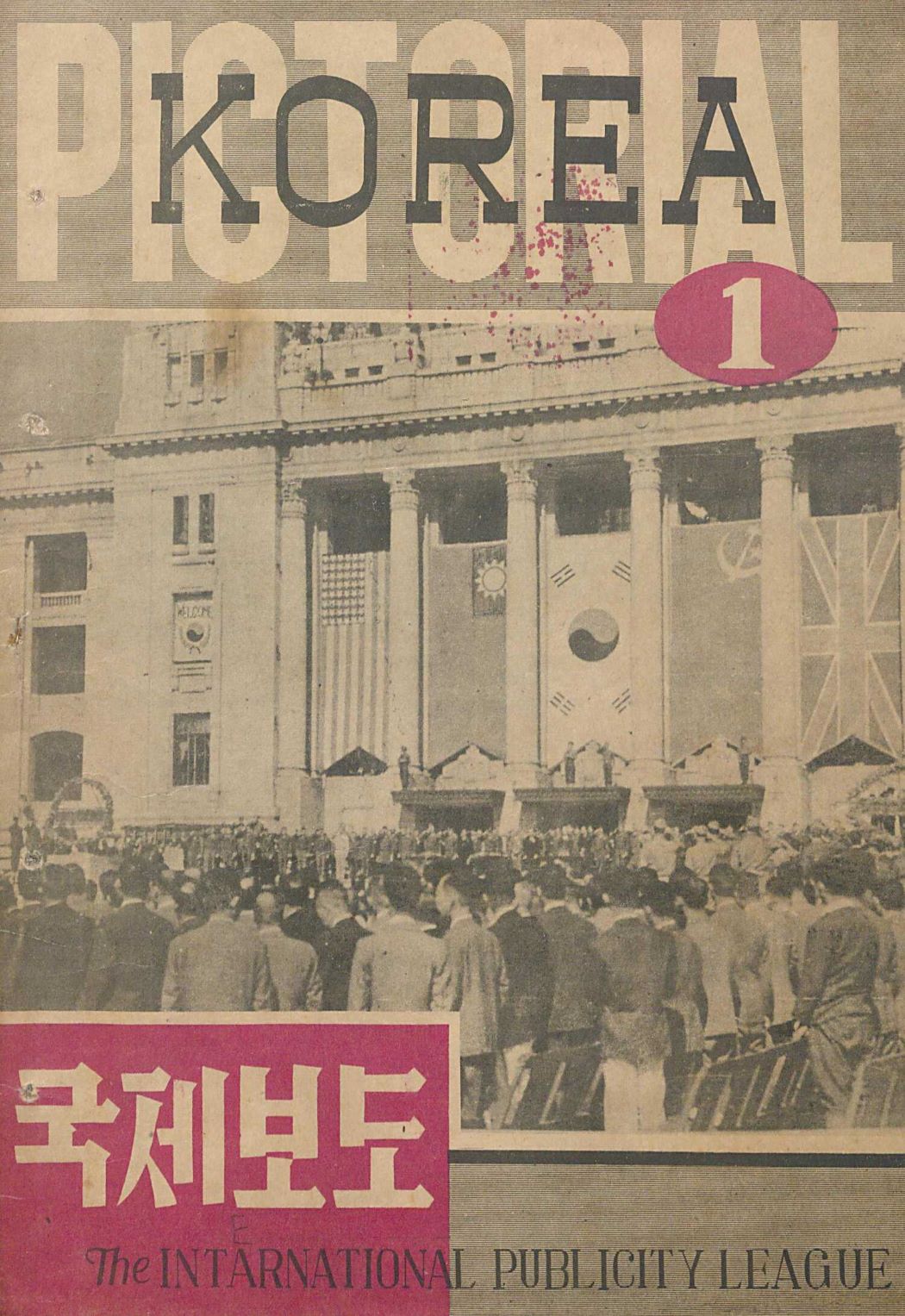
Pictorial Korea
Pictorial Korea is a photographic publication that the International Publicity League of Korea had issued to publicize a positive image of Korea to foreign countries from 1950 through 1970. The titles of each volume are not listed, but it has been said that about twelve volumes were published. Pictorial Korea contained photographs showing the then-current status of the Republic of Korea, its rural and urban landscapes, historical traditions and customs, modern factories and industries, arts and culture, and exhibitions, accompanied by their descriptions in English. The first volume of Pictorial Korea published in January 1950 was about 250 pages long and included more than 100 photographs, indicating that great emphasis was placed on international publicity via visual images. In Pictorial Korea published from 1953 through 1954, the photographers Lee Gyeongmo and Kim Hanyong were in charge of photographs and editing. In some cases, photos by domestic photographers were selected for inclusion through internal photography contests. The works by prominent Korean photographers, such as Limb Eungsik, Han Youngsoo, Lee Hyungrok, and Choi Minshik, were featured in Pictorial Korea.
-
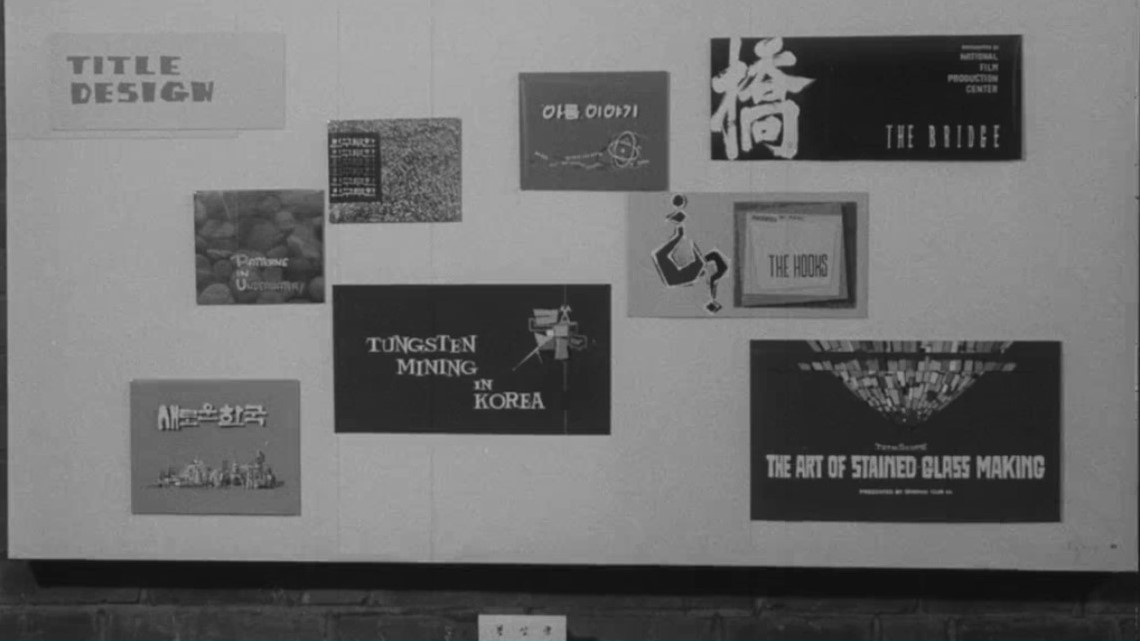
Korean Graphic Art Club
The Korean Graphic Art Club [Hanguk grapic ateu cleop; KGAC] is an organization founded in 1963 by a group of active graphic designers who graduated from the Department of Applied Arts at Seoul National University. Its name, which excluded terms like applied art or commercial art, and its practitioner-oriented membership set the KGAC apart from other organizations of designers at the time. The KGAC consisted of seven members, all of whom were working in corporations, national or public institutions, and schools after graduation. They were Bong Sangkyun and Jeong Nampil at National Film Studio, Kang Huisu at Yuhan Corporation, Yim Iseop at Dongin Dyeing, Kim Seonyeong at Daehan Travel Agency, Kim Geunbae at Deoksu Commercial High School, and Kim Hongryeon at Beomyang Chemicals. The KGAC held the group exhibition Graphic Art from May 11 to 19, 1963 at the Press Center of Korea in Taepyeong-ro, Jung-gu, Seoul. A total of thirty works were displayed at the exhibition, including record jackets, title designs for films and TV programs, calendars, medicine packages, and posters. The KGAC pioneered the concept of graphic art in the 1960s when graphic art was slowly emerging as a specialized field. Its members received modern art education that was initiated from the late 1950s by the faculty who studied abroad in the U.S. and returned to Korea, including Kim Choungza, Kwon Soonhyung, and Min Chulhong. After graduation, they worked in the field of graphic art. After the emergence of the KGAC, the term “graphic art” was eventually used widely, as seen in the Han Hongtaik’s Graphic Art, a solo exhibition held by the industrial artist Han Hongtaik in 1966.
-
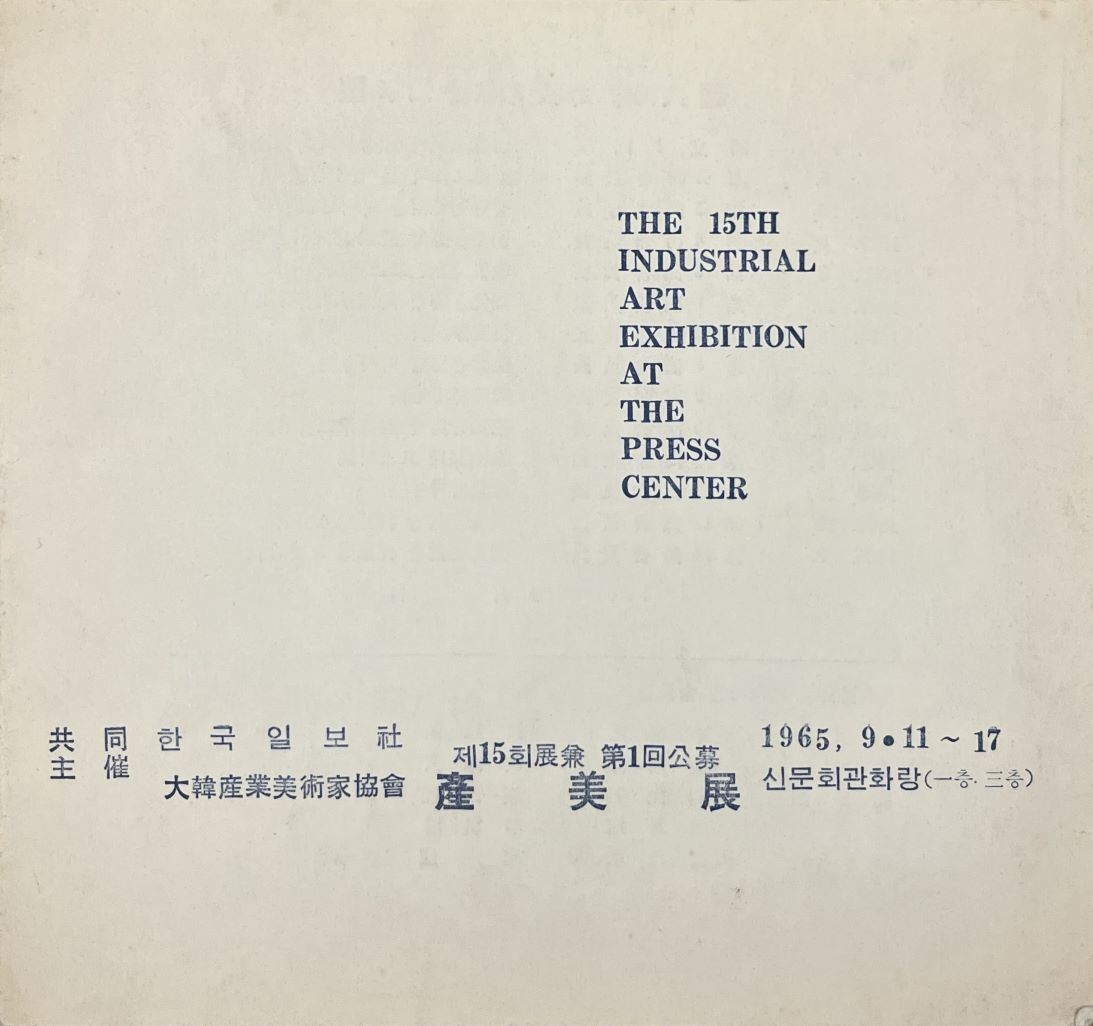
Industrial Arts Competition
The Industrial Arts Competition is a nationwide design competition that was organized by the Korean Industrial Artist Association since 1965. It is known as the first design competition held in South Korea because it started a year before the Korea Commerce and Industry Art Exhibition (present-day Korea International Design Award), which began in 1966. In addition to the goal of discovering and promoting new designers, the Industrial Arts Competition aimed to secure excellent new members. The first competition held in 1965 was divided into two categories: Graphic Design and Industrial Design. Its seven winners were Kim Gwanjung, Han Huisun, Kim Sujeong, Jeong Daegil, Lee Inja, Sim Hyoseop, and Lee Myeonghak. The exhibition of the winning works was held at the Seoul Press Center alongside the exhibition of the Korean Industrial Artist Association. The composition of the competition categories varied depending on the period. In the eighth edition held in 1972, the competition was divided into four categories: Commercial Design (Graphic Design), Crafts, Industrial Design, and Commercial Photography. This categorization was maintained until the thirteenth edition in 1977. Since the early 1980s, the competition has been organized into two categories: Visual Design and Crafts. The change in the competition category was linked to the change in the organizational structure of the Korean Industrial Artist Association. Starting from 1981, the association grouped its members into visual designers and craftspeople. In 1986, the Visual Designers Association [Sanmi sigak dijaineohoe] and the Craftspeople Association [Sanmi gongyegahoe] became independent from the Korean Industrial Artist Association, and such a dual system was sustained for a while. The Industrial Art Competition has not been held since its 51st edition in 2016.
Timelines

Sign Up for Email Updates