Heo Geon, Landscape, date unknown, Ink and color on paper, 43×66cm. MMCA
Eastern painting


* Source: Multilingual Glossary of Korean Art. Korea Arts Management Service
Related
-
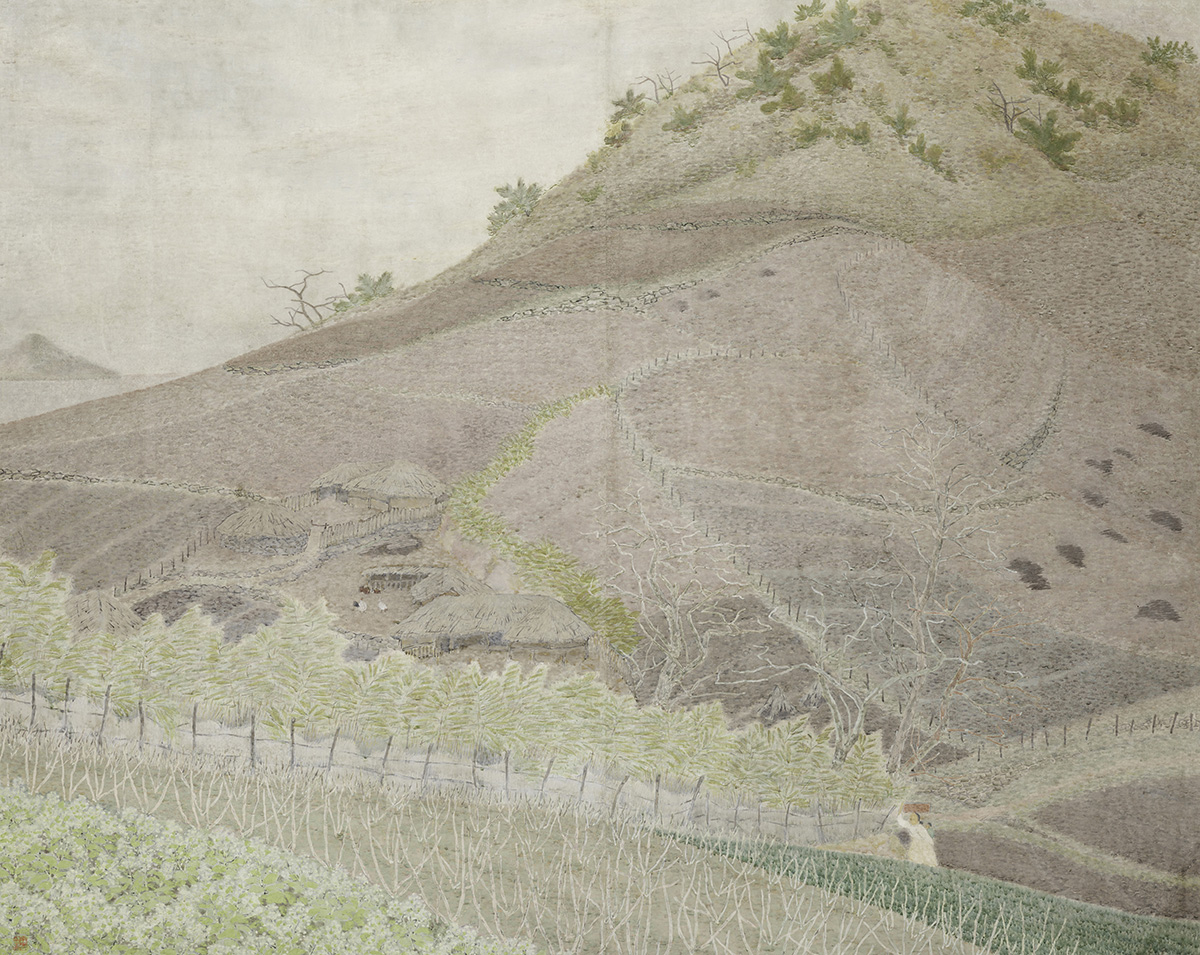
Heo Geon
Heo Geon (1908-1987, pen name Namnong) is a grandson of the prominent nineteenth century Namjong (Southern painting style) painter Heo Ryon. His Sangosujang and Autumn were selected for the nineth Joseon Art Exhibition [Joseon misul jeollamhoe] in 1930, following his father, Heo Hyung. He was continuously selected until the twenty-third Joseon Art Exhibition in 1944 and won a Joseon governor-general award. His work combined the traditional Namjonghwa painting style of his family with a new perspective and coloring methods and blended them into a new modern landscape painting style. In the 1940s, his style emphasized forms influenced by Japanese Shin-nanga painting. He may have also been influenced by his deceased brother Heo Rim (1917-1942), who attended Kawabata Art School in 1940. After independence, he established the Namhwa Research Institute in 1949, and his style changed to create modern landscape paintings with a rough touch and local color. Heo also served as a judge at the National Art Exhibition (Gukjeon) from the 1960s to 1970s and became a senior member of the National Academy of Arts, Republic of Korea. He was a symbolic figure of the Mokpo art community. Heo Geon should be distinguished from Heo Baekryeon, who focused on traditional Namjonghwa painting.
-
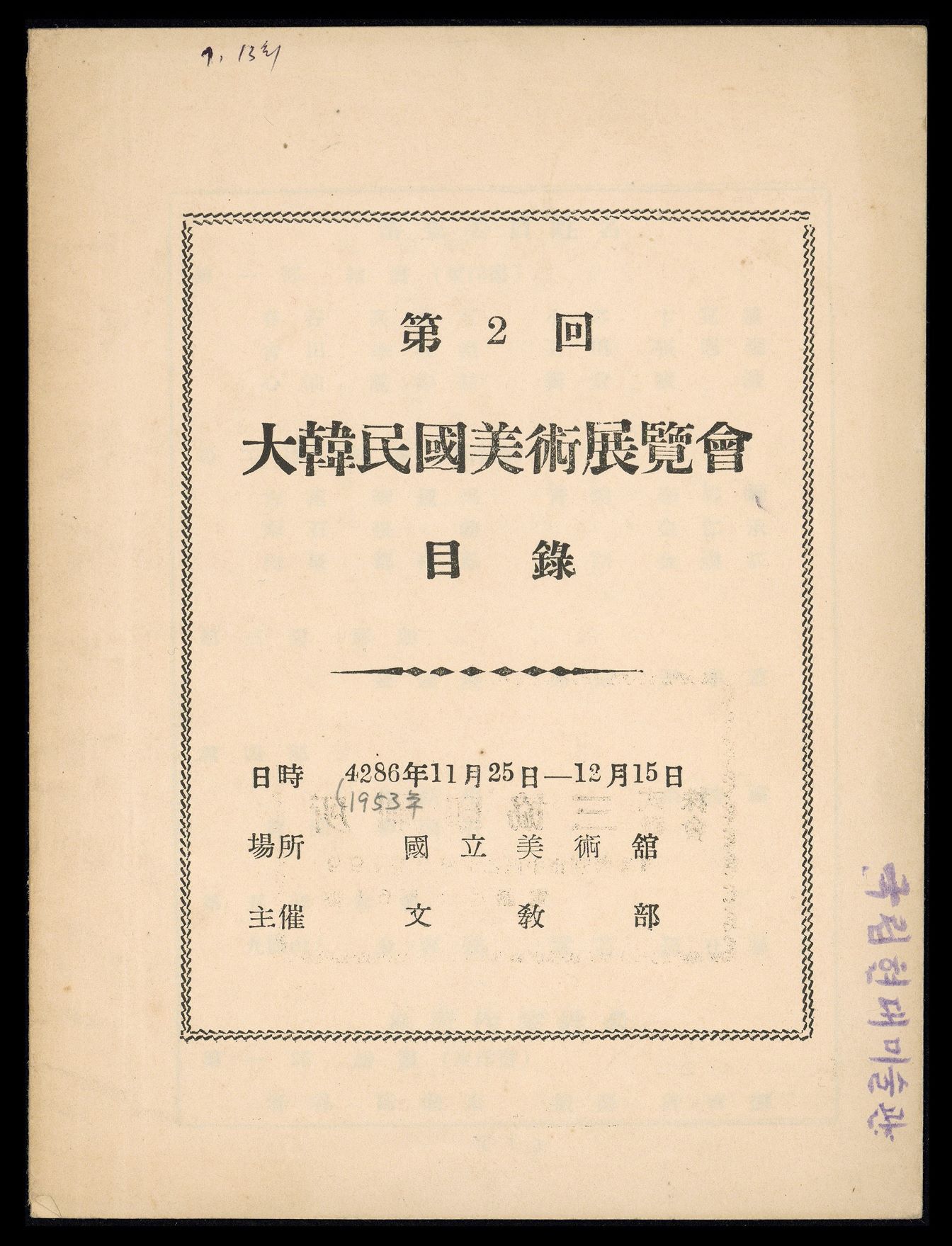
National Art Exhibition
A government-hosted exhibition held 30 times from 1949 to 1981, also known by the shorter name Gukjeon. Following national independence, the exhibition was the primary means for young and emergent Korean artists to achieve recognition. The influence of the exhibition declined as a result of the emergence of non-figurative art during the 1970s, the increased opportunities for artists to participate in overseas exhibitions, and the rise of private exhibitions and galleries.
-
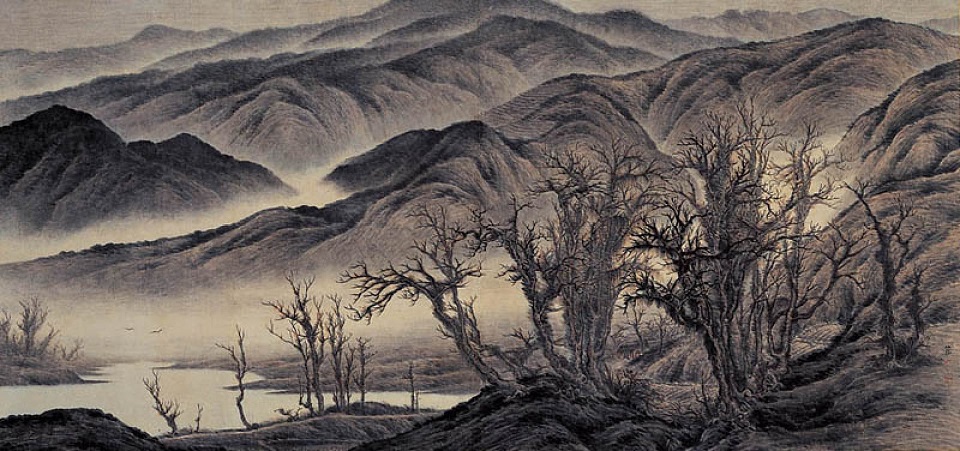
hangukhwa
A type of painting created during the 20th century that uses traditional Korean materials, techniques, and styles. The term emerged from the criticism that traditional-style paintings were called Eastern paintings in Korea, in contrast to China, where they were called national-style paintings, and Japan, where they were called Japanese-style paintings. The term hangukhwa (Korean Painting) entered official use following the overhaul of the educational curriculum in December 1981, and the appearance of the term Korean painting, with the subcategories ink wash painting [sumukhwa] and ink and light-colored painting [damchaehwa] were listed in art textbooks from 1983. The Grand Art Exhibition of Korea also began using the term hangukhwa (Korean Painting), as opposed to Eastern painting, in 1982. Prior to this, Hankukhwahui (Korean Painter’s Association) was used as a collective term for such Korean painters in 1964 and Kim Youngki (pen name Chunggang) argued to use the term Korean painting to define national identity in his essay “On hangukhwa (Korean Painting) and Criticism.” Criticism that Korean paintings, unlike the national paintings of China and Japan, do not have a narrative theme, and that the use of such a term was contrary to contemporary artistic trends, resulted in the term “hangukhwa (Korean Painting)” failing to achieve mainstream use. Hangukhwa (Korean Painting) is currently used interchangeably with the term Eastern painting.
Timelines

Sign Up for Email Updates