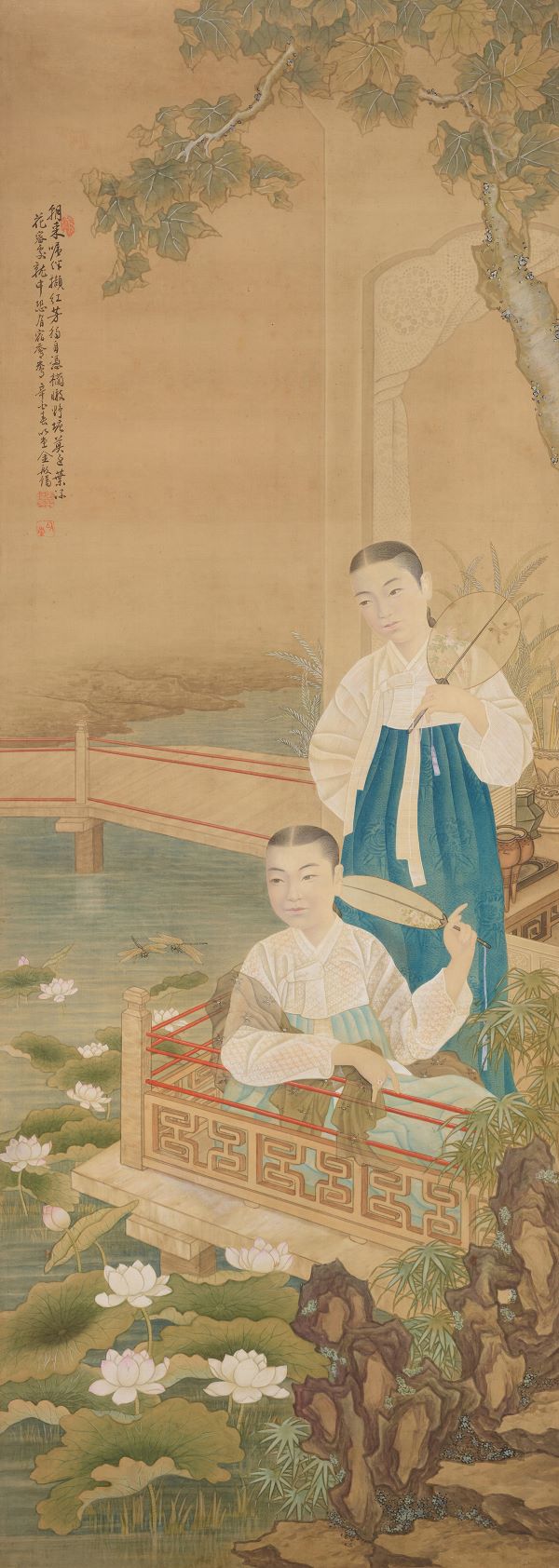
Kim Kichang, Autumn, Ink on Silk, 170.5×110cm. MMCA collection
Kim Kichang


* Source: Multilingual Glossary of Korean Art. Korea Arts Management Service
Related
-
Kim Eunho
Kim Eunho (1892-1979, pen name Yidang) joined the Calligraphy and Painting Society (Seohwa misulhoe) in 1912 and learned Oriental painting under An Jungsik and Cho Seokjin. He was known for his sophisticated brush strokes and attention to detail. Early in his career he was appointed as a court portrait painter. He produced several portraits of kings from the Joseon dynasty and gained a reputation for his portraits and colored figure paintings. He contributed his works to the first exhibition of the Calligraphy and Painting Association (Seohwa hyeophoe) and the Joseon Art Exhibition. His trainees organized Husohoe in 1936, which contributed enormously to the Modern Oriental Art community in Korea. However, he was accused of pro-Japanese activities due to his overt acquiescence to Japanese Imperialism and his involvement in its wartime propaganda. He tried his hand at ink paintings in the 1950s and experimented with modernized colored landscape painting from the 1960s into his later years. In the 1960s, he painted several portraits of historic figures and published Hwadanilgyeong (1968) and Seohwabaeknyeon (1977).
-
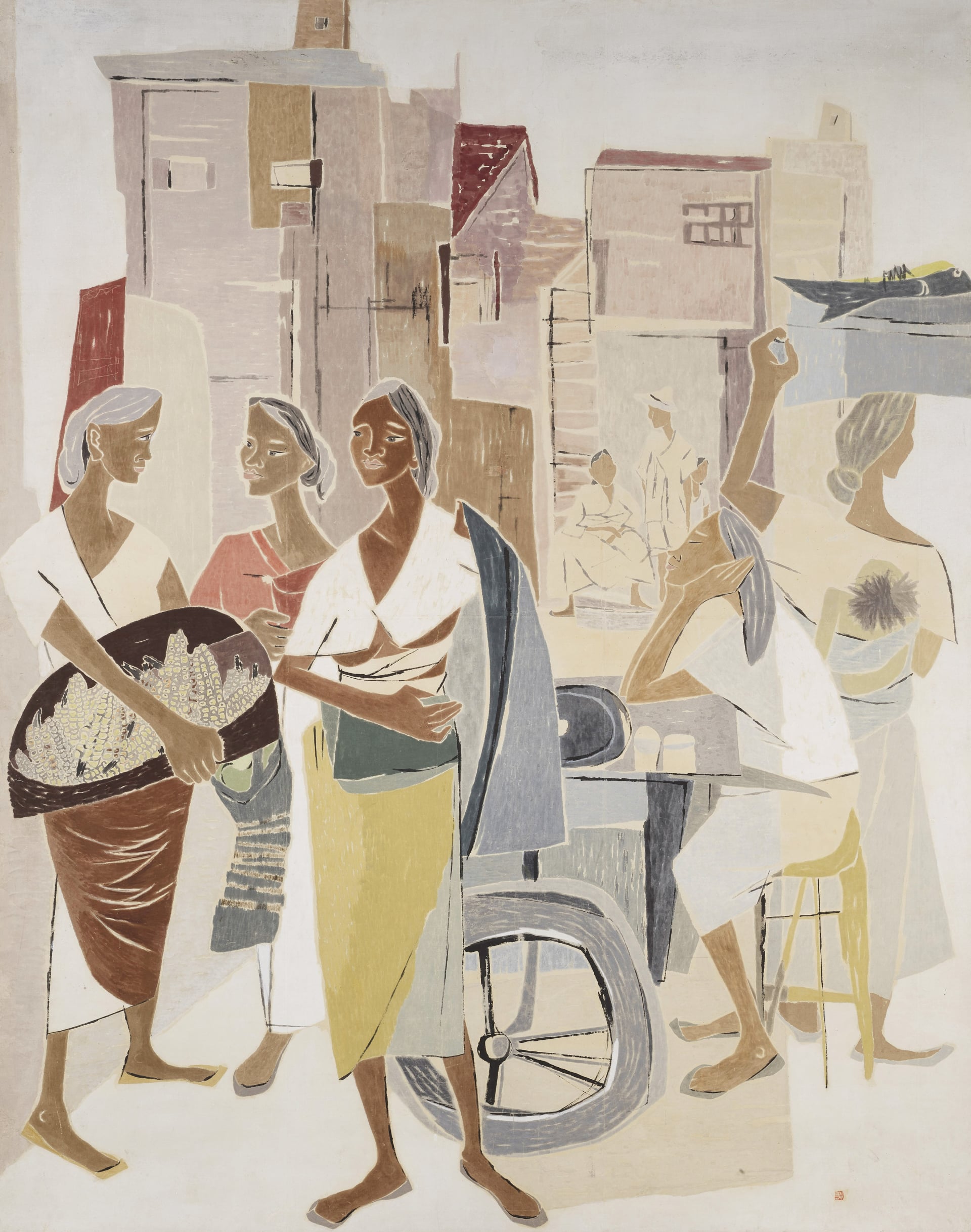
Park Rehyun
Park Rehyun (1920-1976, pen name Woohyang) studied at Gyeongseong girls Normal School and graduated from the Department of Japanese Painting at Tokyo Women’s Art School in 1944. She studied at the Pratt Institute in New York and Bob Blackburn’s Print Studio from 1969 to 1973. After she married Kim Kichang, she held several solo and collaborative exhibitions with her husband and contributed her works to Paek Yang Fine Art Exhibition. She won a Changdeokgung Palace Award at the Joseon Art Exhibition [Joseon misul jeollamhoe] in 1943, a President Award at the fifth National Art Exhibition (Gukjeon) in 1956, a President Award at the eighth Great Korean Art Association Exhibition in 1956, and a Shin Saimdang Award in 1974. During the colonial period, Park Rehyun produced Japanese style color portraits, then, after independence she moved toward a semi-abstract technique, often featuring the three-dimensional formal interpretation of objects and a division of planes and using traditional Oriental painting materials. In the 1960s, she gradually replaced this approach with a splashed ink and pre-dyeing effect. Then, after moving to the U.S., she expanded her oeuvre to include print and tapestry.
-
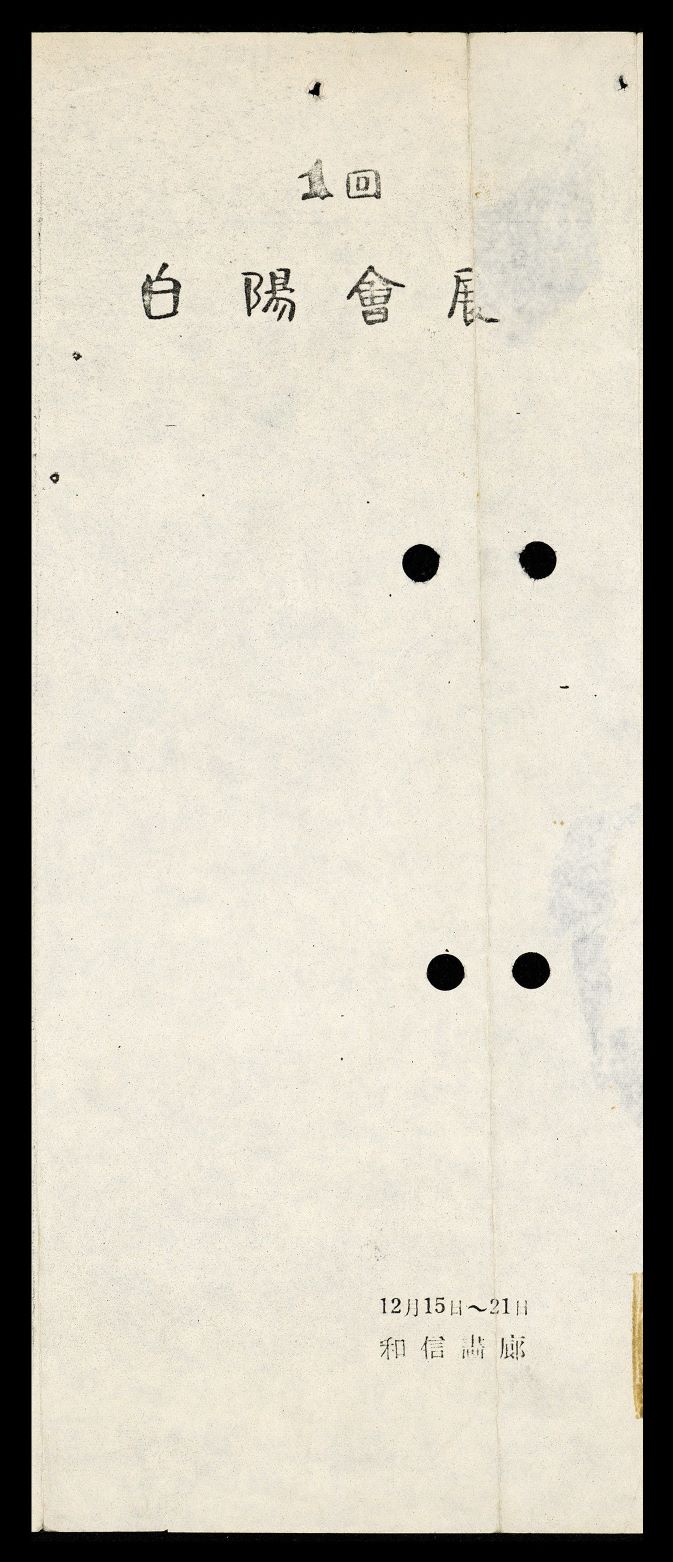
Paek Yang Painting Association
An art group formed in 1957 to explore new perspectives on Korean paintings and educate future artists. The group was formed by nine artists including Kim Kichang and Park Rehyun of the Husohoe (who were students of Kim Eunho, also known by his pen name I-dang), Kim Youngki, and Chun Kyungja. In January 1961, the group organized a touring exhibition in Southeast Asia, which is noteworthy as the first overseas exhibition held by a Korean private-sector art organization. In this traveling exhibition, the term “hangukwa (Korean painting)” was used for the first time to refer to traditional ink painting, instead of the previously dominant term “Eastern painting.”
Timelines

Sign Up for Email Updates