The Seventh Great Korean Art Association Exhibition, Brochure, 1955, MMCA Art Research Center
Great Korean Art Association


* Source: Multilingual Glossary of Korean Art. Korea Arts Management Service
Related
-

Korean Artists Association
An artist association formed in 1955. The core of the association comprised faculty members of the Seoul National University College of Fine Arts. The election of Ko Huidong as the chairman of the Great Korean Art Association (Daehan misul hyeophoe) despite his failure to win the majority vote led the supporters of Chang Louis Pal to leave the association and form the Korea Artists Association. Chang Louis Pal, the first chair, created the photography division, which was absent from the Great Korean Art Association Exhibition, and the architecture division. He also reinstituted the calligraphy division, which had been closed. At the time of establishment, the stated ideology of the association was four-fold: to develop and improve national culture through progressive ideology; to maintain purity of attitude toward the creation and the presentation of art; to actively support the work of new generations; and to achieve, without delay international partnerships with other artists groups and organizations around the world. In 1961, the association was merged into the Korean Fine Arts Association alongside the Great Korean Art Association due to the government policy of consolidating art organizations.
-
Korean Art Association
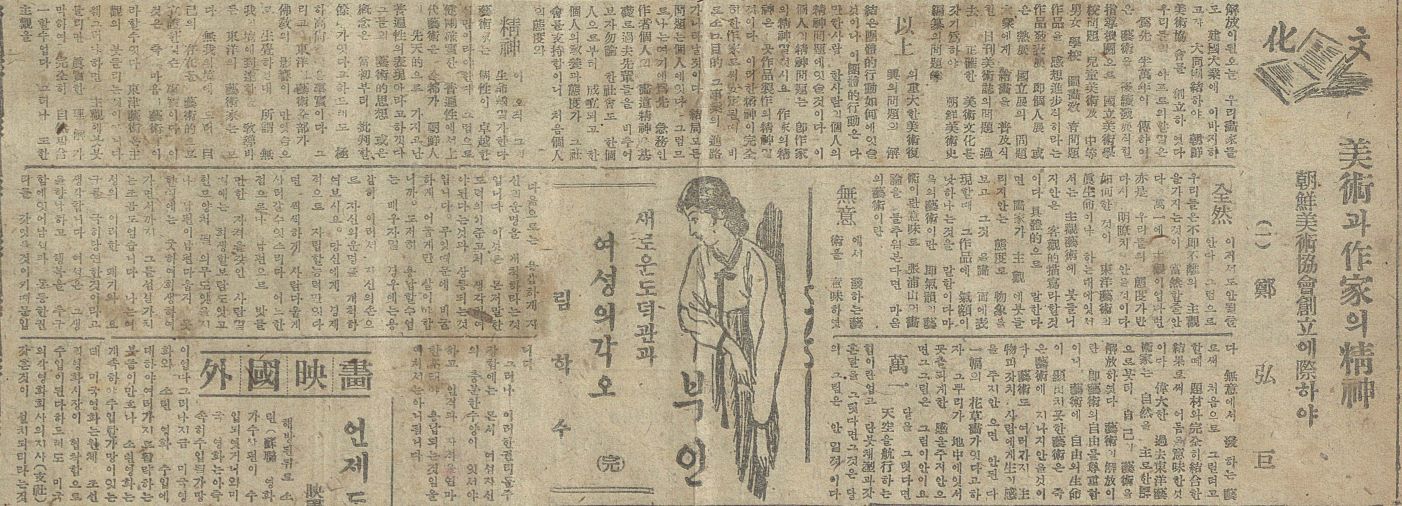
An organization established in 1945 under the leadership of Ko Huidong after the Headquarters for the Korean Art Construction Headquarters (Joseon misul geonseol bonbu), the largest art organization of the time, disbanded. Criticizing the political activism of the Korean Art Construction Headquarters, the Korean Artists Association avowed political neutrality Ko Huidong was the president of the association, and famous artists of the time such as Lee Chongwoo, Kim Yongjun, Kim Jukyung, No Soohyeon, and Gilbert Pha Yim all participated in the association. The association claimed to be the successor of the Society of Painters and Calligraphers, which was active from the late 1910s to the 1930s. The association planned the establishment of art schools, the publication of books on art history, the holding of exhibitions, and the publication of art magazines. Contrary to its avowed political neutrality, however, Ko Huidong, who held right-wing beliefs, continued with his pro-government activism, and numerous members who opposed this left the association to form the Korean Art Alliance (Joseon misul dongmaeng) in 1946.
Timelines

Sign Up for Email Updates