Kim Whanki, 16-IV-70 #166 (Where, in What Form, Shall We Meet Again series), 1970, Oil on cotton, 236×172cm. Private collection © Whanki Foundation∙Whanki Museum
Abstract art


* Source: Multilingual Glossary of Korean Art. Korea Arts Management Service
Related
-
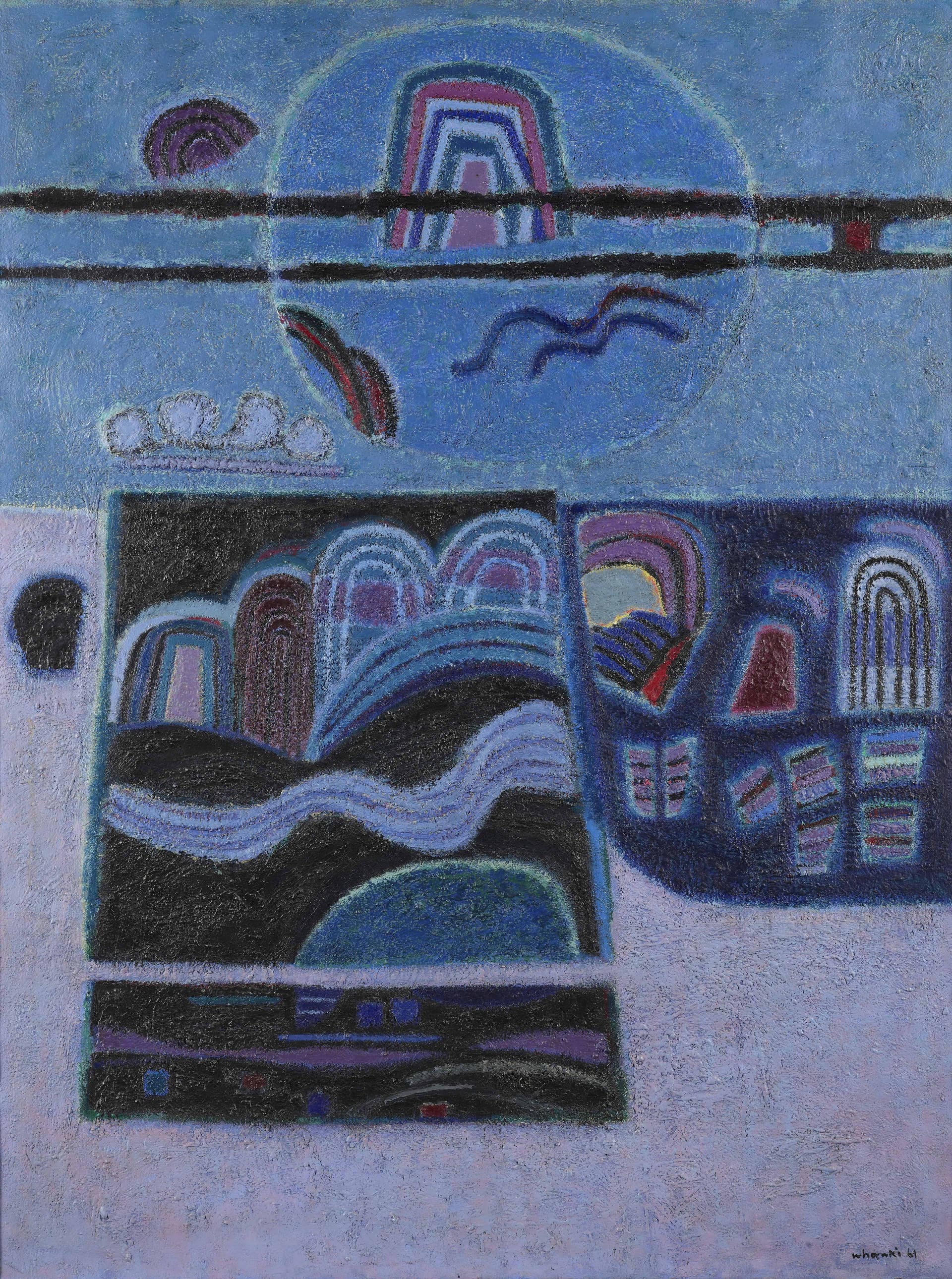
Kim Whanki
Kim Whanki (1913-1974, pen name Suhwa) was born in Sinan, Jeollanamdo, and his family origin was from Gimhae. He studied at the Department of Fine Arts at Nihon University, Tokyo, Japan from 1933 to 1936. He joined the Avant-Garde Western Art Institute in 1934 and submitted his work to Avant-Garde art associations, such as the Second Division Exhibition Nikaten (Nika Art Exhibition) and the Exhibition of the Free Artists Association (Jiyu Bijutsuka Kyokai). After independence, he organized the New Realism Group and worked as a professor in the Department of Fine Art at Seoul National University (1946-1950) and Hongik University (1952-55). He lived in Paris from 1956 to 1959, and after his return, he became a professor and later the Dean of the Fine Art College at Hongik University (1959-1963). He participated in the seventh Sao Paulo Biennale and won an honorary award, and then moved to New York. He abruptly passed away while having a solo exhibition at Poindexter Gallery, New York, ironically when his career in the US was at its peak. As a pioneer of Korean abstract art, he started by working in geometric abstraction and moved on to semi-abstract work that featured natural motifs such as the mountain, the moon, and the river. After moving to the U.S., he returned to abstraction with his so-called "dot paintings." His painting 16-Ⅳ-70 #166 Where, in What Form, Shall We Meet Again? (1970), was awarded a grand prize at the Korean Art Grand Award Exhibition and has inspired many contemporary Korean artists. His work Rondo (1938) was selected as No. 535 within the national Registered Cultural Properties.
-
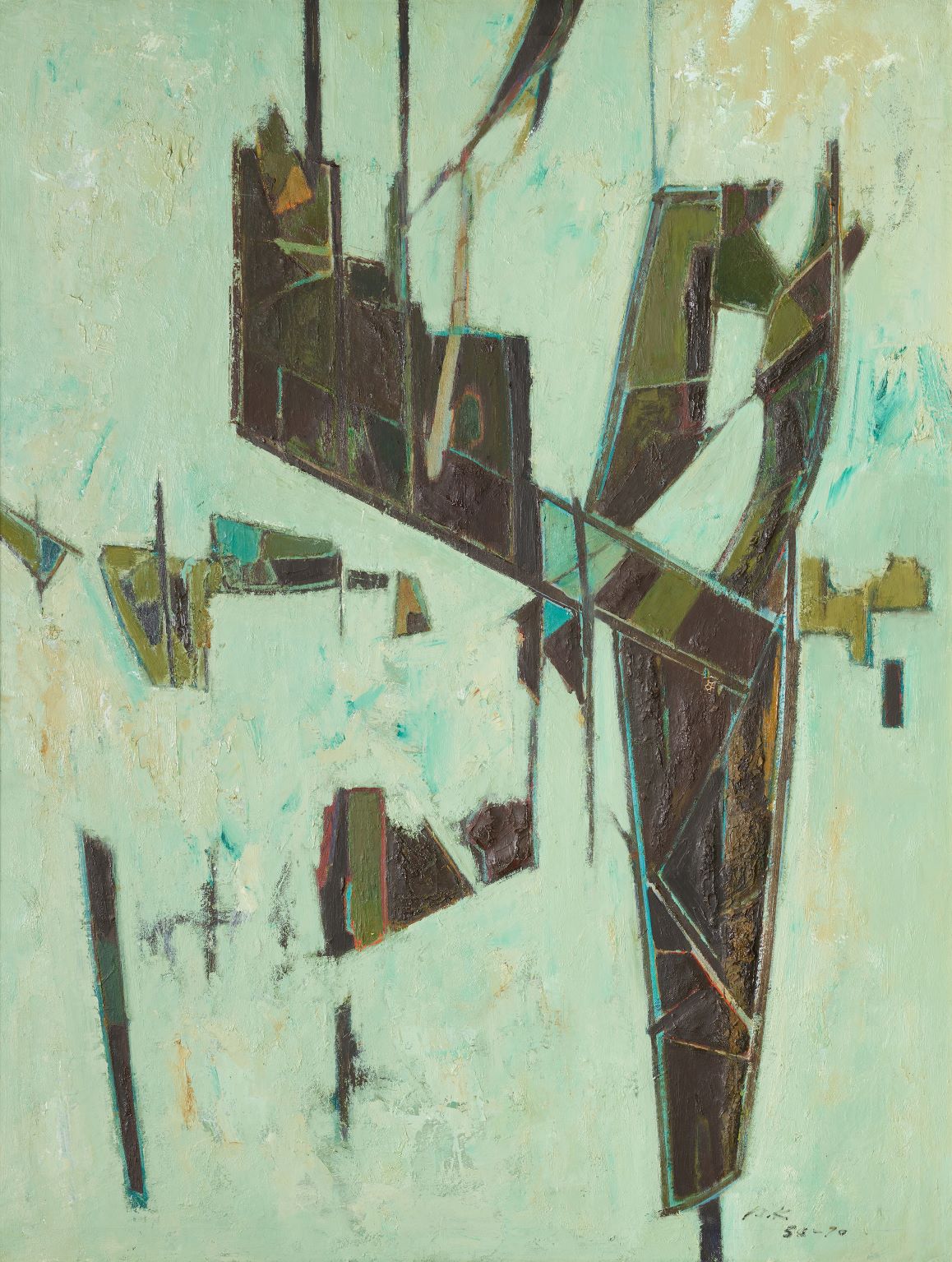
Kim Byungki
Kim Byungki (1916-2022) was one of the first-generation Korean abstract artists. He was born in Pyongyang as the second son of Kim Chanyoung, who graduated from the Tokyo School of Fine Arts. He associated with Kim Whanki at the Avant-garde Western Art Institute in Tokyo in 1933, and in 1939 he studied at the Art Department of Bunka School in Tokyo together with Lee Jungseop and Mun Haksu. After his return to Korea, he served as a secretary of the Korean Art Alliance (Joseon misul dongmaeng) in Pyongyang and then moved to Seoul in 1948. Kim Byungki established the 1950 Art Association (Osimnyeon misul hyeophoe) under the Korean Culture Research Institute in 1949 and, as its secretary-general, tried to unite established artists, but due to the outbreak of the Korean War, it never held exhibitions. During the war, he worked as a deputy director of the military painter group. In 1954, he participated in the Special Exhibition on Modern Korean Painting at the National Museum. After reading an article in The Times related to Pablo Picasso’s painting Massacre in Korea (1951), Kim published “Farewell to Picasso” in the first issue of Munhak yesul (Literature and Art) in 1954. He also devoted himself to art practice, art education, and art theory by teaching at Seoul National University, Seoul Arts High School, and the Institute of Contemporary Art and participating in the first Contemporary Art Exhibit hosted by the Chosun Ilbo newspaper company. He was commissioner of the Paris Biennale in 1961. In 1965, as the board president of Korean Fine Arts Association, he worked as commissioner and judge of the São Paulo Biennale. At the time, he moved to the U.S. and settled in Saratoga, New York, where he absorbed himself in creating artworks for twenty years until he returned home. In 1986, he held a solo exhibition at the Gana Gallery in Seoul. In 1989 he returned to the U.S. and Kim returned to South Korea permanently in 2014 for the MMCA’s exhibition Kim Byungki: The Distribution of Sensible. In 2022, he passed away at the age of 106. Among his notable works are Street Trees (1947), Still Life by Window (1954), Mountain (1967), Forest and Still Life (1987), and Winter Scene (2000).
-
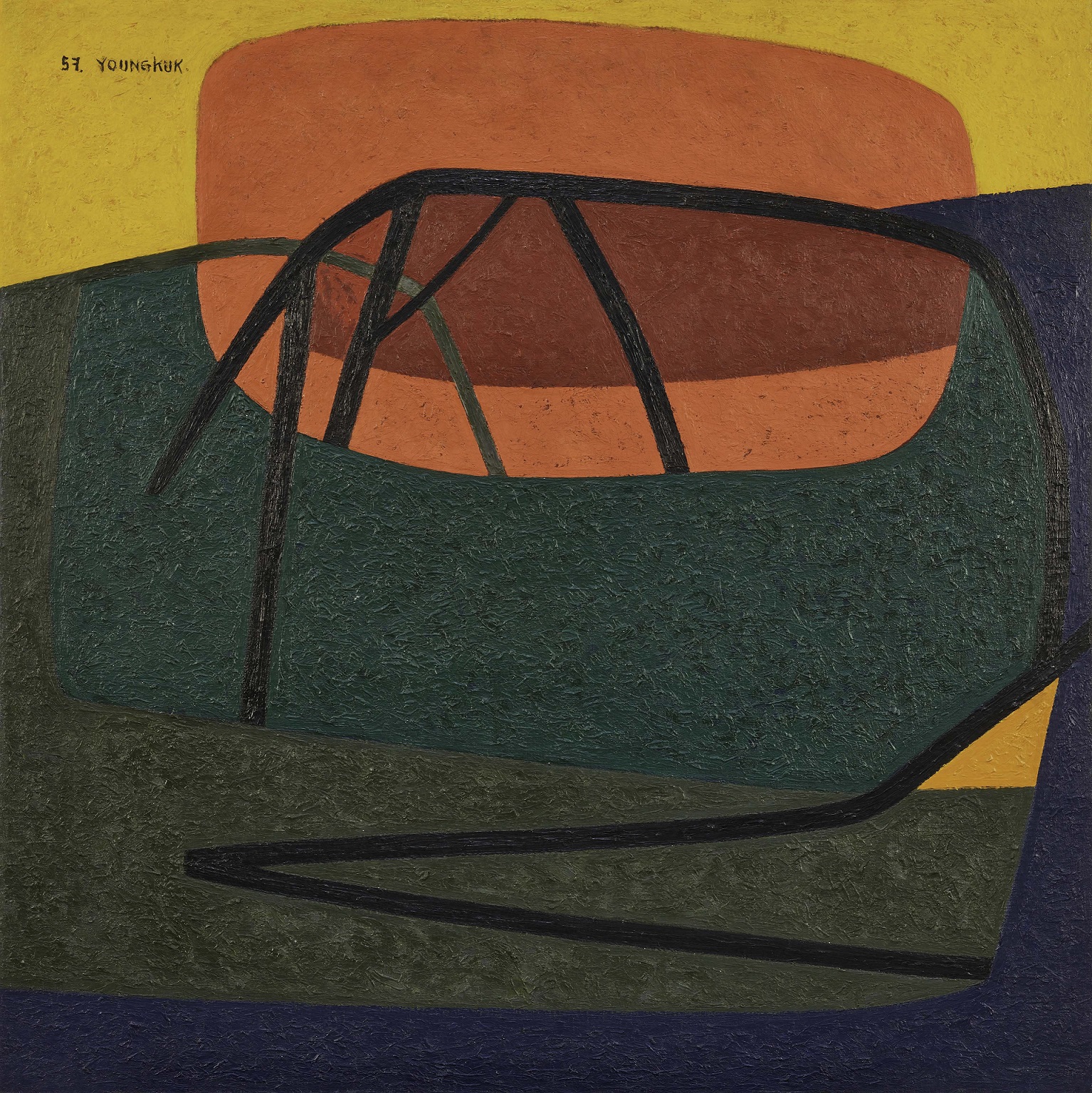
Yoo Youngkuk
Yoo Youngkuk (1916-2002) was born in Uljin, Gyeongsangbuk-do. He graduated from Uljin Elementary School and attended Gyeongseon Teachers College from 1931 to 1934. He moved to Japan in 1935 and graduated from the Tokyo Culture School in 1938. He submitted his work to the Yanghwa Art Coterie Exhibition and won a grand prize for his radical and avant-garde constructive abstract art in the Free Artists Association Exhibition in 1938. He was then recommended as a new member. After independence, he participated in the New Realism Group Exhibition, the Modern Art Association Exhibition, the 1950 Art Association [Osimnyeon misul hyeophoe] Exhibition, the Contemporary Art Exhibit sponsored by Chosun Ilbo, and Sinsanghoe. He worked as an art professor at Seoul National University from 1948 to 1950 and at Hongik University from 1966 to 1970. He was one of the first abstract artists in Korea. While in Japan he pursued the creation of an absolute form of abstraction. Then, back in Korea after independence, he switched to using constructive and emotional color in his abstract compositions to represent the sublime character of nature.
Timelines

Sign Up for Email Updates