The opening ceremony took place within the Biennale grounds — that is, in a temporary outdoor venue set up in a space surrounded by lush trees inside Giardini Park, where the exhibition halls are located. Beginning promptly at 11 a.m., the ceremony proceeded much like such events everywhere: with welcoming remarks from officials and a brief award presentation for the winning artists. It concluded before it had time to become tedious. Among those on the platform were Antonio Gullotti, Minister of Culture; Costante Degan, Minister of Health; Paolo Portoghesi, President of the Venice Biennale; Maurizio Calvesi, Chair of the Visual Arts Section; and Professor Giulio Carlo Argan, the eminent art historian and senior Italian art critic. According to later reports, approximately 1,500 distinguished guests, including eighteen ambassadors from various countries, attended the ceremony.
Among the distinguished figures, there was one special guest who arrived belatedly and could hardly be left unmentioned: President François Mitterrand of France. He made an unofficial visit to the exhibition halls on Monday—the day they are normally closed to the public—and, surrounded by journalists, was reported to have repeated, “I am satisfied with the national prize awarded to the French artist.” Indeed, it was the first time in quite a while that a French artist had received an award at the Venice Biennale. After all, the Biennale’s award system itself had been abolished following the upheavals of 1968 and was only reinstated this year—so in every sense, it was bound to be an occasion long in coming.
Speaking of the award system, it is worth noting that with its reinstatement—and amid ongoing debates over the very purpose and legitimacy of such international exhibitions—it has often been observed that many of these events have been losing the prestige and authority they once enjoyed. Taking advantage of this moment, the Documenta in Kassel, Germany—a large-scale international exhibition of contemporary art held every four years—opened its doors. From the outset, Documenta adopted bold measures: it operated without any award system and entrusted full authority for artist selection to a single general director responsible for the overall curatorial concept. The impact of this approach was significant, influencing Europe’s two major biennials—Venice Biennale and Paris Biennale.
It is true that both biennials fell into stagnation after being swept up in the wave of anti-establishment protests that began in Paris in 1968 and spread across Europe. As a remedy, the Paris Biennale boldly abandoned its founding principle of being a biennial for young artists—those under the age of thirty-five—and, beginning with the 1985 edition, completely abolished any age restrictions for participating artists. In effect, the Biennale for young artists was transformed into a Biennale for adults. Thus, the Paris Biennale, founded in 1959, and with only twenty-five years of history, now positioned itself in direct challenge to the far older Venice Biennale, established in 1895.
And as if in response, the Venice Biennale brought back the ghost of its long-abandoned award system—after some twenty years—apparently to spur the Biennale into renewed vitality (the phrase “to give the Biennale a good whipping,” as one correspondent from the French daily Le Monde put it). It could indeed be called a ghost, as the list of this year’s prizewinners seems to testify all too clearly. For reference, the award recipients were as follows:
- International Prize / Golden Lion for best artists
- Golden Lion for best national participation
- Duemila Prize to the best young artist (for artists under forty)
- Golden Lion in memory of sculptor
In particular, as for the winners of the International Prize, whether due to prejudice or not, their awards appear entirely unconvincing. The work of Frank Auerbach of the United Kingdom amounts to little more than a revival of early twentieth-century Expressionist portraits and landscape series; though he may be regarded as a highly individual painter, his sense of pictorial scale and conception seems, if anything, behind the times. As for Sigmar Polke of West Germany, his work remains a mere visual piece lacking any freshness—resembling either computer art or video imagery fixed onto the canvas.
If there is any prizewinner whose selection seems at least somewhat convincing, it would be Daniel Buren of France. Buren is both the originator of the term “Free Form” (Formes Libres, 1980)—a French adaptation of New Painting—and a prodigious figure in the French art scene, known for his distinctive use of vertical stripe patterns. It appears that France, with a certain strategic intent, put Buren forward for this year’s Venice Biennale and in fact entrusted him with the entire French Pavilion.
Daniel Buren transformed the entire pavilion into a work of art. It could be described as an environmental installation in which the exterior walls and interior spaces—including both walls and ceilings—were entirely covered in his signature vertical stripes. On both sides of the entrance, the outer walls were made of glass stripes that fractured and reflected the image of approaching visitors. Inside, the projecting corners and edges of the adjoining brick walls connected, overlapped, and disjoined, so that as viewers moved through the interior they experienced a peculiar play of optical illusion and a heightened sense of unreality.
As is known, Korea’s participation in this year’s Venice Biennale is virtually unprecedented. Alongside Korea, fourteen other countries—including the Soviet Union, East Germany, Argentina, and Austria—are also taking part for the first time. Like us, these nations do not yet have independent national pavilions; their exhibitions are, so to speak, housed as guests in separate, borrowed buildings on the Biennale grounds.
The Forty-Second Venice Biennale this year brought together forty-two participating countries, with the total number of artists exceeding eight hundred and an estimated 2,200 works on display. These works filled an exhibition area of some 30,000 square meters, encompassing not only the various national pavilions in Giardini Park but also the newly renovated Arsenale, a former armory repurposed for this year’s exhibition. It was, in every sense, a truly global art event.
It goes without saying that an international exhibition of this scale requires an enormous budget. To give a brief idea: during the two-year preparation period—since, immediately after one edition ends, the organizers begin planning the next—the total cost amounts to roughly 12 billion Korean won. In the final three months preceding the opening, thirty-five art specialists and nearly four hundred exhibition staff are mobilized. It should also be noted that all matters related to the installation and display of artworks are entirely entrusted to the commissioners appointed by each participating country.
An international art exhibition of this magnitude is made possible only through such massive investment. The Venice Biennale, for its part, presented the theme “Art and Science” this year—a grand yet somewhat deflated concept. Discussions of art and technology, and the rise of cybernetic art and computer art, were already phenomena of the 1960s, while today video art has become so familiar as to seem almost commonplace.
Paolo Portoghesi, the president of the Venice Biennale, stated the following in an interview with the Italian daily newspaper Il Gazzettino.
“In presenting the theme of Art and Science, I wanted to move beyond the industrial society’s myth that science must lead to progress, production, and material benefit for humankind. What I wished to emphasize is that the relationship of mutual dependence between art and science no longer exists. We now live in a post-industrial society. The industrialization of art no longer exists. Art must not submit or become dependent upon the industrial laws of production, profit, or advertising. These things may not disappear, but art must not yield to the uniformity imposed by such systems.”
Judging from this excerpt of the interview, the theme of “Art and Science” appears to aim less at the integration of the two than at emphasizing their opposition or coexistence. It seems to contain an implicit assertion of a kind of post-science of art. This could also be understood as a declaration of a new humanism—and if the re-establishment of such humanism is indeed possible through art, it would surely not arise from a complacent alliance between art and science, but rather from their mutual separation.
In practice, however, “Art and Science” functioned merely as one of the central themes of the Forty-Second Venice Biennale; it did not uniformly encompass the entire exhibition. In other words, it served only as a basic guiding concept, while each participating country freely presented works according to its own direction, unbound by the theme. Accordingly, the Art and Science section was organized separately in a designated exhibition space and divided into several subcategories, with the scientific component classified into the following seven fields.
1) Space, 2) Art and Alchemy, 3) Wunderkammer (Cabinet of Curiosity), 4) Art and Biology, 5) Color, 6) De-Technology and Information, 7) Science for Art
The very act of defining the relationship between art and science within such a framework inevitably serves its own interests, and the attempt to draw analogies between the two in each section likewise cannot escape being self-serving. The most conspicuous examples of this can be found in the areas of Art and Alchemy and Art and Biology.
Alchemy is a product of medieval thought. Although its exact origins remain uncertain, in Latin Europe it emerged alongside astrology in the twelfth century and has been interpreted as one form of human inquiry that sought to understand the relationship between humanity and the cosmos—and to harness that relationship for human benefit. In the West, it was at times even regarded as synonymous with art. And if alchemy can indeed be considered a form of art, it may be so only in the sense that alchemy has long been understood as a kind of magic, that is, the magic of transforming common material into gold. In this light, it seems natural that the Art and Alchemy section should feature many works by Surrealism artists and those associated with it, for the Surrealists, after all, were the true alchemists of imagery in art.
In addition, the person who organized this section was Arturo Schwarz, a noted scholar who has built his reputation on research into Marcel Duchamp. Accordingly, he brought together in one place the works of Marcel Duchamp, Max Ernst, Francis Picabia, René Magritte, Salvador Dalí, Man Ray, André Masson, and Roberto Matta—and, going even further, Wassily Kandinsky, Pablo Picasso, and even Jasper Johns, Carl Andre, and others—grouping them all as painter-alchemists.
The section on Art and Biology is not much different from the case above. On this point, let me cite just one example—that of Paul Klee. Based on an interpretation presented in the exhibition catalog, Klee’s work is shown alongside an enlarged photograph of a butterfly’s wing to illustrate an unintended resemblance between the two. The following commentary accompanies the plate.
“Paul Klee could never have seen a butterfly’s wing through a magnifying glass. If he had, his painting would have become a model of secondary, citation-based art.”
Quite fortuitously, I also had the opportunity—during my stay for the Venice Biennale—to see the separately held Paul Klee—New private collection (Paul Klee nelle collezioni private) which opened around the same time. It was a remarkably comprehensive collection, and I found myself once again deeply moved by Klee’s extraordinary artistic world—his unparalleled sensitivity, keen intuition, and inexhaustible imagination. In his work, I felt as though I were witnessing a microcosm of all the possibilities inherent in art. And once again, I was struck by how futile the very questions raised in the Art and Biology Section truly are—whether Klee actually saw a butterfly’s wing or whether his forms merely quote those of nature. Such distinctions ultimately seem meaningless.
Perhaps the most successful part of the Art and Science theme was the Space section. Tracing developments from Renaissance perspective to the kinetic and multidimensional spaces of the modern era, it presented the evolution and expansion of spatial concepts through a wide range of works in painting, sculpture, and environmental installation, thereby broadening and deepening our intermediate perception of space.
As we have seen above, apart from a few successful and inspiring examples, this Biennale ultimately left the impression of being little more than a show—one that failed to present any truly new challenges or questions. The Biennale, rather than confronting the many issues, conflicts, and searches—or the processes of verification—that define contemporary art today, tended instead to focus on a single historical aspect of art, giving the overall impression of an exhibition that was strongly pedagogical and didactic in character.
As mentioned earlier, this year marks Korea’s first participation in the Venice Biennale. It is only natural, then, that we do not yet have an independent national pavilion. One of the reasons for our absence from past Biennales lay precisely in this lack of a national exhibition space. Looking ahead, the construction of an independent pavilion of our own should be regarded as a top priority if we are to continue participating in the future.
All of the national pavilions situated within Giardini Park are modest structures rather than grand or ostentatious ones. On average, each building offers an exhibition space about the size of a single floor of local art halls in Seoul, simple in scale yet distinctive and highly functional in design. Among the pavilions, those that left a particularly strong impression were the Spanish, Belgian, and Dutch pavilions, which stand neatly in a row to the left of the park entrance. Each is modest in scale yet distinguished by its own architectural character—appealing precisely because none seeks to impress through size or display. Another general characteristic worth noting is that most participating countries focus their presentations on the work of only one or two artists, allowing for a more focused show.
Korea, not only as a first-time participant in the Biennale but also because it lacks a national pavilion of its own, inevitably finds itself placed among the ranks of less developed nations. These countries have been allotted partitioned wall spaces within the vast temporary exhibition hall installed in the Arsenale, a renovated former armory located about a ten-minute walk from the Giardini Park. In this enormous provisional venue are gathered the Italian artists who vacated the main pavilion for the main special exhibition, as well as the Color Section—one of the Biennale’s thematic exhibitions—and Aperto 86, a show featuring fifty artists selected independently by eleven international critics, all presented together in one space. Korea occupied one of the partitioned exhibition rooms flanking the central corridor of the hall, and, coincidentally, found itself facing Cuba across the passageway. Each had roughly ten square meters of exhibition space. On the Cuban side stood a bleak object work—an installation composed of a massive axe blade on each side, with the inner space bound together by chains—while, in contrast, the Korean presentation featured the impeccably executed paintings of Ha Dongchul and Ko Younghoon, forming, by chance, a striking visual juxtaposition. This contrast, moreover, could also be noted when comparing Korea’s works with those of several other countries beyond Cuba.
When comparing the works of our two artists with those of other countries, one is immediately struck by the high level of completion and technical refinement in each of their pieces. Yet the question of how far that degree of accomplishment can assert its own value within the international currents of contemporary art is an entirely different matter. For the more pressing challenge facing contemporary art today seems to lie not in the issue of such elevated perfection, but elsewhere—and that “elsewhere,” it seems to me, concerns how we define a new concept of art itself.
The time has already passed for Korean art to take comfort merely in participating in international art shows. To assert ourselves more actively in the world art scene, we must invest far more resources—cultural resources, in particular.
*Source: Lee Yil, “A Report on Visiting the Forty-Second Venice Biennale,” Space, August 1986, 71–75.
- Share
 Copy URL

Related Terms
-
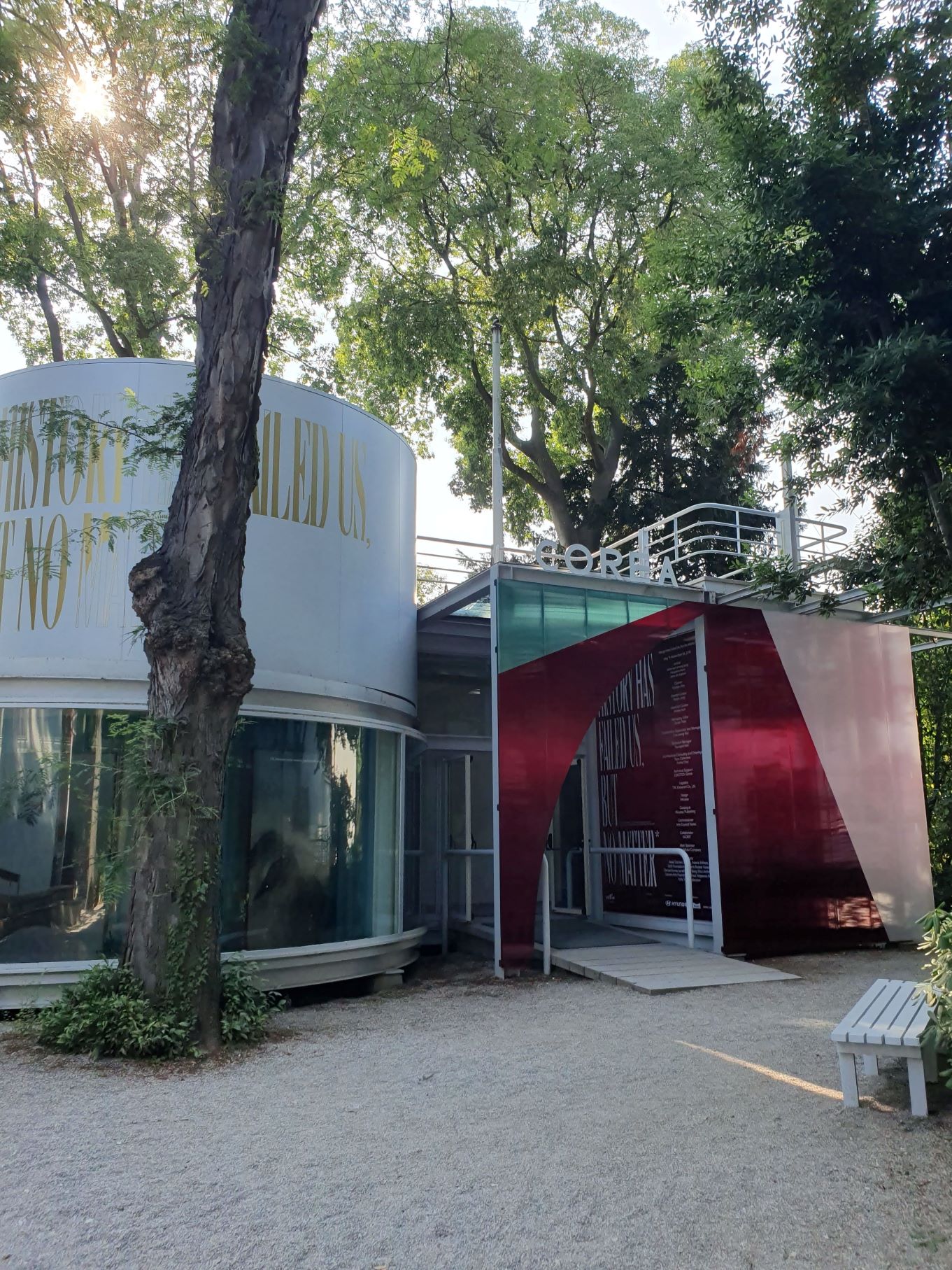
Venice Biennale Korean Pavilion
The Venice Biennale is an international art festival that began in 1895, and the Korean Pavilion opened in 1995 as the 26th national pavilion. The establishment of the Korean Pavilion was the result of government-level support, corporate donations, and the activism of artists after Paik Nam June’s work was exhibited in the German Pavilion and won the Golden Lion Award. The Pavilion was allocated space in Castello between the German and Japanese Pavilions. It was built primarily of glass and metal and based on the design of architect Kim Seokchul.
-
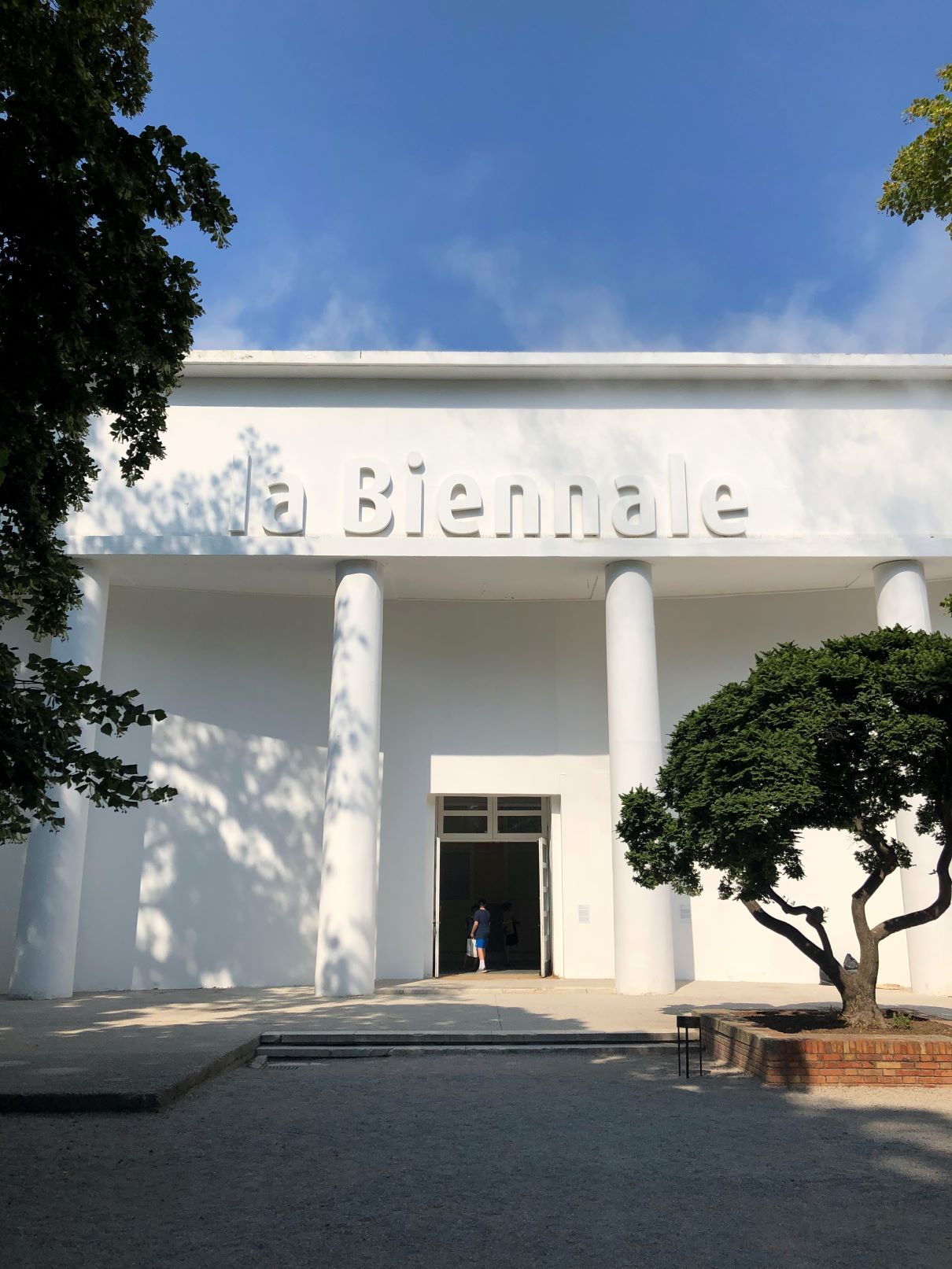
Venice Biennale
The Venice Biennale is an international art exhibition founded in 1895 in Venice, Italy. Its main exhibition, curated by a general director of the biennale, is held at the Arsenale, a former munitions factory, and national pavilions at Giardini Park host exhibitions curated by art directors of each participating country, making them compete against each other. South Korea first participated in the Venice Biennale in 1986 when Ko Younghoon and Ha Dongchul rented a section of the Italian Pavilion. In 1993, Paik Nam June won the Golden Lion award for his work submitted for the German Pavilion. In 1995, thanks to Paik Nam June’s efforts, the Korean Pavilion opened as the twenty-sixth national pavilion. Afterwards, Jheon Soocheon, Kang Ikjoong, and Lee Bul received a special prize at the international art exhibition of the biennale, respectively in 1995, 1997, and 1999. At the 2014 Venice Architecture Biennale, Cho Minsuk was awarded the Golden Lion for his exhibition Crow’s Eye View: The Korean Peninsula. At the art exhibition of the fifty-sixth Venice Biennale in 2015, Im Heungsoon won the Silver Lion for his documentary film Factory Complex. The Venice Biennale serves as a criterion that leads contemporary art or art market trends.

Sign Up for Email Updates