1. Lee Ufan, “Trends in Contemporary Japanese Art: Focusing on the 9th Contemporary Art Exhibition of Japan, [in Korean]” Space, no. 32 (July 1969): 78–82; Lee Ufan, “Introduction to the Phenomenology of Encounter, [in Korean]” AG, no. 4 (1971): 5–14; Lee Ufan, “The Nature and Direction of Object Thinking,” Hongik Misul, inaugural issue (1972): 86–96.
2. Lee Yil, “Representation, Expression, and Realization: A Glimpse into a Contemporary Art Scene, [in Korean]” Space, no. 97 (June 1975): 25-28.
3. Lee Yil, “Korea: Facet of Contemporary Art, [in Korean]” Space, no. 123 (September 1977): 83-84.
4. Representative examples include: Kim Yoon-soo, “On Avant-Garde Art, [in Korean]” Chaeyeon, no. 1 (1972); Park Yongsuk, “Why Conceptual Art?, [in Korean]” Space, no. 84 (April 1974); Won Dongseok, “The Foreign-Oriented Nature of Korean Abstract Art, [in Korean]” Daehwa, (January 1977): 158–169.
2. Lee Yil, “Representation, Expression, and Realization: A Glimpse into a Contemporary Art Scene, [in Korean]” Space, no. 97 (June 1975): 25-28.
3. Lee Yil, “Korea: Facet of Contemporary Art, [in Korean]” Space, no. 123 (September 1977): 83-84.
4. Representative examples include: Kim Yoon-soo, “On Avant-Garde Art, [in Korean]” Chaeyeon, no. 1 (1972); Park Yongsuk, “Why Conceptual Art?, [in Korean]” Space, no. 84 (April 1974); Won Dongseok, “The Foreign-Oriented Nature of Korean Abstract Art, [in Korean]” Daehwa, (January 1977): 158–169.
Shin Chunghoon
Toward ‘Korean Contemporary Art’: Korea: The Trend for the Past 20 Years of Contemporary Arts (1978), Korea: Five Artists, Five Hinsek—White (1975), Korea: Facet of Contemporary Art (1977)
Fueled by the economic growth generated by industrialization and urbanization in the 1970s, Korea witnessed the full-scale consolidation of its art institutions. The establishment of the National Museum of Modern Art, Seoul (now MMCA) in 1969, the successive openings of private galleries beginning with Myeong-dong Gallery and Hyundai Hwarang (now Gallery Hyundai) in 1970, and the launch of art magazines such as Gyegan Misul (Quarterly Art) in 1976 all helped remedy the lack of systems for the reception, distribution, and consumption of artworks that, until then, had been produced without adequate institutional support. These developments expanded the art-going public and enlarged the art market, thereby accelerating both the institutionalization and the historicization of contemporary art. In the 1970s, “contemporary art” in Korea was broadly construed. It was often identified with post-1950s abstraction, as in exhibitions such as Korean Contemporary Art 1957–1972 (Myeong-dong Gallery, 1973) and Korea: The Trends for the past 20 Years of Contemporary Arts (National Museum of Modern Art, Seoul, 1978). At the same time, however, it was also understood as a more expansive category encompassing twentieth-century Korean art as a whole. This broadened framing was shaped by the National Museum of Modern Art’s Modern Korean Art Exhibition series, which began with Sculpture in 1974 and continued with Crafts (1975), Eastern painting (1976), Western painting (1977), and Calligraphy, Architecture, and Photography (1978). It was further reinforced by the publication of Hanguk hyeondae misulsa (The History of Korean Contemporary Art) and the multi-volume Complete Works of Contemporary Korean Art, planned during the same period by the Hankook Ilbo newspaper company. As the very name of Gukrip Hyeondae Misulgwan (now MMCA) suggested—at the time exhibiting Korean art from across the twentieth century—the category of the “contemporary” (hyeondae) was invoked repeatedly, even as its meaning as a period designation remained fundamentally ambiguous.
In contrast to this neutralization—or nominalization—of the term, however, “contemporary art” in another register came to acquire renewed significance and expectation, gradually taking the place of the avant-garde as it fell into disrepute. Unlike its conventional and broadly inclusive usage, “contemporary art” was redefined as a project of intellectual and spiritual inquiry aimed at moving beyond the problematic legacy of modernity. More specifically, it was understood as an attempt to overcome the condition in which humanity—having assumed itself to be the measure of all things—constructed the world as an (illusory) image shaped by its own perspective, and in so doing became estranged from the living world itself. As part of this larger endeavor to transcend humanist modernity, the very idea of contemporary art drew heavily on Lee Ufan—introduced to Korean audiences the exhibition Contemporary Korean Painting at the National Museum of Modern Art, Tokyo, in 1968—whose theory of art, articulated the following year, significantly shaped Korean discourse, along with artistic discourses of anti-illusionism and literalism in the United States in the wake of Abstract Expressionism.1 In this context, Korean artists were urged to abandon manipulating materials in accordance with the artist’s intentions—imposing subjective expression or arbitrary meaning—as merely a perpetuation of modernity’s impasse. Instead, art was to become a means of structuring the encounter with a world that exists prior to humanist intervention. Critic Lee Yil, for his part, argued that Korean art was moving beyond “expression” and “representation”—the legacies of humanism—toward the “realization” of reality itself, a shift he described as marking the “transition from modern art to contemporary art.”2
Although the diverse artistic experiments that emerged in the Korean art field of the 1970s varied in form, they remained closely aligned with the renewed discursive field of anti-illusionist and anti-humanist “contemporary art”. Examples include the use of unprocessed natural objects or raw materials; the presentation of things stripped of contextual framing; paintings organized around repetitive brushstrokes, the intrinsic properties of canvas and pigment, or physical principles such as pressure and gravity; and performances structured through repetitive tasks, impassive gestures, or the body’s physical limits. Despite their apparent heterogeneity, these practices shared a common orientation: the displacement of the artist’s central role in favor of granting agency to materials, media, and environment. In this sense, they articulated newly charged modes of “contemporary art”. As a result, the discourse of Korean art was reorganized around concepts such as “materiality,” “matter,” “world,” “the actual,” and “the real.” This shift also energized the formation of groups and exhibitions including AG, ST, the Daegu Contemporary Art Festival, Indépendants, École de Séoul, and the Seoul Contemporary Art Festival.
The significance of the 1970s lay not only in the renewal of the discourse on “contemporary art,” but more decisively in the explicit articulation of “Korean contemporary art” as a concrete objective. In other words, the project of contemporary art advanced beyond positioning itself as a latecomer to modernism and began to take shape as an effort to move beyond imported models by grounding itself in what was regarded as native to this land. While this may appear to be a self-evident goal, it had until then remained largely nominal—either pressed aside by the urgency of catching up or hampered by the absence of a viable methodology. By the 1970s, however, the overcoming of “Western,”, anthropocentric modernity (and modern art) had become the very aim of contemporary art, and practice was redefined not as imitation but as the manifestation of what was already present: “whiteness,” “monochrome,” “non-action,” “the primal,” and “nature.” In this way, discussions of the achievements of Korean contemporary art—in both quantitative and qualitative terms—took shape. Lee Yil’s responses to overseas exhibitions such as Korea: Five Artists, Five Hinsek—White (Tokyo Gallery, Tokyo, 1975) and Korea: Facet of Contemporary Art (Central Museum of Art, Tokyo, 1977) exemplify this tendency. Encouraged by observations that these works resonated with Minimalism and Supports/Surfaces yet remained distinct from them, and that they appeared more overtly “Eastern” than Japanese art, Lee ultimately proclaimed that through these “artists of the 1970s,” contemporary art had become naturalized in Korea.3
Yet this heightened conviction that “contemporary Korean art” had at last been firmly established appeared to some as a misguided perception. Critics posed pointed questions: Could contemporary art, defined as the overcoming of humanist modernity, truly represent the art of a society that had scarcely undergone the formative experience of modernity itself? Were the Western and Japanese references not reduced to narrow formalist models? Were the “Korean” elements believed to be latent in contemporary art of the 1970s in fact overlooking the realities of Korean society, appealing instead merely to exoticism? Voices such as Kim Yoon-soo, Won Dongseok, and Park Yongsuk argued that the 1970s still witnessed mere imitation of powerful foreign models—imitations that lacked any historical necessity—and that Korean art remained confined to the realm of formal concerns.4 Indeed, the situation was increasingly perceived as more severe. With the growing emphasis on “logic” and “method” in the production and reception of art, Korean art had achieved an unprecedented theoretical clarity—an accomplishment that deserves recognition. At the same time, however, intuitive appreciation through ordinary vision became ever more difficult; art appeared overly erudite, even hermetic. Moreover, as such inaccessible forms of art came to monopolize institutional support, the alienation of the public from contemporary art emerged as an acute problem. From this perspective, the contemporary art of the 1970s captured neither the “Korean” nor the “contemporary.” Awareness of this contradiction converged with the rise of minjung (people’s) discourse, fueling a conviction that art should engage the sensibilities and lives of ordinary audiences. In this sense, following the aborted Reality Group Exhibition (Hyeongsil dongin) in 1969 and anticipating the minjung art of the 1980s, these discursive practices rejected “contemporary art” as tainted and compromised, yet sought to rewrite Korean contemporary art in response to the demands of the here and now.

In contrast to this neutralization—or nominalization—of the term, however, “contemporary art” in another register came to acquire renewed significance and expectation, gradually taking the place of the avant-garde as it fell into disrepute. Unlike its conventional and broadly inclusive usage, “contemporary art” was redefined as a project of intellectual and spiritual inquiry aimed at moving beyond the problematic legacy of modernity. More specifically, it was understood as an attempt to overcome the condition in which humanity—having assumed itself to be the measure of all things—constructed the world as an (illusory) image shaped by its own perspective, and in so doing became estranged from the living world itself. As part of this larger endeavor to transcend humanist modernity, the very idea of contemporary art drew heavily on Lee Ufan—introduced to Korean audiences the exhibition Contemporary Korean Painting at the National Museum of Modern Art, Tokyo, in 1968—whose theory of art, articulated the following year, significantly shaped Korean discourse, along with artistic discourses of anti-illusionism and literalism in the United States in the wake of Abstract Expressionism.1 In this context, Korean artists were urged to abandon manipulating materials in accordance with the artist’s intentions—imposing subjective expression or arbitrary meaning—as merely a perpetuation of modernity’s impasse. Instead, art was to become a means of structuring the encounter with a world that exists prior to humanist intervention. Critic Lee Yil, for his part, argued that Korean art was moving beyond “expression” and “representation”—the legacies of humanism—toward the “realization” of reality itself, a shift he described as marking the “transition from modern art to contemporary art.”2
Although the diverse artistic experiments that emerged in the Korean art field of the 1970s varied in form, they remained closely aligned with the renewed discursive field of anti-illusionist and anti-humanist “contemporary art”. Examples include the use of unprocessed natural objects or raw materials; the presentation of things stripped of contextual framing; paintings organized around repetitive brushstrokes, the intrinsic properties of canvas and pigment, or physical principles such as pressure and gravity; and performances structured through repetitive tasks, impassive gestures, or the body’s physical limits. Despite their apparent heterogeneity, these practices shared a common orientation: the displacement of the artist’s central role in favor of granting agency to materials, media, and environment. In this sense, they articulated newly charged modes of “contemporary art”. As a result, the discourse of Korean art was reorganized around concepts such as “materiality,” “matter,” “world,” “the actual,” and “the real.” This shift also energized the formation of groups and exhibitions including AG, ST, the Daegu Contemporary Art Festival, Indépendants, École de Séoul, and the Seoul Contemporary Art Festival.
The significance of the 1970s lay not only in the renewal of the discourse on “contemporary art,” but more decisively in the explicit articulation of “Korean contemporary art” as a concrete objective. In other words, the project of contemporary art advanced beyond positioning itself as a latecomer to modernism and began to take shape as an effort to move beyond imported models by grounding itself in what was regarded as native to this land. While this may appear to be a self-evident goal, it had until then remained largely nominal—either pressed aside by the urgency of catching up or hampered by the absence of a viable methodology. By the 1970s, however, the overcoming of “Western,”, anthropocentric modernity (and modern art) had become the very aim of contemporary art, and practice was redefined not as imitation but as the manifestation of what was already present: “whiteness,” “monochrome,” “non-action,” “the primal,” and “nature.” In this way, discussions of the achievements of Korean contemporary art—in both quantitative and qualitative terms—took shape. Lee Yil’s responses to overseas exhibitions such as Korea: Five Artists, Five Hinsek—White (Tokyo Gallery, Tokyo, 1975) and Korea: Facet of Contemporary Art (Central Museum of Art, Tokyo, 1977) exemplify this tendency. Encouraged by observations that these works resonated with Minimalism and Supports/Surfaces yet remained distinct from them, and that they appeared more overtly “Eastern” than Japanese art, Lee ultimately proclaimed that through these “artists of the 1970s,” contemporary art had become naturalized in Korea.3
Yet this heightened conviction that “contemporary Korean art” had at last been firmly established appeared to some as a misguided perception. Critics posed pointed questions: Could contemporary art, defined as the overcoming of humanist modernity, truly represent the art of a society that had scarcely undergone the formative experience of modernity itself? Were the Western and Japanese references not reduced to narrow formalist models? Were the “Korean” elements believed to be latent in contemporary art of the 1970s in fact overlooking the realities of Korean society, appealing instead merely to exoticism? Voices such as Kim Yoon-soo, Won Dongseok, and Park Yongsuk argued that the 1970s still witnessed mere imitation of powerful foreign models—imitations that lacked any historical necessity—and that Korean art remained confined to the realm of formal concerns.4 Indeed, the situation was increasingly perceived as more severe. With the growing emphasis on “logic” and “method” in the production and reception of art, Korean art had achieved an unprecedented theoretical clarity—an accomplishment that deserves recognition. At the same time, however, intuitive appreciation through ordinary vision became ever more difficult; art appeared overly erudite, even hermetic. Moreover, as such inaccessible forms of art came to monopolize institutional support, the alienation of the public from contemporary art emerged as an acute problem. From this perspective, the contemporary art of the 1970s captured neither the “Korean” nor the “contemporary.” Awareness of this contradiction converged with the rise of minjung (people’s) discourse, fueling a conviction that art should engage the sensibilities and lives of ordinary audiences. In this sense, following the aborted Reality Group Exhibition (Hyeongsil dongin) in 1969 and anticipating the minjung art of the 1980s, these discursive practices rejected “contemporary art” as tainted and compromised, yet sought to rewrite Korean contemporary art in response to the demands of the here and now.
- Share
 Copy URL
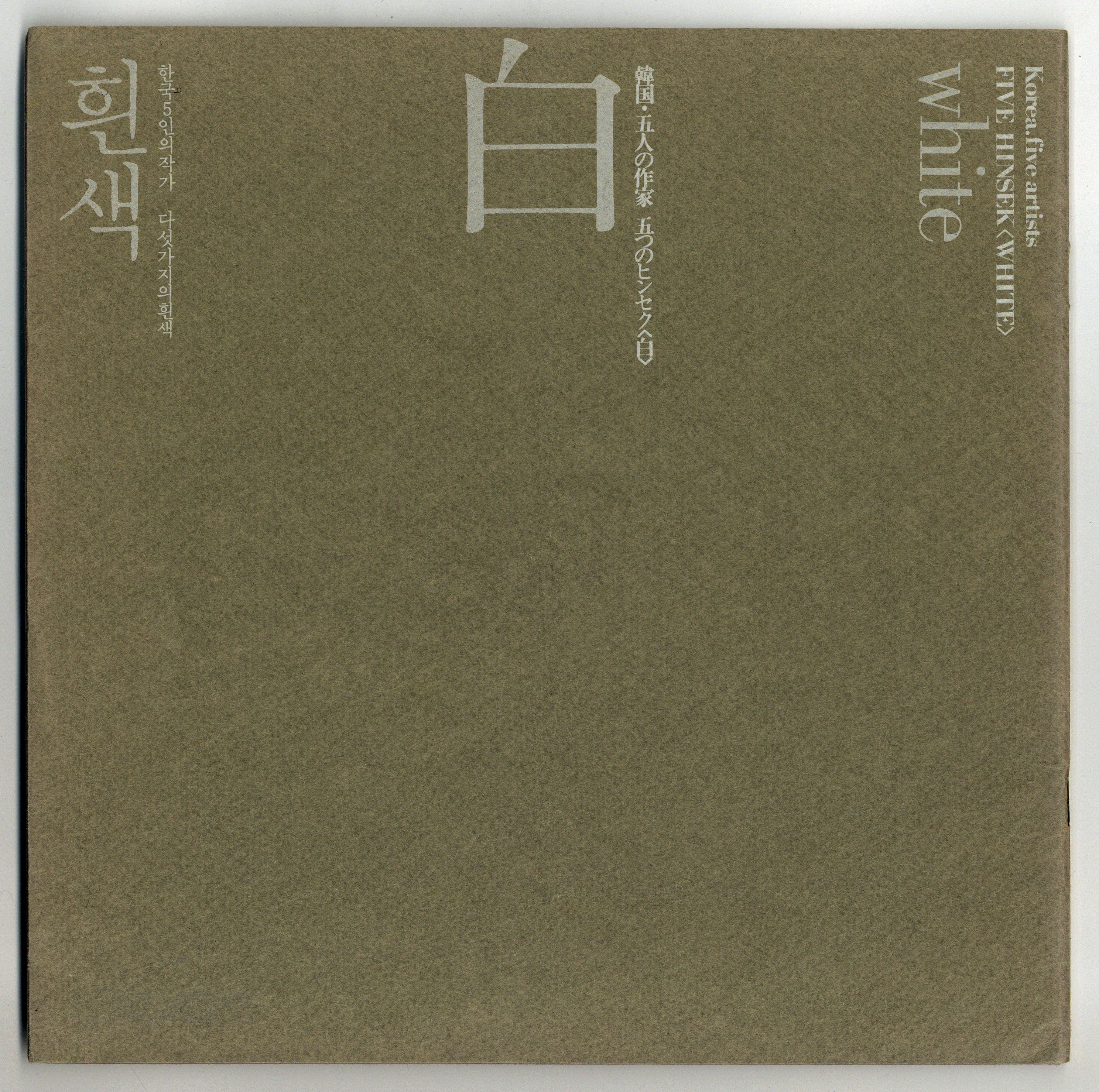
Korea: Five Artists, Five Hinsek—White, exhibition brochure, 1975, MMCA Art Research Center Collection. Gift of Tokyo Gallery.
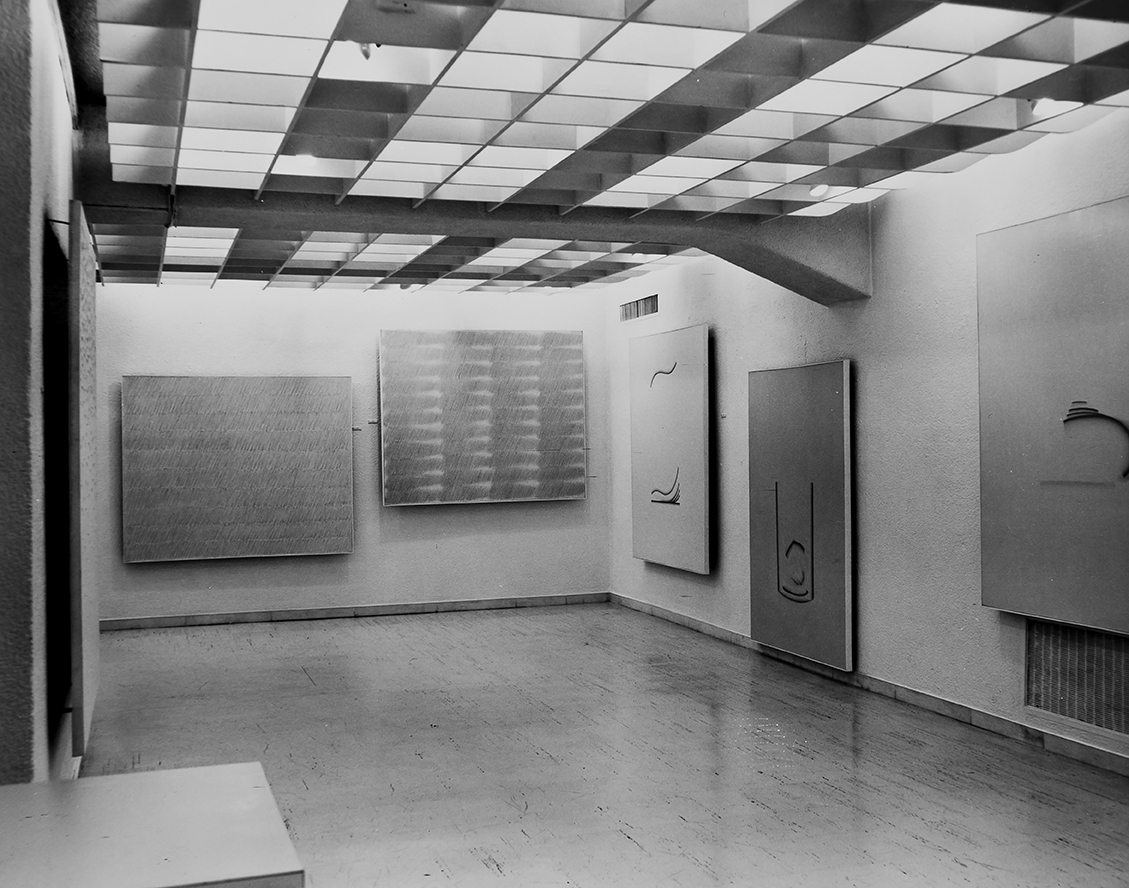
Installation view of Korea: Five Artists, Five Hinsek—White at Tokyo Gallery, 1975, MMCA Art Research Center Collection. Gift of Tokyo Gallery.
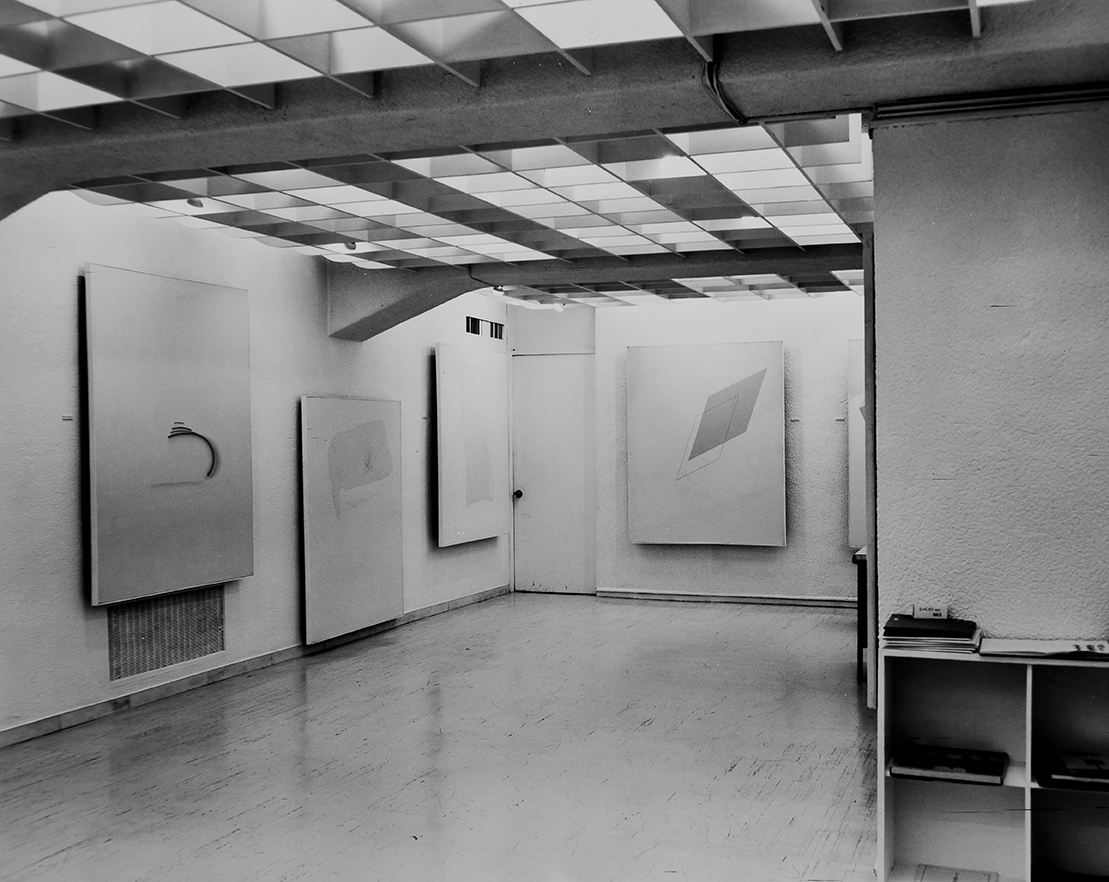
Installation view of Korea: Five Artists, Five Hinsek—White at Tokyo Gallery, 1975, MMCA Art Research Center Collection. Gift of Tokyo Gallery.
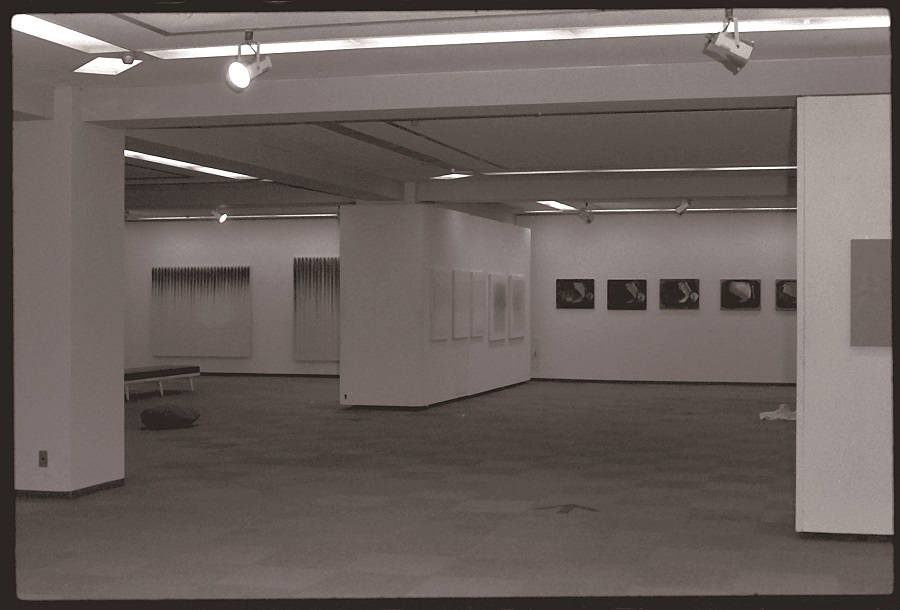
Installation view of Korea: Facet of Contemporary Art, 1977, MMCA Art Research Center Collection, Courtesy of Tokyo Gallery.
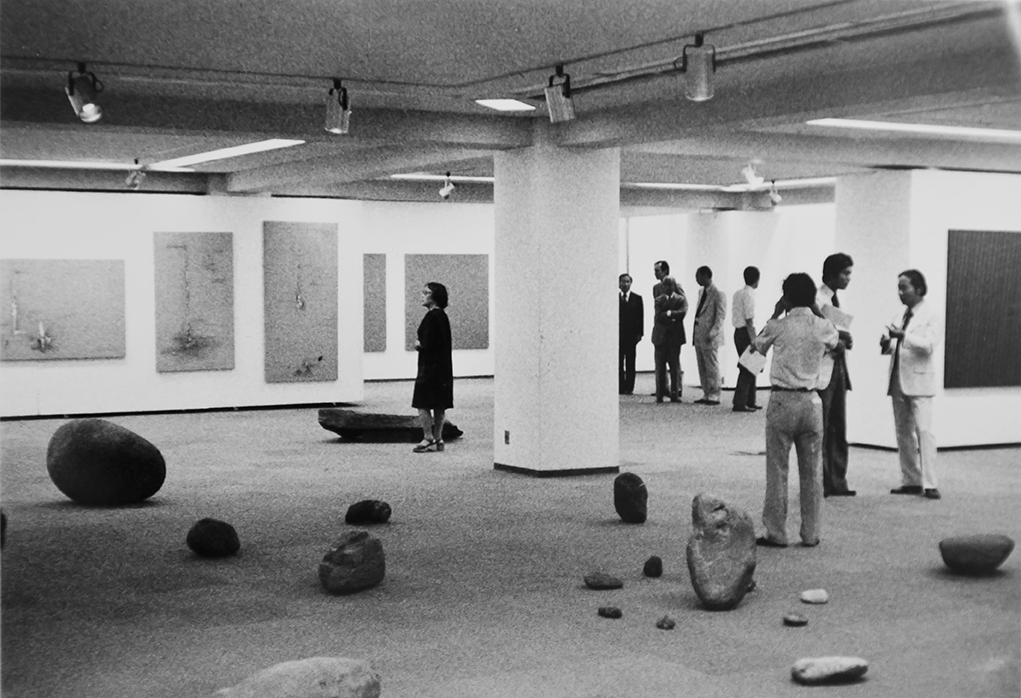
Installation view of Korea: Facet of Contemporary Art at Central Museum of Art, Tokyo, 1977. MMCA Art Research Center Collection. Courtesy of Tokyo Gallery.
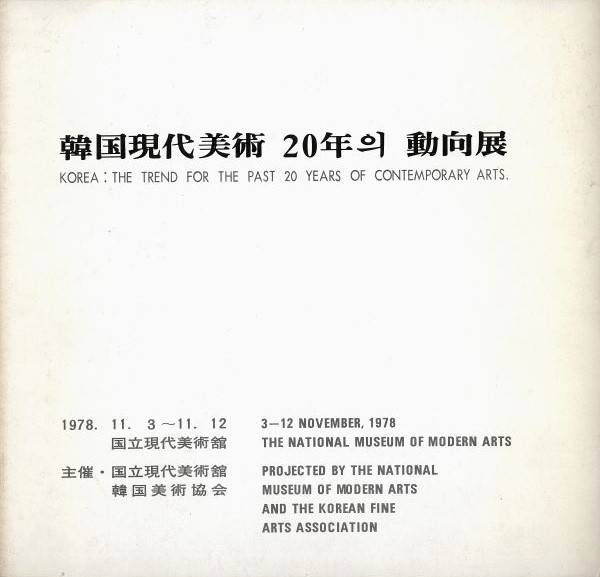
Korea: The Trend for the Past 20 Years of Contemporary Arts, exhibition brochure, 1978. MMCA Art Research Center Collection.

Sign Up for Email Updates