1. Ki Hey-kyung, “Paradigm Shift in Korean Art Scene in 1990: Focusing on Two Exhibitions,” Korean Bulletin of Art History no. 42 (2013): 47.
2. Research Society for Art Criticism (RSAC) was formed in 1989, and in addition to its core figures, members such as Lee Youngwook, Shim Kwanghyun, and Park Sinui were also participated actively. In 1992, Kim Suki, Kim Jinsong, Um Hyuk, and Cho Bongjin—members of RSAC—founded the publishing house Hyunsil Publishing, thereby breaking away from the organization. Between 1993 and 1994, as many members went abroad for graduate studies, RSAC was effectively dissolved. For further discussion on RSAC and the postmodernism debates, see Mun Hye Jin, Korean Art of the 1990s and Postmodernism (Seoul: Hyunshil Munhwa, 2015), 34-42.
3. See Ki Hey-kyung, Ibid., 46, n. 4.
4. Lee Young Chul, “Culture in the Periphery and Identity in Korean Art,” in Across the Pacific: Contemporary Korean and Korean-American Art, exhibition catalogue (New York: Queens Museum of Art, 1993), 79–82.
5. Beck Jee-sook, “The Coordinates of Contemporary Korean Alternative Spaces,” Wolgan Misul, no. 229 (February 2004): 48.
6. This exhibition was organized to commemorate Korea’s designation as the guest country at the 2005 Frankfurt Book Fair and was co-hosted by the Arts Council Korea and the Book Fair Organizing Committee. German curator Dr. Peter Joch co-curated the exhibition with Beck Jee-sook. A total of twenty-one artists participated, including Koh Seung Wook, Kim Youngsoo, Kim Yongtae, Kim Jungheun, Rho Jaeoon, Mixrice, Min Yong Soon, Min Joungki, Park Youngsook, Bae Youngwhan, Son Kihwan, Song Sanghee, Shin Jicheol, Shin Hakchul, Oh Yoon, Lee Kyungsoo, Lim Oksang, Jo Haejun, Joo Jaehwan, Choi Minhwa, and Choi Jeonghwa.
7. This exhibition was jointly organized by Insa Art Space and the Govett-Brewster Art Gallery in New Zealand. Participating artists included Park Chan-kyong, Bae Young-whan, Lim Minouk, Oh Heinkuhn, Go Hyun Ju, Flying City, Kim Ki-soo, Kim Sangdon, JNP Production, Mixrice, Choi Jeonghwa and Jeon Yongseok, Kim Bo-hyeong, and the Cheonggyecheon Design Center (CDC), which was founded by Lim Minouk in 2007.
8. Beck Jee-Sook, “Critical Art in Korea: Some Currents,” in Facing : Korea: Korean Contemporary Art 2003 (Seoul: Yellow Sea, 2003), 35.
9. Beck Jee-Sook, “Minjung Art in the Year 2005, or the Year 2005 in Minjung Art,” The Battle of Visions (Seoul: ARKO&KOGAF, 2005), 117-118.
10. The 2005 exhibition Contemporary Art from Korea — Alchemy of Daily Life, held in New Zealand, can also be seen as a contemporary Korean art exhibition that departed from the dominant curatorial frameworks discussed above. However, while this exhibition was an overseas touring version of a show originally intended for a domestic audience by the National Museum of Contemporary Art, Peppermint Candy was conceived from the outset as an exhibition specifically intended to promote contemporary Korean art internationally. For this reason, this essay will focus primarily on Peppermint Candy.
11. The list of participating artists by section is as follows: Part 1: Made in Korea – Kang Yong-Suk, Song Sanghee, Jo Seub, Bae Younghwan, Suh Doho, Gimhongsok, Oak Jungho, Jeon Joonho / Part 2: New Town Ghost – Park Junebum, Lim Minouk, Kong Sunghun, Jung Yeondoo, Kim Kira, Kim Oksun, Oh Inhwan / Part 3: Plastic Paradise – Lee Dongwook, Gwon Osang, Kim Dujin, Choi Jeonghwa, Koo Sung-Soo, Hong Kyoung-Tack, Kim Sang-Gil, Lee Yongbaek.
2. Research Society for Art Criticism (RSAC) was formed in 1989, and in addition to its core figures, members such as Lee Youngwook, Shim Kwanghyun, and Park Sinui were also participated actively. In 1992, Kim Suki, Kim Jinsong, Um Hyuk, and Cho Bongjin—members of RSAC—founded the publishing house Hyunsil Publishing, thereby breaking away from the organization. Between 1993 and 1994, as many members went abroad for graduate studies, RSAC was effectively dissolved. For further discussion on RSAC and the postmodernism debates, see Mun Hye Jin, Korean Art of the 1990s and Postmodernism (Seoul: Hyunshil Munhwa, 2015), 34-42.
3. See Ki Hey-kyung, Ibid., 46, n. 4.
4. Lee Young Chul, “Culture in the Periphery and Identity in Korean Art,” in Across the Pacific: Contemporary Korean and Korean-American Art, exhibition catalogue (New York: Queens Museum of Art, 1993), 79–82.
5. Beck Jee-sook, “The Coordinates of Contemporary Korean Alternative Spaces,” Wolgan Misul, no. 229 (February 2004): 48.
6. This exhibition was organized to commemorate Korea’s designation as the guest country at the 2005 Frankfurt Book Fair and was co-hosted by the Arts Council Korea and the Book Fair Organizing Committee. German curator Dr. Peter Joch co-curated the exhibition with Beck Jee-sook. A total of twenty-one artists participated, including Koh Seung Wook, Kim Youngsoo, Kim Yongtae, Kim Jungheun, Rho Jaeoon, Mixrice, Min Yong Soon, Min Joungki, Park Youngsook, Bae Youngwhan, Son Kihwan, Song Sanghee, Shin Jicheol, Shin Hakchul, Oh Yoon, Lee Kyungsoo, Lim Oksang, Jo Haejun, Joo Jaehwan, Choi Minhwa, and Choi Jeonghwa.
7. This exhibition was jointly organized by Insa Art Space and the Govett-Brewster Art Gallery in New Zealand. Participating artists included Park Chan-kyong, Bae Young-whan, Lim Minouk, Oh Heinkuhn, Go Hyun Ju, Flying City, Kim Ki-soo, Kim Sangdon, JNP Production, Mixrice, Choi Jeonghwa and Jeon Yongseok, Kim Bo-hyeong, and the Cheonggyecheon Design Center (CDC), which was founded by Lim Minouk in 2007.
8. Beck Jee-Sook, “Critical Art in Korea: Some Currents,” in Facing : Korea: Korean Contemporary Art 2003 (Seoul: Yellow Sea, 2003), 35.
9. Beck Jee-Sook, “Minjung Art in the Year 2005, or the Year 2005 in Minjung Art,” The Battle of Visions (Seoul: ARKO&KOGAF, 2005), 117-118.
10. The 2005 exhibition Contemporary Art from Korea — Alchemy of Daily Life, held in New Zealand, can also be seen as a contemporary Korean art exhibition that departed from the dominant curatorial frameworks discussed above. However, while this exhibition was an overseas touring version of a show originally intended for a domestic audience by the National Museum of Contemporary Art, Peppermint Candy was conceived from the outset as an exhibition specifically intended to promote contemporary Korean art internationally. For this reason, this essay will focus primarily on Peppermint Candy.
11. The list of participating artists by section is as follows: Part 1: Made in Korea – Kang Yong-Suk, Song Sanghee, Jo Seub, Bae Younghwan, Suh Doho, Gimhongsok, Oak Jungho, Jeon Joonho / Part 2: New Town Ghost – Park Junebum, Lim Minouk, Kong Sunghun, Jung Yeondoo, Kim Kira, Kim Oksun, Oh Inhwan / Part 3: Plastic Paradise – Lee Dongwook, Gwon Osang, Kim Dujin, Choi Jeonghwa, Koo Sung-Soo, Hong Kyoung-Tack, Kim Sang-Gil, Lee Yongbaek.
Jeon Yushin
Reflection of Socio-Political Realities: Across the Pacific (1993), Facing Korea (2003), The Battle of Visions (2005), Activating Korea (2007)
The 1993 exhibition Across the Pacific: Contemporary Korean and Korean-American Art, held at the Queens Museum of Art (now Queens Museum) in New York, can be seen as a starting point for exhibitions of contemporary Korean art that reflected Korea’s political and social realities. The exhibition was initiated when the SEORO Korean Cultural Network (hereafter SEORO), founded in 1990 by artists Bahc Yiso (then Bahc Mo) and Choi Sung Ho, along with independent film curator Park Hyejung—who were active in New York at the time—proposed the project to the Queens Museum of Art. The exhibition was organized into three sections: works by Korean American artists, works by young artists based in Korea, and screenings of independent films by Korean directors active in the United States. Each section was curated respectively by Jane Farver, curator at the Queens Museum of Art; Lee Young Chul; and Park Hyejung.
Lee Young Chul participated as the Korean curator for the exhibition in part because he was serving as president of the Research Society for Art Criticism (hereafter RSAC), which operated in collaboration with SEORO following its founding.1 Established in 1989, RSAC was a collective of young art critics affiliated with the Minjung art movement, including Lee Young Chul, Beck Jee-sook, Um Hyuk, and Park Chan-kyong.2 Prior to the founding of both SEORO and RSAC, Bahc Yiso of SEORO and Um Hyuk of RSAC had already played a leading role in organizing the 1988 exhibition Min Joong Art: A New Cultural Movement from Korea at Artists Space, an alternative art space in New York. SEORO regarded Korea’s progressive art movement and the work of Korean American artists as mutually complementary. Consequently, when the group commissioned RSAC to select participating artists for Across the Pacific, the selection was intentionally limited to works associated with the progressive art camp.3 Lee Young Chul ultimately selected twelve artists, more than half of whom had been involved in the Minjung art movement of the 1980s.
In his catalogue essay, Lee Young Chul characterizes modernist art—represented by Dansaekhwa (Korean monochrome painting)—as an opposing force that must be resisted and overcome. He strongly criticizes the way such art, grounded in a naturalist aesthetic, has contributed to the entrenchment of Orientalist frameworks as the defining identity of contemporary Korean art.4 In the early 1990s, RSAC came to be recognized as a leading group of young critics in the Korean art world, particularly through its highly visible postmodernism debates with critics aligned with the modernist camp. As curators affiliated with RSAC began participating in the planning of contemporary Korean art exhibitions, these exhibitions came to be seen, in part, as extensions of the ideological disputes and tensions that had played out between the two camps.
Among the factors that brought renewed attention to Korean modernist art—which, until the 1980s, had received limited recognition both within Korea and in the West—were several contemporary Korean art exhibitions held in the early 1990s. Beginning with Working with Nature, in which Dansaekhwa artists participated collectively, Korean modernist art was reintroduced to the Western art world as a representative form of Korean art. At the same time, starting with Across the Pacific, works considered to stand in opposition to modernist art also began to be presented internationally as emblematic of contemporary Korean art. The emergence of numerous exhibitions in the 2000s that adopted this curatorial framework—many of them curated by Beck Jee-sook, a key figure from the RSAC—suggests that contemporary Korean art exhibitions continued, even during this period, to serve as an extension of the ideological contest between the camps of modernism and Minjung art.
For nine years, from 2000 to 2008, Beck Jee-sook served as both curator and director of the ARKO Art Center (formerly Marronnier Art Center) and Insa Art Space, institutions operated by the Arts Council Korea (ARKO). Insa Art Space, established in 2000 as an alternative space, shared multiple points of connection with Alternative Space Pool, which Beck once described as an “advanced base for post-Minjung art.”5 During her tenure, the ARKO Art Center hosted exhibitions of major artists associated with the Minjung art movement, including Shin Hakchul, Min Joungki, and Choi Minhwa. This curatorial orientation was likewise reflected in the contemporary Korean art exhibitions organized by ARKO in which Beck participated while serving at both institutions.
Beck Jee-sook began her involvement in large-scale international exhibitions of contemporary Korean art with Facing Korea: Dutch-Korean Contemporary Art 2003, held in the Netherlands. She later co-curated The Battle of Visions in 2005,6 and in 2007 curated Activating Korea: Tides of Collective Action, an exhibition presented in New Zealand.7 In the Facing Korea exhibition catalogue, Beck characterizes the Korean art world of the 1990s as one in which the heirs of “Korean modernism” adopted postmodernist theory to aggressively oppose Minjung art, while, conversely, Minjung artists and their intellectual successors turned their focus toward media art and the emerging discourse of the “new generation.”8 In the catalogue for The Battle of Visions, she poses the question of why Minjung art warranted renewed attention in 2005, suggesting that its continued significance lies in its persistent effort to synthesize historical avant-gardism, political radicalism, and aesthetic modernism.9 Beck’s writings consistently frame contemporary Korean art through the binary opposition of modernism and Minjung art, with a particular emphasis on affirming the importance of the latter.
Around the time of Across the Pacific, several exhibitions introducing Korea’s political and social realities were held in the United States. From the early 2000s, similar exhibitions—including those curated by Beck Jee-sook—began to be mounted in Europe as well. In contrast, such works were not widely introduced in Asia until 2007, when the exhibition Art Toward the Society: Realism in Korean Art, 1945–2005, held in Japan, marked the beginning of a more concerted presentation of this material in the region. Although Japan has been one of the most frequent sites for major exhibitions of contemporary Korean art since the 1970s, these exhibitions have primarily centered on Dansaekhwa. The fact that Art Toward the Society—organized by the National Museum of Contemporary Art, Korea (now the National Museum of Modern and Contemporary Art, Korea)—was able to tour five art museums across Japan appears to reflect the influence of art critic Kim Yoon-Soo, a leading figure in the Minjung art movement who was then serving as director of the museum. In this sense, exhibitions of contemporary Korean art functioned as an extension of the ideological debates between the camps of modernism and Minjung art. At times, this divide even informed the geographic terrain in which such exhibitions were presented.
In the same year that Art Toward the Society was held, the National Museum of Contemporary Art, Korea also organized another contemporary Korean art exhibition—Peppermint Candy—which departed from the established framework of naturalism and East Asian tradition to focus instead on Korea’s political and social realities.10 The roster of participating artists in Peppermint Candy was markedly different from that of the National Museum of Contemporary Art’s previous contemporary Korean art exhibitions, with Choi Jeonghwa being the only artist featured in both. Most notably, a new characteristic of this exhibition was the prominent inclusion of artists whose work addressed Korea’s political and social realities from the 1990s onward.11
* This essay is a revised version of the author’s earlier essay, “Exhibitions of Contemporary Korean Art Held Overseas,” originally published in Contemporary Korean Art Since the 1990s (co-authored by Yun Nanji et al., planned by the Forum for Contemporary Art, Seoul: Sahoipyoungnon, 2017).

Lee Young Chul participated as the Korean curator for the exhibition in part because he was serving as president of the Research Society for Art Criticism (hereafter RSAC), which operated in collaboration with SEORO following its founding.1 Established in 1989, RSAC was a collective of young art critics affiliated with the Minjung art movement, including Lee Young Chul, Beck Jee-sook, Um Hyuk, and Park Chan-kyong.2 Prior to the founding of both SEORO and RSAC, Bahc Yiso of SEORO and Um Hyuk of RSAC had already played a leading role in organizing the 1988 exhibition Min Joong Art: A New Cultural Movement from Korea at Artists Space, an alternative art space in New York. SEORO regarded Korea’s progressive art movement and the work of Korean American artists as mutually complementary. Consequently, when the group commissioned RSAC to select participating artists for Across the Pacific, the selection was intentionally limited to works associated with the progressive art camp.3 Lee Young Chul ultimately selected twelve artists, more than half of whom had been involved in the Minjung art movement of the 1980s.
In his catalogue essay, Lee Young Chul characterizes modernist art—represented by Dansaekhwa (Korean monochrome painting)—as an opposing force that must be resisted and overcome. He strongly criticizes the way such art, grounded in a naturalist aesthetic, has contributed to the entrenchment of Orientalist frameworks as the defining identity of contemporary Korean art.4 In the early 1990s, RSAC came to be recognized as a leading group of young critics in the Korean art world, particularly through its highly visible postmodernism debates with critics aligned with the modernist camp. As curators affiliated with RSAC began participating in the planning of contemporary Korean art exhibitions, these exhibitions came to be seen, in part, as extensions of the ideological disputes and tensions that had played out between the two camps.
Among the factors that brought renewed attention to Korean modernist art—which, until the 1980s, had received limited recognition both within Korea and in the West—were several contemporary Korean art exhibitions held in the early 1990s. Beginning with Working with Nature, in which Dansaekhwa artists participated collectively, Korean modernist art was reintroduced to the Western art world as a representative form of Korean art. At the same time, starting with Across the Pacific, works considered to stand in opposition to modernist art also began to be presented internationally as emblematic of contemporary Korean art. The emergence of numerous exhibitions in the 2000s that adopted this curatorial framework—many of them curated by Beck Jee-sook, a key figure from the RSAC—suggests that contemporary Korean art exhibitions continued, even during this period, to serve as an extension of the ideological contest between the camps of modernism and Minjung art.
For nine years, from 2000 to 2008, Beck Jee-sook served as both curator and director of the ARKO Art Center (formerly Marronnier Art Center) and Insa Art Space, institutions operated by the Arts Council Korea (ARKO). Insa Art Space, established in 2000 as an alternative space, shared multiple points of connection with Alternative Space Pool, which Beck once described as an “advanced base for post-Minjung art.”5 During her tenure, the ARKO Art Center hosted exhibitions of major artists associated with the Minjung art movement, including Shin Hakchul, Min Joungki, and Choi Minhwa. This curatorial orientation was likewise reflected in the contemporary Korean art exhibitions organized by ARKO in which Beck participated while serving at both institutions.
Beck Jee-sook began her involvement in large-scale international exhibitions of contemporary Korean art with Facing Korea: Dutch-Korean Contemporary Art 2003, held in the Netherlands. She later co-curated The Battle of Visions in 2005,6 and in 2007 curated Activating Korea: Tides of Collective Action, an exhibition presented in New Zealand.7 In the Facing Korea exhibition catalogue, Beck characterizes the Korean art world of the 1990s as one in which the heirs of “Korean modernism” adopted postmodernist theory to aggressively oppose Minjung art, while, conversely, Minjung artists and their intellectual successors turned their focus toward media art and the emerging discourse of the “new generation.”8 In the catalogue for The Battle of Visions, she poses the question of why Minjung art warranted renewed attention in 2005, suggesting that its continued significance lies in its persistent effort to synthesize historical avant-gardism, political radicalism, and aesthetic modernism.9 Beck’s writings consistently frame contemporary Korean art through the binary opposition of modernism and Minjung art, with a particular emphasis on affirming the importance of the latter.
Around the time of Across the Pacific, several exhibitions introducing Korea’s political and social realities were held in the United States. From the early 2000s, similar exhibitions—including those curated by Beck Jee-sook—began to be mounted in Europe as well. In contrast, such works were not widely introduced in Asia until 2007, when the exhibition Art Toward the Society: Realism in Korean Art, 1945–2005, held in Japan, marked the beginning of a more concerted presentation of this material in the region. Although Japan has been one of the most frequent sites for major exhibitions of contemporary Korean art since the 1970s, these exhibitions have primarily centered on Dansaekhwa. The fact that Art Toward the Society—organized by the National Museum of Contemporary Art, Korea (now the National Museum of Modern and Contemporary Art, Korea)—was able to tour five art museums across Japan appears to reflect the influence of art critic Kim Yoon-Soo, a leading figure in the Minjung art movement who was then serving as director of the museum. In this sense, exhibitions of contemporary Korean art functioned as an extension of the ideological debates between the camps of modernism and Minjung art. At times, this divide even informed the geographic terrain in which such exhibitions were presented.
In the same year that Art Toward the Society was held, the National Museum of Contemporary Art, Korea also organized another contemporary Korean art exhibition—Peppermint Candy—which departed from the established framework of naturalism and East Asian tradition to focus instead on Korea’s political and social realities.10 The roster of participating artists in Peppermint Candy was markedly different from that of the National Museum of Contemporary Art’s previous contemporary Korean art exhibitions, with Choi Jeonghwa being the only artist featured in both. Most notably, a new characteristic of this exhibition was the prominent inclusion of artists whose work addressed Korea’s political and social realities from the 1990s onward.11
* This essay is a revised version of the author’s earlier essay, “Exhibitions of Contemporary Korean Art Held Overseas,” originally published in Contemporary Korean Art Since the 1990s (co-authored by Yun Nanji et al., planned by the Forum for Contemporary Art, Seoul: Sahoipyoungnon, 2017).
- Share
 Copy URL

Across the Pacific, Exhibition catalogue, 1993, MMCA Art Library.
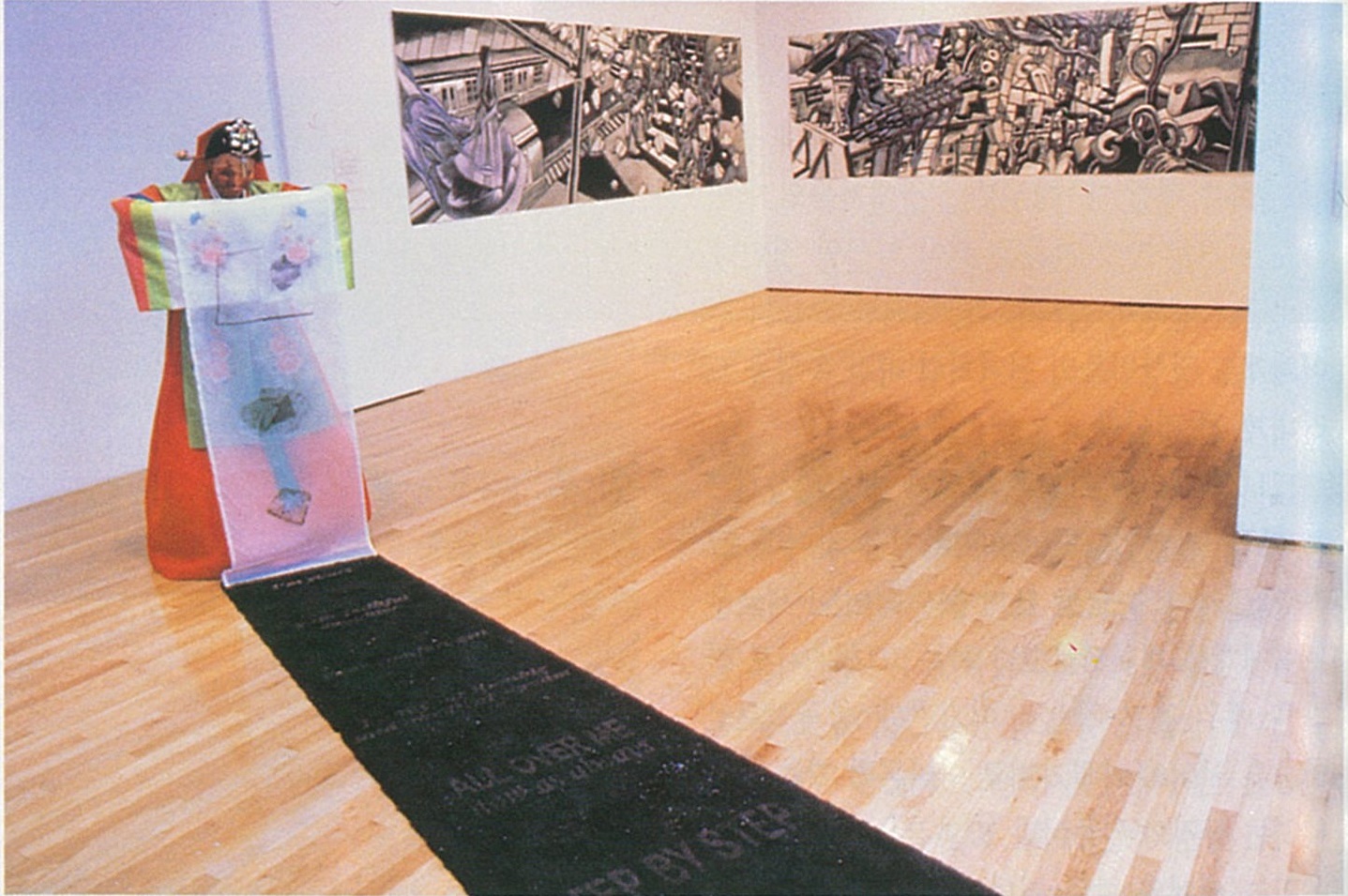
Installation view of Across the Pacific, 1993, Misulsegae (April 1994): 94.
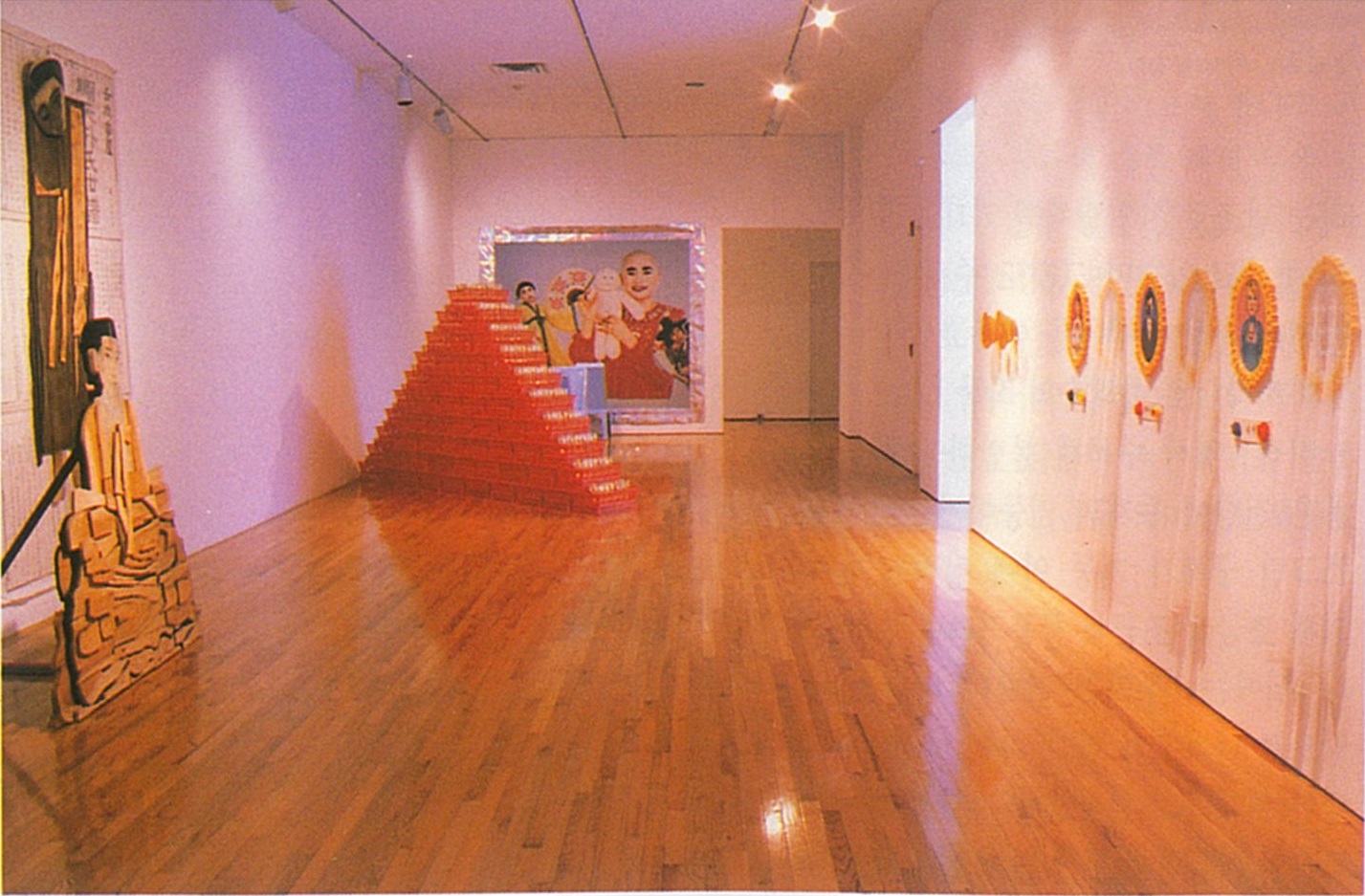
Installation view of Across the Pacific, 1993, Misulsegae (April 1994): 94.
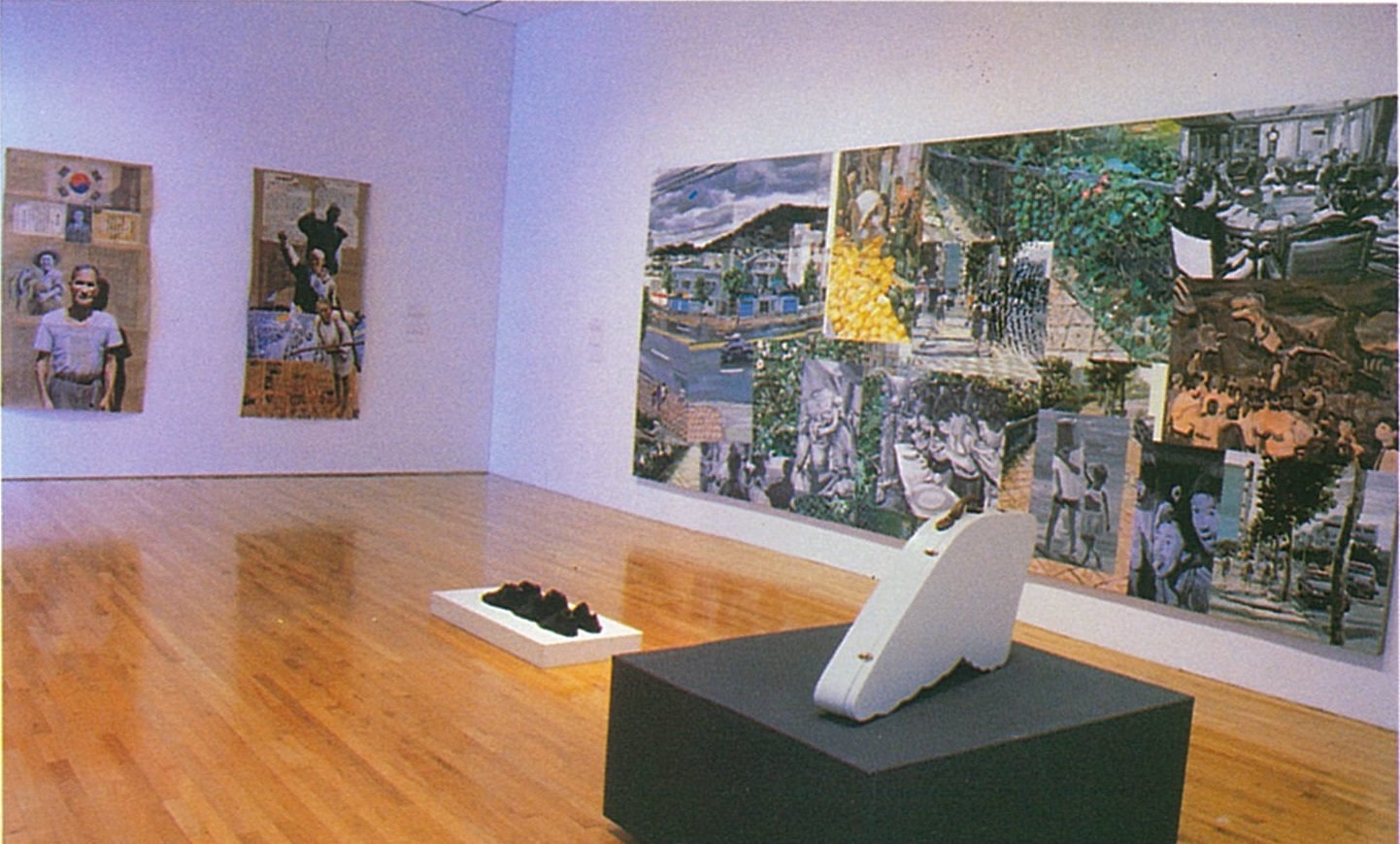
Installation view of Across the Pacific, Misulsegae (April 1994): 95.
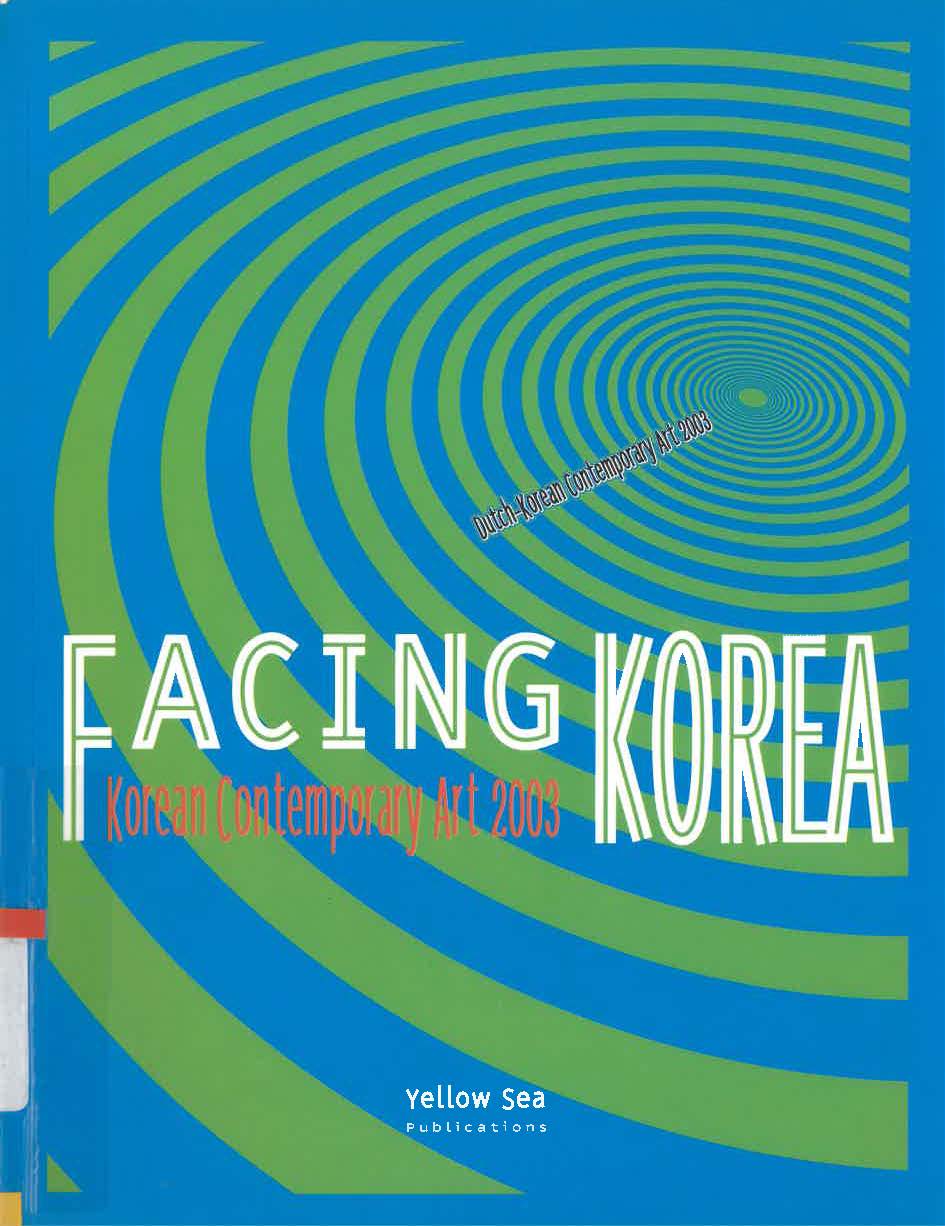
Facing Korea, Exhibition catalogue, 2003, MMCA Art Library.
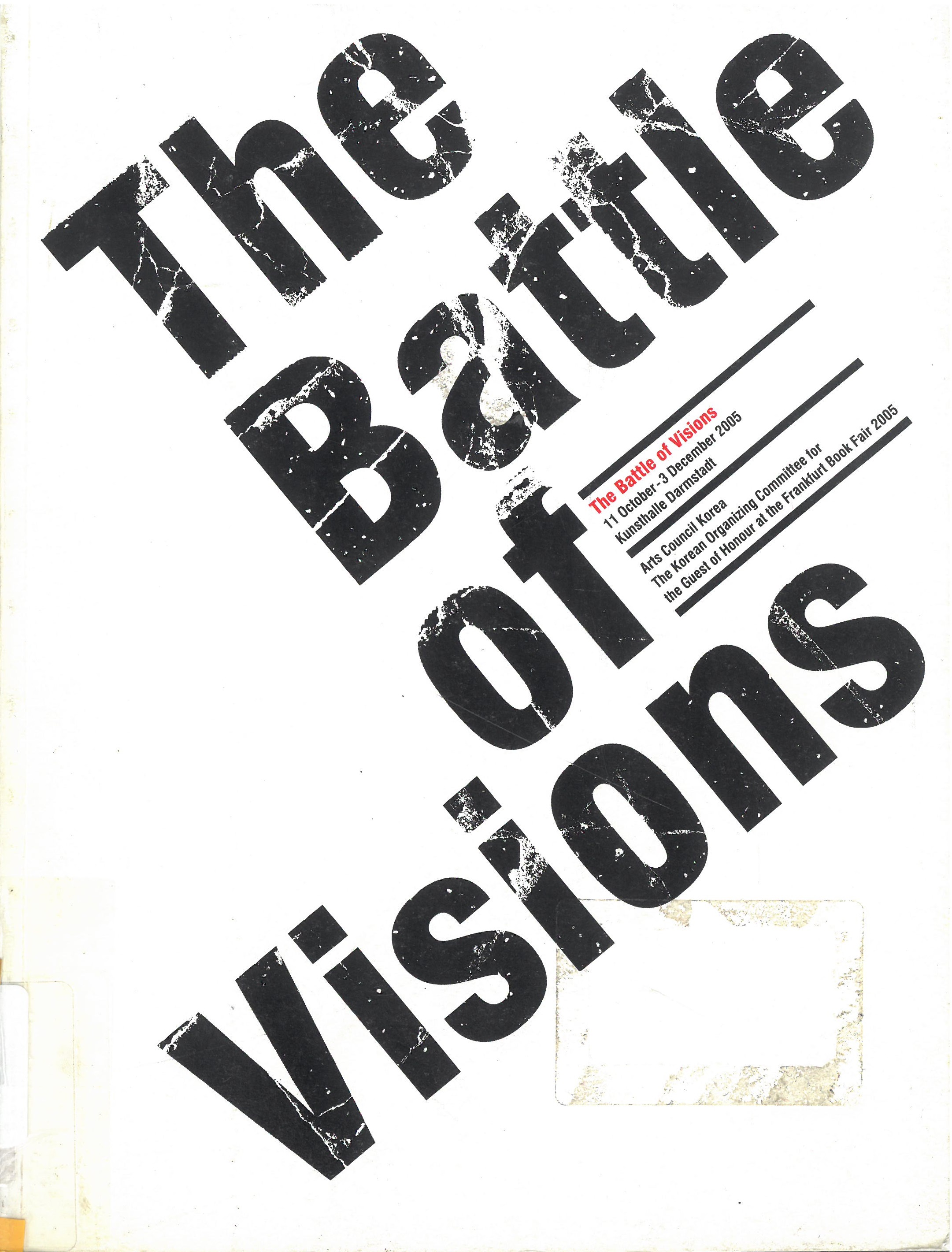
The Battle of Visions, Exhibition catalogue, 2005, MMCA Art Library.
![Shin Hakchul, Contemporary Korean History – Gapdori and Gapsuni. Installation view of The Battle of Visions, excerpted from Enter Korea: Gastland der Frankfurter Buchmesse 2005 (The Korean Organizing Committee for the Guest of Honour at the Frankfurt Book Fair 2005 [KOGAF], 2006), 284.](/admin/utl/web/imageSrc.do?path=ck_image/2025/08&physical=EeXTGVeVH6GqqTKfCTaL.jpg&contentType=image/jpeg)
Shin Hakchul, Contemporary Korean History – Gapdori and Gapsuni. Installation view of The Battle of Visions, Excerpted from Enter Korea: Gastland der Frankfurter Buchmesse 2005 (The Korean Organizing Committee for the Guest of Honour at the Frankfurt Book Fair 2005 [KOGAF], 2006), 284.
![Rho Jaeoon, Evil’s Heart. Installation view of The Battle of Visions, excerpted from Enter Korea: Gastland der Frankfurter Buchmesse 2005 (The Korean Organizing Committee for the Guest of Honour at the Frankfurt Book Fair 2005 [KOGAF], 2006), 284.](/admin/utl/web/imageSrc.do?path=ck_image/2025/08&physical=6m3SMc2phnqIxhOOUXsR.jpg&contentType=image/jpeg)
Rho Jaeoon, Evil’s Heart. Installation view of The Battle of Visions, Excerpted from Enter Korea: Gastland der Frankfurter Buchmesse 2005 (The Korean Organizing Committee for the Guest of Honour at the Frankfurt Book Fair 2005 [KOGAF], 2006), 284.

Peppermint Candy, Poster, 2009, MMCA Art Research Center Collection.

Sign Up for Email Updates